Option Agreement Granting Exclusive Option to Purchase Seismic Data and Oil and Gas Leases from Lease Owner
About this form
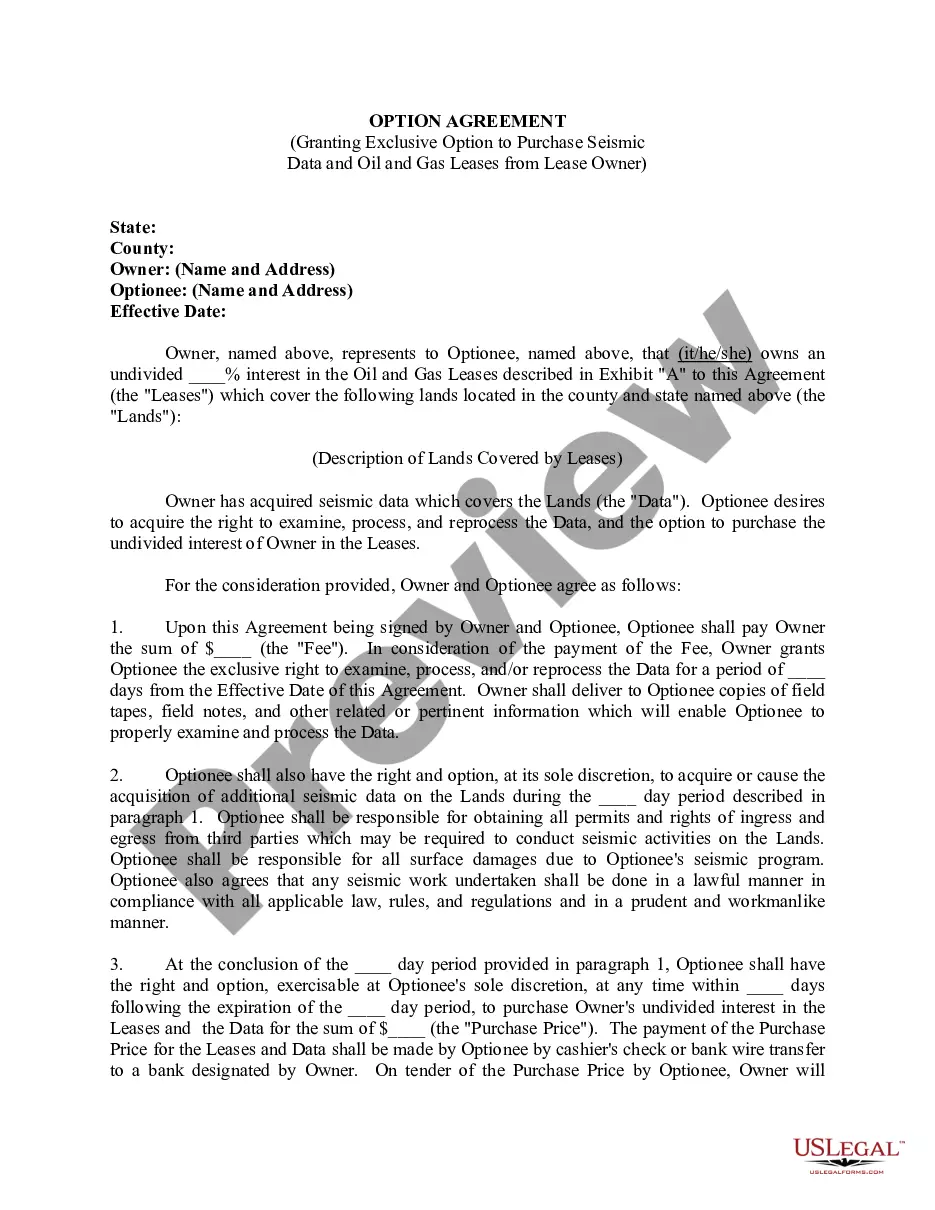
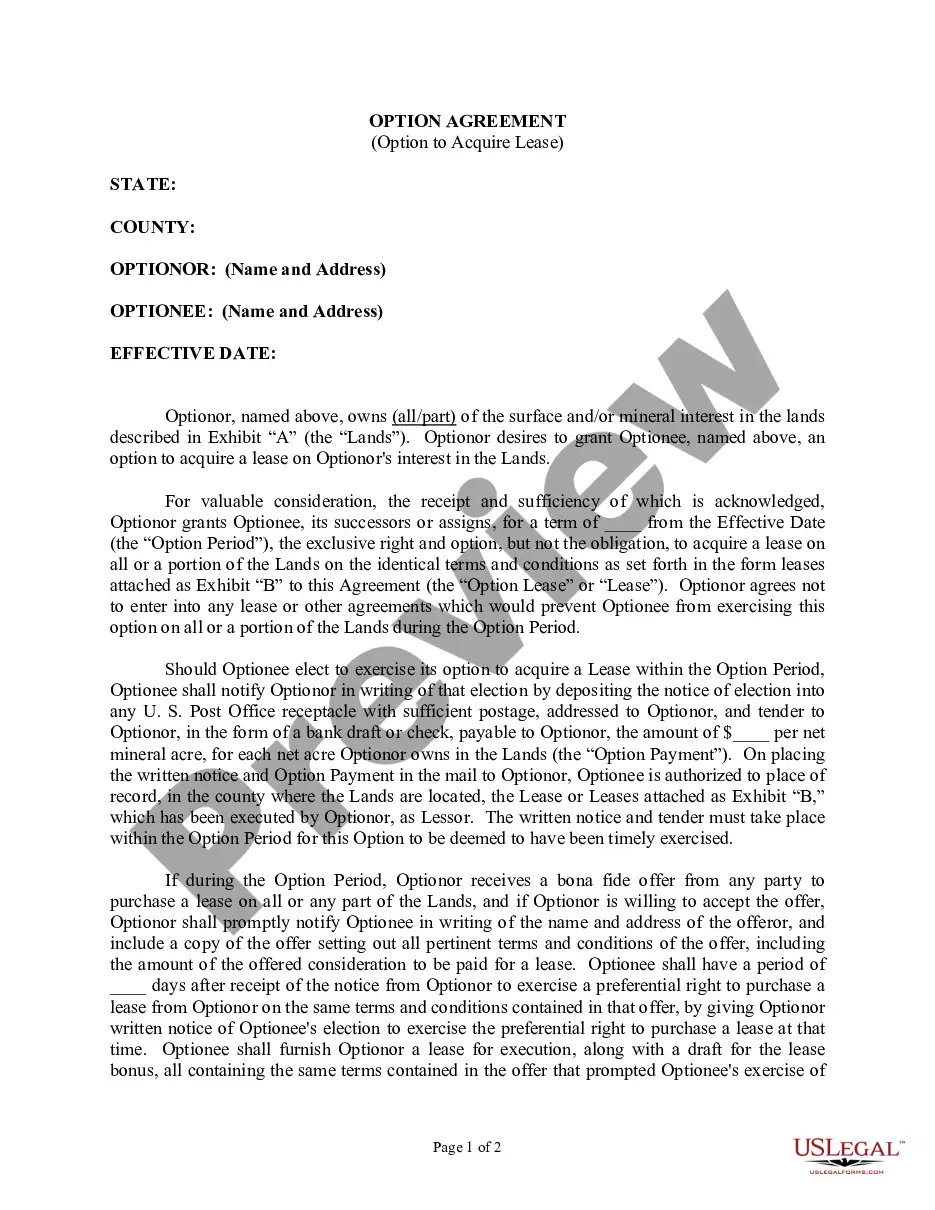
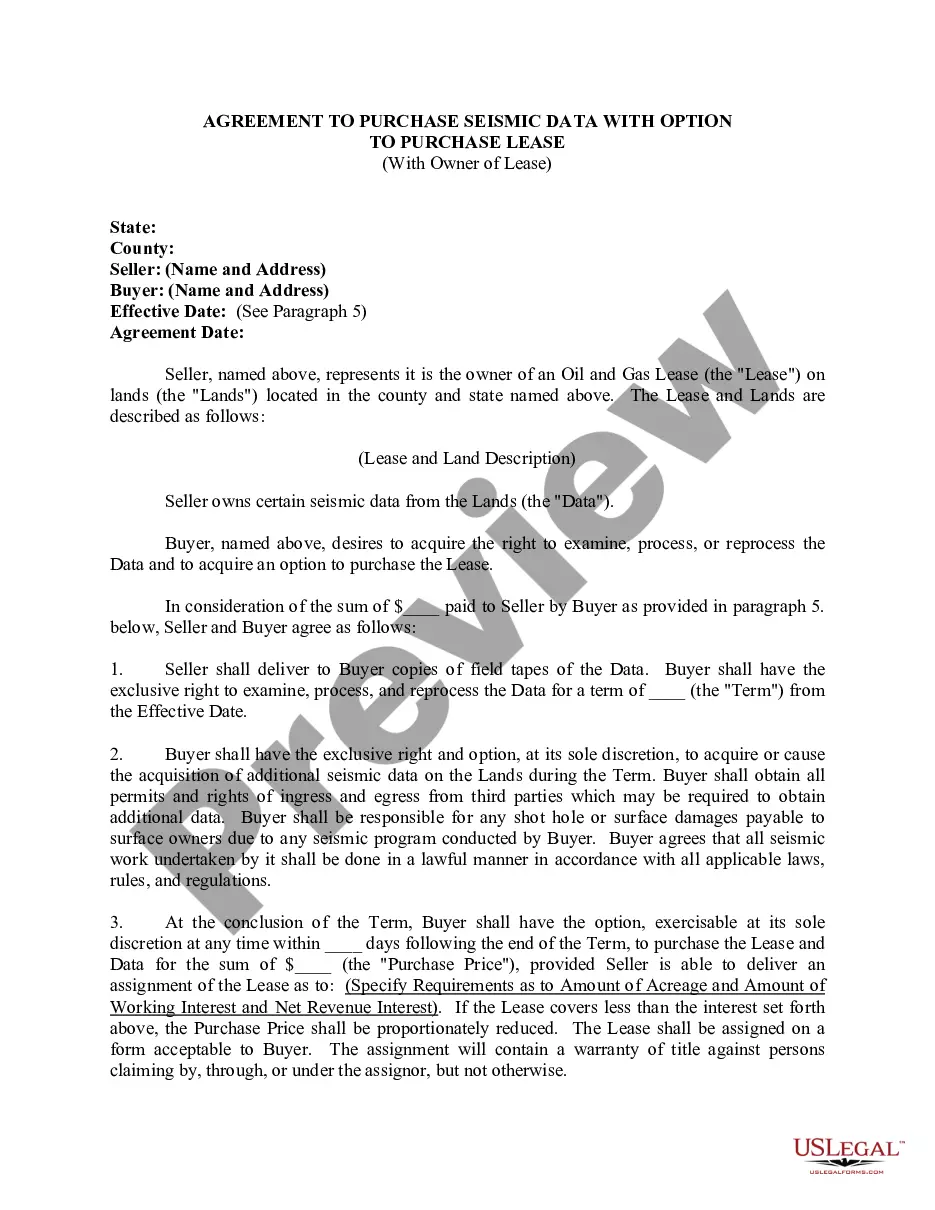
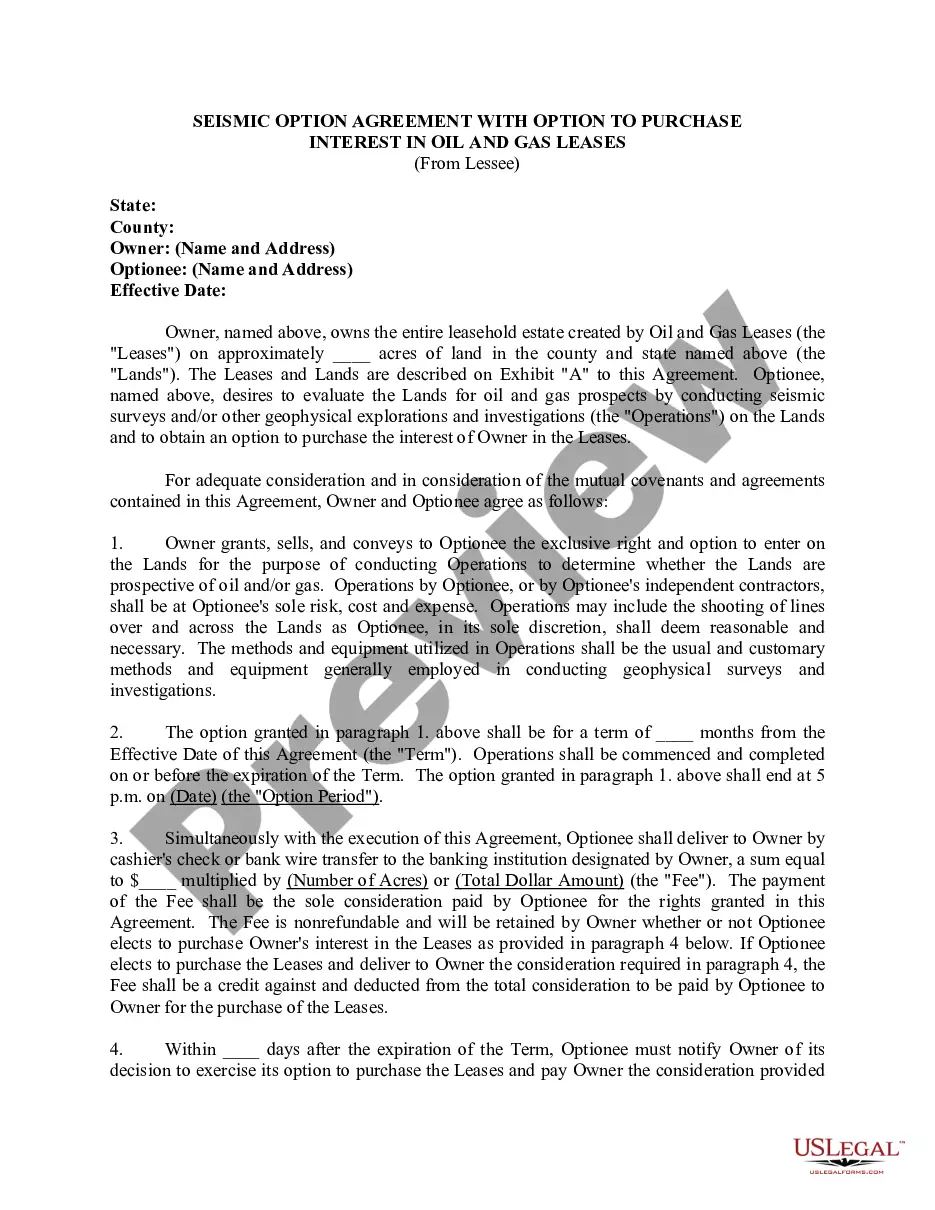
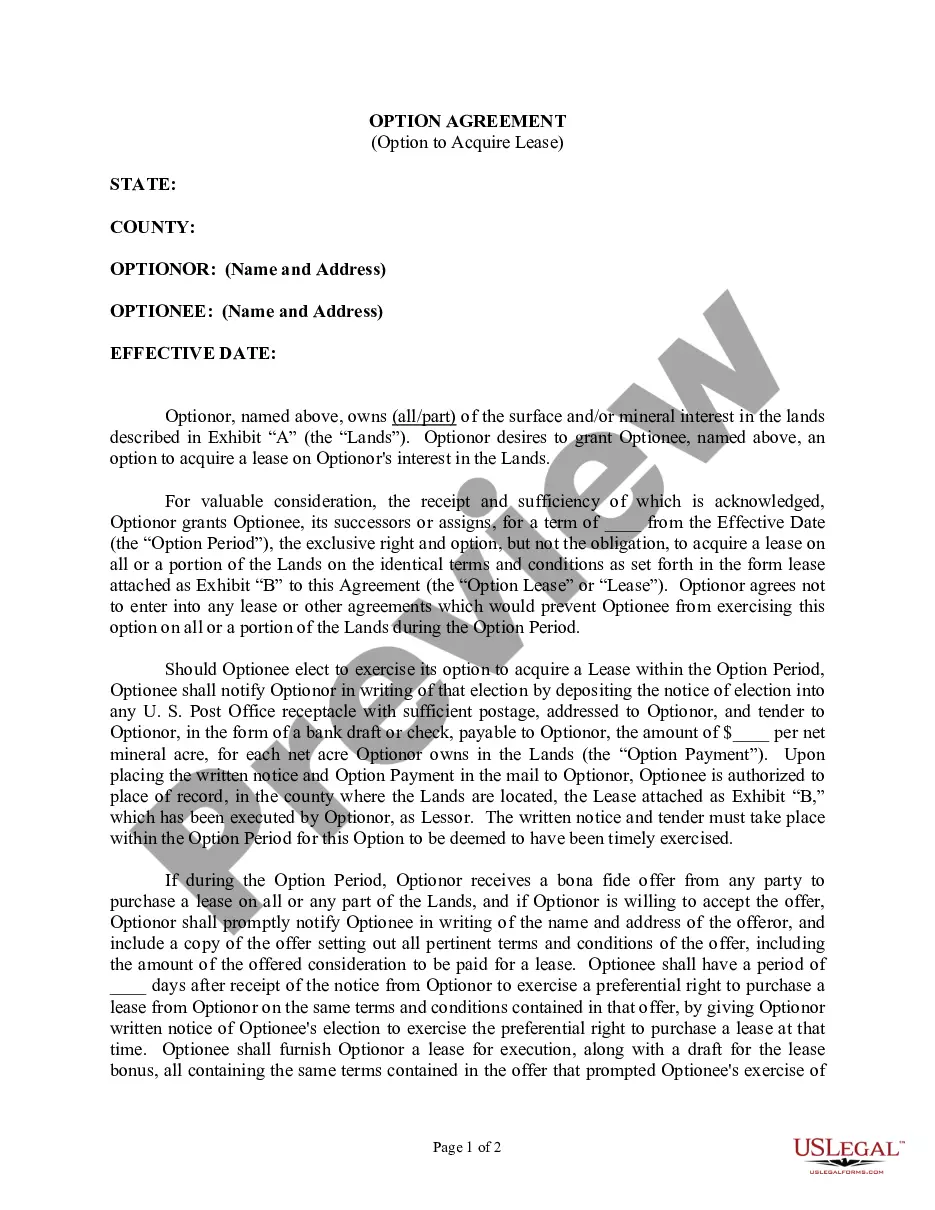
The Option Agreement Granting Exclusive Option to Purchase Seismic Data and Oil and Gas Leases from Lease Owner is a legal document that outlines the terms under which an Optionee can obtain the right to examine and potentially purchase seismic data and oil and gas leases owned by the Lease Owner. This form is essential for facilitating negotiations over seismic data and lease rights, providing clarity and legal structure to transactions in the oil and gas industry.
Main sections of this form
- Identification of the Owner and Optionee, including names and addresses.
- Effective date of the agreement.
- Specific rights granted to the Optionee regarding examination and processing of seismic data.
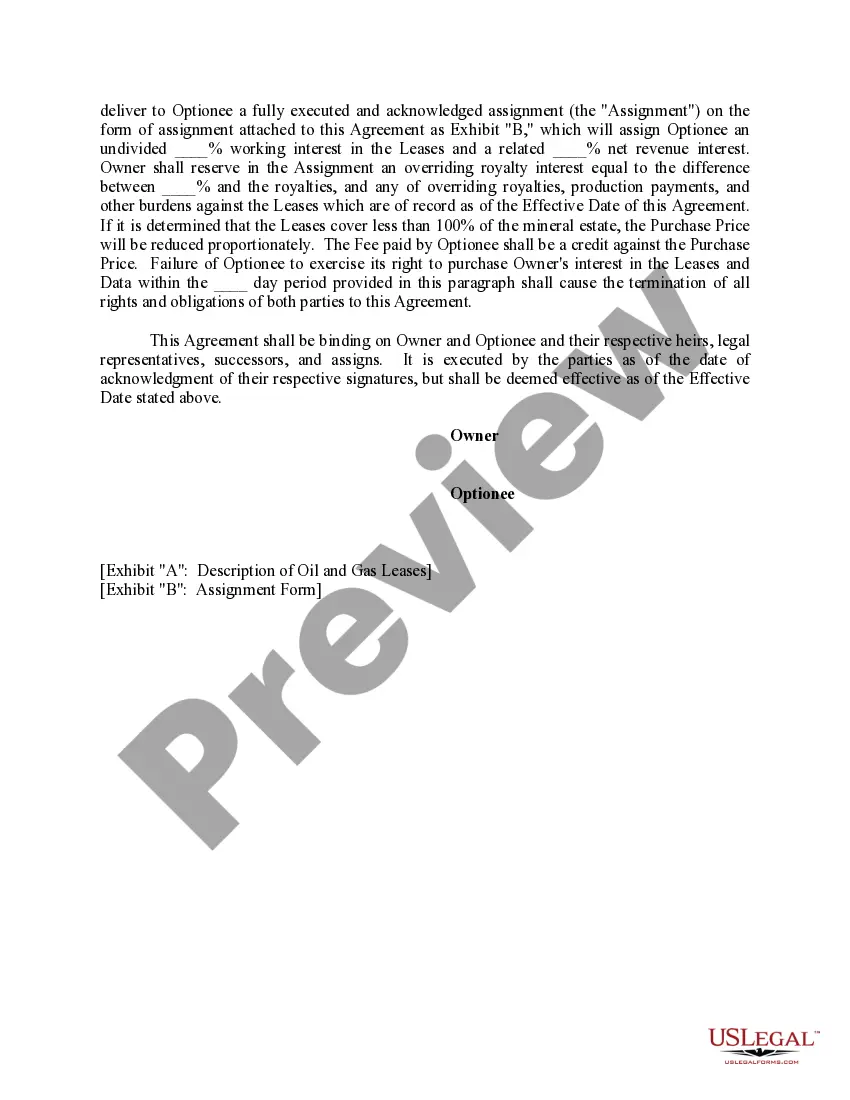
- Details about the payment structure, including fees and purchase price.
- Terms regarding the duration of the agreement and the rights to acquire additional data.
- Obligations concerning permits and compliance with laws.
When this form is needed
This form is typically used when a geophysical company or oil and gas entity seeks to secure exclusive rights to inspect and use seismic data associated with specific land leases before making a purchasing decision. It is appropriate for scenarios where the Owner has seismic data and the Optionee wishes to explore investment opportunities in lease interests.
Who this form is for
- Oil and gas companies looking to acquire rights to seismic data.
- Individuals or entities interested in purchasing oil and gas leases.
- Lease Owners with seismic data who wish to negotiate their selling terms.
- Legal professionals assisting clients in energy sector transactions.
How to complete this form
- Identify the parties by entering the names and addresses of the Owner and Optionee.
- Specify the effective date of the agreement.
- Detail the interest owned by the Owner and provide a description of the Lands.
- Determine and enter the fee for the examination rights and the purchase price.
- Review and fill in any deadlines and obligations regarding permits and seismic activities.
- Ensure signatures of both parties are secured at the conclusion of the document.
Does this form need to be notarized?
In most cases, this form does not require notarization. However, some jurisdictions or signing circumstances might. US Legal Forms offers online notarization powered by Notarize, accessible 24/7 for a quick, remote process.
Get your form ready online
Our built-in tools help you complete, sign, share, and store your documents in one place.
Make edits, fill in missing information, and update formatting in US Legal Forms—just like you would in MS Word.
Download a copy, print it, send it by email, or mail it via USPS—whatever works best for your next step.
Sign and collect signatures with our SignNow integration. Send to multiple recipients, set reminders, and more. Go Premium to unlock E-Sign.
If this form requires notarization, complete it online through a secure video call—no need to meet a notary in person or wait for an appointment.
We protect your documents and personal data by following strict security and privacy standards.

Make edits, fill in missing information, and update formatting in US Legal Forms—just like you would in MS Word.

Download a copy, print it, send it by email, or mail it via USPS—whatever works best for your next step.

Sign and collect signatures with our SignNow integration. Send to multiple recipients, set reminders, and more. Go Premium to unlock E-Sign.

If this form requires notarization, complete it online through a secure video call—no need to meet a notary in person or wait for an appointment.

We protect your documents and personal data by following strict security and privacy standards.
Typical mistakes to avoid
- Failing to clearly define the properties and lease interests involved.
- Leaving important fields blank, such as payment amounts or deadlines.
- Not specifying the effective date accurately, which can delay the agreement's start.
- Neglecting to review local legal requirements that may affect the agreement.
Why complete this form online
- Convenience of downloading and completing the form at your own pace.
- Editable format allows customization based on specific needs.
- Access to forms drafted by licensed attorneys for accuracy and reliability.
- Ability to quickly print and share the document with relevant parties.
Legal use & context
- This agreement is enforceable as a contract, provided it includes all necessary elements such as consent, consideration, and lawful subject matter.
- Failure to exercise the option within the agreed timeframe terminates the rights granted in the agreement.
- It is advisable to consult legal counsel for personalized guidance based on specific circumstances.
Summary of main points
- The form provides an exclusive option for examining and purchasing seismic data related to oil and gas leases.
- It's crucial for both parties to fully understand the terms, including payments and rights.
- Proper completion and adherence to any state-specific requirements are essential for the agreement's validity.
Looking for another form?

Form popularity
FAQ
Exclusive Supply Agreements are defined under Section 3(4)(c) of the Competition Act, 2002 ("Act") as agreements restricting the purchaser from purchasing/dealing with goods other than those of the seller.Exclusive supply agreements are also known as 'single branding' agreements or 'quantity forcing' arrangements.
Overview. Exclusive dealing is not per se or presumptively illegal under either the Sherman Act, 15 U.S.C. ? 1-7, or the Clayton Act, 15 U.S.C. ? 12-27.
Broadly speaking, exclusive dealing occurs when one person trading with another imposes some restrictions on the other's freedom to choose with whom, in what, or where they deal. Exclusive dealing is against the law only when it substantially lessens competition.
Buyer and seller information. Property details. Pricing and financing. Fixtures and appliances included/excluded in the sale. Closing and possession dates. Earnest money deposit amount. Closing costs and who is responsible for paying.
If your competitor is using exclusive-dealing agreements, you might be aggravated about it, but under most circumstances exclusive-dealing agreements are legal under the antitrust laws.But that doesn't mean all exclusive-dealing agreements are legal.
Thus, exclusive agreements are anti-competitive under Section 3(4) or Section 4 of the Act only when the parties involved have significant market power.
A real estate deal can take a turn for the worst if the contract is not carefully written to include all the legal stipulations for both the buyer and seller.You can write your own real estate purchase agreement without paying any money as long as you include certain specifics about your home.
Related Content. Also known as lock-out, shut-out or no-shop agreements. Agreements which are used to try to ensure that the other party to a prospective deal negotiates solely with the client for a period of time. They aim to give the client some protection from another party outbidding him.