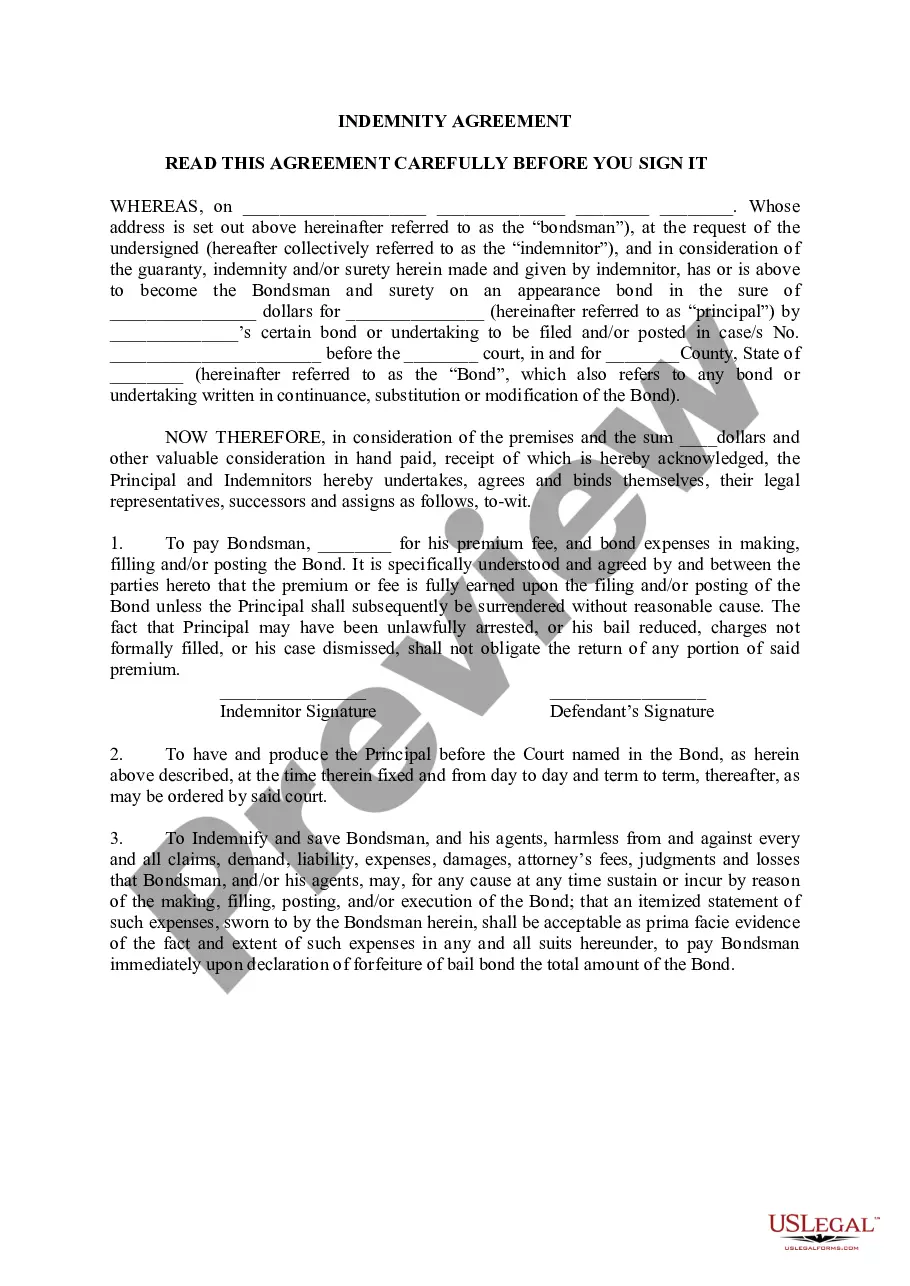
Option Agreement (Option to Aquire a Lease)
What is this form?
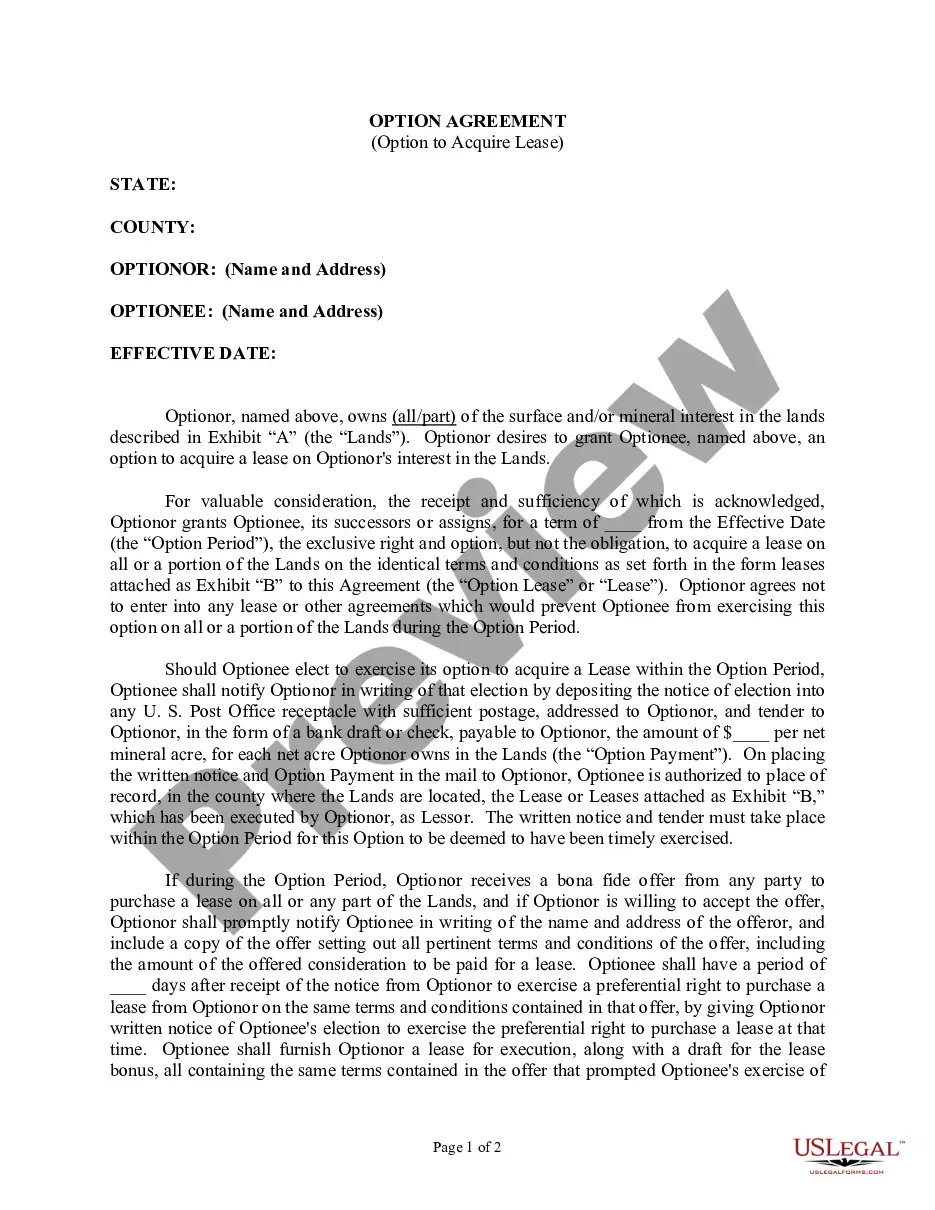
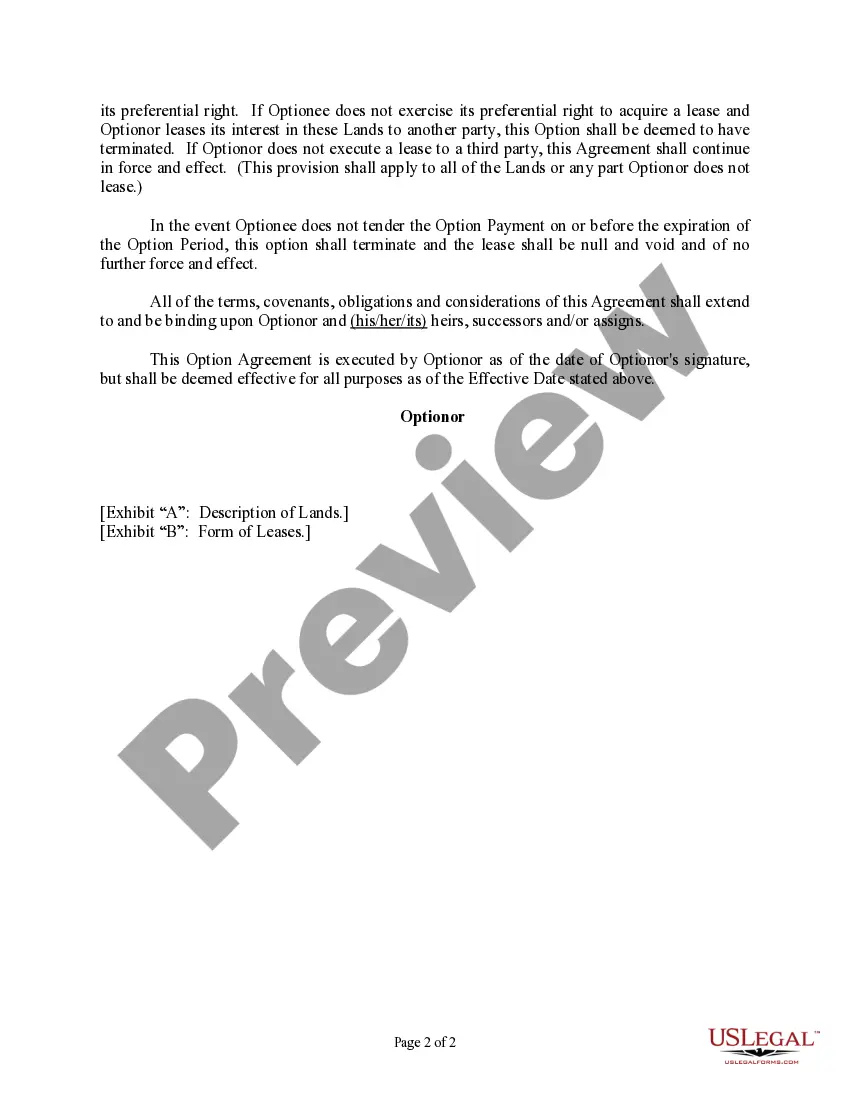
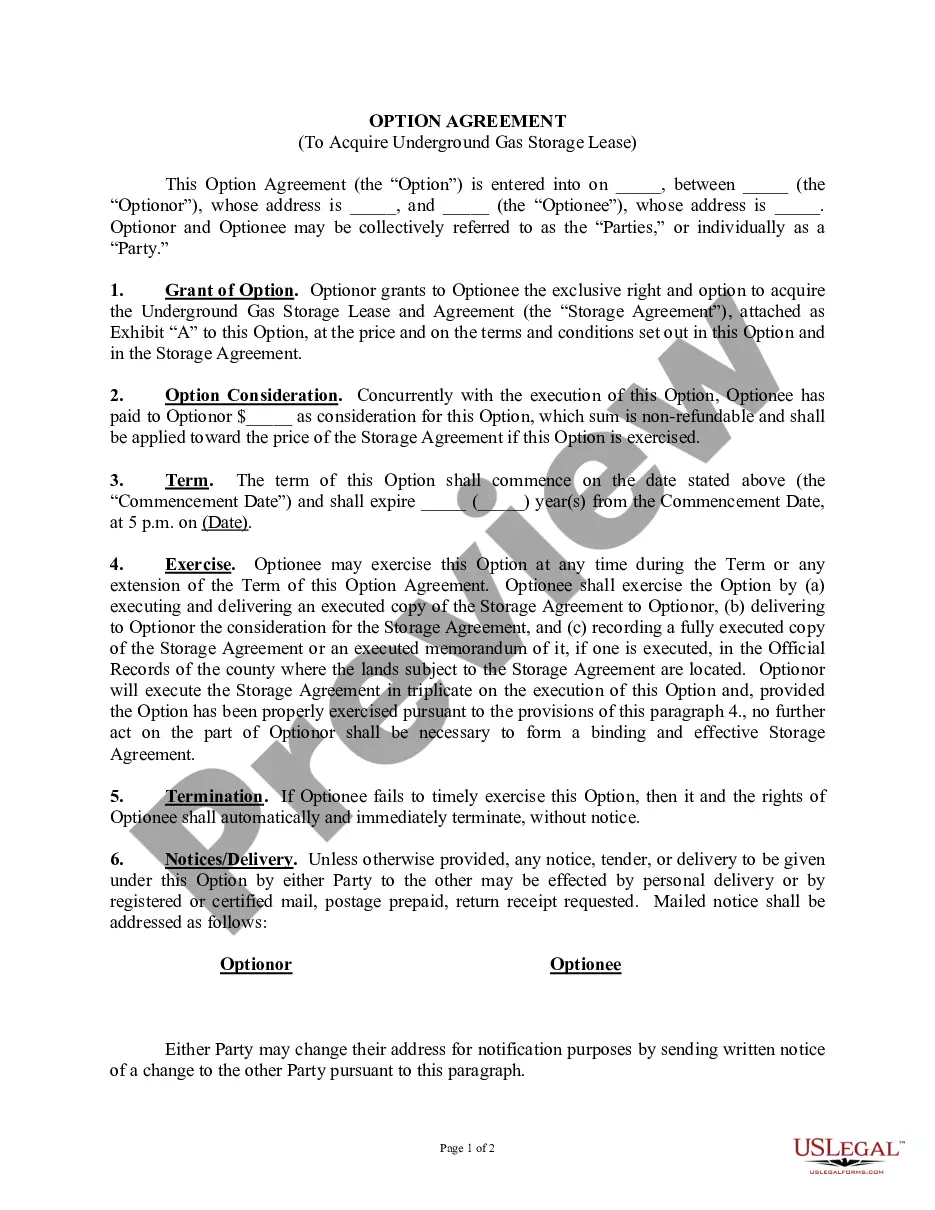
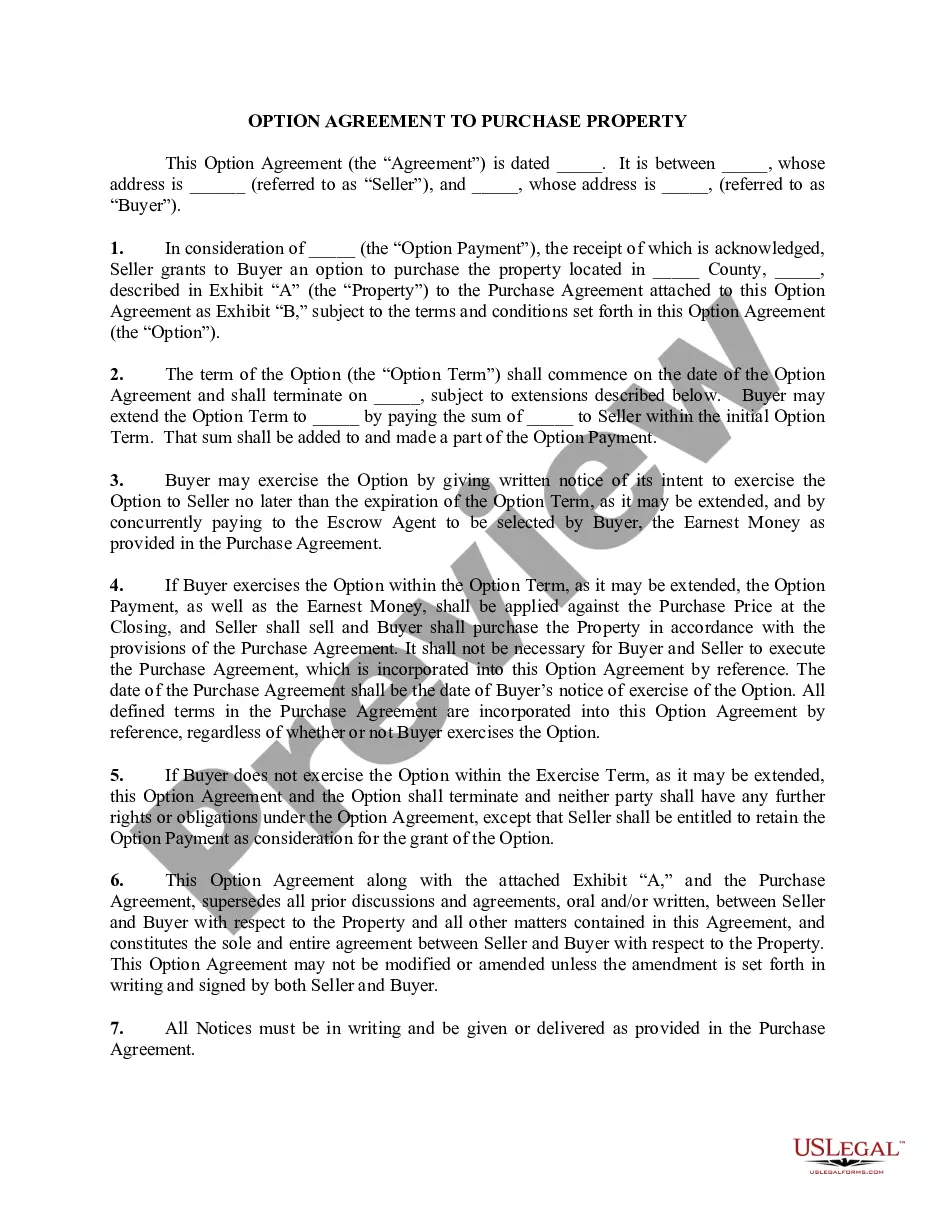
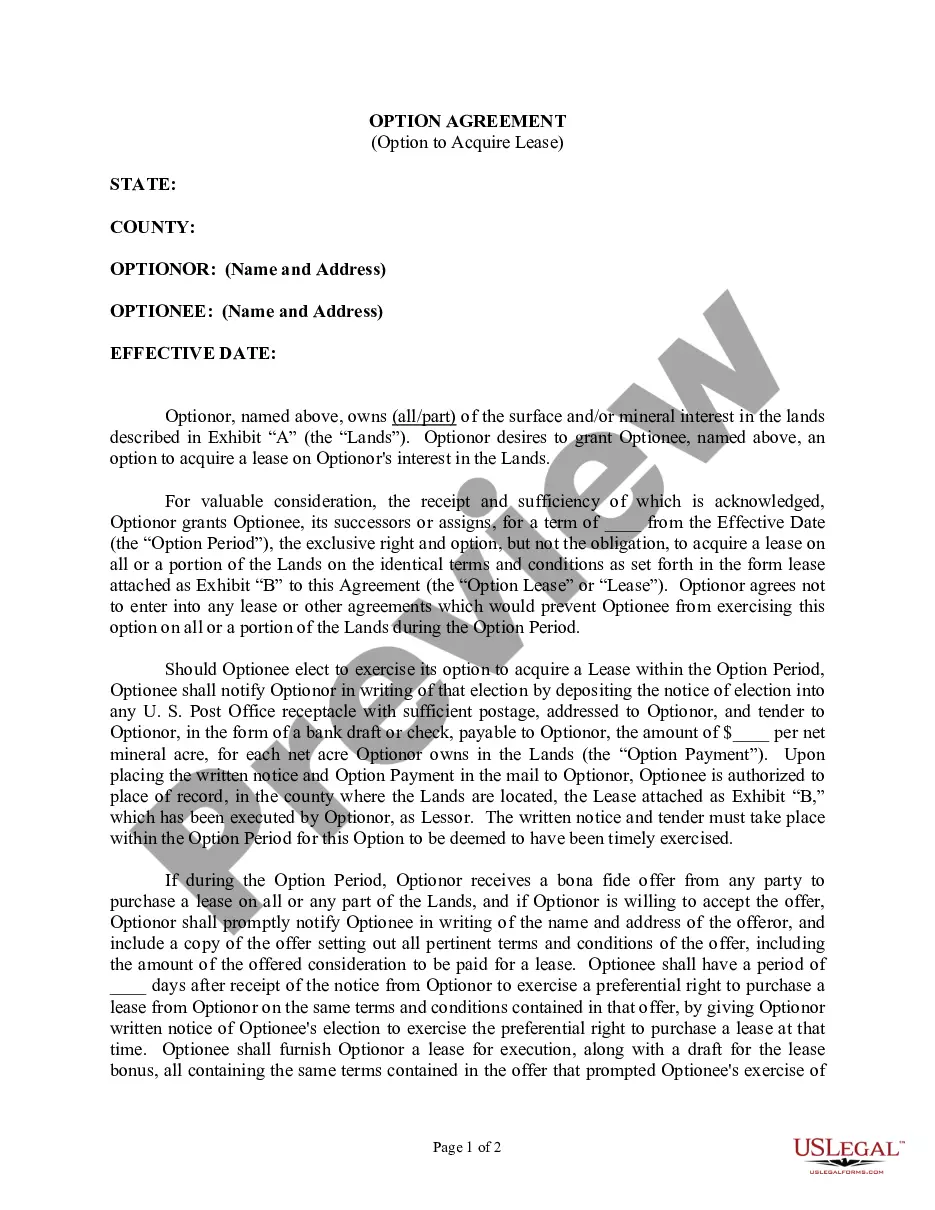
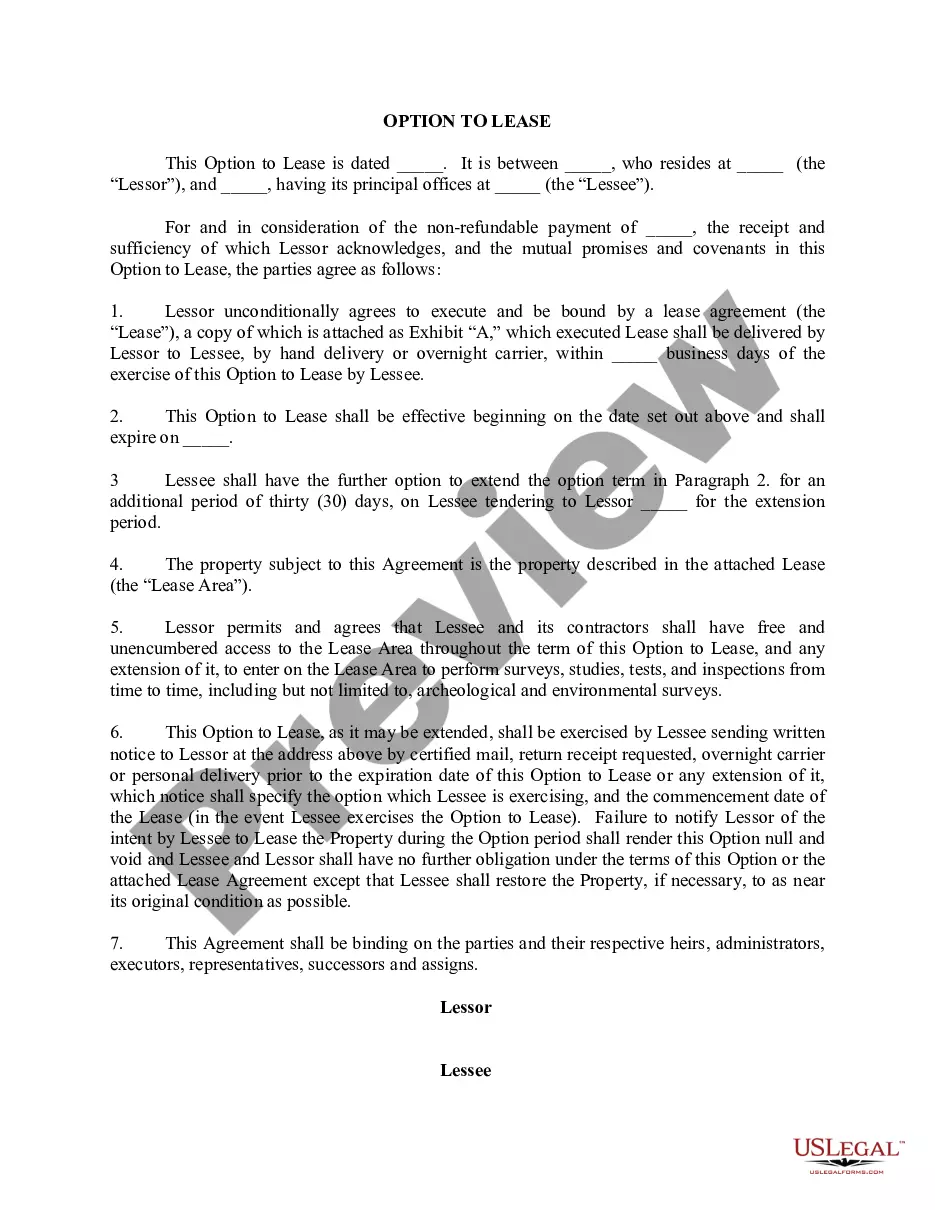
The Option Agreement (Option to Acquire a Lease) is a legal document that grants an individual or entity (the Optionee) the exclusive right to acquire a lease on the property interests held by another party (the Optionor). This form is essential for those looking to secure an option on mineral rights or land leases before finalizing a lease agreement. Unlike a standard lease, the option agreement allows the Optionee time to evaluate the investment without committing immediately to the lease terms.
Form components explained
- Identification of the Optionor and Optionee with their addresses.
- Effective date of the option agreement.
- Description of the property interests involved, outlined in Exhibit A.
- Terms of the option period during which the Optionee can exercise the option.
- Details regarding the payment to exercise the option, including the amount per net acre.
- Provisions detailing the Optionor's obligation to notify the Optionee of other offers received.
When to use this document
This Option Agreement is useful in scenarios where an individual or business is interested in obtaining rights to lease land or mineral interests. It is particularly relevant for real estate investors, mineral rights companies, or anyone looking to secure these rights without immediate commitment. If you receive an opportunity or offer for a lease and want to ensure you have the first right to acquire it, this form secures that advantage.
Who can use this document
- Individuals or companies interested in leasing land or mineral rights.
- Real estate investors seeking to evaluate potential leases.
- Landowners who wish to give options to lease their property.
- Legal representatives handling lease agreements for clients.
How to complete this form
- Identify the parties involved by entering the names and addresses of the Optionor and Optionee.
- Specify the effective date and the property interests being leased in Exhibit A.
- Detail the duration of the option period and the payment amount per net acre.
- Ensure notification provisions are clear for any third-party offers received by the Optionor.
- Review for accuracy, sign the document, and keep a copy for your records.
Does this form need to be notarized?
This form does not typically require notarization to be legally valid. However, some jurisdictions or document types may still require it. US Legal Forms provides secure online notarization powered by Notarize, available 24/7 for added convenience.
Get your form ready online
Our built-in tools help you complete, sign, share, and store your documents in one place.
Make edits, fill in missing information, and update formatting in US Legal Forms—just like you would in MS Word.
Download a copy, print it, send it by email, or mail it via USPS—whatever works best for your next step.
Sign and collect signatures with our SignNow integration. Send to multiple recipients, set reminders, and more. Go Premium to unlock E-Sign.
If this form requires notarization, complete it online through a secure video call—no need to meet a notary in person or wait for an appointment.
We protect your documents and personal data by following strict security and privacy standards.

Make edits, fill in missing information, and update formatting in US Legal Forms—just like you would in MS Word.

Download a copy, print it, send it by email, or mail it via USPS—whatever works best for your next step.

Sign and collect signatures with our SignNow integration. Send to multiple recipients, set reminders, and more. Go Premium to unlock E-Sign.

If this form requires notarization, complete it online through a secure video call—no need to meet a notary in person or wait for an appointment.

We protect your documents and personal data by following strict security and privacy standards.
Common mistakes
- Failing to clearly define the property in Exhibit A.
- Not specifying the duration of the option period.
- Omitting payment amounts or terms, leading to misunderstandings.
- Neglecting to notify the Optionee of other lease offers in a timely manner.
Benefits of using this form online
- Instant access to legally vetted templates drafted by licensed attorneys.
- Convenient downloading and printing options for immediate use.
- Editability allows users to customize the form to their specific needs easily.
- Time-saving compared to drafting a legal document from scratch.
Legal use & context
- This form provides a legal mechanism for securing lease rights while protecting both parties' interests.
- It is enforceable in accordance with state laws governing lease agreements and option contracts.
Summary of main points
- The Option Agreement allows a party to acquire leasing rights without immediate commitment.
- The agreement includes specific terms such as payment, period, and property description.
- It is essential to ensure all fields are completed accurately to avoid legal complications.
Looking for another form?
Form popularity
FAQ
A lease-option-to-buy arrangement can be a solution for some potential homebuyers, but it's not right for everyone. If you're not certain that you're going to be able to purchase the rental home at the end of the lease period, you might be better served with a standard rental agreement.
Document everything in writing. Keep a written record of everything that is agreed on, and be careful to use the right terms in the agreement. Consult an attorney. Use separate agreements. Keep the term short. Take a security deposit. Pay like an owner. Factor in repair costs. Don't give large rent credits.
The difference between a lease option and lease purchase agreement is that the lease option only obligates the seller to sell. A lease purchase agreement commits both parties to the sale barring breach of contract or the buyer's inability to secure a mortgage.
A lease option is an agreement that gives a renter a choice to purchase the rented property during or at the end of the rental period. It also precludes the owner from offering the property for sale to anyone else.A lease option is also known as a lease with the option to purchase.
Lease-option contracts give you the right to buy the home when the lease expires, while lease-purchase contracts require you to buy it. You pay rent throughout the lease, and in some cases, a percentage of the payment is applied to the purchase price.
Rent-to-own schemes (also known as rent-to-buy schemes) are leasing agreements that afford renters the right to buy a home at the end of a pre-determined rental period, at a price agreed prior to signing the agreement.
Sellers agreeing to lease option deals arguably have more to lose than buyers. If house prices rise they're likely to regret agreeing a price at the time the option was taken out. If prices fall there's a risk the buyer or investor will not exercise their option to buy, and they'll still be stuck with the property.
A lease-option-to-buy arrangement can be a solution for some potential homebuyers, but it's not right for everyone. If you're not certain that you're going to be able to purchase the rental home at the end of the lease period, you might be better served with a standard rental agreement.
Having an option gives the holder the right to buy or sell something at an agreed price after an agreed period.A lease option agreement involves a tenant being given the option to buy a property at an agreed price at the end of a given rental period, usually three to six years.