Oklahoma Indemnity Agreement
What is this form?
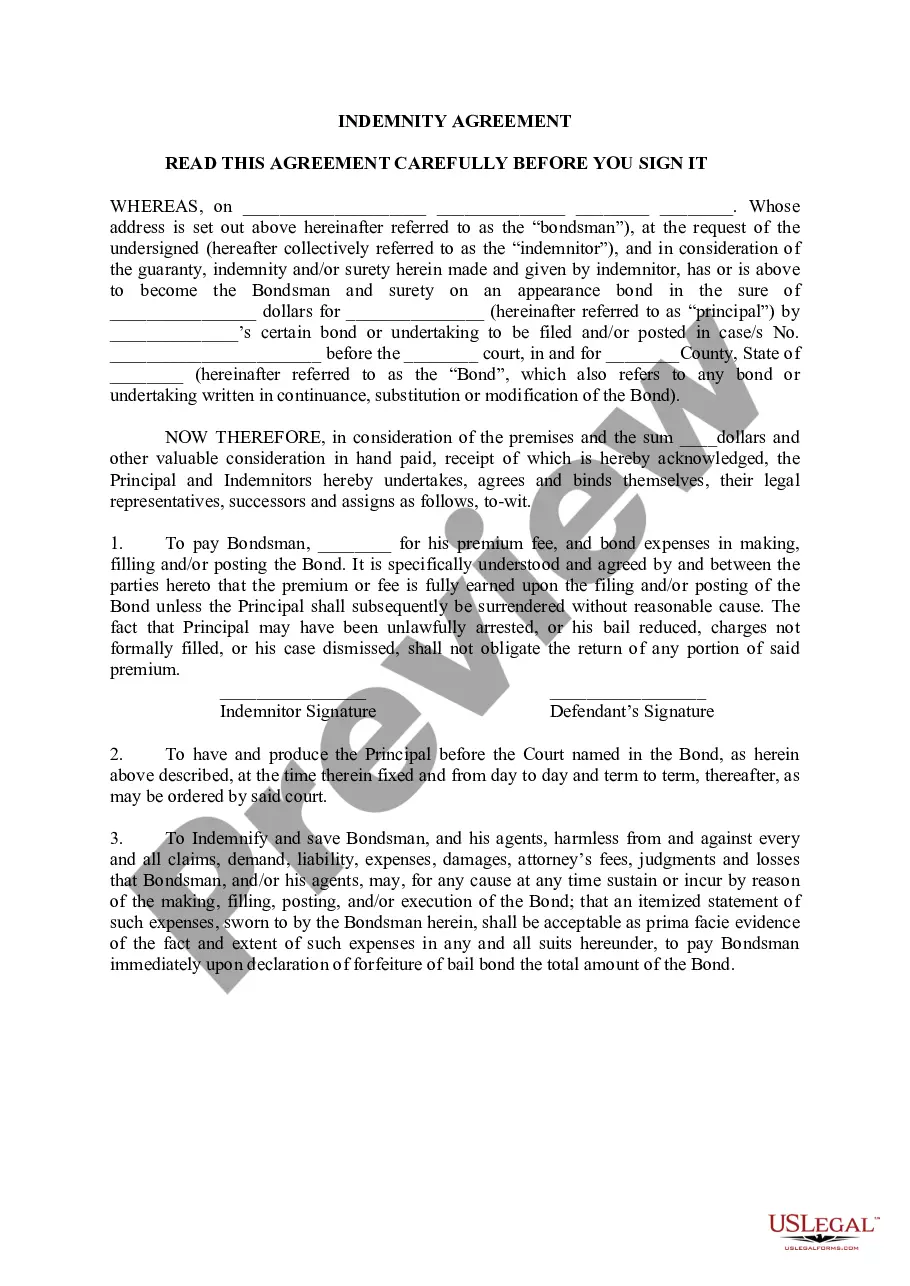
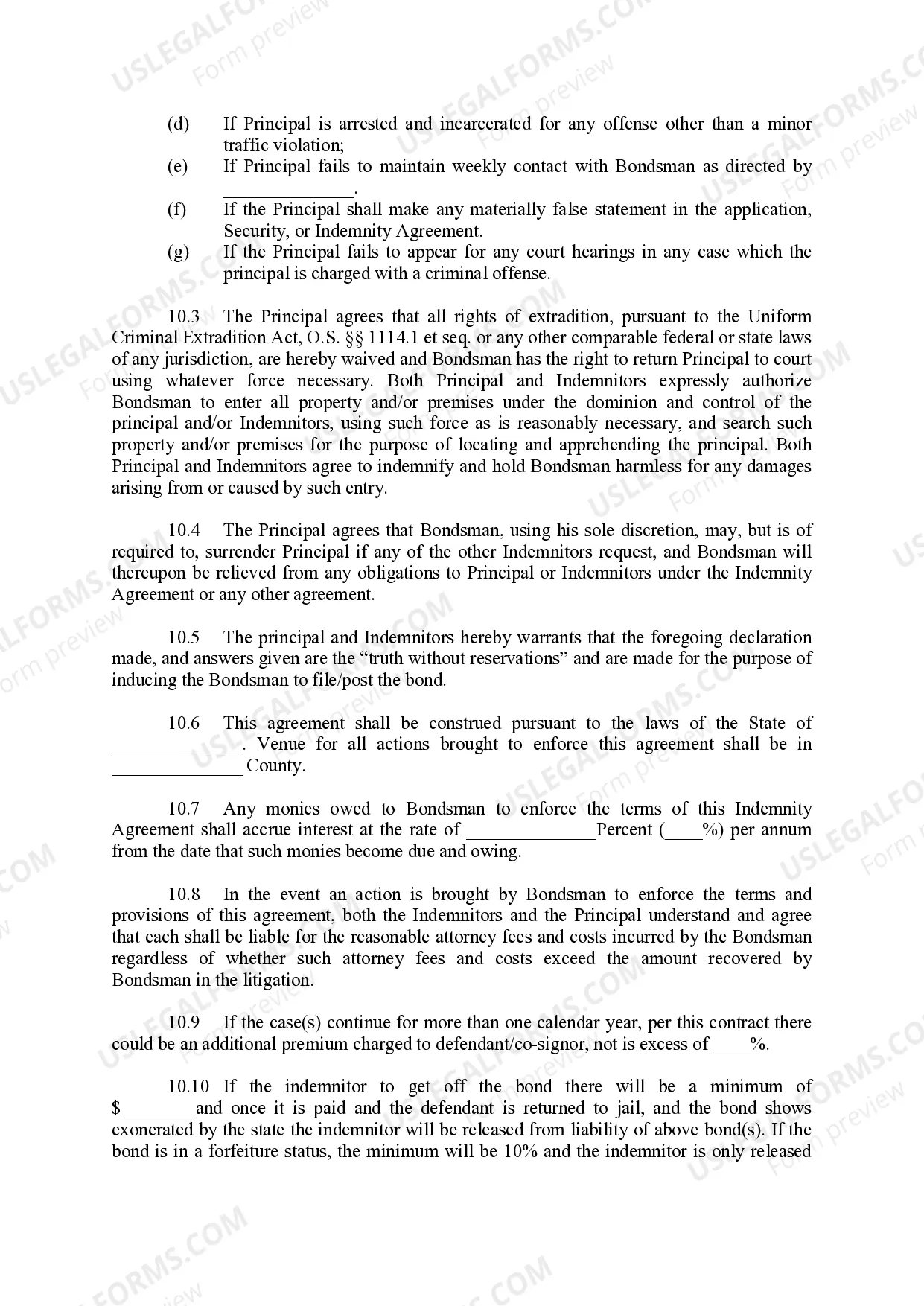
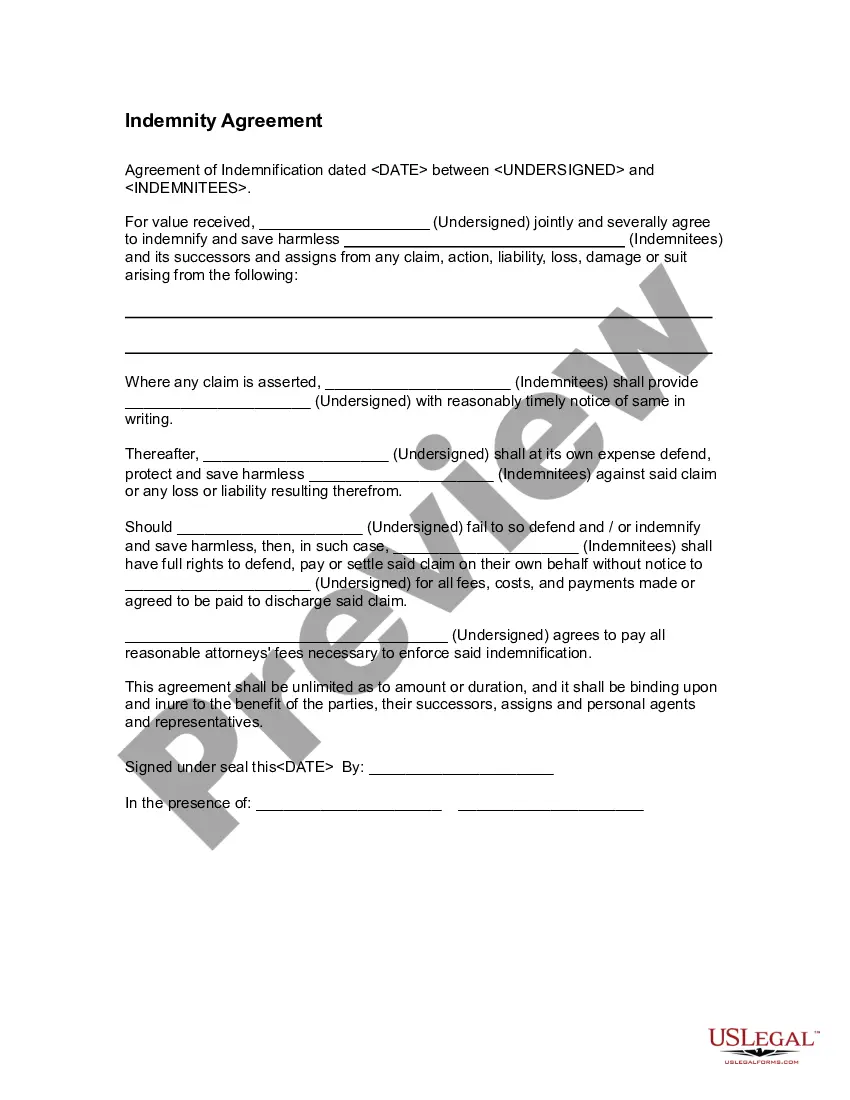
The Indemnity Agreement is a legal document designed to protect a bondsman and their agents from financial loss when they provide a bond for an individual (the principal). This agreement holds the indemnitor (the person who agrees to indemnify) responsible for any expenses, claims, or liabilities that may arise from the bond execution. Unlike other legal agreements, this one focuses specifically on the bondsmanâs right to recover costs related to any bond posted on behalf of the principal.
Key parts of this document
- Parties involved: Identification of the bondsman and indemnitor.
- Bond details: Information about the bond amount, case number, and the court involved.
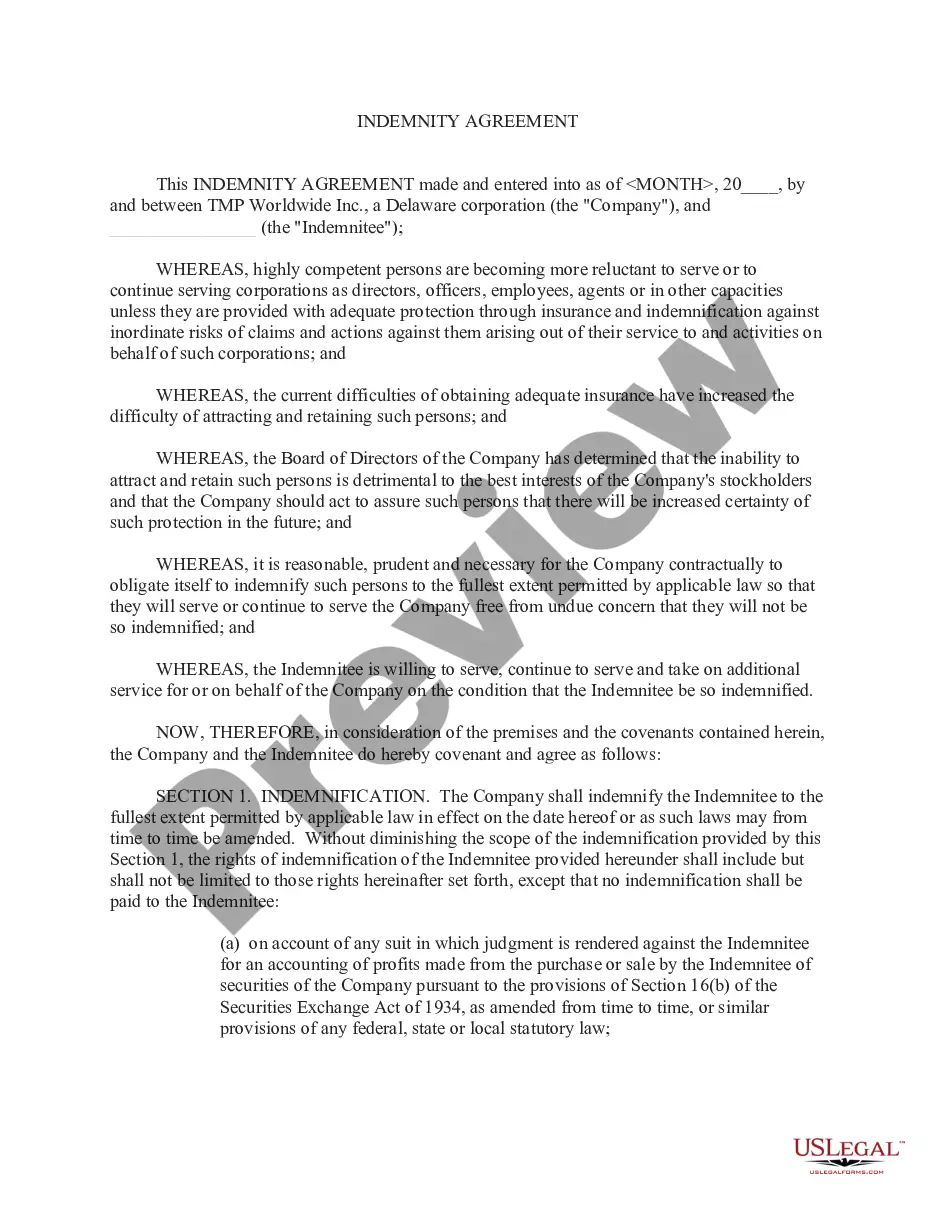
- Indemnification clauses: Outlines the indemnitor's obligation to cover fees and liabilities.
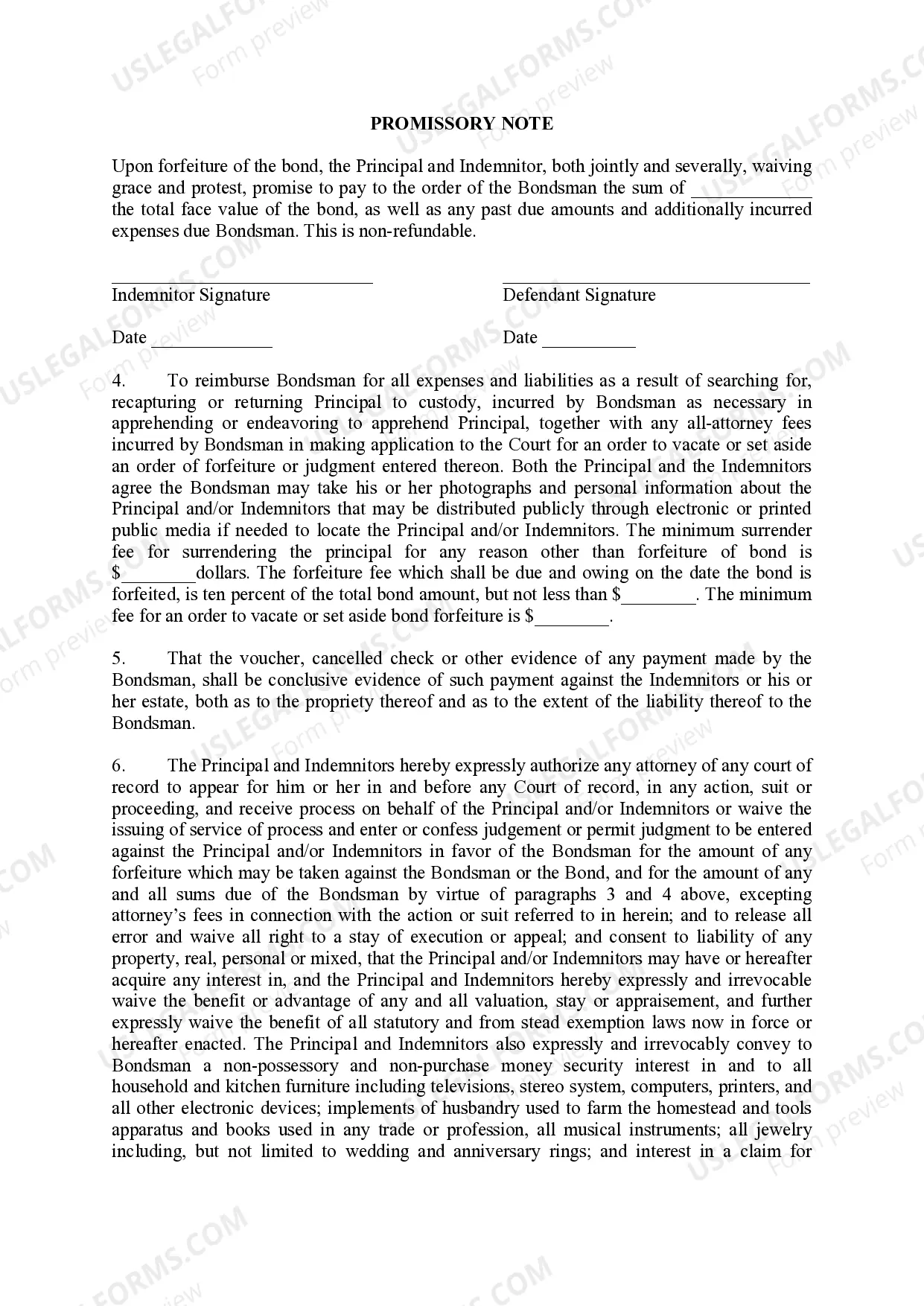
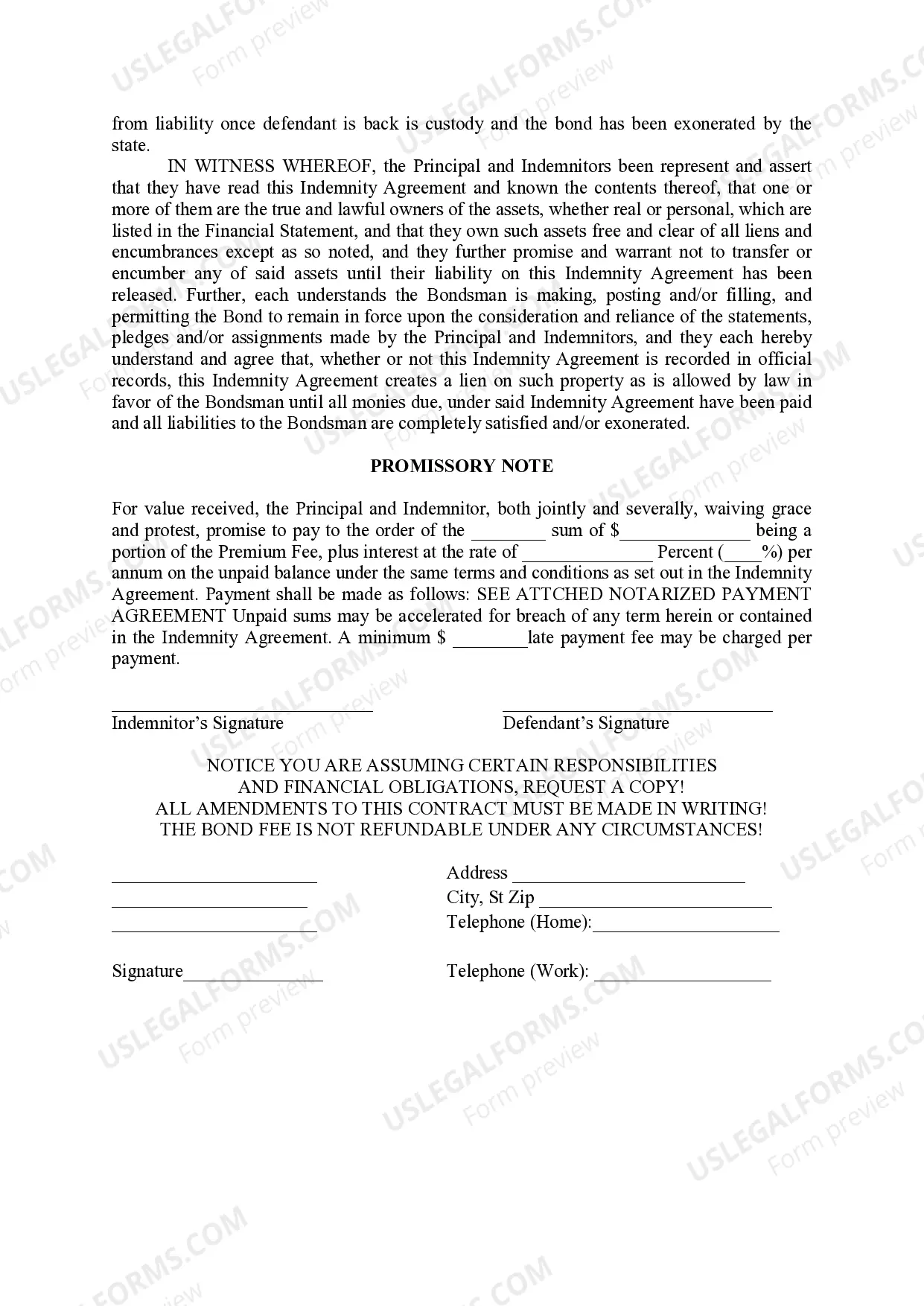
- Promissory note section: Agreement on payment of the total bond value upon forfeiture.
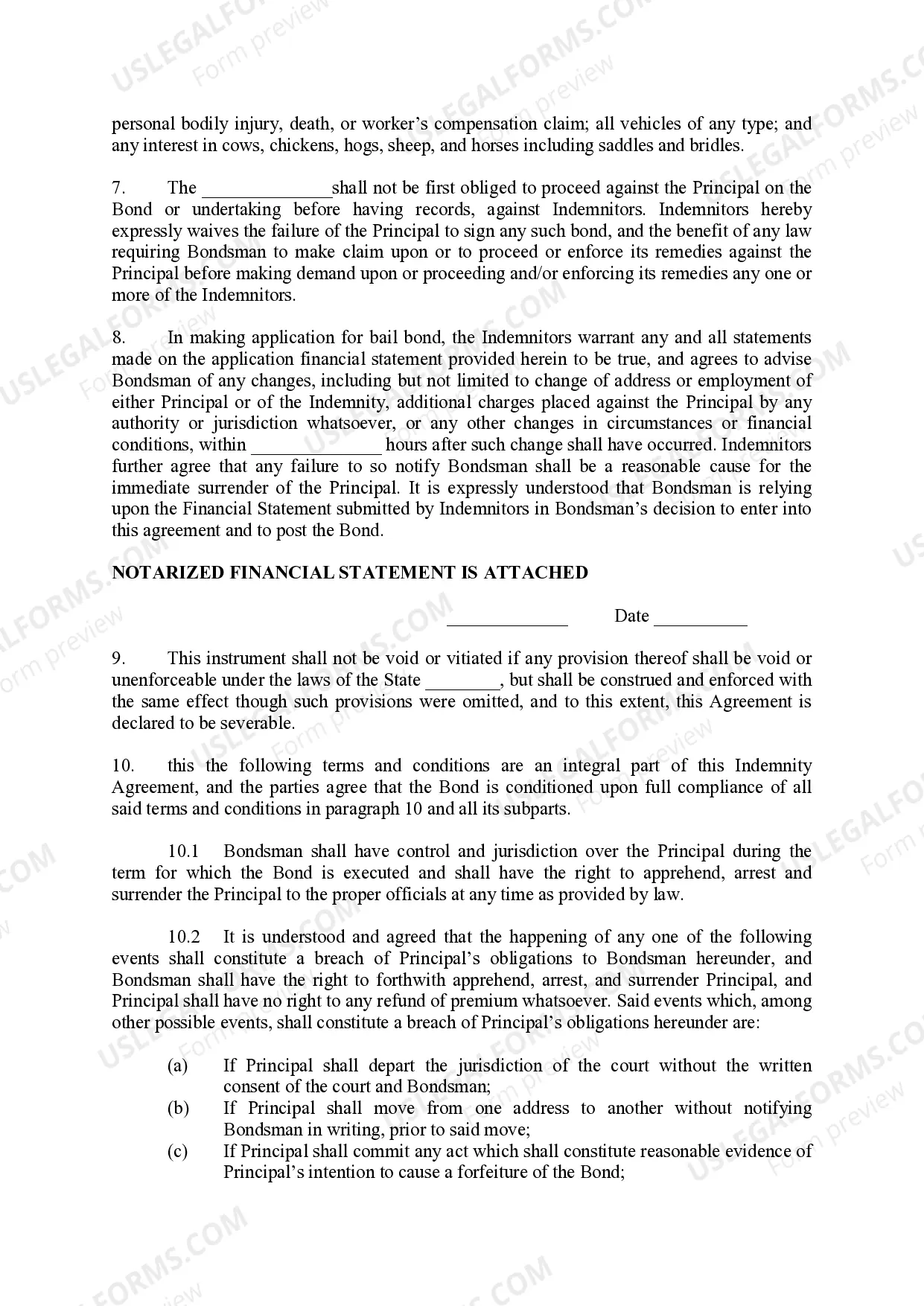
- Control rights: Bondsmanâs authority to apprehend and surrender the principal.
When to use this document
This form is typically used when someone requires a bail bond for their release from custody. It is essential when the bondsman needs assurance they will be compensated for the bond expenses. Common scenarios include criminal cases where an individual is awaiting trial and needs to post bail to secure their release. Additionally, this agreement should be executed when the principal may pose a risk of forfeiting the bond.
Who this form is for
- Individuals seeking a bail bond for release from custody.
- Family or friends acting as indemnitors to secure a bond on behalf of a principal.
- Bondsmen and sureties who need protection against potential losses incurred from bond agreements.
How to prepare this document
- Identify the parties: Enter the names and addresses of both the bondsman and the indemnitor.
- Specify bond details: Fill in the bond amount, case number, and court information.
- Complete indemnification sections: Clearly outline the indemnitor's obligations, including payment responsibilities and conditions for the bond.
- Sign and date: Both the indemnitor and principal must sign and date the agreement to validate it.
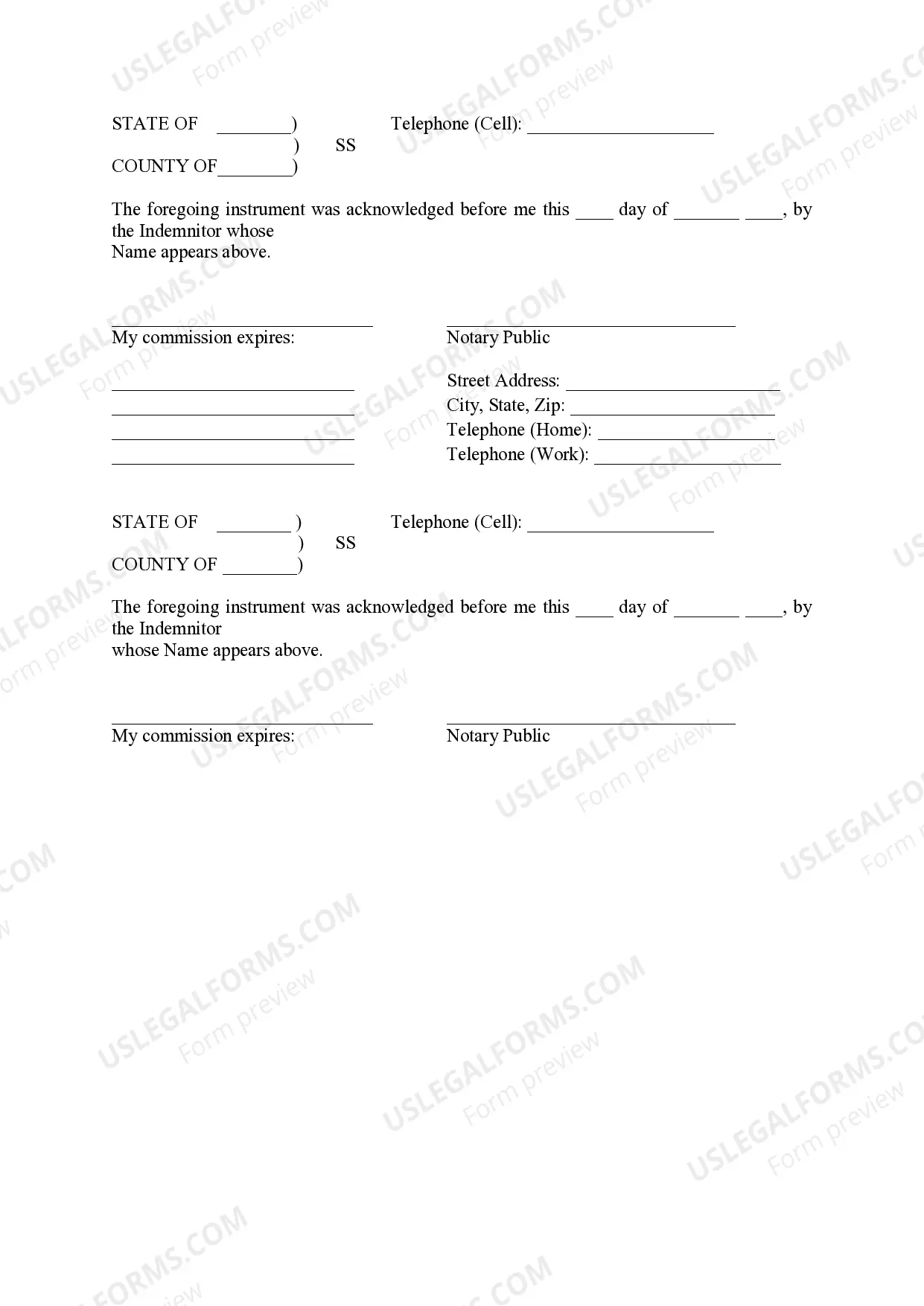
- Notarization: Ensure the document is notarized if required by state law.
Notarization requirements for this form
Yes, this form must be notarized to be legally valid. US Legal Forms offers integrated online notarization services that are available 24/7. This allows you to securely complete the notarization process via a video call, ensuring convenience without the need to travel.
Get your form ready online
Our built-in tools help you complete, sign, share, and store your documents in one place.
Make edits, fill in missing information, and update formatting in US Legal Forms—just like you would in MS Word.
Download a copy, print it, send it by email, or mail it via USPS—whatever works best for your next step.
Sign and collect signatures with our SignNow integration. Send to multiple recipients, set reminders, and more. Go Premium to unlock E-Sign.
If this form requires notarization, complete it online through a secure video call—no need to meet a notary in person or wait for an appointment.
We protect your documents and personal data by following strict security and privacy standards.

Make edits, fill in missing information, and update formatting in US Legal Forms—just like you would in MS Word.

Download a copy, print it, send it by email, or mail it via USPS—whatever works best for your next step.

Sign and collect signatures with our SignNow integration. Send to multiple recipients, set reminders, and more. Go Premium to unlock E-Sign.

If this form requires notarization, complete it online through a secure video call—no need to meet a notary in person or wait for an appointment.

We protect your documents and personal data by following strict security and privacy standards.
Mistakes to watch out for
- Failing to complete all sections accurately, leading to enforceability issues.
- Not providing correct or complete information about the bond or court.
- Forgetting to sign and date the form, which invalidates the agreement.
- Neglecting to notarize the document if state laws require it.
Benefits of completing this form online
- Instant access to a professionally drafted form tailored to your needs.
- Easy editing capabilities to ensure all necessary information is included.
- Secure storage options, making it easy to retrieve and manage your legal documents.
Looking for another form?
Form popularity
FAQ
If you've signed a contract, chances are you've seen an indemnity clause.In its simplest form, indemnity means that one party in the contract is responsible for compensating another for loss, damages, and/or injury incurred as a result of that party's actions.
Generally (but not always), California courts agree to provide indemnity for own negligence if the parties use sufficiently specific and explicit language that is strictly construed against the indemnitee.
By signing a broad form hold harmless agreement you are possibly exposing your company to uninsurable risk. Contractual Liability Coverage for sole or gross negligent acts of your client is excluded is y most liability policies.As with all contracts, it is best to have legal counsel review prior to signing.
The most important part of an indemnification clause is that it protects the indemnified party from lawsuits filed by third parties. This protection is important because damaged parties are still able to pursue compensation for their losses even if this clause isn't in the contract.
The main difference in this case is that hold harmless may require a party to protect against actual losses as well as potential losses while indemnification protects against actual losses only.
It's still your business decision whether you sign them or not, but you should do so only where it is a critical contract that you have no way of modifying or negotiating changes. In contrast, the best kind of Indemnity Agreement is commonly called a Mutual Indemnity Agreement or a Mutual Hold Harmless Provision.
When the term indemnity is used in the legal sense, it may also refer to an exemption from liability for damages. Indemnity is a contractual agreement between two parties. In this arrangement, one party agrees to pay for potential losses or damages caused by another party.