Deed of Indemnity
What this document covers
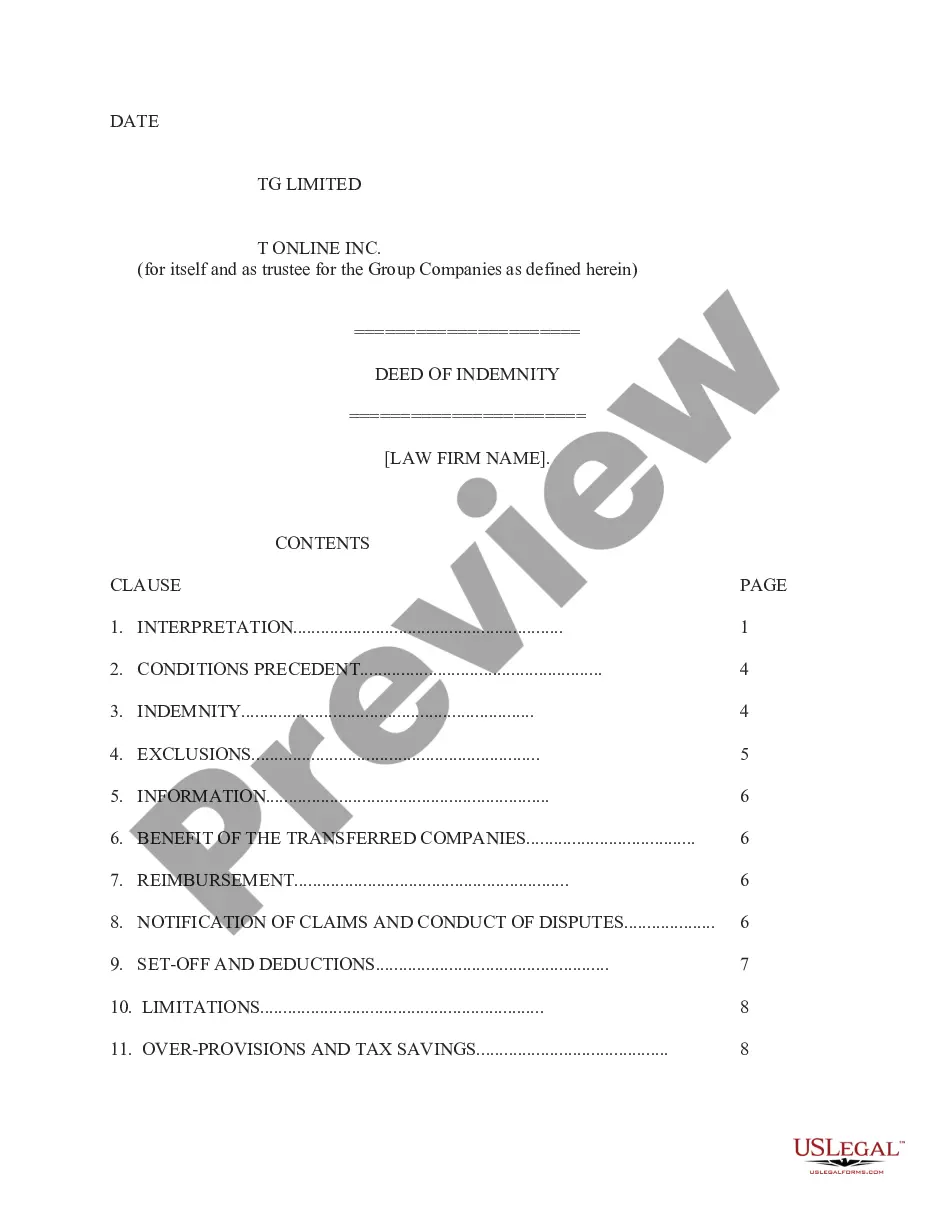
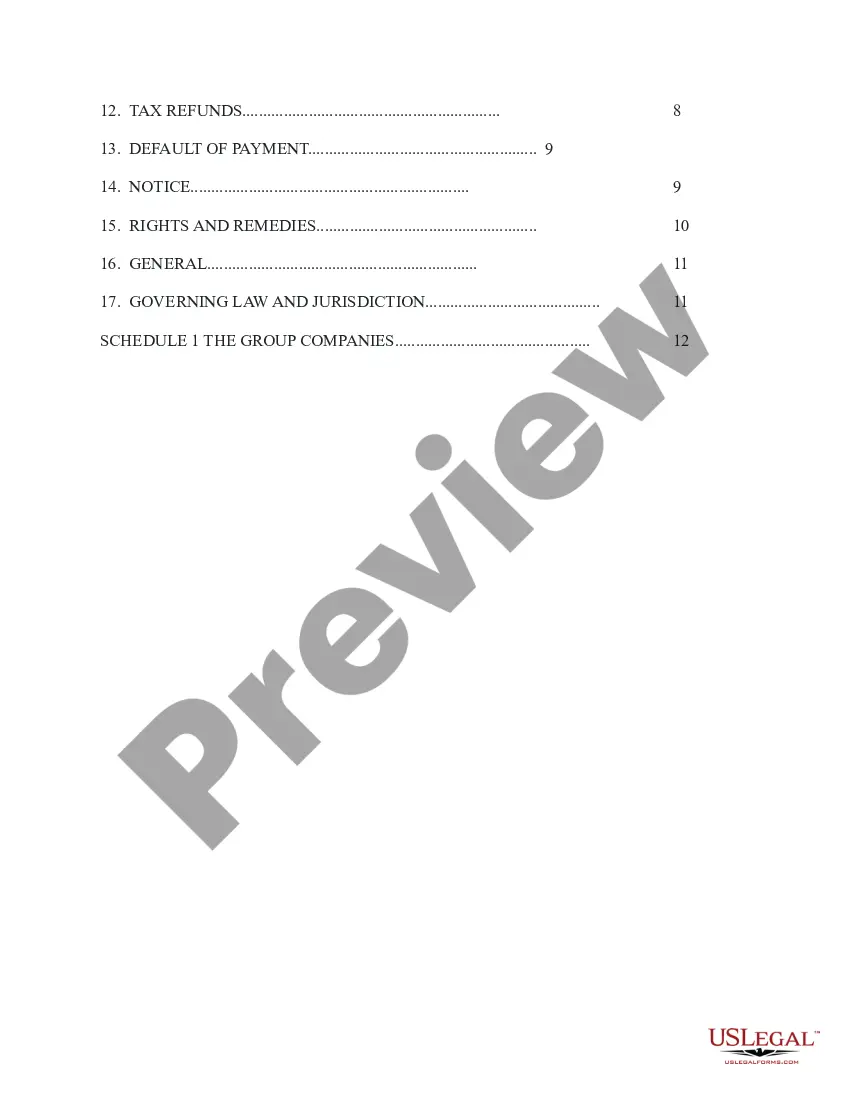
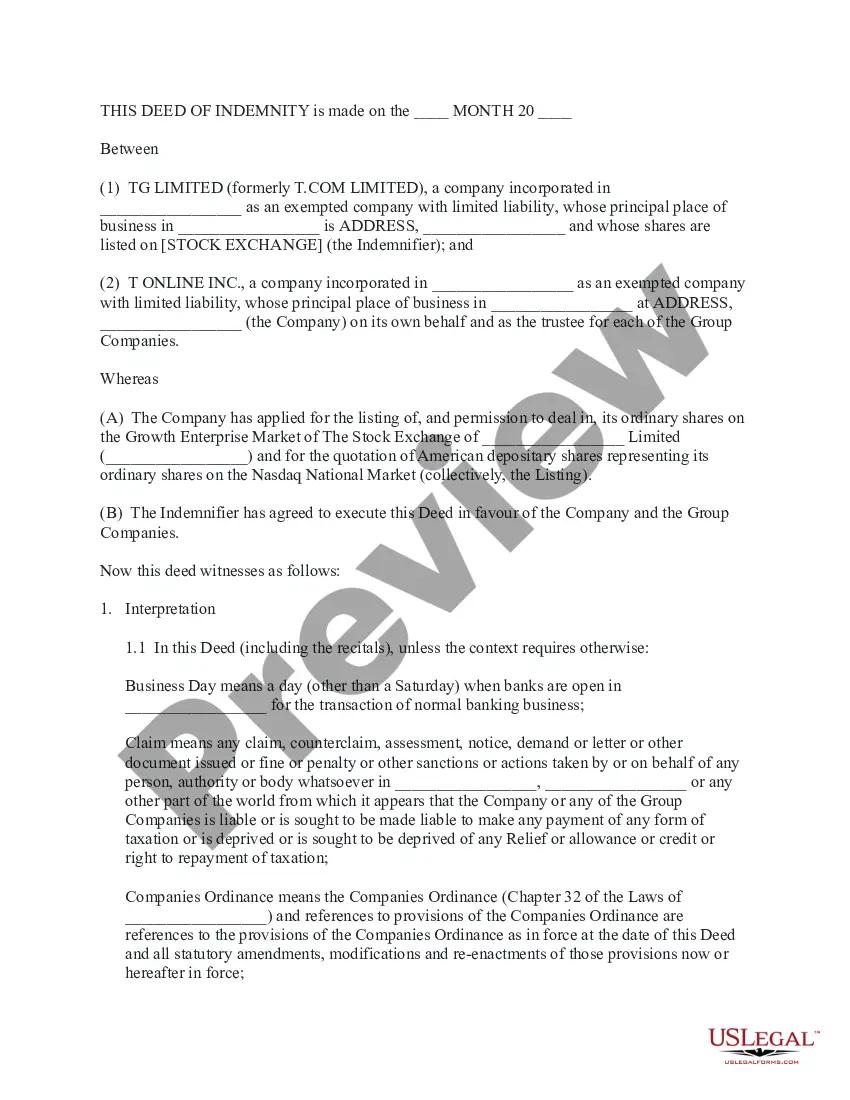
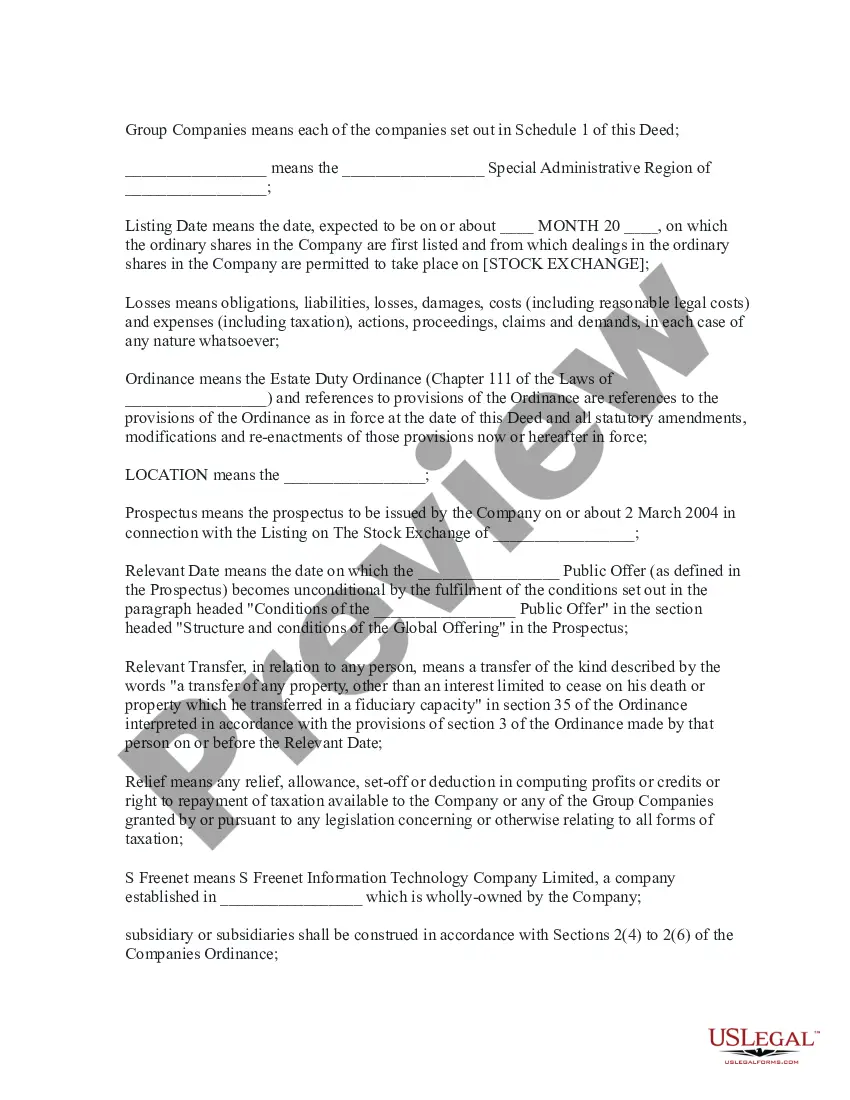
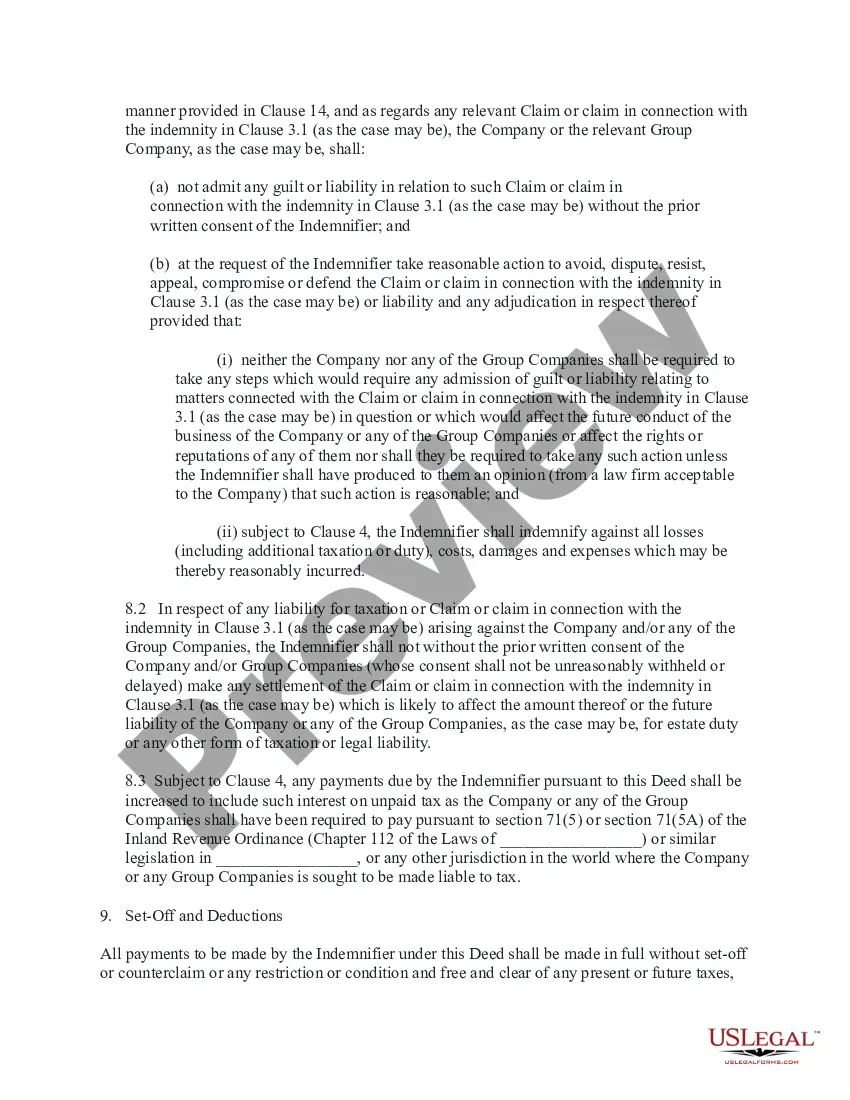
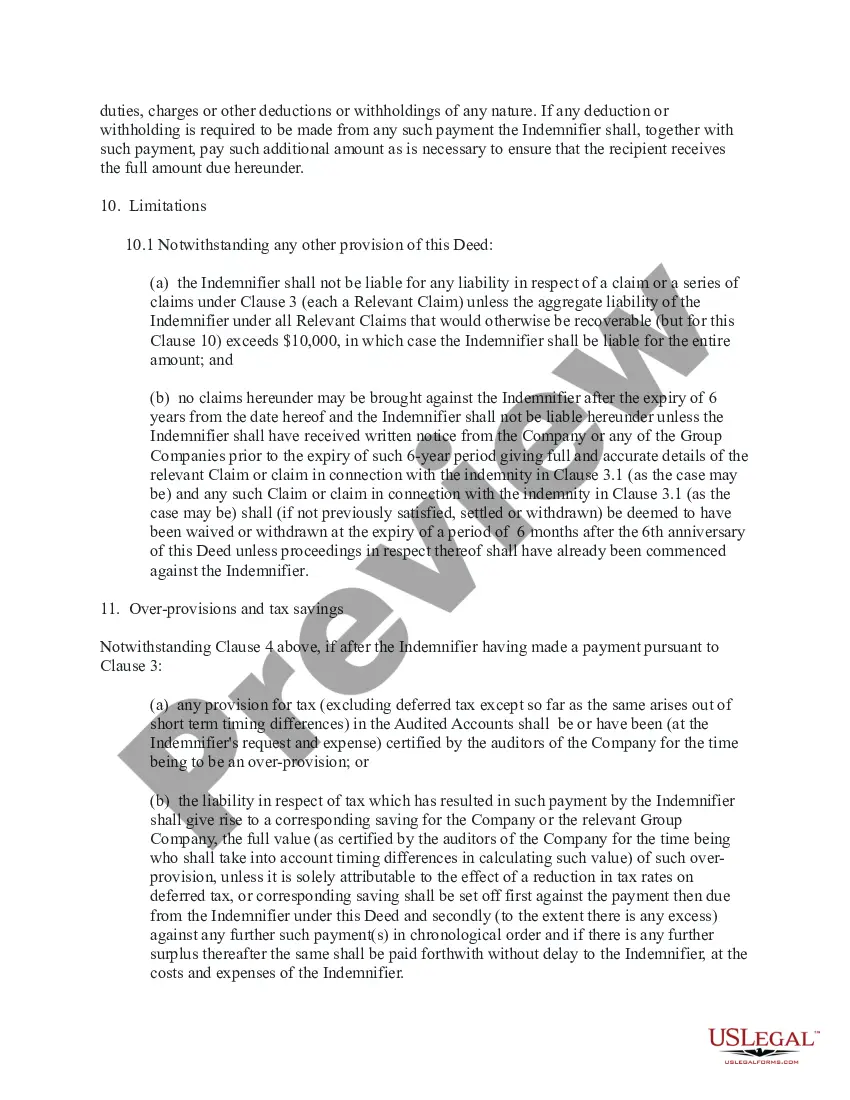
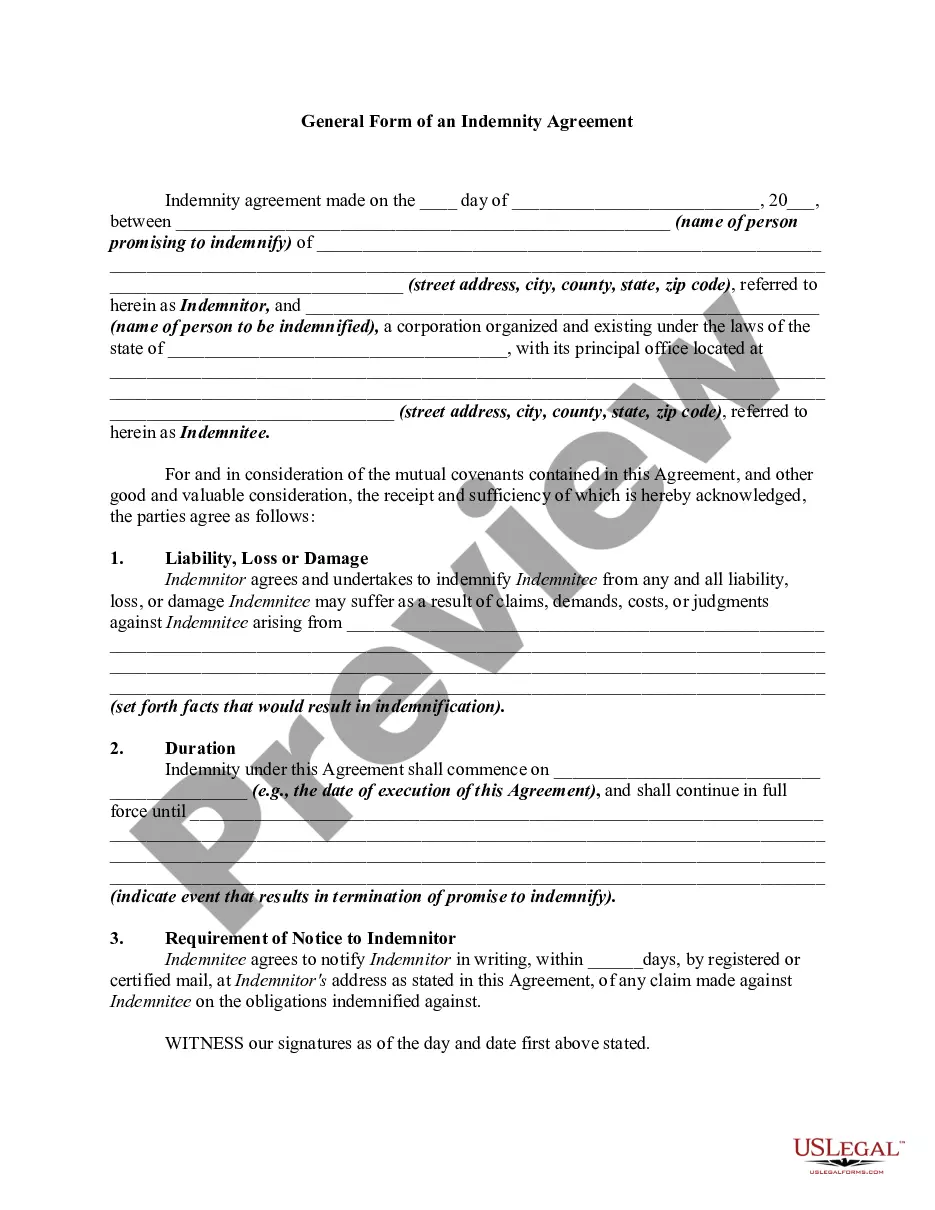
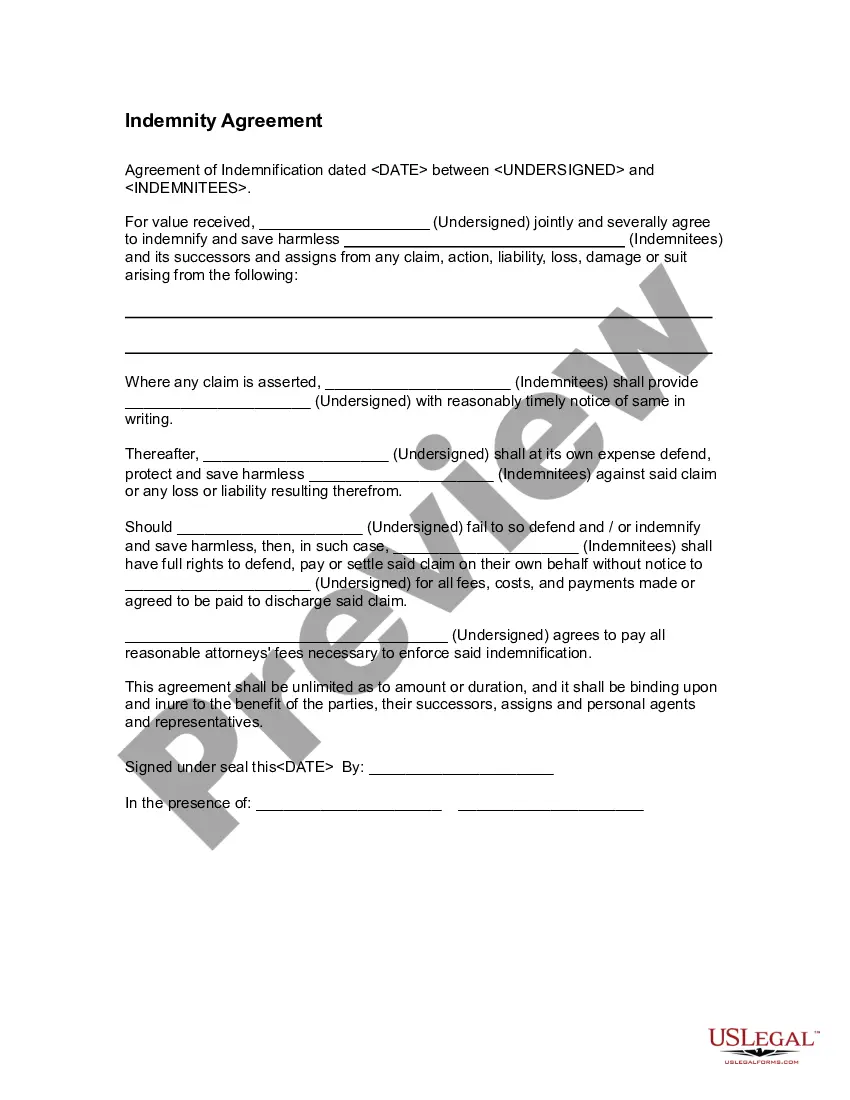
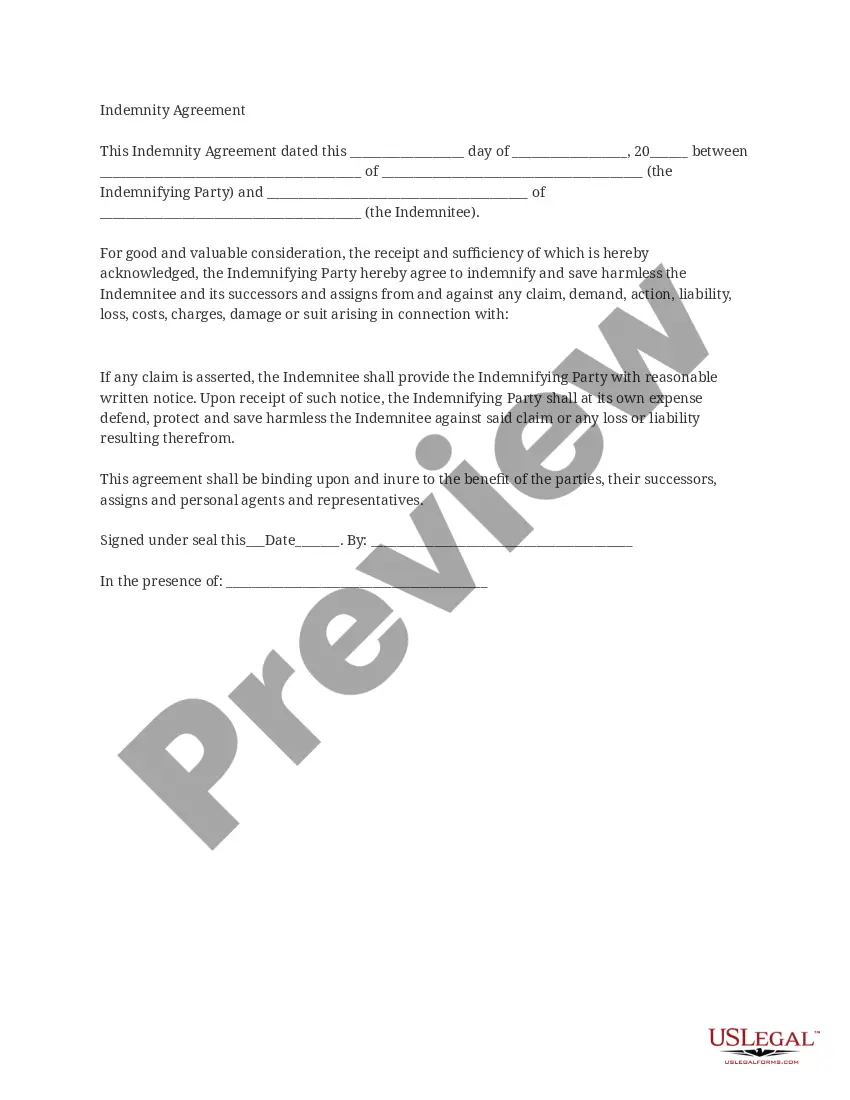
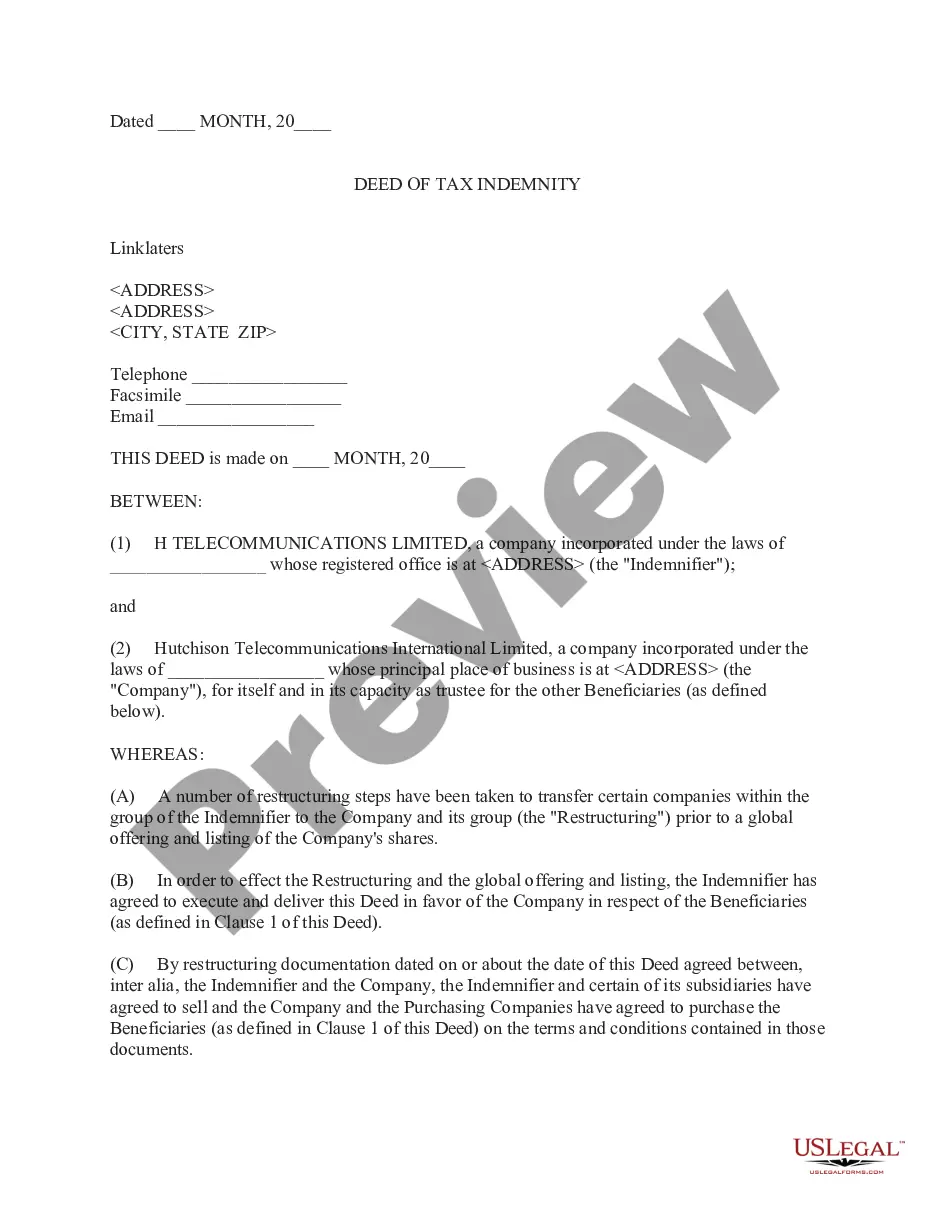
A Deed of Indemnity is a legal document that serves as an agreement among multiple parties to protect certain individuals or entities from liability for specific events. The key purpose of this form is to outline indemnification provisions, ensuring that one party will compensate another for any potential losses or claims that may arise. This document is particularly relevant for businesses undergoing transactions that may expose them to risks or liabilities, setting it apart from standard contracts by emphasizing protection against specific claims.
What’s included in this form
- Date: The exact date on which the deed is executed.
- Indemnifier: The party agreeing to provide indemnity.
- Conditions precedent: Provisions that must be fulfilled before the deed fully takes effect.
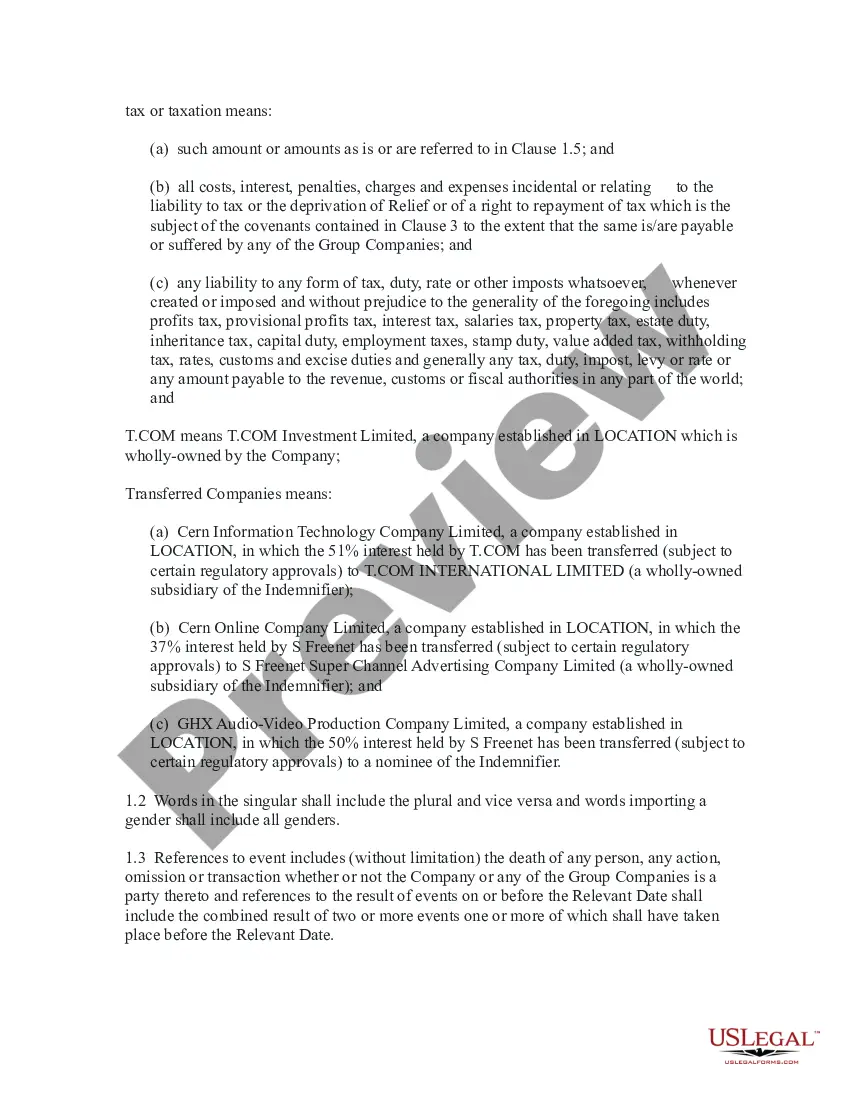
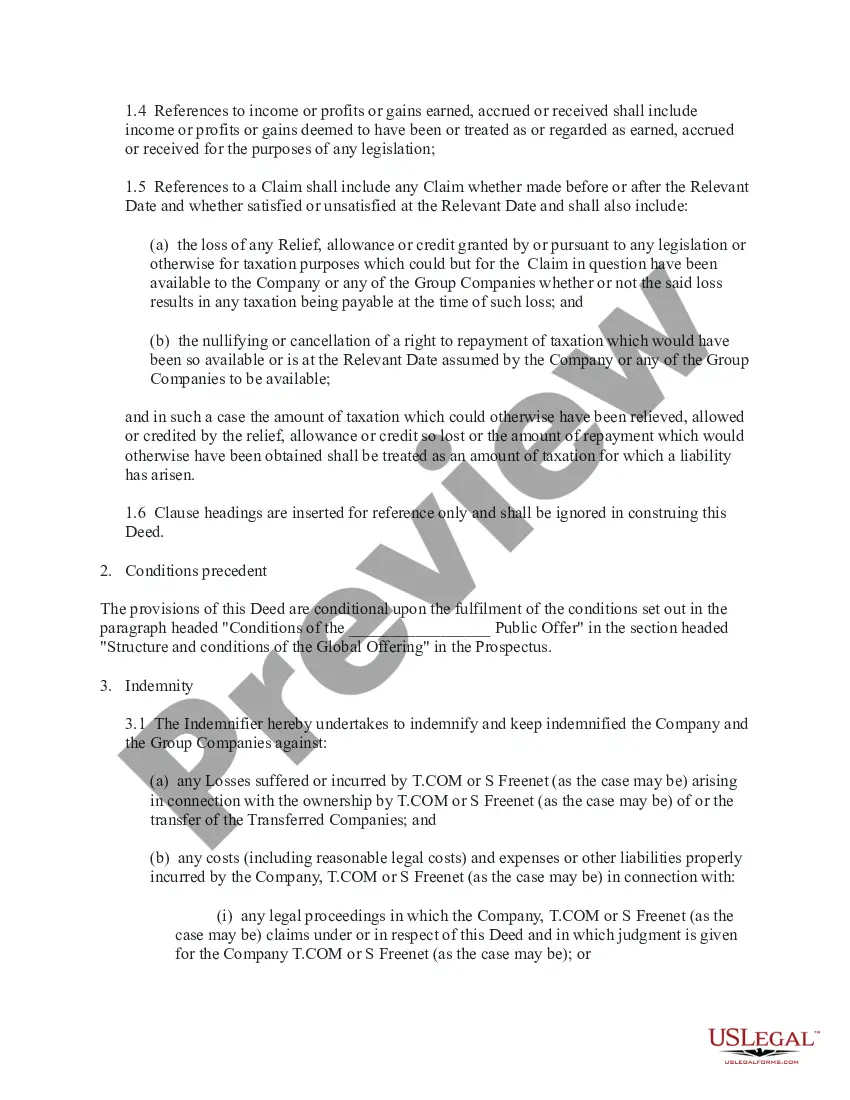
- Indemnity clause: Outlines the responsibilities of the indemnifier to cover costs associated with claims.
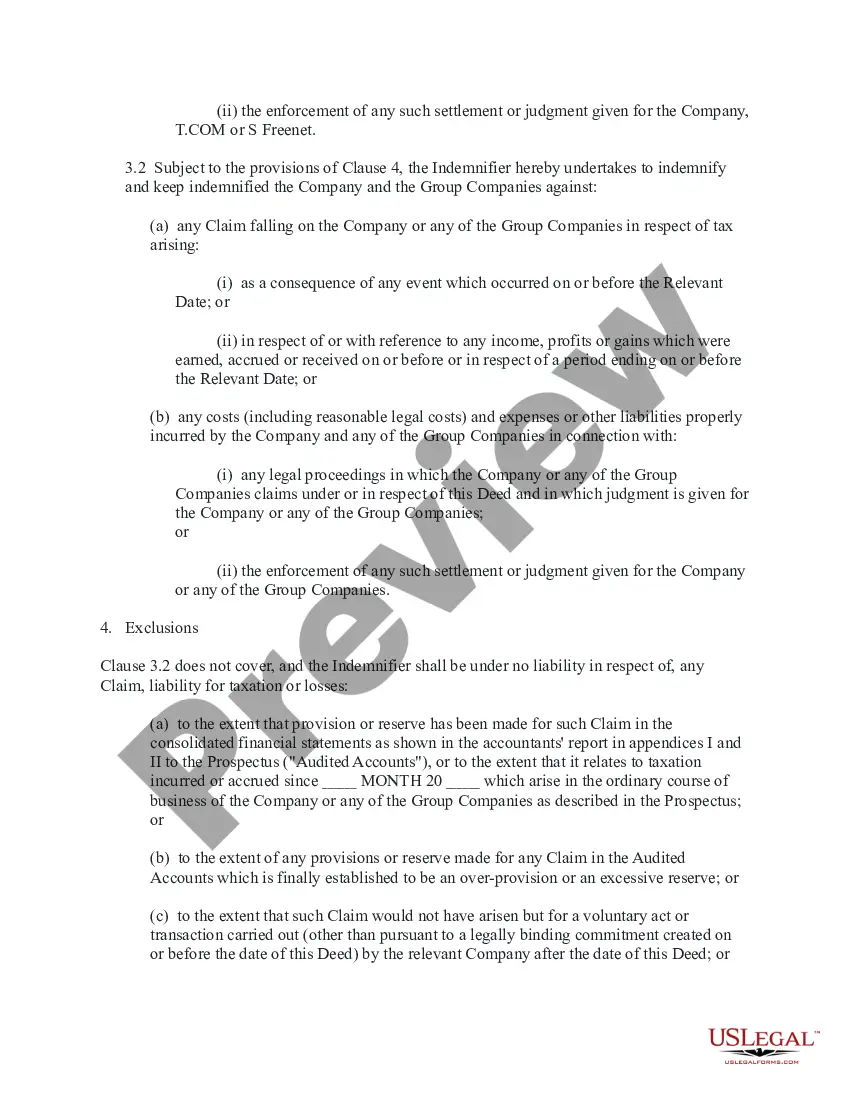
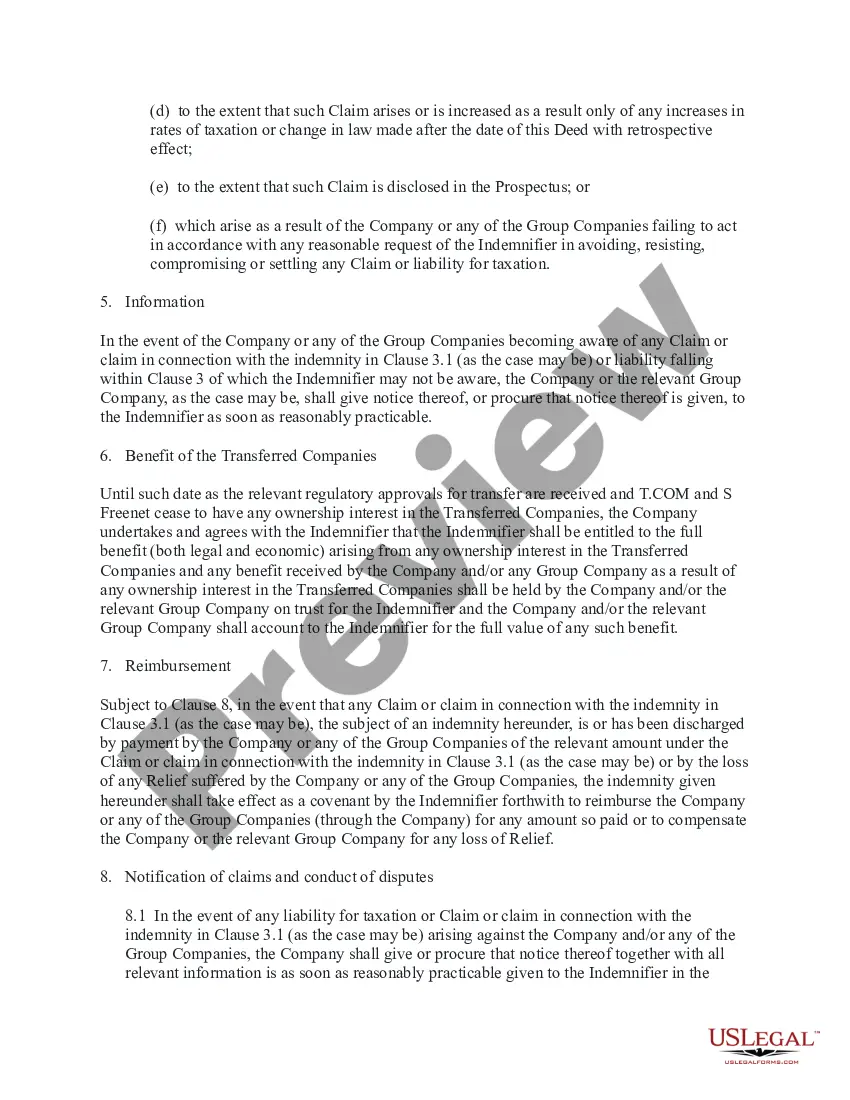
- Exclusions: Specifies situations or claims that are not covered under the indemnity.
- Notices: Instructions on how parties should communicate relevant claims or changes regarding the indemnity.

Common use cases
This form is essential in situations where one party needs to secure protection from potential claims or liabilities that may arise from business transactions or partnerships. For example, if a company is acquiring another entity and is concerned about outstanding tax liabilities, a Deed of Indemnity can provide assurances that any costs incurred due to these liabilities will be managed by the indemnifier. It is also useful in cases of joint ventures or collaborations where risks may need to be allocated clearly among parties involved.
Who can use this document
- Business owners and executives negotiating mergers or acquisitions.
- Trustees managing assets on behalf of beneficiaries.
- Legal representatives involved in liability management for businesses.
- Companies engaged in partnerships requiring clear risk-sharing agreements.
- Any party wanting documented assurance against potential claims from business activities.
Steps to complete this form
- Identify the parties involved, including their official names and addresses.
- Clearly state the date of execution and ensure all parties sign the document.
- Fill in the specifics regarding indemnification provisions, including the scope of liability covered.
- Include clauses related to exclusions that clearly outline what is not covered by the indemnity.
- Attach any additional schedules or annexures that may define groups or other relevant parties.
Does this document require notarization?
This form does not typically require notarization unless specified by local law. However, having it notarized can provide an extra layer of validation, ensuring that the signatures are authentic and the agreement is legally sound. Always check with your legal advisor for any specific requirements based on your jurisdiction.
Get your form ready online
Our built-in tools help you complete, sign, share, and store your documents in one place.
Make edits, fill in missing information, and update formatting in US Legal Forms—just like you would in MS Word.
Download a copy, print it, send it by email, or mail it via USPS—whatever works best for your next step.
Sign and collect signatures with our SignNow integration. Send to multiple recipients, set reminders, and more. Go Premium to unlock E-Sign.
If this form requires notarization, complete it online through a secure video call—no need to meet a notary in person or wait for an appointment.
We protect your documents and personal data by following strict security and privacy standards.

Make edits, fill in missing information, and update formatting in US Legal Forms—just like you would in MS Word.

Download a copy, print it, send it by email, or mail it via USPS—whatever works best for your next step.

Sign and collect signatures with our SignNow integration. Send to multiple recipients, set reminders, and more. Go Premium to unlock E-Sign.

If this form requires notarization, complete it online through a secure video call—no need to meet a notary in person or wait for an appointment.

We protect your documents and personal data by following strict security and privacy standards.
Common mistakes
- Failing to accurately identify all parties involved in the indemnity.
- Leaving out the conditions precedent that must be met for the indemnity to take effect.
- Not defining the scope of indemnity clearly, leading to ambiguity and potential disputes.
- Neglecting to fill out relevant details related to notices of claims and requirements for communication.
Advantages of online completion
- Immediate access to a professionally drafted legal document tailored for your specific needs.
- Convenience of downloading the form and customizing it without the need to hire an attorney for basic drafting.
- Ability to complete the form at your own pace, ensuring all sections are filled out accurately.
- Revisions can be made easily before finalizing, reducing the likelihood of errors.
Legal use & context
- This Deed of Indemnity is legally binding once properly executed by all parties involved.
- It serves to clarify the responsibilities and potential liabilities associated with specific business transactions.
- The enforceability of the indemnity clauses may vary based on jurisdiction, particularly regarding overall limits on indemnity in certain situations.
Looking for another form?
Form popularity
FAQ
The most common example of indemnity in the financial sense is an insurance contract. For instance, in the case of home insurance, homeowners pay insurance to an insurance company in return for the homeowners being indemnified if the worst were to happen.
That if a risk is not covered by an indemnity, a party will not have adequate means of recovering its loss if the risk materialises. That an indemnity clause has advantages over a claim for damages such that if they can be used, they should be used.
Indemnity agreements, also known as indemnity clauses, play an integral role in contracts. That's because they are designed to punish the nonperforming party and reassure the damaged one they will be reimbursed for losses caused by the errant entity.
To indemnify means that the seller will reimburse the buyer for a loss or liability. To defend means that the seller will pay the buyer's legal fees for suits that arise from specific risks articulated in the contract.
An indemnity agreement is a contract that protects one party of a transaction from the risks or liabilities created by the other party of the transaction. Hold harmless agreement, no-fault agreement, release of liability, or waiver of liability are other terms for an indemnity agreement.?