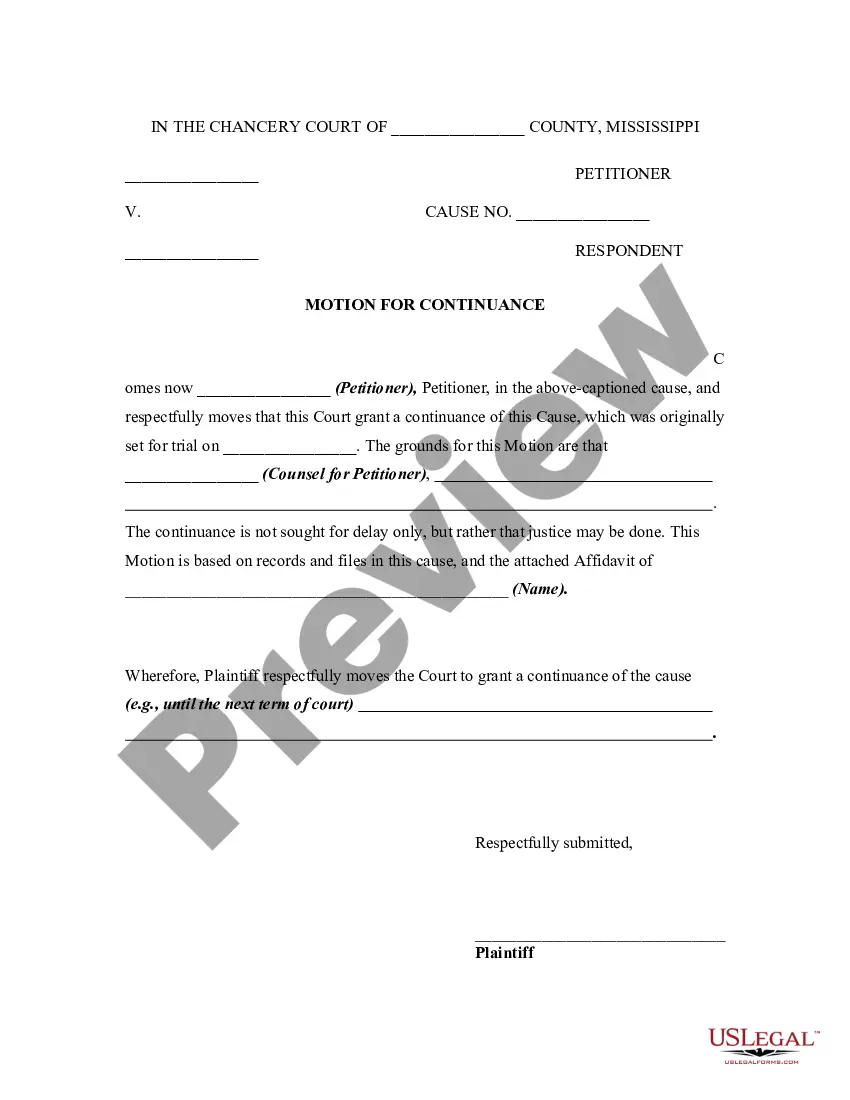
Mississippi Motion for Continuance
Understanding this form
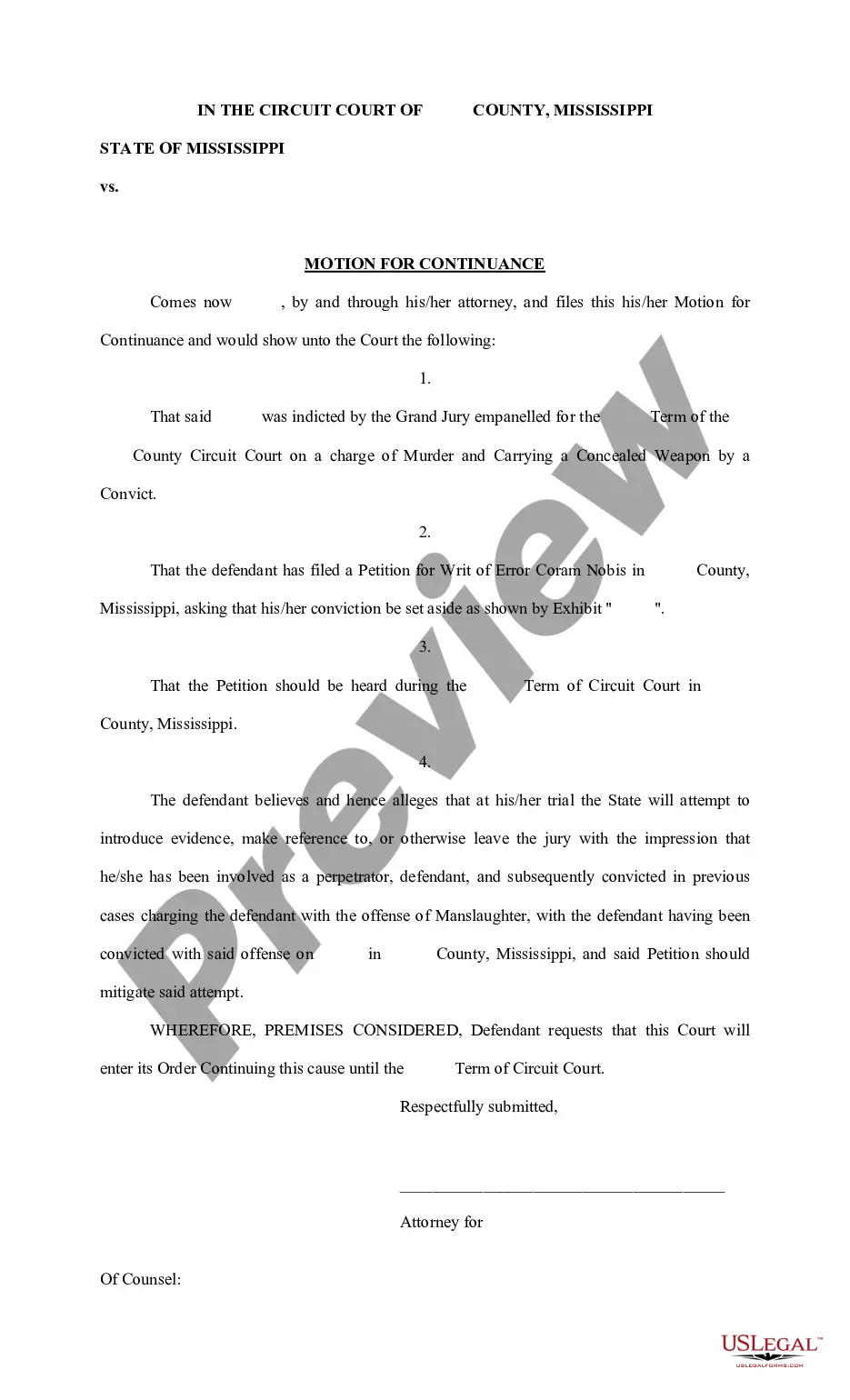
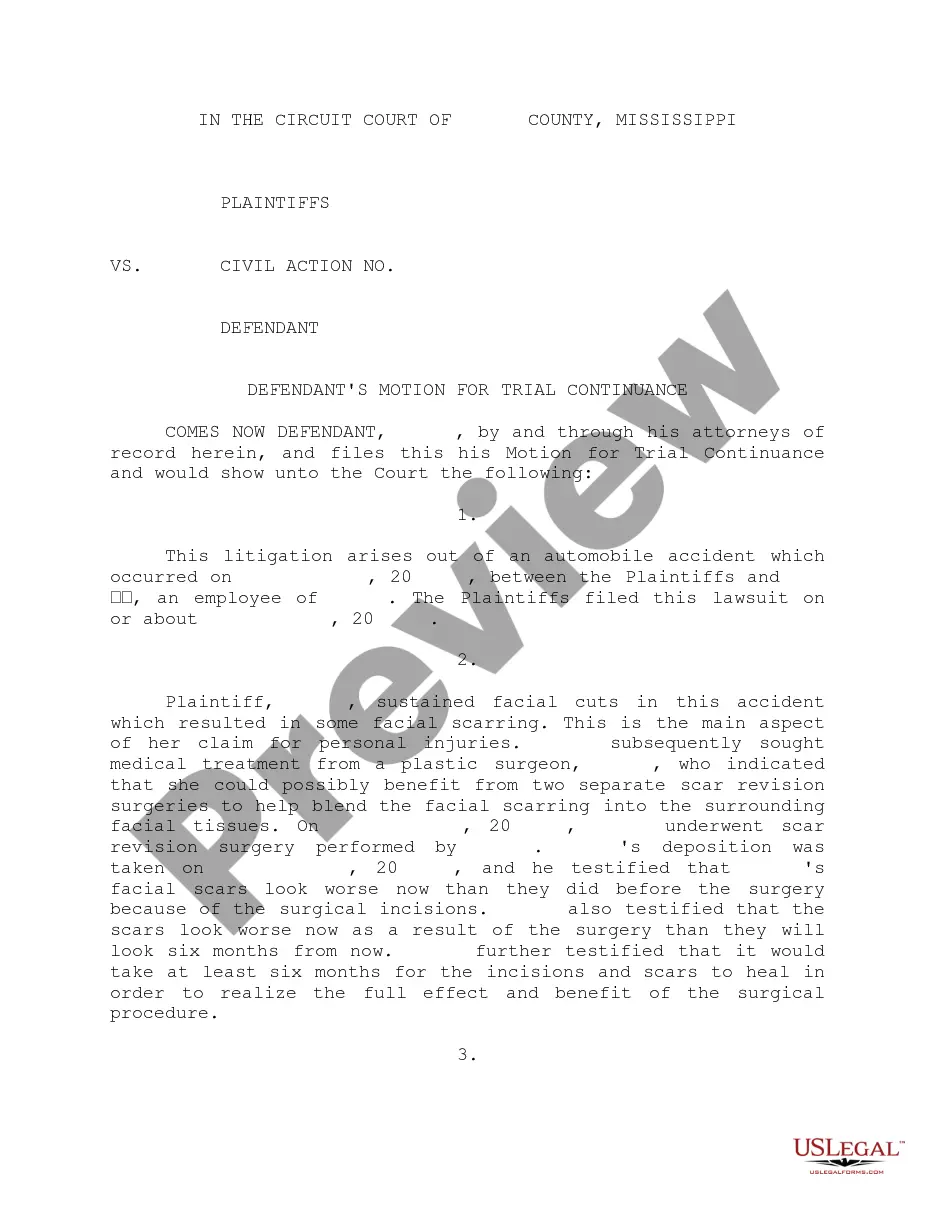
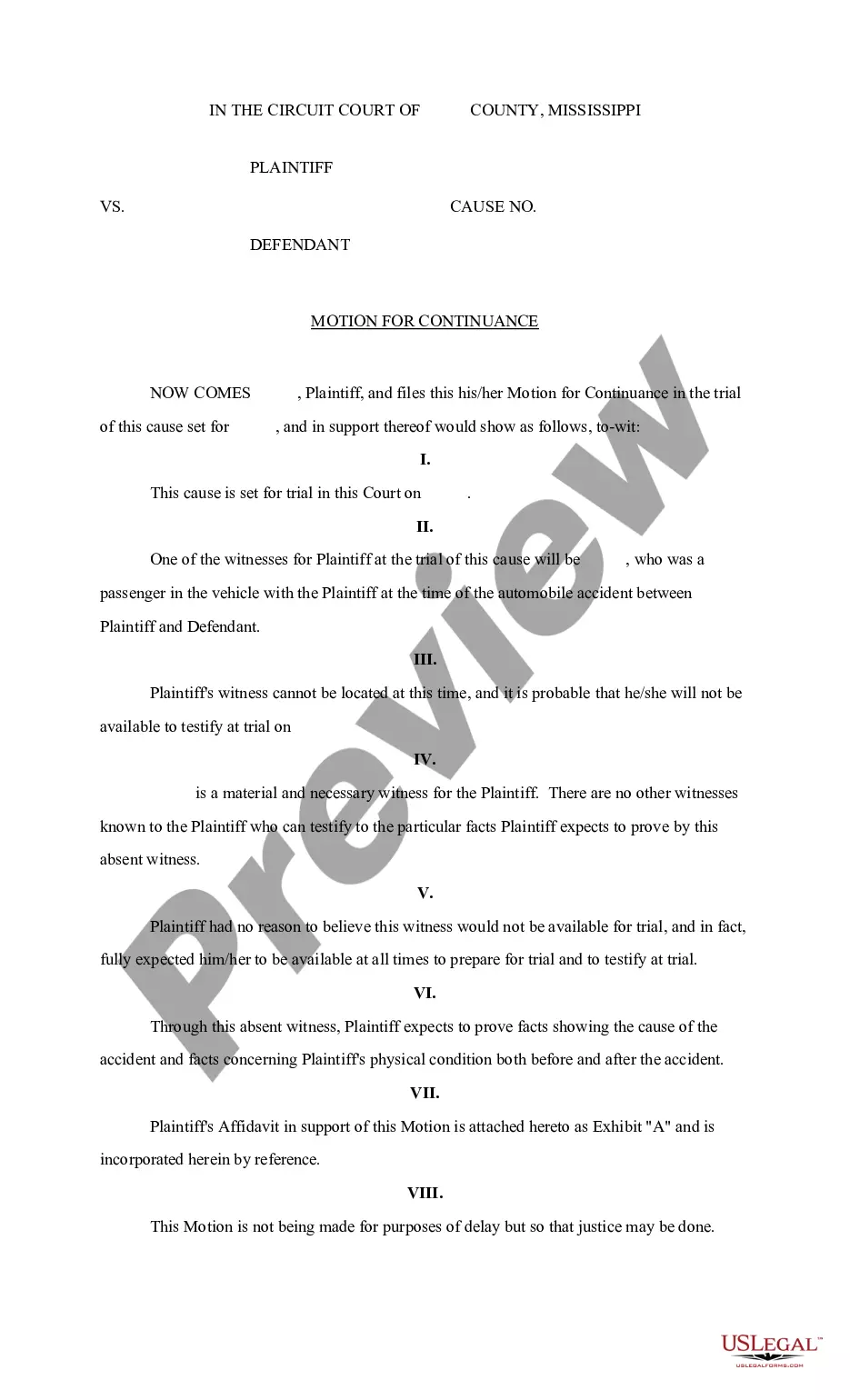
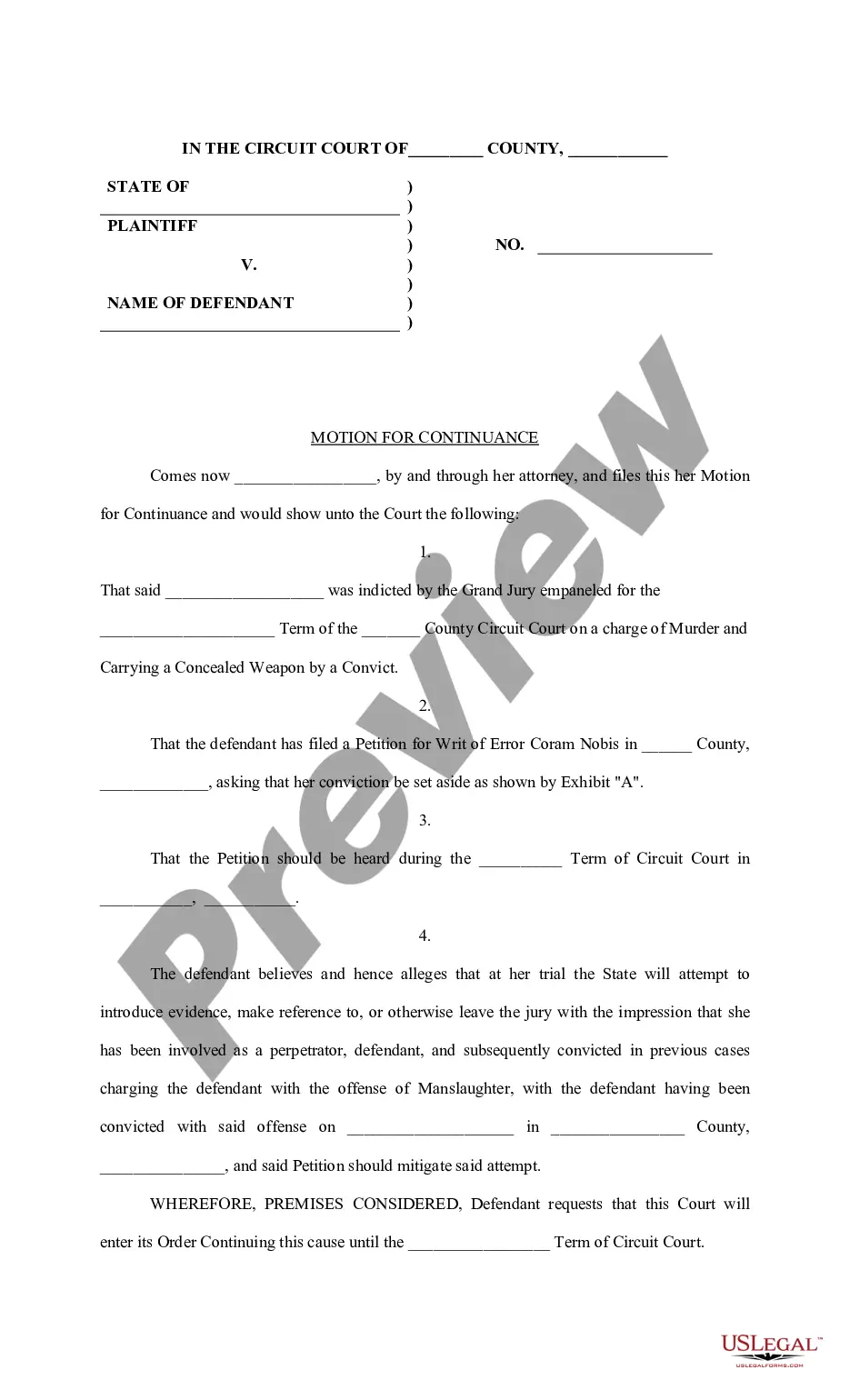
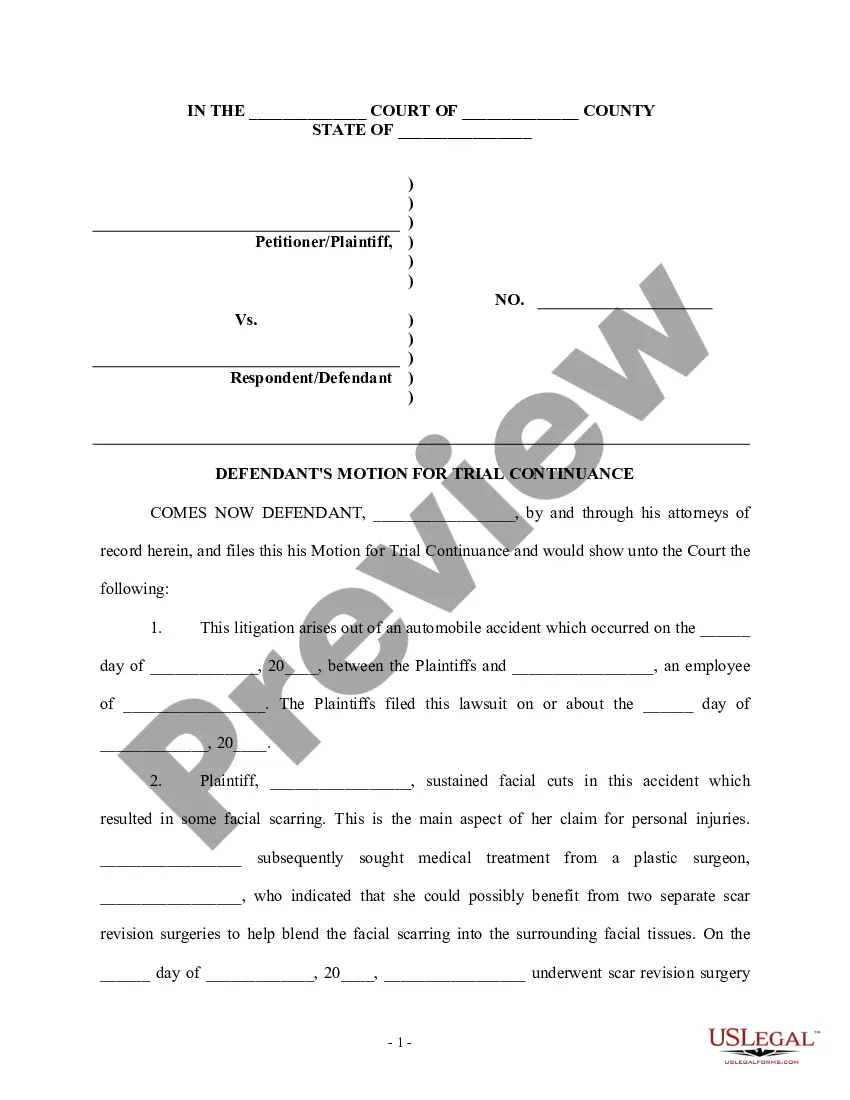
A Motion for Continuance is a legal request submitted to the court by one party seeking to postpone a scheduled hearing or trial date. This form outlines the reasons for the requested delay and demonstrates that the request is made in good faith, not intended to delay the proceedings unnecessarily. It is important to use this form when you cannot attend a scheduled court date or need more time to prepare your case.
Form components explained
- Petitioner and Respondent information: Names of the parties involved in the case.
- Motion request: A formal request to the court to grant a continuance.
- Reasons for the motion: Clear justification for why the continuance is necessary.
- Date of original court date: Indication of when the trial or hearing was originally scheduled.
- Signature lines: Where the plaintiff and their attorney sign to validate the motion.

When to use this form
This form should be used when a party is unable to attend a scheduled hearing or trial due to various reasons such as a scheduling conflict, illness, or the need for additional time to prepare. It is essential to file this motion as soon as the need arises, ideally well before the scheduled date, to ensure the court has adequate time to consider the request.
Who can use this document
- Individuals involved in a civil or family court case who need to reschedule a hearing.
- Legal representatives of parties seeking more time for preparation or other valid reasons.
- Any party in a legal dispute who is unable to proceed on the originally set court date.
Instructions for completing this form
- Identify the parties involved by filling in the names of the petitioner and respondent.
- Specify the date of the originally scheduled court hearing.
- Clearly state the reasons for requesting the continuance.
- Sign the form where indicated, ensuring all necessary parties have signed.
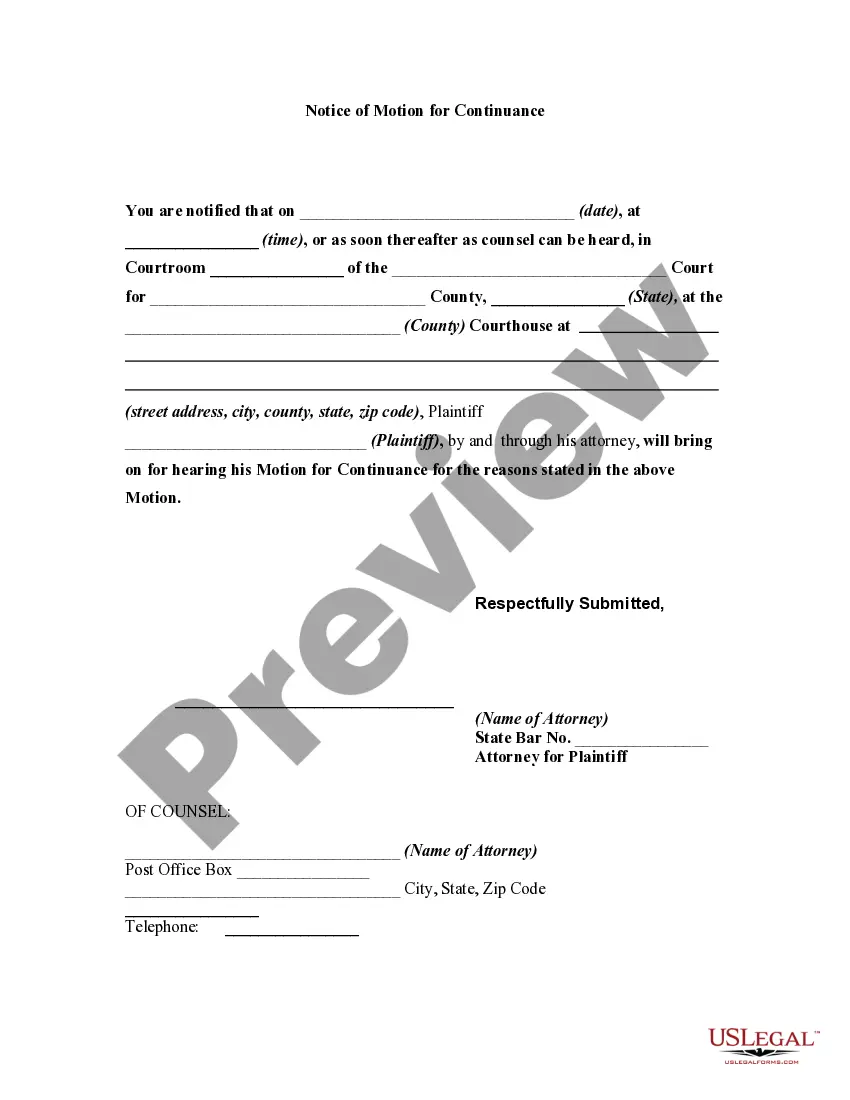
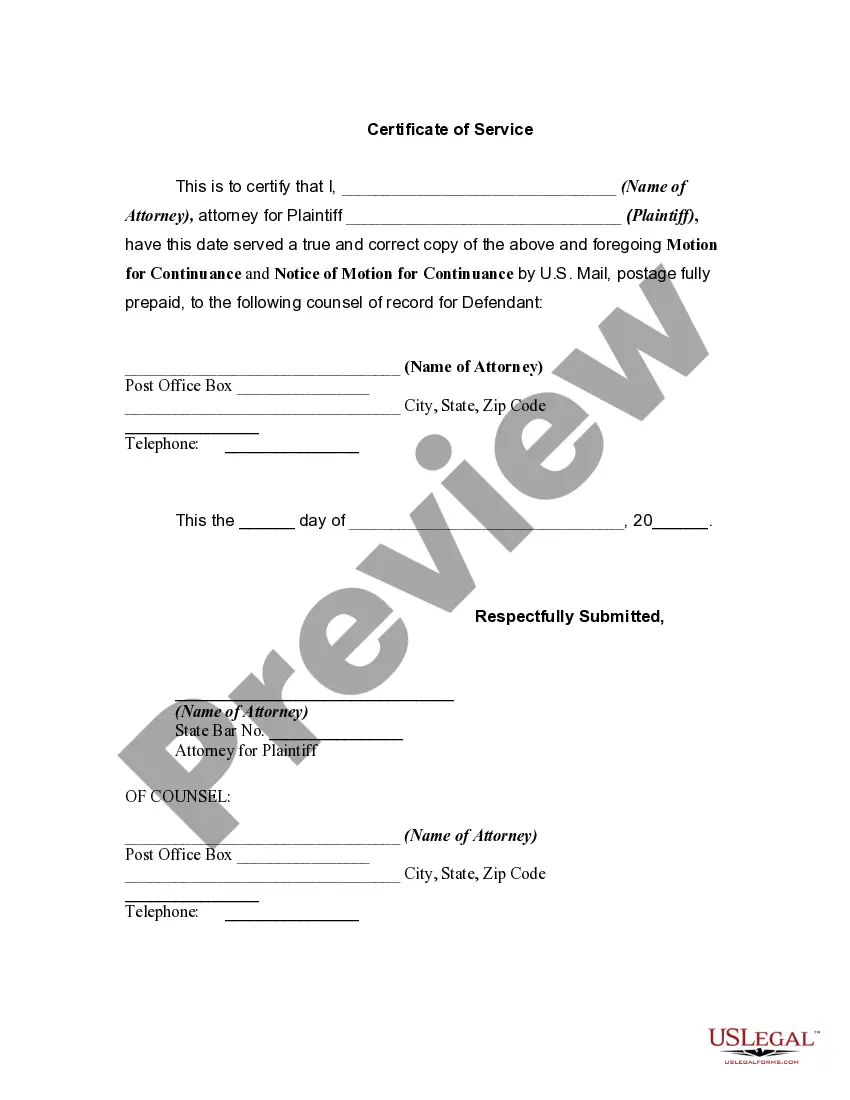
- Deliver the Motion for Continuance to the appropriate court and serve a copy to the opposing party's attorney.
Is notarization required?
This form does not typically require notarization unless specified by local law.
Get your form ready online
Our built-in tools help you complete, sign, share, and store your documents in one place.
Make edits, fill in missing information, and update formatting in US Legal Forms—just like you would in MS Word.
Download a copy, print it, send it by email, or mail it via USPS—whatever works best for your next step.
Sign and collect signatures with our SignNow integration. Send to multiple recipients, set reminders, and more. Go Premium to unlock E-Sign.
If this form requires notarization, complete it online through a secure video call—no need to meet a notary in person or wait for an appointment.
We protect your documents and personal data by following strict security and privacy standards.

Make edits, fill in missing information, and update formatting in US Legal Forms—just like you would in MS Word.

Download a copy, print it, send it by email, or mail it via USPS—whatever works best for your next step.

Sign and collect signatures with our SignNow integration. Send to multiple recipients, set reminders, and more. Go Premium to unlock E-Sign.

If this form requires notarization, complete it online through a secure video call—no need to meet a notary in person or wait for an appointment.

We protect your documents and personal data by following strict security and privacy standards.
Typical mistakes to avoid
- Failing to file the motion promptly or before the court date.
- Not providing adequate reasoning for the requested continuance.
- Neglecting to serve a copy of the motion to all other involved parties.
- Leaving required fields blank or failing to sign the form.
Advantages of online completion
- Convenience of downloading and completing the form at your own pace.
- Ensures access to a legal template drafted by licensed attorneys for accurate compliance.
- Editable format allows for easy entry of specific case information.
- Facilitates quick preparation and timely filing to avoid delays in court proceedings.
What to keep in mind
- A Motion for Continuance is essential when unable to attend scheduled court dates.
- Filing must be done promptly, with clear explanations for the delay.
- Ensure all parties are notified, and the form is appropriately signed.
Looking for another form?
Form popularity
FAQ
Rule 30(b)(6) creates obligations on both sides: the side being deposed has an obligation to prepare one or more witnesses to testify, and the side taking the deposition has an obligation to ?designate with painstaking specificity, the particular subject areas that are intended to be questioned, and that are relevant
As opposed to a ?regular? fact witness, a Rule 30(b) (6) witness represents the corporate entity's knowledge, not the individual deponent's. fact witness based on his personal know- ledge and in compliance with Federal Rule of Evidence 701?).
Federal Rule of Civil Procedure (?FRCP?) 30(b)(6) governs the depositions of organizations, including corporations, partnerships, associations, and governmental agencies. The party seeking to depose the organization must ?describe with reasonable particularity the matters for examination? in its deposition notice.
30(b)(6) Depositions Rule 30(b)(6) allows a party to depose a corporation, partnership, association, gov- ernmental agency, or other entity with- out identifying a specific individual for the deposition.
A Motion for Continuance is a motion that one party files with the court seeking the court move a hearing or other court date.
Rule 65 authorizes parties to seek temporary restraining orders (TROs) and preliminary injunctions in civil cases in which permanent injunctive relief or other relief is being sought.
Share: Rule 30(b)(6) of the Federal Rules of Civil Procedure provides a mechanism through which litigants may depose corporate representatives, as designated by the corporation. These depositions can have serious consequences because the witness's testimony is binding on the company.
Request a continuance: When your name is called at court, you (or your lawyer) may ask the judge for a continuance. They will ask for a reason, and if a permissible excuse is given, they may set a new date.