Jury Instruction - Counterfeit - Uttering
What is this form?
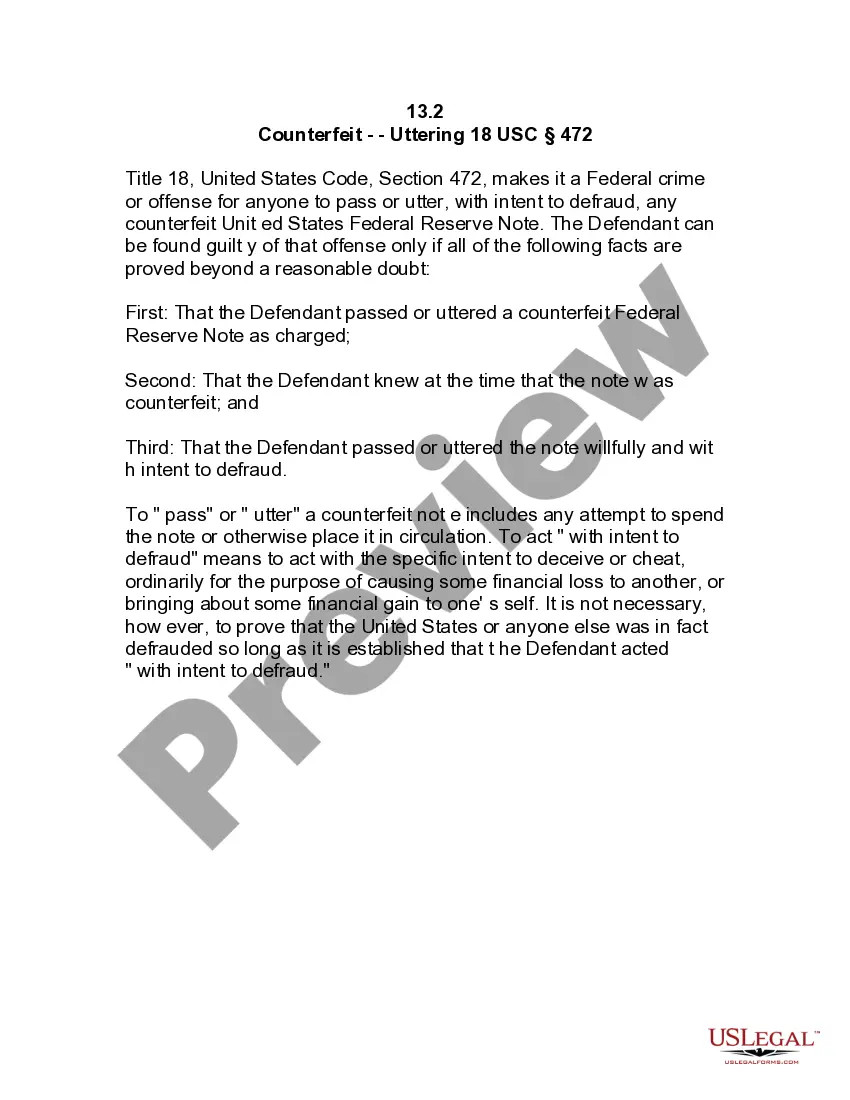
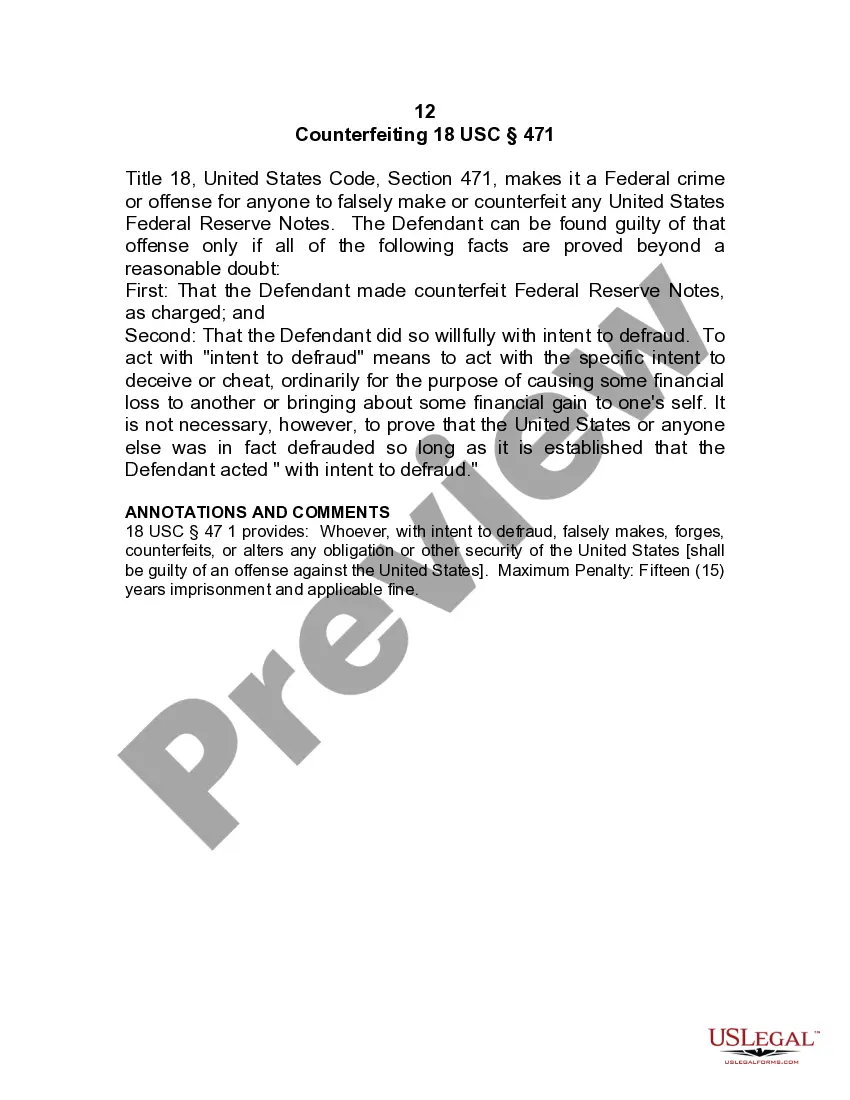
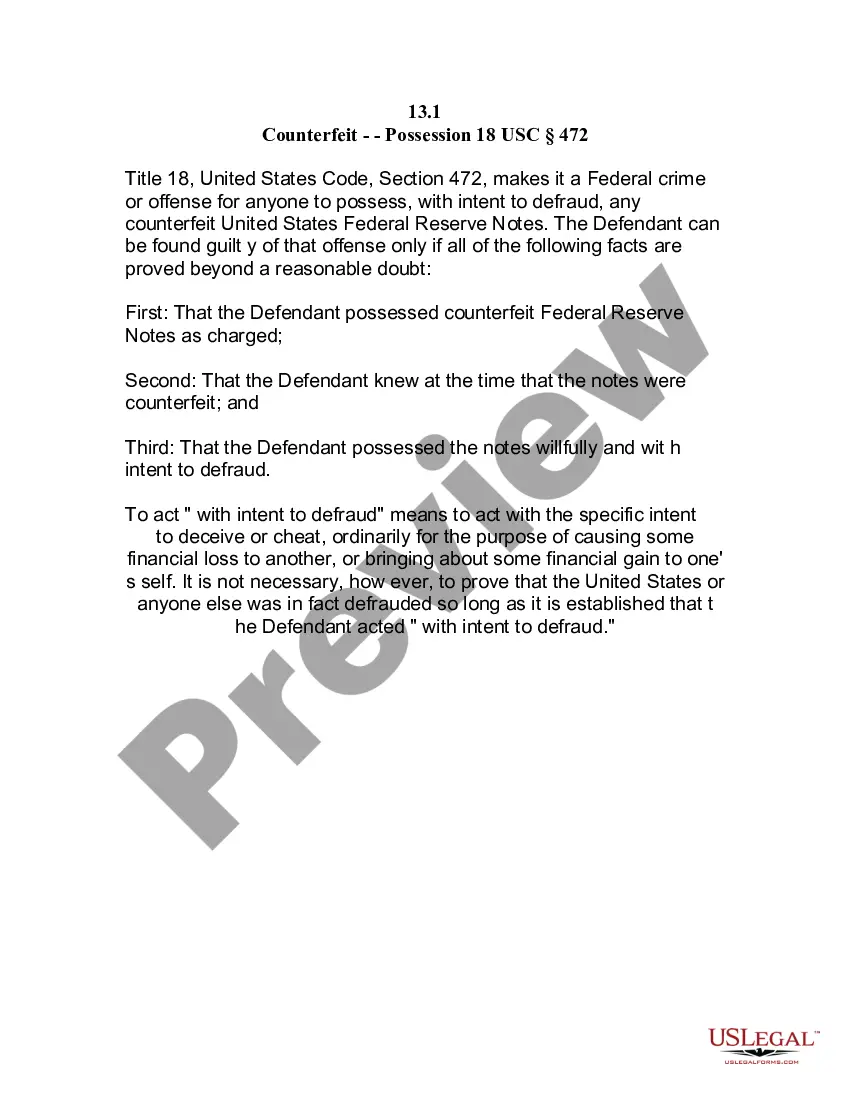
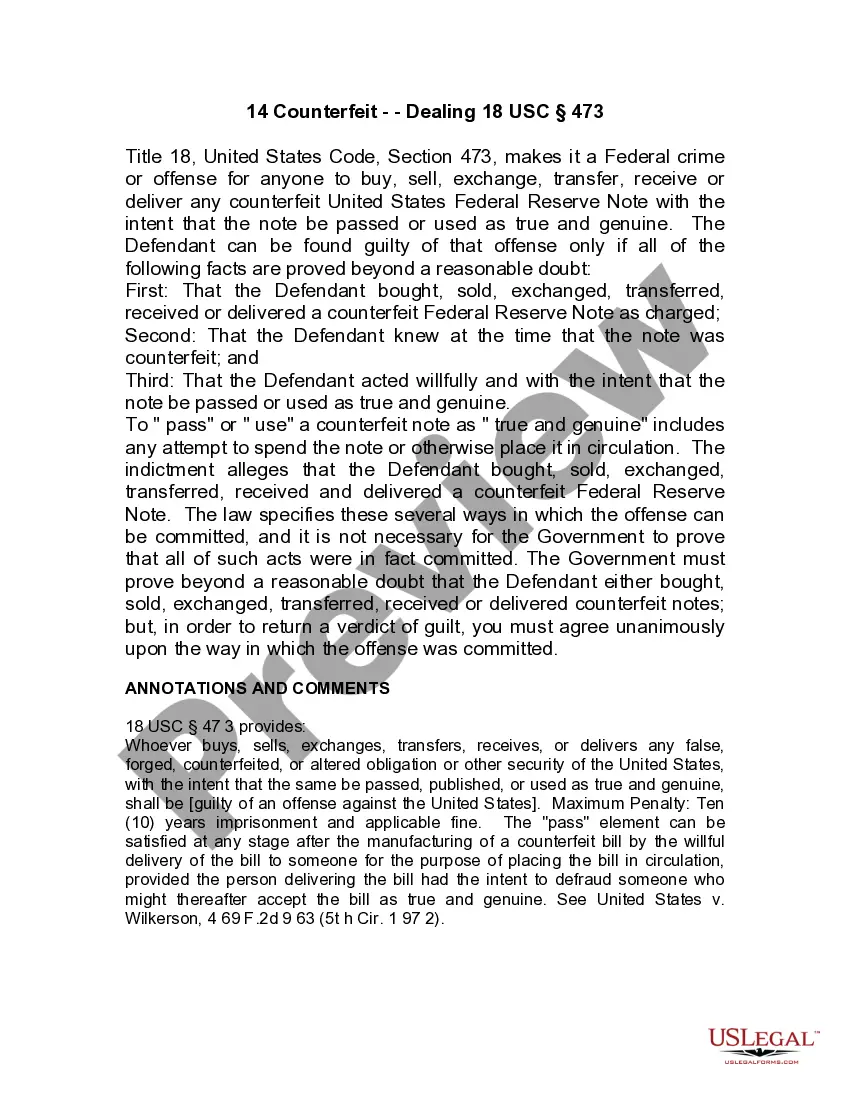
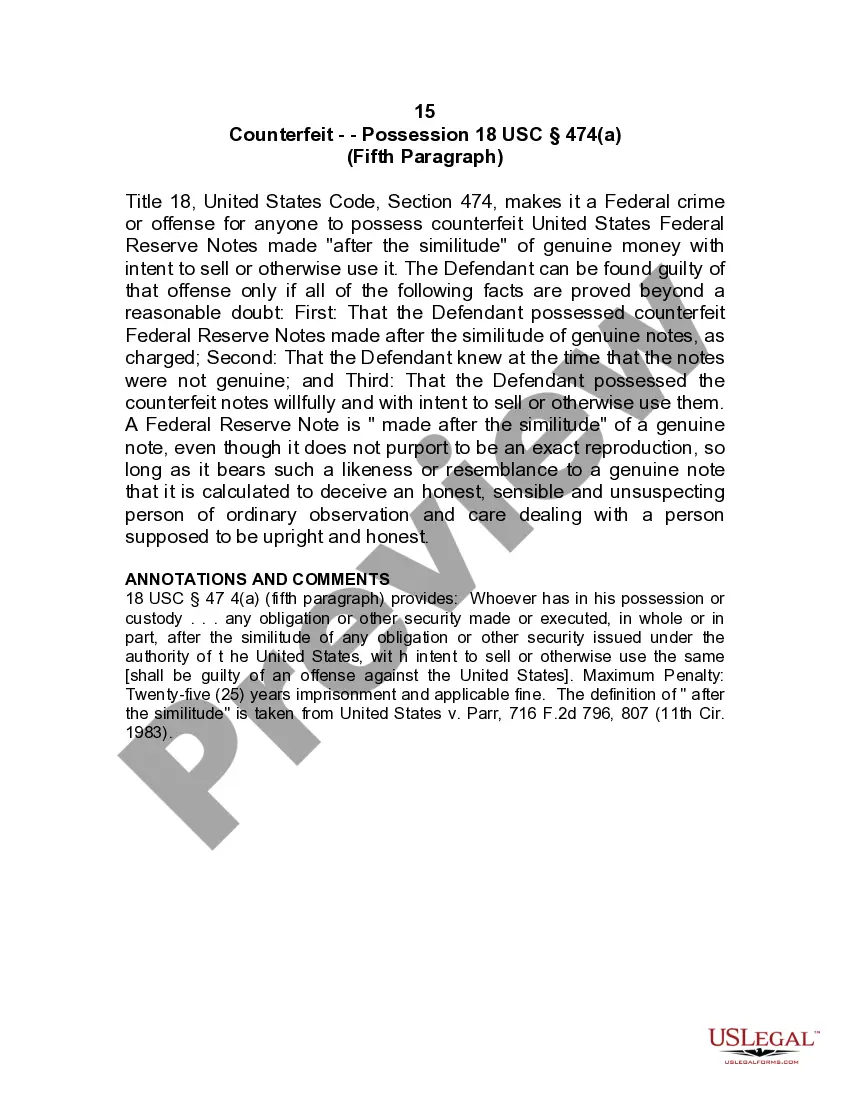
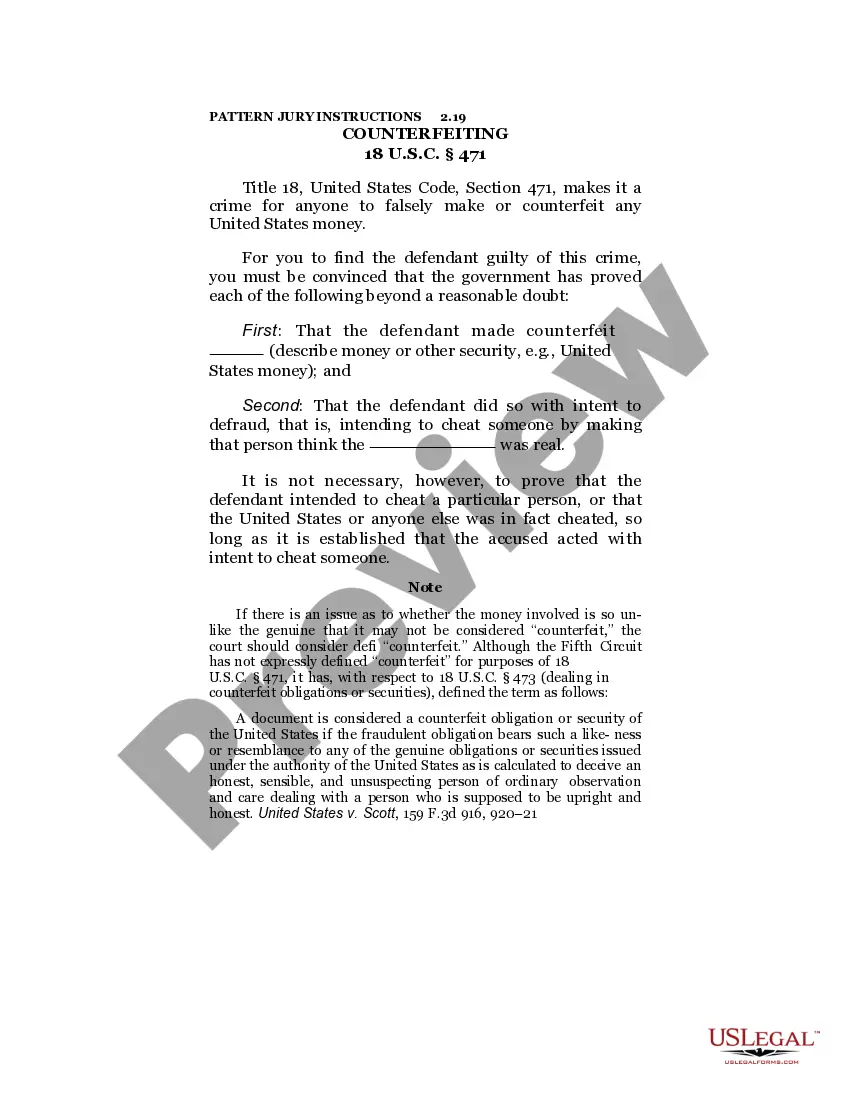
The Jury Instruction - Counterfeit - Uttering form provides sample jury instructions for cases involving the passing or uttering of counterfeit currency. This form helps attorneys present relevant legal standards to juries in a clear and organized manner. It is essential for ensuring that juries understand the elements of the crime as defined under Title 18, United States Code, Section 472. Unlike other legal documents, this form specifically outlines how to instruct juries on evaluating the evidence related to counterfeit offenses.
Main sections of this form
- Definition of the offense: Outlines what constitutes passing or uttering counterfeit money.
- Intent to defraud: Clarifies the defendant's required mental state for conviction.
- Elements of the crime: Specifies the factual findings necessary for finding guilt beyond a reasonable doubt.
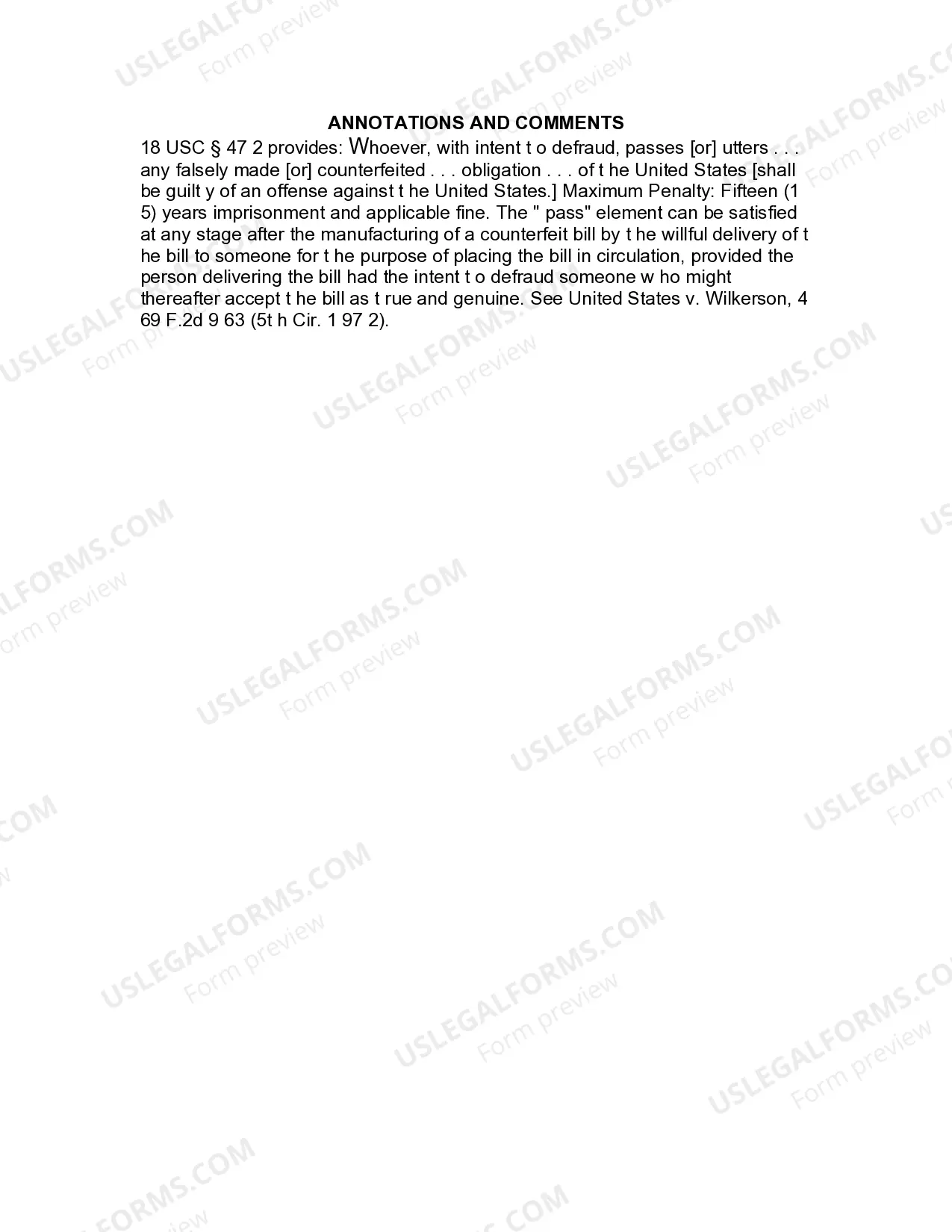
- Potential penalties: Describes the maximum consequences if convicted, including imprisonment and fines.
When this form is needed
This form should be used during jury trials involving cases of counterfeit currency. It is crucial for attorneys representing defendants or the prosecution to provide juries with accurate legal standards and instructions on how to deliberate on charges related to passing or uttering counterfeit Federal Reserve Notes. This form is applicable in cases where there is evidence suggesting a defendant attempted to use or distribute counterfeit currency with the intent to defraud.
Who should use this form
- Criminal defense attorneys representing clients accused of counterfeit offenses.
- Prosecutors seeking to establish legal standards during a jury trial.
- Judges needing to provide jury instructions in related court cases.
- Legal professionals involved in cases pertaining to fraud and financial crimes.
How to prepare this document
- Review the full set of jury instructions provided in the form.
- Tailor the instructions to fit the specifics of your case, including any relevant state laws.
- Ensure that all elements of the crime are clearly explained to the jury.
- Submit the finalized jury instructions to the court for approval prior to trial.
- Present the instructions to the jury during the trial as part of the jury charge.
Is notarization required?
Notarization is not commonly needed for this form. However, certain documents or local rules may make it necessary. Our notarization service, powered by Notarize, allows you to finalize it securely online anytime, day or night.
Get your form ready online
Our built-in tools help you complete, sign, share, and store your documents in one place.
Make edits, fill in missing information, and update formatting in US Legal Forms—just like you would in MS Word.
Download a copy, print it, send it by email, or mail it via USPS—whatever works best for your next step.
Sign and collect signatures with our SignNow integration. Send to multiple recipients, set reminders, and more. Go Premium to unlock E-Sign.
If this form requires notarization, complete it online through a secure video call—no need to meet a notary in person or wait for an appointment.
We protect your documents and personal data by following strict security and privacy standards.

Make edits, fill in missing information, and update formatting in US Legal Forms—just like you would in MS Word.

Download a copy, print it, send it by email, or mail it via USPS—whatever works best for your next step.

Sign and collect signatures with our SignNow integration. Send to multiple recipients, set reminders, and more. Go Premium to unlock E-Sign.

If this form requires notarization, complete it online through a secure video call—no need to meet a notary in person or wait for an appointment.

We protect your documents and personal data by following strict security and privacy standards.
Avoid these common issues
- Failing to personalize the instructions for the specific case nuances.
- Omitting critical elements of the offense, leading to jury confusion.
- Using outdated legal standards or terminology.
Why complete this form online
- Convenient access to professionally drafted jury instructions.
- Ability to easily edit and customize language to fit the case requirements.
- Reliable content drafted by licensed attorneys familiar with legal standards.
Legal use & context
The Jury Instruction - Counterfeit - Uttering form is designed to ensure clarity in jury deliberations when dealing with charges related to counterfeit currency. Enforceability relies on clear presentation and understanding of the instructions, making it vital for both the prosecution and defense to utilize correct legal standards.
Looking for another form?
Form popularity
FAQ
Forgery (also known as "uttering a false instrument") is a serious offense, punishable as a felony in all fifty states and by the federal government.Traditionally, the crime of forgery consisted only of making or altering a false writing.
Uttering a forged instrument is a criminal offense. When a person knowingly publishes or puts into circulation any forged or altered financial document, legal document or other writing with the intent to misrepresent it as true and defraud others it amounts to uttering a forged instrument.
There are several elements to the crime of forgery, and all must be proven before someone can be found guilty: A person must make, alter, use, or possess a false document. Forgery can be creating a false document from scratch, or altering an otherwise genuine document in a material way.
Forgery charges are highly complex and sometimes difficult for a prosecutor to prove in court. Due to the complexity of these criminal cases, it's essential to consult an attorney at law near Denver who has experience defending clients from forgery and fraud charges.
Uttering is a crime involving a person with the intent to defraud that knowingly sells, publishes or passes a forged or counterfeited document. More specifically, forgery creates a falsified document and uttering is the act of knowingly passing on or using the forged document.
In general, forgery is charged as a third-degree felony. If convicted, a person could be punished by up to 5 years in prison and a fine of up to $25,000.
Uttering is passing that document to someone with the intent to defraud. So, if you made a counterfeit $100 bill, that would be forgery. If you gave that counterfeit bill to a convenience store in exchange for groceries, that would be uttering.
Uttering is a crime involving a person with the intent to defraud that knowingly sells, publishes or passes a forged or counterfeited document. More specifically, forgery creates a falsified document and uttering is the act of knowingly passing on or using the forged document.