Debt Adjustment Agreement with Creditor
Overview of this form
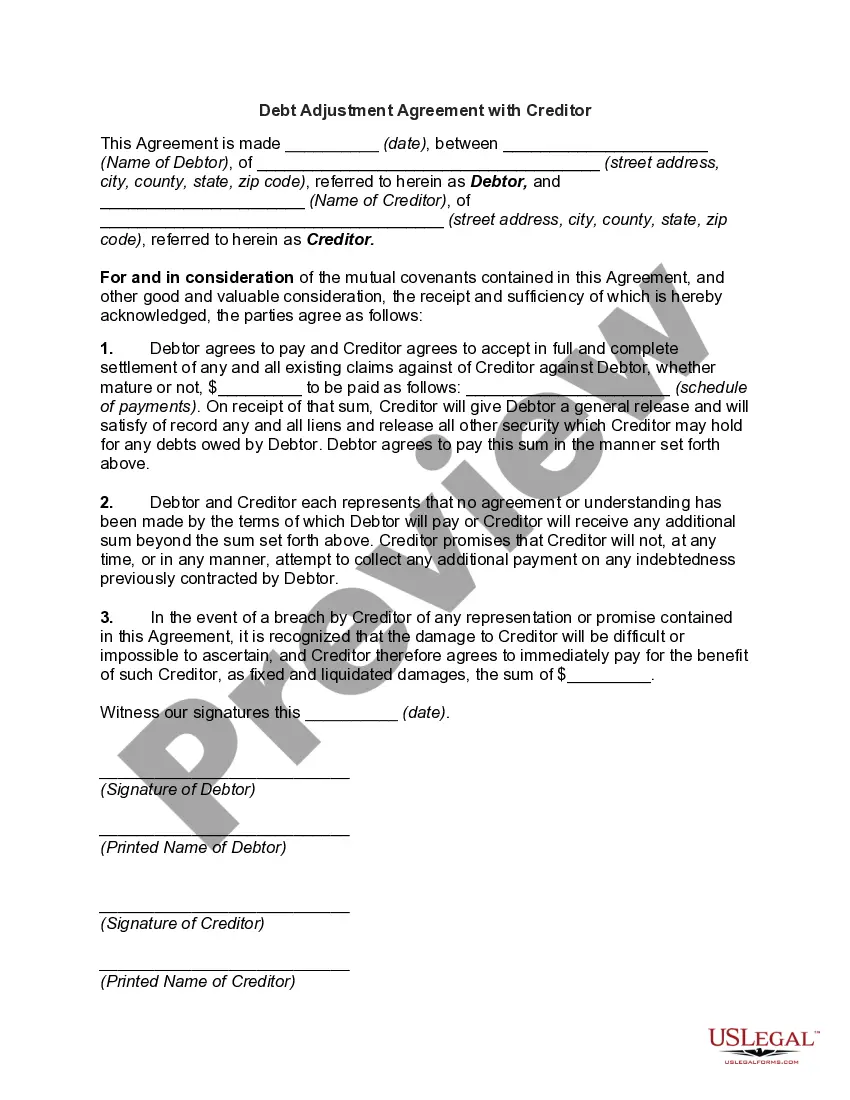
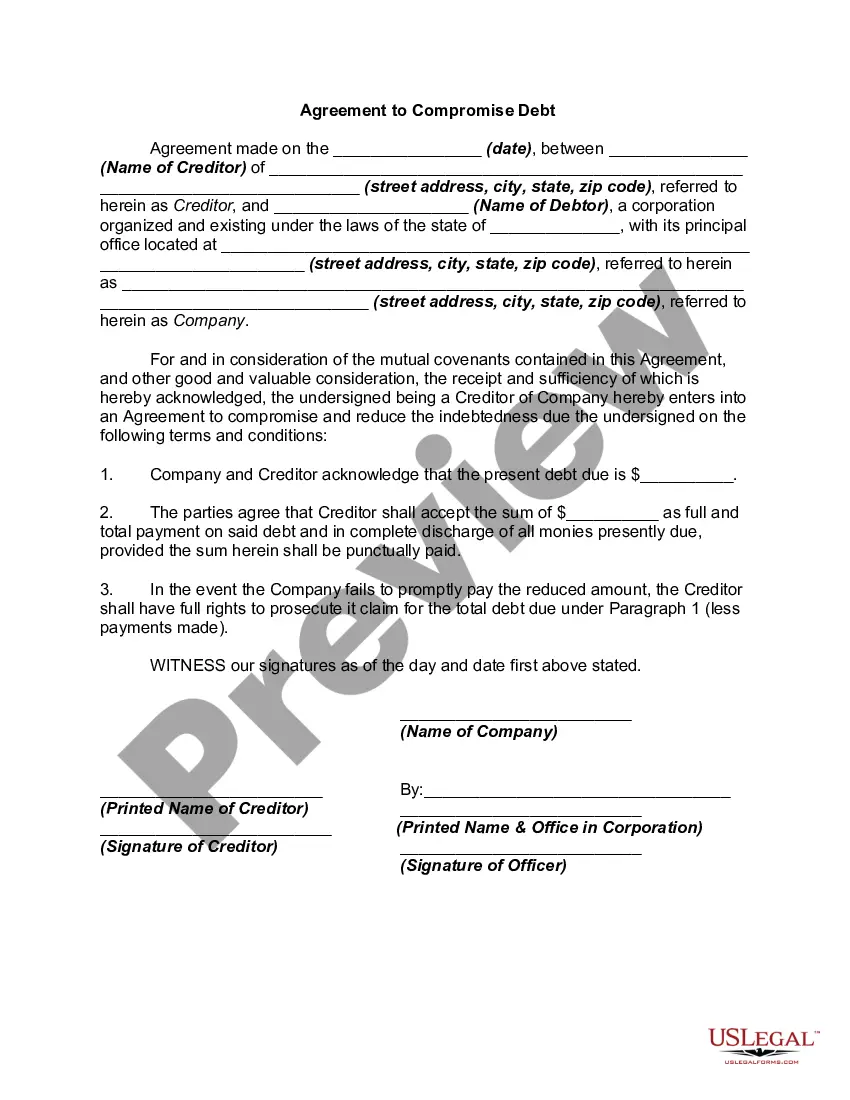
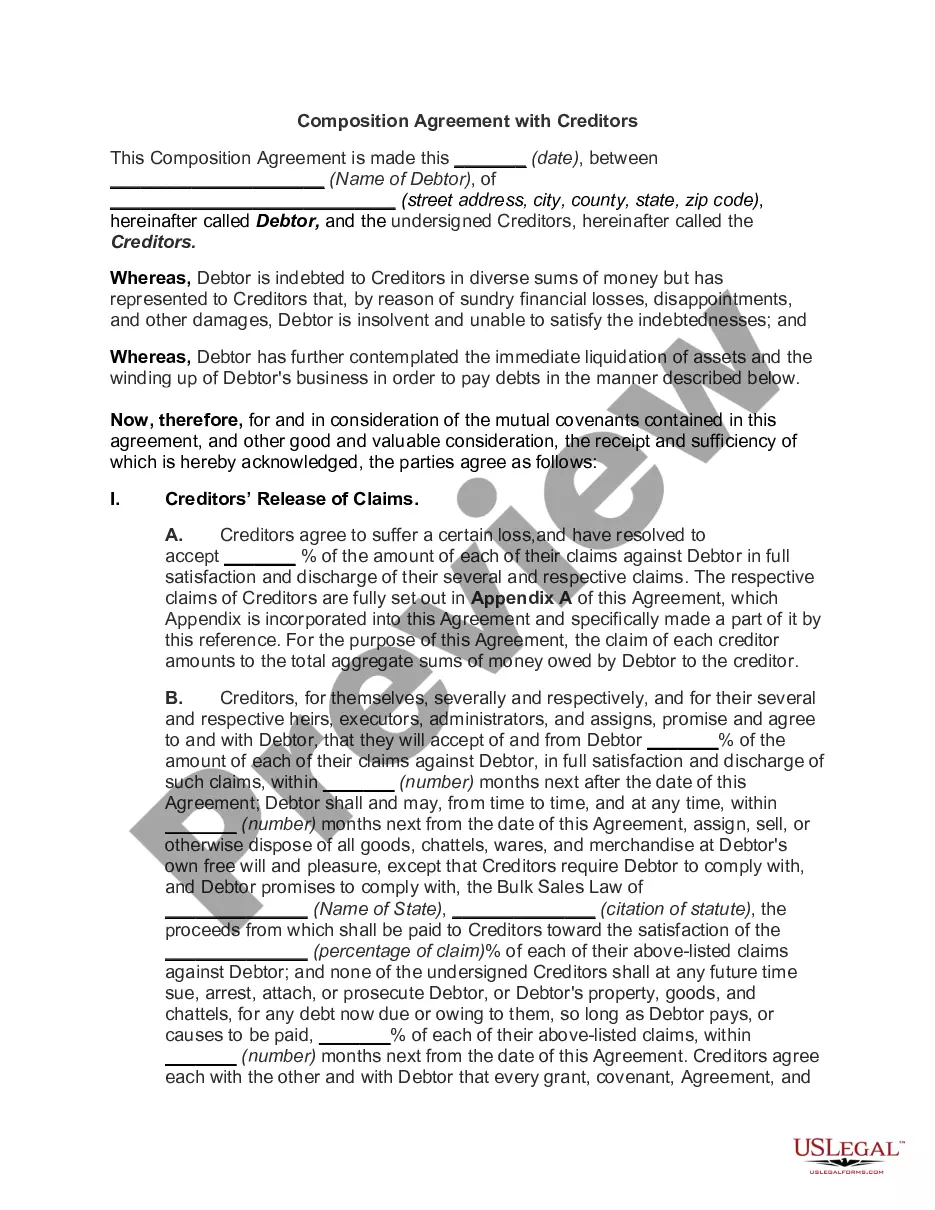
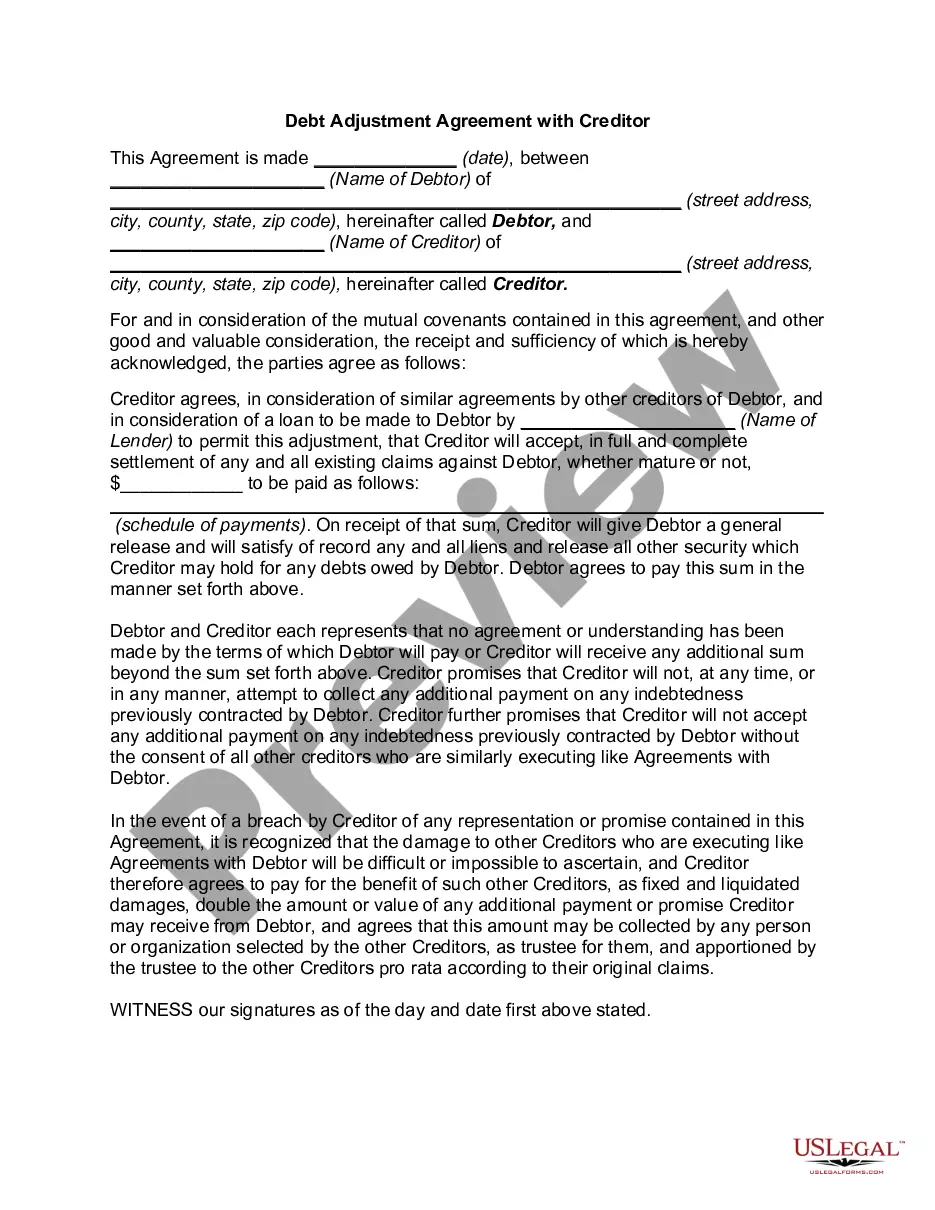
The Debt Adjustment Agreement with Creditor is a legal document that outlines the terms by which a debtor can settle their debts with a creditor. This agreement allows the debtor to pay a specified amount, which is agreed upon by both parties, instead of the total debt owed. Unlike other debt settlement forms, this document explicitly prevents the creditor from seeking any additional payment beyond the agreed sum, providing both clarity and peace of mind for the debtor.
Form components explained
- Date of agreement and parties involved (debtor and creditor).
- Specified settlement amount to be paid by the debtor.
- Schedule of payments detailing how the settlement will be made.
- Creditorâs agreement to release any liens or claims upon payment.
- Clause preventing the creditor from seeking further payment.
- Liquidated damages clause in case of breach by the creditor.
When this form is needed
This form is useful when a debtor wishes to negotiate a lump sum payment that is less than the total amount owed to a creditor. It is often used when a debtor is facing financial hardship and seeks to resolve debts amicably without extended negotiation processes. This agreement can prevent misunderstandings and ensure both parties are clear about their rights and obligations moving forward.
Intended users of this form
- Individuals or businesses in debt seeking to negotiate a reduced payment with a creditor.
- Debtors wishing to attain a clear understanding of their obligations post-agreement.
- Creditors who want formal documentation outlining the terms of debt settlement.
How to complete this form
- Enter the date of the agreement at the top of the form.
- Provide the names and addresses of both the debtor and creditor.
- Specify the total settlement amount to be paid by the debtor.
- Outline the schedule of payments agreed upon by both parties.
- Both parties should sign and print their names on the agreement to ensure validity.
Does this form need to be notarized?
This form does not typically require notarization unless specified by local law. It is advisable to consult your stateâs regulations regarding notarization to ensure compliance, if necessary.
Get your form ready online
Our built-in tools help you complete, sign, share, and store your documents in one place.
Make edits, fill in missing information, and update formatting in US Legal Forms—just like you would in MS Word.
Download a copy, print it, send it by email, or mail it via USPS—whatever works best for your next step.
Sign and collect signatures with our SignNow integration. Send to multiple recipients, set reminders, and more. Go Premium to unlock E-Sign.
If this form requires notarization, complete it online through a secure video call—no need to meet a notary in person or wait for an appointment.
We protect your documents and personal data by following strict security and privacy standards.

Make edits, fill in missing information, and update formatting in US Legal Forms—just like you would in MS Word.

Download a copy, print it, send it by email, or mail it via USPS—whatever works best for your next step.

Sign and collect signatures with our SignNow integration. Send to multiple recipients, set reminders, and more. Go Premium to unlock E-Sign.

If this form requires notarization, complete it online through a secure video call—no need to meet a notary in person or wait for an appointment.

We protect your documents and personal data by following strict security and privacy standards.
Common mistakes to avoid
- Leaving out signatures or print names, which can invalidate the agreement.
- Not specifying a clear payment schedule, leading to future disputes.
- Failing to check local laws regarding debt settlement requirements.
Why use this form online
- Instant access to legally vetted documents designed by licensed attorneys.
- Easy editable format allows you to customize the agreement according to your specific situation.
- Convenience of completing and downloading the form from anywhere, anytime, without the need for appointments.
Looking for another form?

Form popularity
FAQ
If the collection agency bought the debt from the creditor (rather than the creditor just assigning the debt to the agency for collection), the agency owns the debt. If you negotiate with and make payments to the creditor, the collector may refuse to credit you for those payments.
Sometimes the creditor will hire a collection agency to chase the money for them. Ask the debt collector if they own the debt. If not, you still might be able to negotiate with the original creditor.In this case, the debt collector owns the debt, so any payment is made to the collection agency.
It's a service that's typically offered by third-party companies that claim to reduce your debt by negotiating a settlement with your creditor. Paying off a debt for less than you owe may sound great at first, but debt settlement can be risky, potentially impacting your credit scores or even costing you more money.
It's much better to deal with creditors than debt collectors. Whatever the past-due debt is for doctor bills, credit card payments, car loan the creditor may still see you as a potential return customer. A debt collector's only interest is squeezing money out of you.
It's possible in some cases to negotiate with a lender to repay a debt after it's already been sent to collections. Working with the original creditor, rather than dealing with debt collectors, can be beneficial.
You can be sued on unpaid debts after charge off, so settling is a good idea when it makes sense for you financially. A collection agency making an offer you did not solicit often means there is room to negotiate an even better outcome.
Make Initial Contact. Have a Strategy. Start Your Offers Low. Keep a Professional Tone. Get a Written Settlement Agreement. Effects of Debt Settlement.
Generally, you can negotiate the best settlement on a debt if you can come up with a lump sum amount to resolve the debt. If you agree to a payment plan, you will likely pay more over time. If you do agree to a payment plan, make sure you understand the total amount you will pay.
If the lender agrees, your debt is reported to the credit bureaus as "paid-settled." The best-case scenario is to negotiate with your creditor ahead of time to have the account reported as "paid in full" (even if that's not the case). This does not hurt your credit score as much.