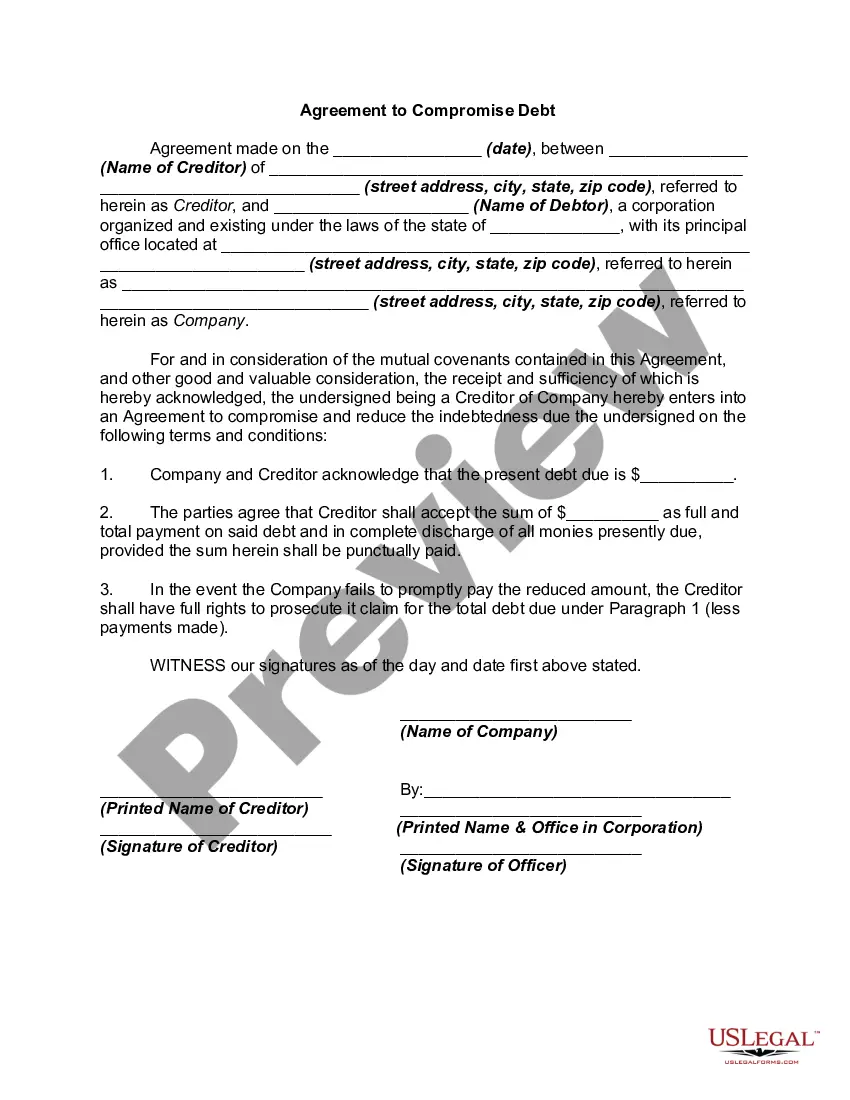
Agreement to Compromise Debt
Understanding this form
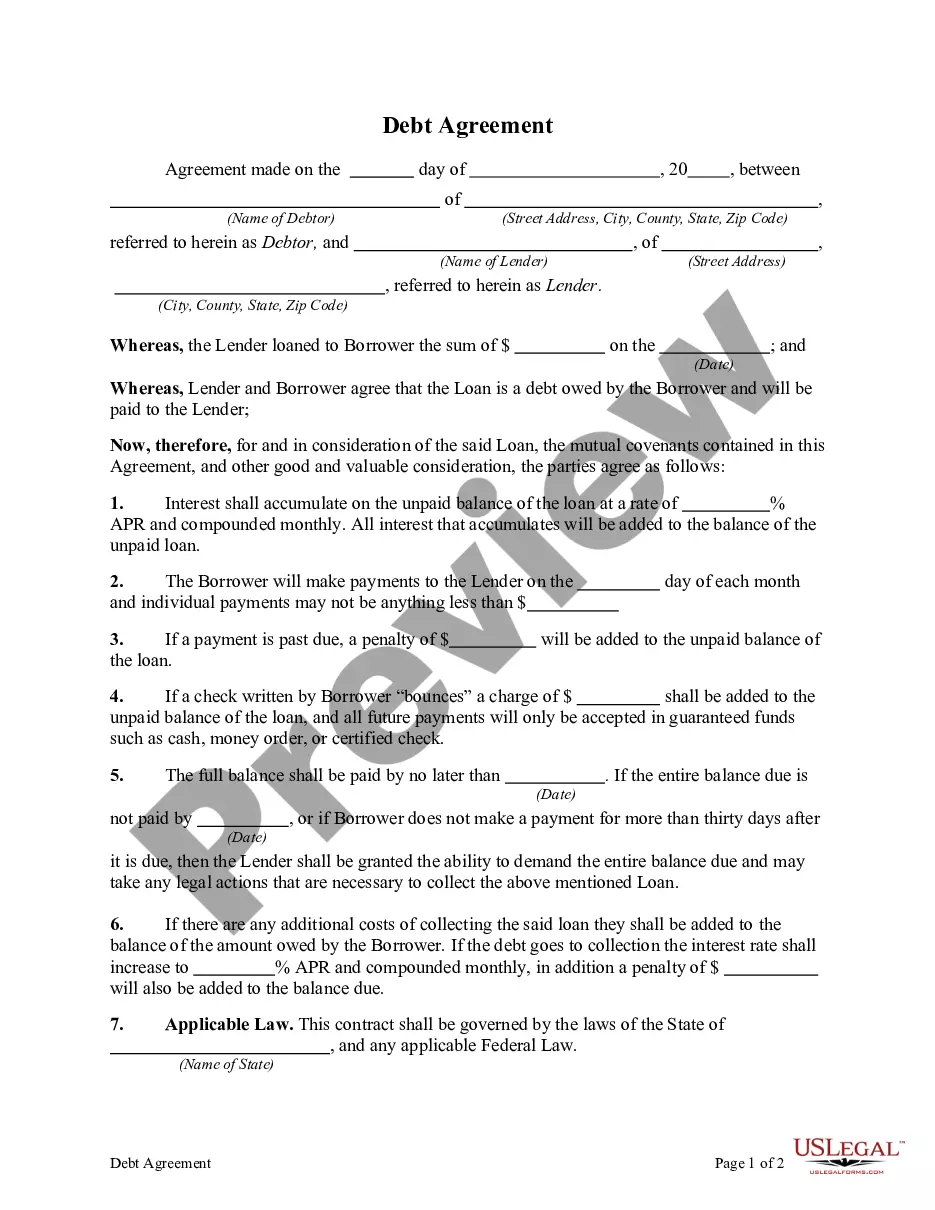
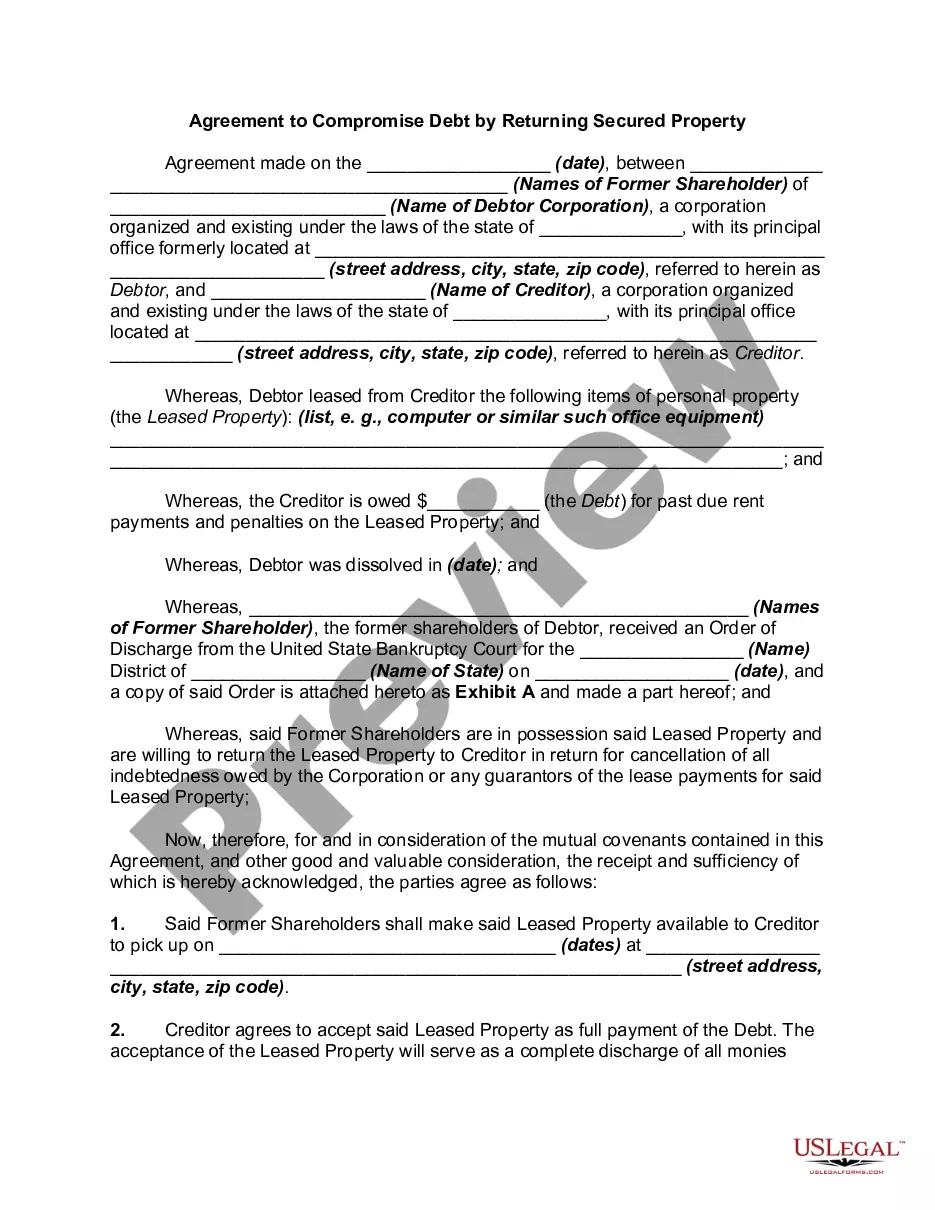
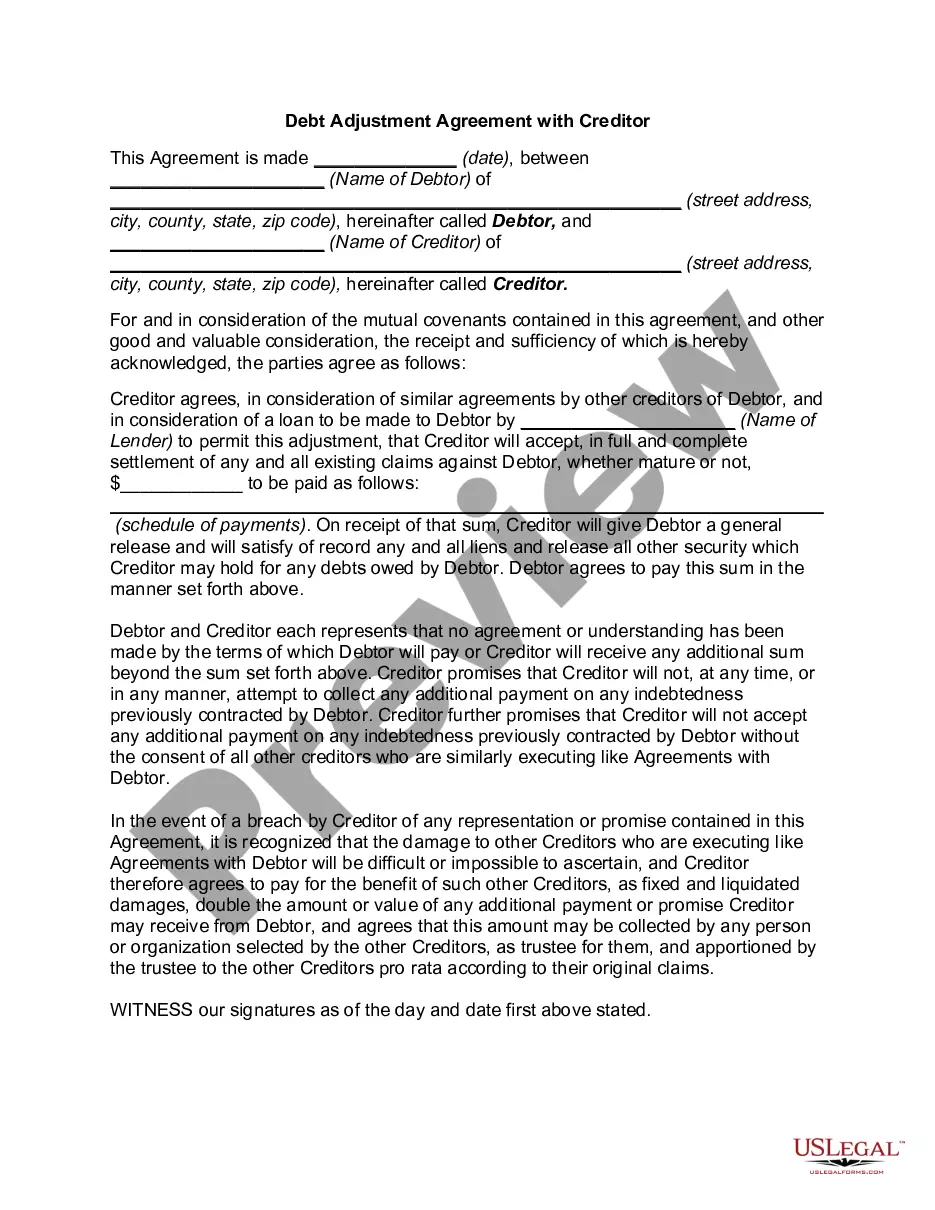
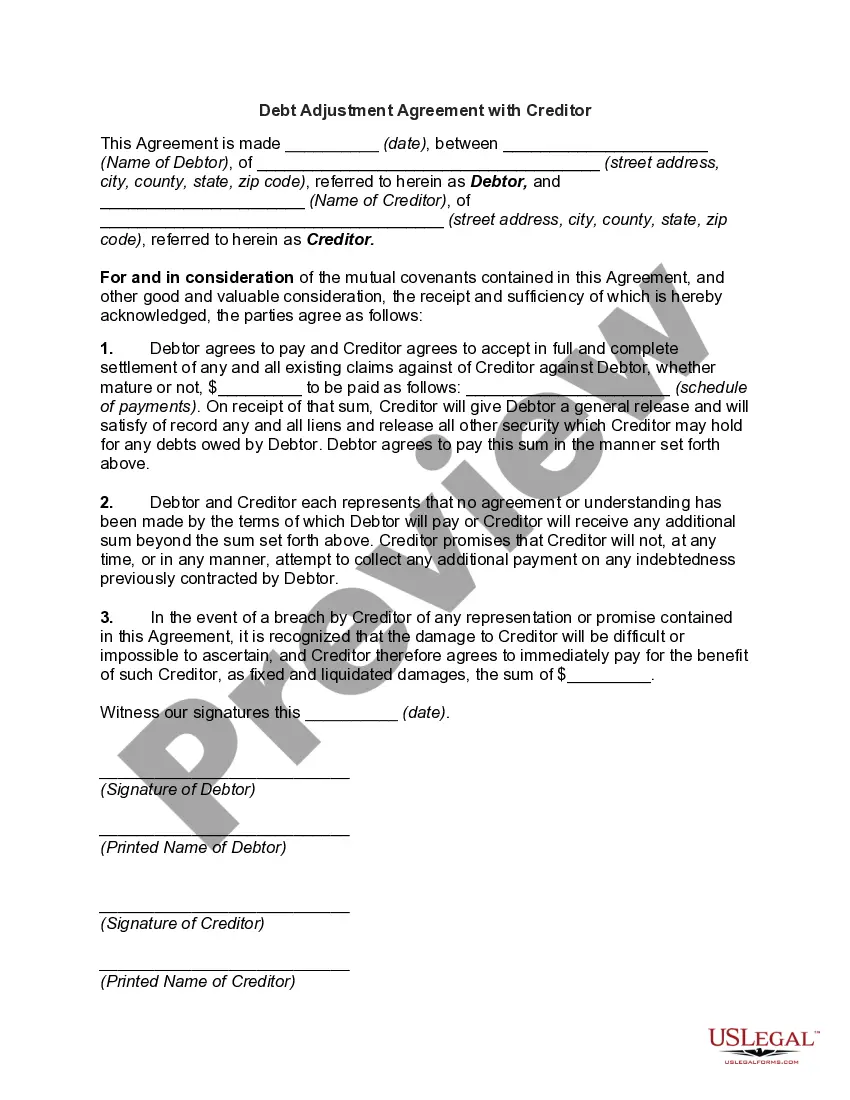
The Agreement to Compromise Debt is a legal document that allows a creditor and a company to settle a debt for less than the total owed. This form clearly outlines the terms of the compromise, including the amount to be accepted as full payment. It serves to resolve disputes over the debt, distinguishing it from other debt resolution forms by emphasizing the agreed-upon total amount to be paid to satisfy the obligation.
What’s included in this form
- Debt acknowledgment: A statement confirming the current total debt amount.
- Compromise amount: Specifies the reduced amount the creditor agrees to accept.
- Payment conditions: Outlines the terms under which the creditor will divest all claims once the reduced amount is paid.
- Default clause: Provides rights for the creditor to pursue the full debt if the company fails to pay the agreed amount.
- Signatures: Requires signatures of both parties to validate the agreement.
When this form is needed
This form is useful in situations where a company is unable to pay its full debt and the creditor agrees to accept a lower amount. It is often used in negotiations following payment defaults or financial hardships, allowing both parties to avoid legal disputes and quickly resolve the obligation.
Who needs this form
- Creditors who are willing to reduce the total debt owed by a company.
- Companies seeking to settle their debts without resorting to bankruptcy or litigation.
- Legal representatives handling debt settlement or compromise agreements.
Completing this form step by step
- Identify the parties: Include the names of the creditor and the company.
- Specify the current debt amount: Clearly state the total amount owed before compromise.
- Enter the agreed compromise amount: Provide the specific sum the creditor will accept as full payment.
- Outline payment terms: Detail how the creditor will discharge the debt upon receipt of the agreed payment.
- Gather signatures: Ensure both parties sign and date the agreement to validate the contract.
Is notarization required?
This form does not typically require notarization unless specified by local law. It's important to verify whether your jurisdiction has specific requirements for signing or witnessing this type of agreement.
Get your form ready online
Our built-in tools help you complete, sign, share, and store your documents in one place.
Make edits, fill in missing information, and update formatting in US Legal Forms—just like you would in MS Word.
Download a copy, print it, send it by email, or mail it via USPS—whatever works best for your next step.
Sign and collect signatures with our SignNow integration. Send to multiple recipients, set reminders, and more. Go Premium to unlock E-Sign.
If this form requires notarization, complete it online through a secure video call—no need to meet a notary in person or wait for an appointment.
We protect your documents and personal data by following strict security and privacy standards.

Make edits, fill in missing information, and update formatting in US Legal Forms—just like you would in MS Word.

Download a copy, print it, send it by email, or mail it via USPS—whatever works best for your next step.

Sign and collect signatures with our SignNow integration. Send to multiple recipients, set reminders, and more. Go Premium to unlock E-Sign.

If this form requires notarization, complete it online through a secure video call—no need to meet a notary in person or wait for an appointment.

We protect your documents and personal data by following strict security and privacy standards.
Common mistakes
- Failing to specify the exact amount to be paid.
- Not including signatures from both parties, making the form invalid.
- Forgetting to note payment terms clearly, leading to misunderstandings.
Benefits of using this form online
- Easy access to a professionally drafted agreement that is customizable for specific needs.
- Convenient digital download eliminates the need for in-person meetings.
- Immediate availability allows swift resolution of debt issues.
Legal use & context
- The Agreement to Compromise Debt serves as a binding contract between the creditor and debtor.
- It is enforceable in a court of law if all conditions are met by both parties.
- The agreement protects the creditor's rights to pursue the full debt amount if the agreed payment is not made.
What to keep in mind
- The Agreement to Compromise Debt is a useful tool for settling debts at a reduced amount.
- Clear terms and signatures are crucial for the enforceability of the agreement.
- Utilizing online resources can streamline the process of creating and completing this form.
Looking for another form?

Form popularity
FAQ
The document (contract) which evidences the agreement between parties and which binds the parties following a negotiation to adhere to the terms agreed upon as a result of the negotiation.
The agreement should list the rights, claims, obligations, or interests that will be released in the settlement as well as any claims or obligations that are not part of the settlement.
A Settlement Agreement (formerly known as a Compromise Agreement) is a legally binding agreement between you and your employer. This usually provides for a severance payment by the employer in return for your agreement not to pursue any claims in a Tribunal or a Court.
Key Obligations. Also called the terms of settlement, these include who will pay or do what, and what will happen after the payment is made or the actions completed. They should include details like a payment deadline. Release. Parties agree to release each other from all future claims, demands and actions.
2714 Retain relevant documents. 2714 Decide whether (and when) to make offer. 2714 Evaluate the reasons for settling. 2714 Assess motivating factors to settle. 2714 Confirm client's ability to settle. 2714 List all covered parties. 2714 List all legal issues to be settled.
Unless you have already have another job to go to, it is not easy to ascertain how long you will be out of work, but as a general rule of thumb, a payment equivalent to six month's salary is considered to be a good settlement.
1Original creditor and collection agent's company name.2Date the letter was written.3Your name.4Your account number.5Outstanding balance owed on the account (optional)6Amount agreed to as settlement.How to Write a Successful Debt Settlement Agreement - Bills\nwww.bills.com > Paying Off Debt > Debt Settlement