Sample Letter for Plaintiff's Motion to Compel the Production of the Documents Requested in Plaintiff's Second Request for Production of Documents
What is this form?
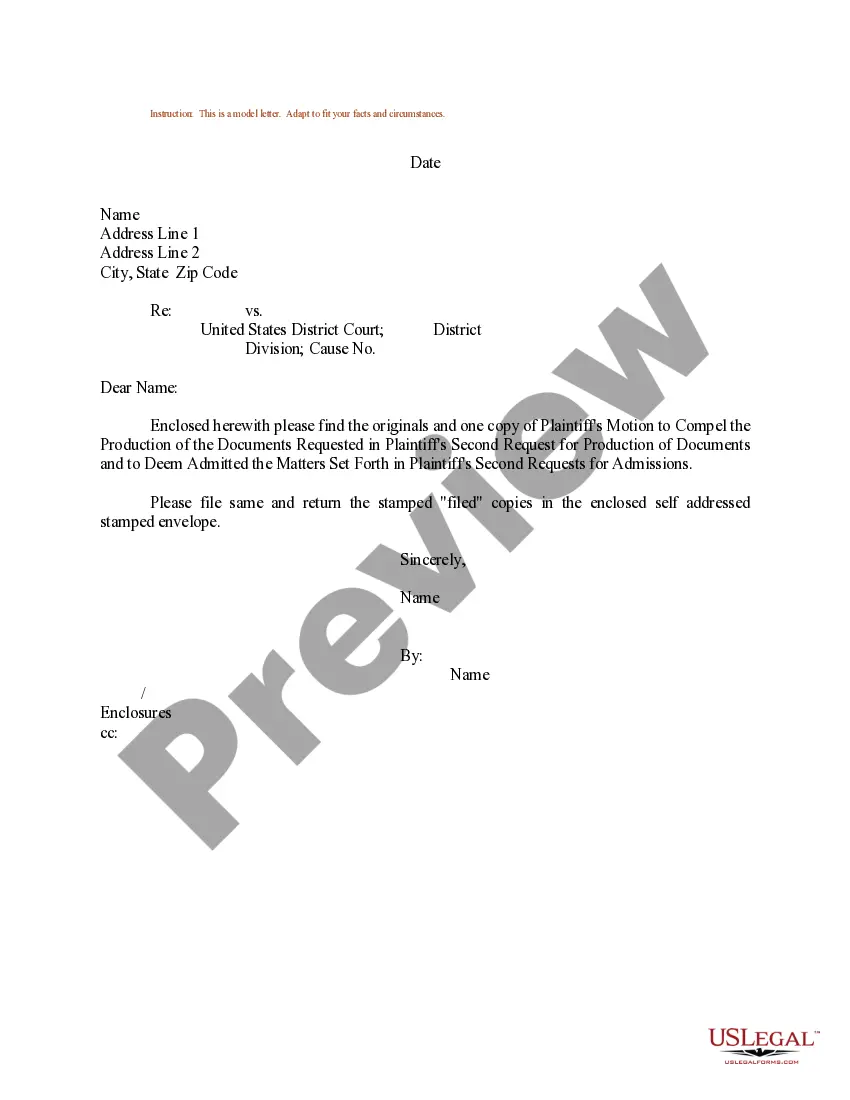
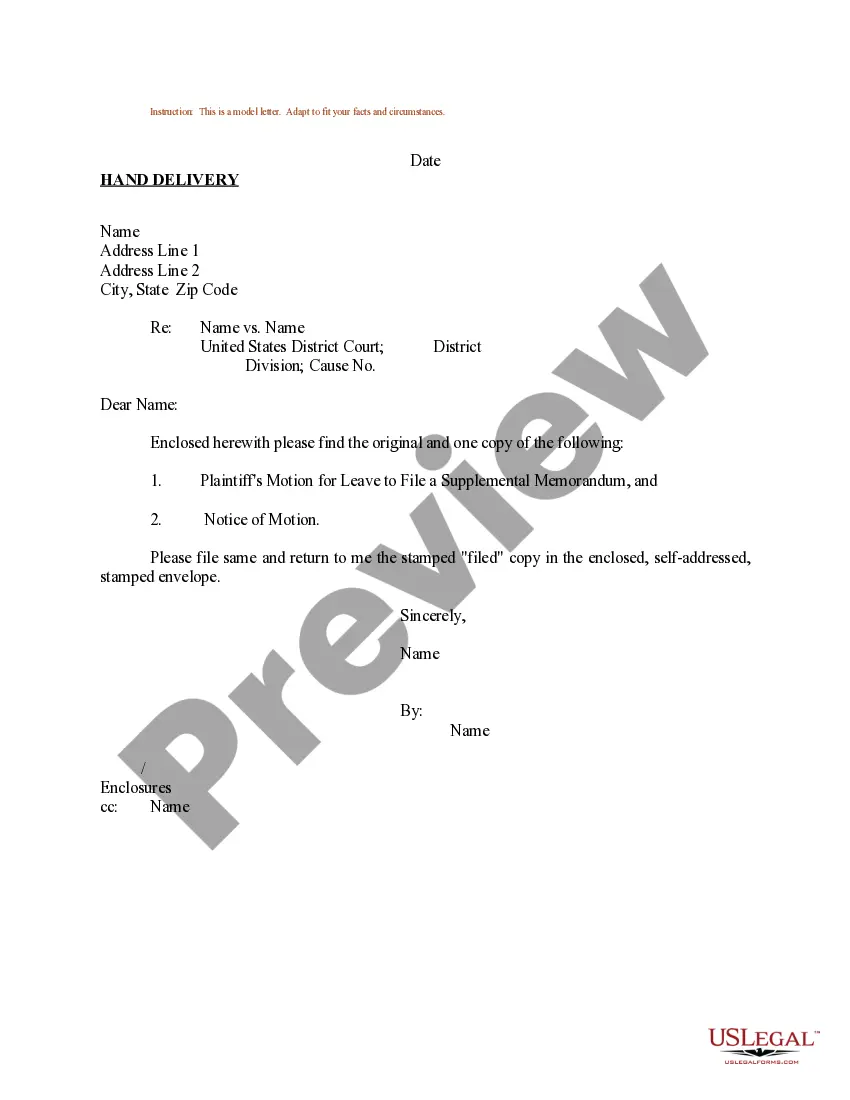
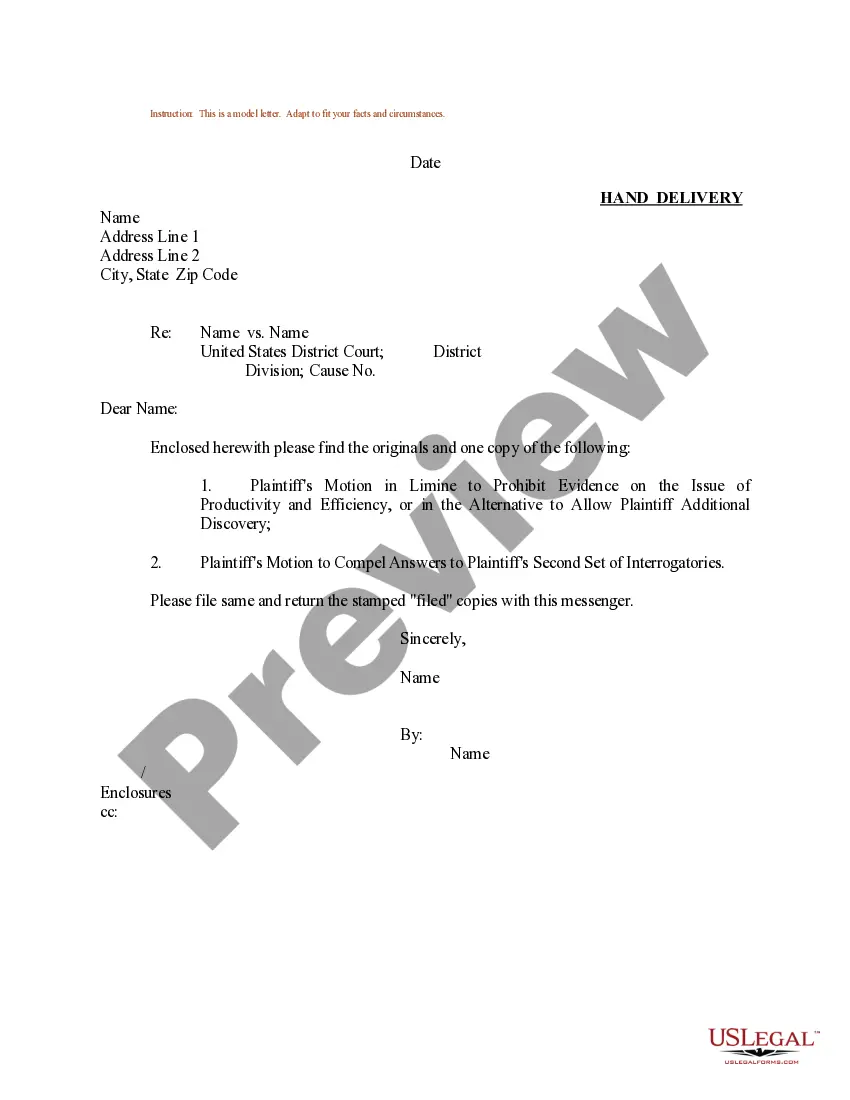
This form is a sample letter for a plaintiff's motion to compel the production of documents as requested in the plaintiff's second request for production. It serves as a formal communication to ensure compliance from the opposing party regarding the submission of relevant documents in a legal case. Unlike generic request letters, this specific form outlines the legal context and requirements involved in compelling document production.
Main sections of this form
- Date: Specifies the date of the letter.
- Recipient Information: Includes the name and address of the party from whom documents are being requested.
- Document Request: Clearly states the request for the production of specific documents.
- Instructions for Filing: Indicates the need to file the letter and return stamped copies.
- Signature Lines: States where signatories must provide their names and signatures.
When to use this form
This form should be used when a plaintiff needs to formally request additional documentation from the other party in a legal proceeding after a second request has been made. If the opposing party has failed to comply with previous production requests, this letter acts as a necessary step before escalating the matter to the court.
Intended users of this form
- Individuals acting as plaintiffs in a legal case.
- Attorneys representing clients who need to compel document production.
- Parties involved in civil litigation requiring additional evidence or documentation.
Steps to complete this form
- Enter the date at the top of the letter.
- Fill in the recipient's name and full address in the appropriate sections.
- Clearly specify the documents being requested in the body of the letter.
- Include instructions for filing and returning stamped copies.
- Sign the letter and provide printed names under the signature lines.
Is notarization required?
Notarization is not commonly needed for this form. However, certain documents or local rules may make it necessary. Our notarization service, powered by Notarize, allows you to finalize it securely online anytime, day or night.
Get your form ready online
Our built-in tools help you complete, sign, share, and store your documents in one place.
Make edits, fill in missing information, and update formatting in US Legal Forms—just like you would in MS Word.
Download a copy, print it, send it by email, or mail it via USPS—whatever works best for your next step.
Sign and collect signatures with our SignNow integration. Send to multiple recipients, set reminders, and more. Go Premium to unlock E-Sign.
If this form requires notarization, complete it online through a secure video call—no need to meet a notary in person or wait for an appointment.
We protect your documents and personal data by following strict security and privacy standards.

Make edits, fill in missing information, and update formatting in US Legal Forms—just like you would in MS Word.

Download a copy, print it, send it by email, or mail it via USPS—whatever works best for your next step.

Sign and collect signatures with our SignNow integration. Send to multiple recipients, set reminders, and more. Go Premium to unlock E-Sign.

If this form requires notarization, complete it online through a secure video call—no need to meet a notary in person or wait for an appointment.

We protect your documents and personal data by following strict security and privacy standards.
Common mistakes to avoid
- Failing to provide complete recipient information.
- Not clearly specifying the documents required.
- Omitting the date of the letter.
- Not including instructions for filing and returning processed copies.
- Forgetting to sign the letter before submission.
Why use this form online
- Convenient access to a professionally drafted letter.
- Editable Word format allows for easy customization.
- Reliability from a source created by licensed attorneys.
- Instant download saves time compared to traditional legal services.
Legal use & context
- This letter is used in the context of civil litigation to compel compliance with discovery requests.
- It is important to ensure that requests are reasonable and specific to uphold enforceability.
- Properly using this letter can prevent delays and promote a smoother litigation process.
What to keep in mind
- Understand the specific context in which to use the motion to compel letter.
- Ensure all required information is accurately filled in and clearly presented.
- Avoid common mistakes by checking the completeness of the form.
Looking for another form?
Form popularity
FAQ
You need to give the court a reason to deny the other side's motion to compel. There are many different reasons you could give. Take out your Response to the discovery request. You should have identified reasons in your Response for why you weren't turning over certain information.
First, you can file a Motion to Compel, which is a request to have the court order your spouse to turn over documents.If the court agrees that the financial information should be turned over, the judge will order your spouse to produce the documents within a certain time.
A motion to compel asks the court to order either the opposing party or a third party to take some action. This sort of motion most commonly deals with discovery disputes, when a party who has propounded discovery to either the opposing party or a third party believes that the discovery responses are insufficient.
Consequences of Refusing to Provide Evidence Requested in a Motion to Compel. If the court issues an order that compels your spouse to produce the discovery you are seeking but your spouse still refuses to provide evidence, the judge may impose further sanctions such as: A verdict in your favor.