New Open Account Welcome and Terms Letter
What is this form?
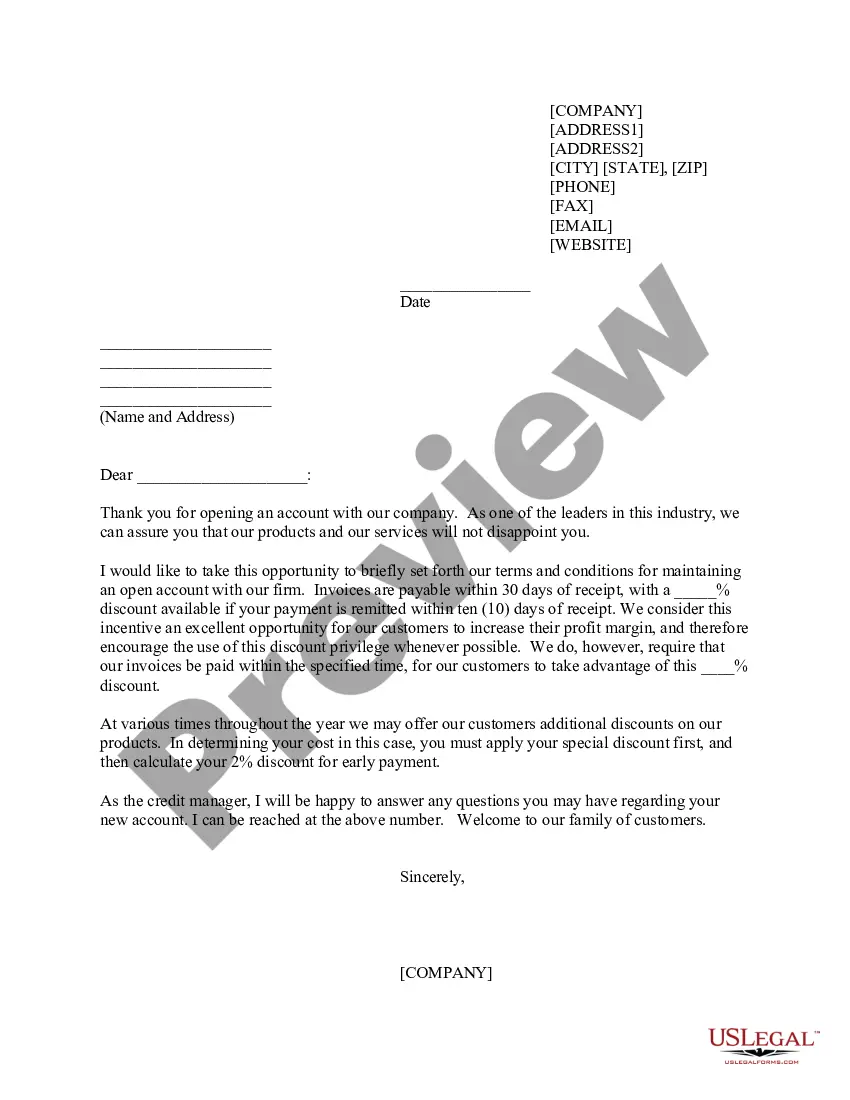
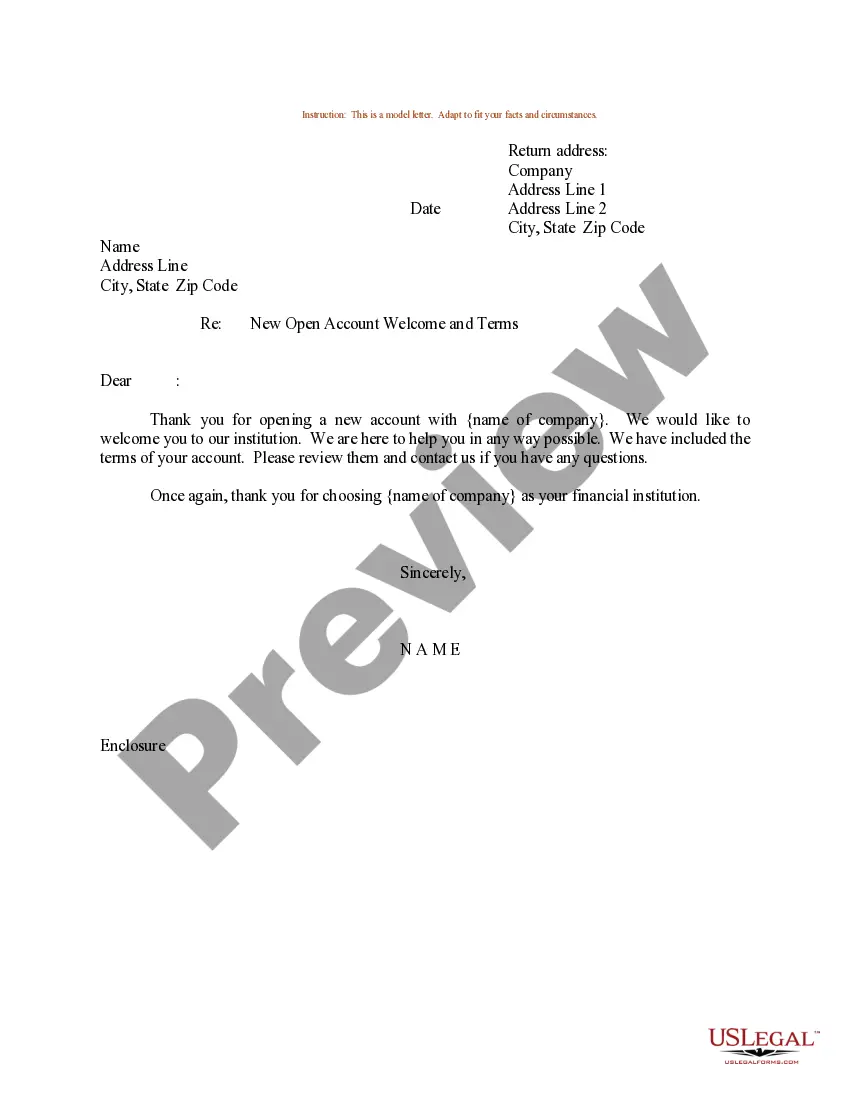
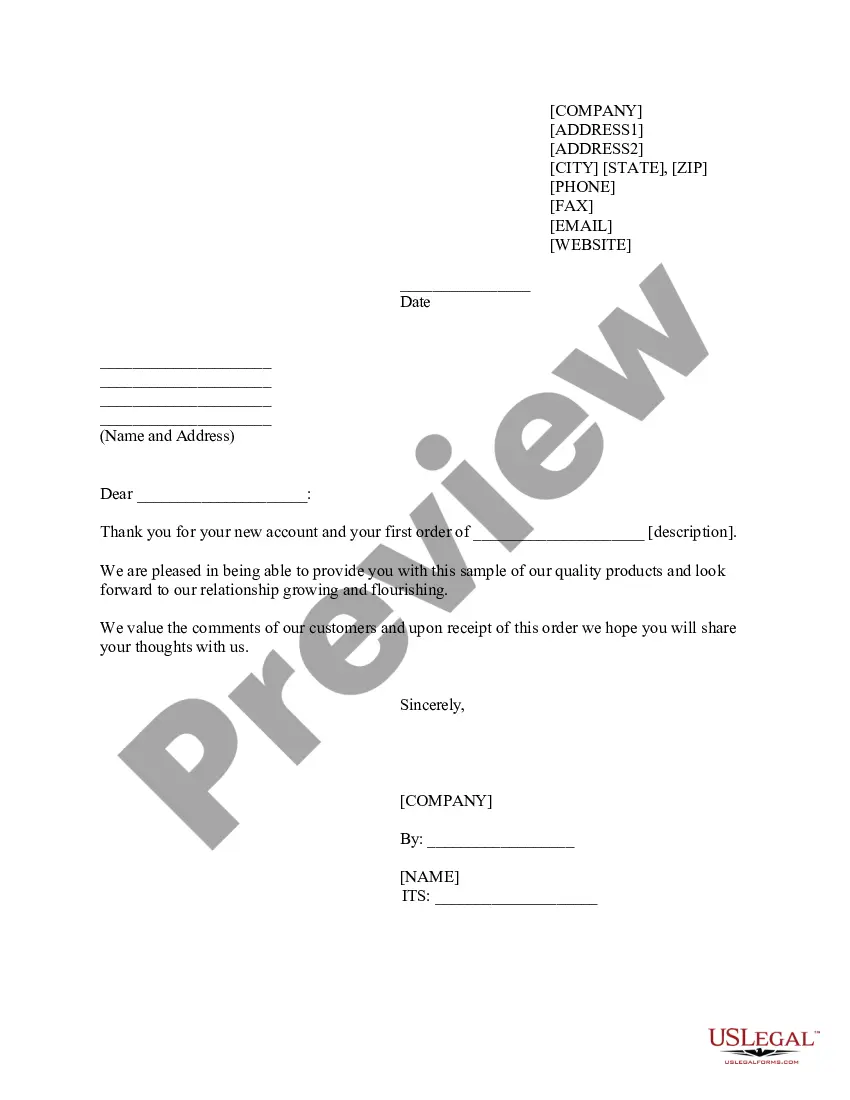
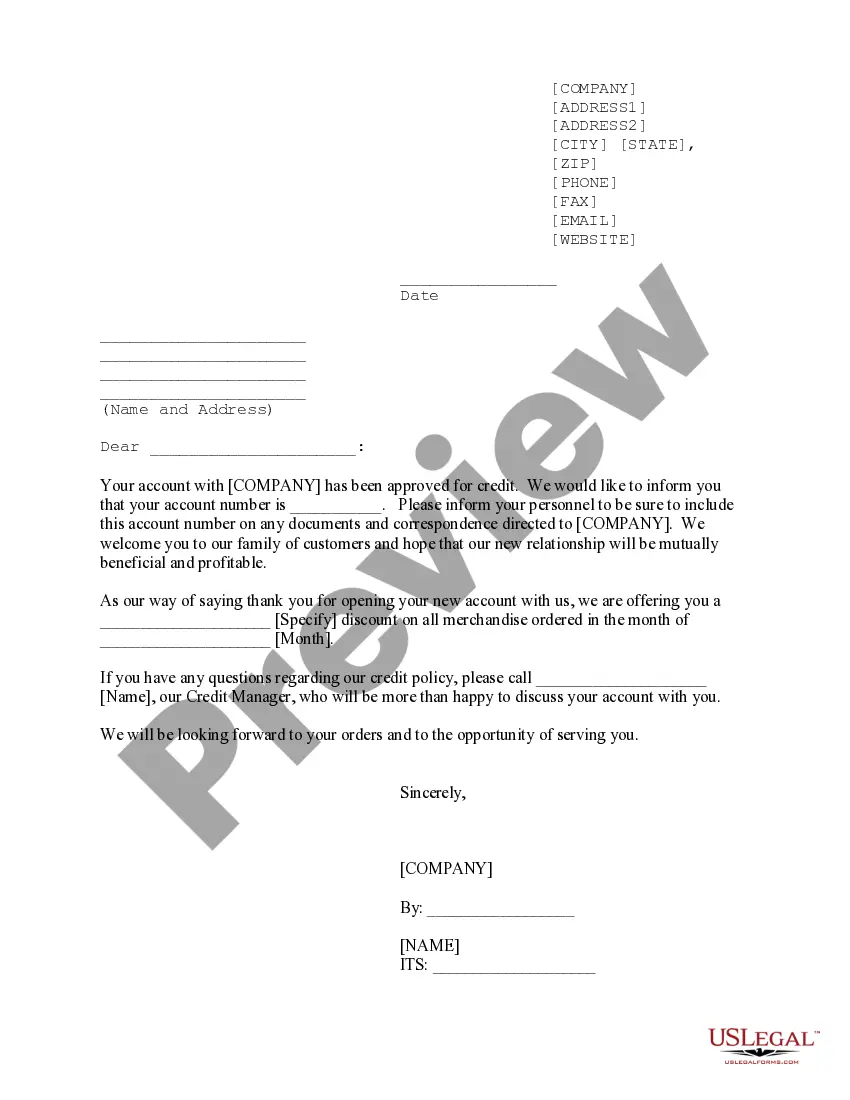
The New Open Account Welcome and Terms Letter is a formal document sent to new customers after they open an account with a company. This letter outlines the terms and conditions for maintaining the account, such as payment deadlines and available discounts. Unlike standard welcome letters, this form specifically includes important contractual terms, ensuring that both the business and customer have a clear understanding of their responsibilities.
Key components of this form
- Company address and contact information
- Date of the letter
- Customer's name and address
- Payment terms, including due dates and discounts
- Contact information for the credit manager
- Signature line for the authorized representative

When to use this document
This form should be used whenever a customer opens a new account with your business. It is essential for communicating the financial expectations and terms that will govern the relationship between the customer and the company, specifically regarding payment schedules and available discounts.
Who this form is for
- Businesses that offer accounts to customers
- Credit managers responsible for account maintenance
- Account representatives overseeing customer relations
Steps to complete this form
- Fill in your companyâs address and contact details at the top of the letter.
- Enter the date on which the letter is being sent.
- Include the customer's name and address to personalize the letter.
- Specify the payment terms, including due dates and any discounts for early payment.
- Provide the contact information for the credit manager, ensuring they can assist the customer with any questions.
- Sign the letter on behalf of your company, including your name and title.
Does this form need to be notarized?
This form does not typically require notarization unless specified by local law. Always check with legal counsel to confirm if notarization is needed based on the jurisdiction of your business.
Get your form ready online
Our built-in tools help you complete, sign, share, and store your documents in one place.
Make edits, fill in missing information, and update formatting in US Legal Forms—just like you would in MS Word.
Download a copy, print it, send it by email, or mail it via USPS—whatever works best for your next step.
Sign and collect signatures with our SignNow integration. Send to multiple recipients, set reminders, and more. Go Premium to unlock E-Sign.
If this form requires notarization, complete it online through a secure video call—no need to meet a notary in person or wait for an appointment.
We protect your documents and personal data by following strict security and privacy standards.

Make edits, fill in missing information, and update formatting in US Legal Forms—just like you would in MS Word.

Download a copy, print it, send it by email, or mail it via USPS—whatever works best for your next step.

Sign and collect signatures with our SignNow integration. Send to multiple recipients, set reminders, and more. Go Premium to unlock E-Sign.

If this form requires notarization, complete it online through a secure video call—no need to meet a notary in person or wait for an appointment.

We protect your documents and personal data by following strict security and privacy standards.
Typical mistakes to avoid
- Failing to include personal details of the customer, leading to a generic letter.
- Not specifying the actual discount percentages available.
- Leaving out contact information for customer support.
Benefits of using this form online
- Instant access to a professionally drafted template, ensuring compliance with legal standards.
- Easy customization allows you to quickly tailor the letter to individual customers.
- Downloadable format ensures you can keep a record and send it via your preferred method.
Legal use & context
- This letter serves as a binding agreement between the company and the customer regarding account terms.
- Failure to adhere to payment terms can result in penalties and affect the customerâs credit status.
Quick recap
- The New Open Account Welcome and Terms Letter clarifies payment terms and discounts.
- It is essential for establishing a clear agreement with new customers.
- Using a standardized form helps reduce errors and improves customer relations.
Looking for another form?
Form popularity
FAQ
What to include in a welcome letter to new employees A welcome statement. Your name and position. Basic need-to-know information. A reminder of the employee's start date and time.
How to write a customer welcome letter Start with a business letterhead.Include the date and the customer's address.Greet the customer.Write an official welcome message.Share additional information to add value.Add contact details.Close the letter.
We wish to introduce Company Name, I/C No Enter number to open a current account with Bank Name. We hereby confirm that Company Name has the active account since: DD/MM/YYYY. Based on our bank records, the conduct of the account is satisfactory. Thank you.
How to write a welcome letter? Step 1-Begin with the letterhead/name/email address of the company for maximum attention. Step 2 ? Include the Date. Step 3-Greet the recipient. Step 4? Warm welcoming note along with brief information about the company.
How to greet customers Dress professionally. It's important to dress professionally so customers know you care about your job.Be friendly.Acknowledge customers quickly.Make eye contact.Ask questions.Take your time.Remember customer preferences.Show customers to products.
What to include in a welcome letter to new employees A welcome statement. Your name and position. Basic need-to-know information. A reminder of the employee's start date and time.
How to write a greeting message? Company logo and/or motto. Personalization (e.g. customer's name) Explanation of what the customer has subscribed to. ?Thank you? message. Special offer. CTA. Social network buttons. Unsubscribe link.
Dear client name, We'd like to welcome you to company name, and thank you for joining us. My name is your name, and I'm here to show you everything you need for success. Here at company name, we dedicate ourselves to your company's value proposition for the customer.