Self-Defense - Assault
What is this form?
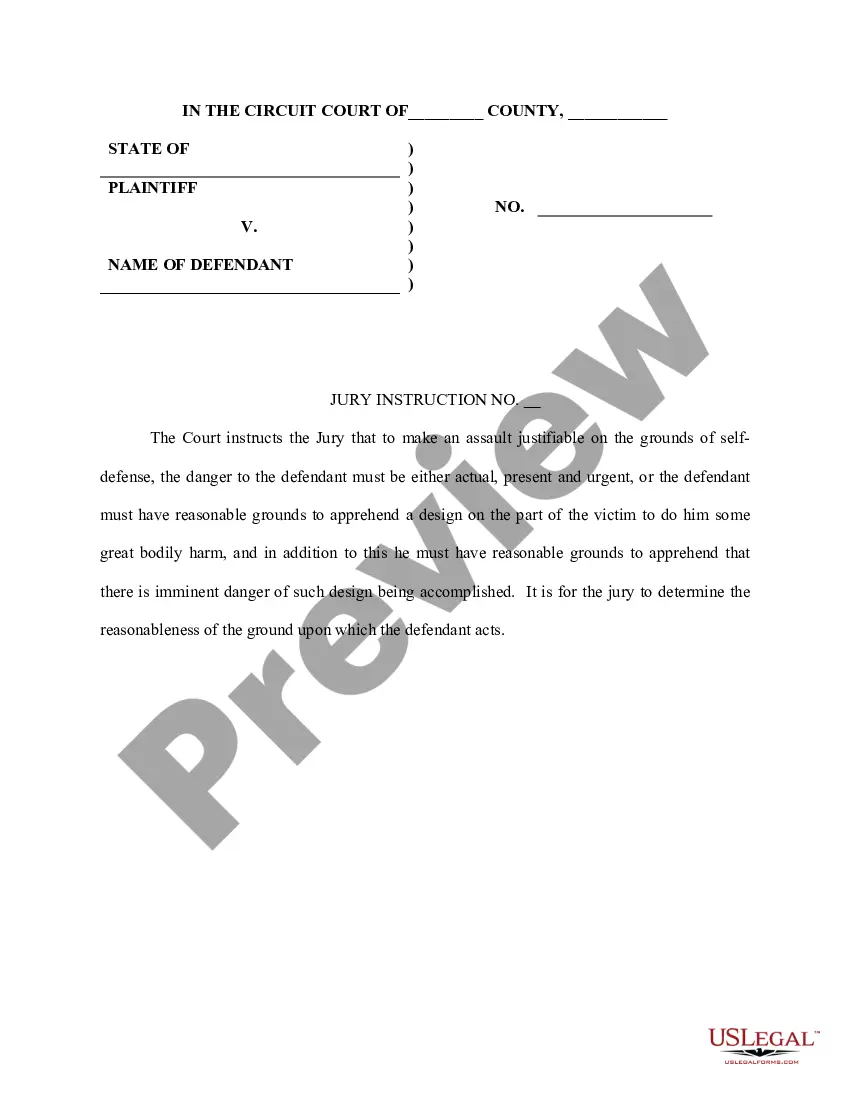
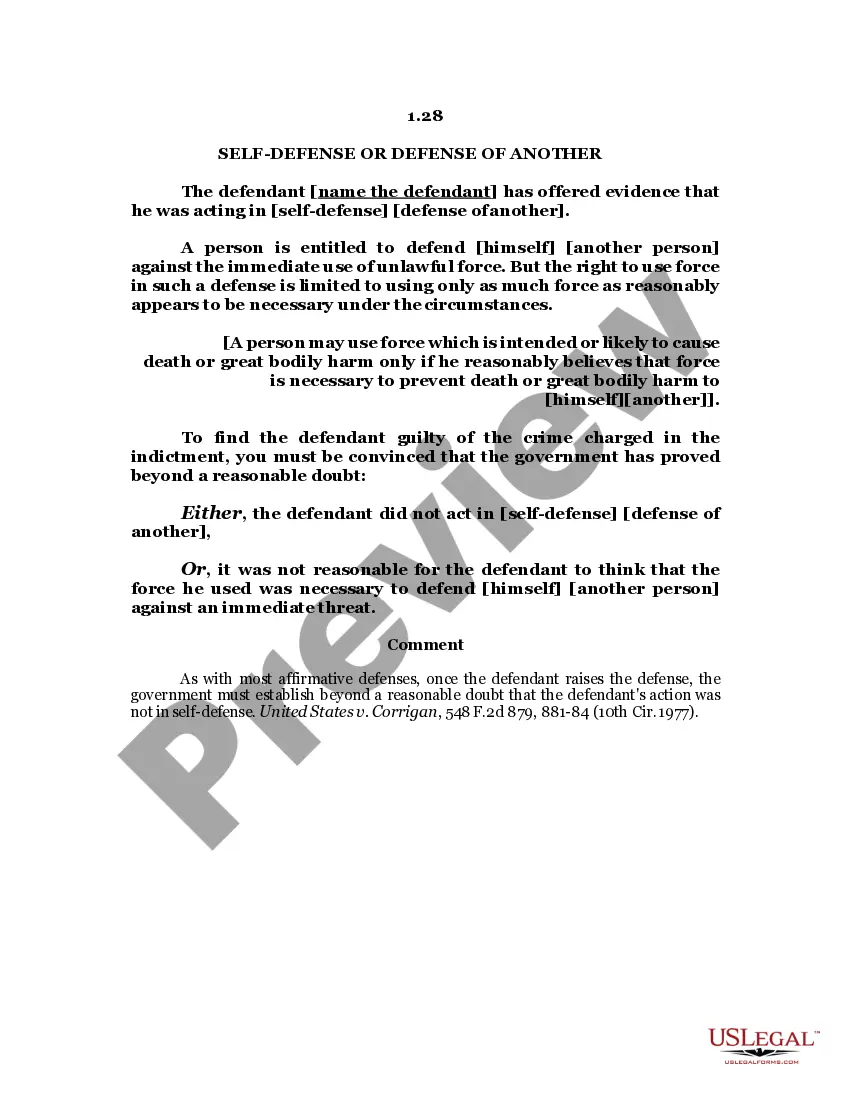
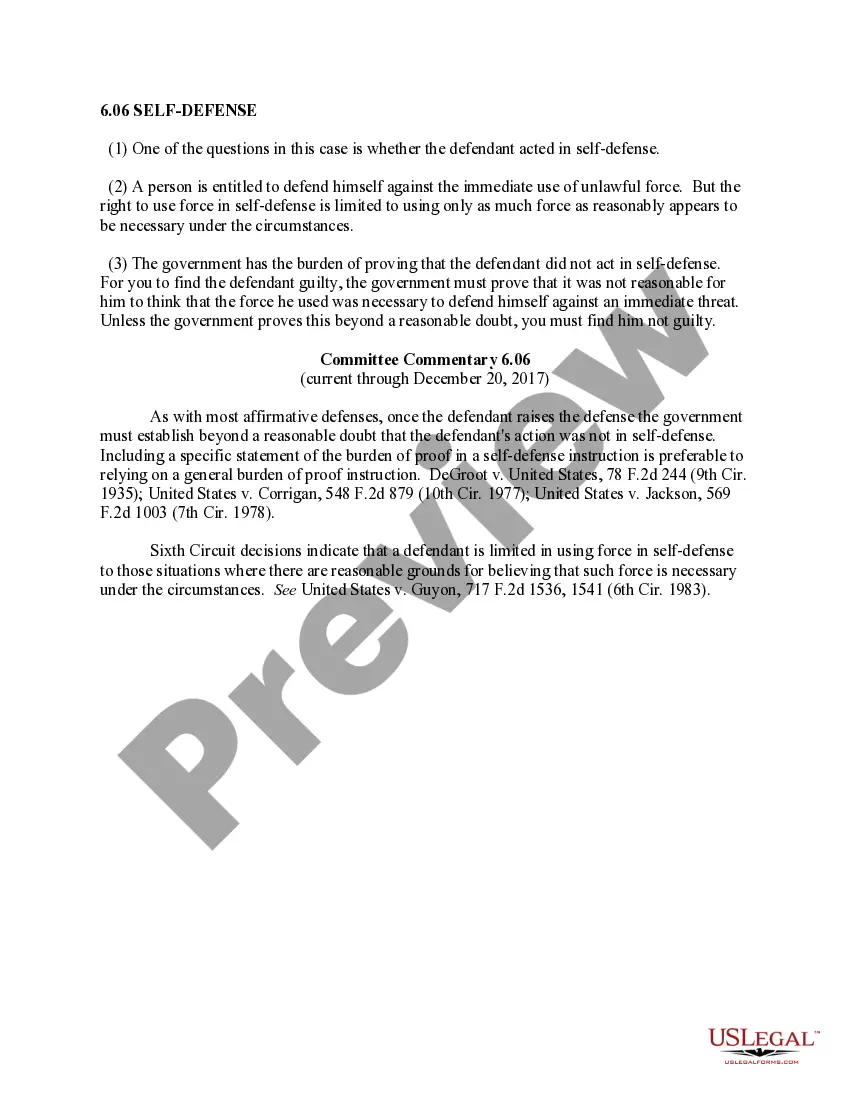
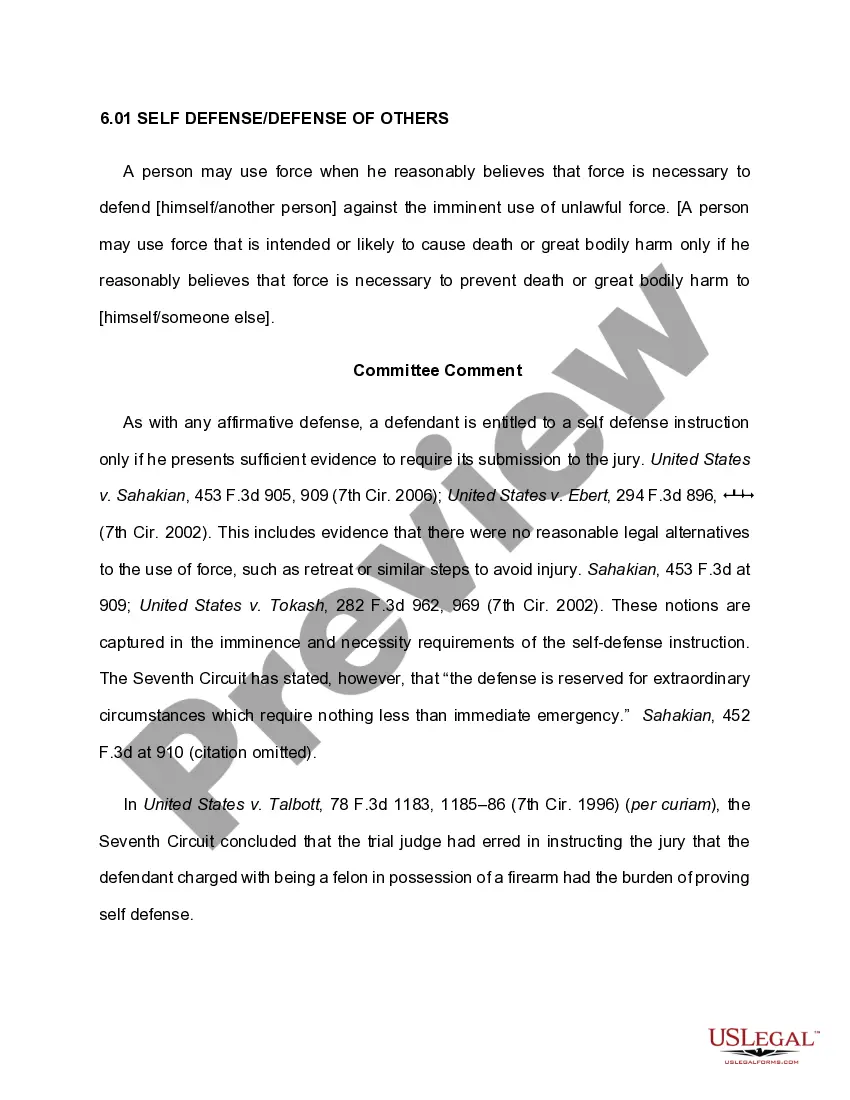
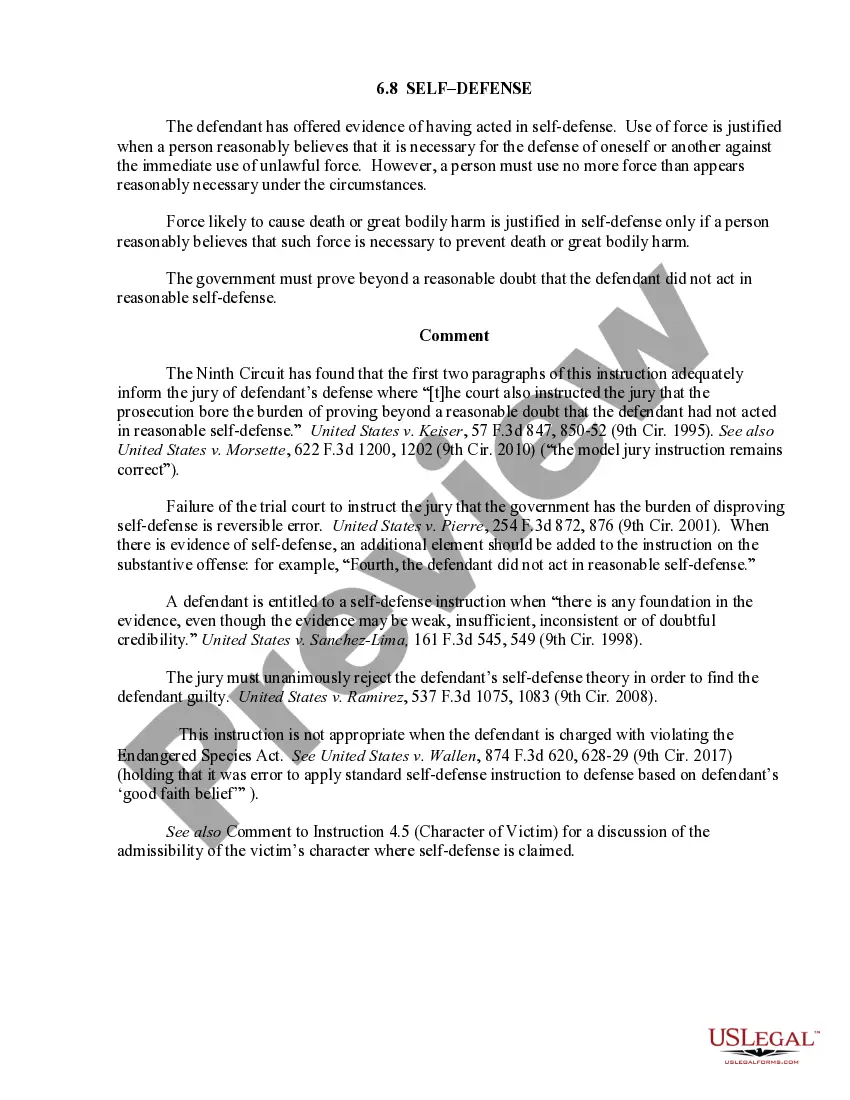
The Self-Defense - Assault form provides a sample jury instruction that supports the defendant's claim of justifiable assault based on self-defense. This instruction is essential for explaining the criteria under which an assault may be considered justified, differentiating it from other forms related to self-defense or assault. It guides the jury in evaluating the reasonableness of the defendant's belief regarding the threat of harm.
Key components of this form
- Definition of justifiable assault in the context of self-defense.
- Criteria for assessing actual, present, and urgent danger.
- Guidelines for the jury to determine reasonableness of the defendant's apprehension of harm.
- Details on the requirement for imminent danger to justify the use of force.
When this form is needed
This form is used in legal cases where a defendant claims that an assault was committed in self-defense. It is pertinent during criminal trials when determining whether the actions taken were reasonable under the circumstances, especially when facing a perceived threat from another party. This form helps frame the jury's understanding of self-defense laws and the justification needed for such actions.
Who needs this form
This form is intended for:
- Defense attorneys representing clients charged with assault who are claiming self-defense.
- Judges who need to provide clear instructions to the jury regarding self-defense.
- Legal professionals involved in criminal law and trial preparation.
Completing this form step by step
- Read the jury instruction carefully to understand the criteria for justifiable assault.
- Determine the specific details of the case, including the circumstances leading to the alleged assault.
- Clarify the defendant's perception of danger and the reasons behind it.
- Prepare to articulate the points highlighted in the jury instruction during trial.
- Ensure all parties involved understand the implications of the self-defense claim.
Is notarization required?
Notarization is not commonly needed for this form. However, certain documents or local rules may make it necessary. Our notarization service, powered by Notarize, allows you to finalize it securely online anytime, day or night.
Get your form ready online
Our built-in tools help you complete, sign, share, and store your documents in one place.
Make edits, fill in missing information, and update formatting in US Legal Forms—just like you would in MS Word.
Download a copy, print it, send it by email, or mail it via USPS—whatever works best for your next step.
Sign and collect signatures with our SignNow integration. Send to multiple recipients, set reminders, and more. Go Premium to unlock E-Sign.
If this form requires notarization, complete it online through a secure video call—no need to meet a notary in person or wait for an appointment.
We protect your documents and personal data by following strict security and privacy standards.

Make edits, fill in missing information, and update formatting in US Legal Forms—just like you would in MS Word.

Download a copy, print it, send it by email, or mail it via USPS—whatever works best for your next step.

Sign and collect signatures with our SignNow integration. Send to multiple recipients, set reminders, and more. Go Premium to unlock E-Sign.

If this form requires notarization, complete it online through a secure video call—no need to meet a notary in person or wait for an appointment.

We protect your documents and personal data by following strict security and privacy standards.
Avoid these common issues
- Failing to clearly define what constitutes imminent danger in the context of the case.
- Overlooking the necessity of presenting evidence that supports the reasonableness of the defendant's beliefs.
- Not reviewing the specific laws governing self-defense in the relevant jurisdiction.
Benefits of completing this form online
- Convenient access to professionally drafted legal language and templates.
- Easy customization to fit specific case details and legal requirements.
- Time-saving feature by enabling quick downloads for immediate use in legal proceedings.
Legal use & context
- Self-defense claims must meet strict legal criteria and vary by state law.
- This form assists in clarifying roles and responsibilities within the judicial process regarding self-defense claims.
- Understanding the definition of imminent danger is essential for jurors in making informed decisions.
Main things to remember
- The self-defense - assault form is crucial for justifying an assault based on self-defense arguments.
- Factors like imminent danger and reasonable grounds are critical for jury assessment.
- This form is adaptable for use across multiple jurisdictions, but local laws should be verified.
Looking for another form?


Form popularity
FAQ
The general defences dealt with in this chapter are as follows: (1) Intoxication/drunkenness due to drugs/alcohol. (2) Self defence. (3) Mistake. (4) Duress.
Assault and Battery Defenses: Self-Defense In order to establish self-defense, an accused must generally show: a threat of unlawful force or harm against them; a real, honest perceived fear of harm to themselves (there must be a reasonable basis for this perceived fear); no harm or provocation on their part; and.
Assault can be justified in situations of self-defense or defense of a third party where the act was deemed reasonable. It can also be justified in the context of a sport where consent may be given or implied.
Self-Defense BasicsSelf-defense is the act of using force to protect yourself from danger. Law enforcement officers do not actually arrest an individual for self-defense but for engaging in actions that, at face value, are criminal.
No it is not legal. You will likely be arrested and charged with some level of assault. But it's still a choice and depending on the circumstances, it still might be worth it. One of the best things I ever did as a teenager was punch another kid in the face who was insulting me.
Self-defense can potentially become assault under certain circumstances.However, if an individual engaged in self-defense takes things too far or neglects state laws, the defender may actually face criminal penalties.
To make it simple: Usually it's not legal. If they provoke you by insulting you or saying mean things, probably you have no right to physically hit them. If they say they're going to attack you then you could hypothetically preemptively defend yourself.
Self-Defence. Duress. Necessity, and. Lawful Correction.
There was a threat of force or harm against them that caused them to act. There was reasonable fear that they were in danger of harm. The threat and fear came with no harm or provocation on their part.