SELF-DEFENSE
Understanding this form
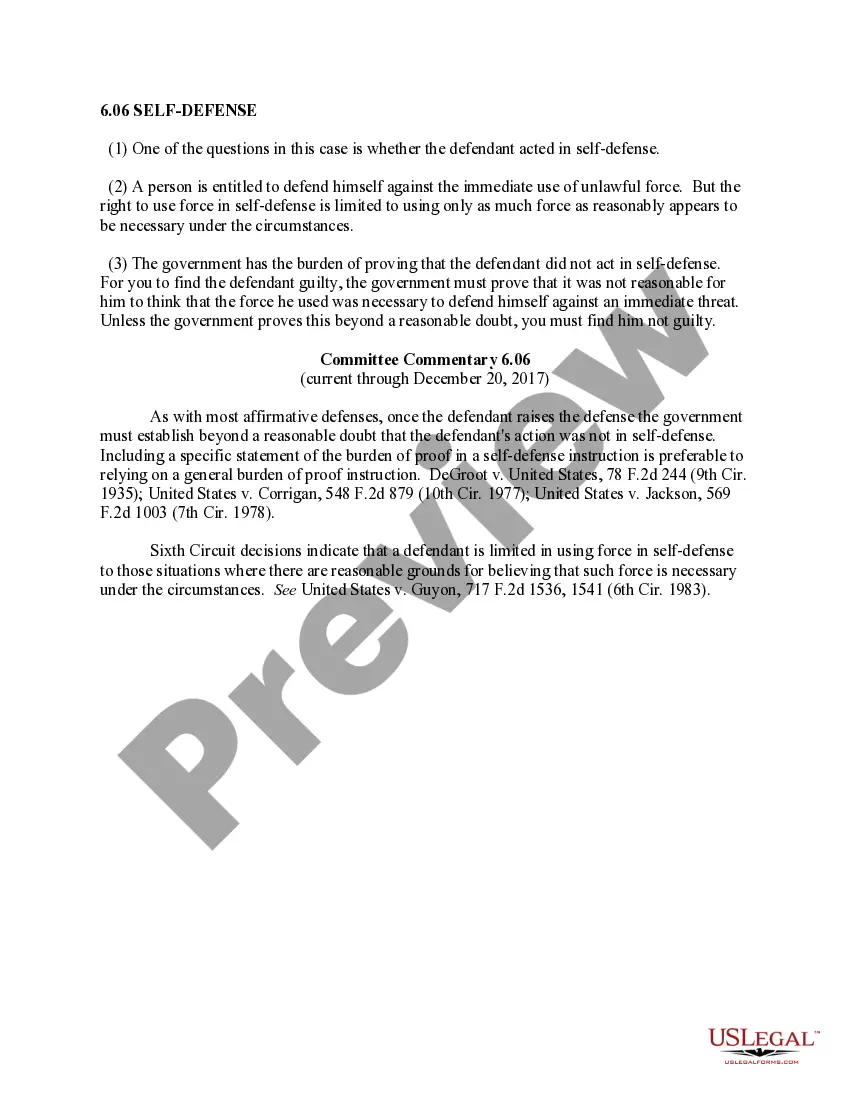
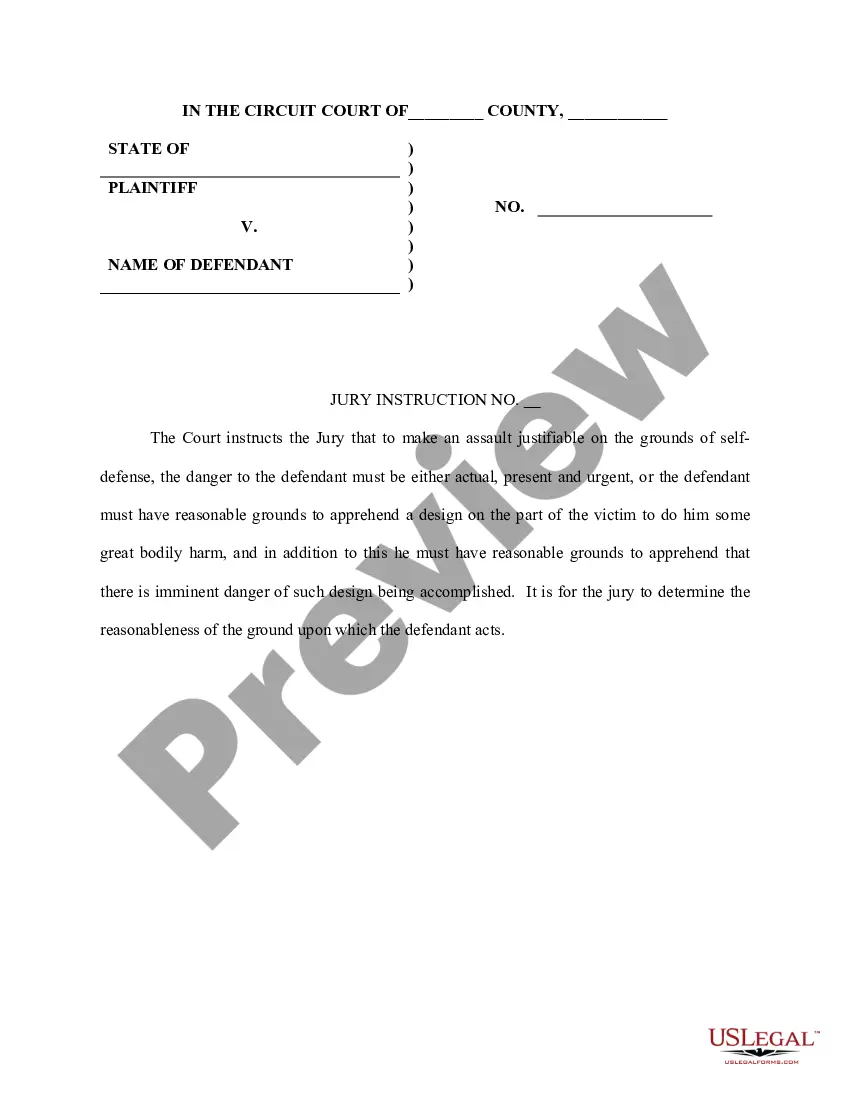
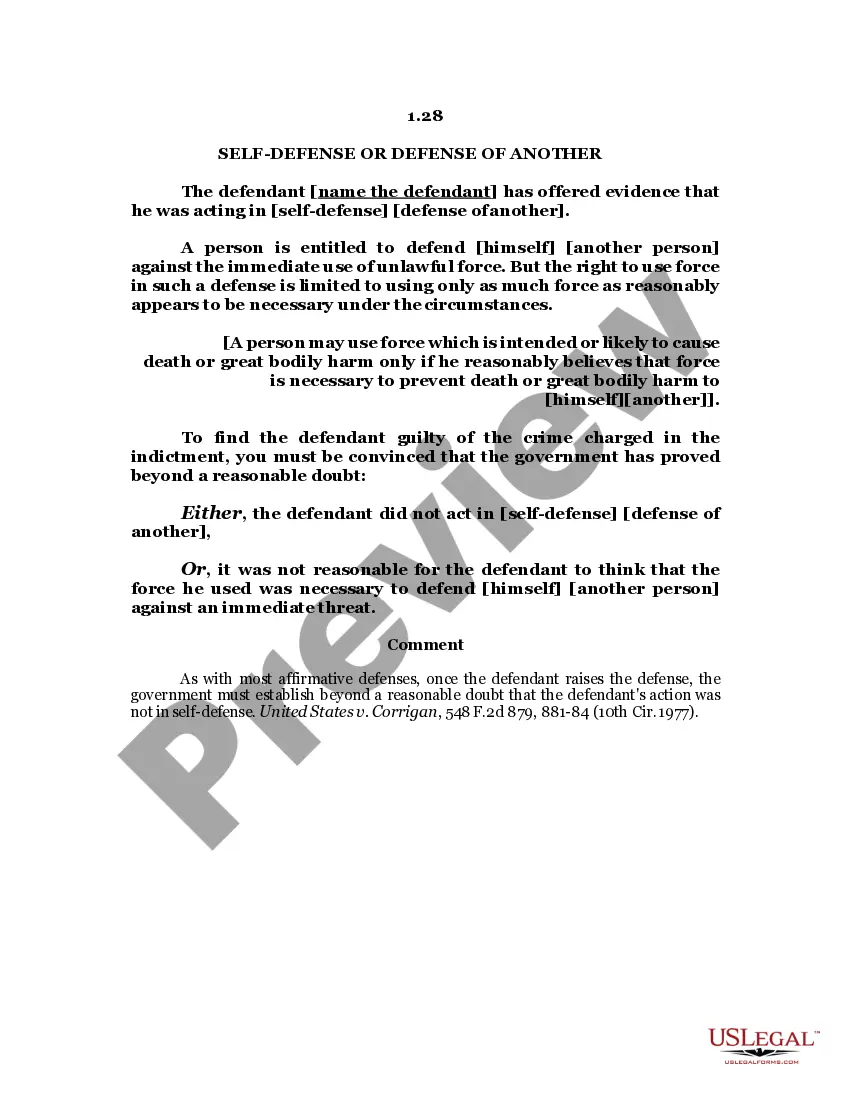
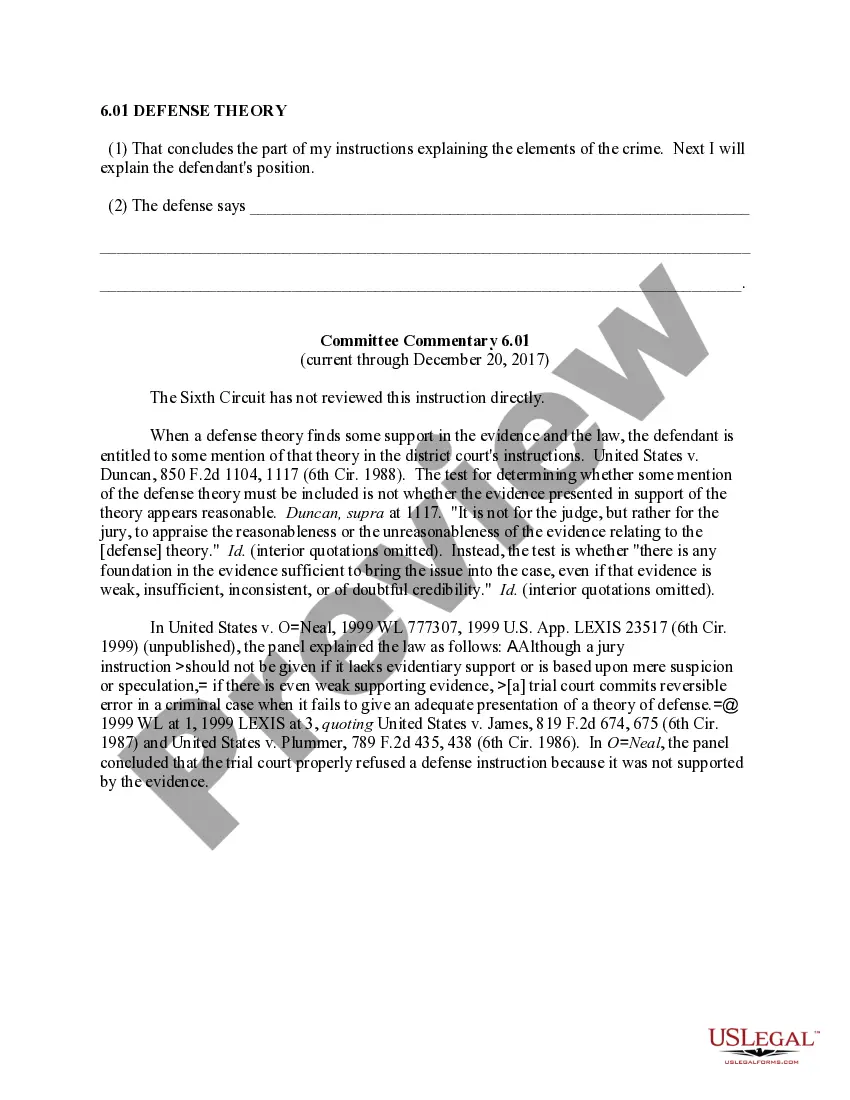
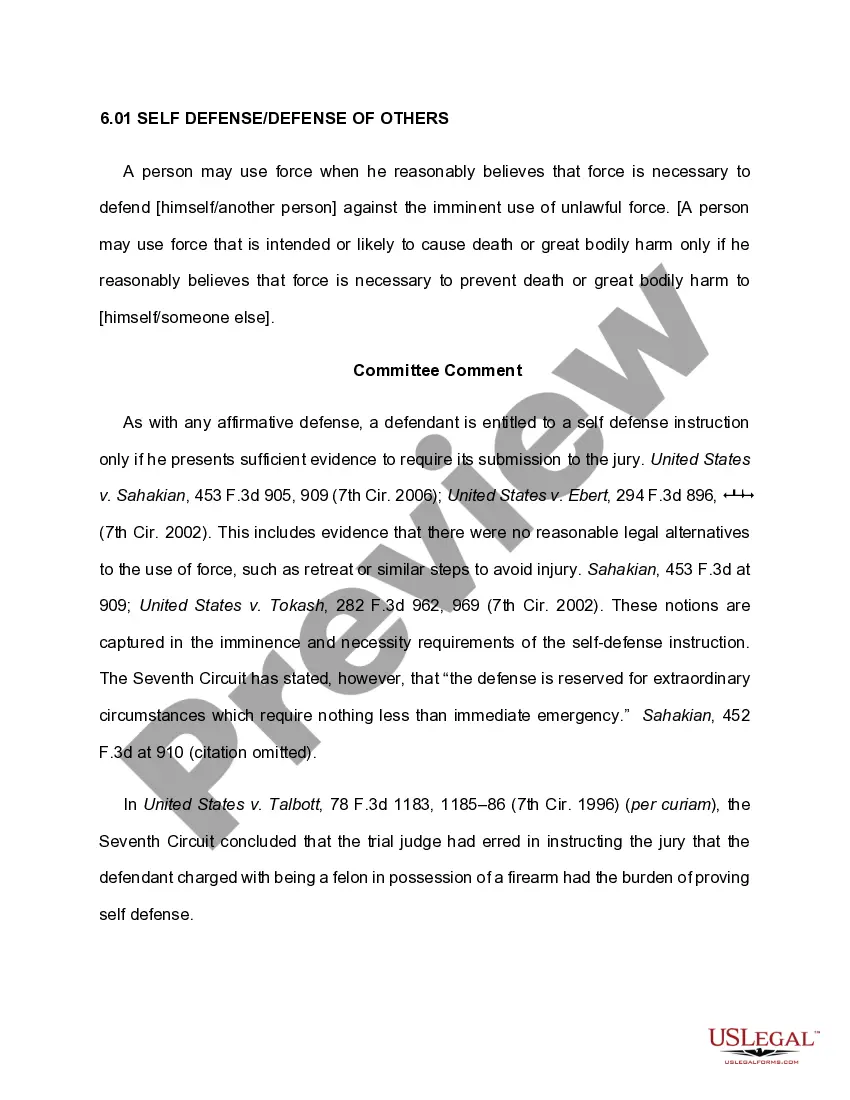
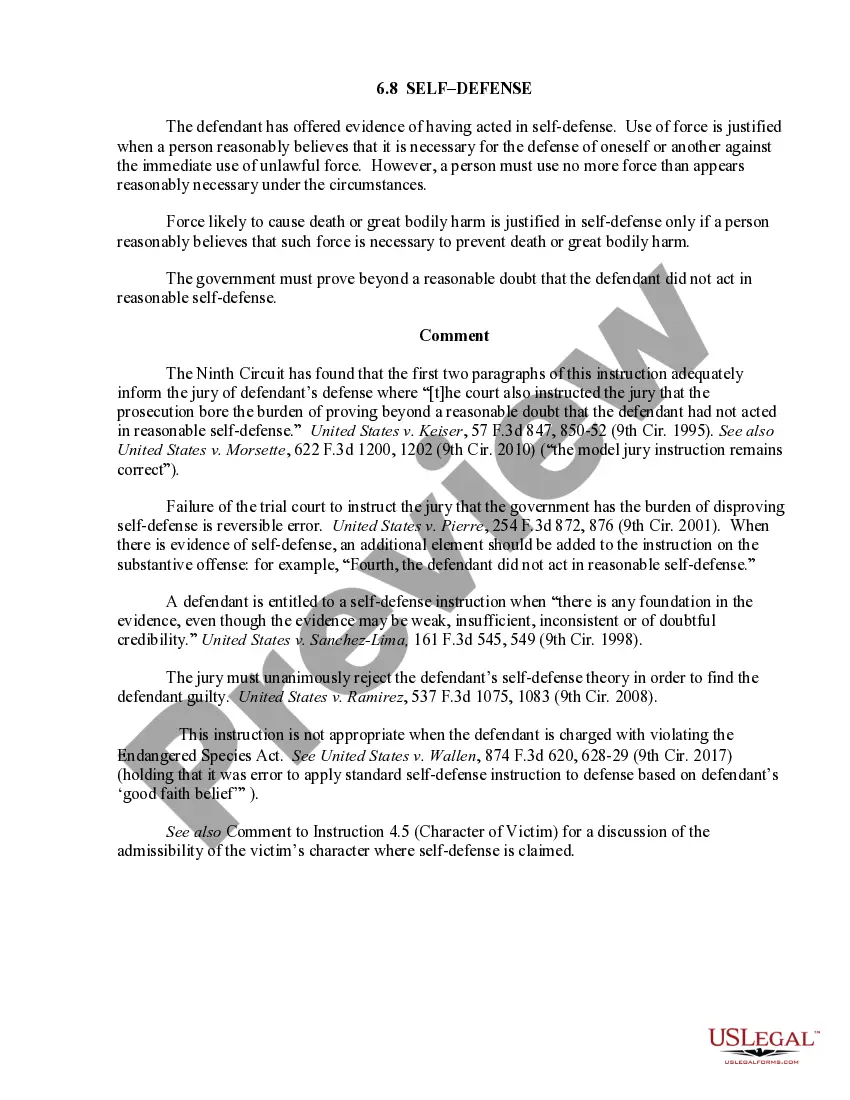
The Self-Defense form is a legal document that asserts a defendant's right to use reasonable force in defense against an immediate threat of unlawful force. This form is crucial in legal proceedings where self-defense is claimed as an affirmative defense. It differs from other legal forms by specifically addressing the justification of force used in self-defense cases and outlining the burden of proof on the government to prove that the defendant did not act in self-defense.
Key components of this form
- Definition of self-defense as a legal right
- Limitations on the use of force, requiring it to be reasonable
- Burden of proof placed on the government to disprove self-defense
- Specific legal citations supporting the self-defense instructions
When to use this document
This form is needed in situations where an individual faces legal charges related to the use of force, particularly in cases involving physical altercations. If a defendant claims they acted to protect themselves from imminent danger, this form will help establish the basis for that defense in court. It becomes essential in trials where the justification of force is questioned.
Who should use this form
- Defendants in criminal cases involving allegations of violence
- Individuals who have used force in a situation they believe to be a threat to their safety
- Legal representatives needing to present a defense based on self-defense laws
How to prepare this document
- Identify and state the parties involved in the incident.
- Describe the circumstances that led to the use of force.
- Specify the perceived threats that justified the use of force.
- Enter details about any witnesses to the event, if available.
- Review the entire form for accuracy before submission.
Does this document require notarization?
Notarization is generally not required for this form. However, certain states or situations might demand it. You can complete notarization online through US Legal Forms, powered by Notarize, using a verified video call available anytime.
Get your form ready online
Our built-in tools help you complete, sign, share, and store your documents in one place.
Make edits, fill in missing information, and update formatting in US Legal Forms—just like you would in MS Word.
Download a copy, print it, send it by email, or mail it via USPS—whatever works best for your next step.
Sign and collect signatures with our SignNow integration. Send to multiple recipients, set reminders, and more. Go Premium to unlock E-Sign.
If this form requires notarization, complete it online through a secure video call—no need to meet a notary in person or wait for an appointment.
We protect your documents and personal data by following strict security and privacy standards.

Make edits, fill in missing information, and update formatting in US Legal Forms—just like you would in MS Word.

Download a copy, print it, send it by email, or mail it via USPS—whatever works best for your next step.

Sign and collect signatures with our SignNow integration. Send to multiple recipients, set reminders, and more. Go Premium to unlock E-Sign.

If this form requires notarization, complete it online through a secure video call—no need to meet a notary in person or wait for an appointment.

We protect your documents and personal data by following strict security and privacy standards.
Typical mistakes to avoid
- Failing to provide a detailed account of the threat faced.
- Not adequately describing why the force used was considered reasonable.
- Omitting witness information or statements that support the claim.
- Relying on vague language instead of clear, specific claims of self-defense.
Benefits of completing this form online
- Convenient access to legal documentation from any location.
- Easy customization to fit specific case details.
- Prepared by licensed attorneys, ensuring legal soundness.
- No need for extensive legal knowledge; the form guides completion.
Looking for another form?

Form popularity
FAQ
The definite article (the) is used before a noun to indicate that the identity of the noun is known to the reader. The indefinite article (a, an) is used before a noun that is general or when its identity is not known.
Golden Rule #1: You may use no greater force than a reasonable person would deem necessary to defend against the threat proffered.
?The? is typically used in accompaniment with any noun with a specific meaning, or a noun referring to a single thing. The important distinction is between countable and non-countable nouns: if the noun is something that can't be counted or something singular, then use ?the?, if it can be counted, then us ?a? or ?an?.
Self-defense. n. the use of reasonable force to protect oneself or members of the family from bodily harm from the attack of an aggressor, if the defender has reason to believe he/she/they is/are in danger. Self-defense is a common defense by a person accused of assault, battery or homicide.
We can use now that as a conjunction to refer to something and its result(s): Now that she had his attention, she couldn't think of anything to say. In informal speaking we can leave out that: Now (that) the weather's nice, the children play outside all day.
And is a coordinating conjunction. We use and to connect two words, phrases, clauses or prefixes together: Televisions and computers are dominating our daily life. ( noun + noun)
Maryland does not have a stand your ground law. The state's case law imposes a duty to retreat before resorting to deadly force outside the home.
Iowa Law. Iowa has a stand your ground law which removes the duty to retreat before using force in self defense or in defense of another.