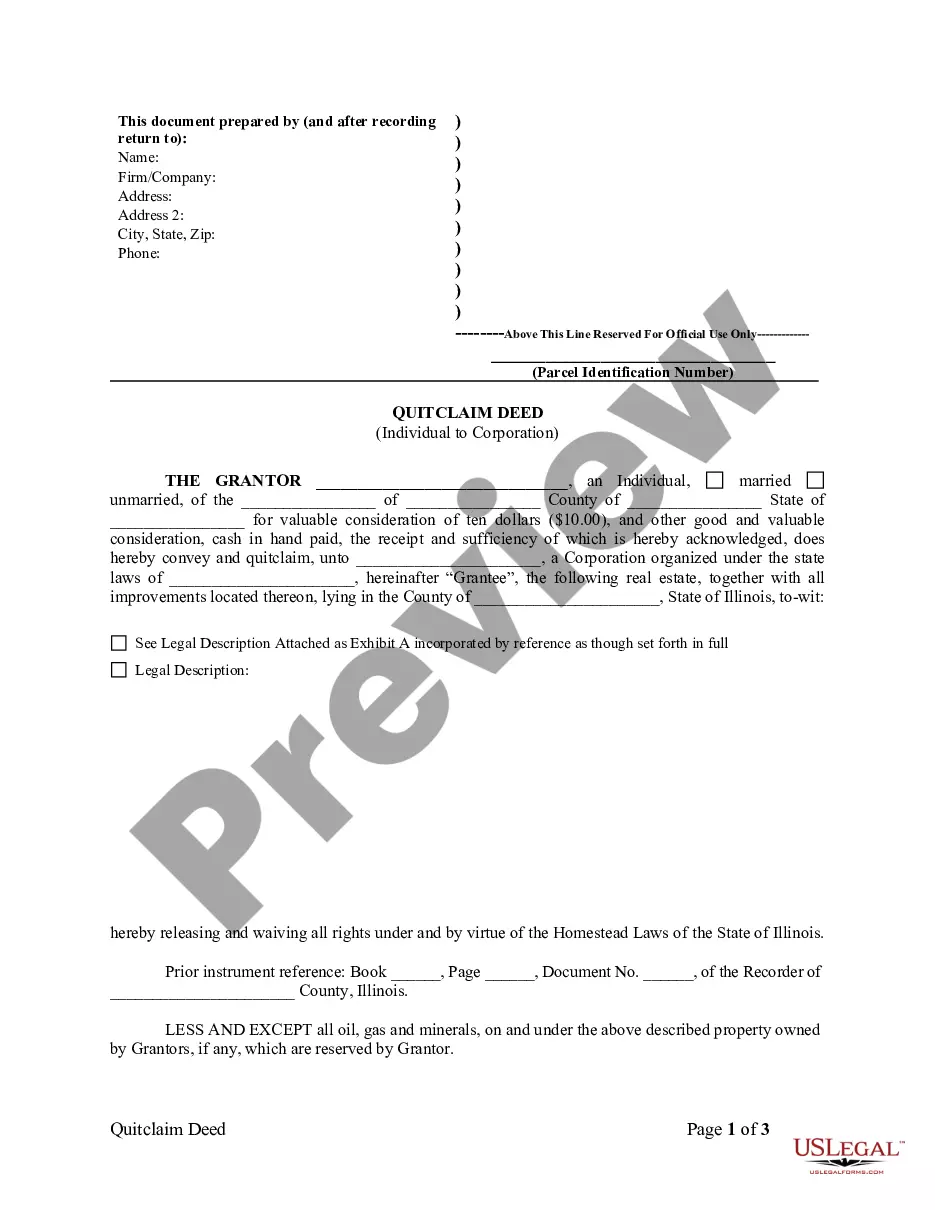
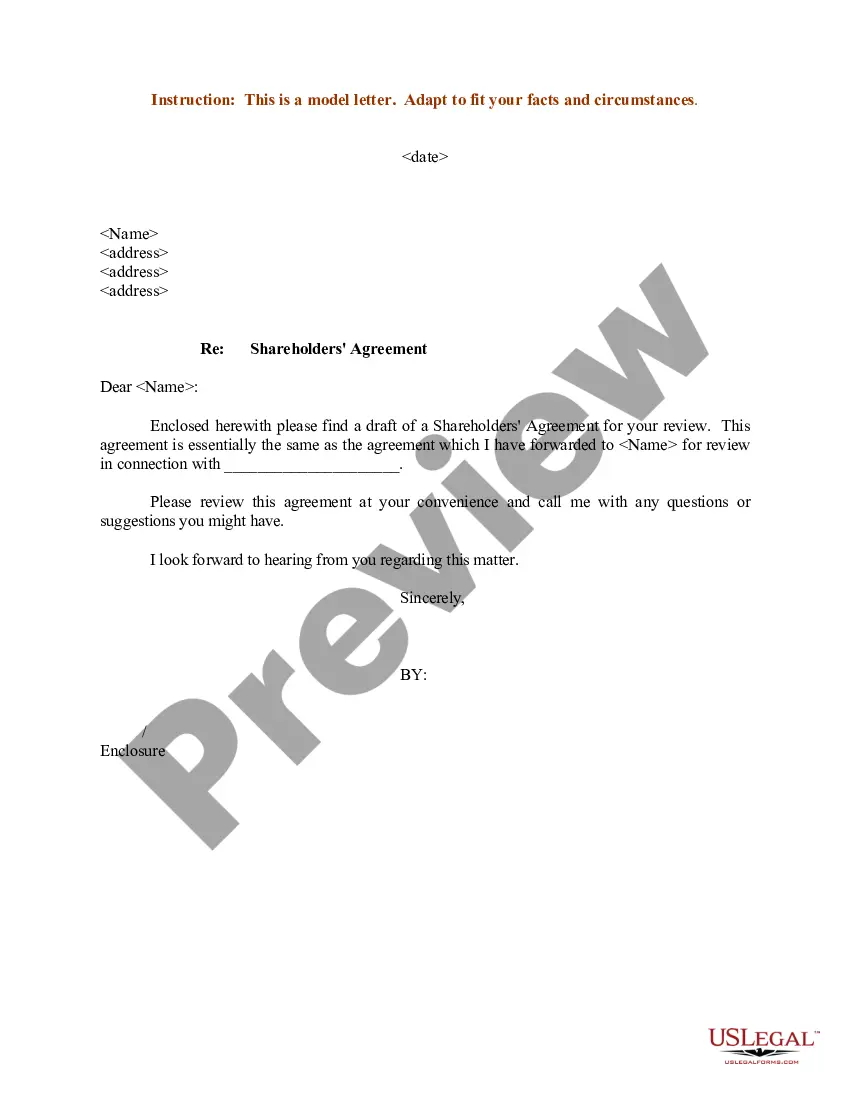
Sample Letter regarding Draft of Shareholder's Agreement
What is this form?
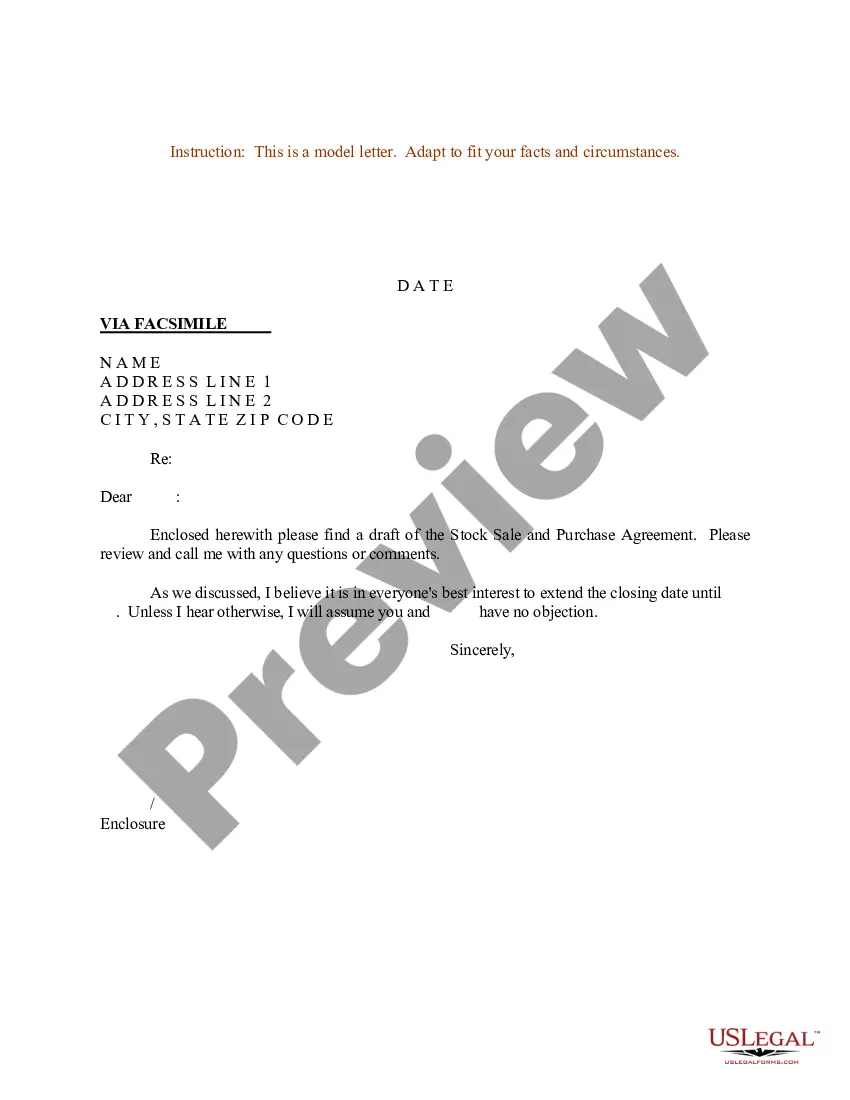
The Sample Letter regarding Draft of Shareholder's Agreement is a formal document used to communicate with stakeholders about the preparation of a shareholder's agreement. This letter serves to inform the relevant parties about key terms being discussed and to invite feedback on the draft. It is an essential tool for fostering clear communication among potential shareholders and ensuring that everyone's interests are considered, distinguishing it from a finalized shareholder agreement which is a legally binding document.
Key parts of this document
- Date of the letter
- Recipient's name and address
- Subject line indicating the purpose of the letter
- Greeting
- Main body discussing the shareholder's agreement draft
- Closure and signature section
When this form is needed
This form is typically used when a company is in the process of drafting a shareholder's agreement. It is essential for notifying shareholders or stakeholders about the progress of the draft, gathering their thoughts, or addressing any concerns they might have before the document is finalized. Use this letter when you want to ensure transparency and collaboration among stakeholders regarding business agreements.
Intended users of this form
This form is intended for:
- Business owners planning to create a shareholder's agreement
- Corporate secretaries or legal assistants who facilitate communication between parties
- Shareholders who need to stay informed about the drafting process
Instructions for completing this form
To complete this form, follow these steps:
- Identify and enter the date at the top of the letter.
- Fill in the recipient's name and address accurately.
- Specify the subject line to clarify the letter's purpose.
- Draft the main body detailing the shareholder's agreement, including key points for discussion.
- Conclude with a respectful closing statement and your signature.
Notarization requirements for this form
This form does not typically require notarization unless specified by local law. However, it is always wise to check state regulations to ensure compliance with any additional requirements.
Get your form ready online
Our built-in tools help you complete, sign, share, and store your documents in one place.
Make edits, fill in missing information, and update formatting in US Legal Forms—just like you would in MS Word.
Download a copy, print it, send it by email, or mail it via USPS—whatever works best for your next step.
Sign and collect signatures with our SignNow integration. Send to multiple recipients, set reminders, and more. Go Premium to unlock E-Sign.
If this form requires notarization, complete it online through a secure video call—no need to meet a notary in person or wait for an appointment.
We protect your documents and personal data by following strict security and privacy standards.

Make edits, fill in missing information, and update formatting in US Legal Forms—just like you would in MS Word.

Download a copy, print it, send it by email, or mail it via USPS—whatever works best for your next step.

Sign and collect signatures with our SignNow integration. Send to multiple recipients, set reminders, and more. Go Premium to unlock E-Sign.

If this form requires notarization, complete it online through a secure video call—no need to meet a notary in person or wait for an appointment.

We protect your documents and personal data by following strict security and privacy standards.
Avoid these common issues
- Forgetting to include a clear subject line.
- Incorrectly addressing the recipient's name or title.
- Failing to summarize key elements of the shareholder's agreement draft.
- Not providing a space for feedback or questions from the recipients.
Benefits of using this form online
- Convenient online access to the form allows quick download and customization.
- Editability ensures that you can tailor the letter to your specific situation.
- Reliability of the form drafted by licensed attorneys ensures legal compliance.
- The letter serves as a communication tool rather than a legally enforceable contract.
- While it encourages collaboration, it does not obligate parties until a formal agreement is signed.
- Ensure all parties understand that this letter is part of the negotiation process.
Key takeaways
- The Sample Letter regarding Draft of Shareholder's Agreement is crucial for facilitating discussions among potential shareholders.
- Complete the letter with attention to detail to avoid common mistakes.
- Utilizing this letter helps maintain transparency and encourages active participation from stakeholders.
Looking for another form?
Form popularity
FAQ
Give it a complex structure. So one needs to be clear on the concepts like the instruments used (equity shares, preference shares, debentures, etc.), rights involved (veto rights, voting rights, anti-dilution rights, etc.), the intent of the parties, etc.
Normally an agreement can only be changed by unanimous agreement among the shareholders or partners. A deed of variation, or an entirely new agreement, will need to be drawn up and signed by all the shareholders or partners.
Does everyone have to sign a shareholders' agreement? A shareholder cannot be compelled to sign a shareholders' agreement i.e. each shareholder should enter into it voluntarily.
Who needs to sign the Shareholders' Agreement? Each shareholder must sign the Shareholders' Agreement. In addition, a representative of the company should sign.
Introduction. Why have a Shareholders' Agreement? Identify the interests of the Shareholders. Identify Shareholder Value. Identify who will make decisions - Shareholders or Directors? Decide how the voting power of Shareholders should add up. Decide on the issues that the Shareholders' Agreement should cover.
The Supreme Court ruled that shareholders can enter into any agreement deemed best for the company, except for the provisions in the shareholders agreement shall not be contrary to the articles of association.The parties that agreed to the agreement can avail of remedies for breach of an agreement.
Common problem areas include the following: Directors -v- members. Transfer of shares. Approving a change in business direction. Managing changes in the roles shareholders play. Injection of debt. Competition. Exit.
An agreement can provide for many eventualities including the financing of the company, the management of the company, the dividend policy, the procedure to be followed on a transfer of shares, deadlock situations and valuation of the shares. What different types of shareholders' agreements are there?