Underground Storage Lease and Agreement (Surface and Minerals)
About this form
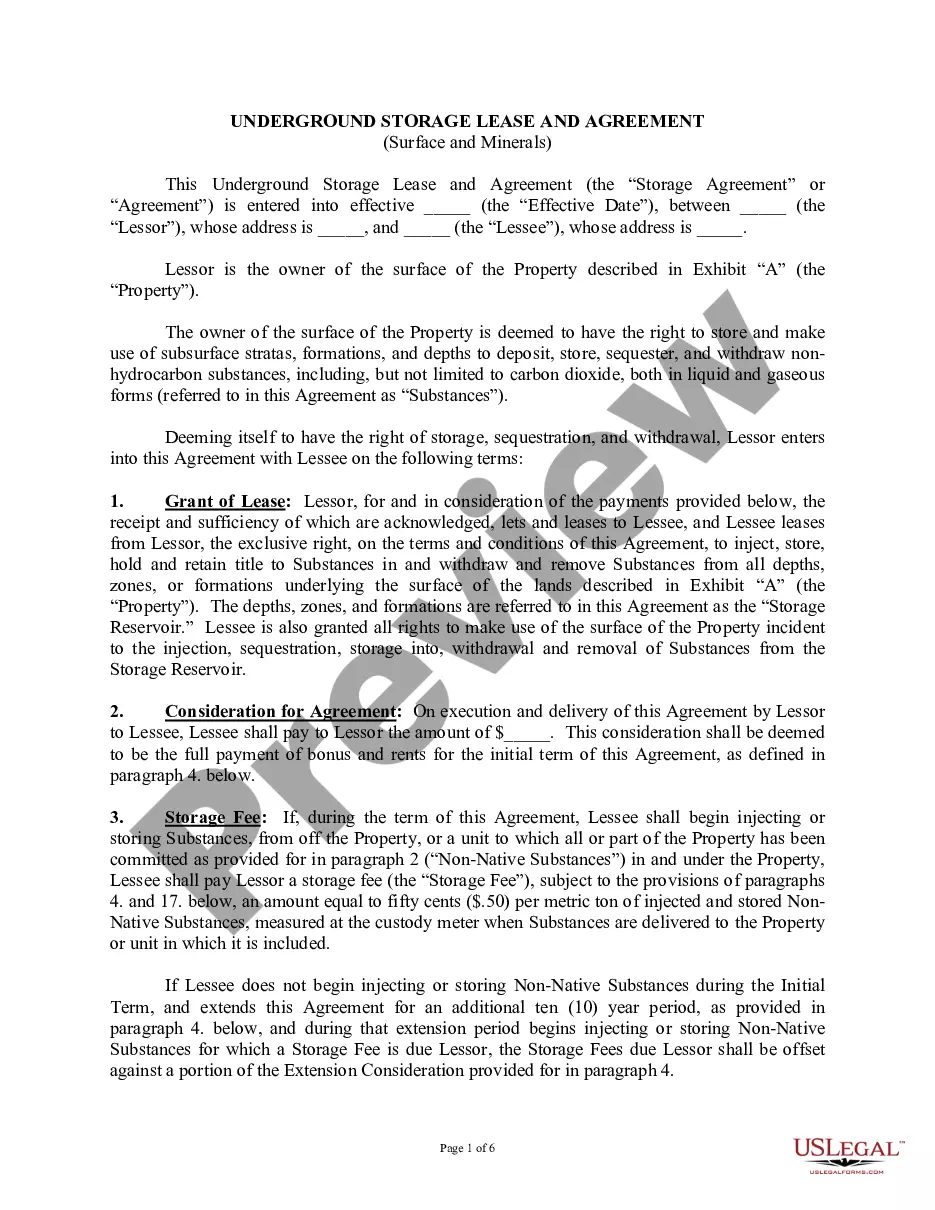
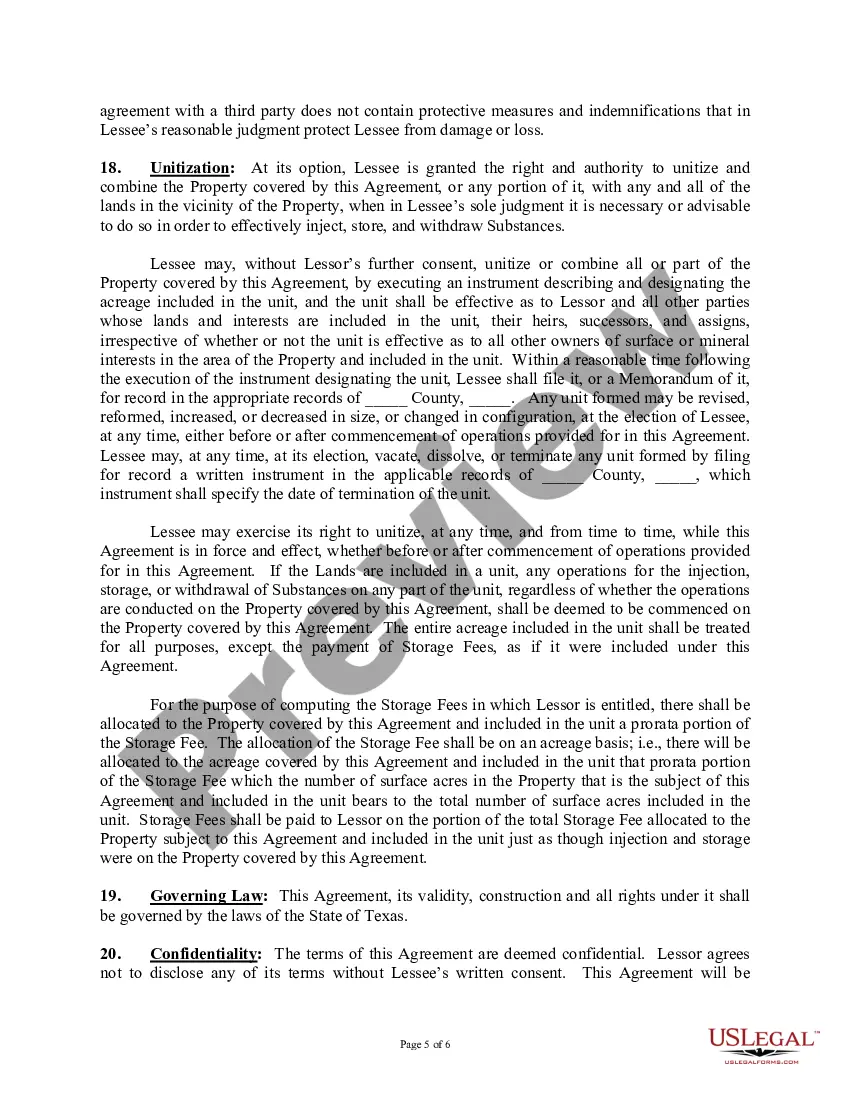
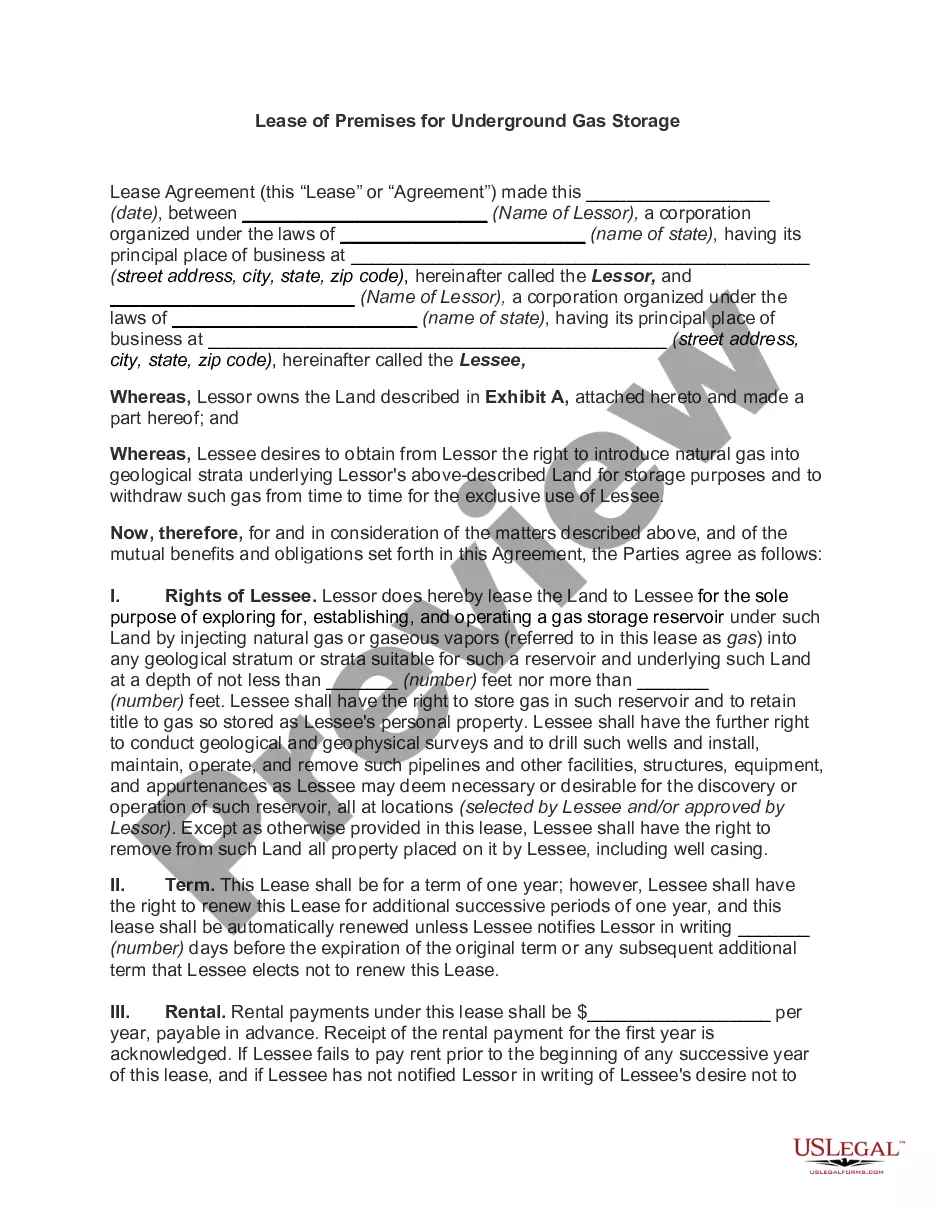
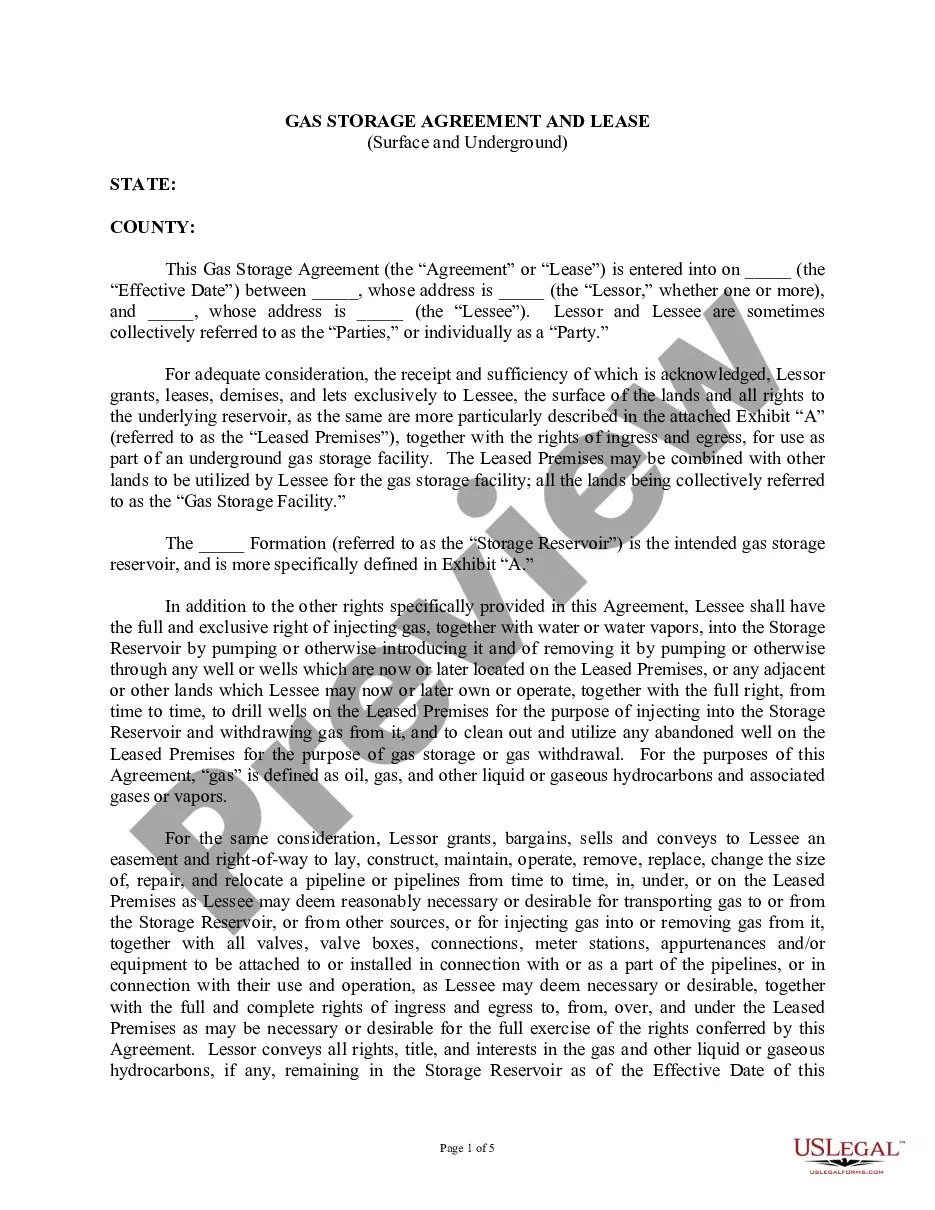
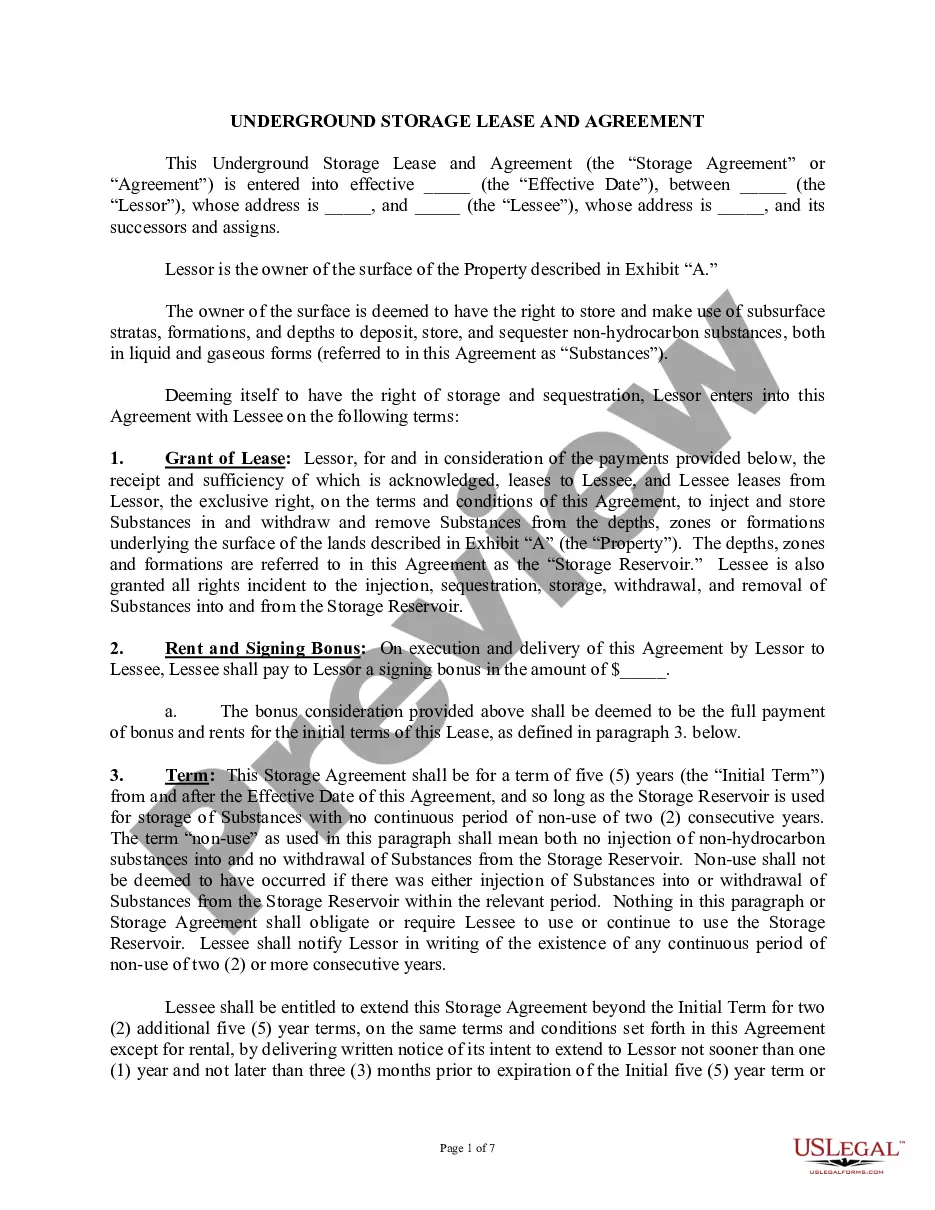
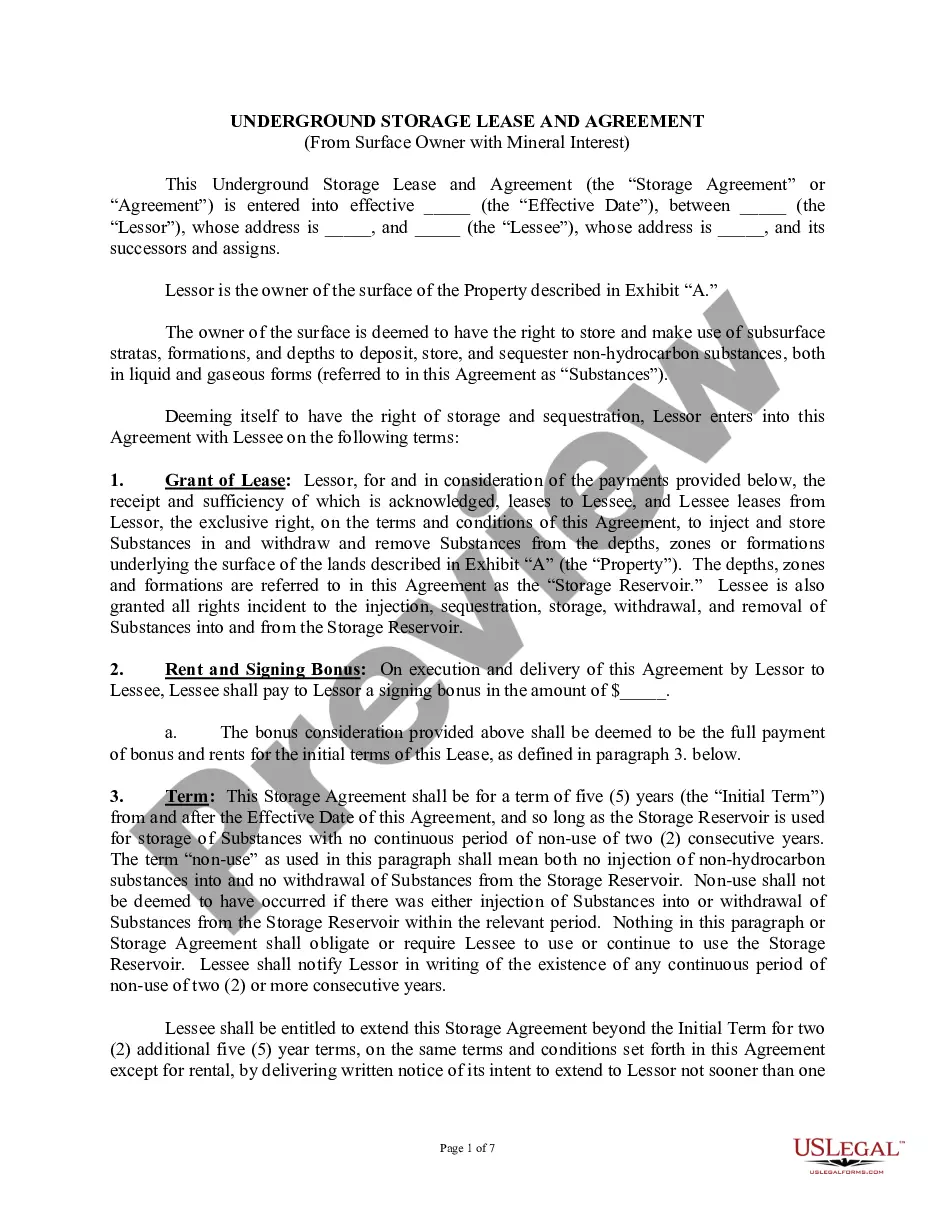
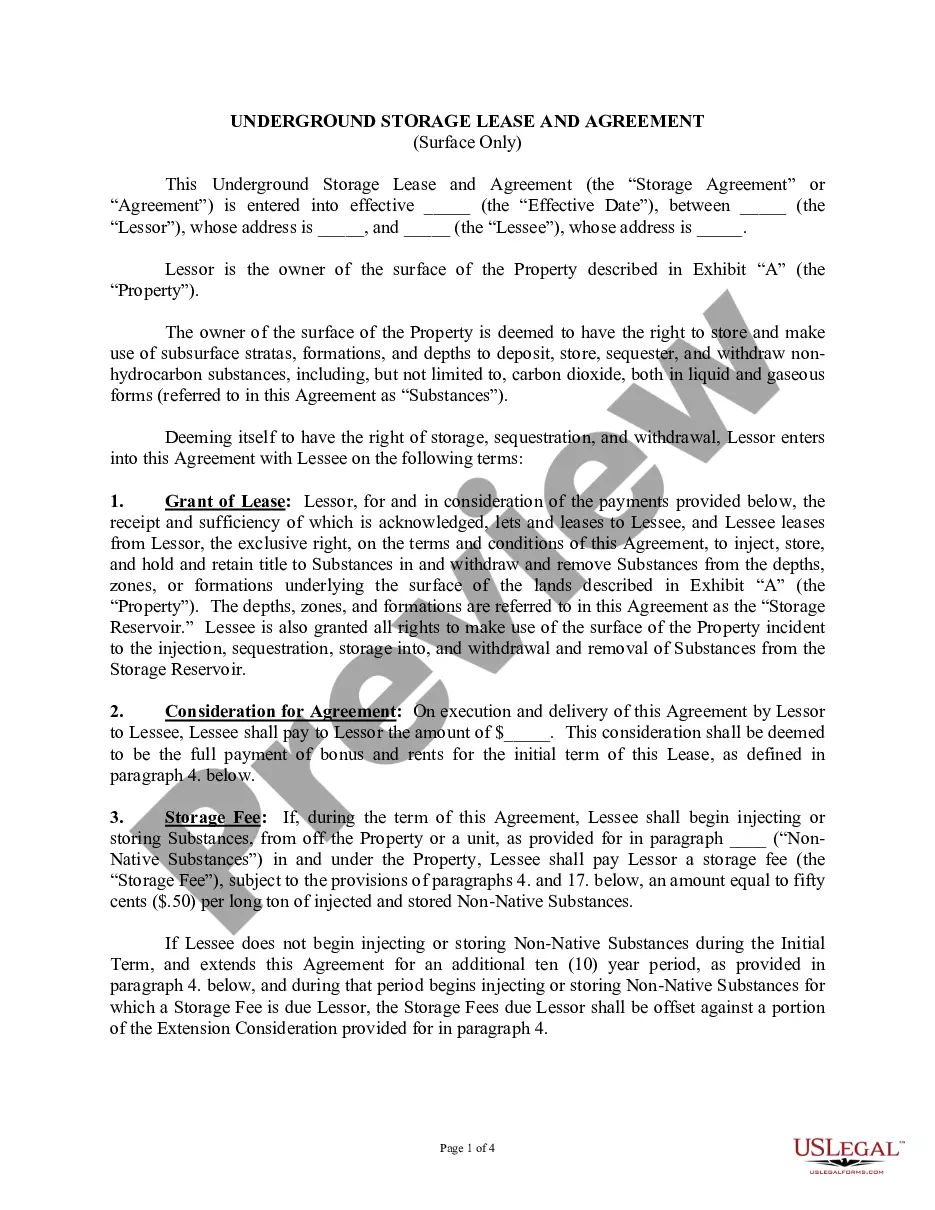
The Underground Storage Lease and Agreement (Surface and Minerals) is a legal document that establishes the terms under which the surface owner (Lessor) allows another party (Lessee) to inject, store, and withdraw non-hydrocarbon substances, such as carbon dioxide, from underground formations. This form is specific to arrangements involving both surface land and mineral rights, differentiating it from standard leasing agreements that may only pertain to one aspect.
Key components of this form
- Effective date and details of the parties involved.
- Grant of lease outlining the exclusive rights to use the storage reservoir.
- Consideration for the agreement, including initial payments and storage fees.
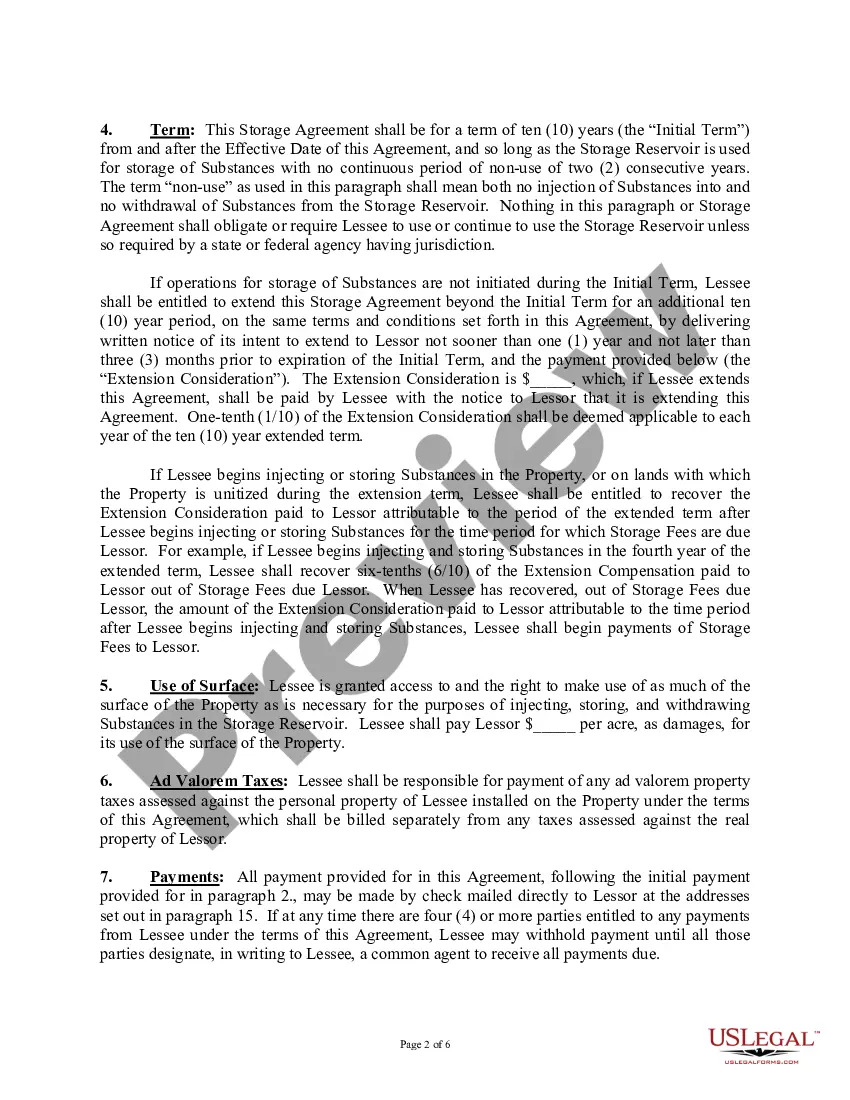
- Term of the lease, specifying the duration and conditions for renewal.
- Provisions regarding use of the surface area for storage activities.
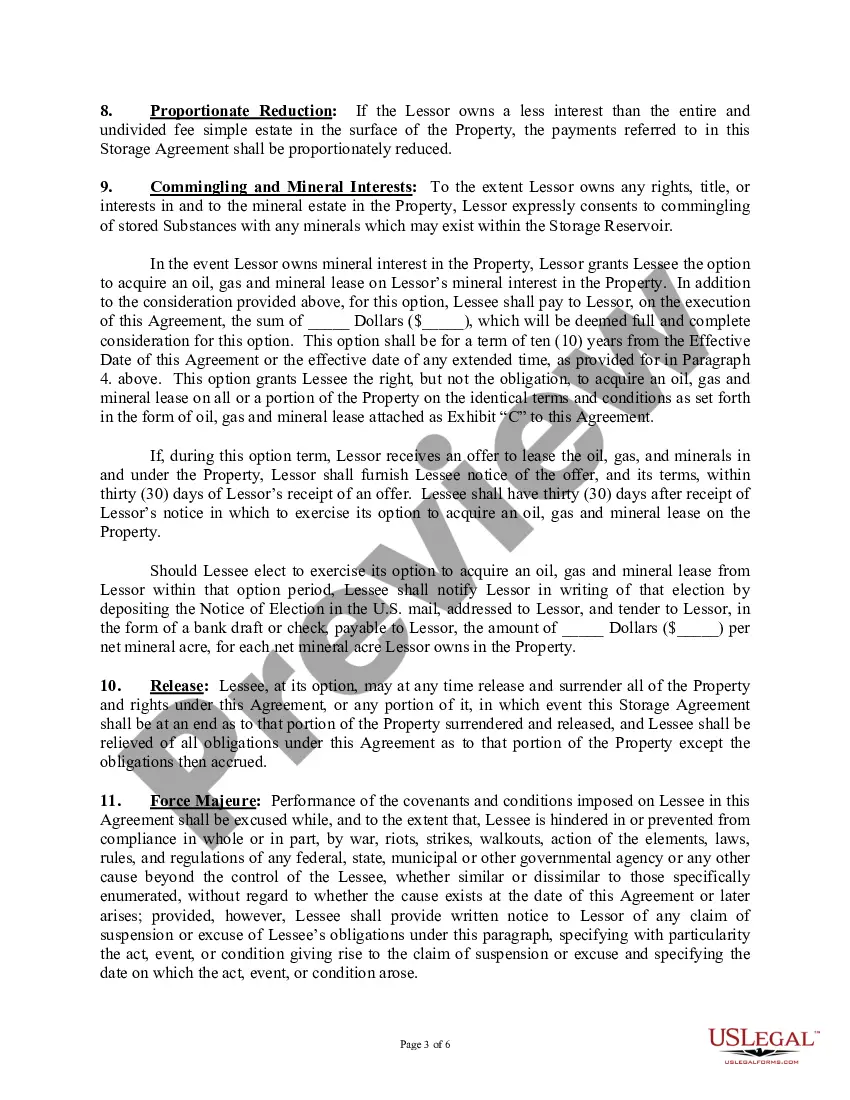
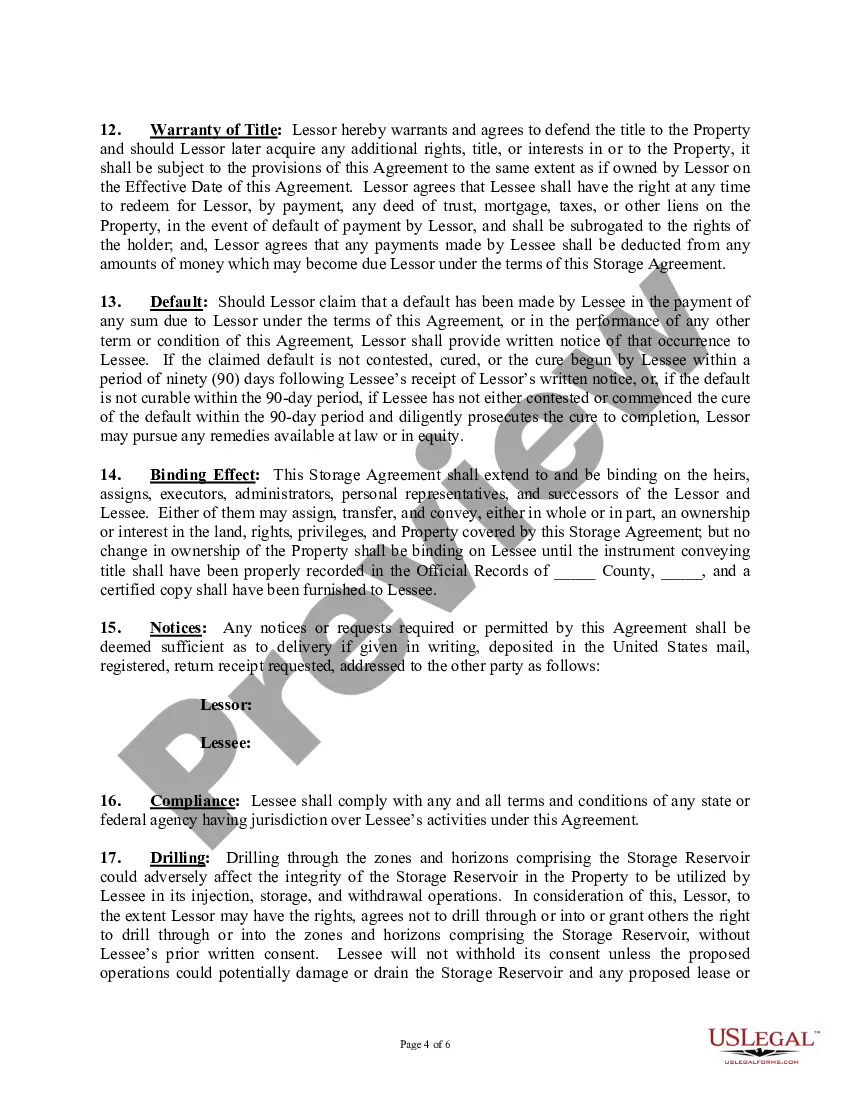
- Rights related to drilling and mineral interests on the property.
When to use this document
This form is necessary when a surface owner wants to permit another entity to store non-hydrocarbon substances underground. It is commonly used in contexts such as carbon capture projects or when dealing with long-term storage of industrial byproducts. The agreement defines responsibilities, rights, and compensation, making it essential in ensuring both parties are protected during the leasing period.
Who this form is for
- Landowners who wish to lease their property for underground storage purposes.
- Companies or entities seeking to use subterranean spaces for environmental projects or resource management.
- Legal professionals assisting clients in drafting or reviewing storage agreements.
- Investors or stakeholders in areas where underground storage could be beneficial.
Steps to complete this form
- Identify and enter the names and addresses of the Lessor and Lessee.
- Specify the effective date of the agreement.
- Clearly describe the property involved in the agreement, including dimensions and characteristics.
- State the initial payment amount along with any ongoing storage fees.
- Sign and date the document, ensuring all parties understand the terms outlined in the agreement.
Notarization guidance
In most cases, this form does not require notarization. However, some jurisdictions or signing circumstances might. US Legal Forms offers online notarization powered by Notarize, accessible 24/7 for a quick, remote process.
Get your form ready online
Our built-in tools help you complete, sign, share, and store your documents in one place.
Make edits, fill in missing information, and update formatting in US Legal Forms—just like you would in MS Word.
Download a copy, print it, send it by email, or mail it via USPS—whatever works best for your next step.
Sign and collect signatures with our SignNow integration. Send to multiple recipients, set reminders, and more. Go Premium to unlock E-Sign.
If this form requires notarization, complete it online through a secure video call—no need to meet a notary in person or wait for an appointment.
We protect your documents and personal data by following strict security and privacy standards.

Make edits, fill in missing information, and update formatting in US Legal Forms—just like you would in MS Word.

Download a copy, print it, send it by email, or mail it via USPS—whatever works best for your next step.

Sign and collect signatures with our SignNow integration. Send to multiple recipients, set reminders, and more. Go Premium to unlock E-Sign.

If this form requires notarization, complete it online through a secure video call—no need to meet a notary in person or wait for an appointment.

We protect your documents and personal data by following strict security and privacy standards.
Mistakes to watch out for
- Failing to clearly define the property boundaries in the agreement.
- Not specifying the types of substances allowed for storage.
- Overlooking state-specific regulations that may impact the agreement.
- Neglecting to include a detailed payment structure and conditions for payment.
- Not ensuring both parties sign and date the document appropriately.
Why complete this form online
- Immediate access to a professionally drafted legal template.
- Editable for customization to meet specific needs and requirements.
- Easy downloading and printing for all parties involved.
- Access to legal support and guidance when needed.
- Convenience of completing the form at any time without the necessity of a lawyer's office visit.
Legal use & context
- This form provides a clear framework for the rights and responsibilities of both parties involved.
- Failure to follow the terms outlined in this agreement could lead to legal disputes.
- It is essential for both parties to keep copies of the executed agreement for their records.
What to keep in mind
- The Underground Storage Lease and Agreement is essential for delineating rights related to underground storage.
- Understanding key components helps to prevent misunderstandings and potential disputes.
- Always review state-specific regulations for compliance when using this form.
Looking for another form?


Form popularity
FAQ
A mineral lease is a property conveyance because the mineral owner grants a transfer of possession, easements or other property rights through the document.
Nationally, mineral rights owners can expect anywhere from $100 to $5,000 per acre for their mineral rights lease. The most valuable mineral rights leases are on producing parcels of land that are still expected to hold many more precious minerals.
Mineral rights are automatically included as a part of the land in a property conveyance, unless and until the ownership gets separated at some point by an owner/seller. An owner can separate the mineral rights from his or her land by:Conveying the land to one person and the mineral rights to another.
If you are ready to list or purchase mineral rights, the best mineral rights value rule of thumb to use is the current market price. Today, your mineral rights may sell for $2,000 an acre, but if the developers drill a few dry wells tomorrow, that value could plummet.
The surface lease is the document used by the operator to legally secure its interest in the surface of the land for the purpose of extracting the oil or gas. A surface lease is required for any above surface structure which typically includes wells, access roads and other oil and gas facilities.
When it comes to mineral rights, the standard admonition has long been consistent and emphatic: Avoid selling them. After all, simply owning mineral rights costs you nothing. There are no liability risks, and in most cases, taxes are assessed only on properties that are actively producing oil or gas.
To check if you own mineral rights, then you should start by getting a copy of your deed. If you do not already have a copy, then go to the county Recorder's office and get a copy. Look to see if you were conveyed fee simple title to the property.
Mineral rights don't come into effect until you begin to dig below the surface of the property. But the bottom line is: if you do not have the mineral rights to a parcel of land, then you do not have the legal ability to explore, extract, or sell the naturally occurring deposits below.
One important factor you must keep in mind is that if real estate contains mineral rights, simply buying the property doesn't make you the owner of them. Since mineral rights can be sold separately from the land itself, even if you own the land, someone else may hold ownership of what's below it.