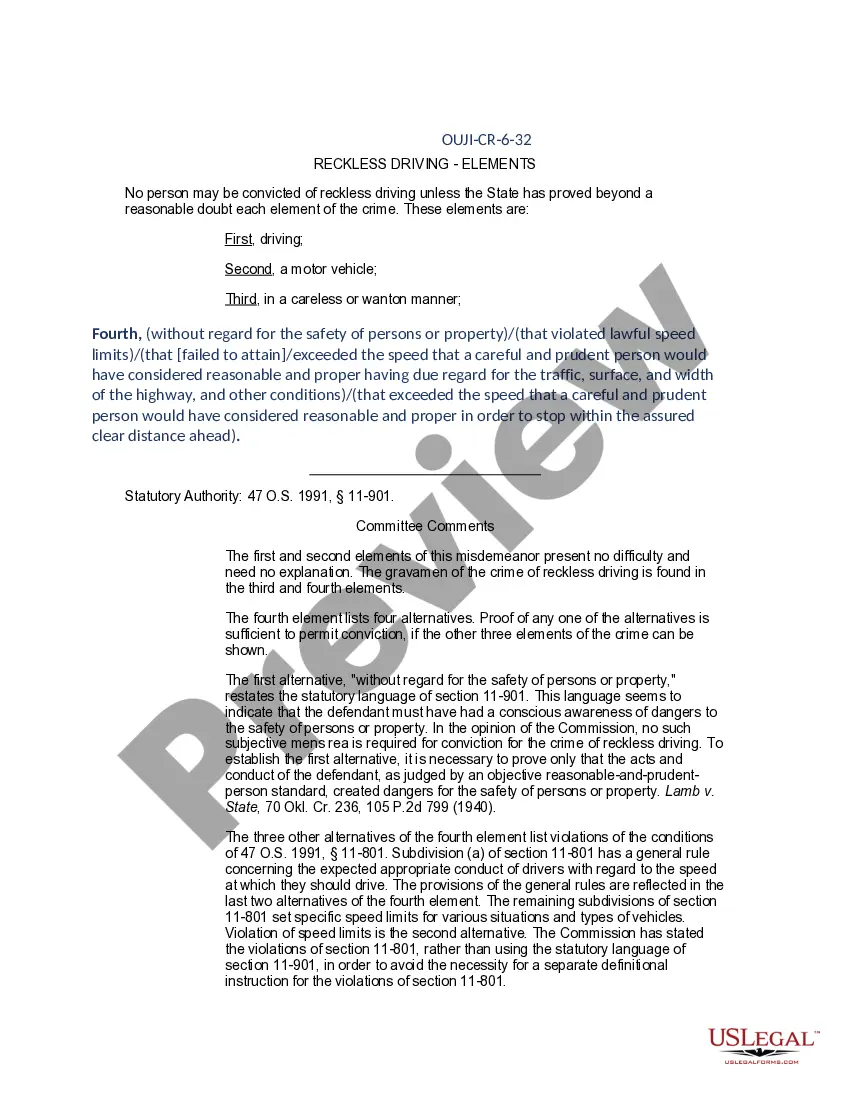
Gas Storage Agreement and Lease (Surface and Underground)
Understanding this form
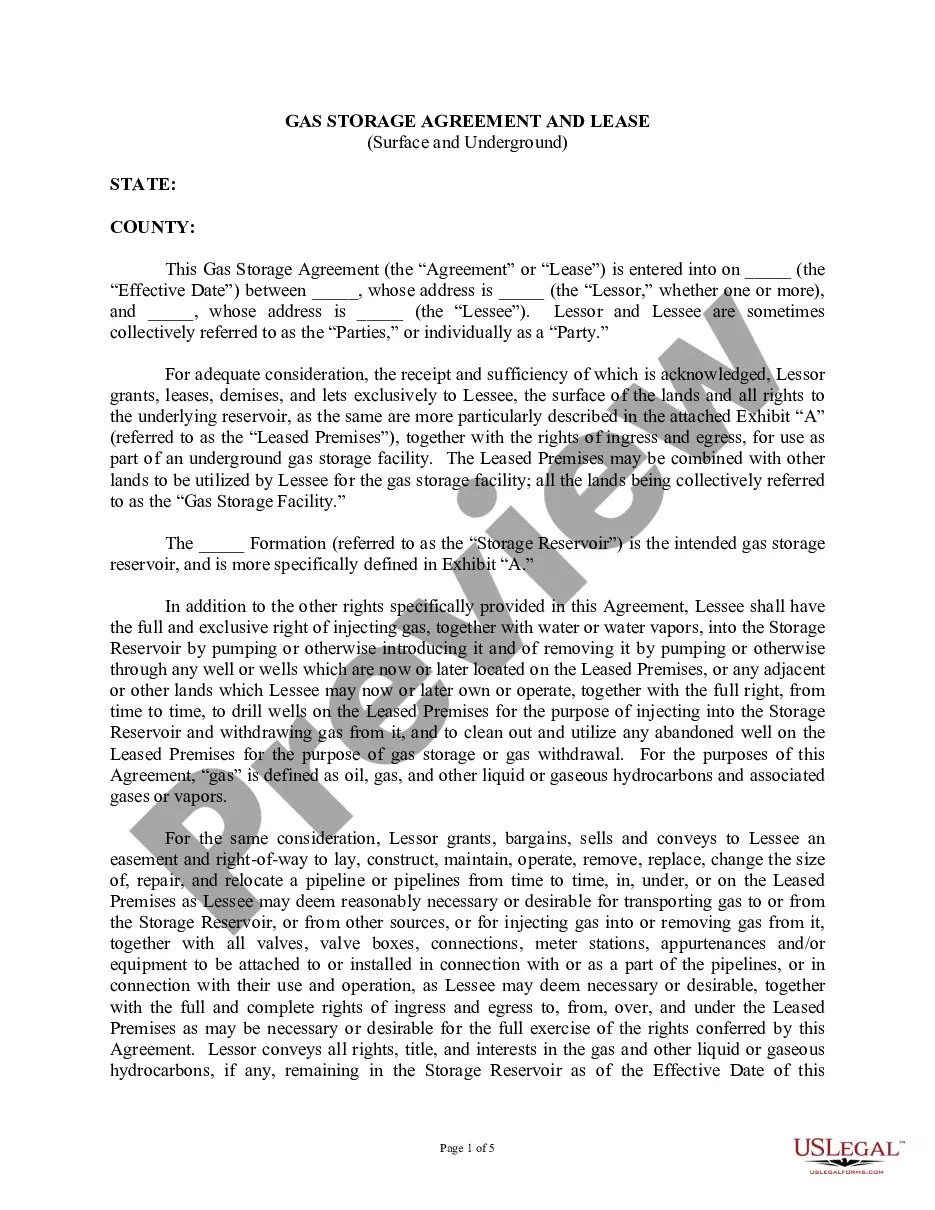
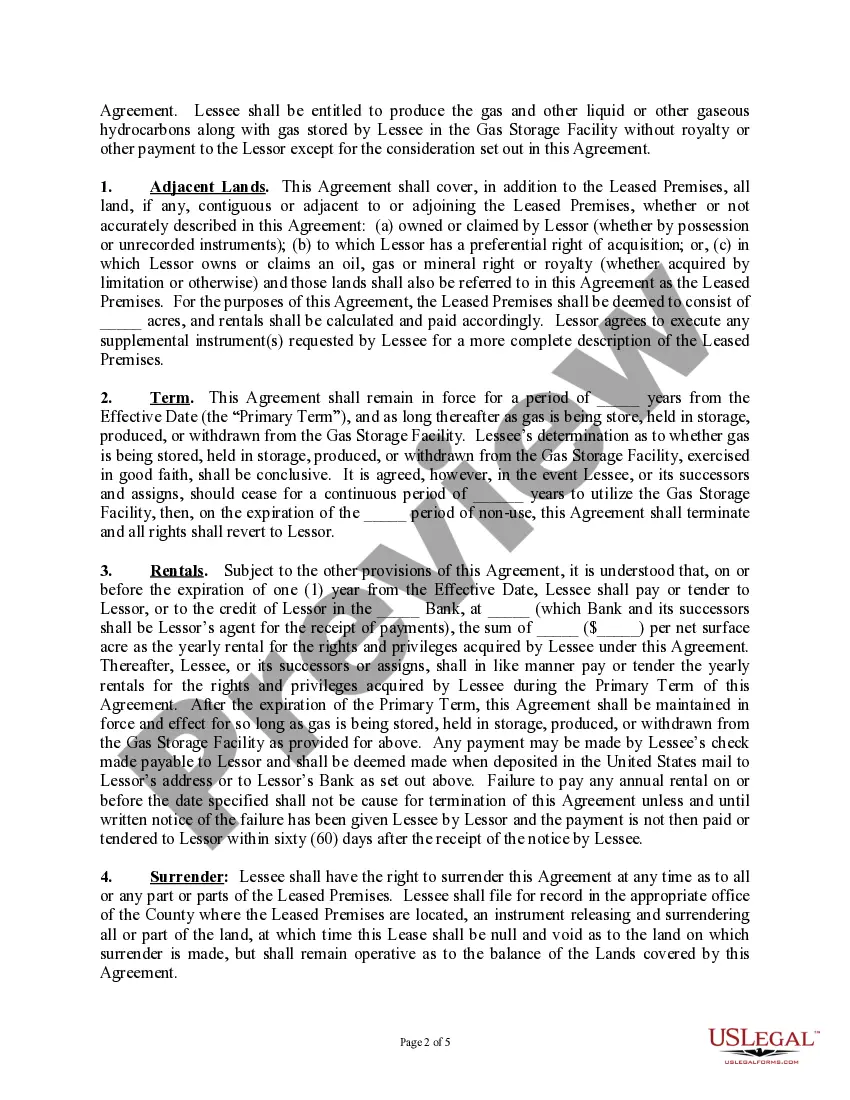
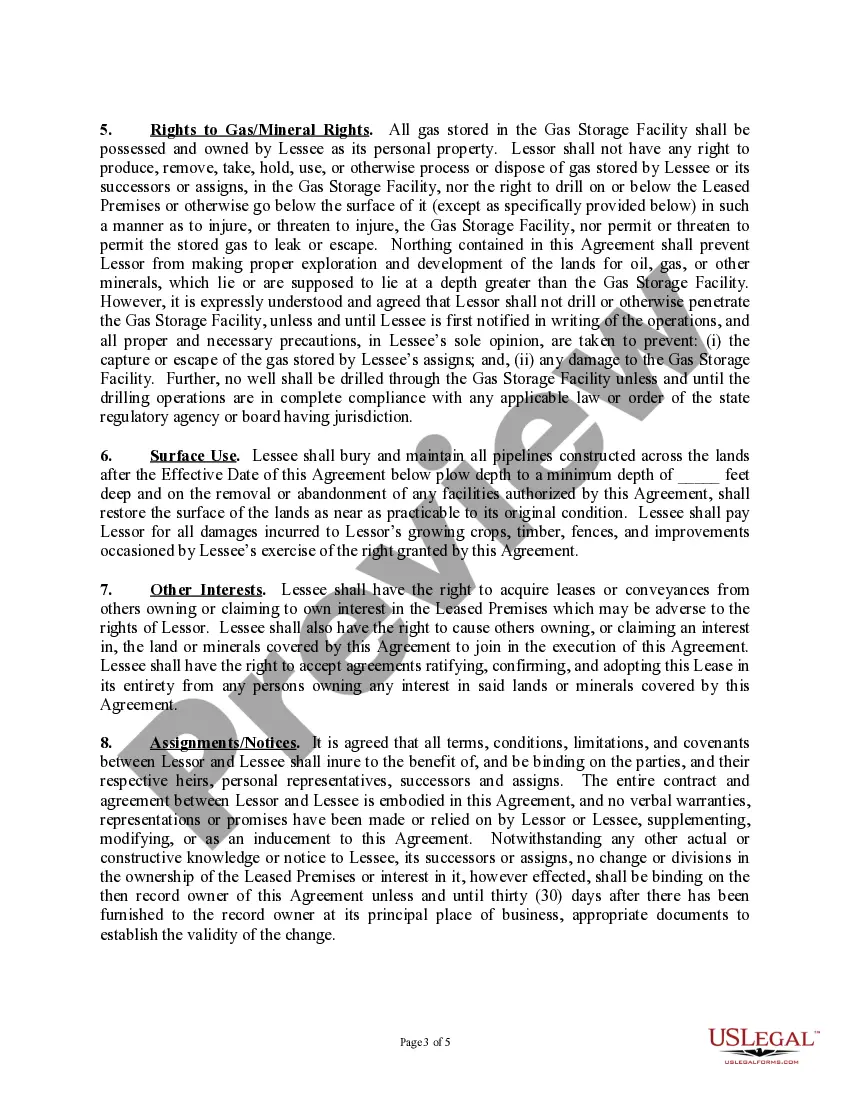
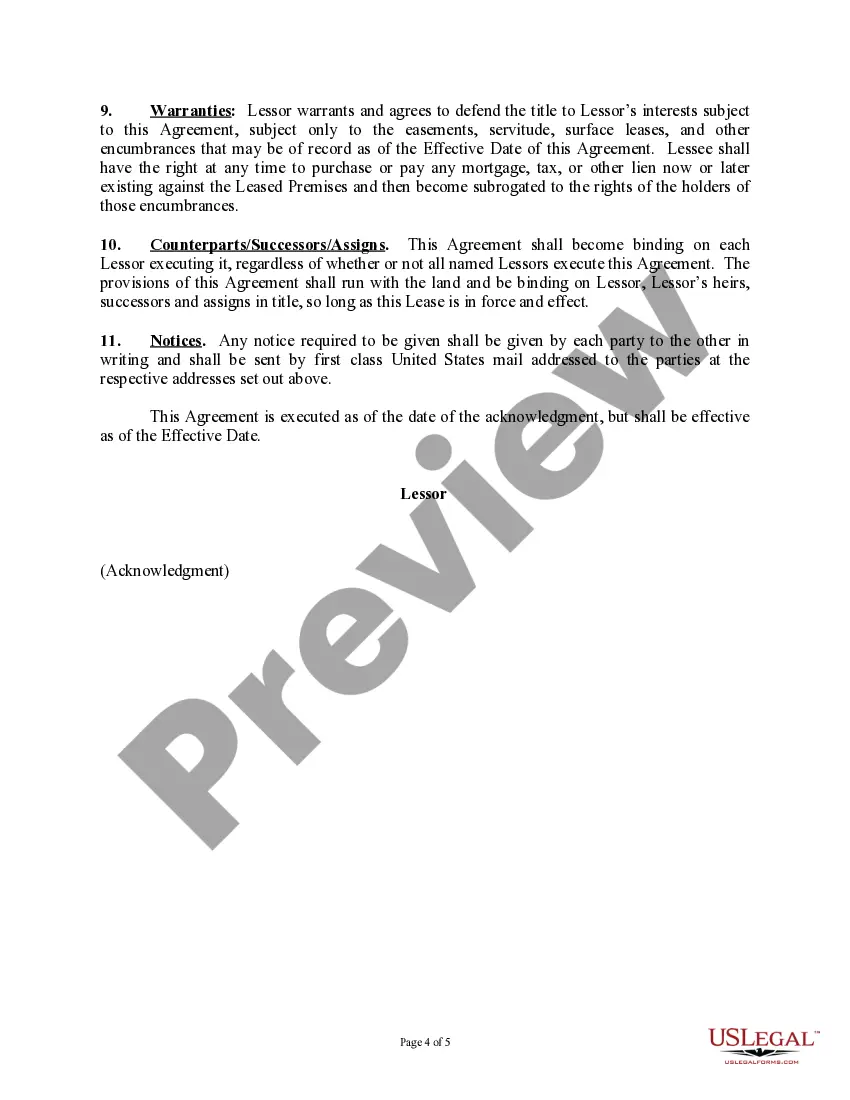
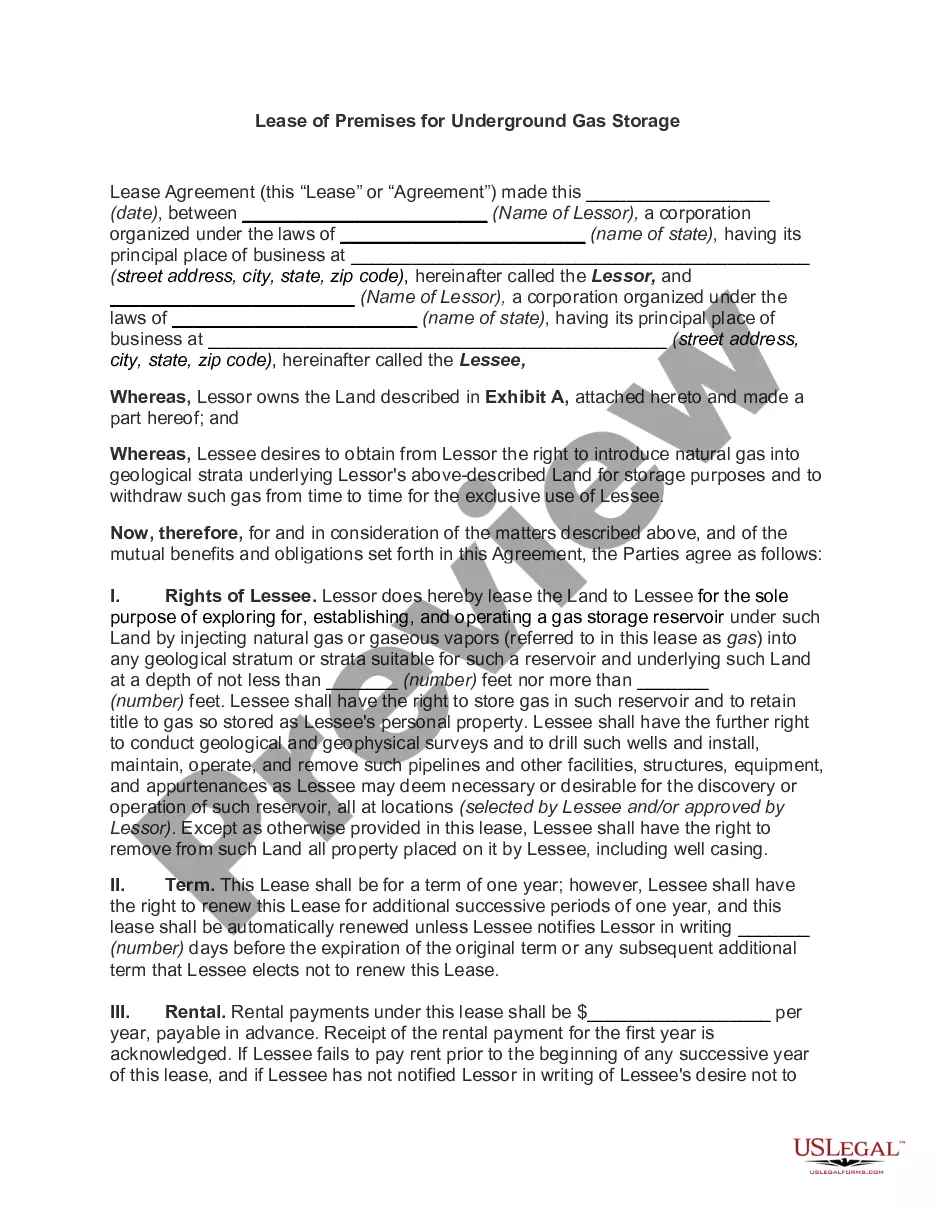
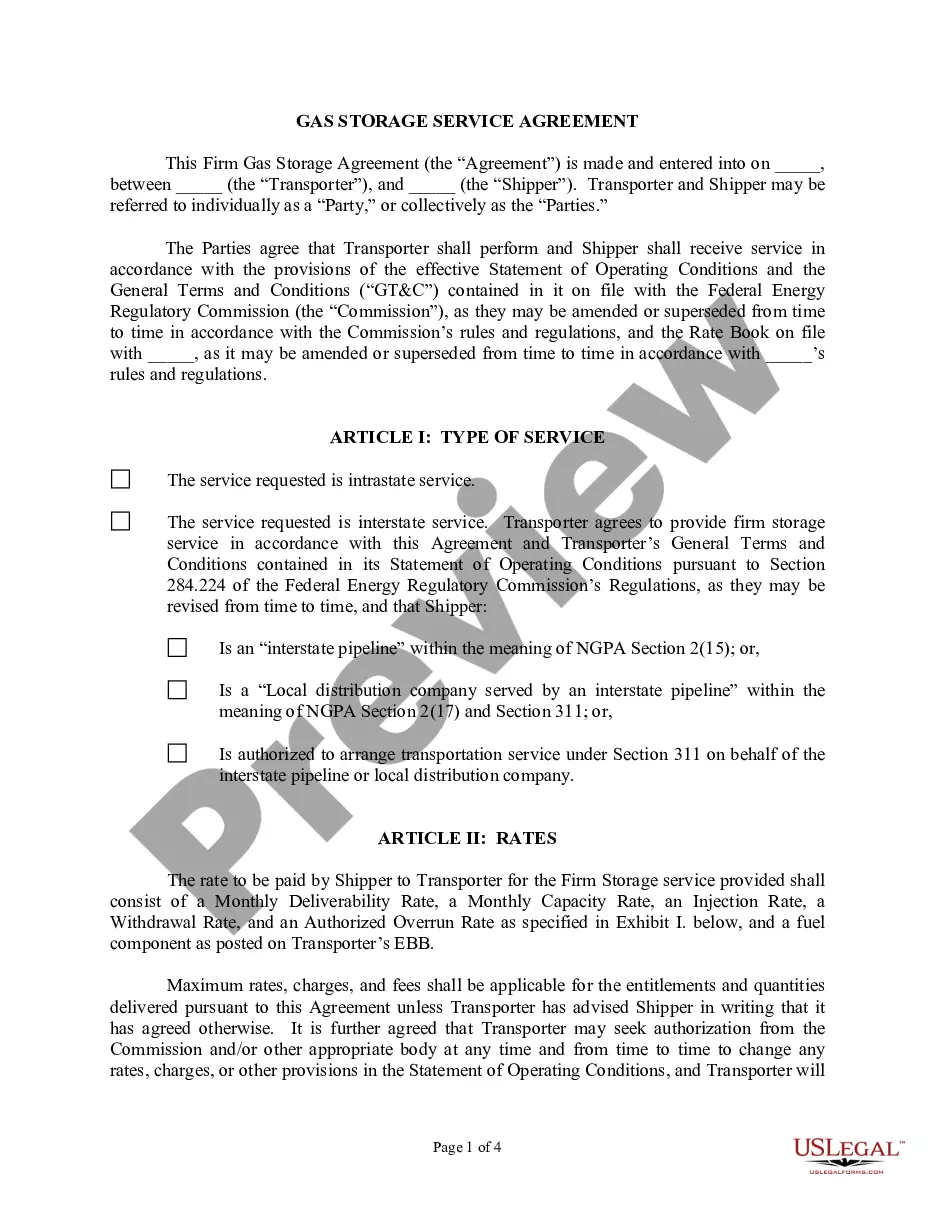
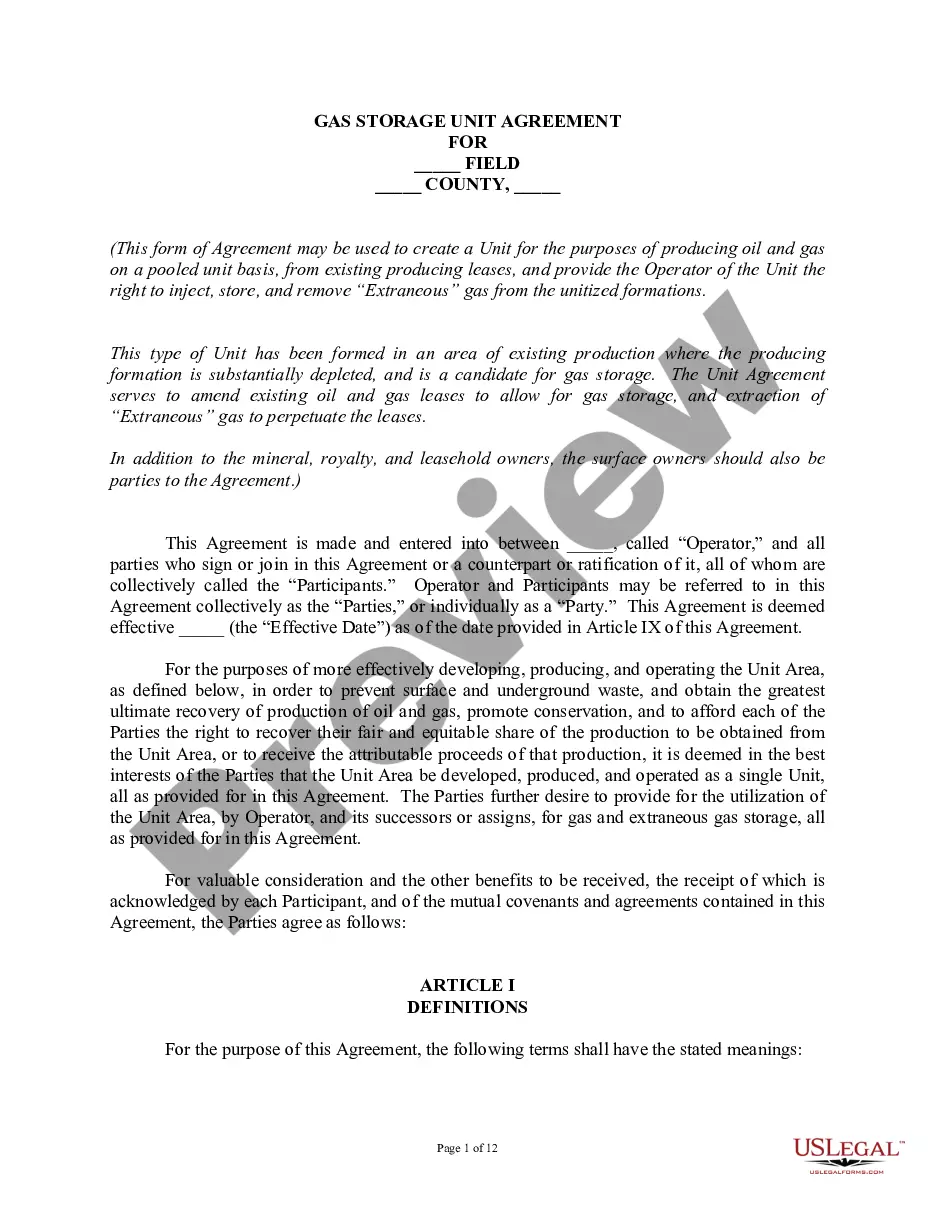
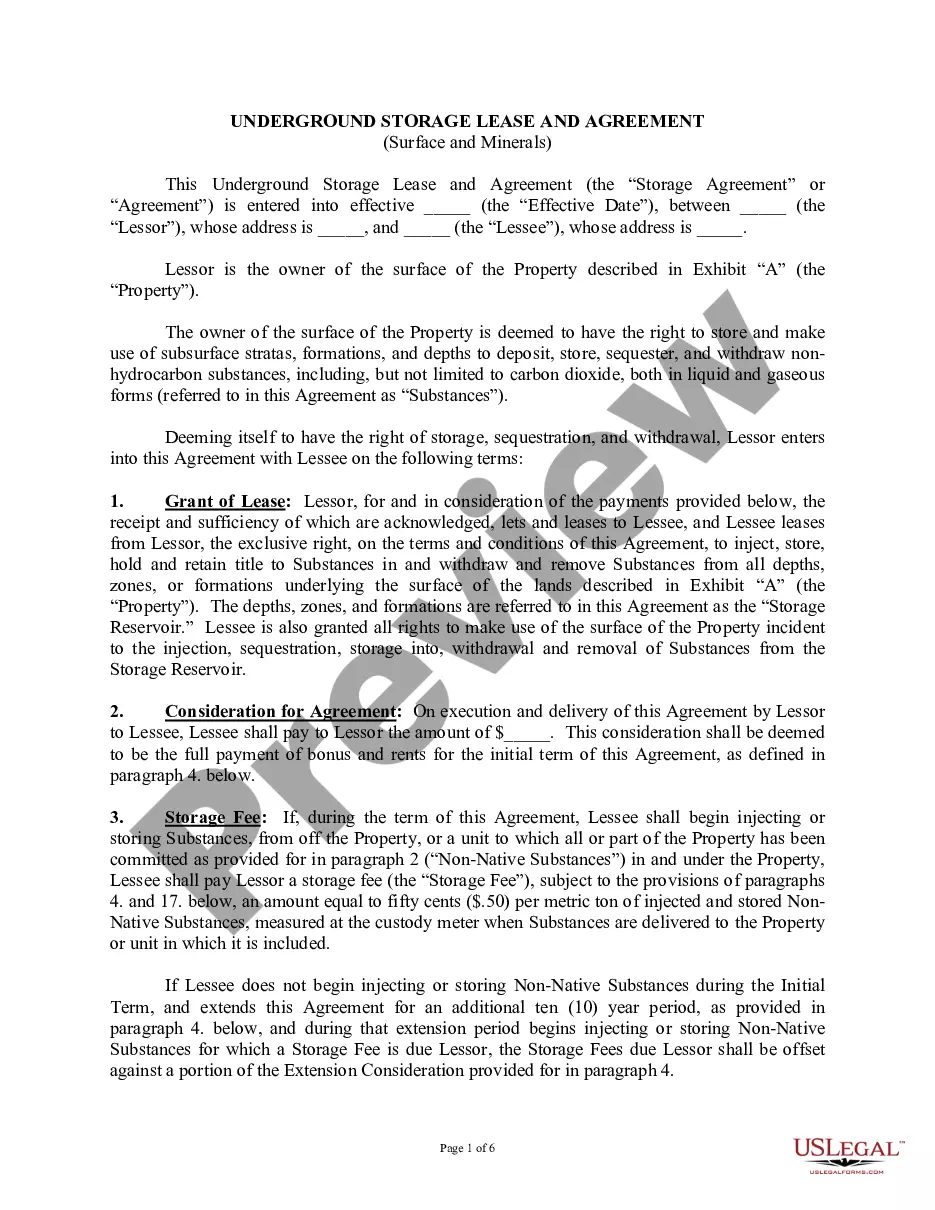
The Gas Storage Agreement and Lease is a legal document that outlines the terms under which one party (the Lessor) leases land to another party (the Lessee) for the purpose of underground gas storage. This agreement sets forth the rights and responsibilities of both parties regarding the use of the surface and subsurface of the specified property. It is essential for establishing clear legal frameworks for gas storage operations, differentiating it from other property leases by its specific focus on gas storage and reservoir management.
Main sections of this form
- Parties: Identifies the Lessor and Lessee along with their addresses.
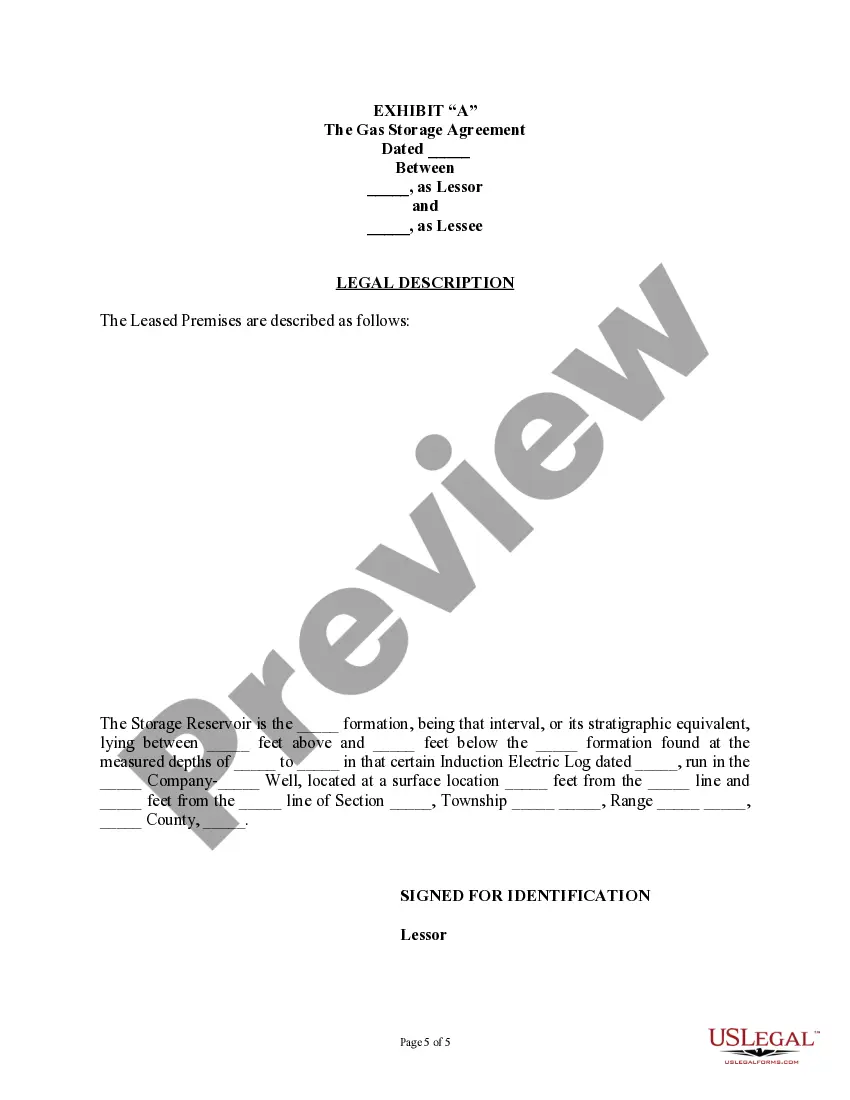
- Leased Premises: Details the area of land included in the lease and the intended gas storage reservoir.
- Injection and Withdrawal Rights: Grants Lessee the rights to inject and withdraw gas from the reservoir.
- Term of Lease: Specifies the duration of the lease and conditions for extension or termination.
- Rentals: Outlines payment terms, including amounts and timing of rental payments.
- Easements: Allows the Lessee to construct pipelines necessary for gas storage operations.
Situations where this form applies
This form is necessary when an individual or business wishes to establish an agreement for gas storage on a specified property. It is commonly used by gas companies or individuals who need to securely store natural gas underground and want to ensure clear legal rights regarding surface use and access to the gas reservoir. Ideal scenarios include situations where new gas storage sites are being developed, or existing agreements need to be formalized to protect all parties involved.
Who this form is for
- Property owners who wish to lease their land for gas storage.
- Gas companies or contractors looking to store gas in accordance with legal requirements.
- Individuals requiring a legally binding agreement to ensure proper use of land for gas operations.
- Organizations engaging in energy sector activities related to gas management and storage.
Steps to complete this form
- Identify the parties involved by entering the names and addresses of the Lessor and Lessee.
- Specify the property by describing the leased premises and including relevant details of the gas storage reservoir.
- Enter the duration of the lease, including the primary term and any conditions for renewal or termination.
- Set forth rental payment details, including amounts and payment locations.
- Include any necessary details about easements and rights related to gas injection and withdrawal.
Notarization guidance
This document requires notarization to meet legal standards. US Legal Forms provides secure online notarization powered by Notarize, allowing you to complete the process through a verified video call, available 24/7.
Get your form ready online
Our built-in tools help you complete, sign, share, and store your documents in one place.
Make edits, fill in missing information, and update formatting in US Legal Forms—just like you would in MS Word.
Download a copy, print it, send it by email, or mail it via USPS—whatever works best for your next step.
Sign and collect signatures with our SignNow integration. Send to multiple recipients, set reminders, and more. Go Premium to unlock E-Sign.
If this form requires notarization, complete it online through a secure video call—no need to meet a notary in person or wait for an appointment.
We protect your documents and personal data by following strict security and privacy standards.

Make edits, fill in missing information, and update formatting in US Legal Forms—just like you would in MS Word.

Download a copy, print it, send it by email, or mail it via USPS—whatever works best for your next step.

Sign and collect signatures with our SignNow integration. Send to multiple recipients, set reminders, and more. Go Premium to unlock E-Sign.

If this form requires notarization, complete it online through a secure video call—no need to meet a notary in person or wait for an appointment.

We protect your documents and personal data by following strict security and privacy standards.
Avoid these common issues
- Failing to accurately describe the leased premises, leading to potential disputes.
- Not specifying the term of the lease clearly, which can cause confusion later on.
- Overlooking necessary local regulations that may affect the legal validity of the agreement.
- Ignoring the need for signatures from all parties involved to enforce the agreement effectively.
Benefits of completing this form online
- Convenient access: Fill out the form anytime and anywhere without the need for in-person meetings.
- Editability: Easily modify any section of the form to suit specific needs or circumstances.
- Reliability: Obtain a professionally drafted agreement designed to comply with legal standards.
Looking for another form?
Form popularity
FAQ
Oil and gas leases in one document, although in Alberta, the Crown has; or will have, a form of gas lease that grants rights to natural gas in specified gas producing zones. The lease granting both oil and gas has been a characteristic of the industry for fifty years.
Accordingly, when you see the words Paid-Up Lease, this normally means that you will receive an upfront bonus for which the oil and gas company does not have to do anything during the initial or primary term of the lease.
It is most commonly held in inventory underground under pressure in three types of facilities. These underground facilities are depleted reservoirs in oil and/or natural gas fields, aquifers, and salt cavern formations. Natural gas is also stored in liquid or gaseous form in aboveground tanks.
¹ The term of an oil and gas lease is divided into two parts, a primary term and a secondary term. The primary term is usually for a set amount of years, 1, 3, 5, 7 or 10 years.
: a deed by which a landowner authorizes exploration for and production of oil and gas on his land usually in consideration of a royalty.
An oil lease is essentially an agreement between parties to allow a Lessee (the oil and gas company and their production crew) to have access to the property and minerals (oil and gas) on the property of the Lessor. The lease agreement is a legal contract of terms.It establishes the primary term of the lease.
The more the well yields in the first month, the more valuable it generally will be over time. The typical well might yield as much as half of its gas in the first five years of production. Wells might then continue to produce for a total of twenty to thirty years but at lower and lower production rates.