Negligent Entrustment
Understanding this form
The Negligent Entrustment form is a legal document used to address situations where one party has entrusted a vehicle or property to another, and that party subsequently causes harm. This form is crucial for asserting claims based on negligent behavior within a specific context. It differs from similar forms, such as those related to personal injury or related disputes, as it focuses specifically on the duty of care owed in the entrustment scenario.
Key components of this form
- Identification of the plaintiff and defendant.
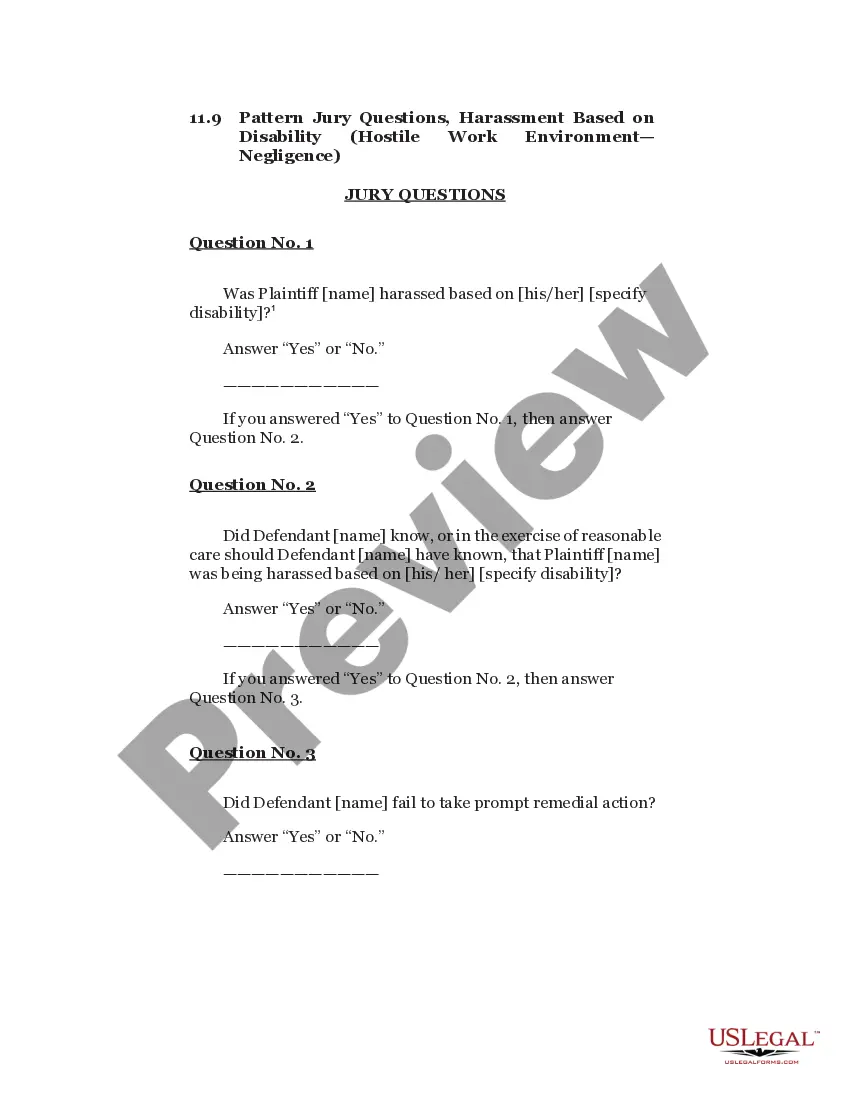
- Details about the alleged harassment linked to the specified disability.
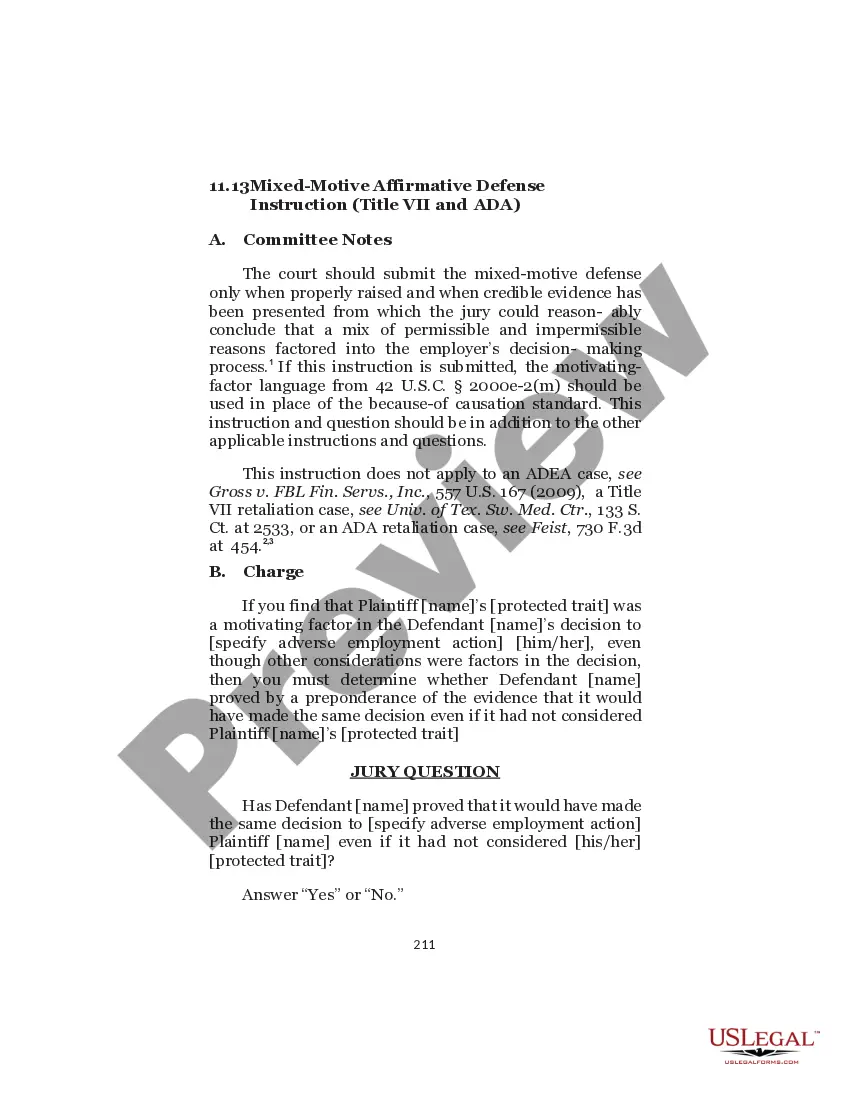
- Assessment of the defendant's knowledge of the harassment situation.
- Evaluation of the defendant's response or lack thereof to the harassment.
When this form is needed
This form is used in situations where someone has been harmed due to the negligent entrustment of a vehicle or property. For example, if a vehicle owner allows an unqualified driver to operate their vehicle and an accident results in injury, this form can play a crucial role in establishing liability. It can also be applicable in workplace scenarios involving harassment linked to disabilities.
Who needs this form
- Individuals seeking to make a legal claim against a party for negligent behavior.
- Victims of accidents resulting from the negligent entrustment of property.
- Employees who have faced harassment in a working environment due to their disability.
- Legal representatives assisting clients with claims of negligence.
Instructions for completing this form
- Identify the parties involved, including the plaintiff and defendant.
- Specify the nature of the disability relevant to the harassment claim.
- Answer the questions regarding the defendant's knowledge of the harassment.
- Indicate whether remedial action was taken by the defendant.
- Sign and date the form where indicated.
Does this document require notarization?
Notarization is generally not required for this form. However, certain states or situations might demand it. You can complete notarization online through US Legal Forms, powered by Notarize, using a verified video call available anytime.
Get your form ready online
Our built-in tools help you complete, sign, share, and store your documents in one place.
Make edits, fill in missing information, and update formatting in US Legal Forms—just like you would in MS Word.
Download a copy, print it, send it by email, or mail it via USPS—whatever works best for your next step.
Sign and collect signatures with our SignNow integration. Send to multiple recipients, set reminders, and more. Go Premium to unlock E-Sign.
If this form requires notarization, complete it online through a secure video call—no need to meet a notary in person or wait for an appointment.
We protect your documents and personal data by following strict security and privacy standards.

Make edits, fill in missing information, and update formatting in US Legal Forms—just like you would in MS Word.

Download a copy, print it, send it by email, or mail it via USPS—whatever works best for your next step.

Sign and collect signatures with our SignNow integration. Send to multiple recipients, set reminders, and more. Go Premium to unlock E-Sign.

If this form requires notarization, complete it online through a secure video call—no need to meet a notary in person or wait for an appointment.

We protect your documents and personal data by following strict security and privacy standards.
Typical mistakes to avoid
- Failing to clearly identify all parties involved.
- Not providing adequate evidence of the alleged negligent behavior.
- Overlooking the need for precise details regarding the disability.
- Neglecting to sign the form before submission.
Advantages of online completion
- Convenience of downloading and completing at your own pace.
- Editable format allows for personalization to fit your specific needs.
- Reliability of having a document created with legal expertise.
Looking for another form?
Form popularity
FAQ
In determining negligence, North Carolina follows the ordinary/reasonable care standard. This means every person is required to use reasonable care to protect his or her own safety as well as the safety of others.
Negligent entrustment is a theory of recovery in tort law (the body of laws most often associated with personal injury cases). A claim for negligent entrustment arises when one party is held liable for negligently giving someone else a ?dangerous instrumentality? with which that person causes injury to a third party.
(1) the entrustment of a vehicle by its owner or custodian, (2) to an incompetent driver, (3) that the owner knew or should have known was unlicensed, incompetent, or reckless, (4) that the driver was negligent on the occasion in question, and (5) the driver's negligence proximately caused the accident. Williams v.
Typically, to prove a claim in negligence, a plaintiff must prove that (1) the defendant had a duty to exercise reasonable care, (2) the defendant failed to meet that duty, (3) the plaintiff suffered injuries, and (4) the defendant's failure to exercise reasonable care was both the actual and proximate cause of the
So there are two elements that must be proven to establish negligent entrustment. First, the plaintiff must show that the defendant ?entrusted? his automobile to the driver. And second, the plaintiff must show that the defendant knew or should have known that the driver was likely to cause injury.
Unlike vicarious liability, where the owner's conduct is at issue, negligent entrustment is an independent theory of liability against the vehicle owner based on the act of entrustment.
Negligent entrustment is a legal term used in tort law. It describes the concept that an individual can be held responsible for another person's actions if the individual has provided them with a "dangerous instrumentality" that then caused injury to a third party because of the person's use of the instrumentality.
Common Situations of Negligent Entrustment The driver is ruled incompetent; The employer knew or should have known of this incompetence; The employer entrusted the vehicle to the driver within the scope of work; or. The driver was negligent and caused the accident.