Michigan Site Work Contract for Contractor
Understanding this form
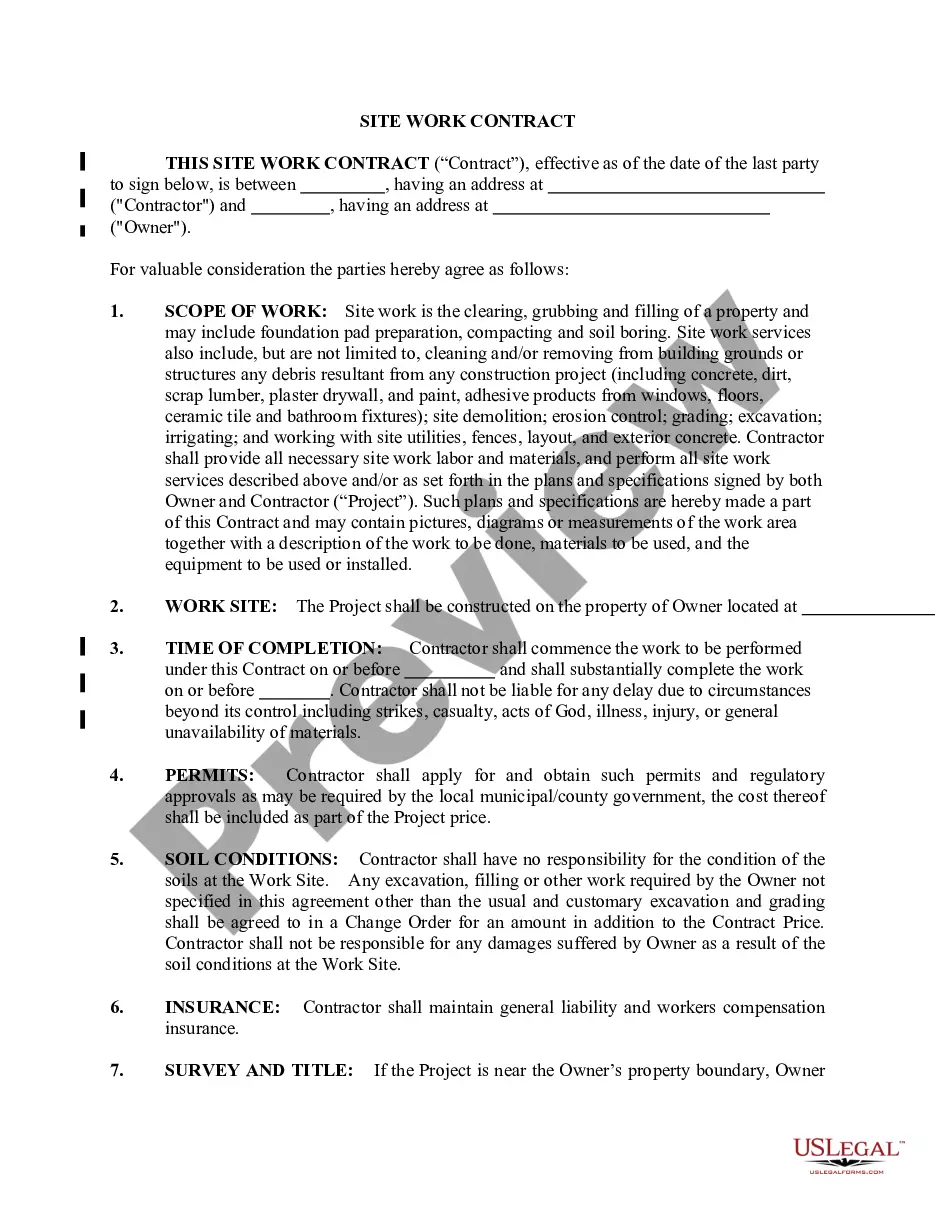
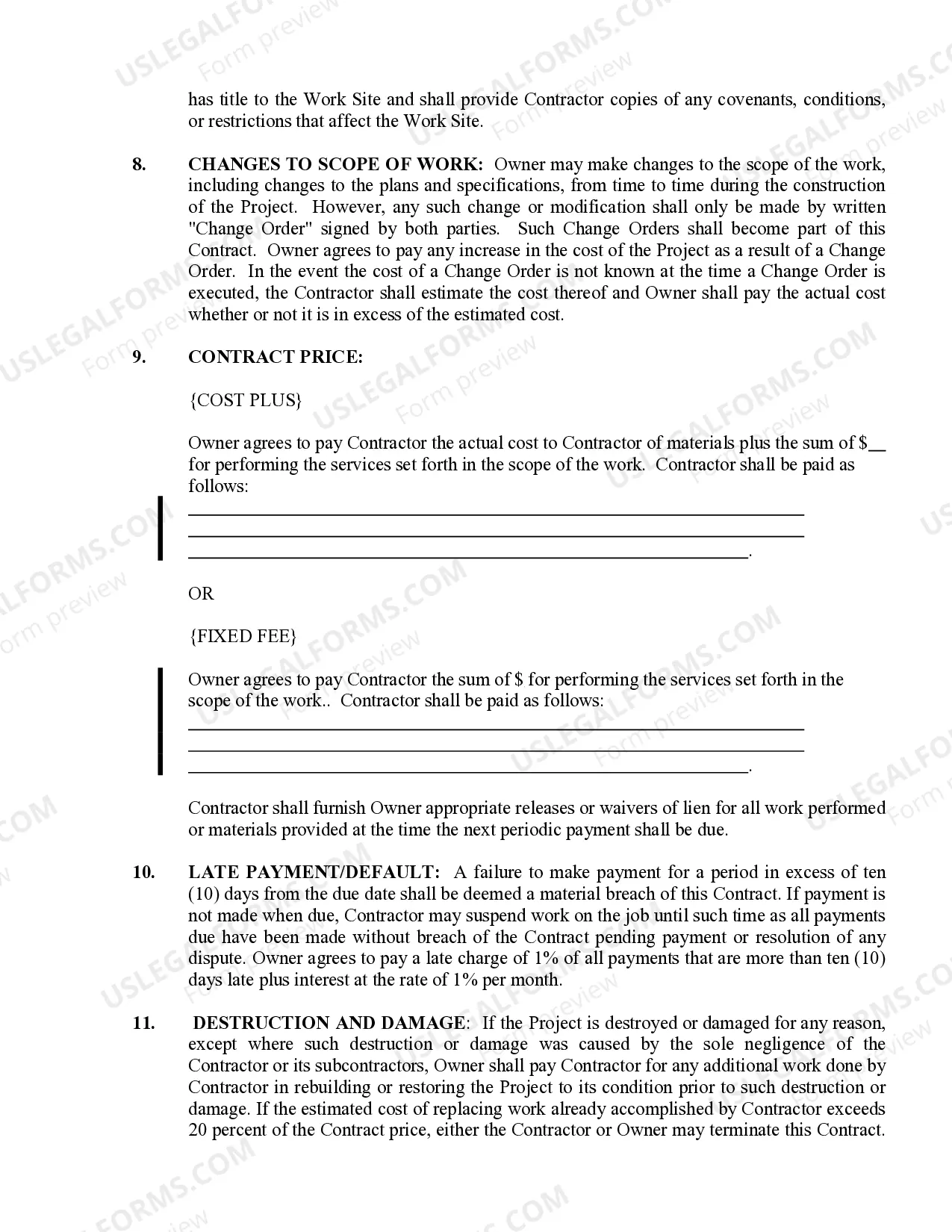
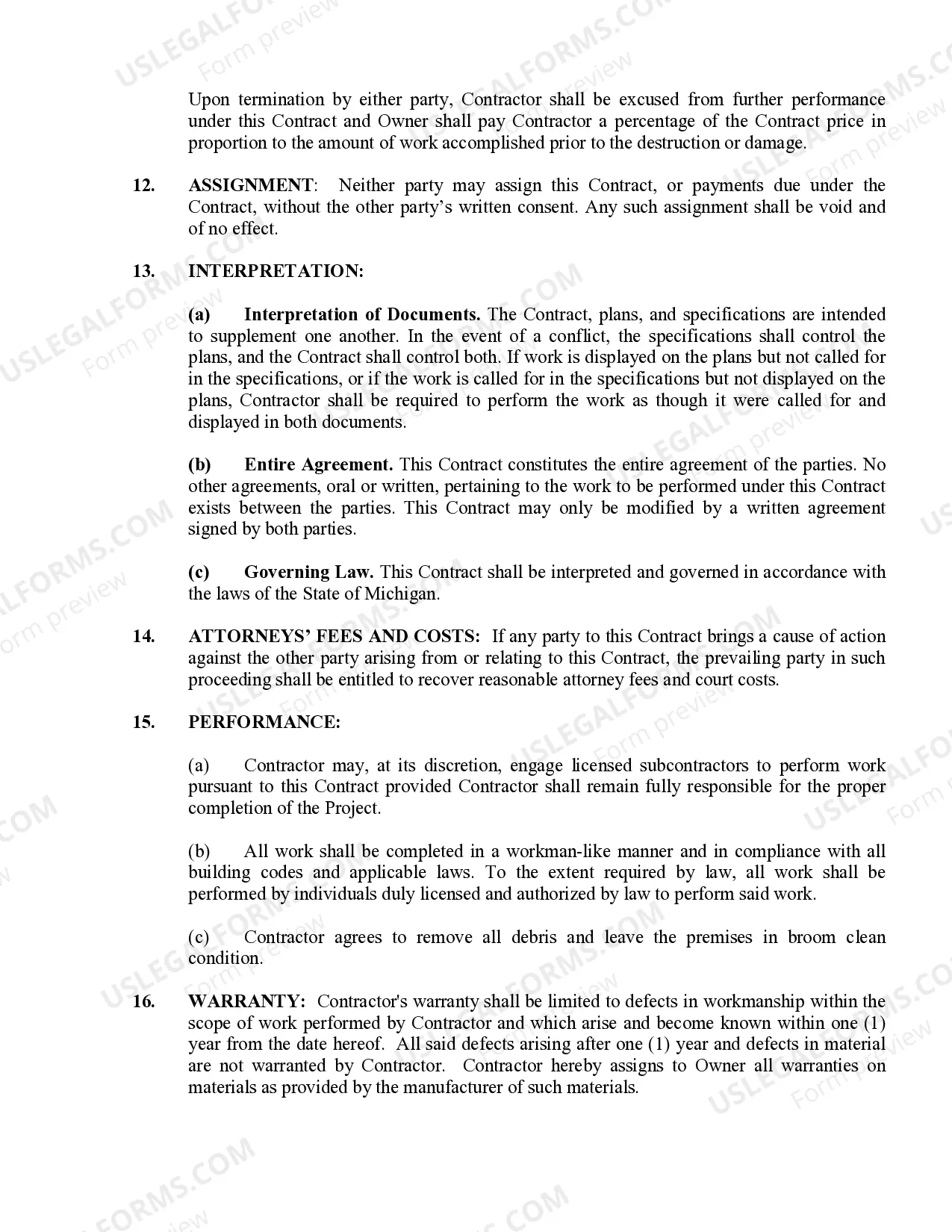
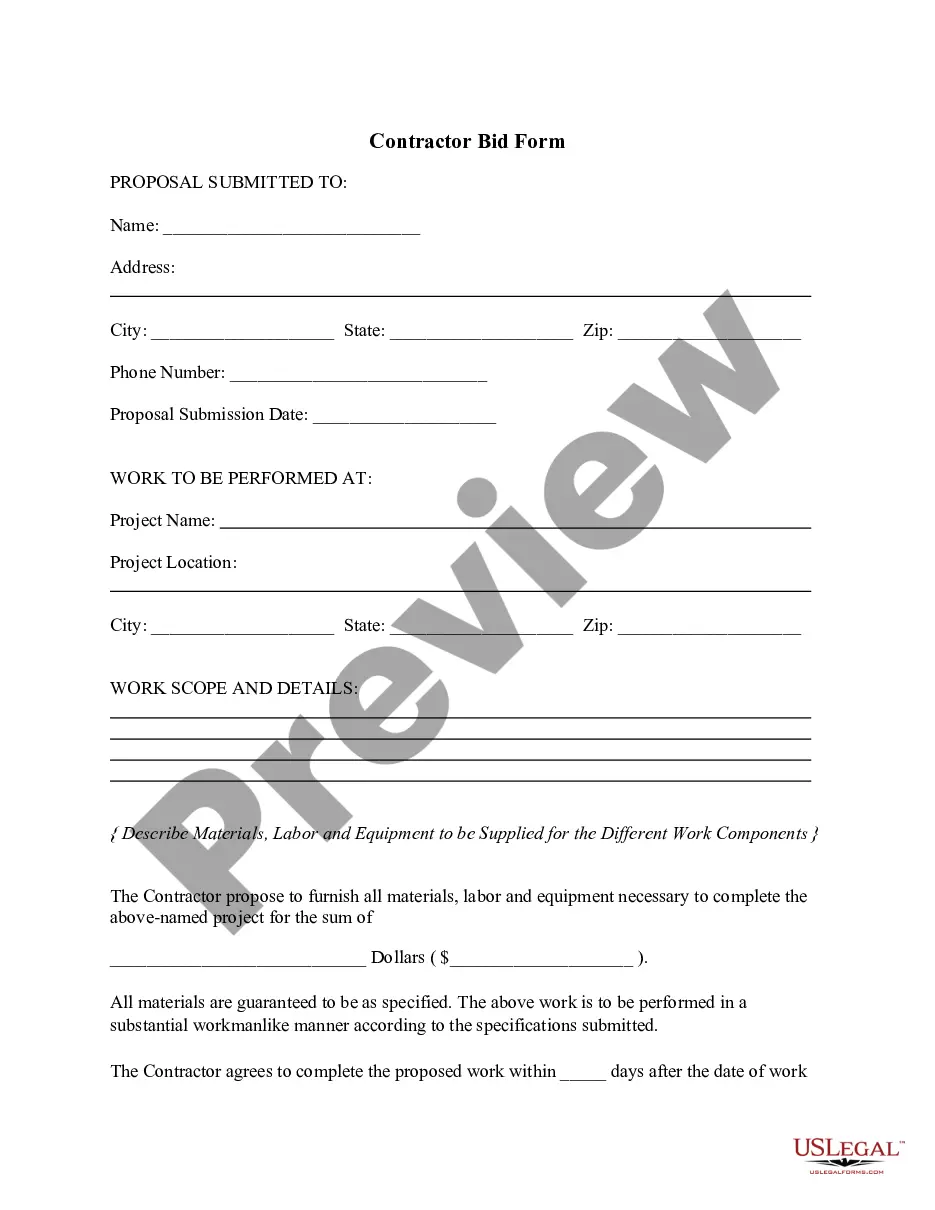
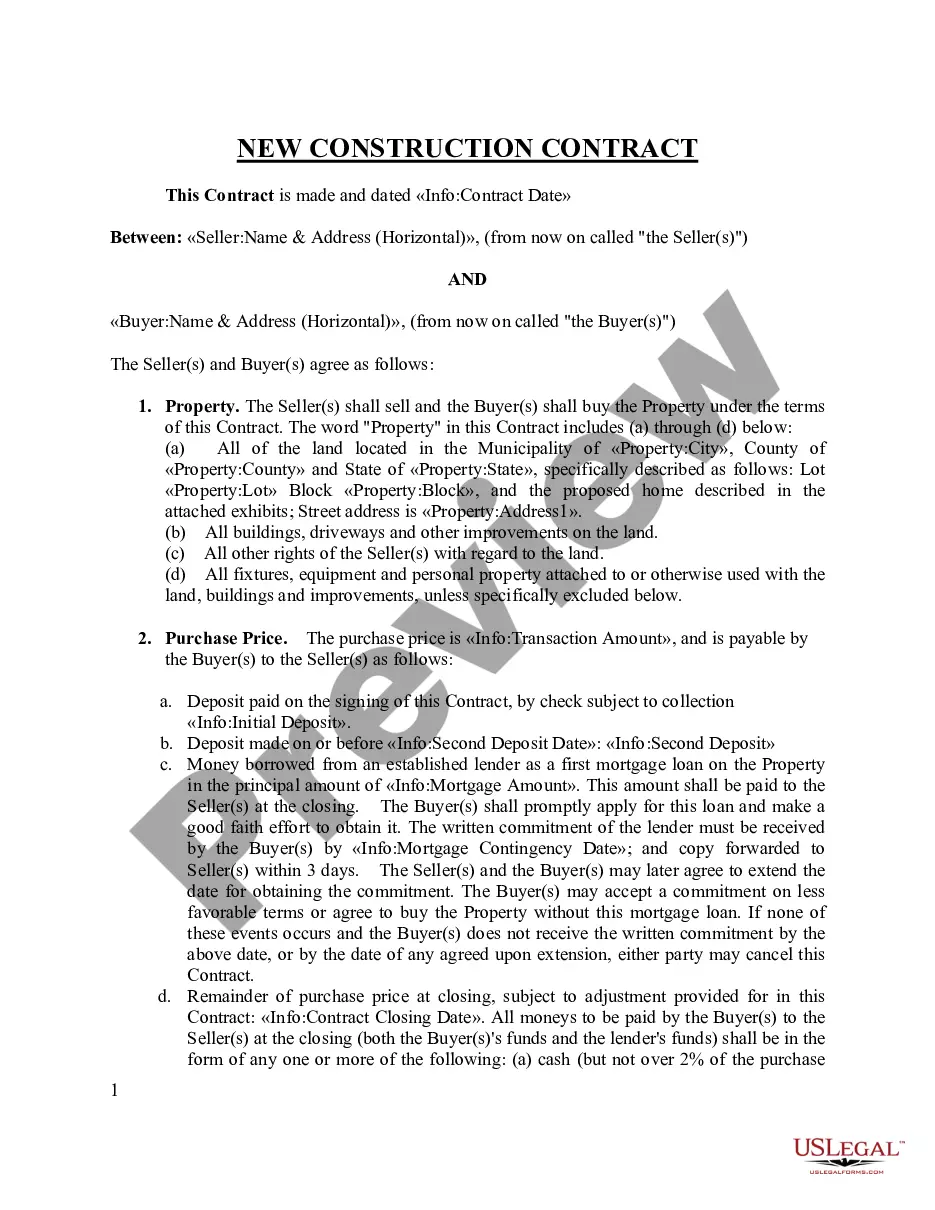
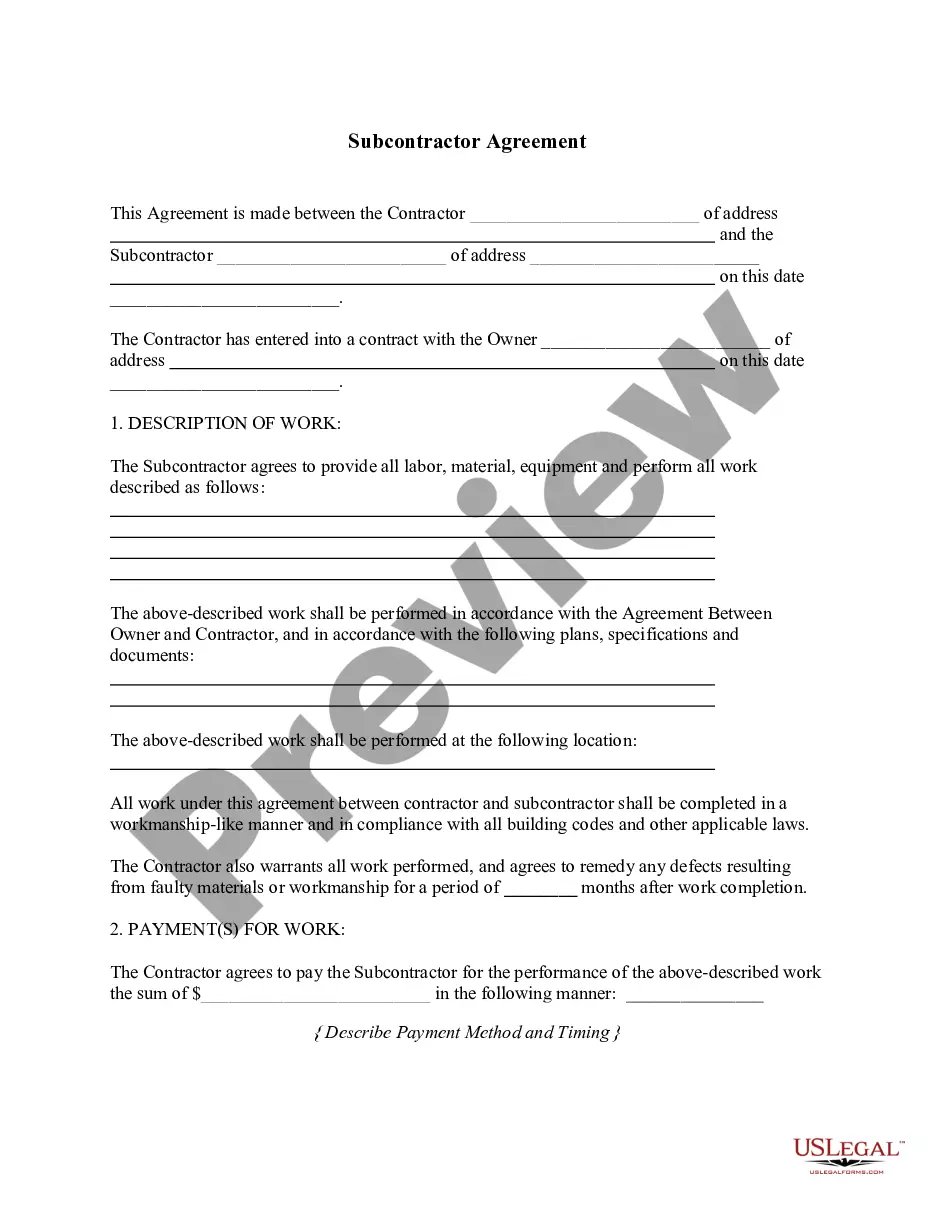
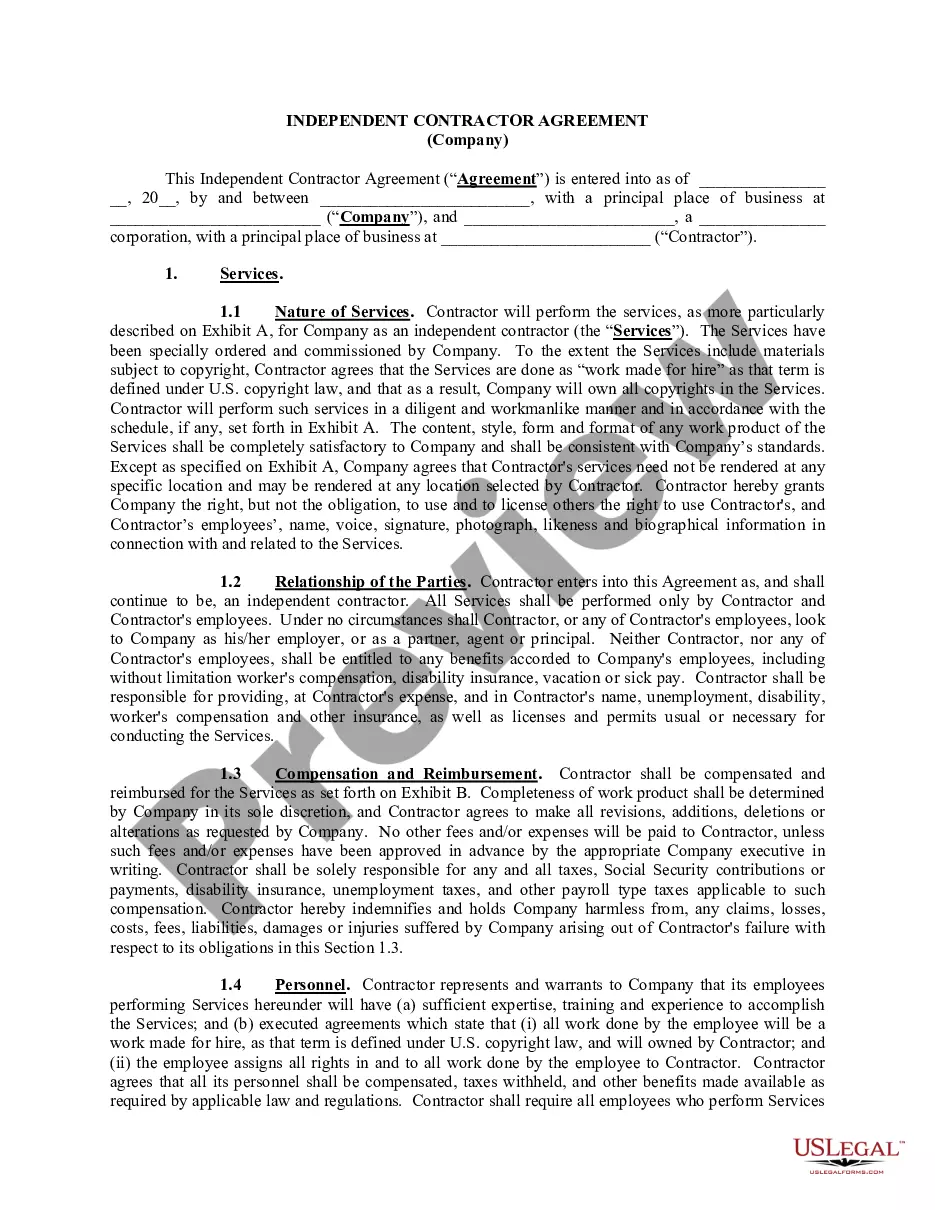
The Site Work Contract for Contractor is a legal document that outlines the agreement between a site work contractor and a property owner regarding construction services. This form can accommodate either a cost-plus or fixed-fee payment structure and addresses essential elements such as change orders, work site information, warranties, and insurance requirements. It is specifically designed to comply with the legal standards established in the State of Michigan.
What’s included in this form
- WORK SITE: Specifies the location where the project will be constructed.
- PERMITS: Details the contractor's responsibility to secure necessary permits and approvals.
- SOIL CONDITIONS: Clarifies the contractor's lack of responsibility for soil conditions at the work site.
- INSURANCE: Outlines the required insurance coverage for the contractor.
- CHANGES TO SCOPE OF WORK: Describes the process for modifying project scope through written change orders.
- LATE PAYMENT/DEFAULT: Details the consequences of delayed payment and the process for contract breach.

When this form is needed
This Site Work Contract is ideal for property owners who are hiring contractors for construction projects or site work. It is especially useful for individuals needing clear terms for project scope, payment arrangements, and responsibilities, ensuring that both parties understand their obligations and liabilities throughout the construction process.
Who this form is for
- Property owners seeking to hire contractors for construction projects.
- Contractors looking for a reliable agreement template to outline work terms.
- Individuals involved in site work requiring specific contractual terms in Michigan.
How to prepare this document
- Identify the parties involved: Enter the names of the contractor and property owner.
- Specify the work site: Fill in the exact address where the project will take place.
- Detail the payment type: Indicate whether the payment arrangement will be cost-plus or fixed fee.
- Outline insurance details: Ensure the contractor's insurance coverage is noted.
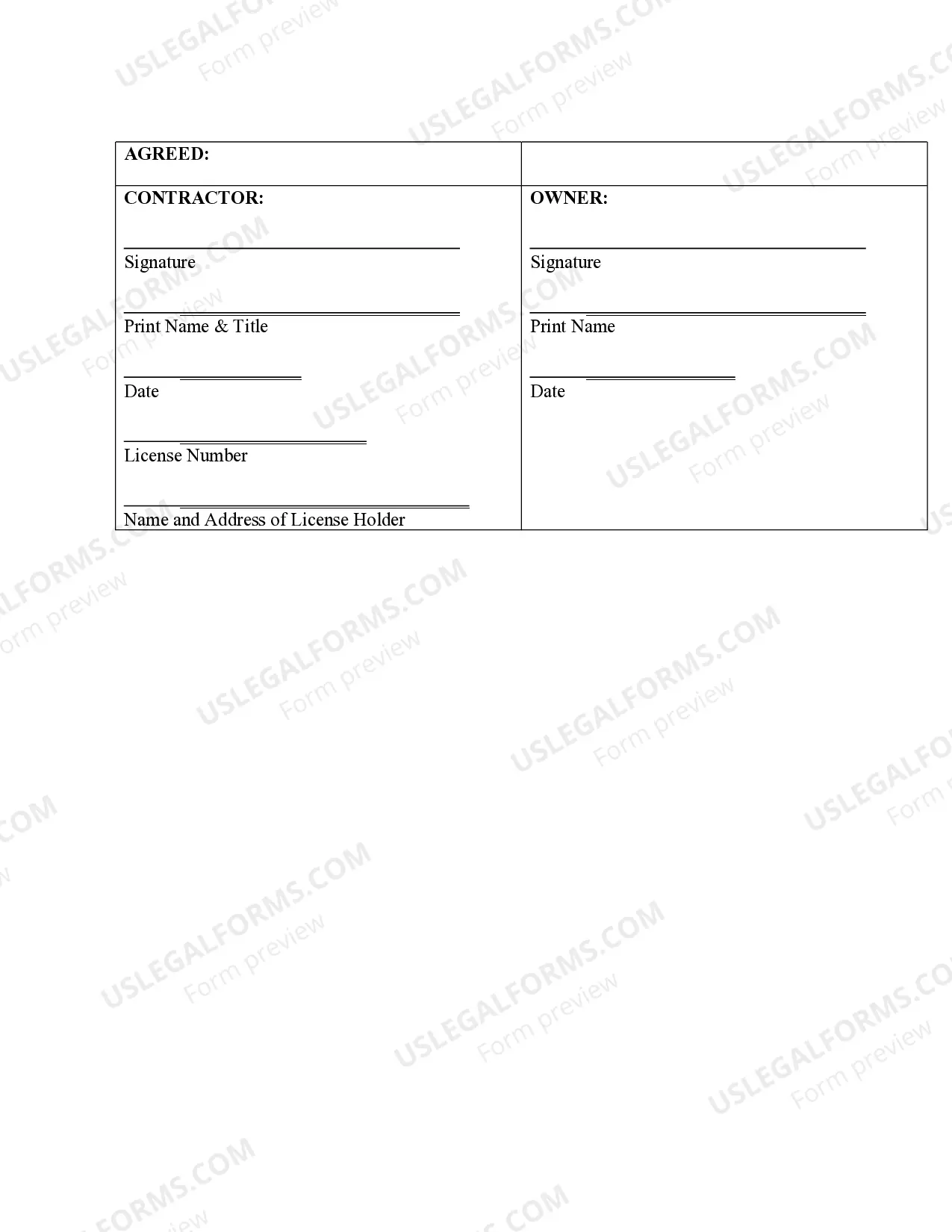
- Enter dates and signatures: Complete the contract with the appropriate dates and signatures from both parties.
Notarization requirements for this form
Notarization is not commonly needed for this form. However, certain documents or local rules may make it necessary. Our notarization service, powered by Notarize, allows you to finalize it securely online anytime, day or night.
Get your form ready online
Our built-in tools help you complete, sign, share, and store your documents in one place.
Make edits, fill in missing information, and update formatting in US Legal Forms—just like you would in MS Word.
Download a copy, print it, send it by email, or mail it via USPS—whatever works best for your next step.
Sign and collect signatures with our SignNow integration. Send to multiple recipients, set reminders, and more. Go Premium to unlock E-Sign.
If this form requires notarization, complete it online through a secure video call—no need to meet a notary in person or wait for an appointment.
We protect your documents and personal data by following strict security and privacy standards.

Make edits, fill in missing information, and update formatting in US Legal Forms—just like you would in MS Word.

Download a copy, print it, send it by email, or mail it via USPS—whatever works best for your next step.

Sign and collect signatures with our SignNow integration. Send to multiple recipients, set reminders, and more. Go Premium to unlock E-Sign.

If this form requires notarization, complete it online through a secure video call—no need to meet a notary in person or wait for an appointment.

We protect your documents and personal data by following strict security and privacy standards.
Common mistakes
- Failing to specify the project scope can lead to misunderstandings.
- Not including the required insurance information.
- Missing signatures or dates, making the contract legally invalid.
- Overlooking local permit requirements related to the project.
Benefits of using this form online
- Convenience of instant access to a legally compliant form.
- Editable templates to tailor the contract to specific project needs.
- Reliability from professionally drafted documents reviewed by licensed attorneys.
Looking for another form?
Form popularity
FAQ
Contract Types Overview. Express and Implied Contracts. Unilateral and Bilateral Contracts. Unconscionable Contracts. Adhesion Contracts. Aleatory Contracts. Option Contracts. Fixed Price Contracts.
Terms. This is the first section of any agreement or contract and states the names and locations of the parties involved. Responsibilities & Deliverables. Payment-Related Details. Confidentiality Clause. Contract Termination. Choice of Law.
Most contractors do offer some kind of guarantee on their work, because doing so protects their interests as well as your own. While a contractor's warranty can protect you, the homeowner, from having to live with shoddy work, it also protects the contractor from having to return to fix things over and over again.
Both parties should sign the contract, and both should be bound by the terms and conditions spelled out in the agreement. In general that means the contractor will be obliged to provide specified materials and to perform certain services for you. In turn, you will be required to pay for those goods and that labor.
In California, the statute of repose is four years for most defects, but 10 years for latent defects (those that aren't observable right away, such as a faulty foundation). In Georgia, the statute of repose is eight years for all claims related to design or construction of the building.
Contracts often don't include express references to latent defects, and asset owners and operators can pursue damages when the contractor or builder is deemed or thought to be negligent. In other scenarios, designers and contractors may be liable for latent defects for between 6 and 12 years.
Begin with the Date and the Address of the Other Party. Start with the Basic Details of the Planned Work. Include Special Stipulations. State Whether There Will be a Further Agreement. Create an Area for Signatures. Sign and Date the Contract Letter.
Identifying/Contact Information. Title and Description of the Project. Projected Timeline and Completion Date. Cost Estimate and Payment Schedule. Stop Work Clause and Stop Payment Clause. Act of God Clause. Change Order Agreement. Warranty.
In California, contractors are required to provide warranties on work done for home and business owners for between one and 10 years. The warranties California law provides are a minimum, and longer warranties can be agreed to between the parties.