Inherently Dangerous Work-Imputed Conduct-Independent Contractor
Understanding this form
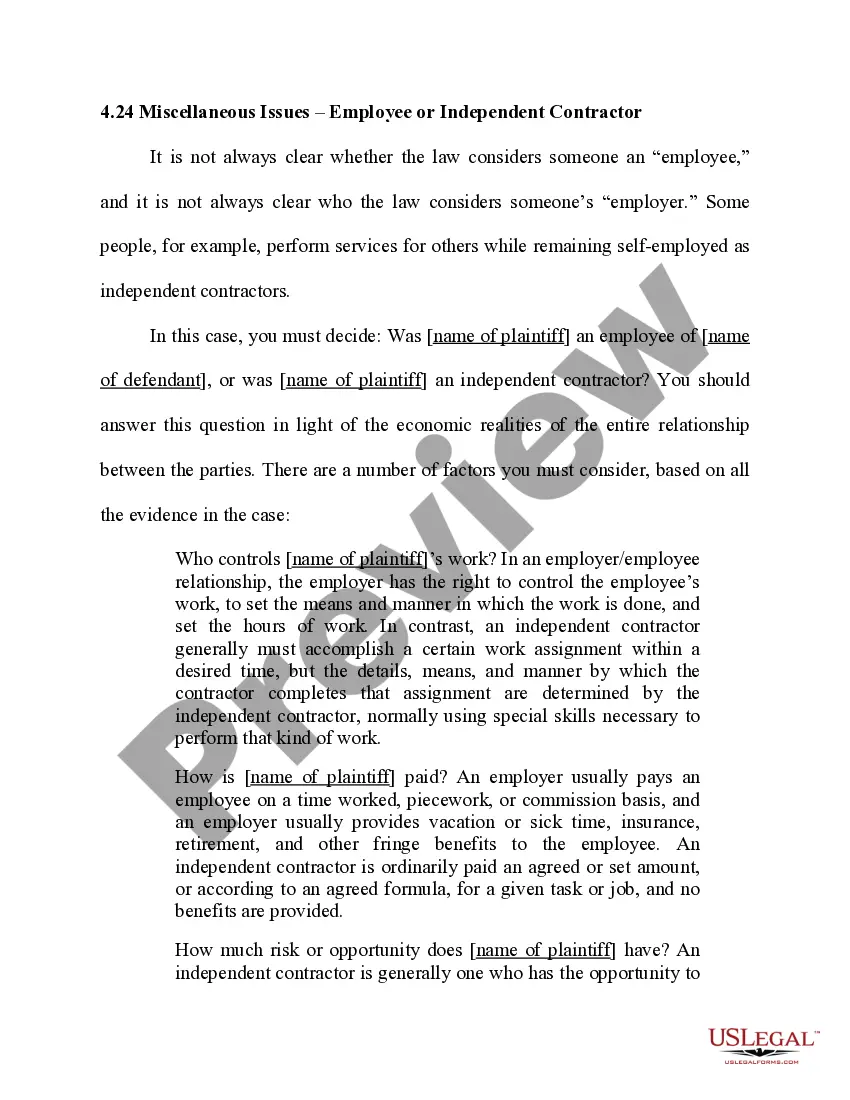
The Inherently Dangerous Work-Imputed Conduct-Independent Contractor form is a legal document specifically tailored for independent contractors working in potentially hazardous environments. This form serves to establish the responsibilities of the contractor and the employer concerning safety and liability, ensuring both parties understand their obligations and the implications of working in inherently dangerous conditions.
Key components of this form
- Details regarding the nature of dangerous work and its associated risks.
- Clauses outlining the responsibilities of both the independent contractor and the employer.
- Provisions for liability and indemnification in case of accidents or damages.
- Specific requirements for safety protocols and compliance to ensure a safe working environment.
- Guidelines for addressing and reporting injuries or incidents on-site.
When this form is needed
This form should be used when entering into a contract with an independent contractor who will be performing work that is deemed inherently dangerous. Examples include construction, mining, or handling hazardous materials. It helps clarify legal responsibilities and protections for both parties involved to mitigate risks associated with dangerous work.
Who needs this form
This form is suitable for:
- Independent contractors taking on jobs that involve significant risks.
- Employers hiring contractors for inherently dangerous tasks.
- Businesses needing to define safety and liability terms with contractors.
- Legal professionals drafting contracts for clients in high-risk industries.
Completing this form step by step
- Identify the parties involved: clearly state the names and addresses of the independent contractor and the employer.
- Describe the nature of the work: detail the inherently dangerous aspects of the job.
- Specify the safety measures: outline the required safety protocols both parties must adhere to.
- Include liability clauses: clearly state the liability terms to protect both the contractor and the employer.
- Obtain signatures: ensure both parties sign and date the document to validate the agreement.
Notarization guidance
Notarization is not commonly needed for this form. However, certain documents or local rules may make it necessary. Our notarization service, powered by Notarize, allows you to finalize it securely online anytime, day or night.
Get your form ready online
Our built-in tools help you complete, sign, share, and store your documents in one place.
Make edits, fill in missing information, and update formatting in US Legal Forms—just like you would in MS Word.
Download a copy, print it, send it by email, or mail it via USPS—whatever works best for your next step.
Sign and collect signatures with our SignNow integration. Send to multiple recipients, set reminders, and more. Go Premium to unlock E-Sign.
If this form requires notarization, complete it online through a secure video call—no need to meet a notary in person or wait for an appointment.
We protect your documents and personal data by following strict security and privacy standards.

Make edits, fill in missing information, and update formatting in US Legal Forms—just like you would in MS Word.

Download a copy, print it, send it by email, or mail it via USPS—whatever works best for your next step.

Sign and collect signatures with our SignNow integration. Send to multiple recipients, set reminders, and more. Go Premium to unlock E-Sign.

If this form requires notarization, complete it online through a secure video call—no need to meet a notary in person or wait for an appointment.

We protect your documents and personal data by following strict security and privacy standards.
Common mistakes
- Failing to detail all the potentially dangerous aspects of the work environment.
- Not clearly defining the responsibilities and expectations of each party.
- Neglecting to include safety measures and protocols.
- Allowing the form to go unsigned or undated.
Benefits of completing this form online
- Immediate access to a professionally drafted form tailored for specific needs.
- Convenience of downloading and printing the document from anywhere.
- Editability allows for customization to fit unique job requirements.
- Reliable source with forms drafted by licensed attorneys.
Legal use & context
- This form is legally binding once signed by both parties.
- It helps protect both parties from liability in case of accidents during inherently dangerous work.
- Ensures clarity and understanding of each party's responsibilities regarding workplace safety.
Key takeaways
- The Inherently Dangerous Work-Imputed Conduct-Independent Contractor form protects all parties involved in risky work.
- It is essential for defining roles and responsibilities to ensure workplace safety.
- Proper completion of the form helps avoid legal complications and promotes accountability.
Looking for another form?

Form popularity
FAQ
General Exceptions Case law recognizes three exceptions to liability for independent contractors: Negligent selecting, instructing, or supervising: This exception goes to whether you adequately vetted and instructed an independent contractor.
Respondeat superior applies to employees, but not to independent contractors. The Third Restatement of Torts helps to outline the difference between an employee and an independent contractor for the purpose of respondeat superior.
Although an employer may be vicariously liable for an employee's misconduct, an employer is typically not vicariously liable for an independent contractor's misconduct.
The respondeat superior doctrine (also called vicarious liability) refers to any employer's liability for an employee's actions or misactions. It translates directly as ?let the master answer? and applies to employees who act negligently while in the course of their employment.
(1) the employer retained control over the contractor's work; (2) the employer was in possession and control of premises; (3) a statute or rule imposes a specific duty on the employer; or (4) the contractor's work involved special risks or dangers.
Respondeat superior does not apply when the one employed is an independent contractor.