Idaho Letter from Tenant to Landlord for Failure of Landlord to return all prepaid and unearned rent and security recoverable by Tenant
About this form
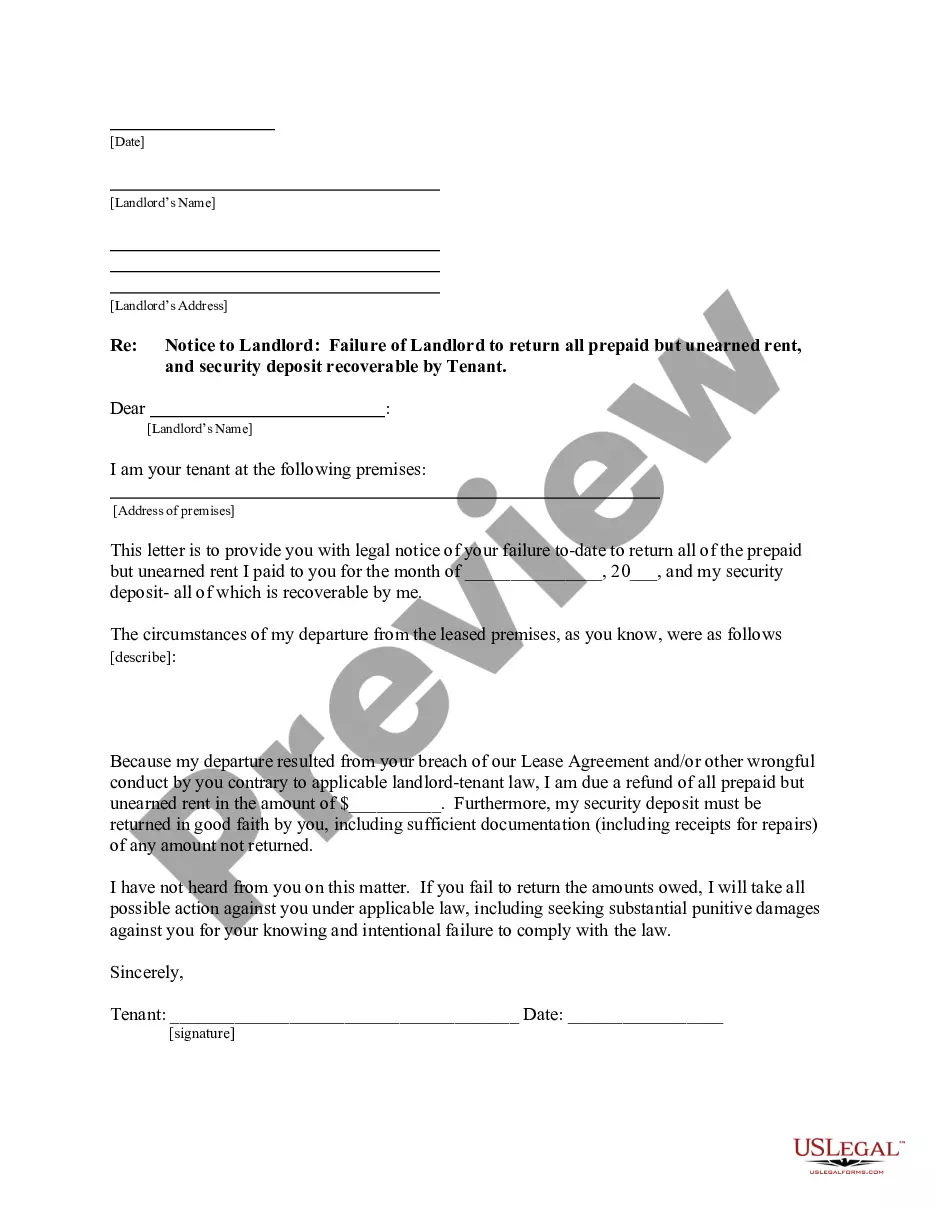
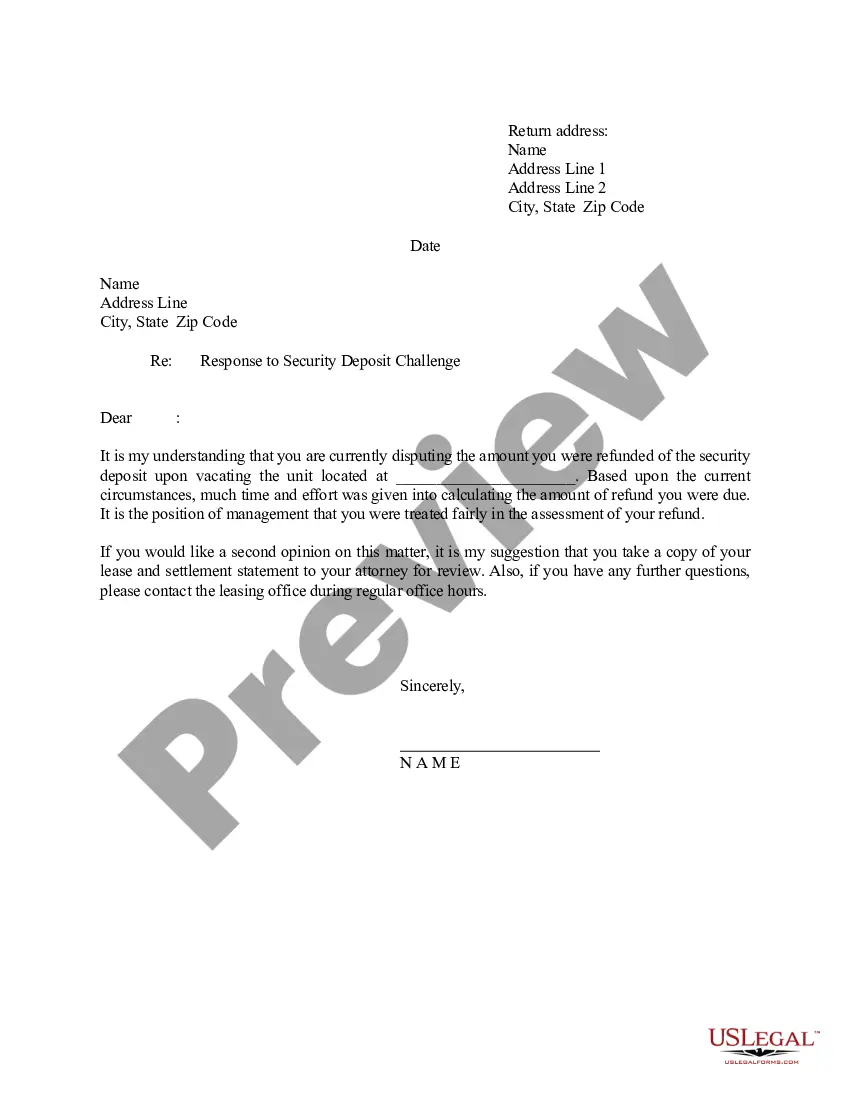
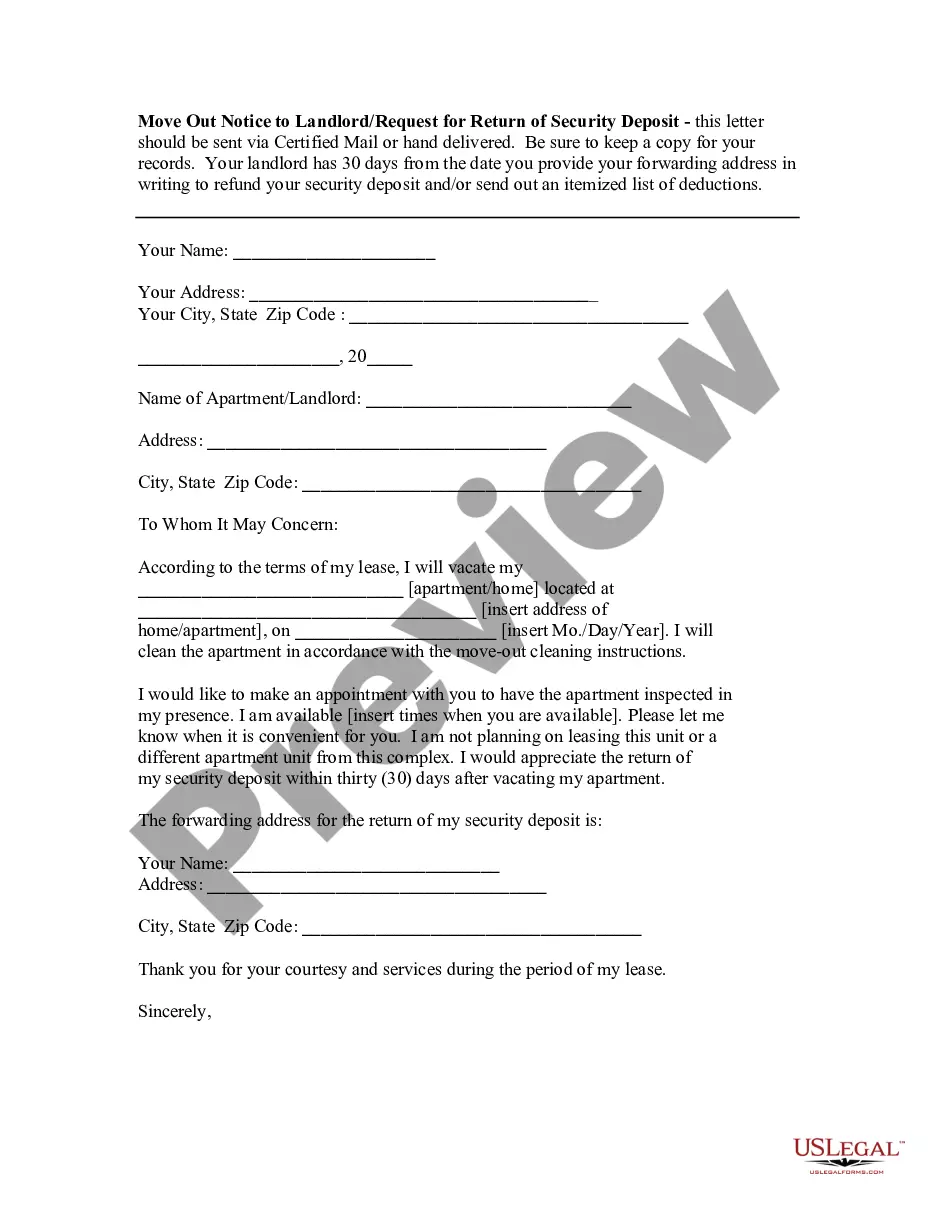
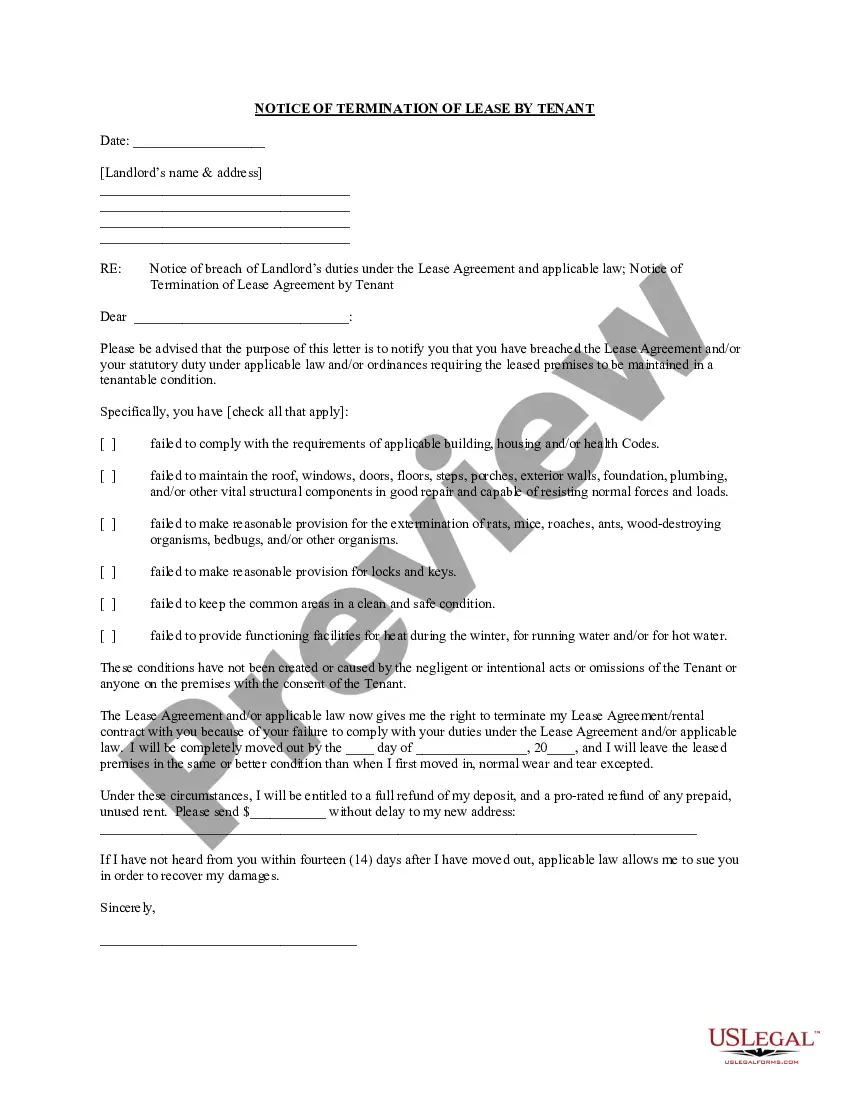
This form is a formal request from a tenant to their landlord, addressing the failure to return prepaid and unearned rent as well as the security deposit owed to the tenant. It serves as a crucial legal notice that can help clarify the tenant's rights and demands, differentiating it from other landlord-tenant forms by focusing specifically on the financial restitution due to the tenant as a result of the landlordâs breach of contract or wrongful conduct. This letter from tenant to landlord for failure to return rent is essential for asserting a tenant's legal rights.
Form components explained
- Details of the tenant's departure from the leased premises.
- Notification of the landlord's failure to return prepaid but unearned rent.
- A statement of potential legal action if the amounts owed are not returned.
- Date and signature lines for the tenant to confirm their notice.
- Proof of delivery options, including personal delivery and certified mail.

When to use this form
This letter should be used when a tenant has moved out of their rental property and has not received a refund of any prepaid and unearned rent or their security deposit. It is applicable when the landlord has breached the lease agreement or has acted contrary to landlord-tenant laws, thus prompting the tenant to demand financial restitution.
Who this form is for
This form is intended for:
- Tenants who have prepaid rent and are seeking to recover unearned amounts upon leaving a rental property.
- Individuals who believe their landlord has failed to comply with the lease agreement regarding rent refunds.
- Tenants who have experienced wrongful conduct by their landlord that affects their rental obligations.
How to complete this form
- Identify the parties involved, including the tenant and landlord.
- Describe the circumstances of your departure from the property.
- Clearly state the amounts owed and any unpaid rent or security deposit.
- Enter the date and provide your signature to validate the notice.
- Choose the method of delivery to ensure proof of receipt by the landlord.
Is notarization required?
This form does not typically require notarization unless specified by local law. Make sure to check any specific regulations that may apply in your state regarding notarization requirements for tenant-landlord communications.
Get your form ready online
Our built-in tools help you complete, sign, share, and store your documents in one place.
Make edits, fill in missing information, and update formatting in US Legal Forms—just like you would in MS Word.
Download a copy, print it, send it by email, or mail it via USPS—whatever works best for your next step.
Sign and collect signatures with our SignNow integration. Send to multiple recipients, set reminders, and more. Go Premium to unlock E-Sign.
If this form requires notarization, complete it online through a secure video call—no need to meet a notary in person or wait for an appointment.
We protect your documents and personal data by following strict security and privacy standards.

Make edits, fill in missing information, and update formatting in US Legal Forms—just like you would in MS Word.

Download a copy, print it, send it by email, or mail it via USPS—whatever works best for your next step.

Sign and collect signatures with our SignNow integration. Send to multiple recipients, set reminders, and more. Go Premium to unlock E-Sign.

If this form requires notarization, complete it online through a secure video call—no need to meet a notary in person or wait for an appointment.

We protect your documents and personal data by following strict security and privacy standards.
Mistakes to watch out for
- Failing to provide specific details regarding the amounts owed.
- Not sending the letter to the correct address for the landlord.
- Inadequately documenting the proof of delivery.
- Omitting the date and signature of the tenant.
Benefits of completing this form online
- Instant access to a professionally drafted template that meets legal standards.
- Convenience of downloading and completing the form at your own pace.
- Editability to customize details specific to your situation.
- High reliability with terms that comply with state laws.
Legal use & context
- This form serves as a formal legal notice, supporting the tenant's rights to recover funds.
- It's essential to keep a copy of the letter for your records as it may be used in any potential legal proceedings.
- Understanding local landlord-tenant laws can bolster the effectiveness of this notification.
Summary of main points
- This form is a formal demand from the tenant to the landlord for unreturned rent.
- Timely and proper delivery of this notice is crucial for legal compliance.
- Customize the details to accurately reflect your situation and amounts owed.
Looking for another form?
Form popularity
FAQ
Fill out the Request for Return of Security Deposit form (not interactive; you must print, then fill out the form). Send the form to your former landlord. Keep a photo-copy of the form for yourself. Hold on to the Return Receipt when it comes back in the mail.
Alerting state or local health and building inspectors. Suing your landlord in small claims court.
According to Idaho's security deposit law, landlords have 21 days to return tenants' security deposits once they move out. This period may be extended or shortened if both parties reach an agreement. In such cases, the period must not exceed 30 days.
The landlord verification form is a document used by a landlord when verifying the previous rental information of an applicant for tenancy. The requesting landlord must send the form to the applicant's current or past landlord in order to obtain all details related to the tenancy of the individual.
The Idaho law enacted in 1977 clearly specifies the rights of landlords and tenants. Some of the tenant rights include: Right to remain on the property until they're properly evicted by a court order. Right to have repairs made within a reasonable amount of time after a request is made.
5 Times a Landlord Does Not Have to Return a Tenant's Security Deposit. Breaking or Terminating a Lease Early. Nonpayment of Rent. Damage to the Property. Cleaning Costs. Unpaid Utilities.
You should usually get your deposit back within 10 days of agreeing on the amount with your landlord. It can take a lot longer if you and your landlord disagree on the amount that's being taken off.
A rental verification helps landlords and property managers to verify the rental history of their applicant. This is done through a background check combined with a phone call verification.Calling the previous and current landlord is an important step of the rental verification.
If your deposit didn't need to be protected and your landlord refuses to give it back, you might have to take them to court. Going to court can be expensive and stressful. You'll have to pay court costs upfront but you might get them back if you win your case.