Alterations Clauses Model Approach
About this form
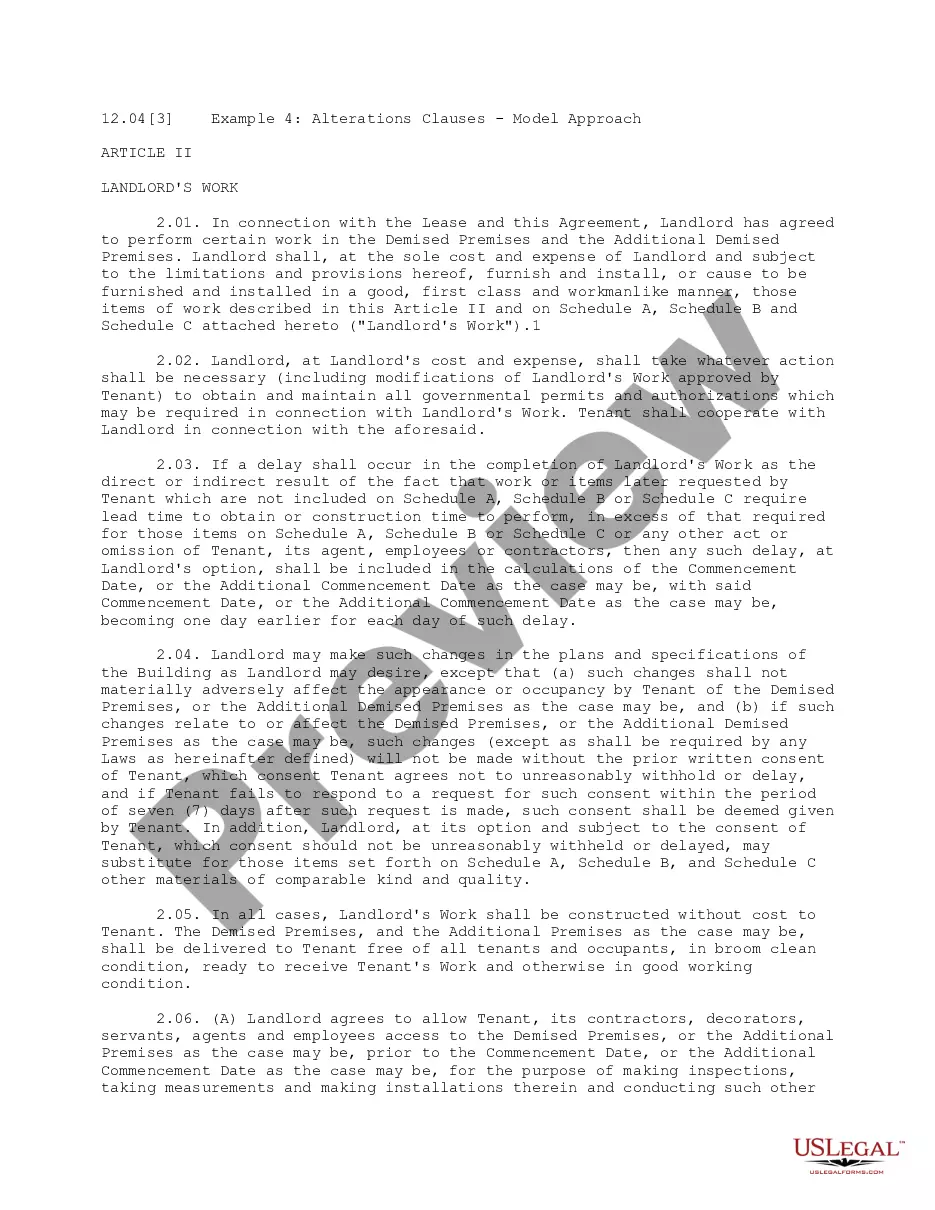
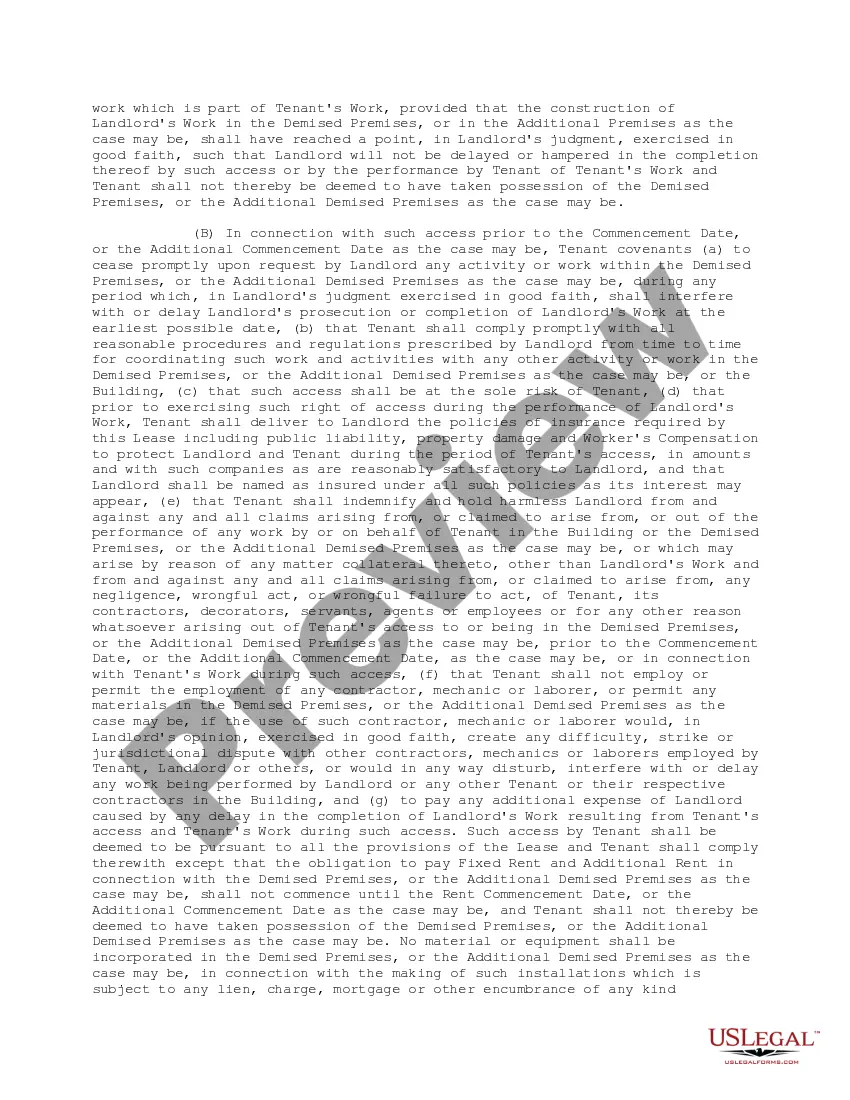
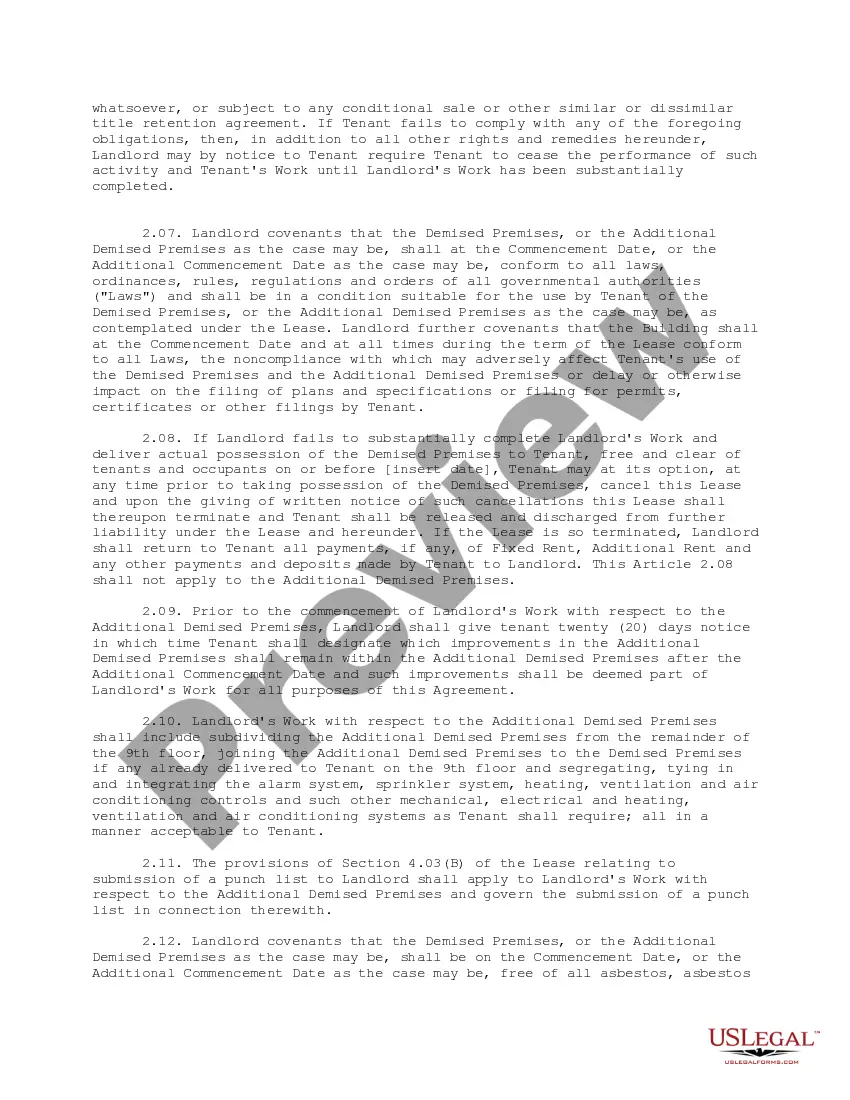
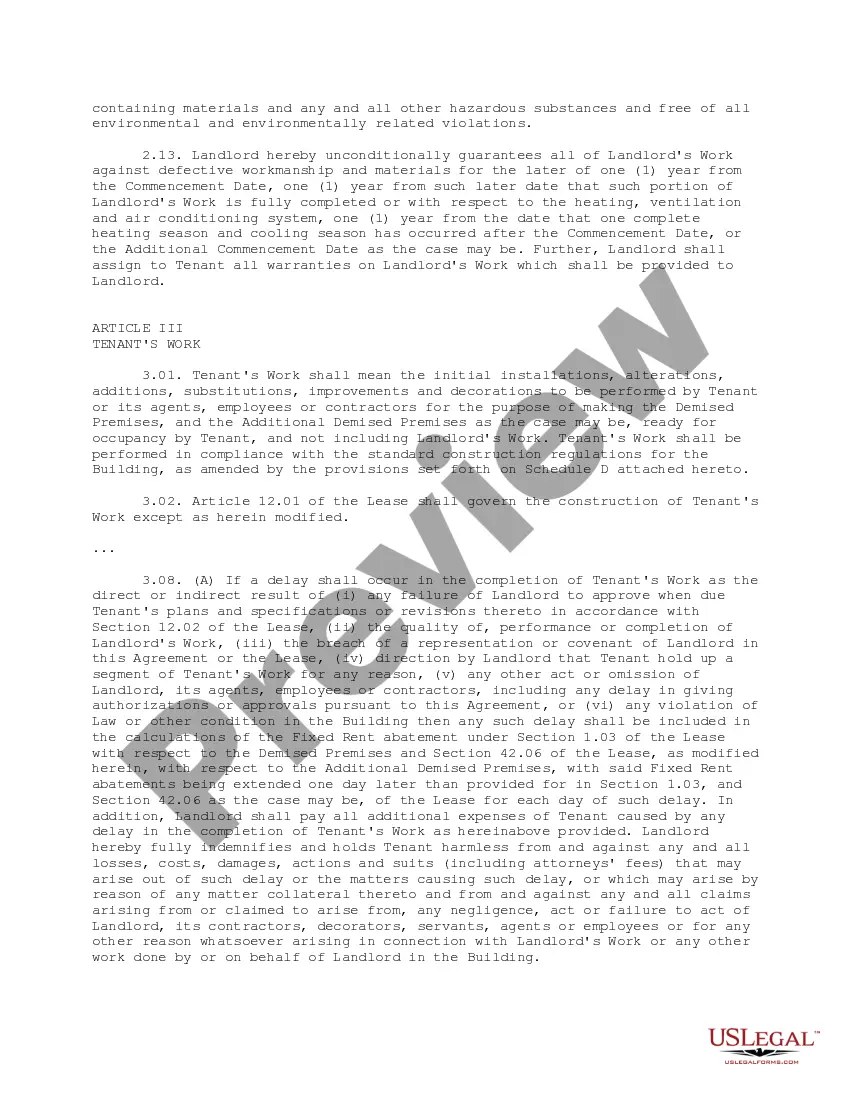
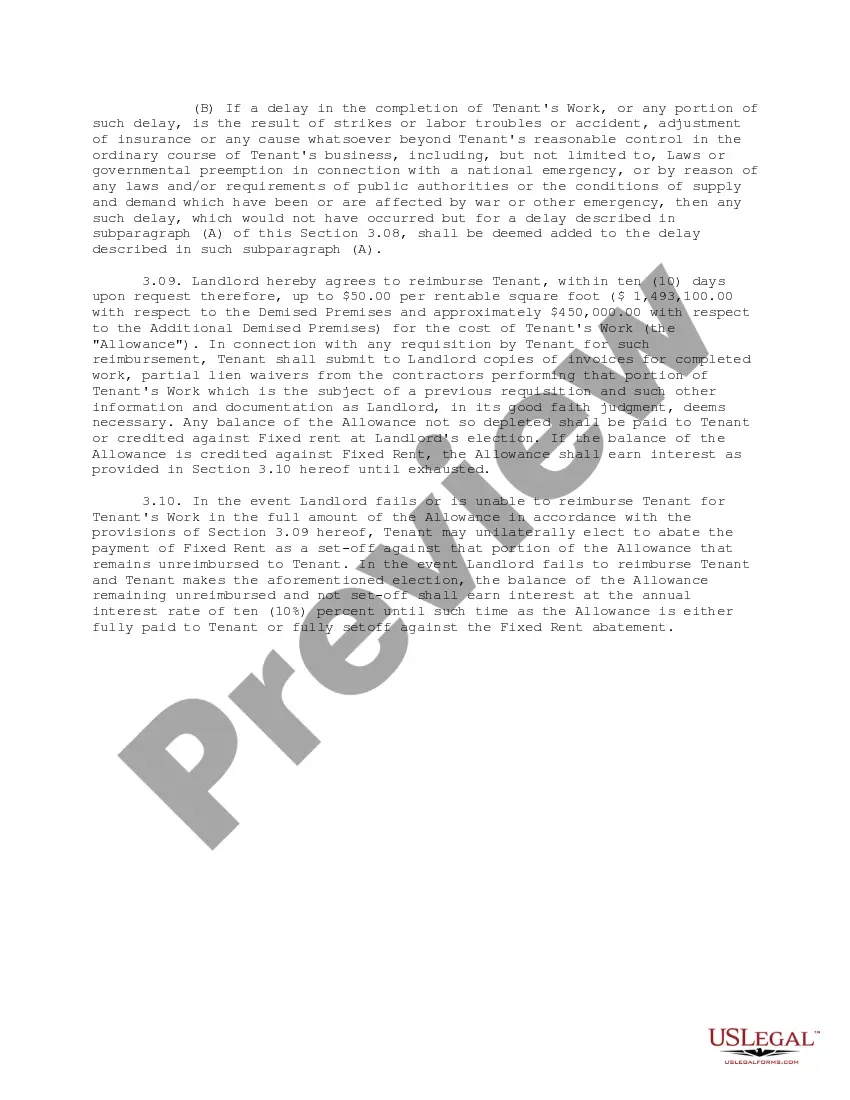
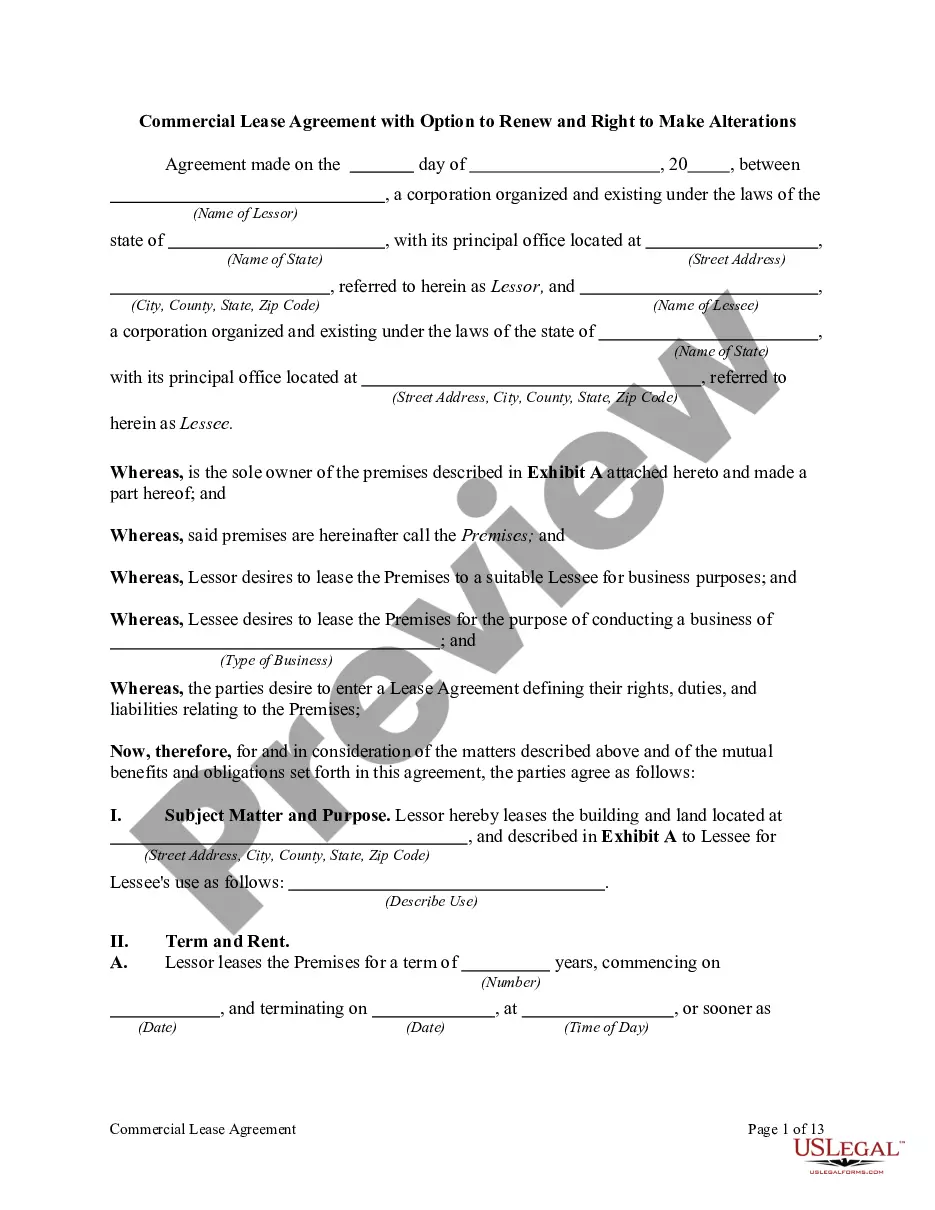
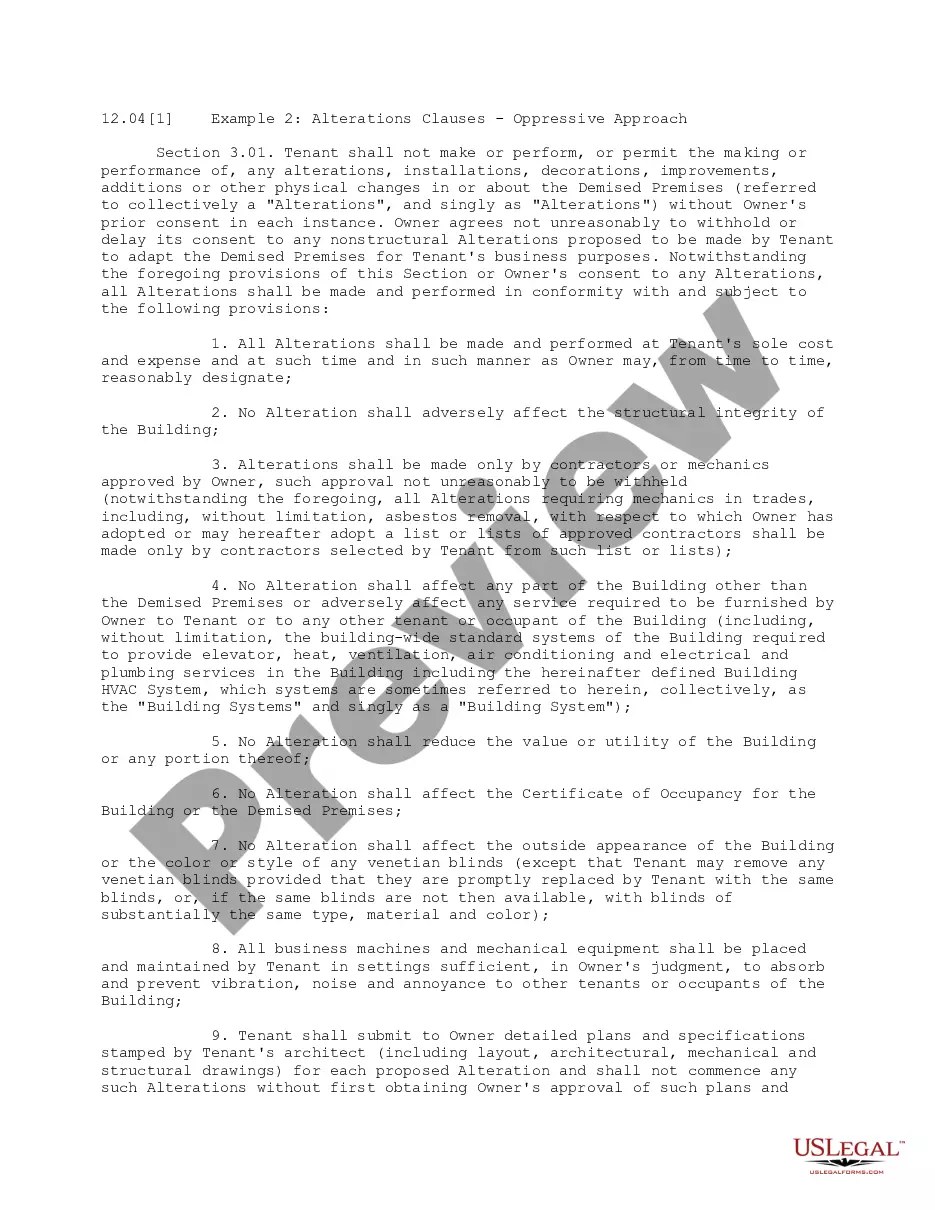
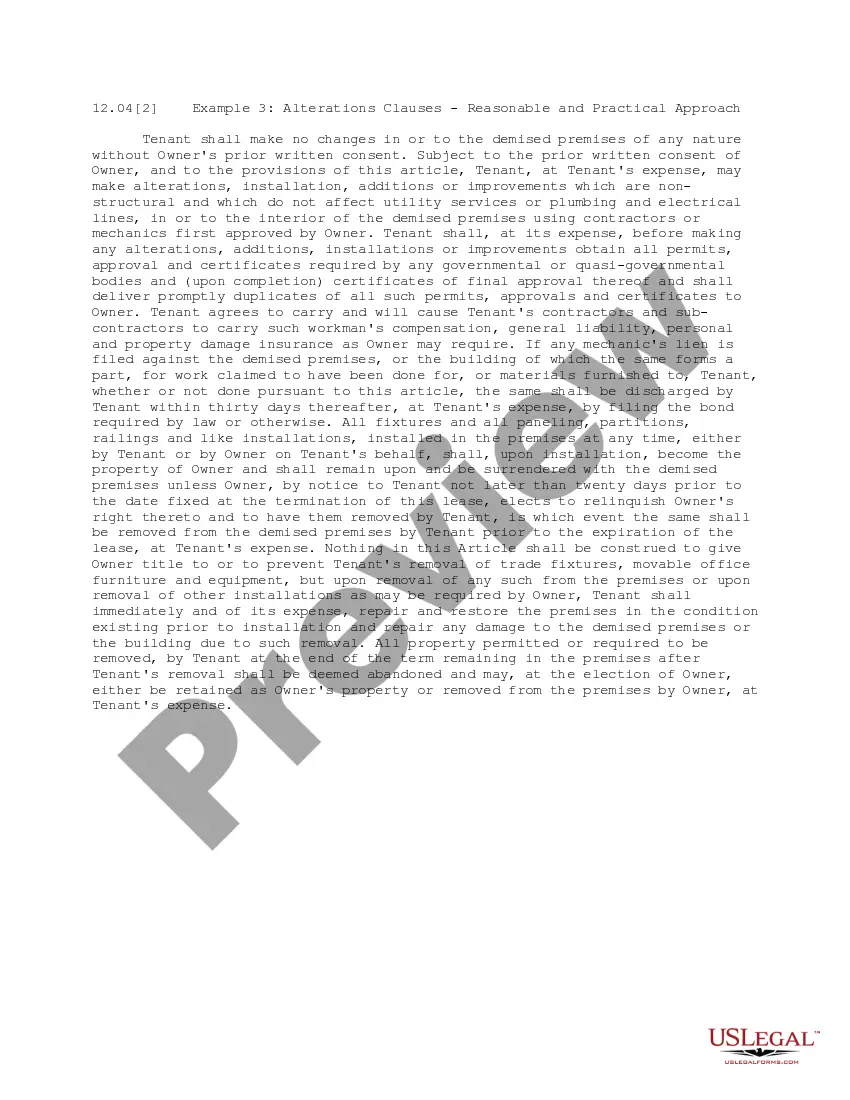
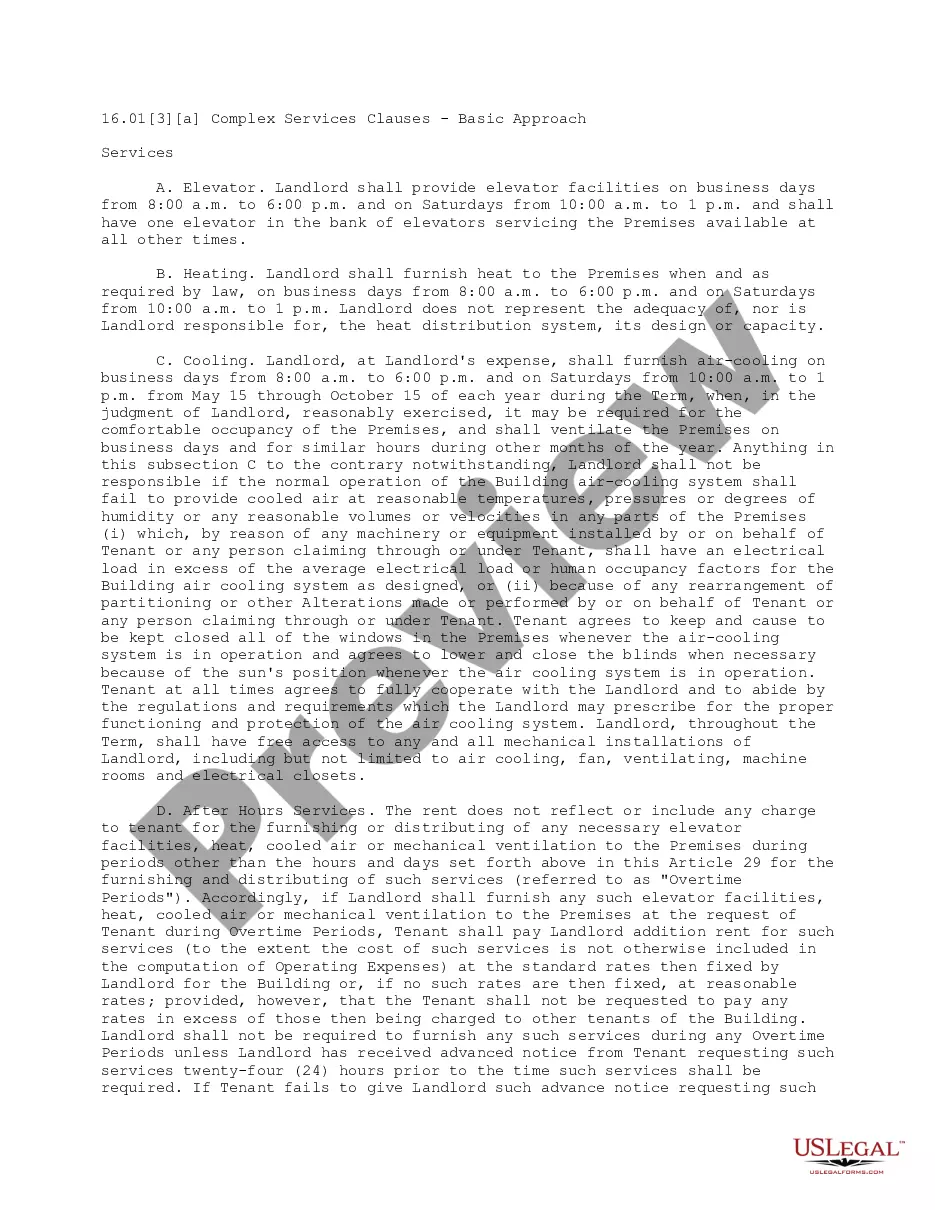
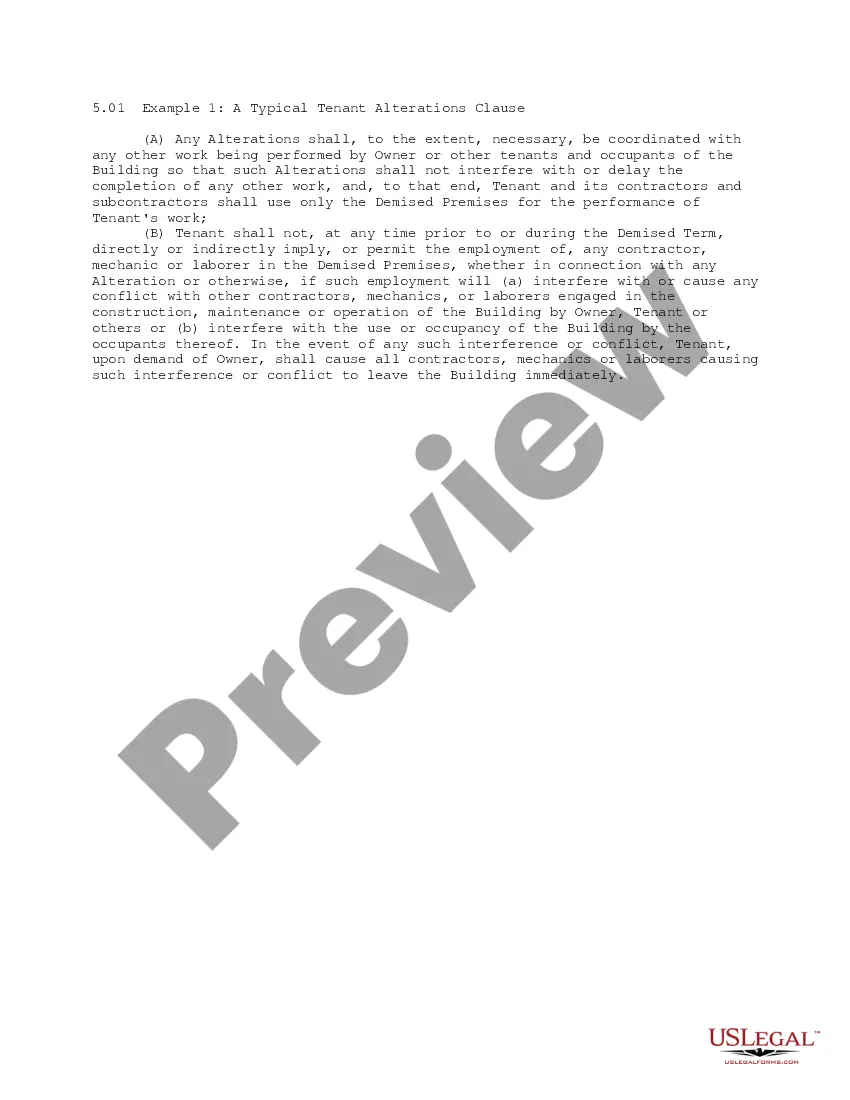
The Alterations Clauses Model Approach form outlines the agreements between a landlord and tenant regarding any improvements or changes to a rental property. This form specifies the responsibilities of the landlord for completing necessary work within the demised premises and states the conditions under which tenants may conduct their work. It differentiates itself from standard lease agreements by focusing specifically on alterations and improvements, ensuring clarity in responsibilities and expectations for both parties.
Form components explained
- Definition of landlord's duties regarding construction and improvements.
- Requirements for governmental permits and tenant cooperation.
- Conditions for tenant access to the premises before the lease commences.
- Provisions for delays in work completion and their impact on rent payments.
- Guarantees regarding the workmanship and condition of the property upon delivery.
When to use this document
This form is essential when signing a lease that includes clauses regarding alterations to the rental property. It is particularly important in situations where the landlord must agree to specific improvements or modifications requested by the tenant before occupancy. Use this form to ensure that both parties are aligned on responsibilities and expectations concerning construction work in the premises.
Who needs this form
- Landlords who need to define the scope of work to be completed before a tenant occupies the property.
- Tenants planning significant alterations or improvements to a rented space.
- Property managers overseeing lease agreements that involve construction work.
Completing this form step by step
- Identify the parties involved in the lease agreement.
- List the specific improvements or alterations the landlord agrees to perform.
- Specify any necessary permits required for the work to commence.
- Set conditions for tenant access to the premises prior to the lease commencement.
- Include guarantees related to workmanship and compliance with local laws.
Does this form need to be notarized?
This form does not typically require notarization unless specified by local law. However, providing a notarized signature can enhance the credibility of the agreement and serve as additional proof should disputes arise.
Get your form ready online
Our built-in tools help you complete, sign, share, and store your documents in one place.
Make edits, fill in missing information, and update formatting in US Legal Forms—just like you would in MS Word.
Download a copy, print it, send it by email, or mail it via USPS—whatever works best for your next step.
Sign and collect signatures with our SignNow integration. Send to multiple recipients, set reminders, and more. Go Premium to unlock E-Sign.
If this form requires notarization, complete it online through a secure video call—no need to meet a notary in person or wait for an appointment.
We protect your documents and personal data by following strict security and privacy standards.

Make edits, fill in missing information, and update formatting in US Legal Forms—just like you would in MS Word.

Download a copy, print it, send it by email, or mail it via USPS—whatever works best for your next step.

Sign and collect signatures with our SignNow integration. Send to multiple recipients, set reminders, and more. Go Premium to unlock E-Sign.

If this form requires notarization, complete it online through a secure video call—no need to meet a notary in person or wait for an appointment.

We protect your documents and personal data by following strict security and privacy standards.
Typical mistakes to avoid
- Failing to include all necessary details regarding the landlord's scope of work.
- Not addressing delays in work completion or their implications on rent.
- Overlooking state-specific regulations that govern rental properties.
Benefits of using this form online
- Immediate access to legally vetted templates created by licensed attorneys.
- Easy downloading and modification to fit specific needs.
- Confidence in the reliability of the document structure and terminology.
Looking for another form?
Form popularity
FAQ
Can a tenant claim for improvements made during the lease? The position differs in the case of immovable and movable property. Tenant can claim for:The claim arises only once the lease is terminated and lessee vacated the property.
Commercial tenants may have the protection of the Landlord and Tenant Act 1954. The Act grants Security of Tenure to tenants who occupy premises for business purposes. The tenancy will continue after the contractual termination date until it is ended in one of the ways specified by the Act.
Can a Landlord Break or Refuse to Renew a Commercial Lease? Your lease agreement is legally binding under contract law, but it can be broken in some circumstances. If you and the landlord agree to break the lease, you should both sign an agreement to protect you from future legal action.
The use clause in a lease tells you how you can utilize your space. It may restrict your lines of business, stipulate office hours that you must adhere to and place restrictions on advertising signage on the premises.
Anyone renting a building, whether for commercial or personal use, has the right to privacy. You are entitled to do anything on the property that you wish, so long as whatever you are doing is legal. The landlord cannot prevent you from operating your business nor from allowing guests or patrons on the property.