Alterations Clauses Oppressive Approach
About this form
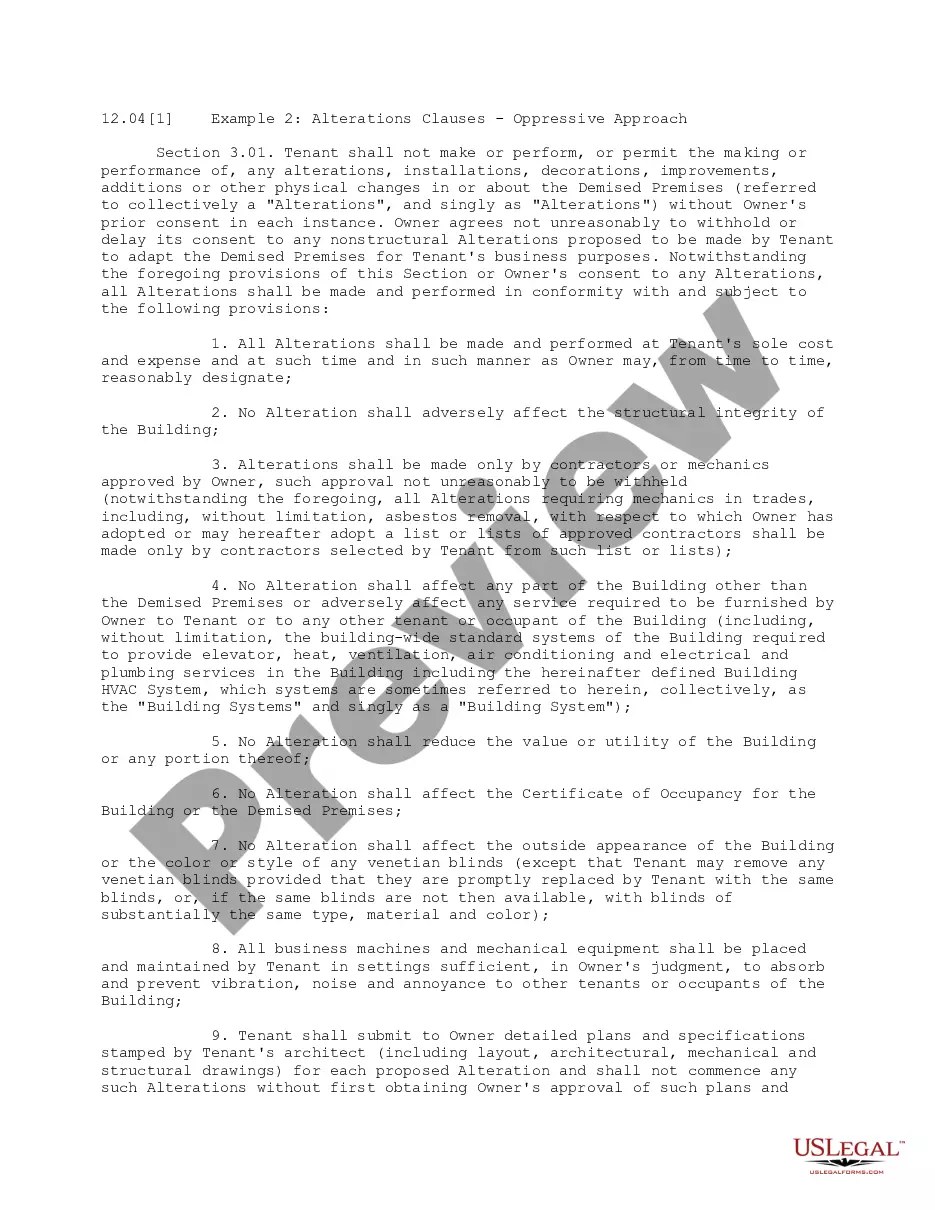
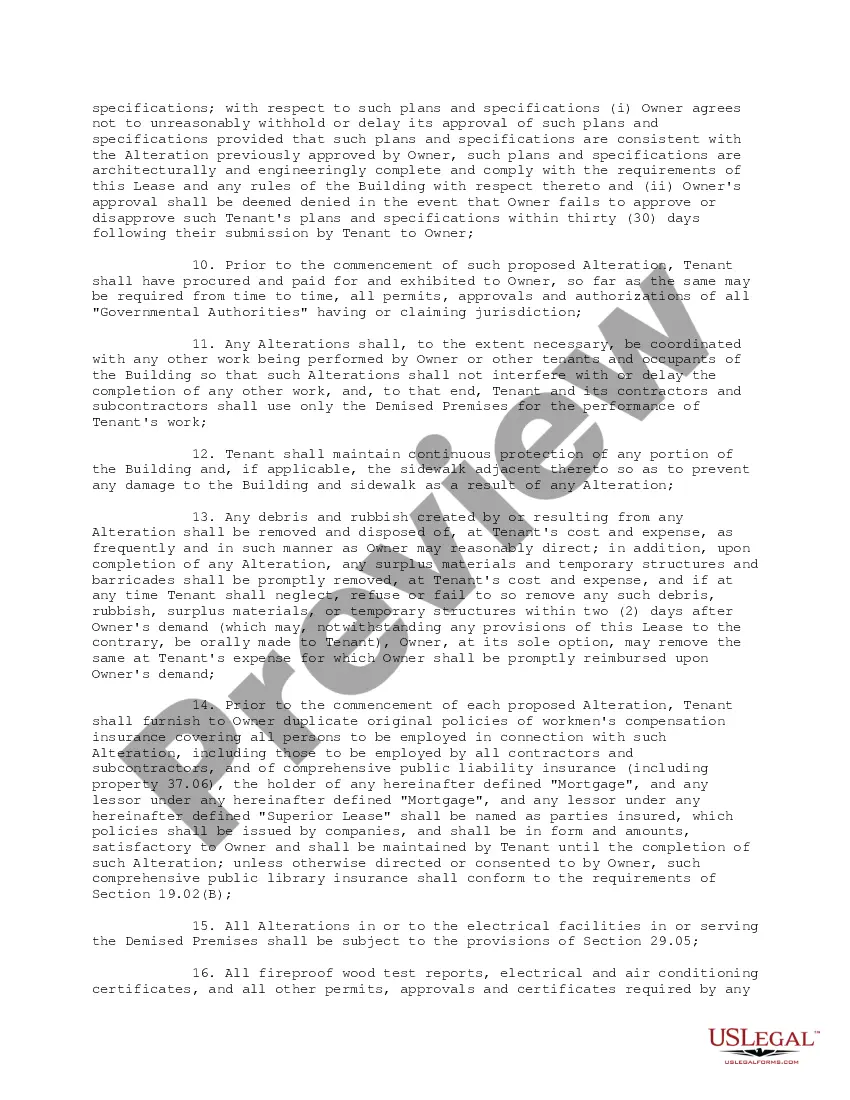
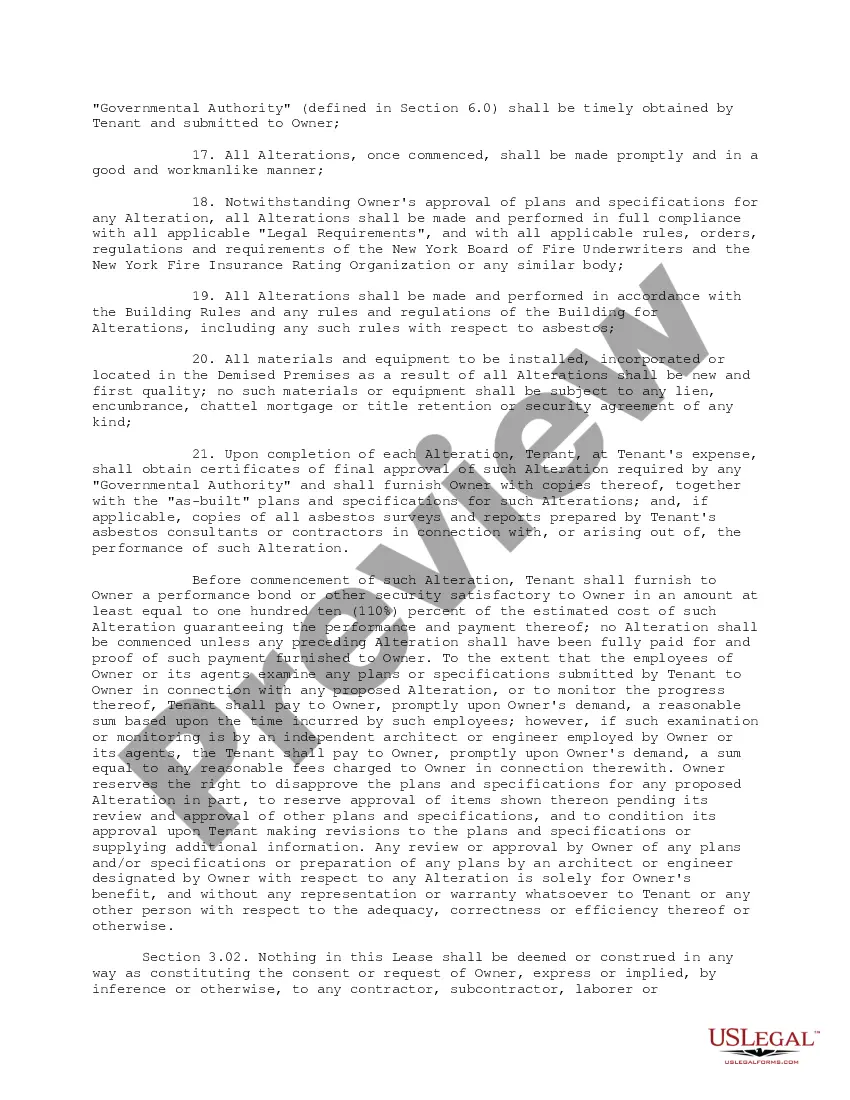
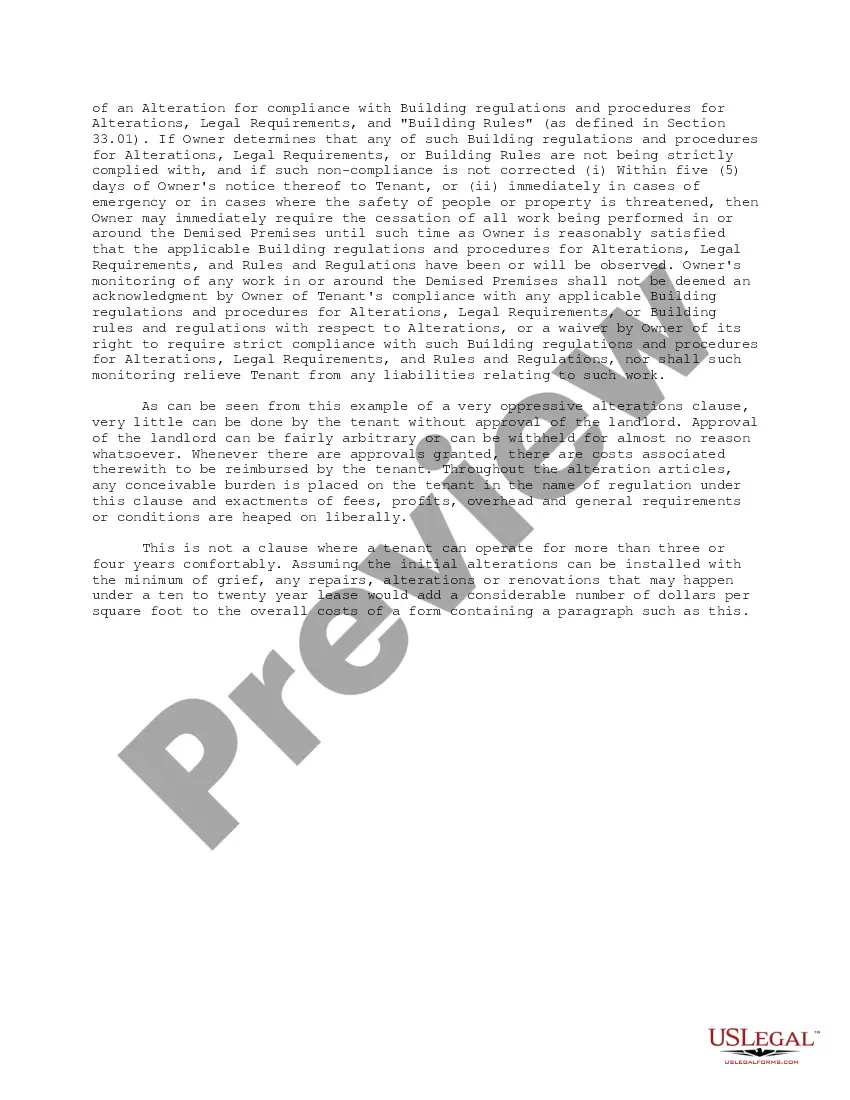
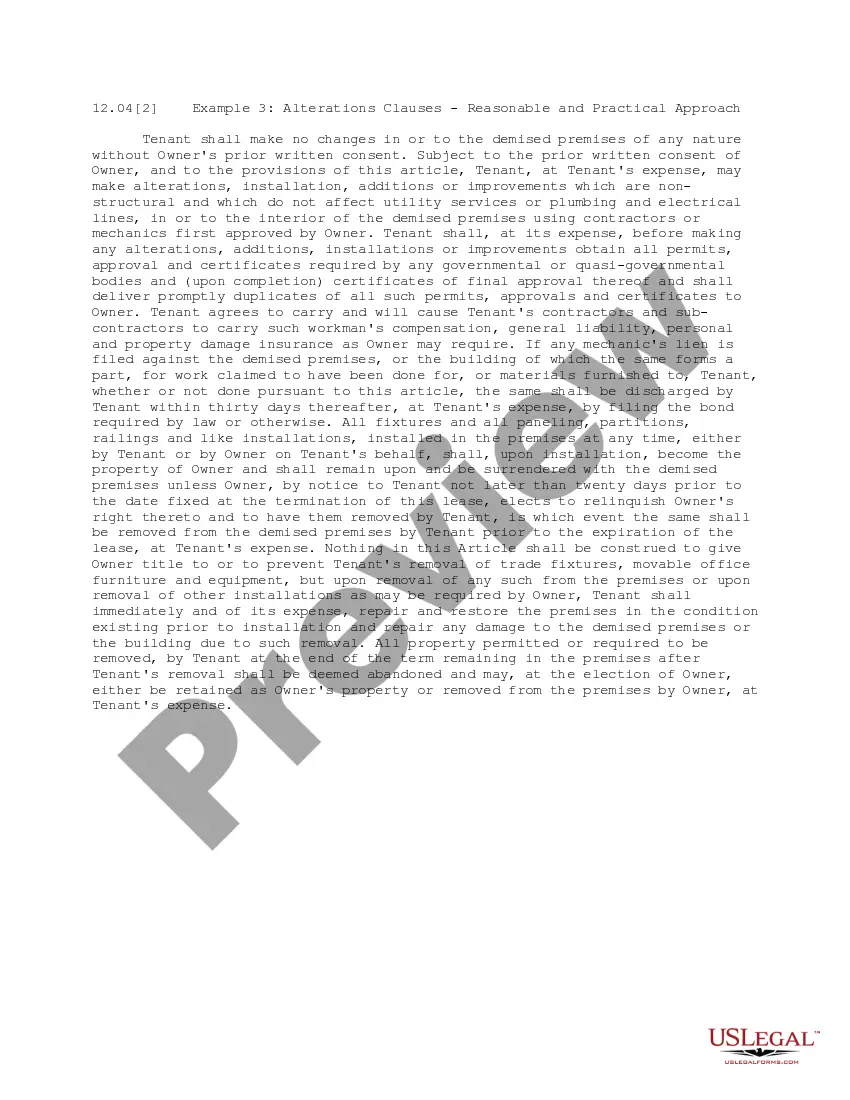
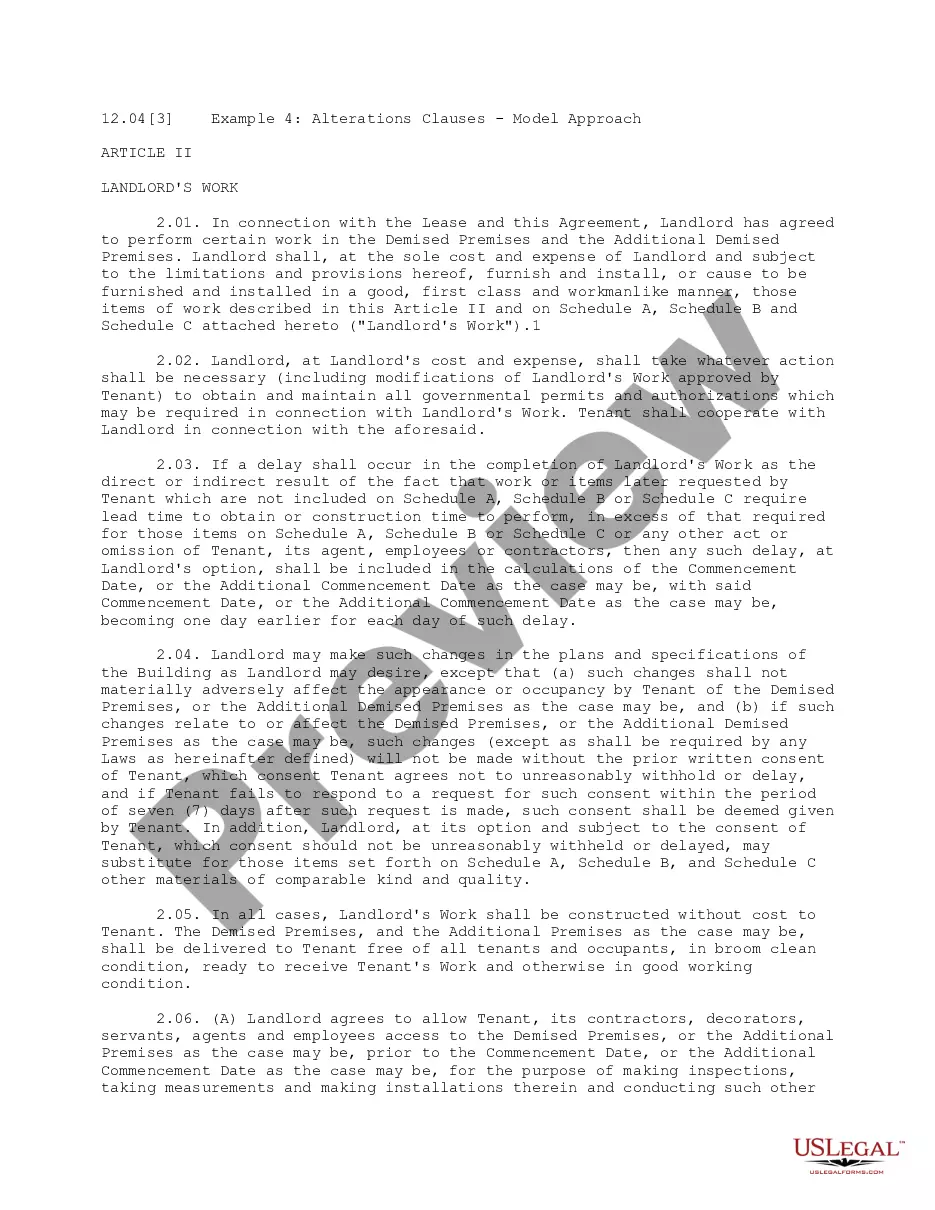
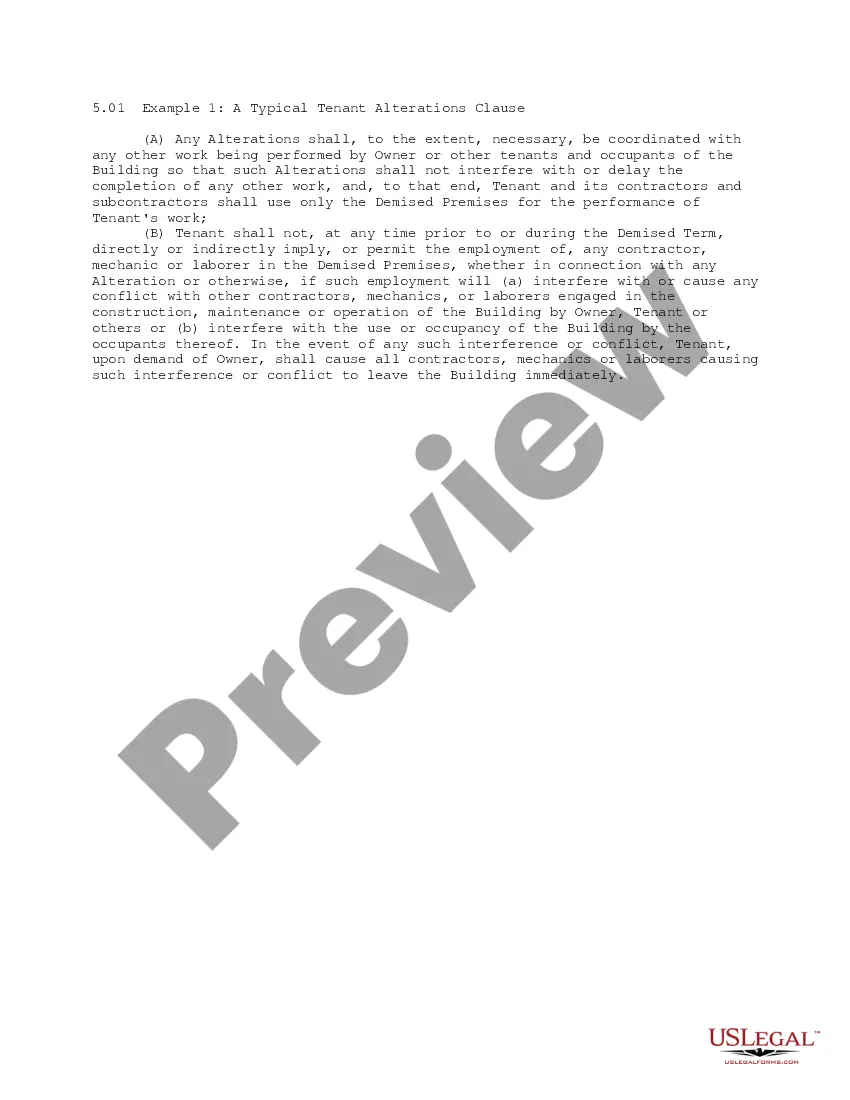
The Alterations Clauses Oppressive Approach form is a legal template used in commercial leases to outline the terms and conditions under which tenants may make alterations or improvements to the leased premises. This form distinctly emphasizes the restrictions placed on tenants, requiring them to obtain the landlord's prior consent for any changes. Unlike standard alteration clauses, this form delineates numerous conditions, fees, and potential delays that may impose additional burdens on tenants.
Main sections of this form
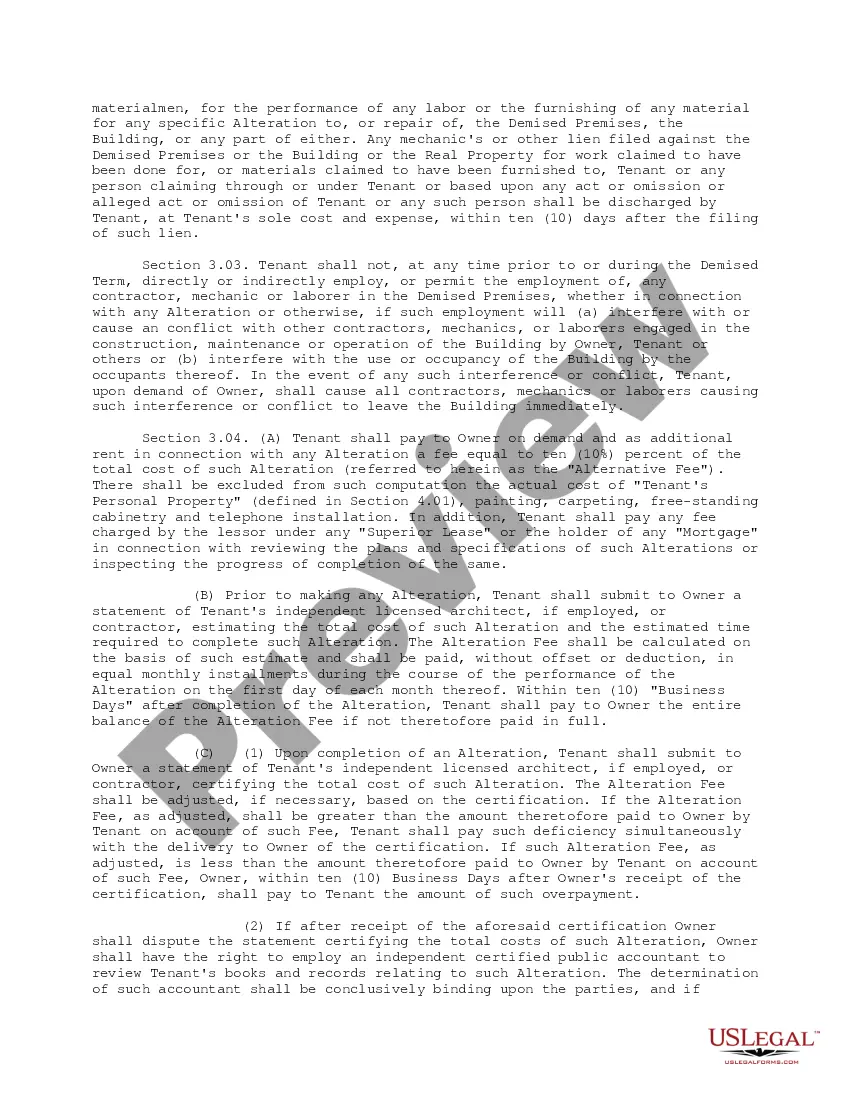
- Consent Requirements: Tenant must obtain prior consent from the owner for any alterations.
- Cost Responsibility: All alterations are to be completed at the tenant's sole cost and expense.
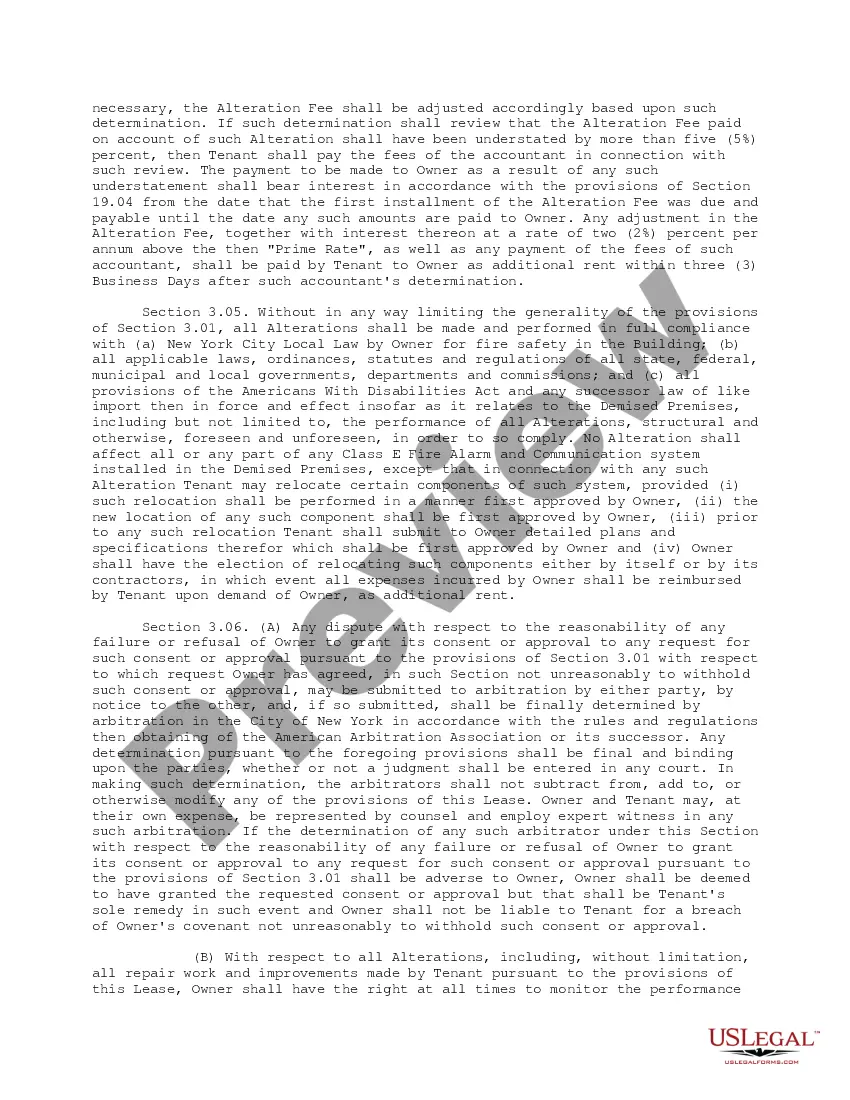
- Approval Process: The owner agrees not to unreasonably withhold approval, but numerous stipulations apply.
- Compliance with Laws: All changes must conform to applicable legal requirements and building rules.
- Insurance and Permits: Tenant is responsible for obtaining necessary permits and maintaining adequate insurance during alterations.
- Liability and Indemnification: Tenant must address any mechanics' liens or damages resulting from their alterations.
Common use cases
This form is typically used when a tenant intends to make physical changes to a commercial property they are leasing. It serves to clarify the requirements and limitations imposed by the landlord, ensuring that both parties understand their rights and obligations regarding alterations. Situations where this form is particularly useful include renovation plans, modifications to the layout, or any enhancements intended to adapt the property for specific business needs.
Who this form is for
- Commercial tenants seeking to alter or renovate their leased space.
- Landlords wanting to establish clear guidelines and obligations for tenant alterations.
- Real estate professionals needing a standard clause for lease agreements involving substantial modifications.
How to complete this form
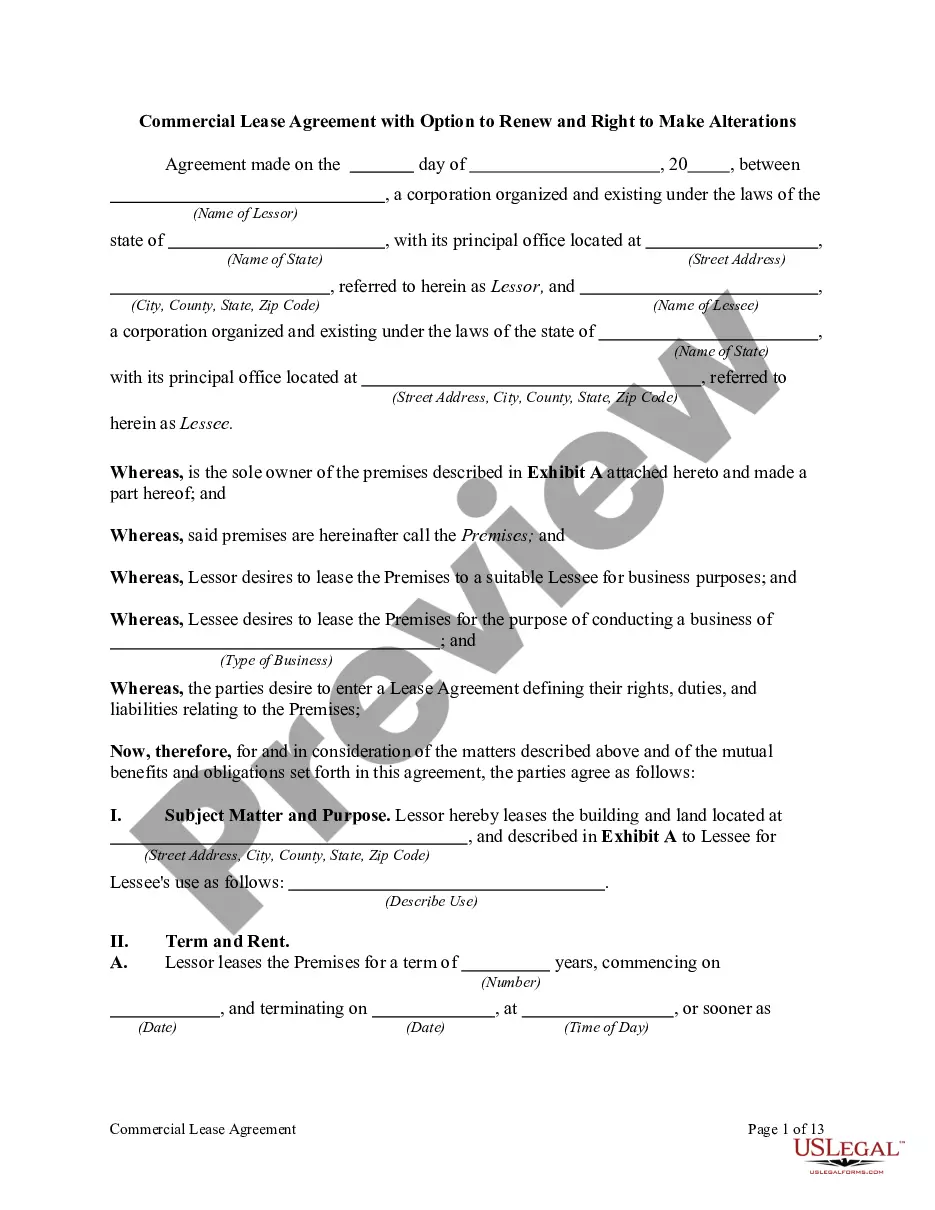
- Identify the parties involved: Enter the names and contact information of both the tenant and the landlord.
- Describe the premises: Clearly specify the location and description of the leased property.
- Detail the planned alterations: Include a description of the intended changes and why they are necessary.
- Outline the approval process: Include timelines for approval and any specific criteria for consent.
- Add insurance and permit obligations: Specify what documents and insurance aspects the tenant must handle.
Does this document require notarization?
In most cases, this form does not require notarization. However, some jurisdictions or signing circumstances might. US Legal Forms offers online notarization powered by Notarize, accessible 24/7 for a quick, remote process.
Get your form ready online
Our built-in tools help you complete, sign, share, and store your documents in one place.
Make edits, fill in missing information, and update formatting in US Legal Forms—just like you would in MS Word.
Download a copy, print it, send it by email, or mail it via USPS—whatever works best for your next step.
Sign and collect signatures with our SignNow integration. Send to multiple recipients, set reminders, and more. Go Premium to unlock E-Sign.
If this form requires notarization, complete it online through a secure video call—no need to meet a notary in person or wait for an appointment.
We protect your documents and personal data by following strict security and privacy standards.

Make edits, fill in missing information, and update formatting in US Legal Forms—just like you would in MS Word.

Download a copy, print it, send it by email, or mail it via USPS—whatever works best for your next step.

Sign and collect signatures with our SignNow integration. Send to multiple recipients, set reminders, and more. Go Premium to unlock E-Sign.

If this form requires notarization, complete it online through a secure video call—no need to meet a notary in person or wait for an appointment.

We protect your documents and personal data by following strict security and privacy standards.
Mistakes to watch out for
- Failing to obtain prior consent before commencing any alterations.
- Not keeping detailed records of costs associated with alterations.
- Overlooking the necessity for permits and inspections required by local authorities.
Benefits of using this form online
- Convenience of downloading and completing the form at your own pace.
- Easy modification to tailor the form to your specific needs.
- Access to secure legal documents drafted by licensed attorneys.
Legal use & context
- This form provides a clear framework for landlord-tenant relations regarding property alterations.
- It safeguards the landlord's property while outlining tenant responsibilities during renovations.
- Commonly utilized in commercial real estate transactions to mitigate disputes over property changes.
- Serves as a protective legal document in case of disagreements regarding alterations and approvals.
Looking for another form?



Form popularity
FAQ
Can a tenant claim for improvements made during the lease? The position differs in the case of immovable and movable property. Tenant can claim for:The claim arises only once the lease is terminated and lessee vacated the property.
Commercial tenants may have the protection of the Landlord and Tenant Act 1954. The Act grants Security of Tenure to tenants who occupy premises for business purposes. The tenancy will continue after the contractual termination date until it is ended in one of the ways specified by the Act.
Can a Landlord Break or Refuse to Renew a Commercial Lease? Your lease agreement is legally binding under contract law, but it can be broken in some circumstances. If you and the landlord agree to break the lease, you should both sign an agreement to protect you from future legal action.
The use clause in a lease tells you how you can utilize your space. It may restrict your lines of business, stipulate office hours that you must adhere to and place restrictions on advertising signage on the premises.
Anyone renting a building, whether for commercial or personal use, has the right to privacy. You are entitled to do anything on the property that you wish, so long as whatever you are doing is legal. The landlord cannot prevent you from operating your business nor from allowing guests or patrons on the property.