Commercial Lease Agreement with Option to Renew and Right to Make Alterations
Overview of this form
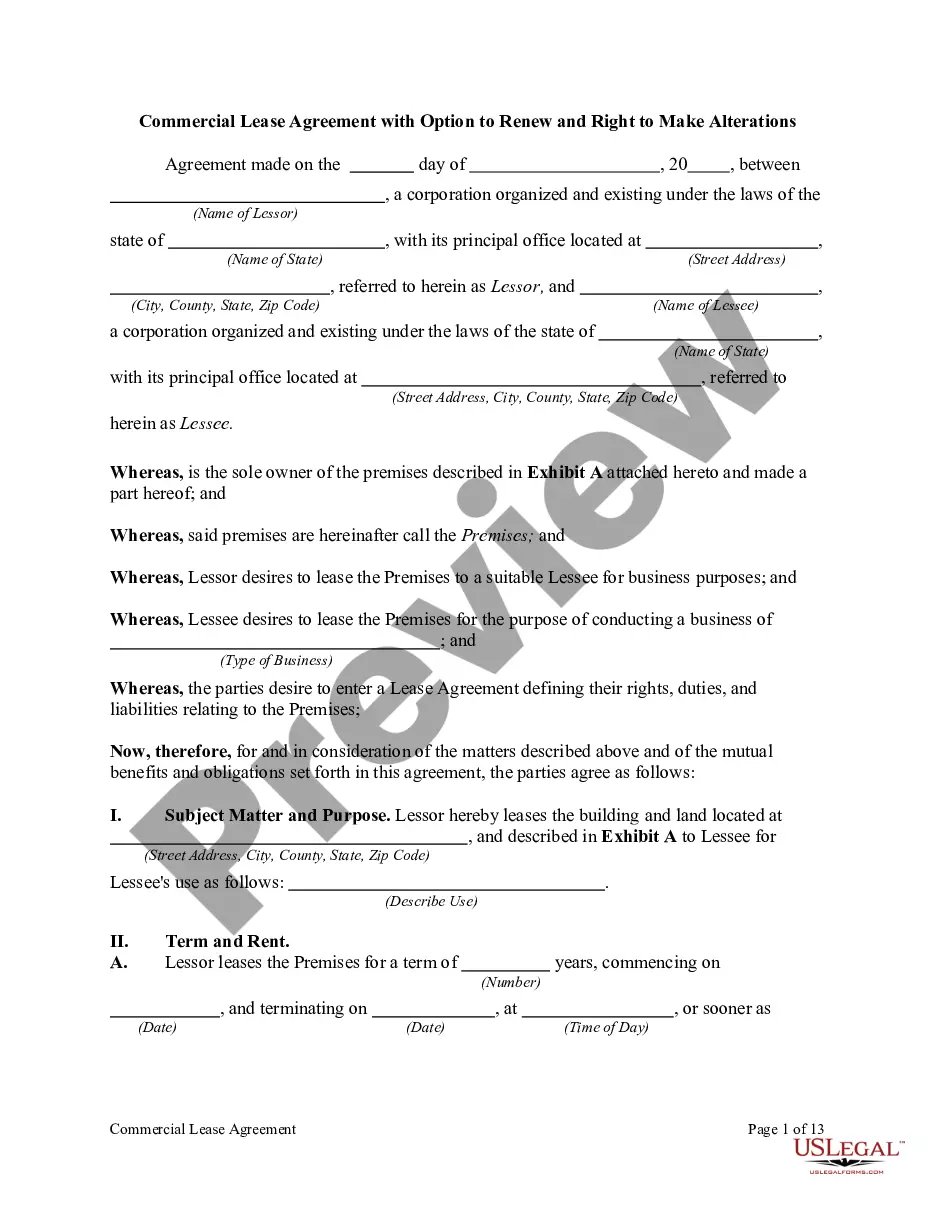
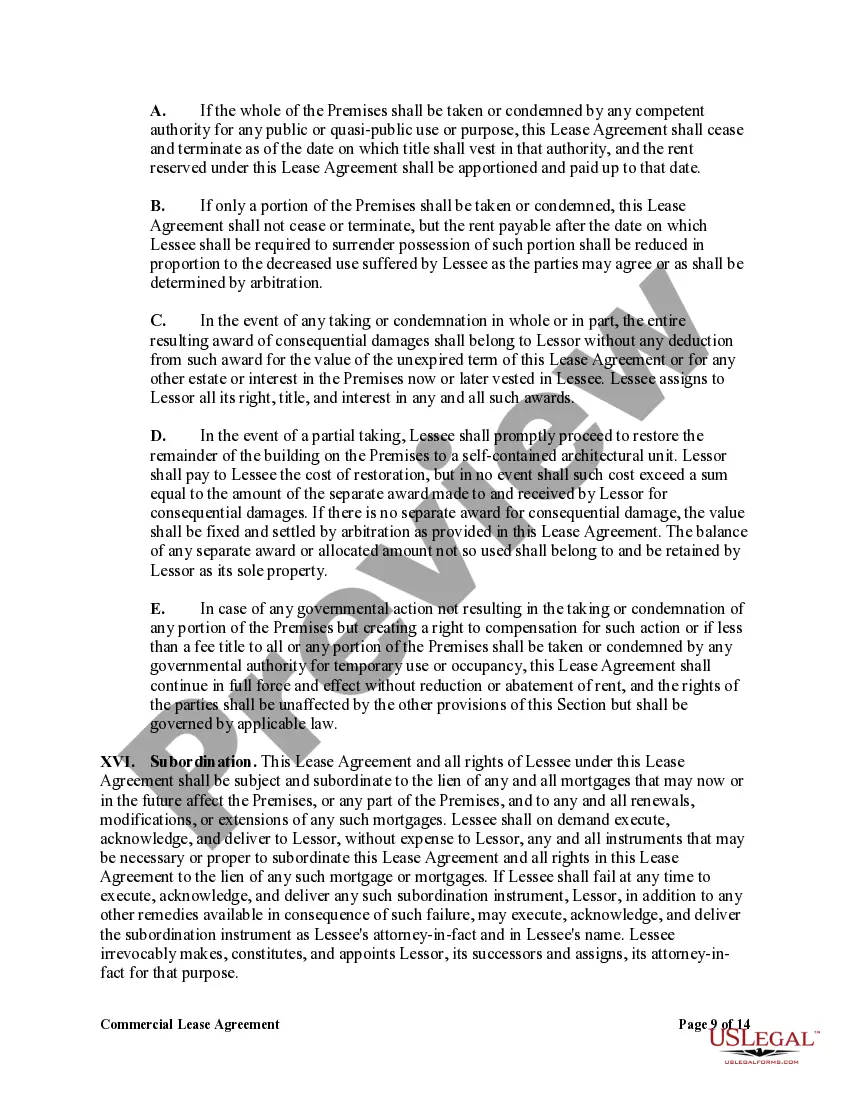
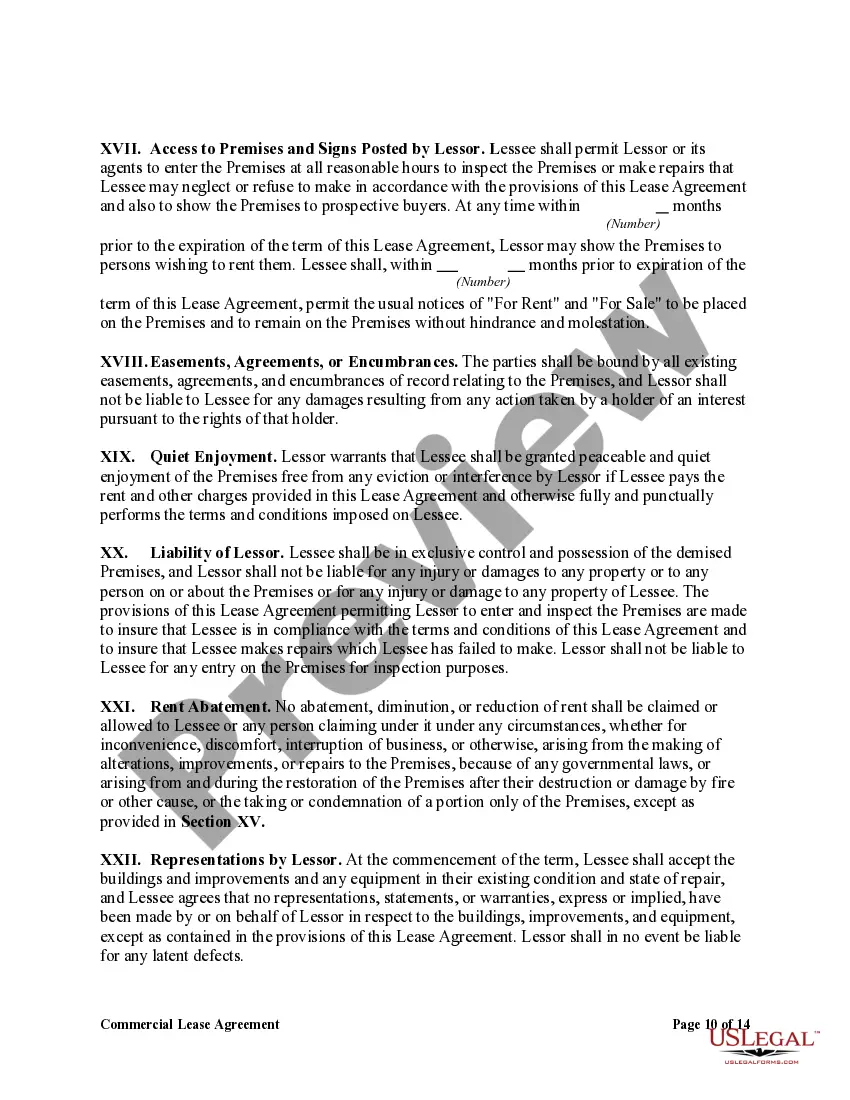
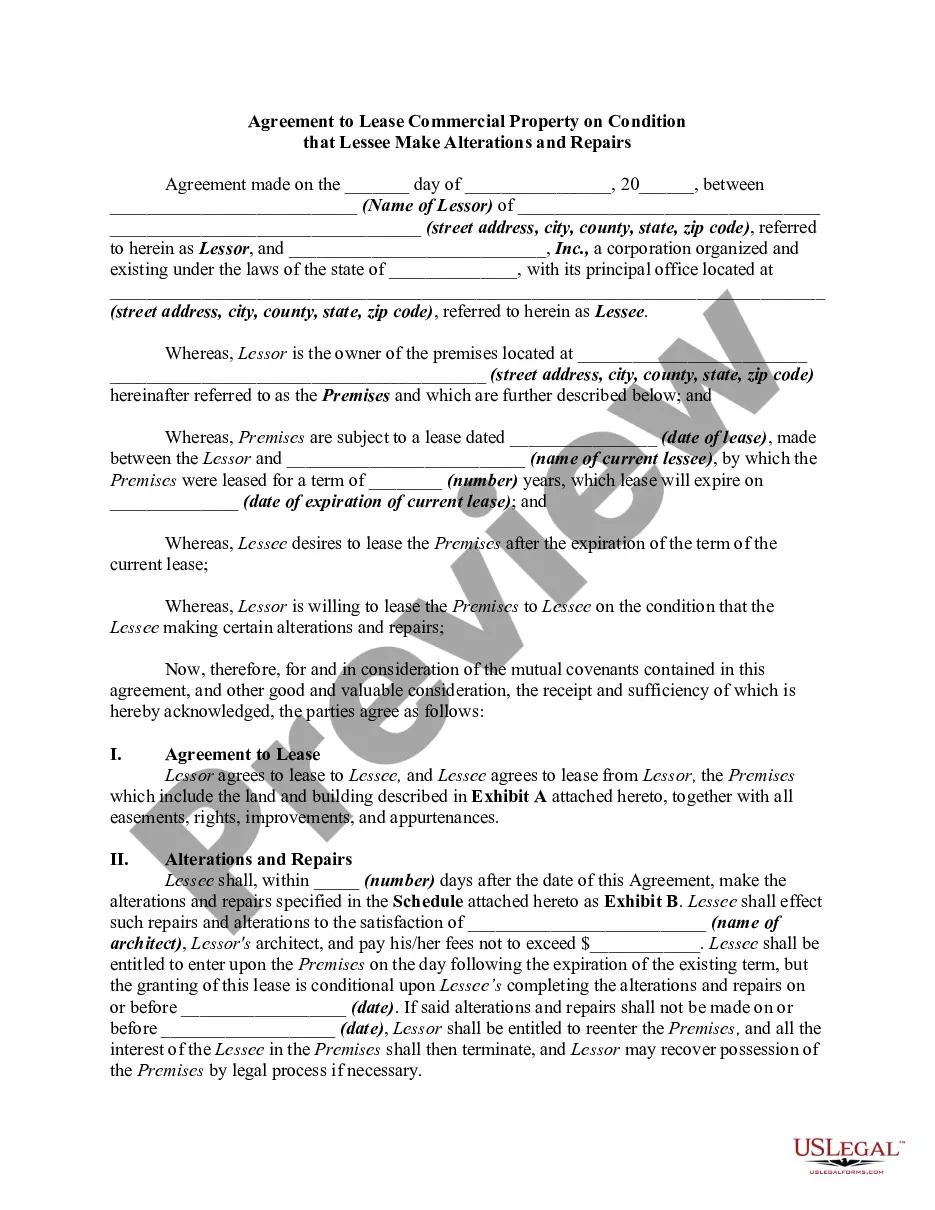
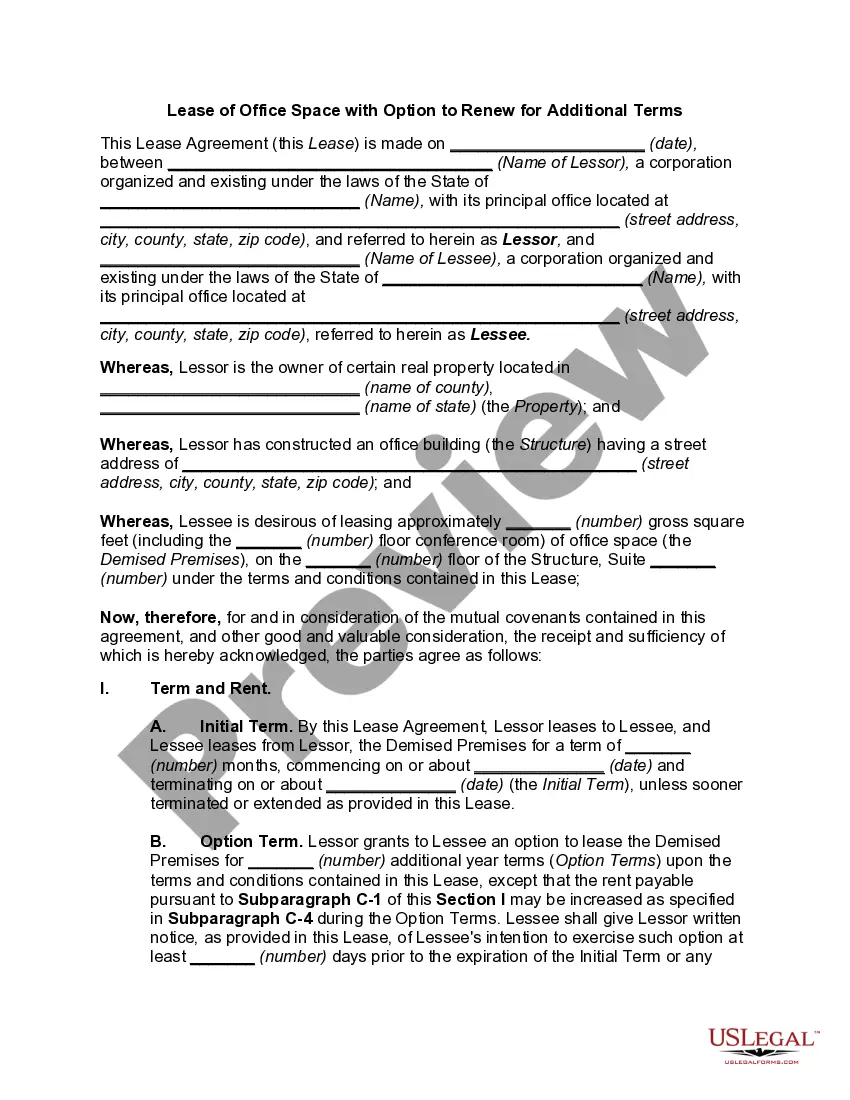
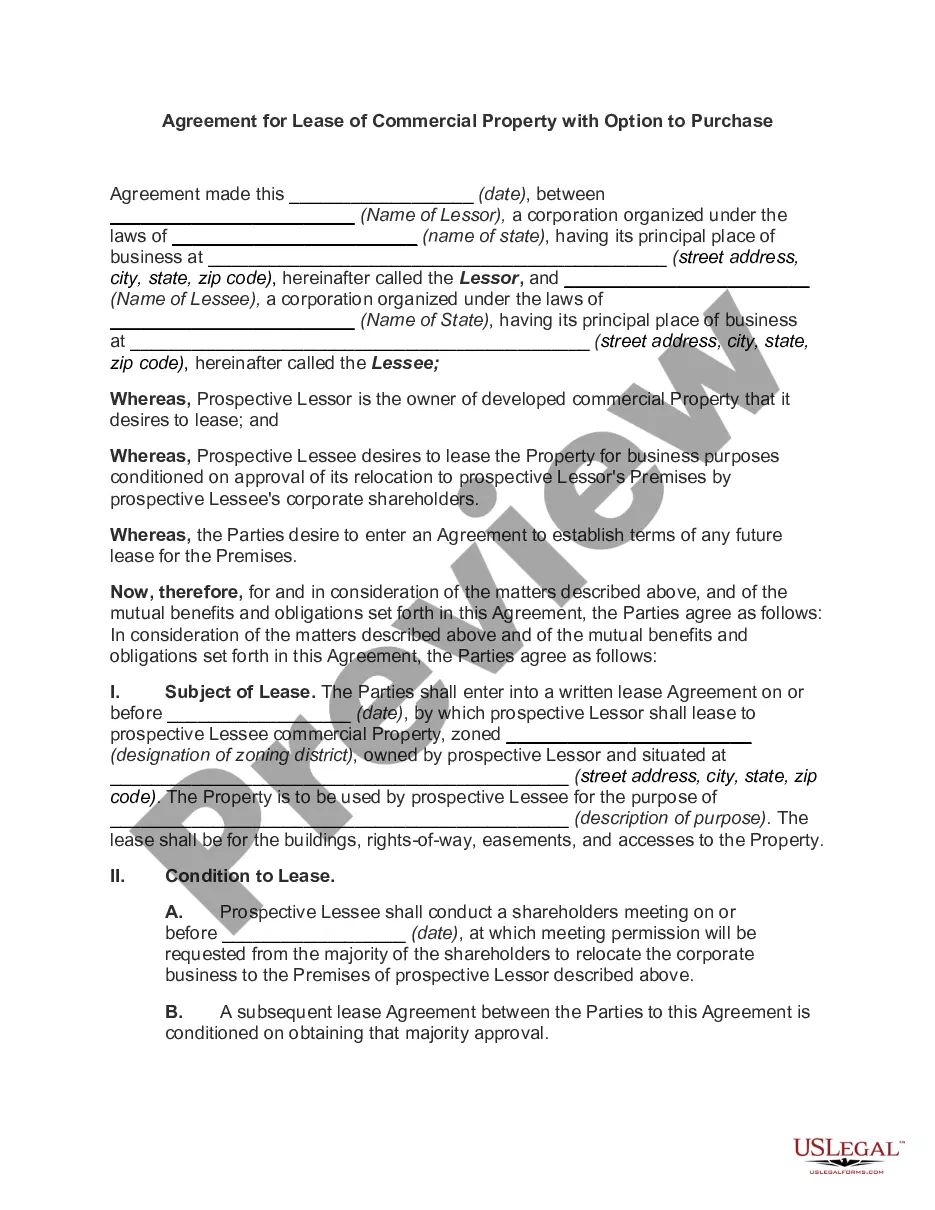
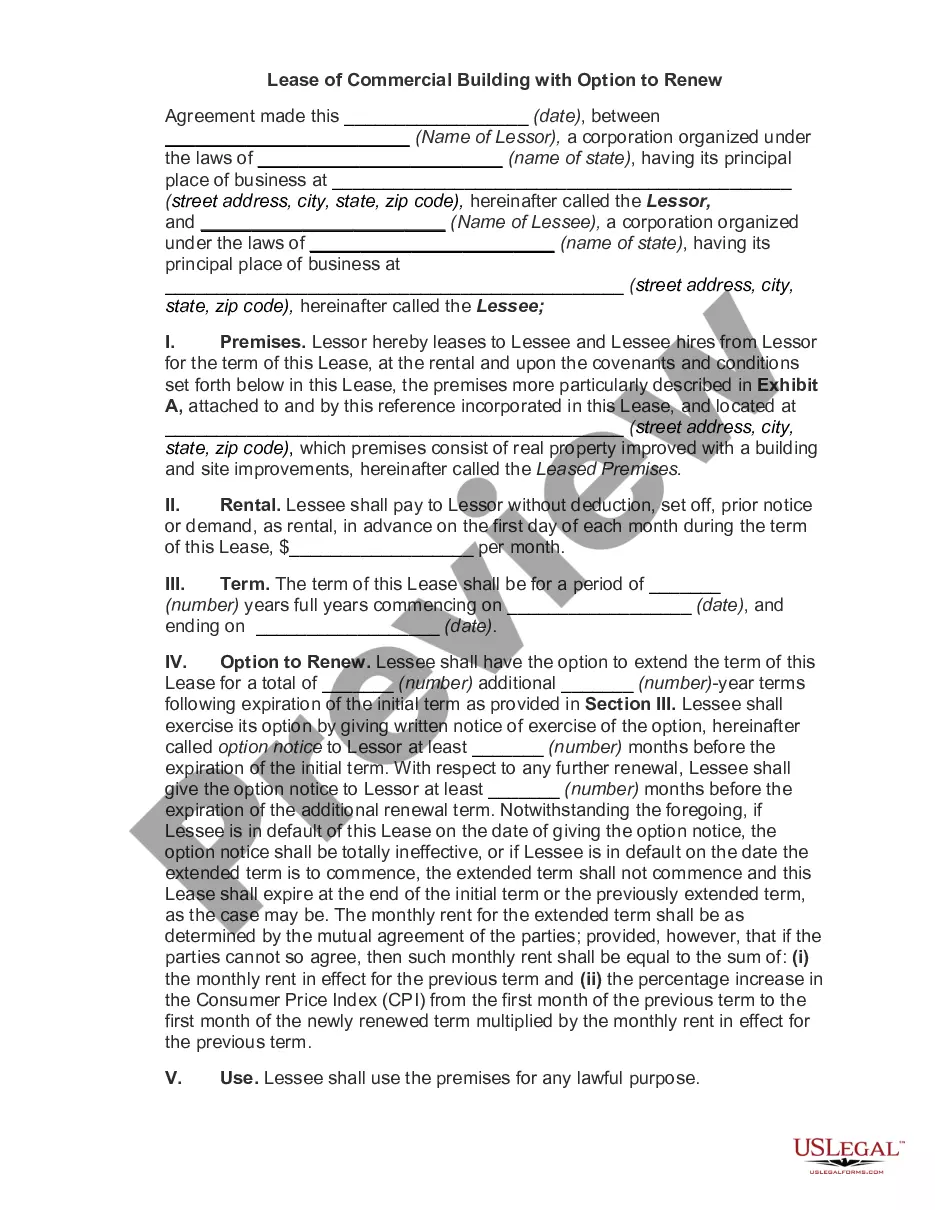
This Commercial Lease Agreement with Option to Renew and Right to Make Alterations is a legal document that allows a lessor to lease commercial property to a lessee. This form includes provisions that not only provide the lessee with the option to renew the lease but also allows for alterations to the property, making it suitable for businesses that may need to customize the space to fit their operational needs. Unlike standard lease agreements, this form addresses both renewal and property modification, making it ideal for businesses seeking long-term occupancy with flexibility.
Key components of this form
- Identification of parties: Names and addresses of the lessor and lessee.
- Property description: Detailed description of the leased premises.
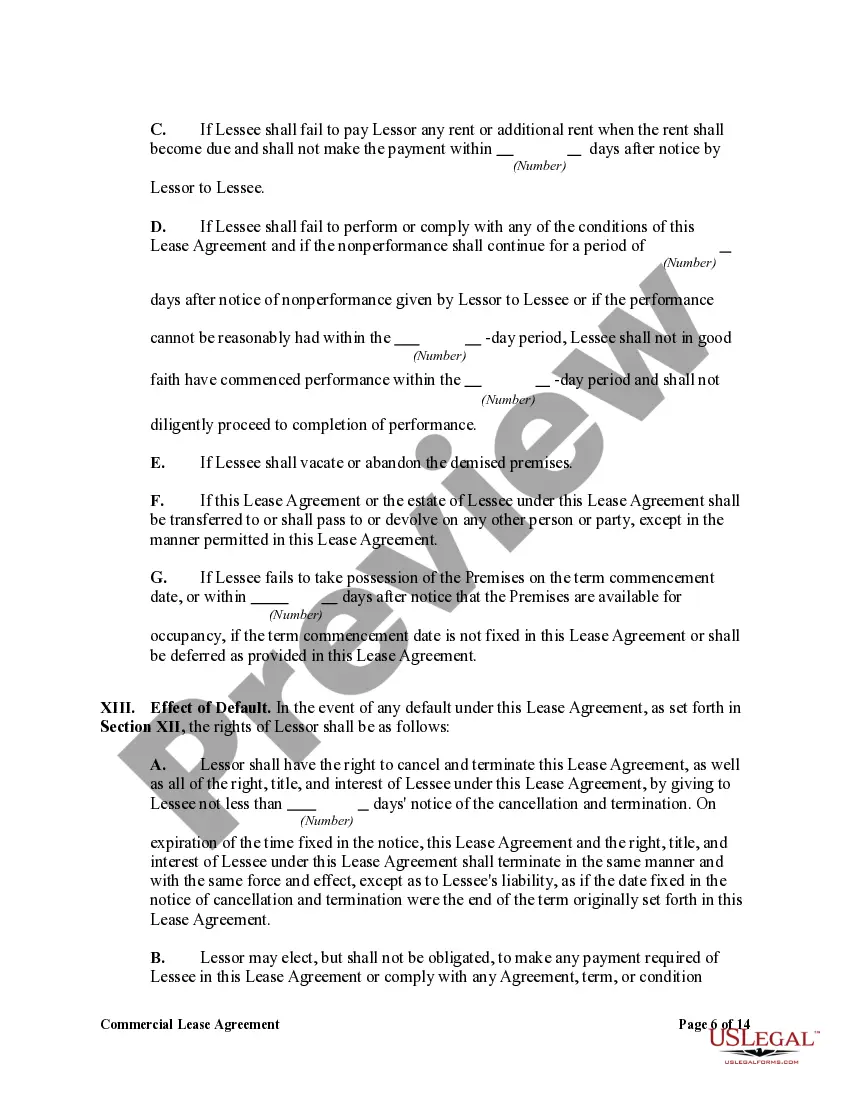
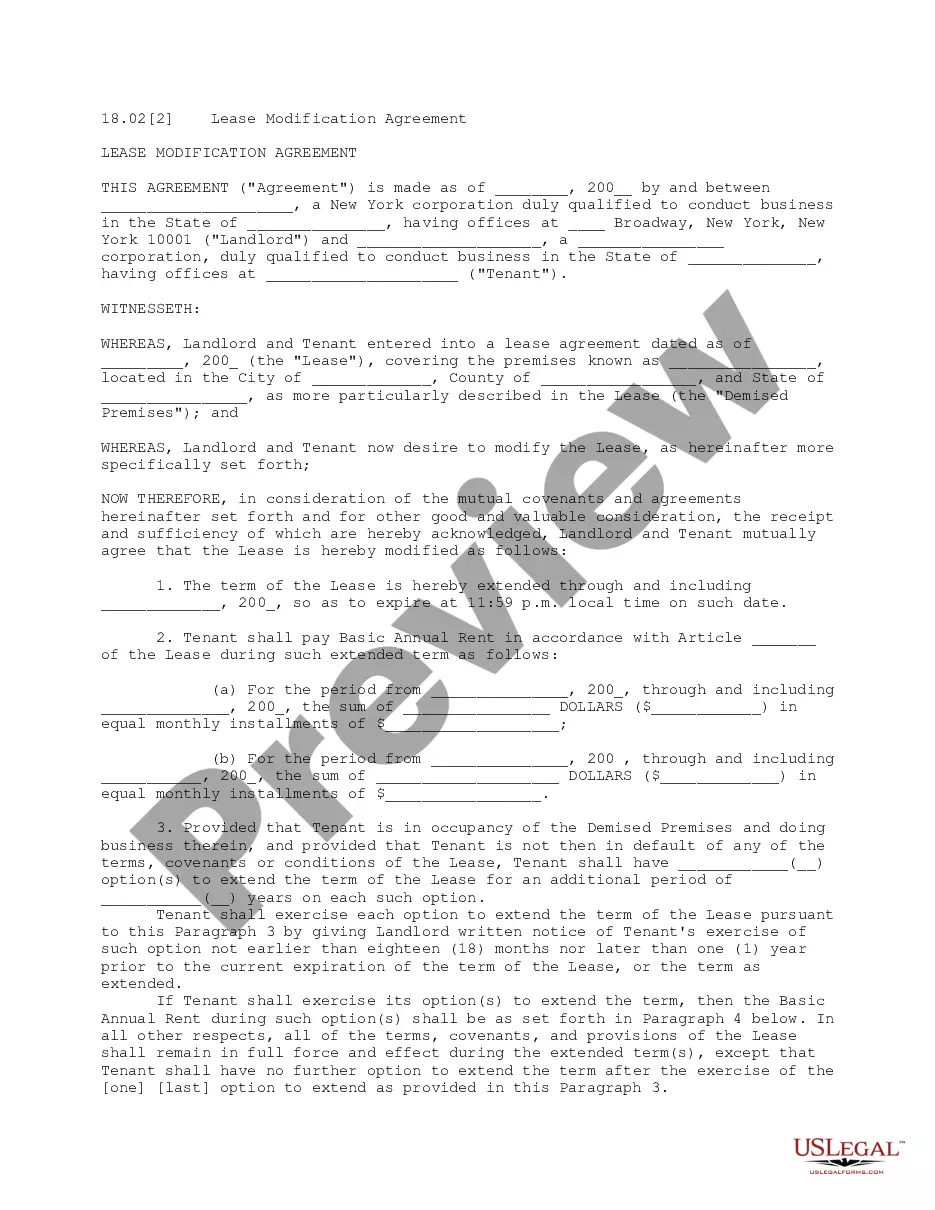
- Lease term: Duration of the lease and any renewal options.
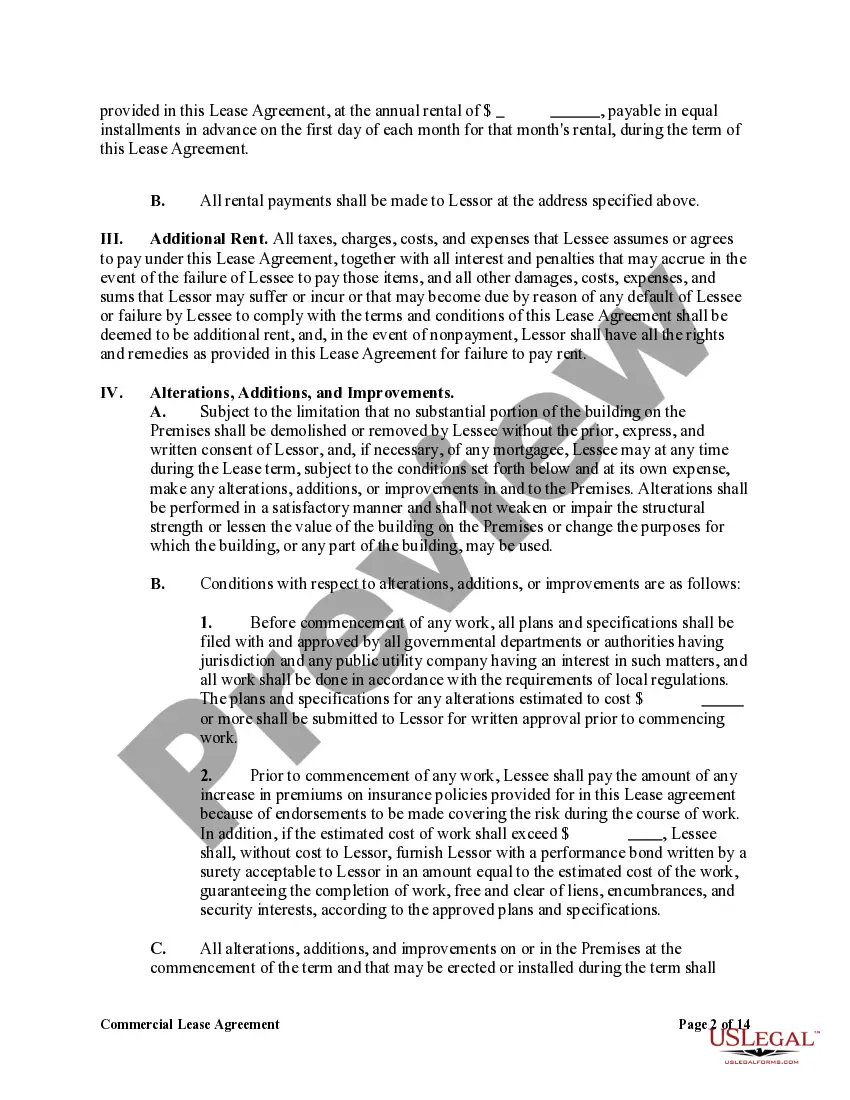
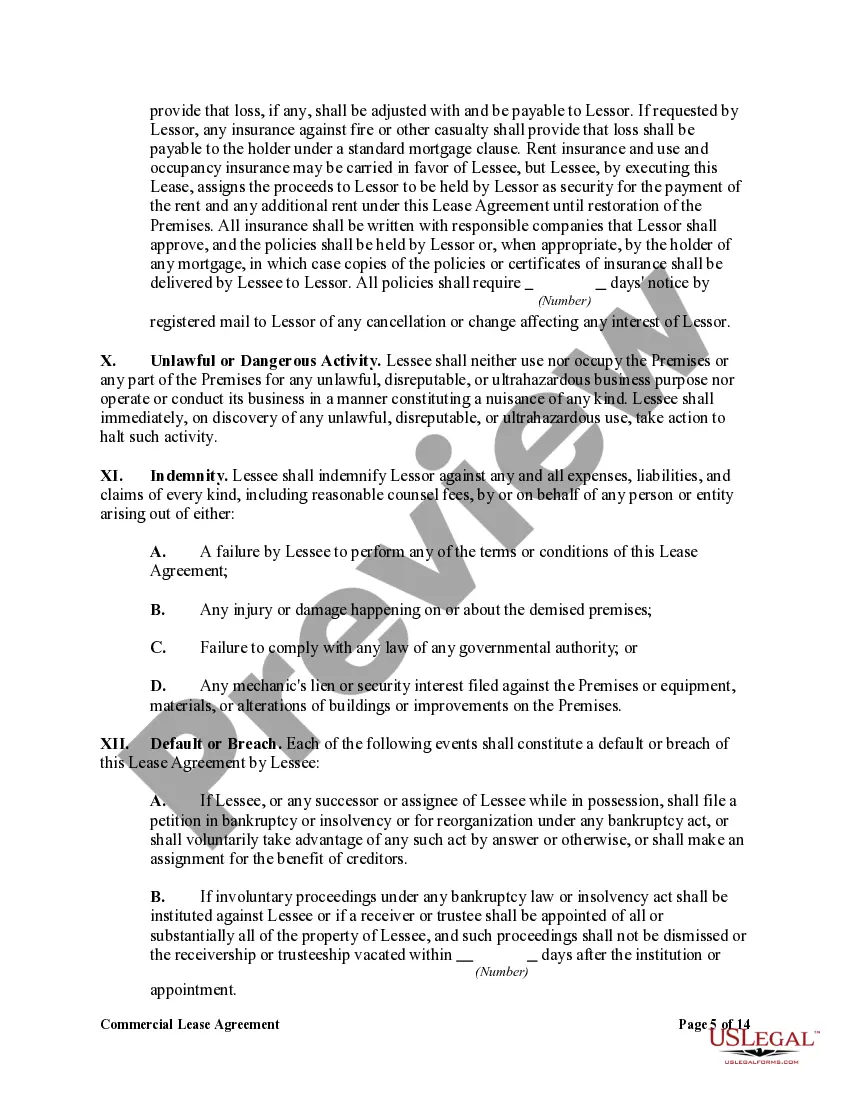
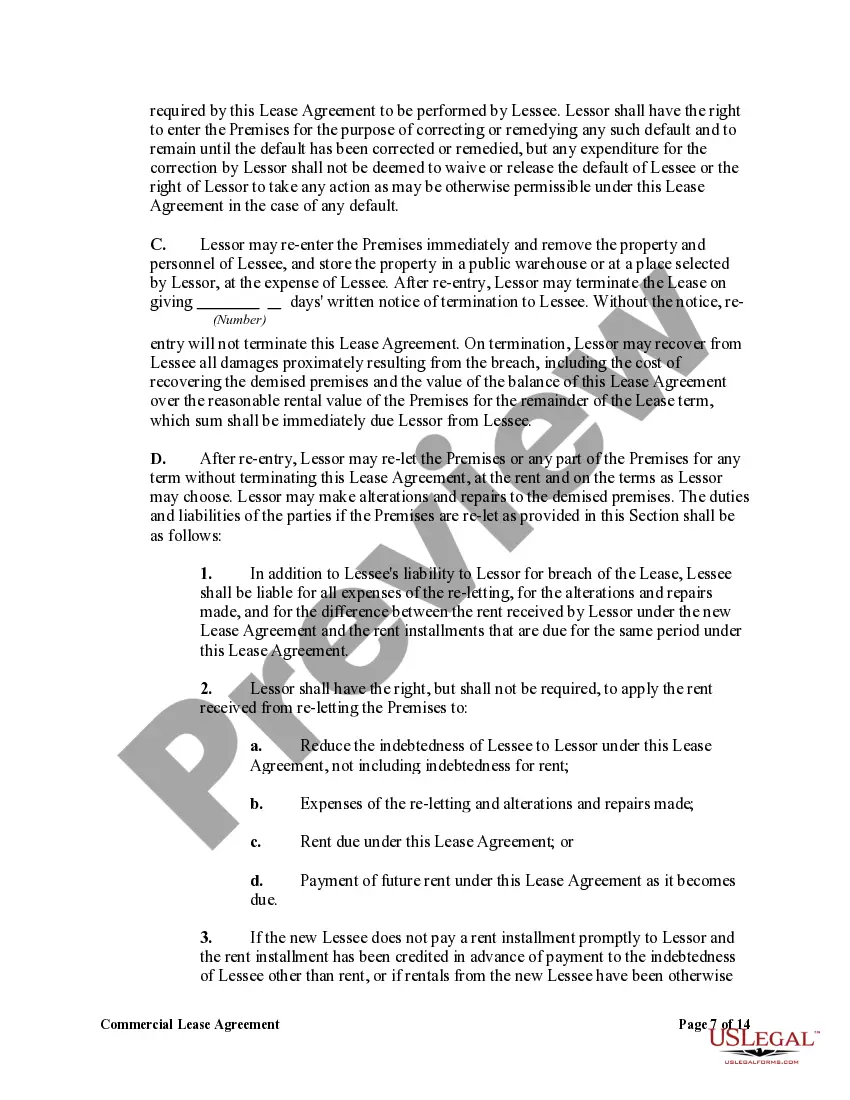
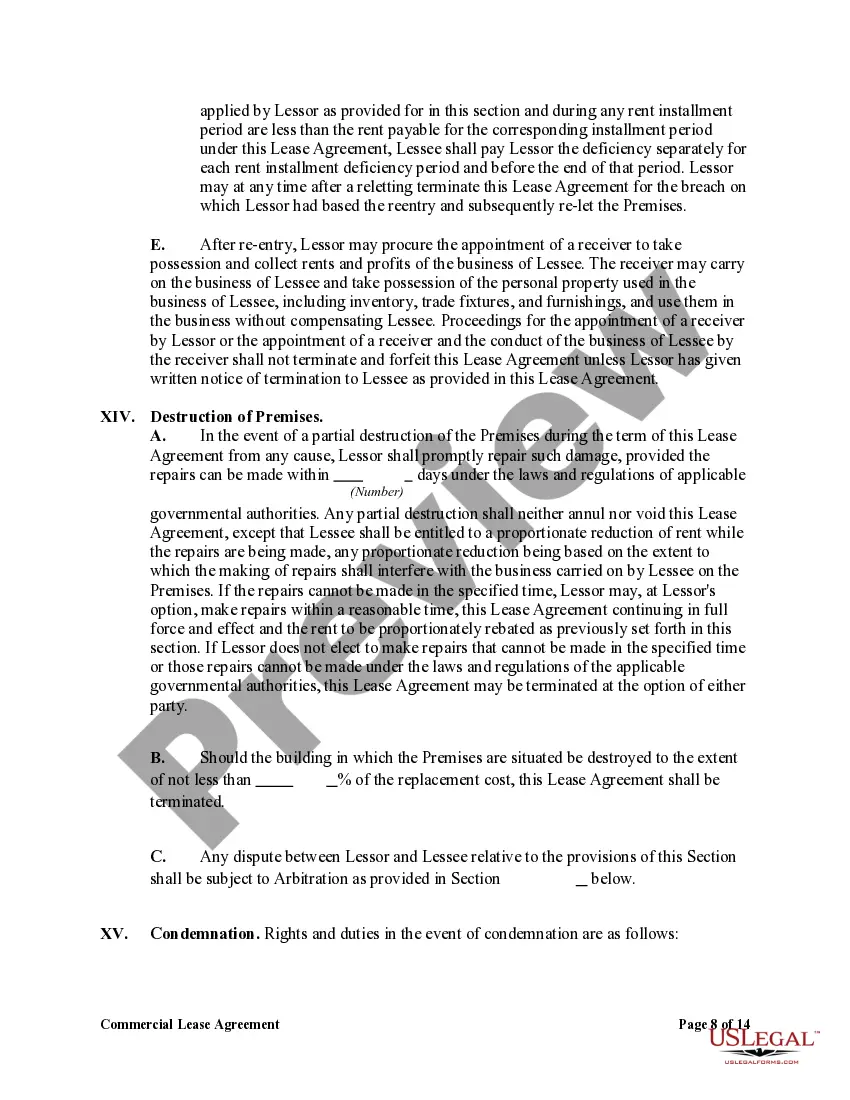
- Alterations clause: Conditions under which the lessee can make modifications to the property.
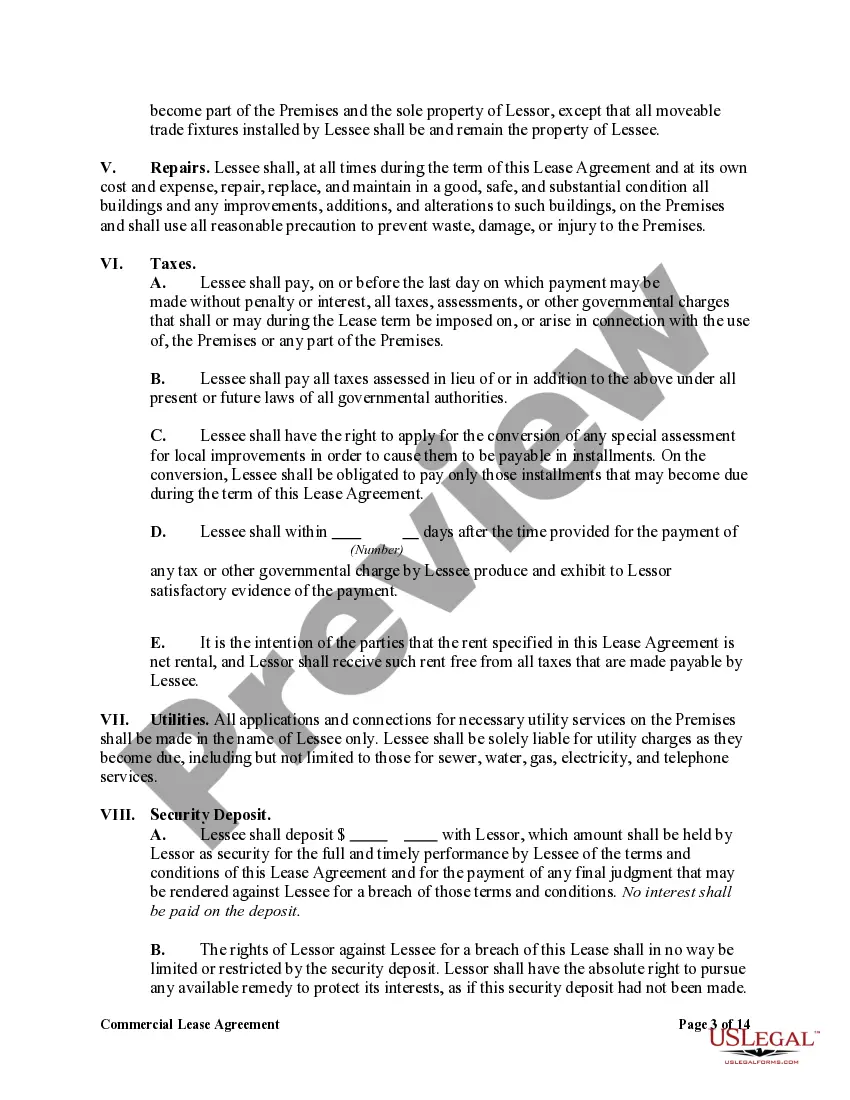
- Repair and maintenance obligations: Responsibilities of the lessee for property upkeep.
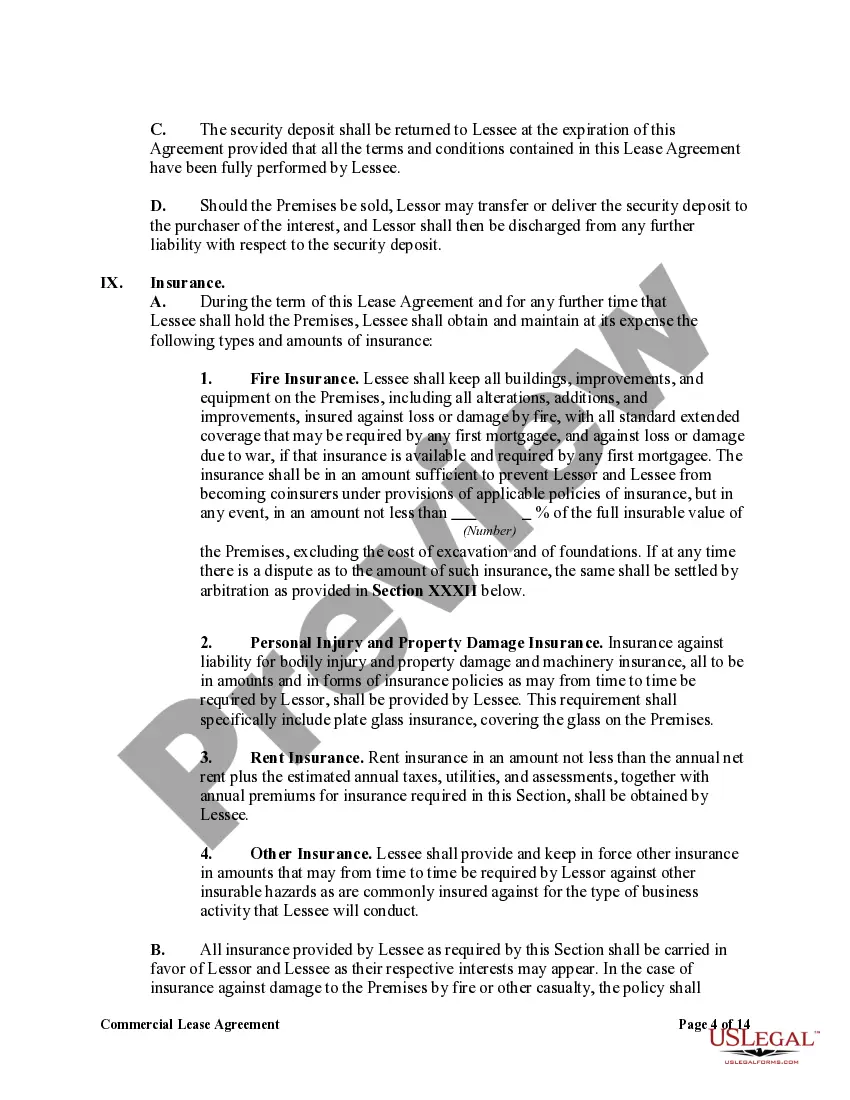
- Insurance requirements: Types of insurance the lessee must maintain during the lease term.

When to use this document
This form is needed when a business intends to lease commercial property and desires the flexibility to renew the lease and make property alterations. It's particularly useful for entrepreneurs looking to establish a stable location for their business while also needing to adapt the physical space over time. Situations could include expanding an office, modifying a retail layout for better customer flow, or enhancing facilities to meet specific industry needs.
Who needs this form
- Business owners seeking to lease commercial space for their operations.
- Landlords looking to provide lease agreements that allow for tenant improvements.
- Commercial real estate professionals facilitating leases for clients.
- Businesses that anticipate needing to modify their leased space for operational purposes.
How to complete this form
- Identify the parties involved by filling in the names and addresses of both the lessor and lessee.
- Specify the property by providing a detailed description, including any relevant identifiers.
- Enter the lease term, including the start date, end date, and renewal options, if applicable.
- Outline any conditions for alterations, including required approvals and types of modifications allowed.
- Include applicable insurance details to ensure the leaseholder maintains necessary coverage.
- Both parties should review the terms and sign the document to finalize the agreement.
Is notarization required?
This form does not typically require notarization unless specified by local law. However, verifying any local requirements is advisable to ensure compliance.
Get your form ready online
Our built-in tools help you complete, sign, share, and store your documents in one place.
Make edits, fill in missing information, and update formatting in US Legal Forms—just like you would in MS Word.
Download a copy, print it, send it by email, or mail it via USPS—whatever works best for your next step.
Sign and collect signatures with our SignNow integration. Send to multiple recipients, set reminders, and more. Go Premium to unlock E-Sign.
If this form requires notarization, complete it online through a secure video call—no need to meet a notary in person or wait for an appointment.
We protect your documents and personal data by following strict security and privacy standards.

Make edits, fill in missing information, and update formatting in US Legal Forms—just like you would in MS Word.

Download a copy, print it, send it by email, or mail it via USPS—whatever works best for your next step.

Sign and collect signatures with our SignNow integration. Send to multiple recipients, set reminders, and more. Go Premium to unlock E-Sign.

If this form requires notarization, complete it online through a secure video call—no need to meet a notary in person or wait for an appointment.

We protect your documents and personal data by following strict security and privacy standards.
Common mistakes
- Failing to clearly define the premises being leased, leading to disputes.
- Not specifying the terms of renewal, which can cause confusion later.
- Omitting conditions for alterations, resulting in unauthorized modifications.
- Neglecting to outline repair responsibilities, leading to misunderstandings about property maintenance.
Why use this form online
- Convenience: Downloadable and customizable to fit specific needs.
- Time-saving: Immediate access to essential legal documentation without the need for in-person consultations.
- Reliability: Drafted by licensed attorneys, ensuring legal compliance and clarity.
Legal use & context
- This lease agreement is enforceable under commercial leasing laws.
- Legal advice is recommended to ensure all clauses comply with state regulations.
- Alterations made by the Lessee may require compliance with local building codes.
Summary of main points
- The form provides clear terms for leasing commercial property, including renewal and alteration rights.
- It is essential to document all parties' responsibilities to avoid future disputes.
- Ensure the lease reflects accurate and thorough provisions to protect both parties legally.
Looking for another form?
Form popularity
FAQ
Surrender the Lease. One option for getting out of your commercial lease early is to approach your landlord and request to surrender the lease. Early Termination Clause. Some lease agreements will contain an early termination clause (commonly called a break clause). Assignment of Lease. Subletting the Premises. Licensing.
A renewal option allows for a lease to apply to a specified time period, but the lease can be extended for another term if agreed upon by the participating parties. Renewal options may have specifications or conditions, such as when the lessee must let the landlord know if they will be renewing.
Read the terms of your agreement. Before you start the process of trying to renegotiate, it's important to clearly understand the terms of your lease agreement. Do research. Write a letter or call to explain your situation. Alter the lease terms.
Depending on how granularly you want to get into the details, an office lease can take anywhere from one day to a year or more to negotiate. Most commonly it will be in the three to nine month range.
Can the contractual term of a commercial lease be extended? Yes. Subject to satisfying certain criteria, business tenants have a statutory right under the Landlord and Tenant Act 1954 to extend the contractual term of their lease. At the end of the lease, the tenant can ask the landlord for a new lease.
With Tenant Consent. If the tenant and landlord both agree to the change, the parties can either (1) execute a new lease or rental agreement that includes the new clause, or (2) amend the existing lease or rental agreement. Without Tenant Consent.
Once the lease is signed, you're bargaining power is a lot lower. However, you can still try to negotiate with your landlord.If you can find a compromise that helps both you and your landlord financially, he might agree to lower your monthly rent even after a lease was signed.
Start with the title section. Think of this letter as a formal communication from the landlord to the tenant. Set the stage. Your letter should have a reference section which would explain its contents. Include the renewal terms. Request for a response. Affix your signature.
Evaluate the Length of the Lease. Research Comparable Rents. Look for Hidden Costs. Ask for Favorable Clauses. Check the Termination Clause Closely.