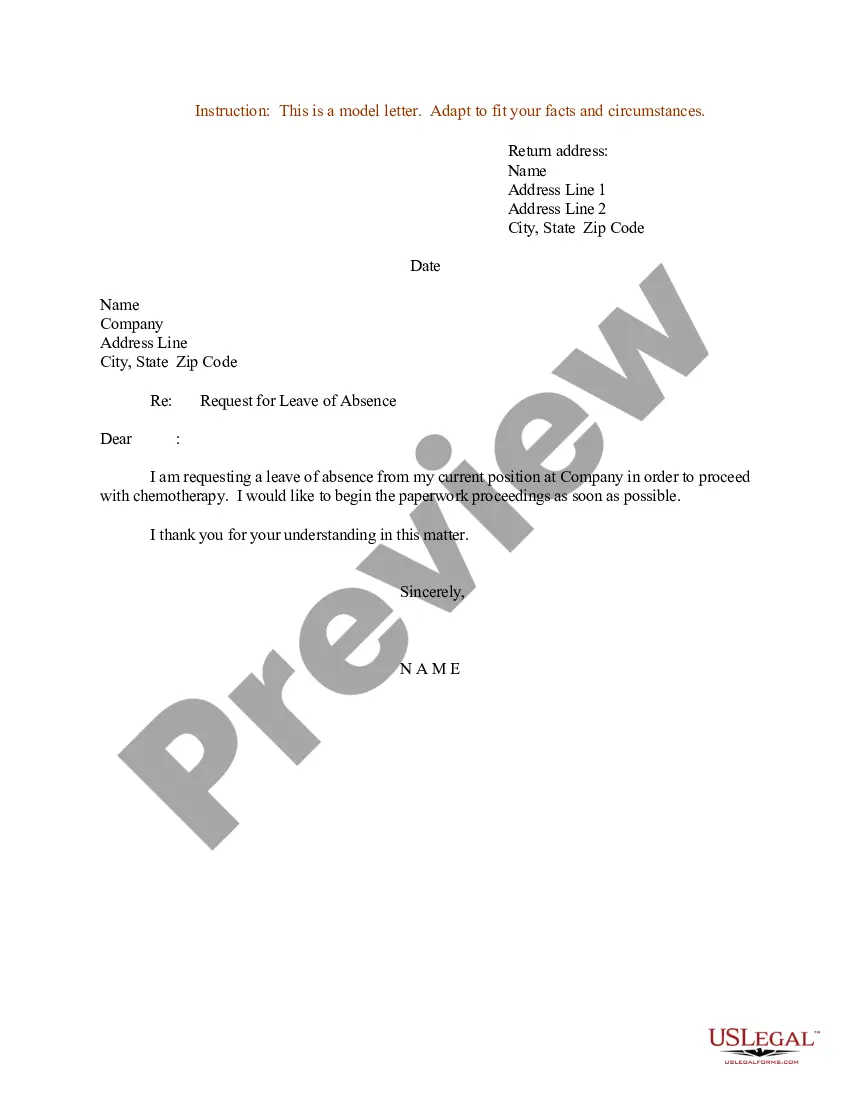
Leave of Absence for Military Service
Description
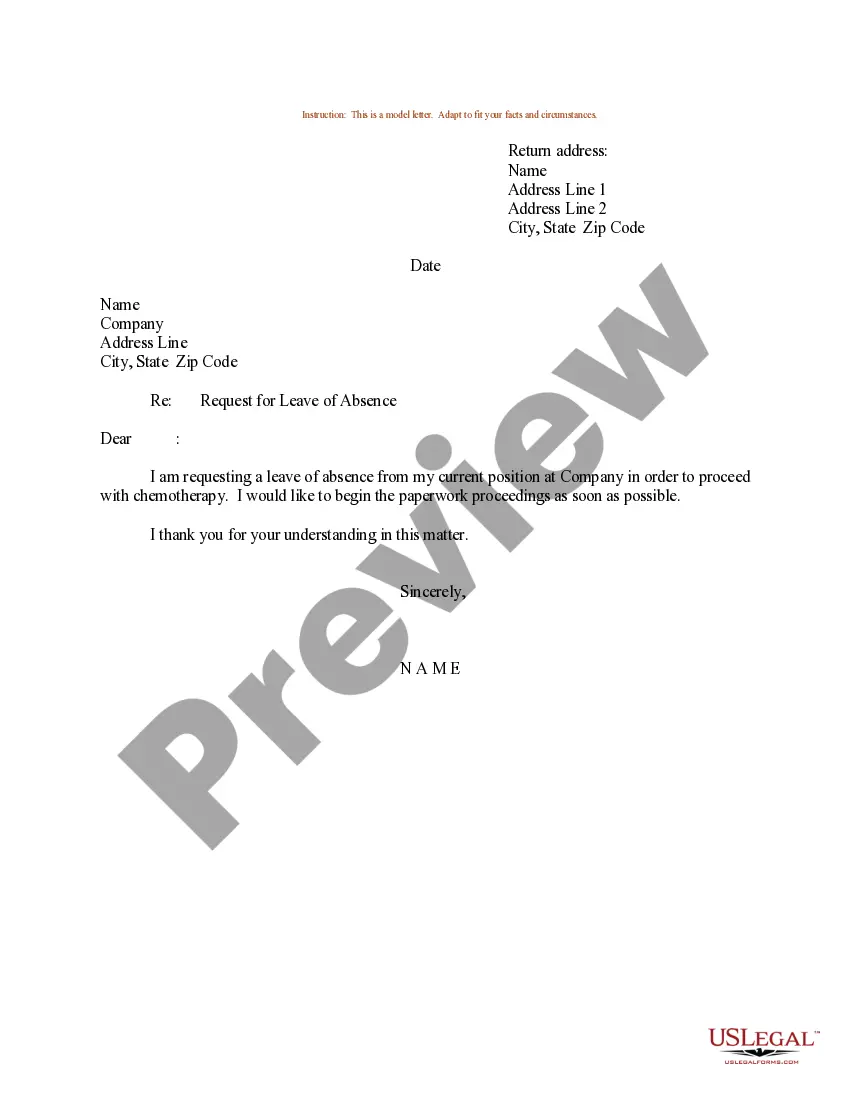
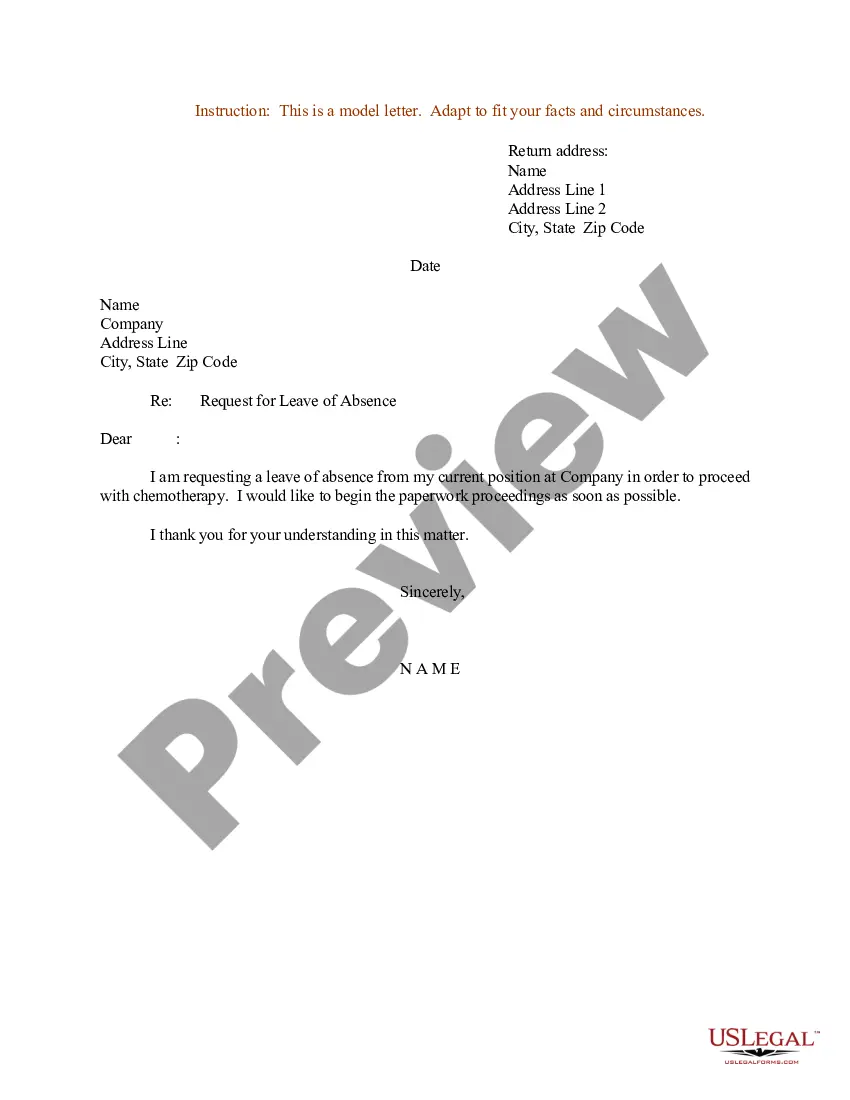
How to fill out Leave Of Absence For Military Service?
Use US Legal Forms to obtain a printable Leave of Absence for Military Service. Our court-admissible forms are drafted and regularly updated by skilled lawyers. Our’s is the most comprehensive Forms library on the internet and provides affordable and accurate templates for customers and attorneys, and SMBs. The templates are categorized into state-based categories and a few of them can be previewed before being downloaded.
To download templates, customers need to have a subscription and to log in to their account. Click Download next to any form you want and find it in My Forms.
For individuals who don’t have a subscription, follow the tips below to quickly find and download Leave of Absence for Military Service:
- Check to ensure that you have the proper form with regards to the state it is needed in.
- Review the document by looking through the description and by using the Preview feature.
- Press Buy Now if it is the template you need.
- Create your account and pay via PayPal or by card|credit card.
- Download the template to the device and feel free to reuse it many times.
- Make use of the Search field if you need to get another document template.
US Legal Forms provides thousands of legal and tax samples and packages for business and personal needs, including Leave of Absence for Military Service. Over three million users have already used our platform successfully. Select your subscription plan and get high-quality forms in just a few clicks.
Form popularity
FAQ
At some point, you may need to request a leave of absence from work. It could be for one of a variety of reasons: personal or family health problems, the birth or adoption of a child, relief from excessive job stress, the loss of a loved one, or the desire to travel or pursue a hobby.
Sick and carer's leave (also known as personal leave or personal / carer's leave) lets an employee take time off to help them deal with personal illness, caring responsibilities and family emergencies. Sick leave can be used when an employee is ill or injured.
The Uniformed Services Employment and Reemployment Rights Act (USERRA) guarantees the rights of military service members to take a leave of absence from their civilian jobs for active military service and to return to their jobs with accrued seniority and other employment protections.
Military leave is unpaid. However, employers are required to reserve a position for the employee and to restore payment, benefits, and applicable seniority upon the employee's return from a military leave of absence.
How long can you take a leave of absence? Under the EFMLA, employees may take leave in order to recover from COVID-19 or take care of a family member who has the virus. According to the FMLA, your employees can take up to 12 weeks off in a 12-month period if they have already worked for 1,250 hours.
Personal leave is any time off that is granted for reasons including (but not limited to) specialized experiences, family issues, extenuating personal needs, elective office, or formal studies that result in promoting the interests of Duke and/or the staff member.
There is no requirement under the Uniformed Services Employment and Reemployment Rights Act (USERRA) to pay a nonexempt employee for a military-related absence.There is no requirement to pay exempt employees when they are absent for a full workweek and perform no work during the week.
A personal leave of absence is an absence from work taken for personal reasons not otherwise covered by the FMLA or other protected leave policies. Personal leaves of absence are unpaid and are not job-protected.During the leave, an employee must regularly update the Company as to his or her status.
FMLA Qualifying Military Exigencies. Employees who meet the eligibility requirements under the Family and Medical Leave Act (FMLA) are entitled to take up to 12 work weeks of unpaid, job-protected leave in a 12-month period for a qualifying military exigency.