Leave of Absence for Work
Understanding this form
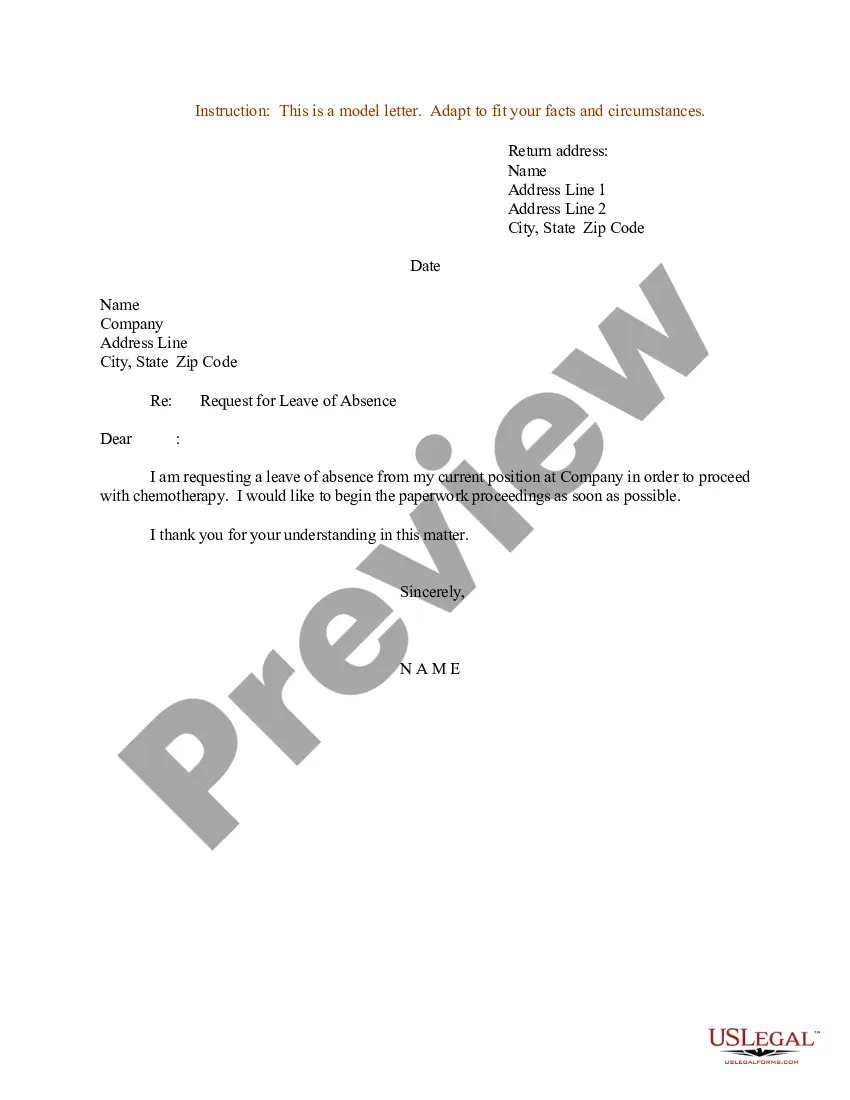
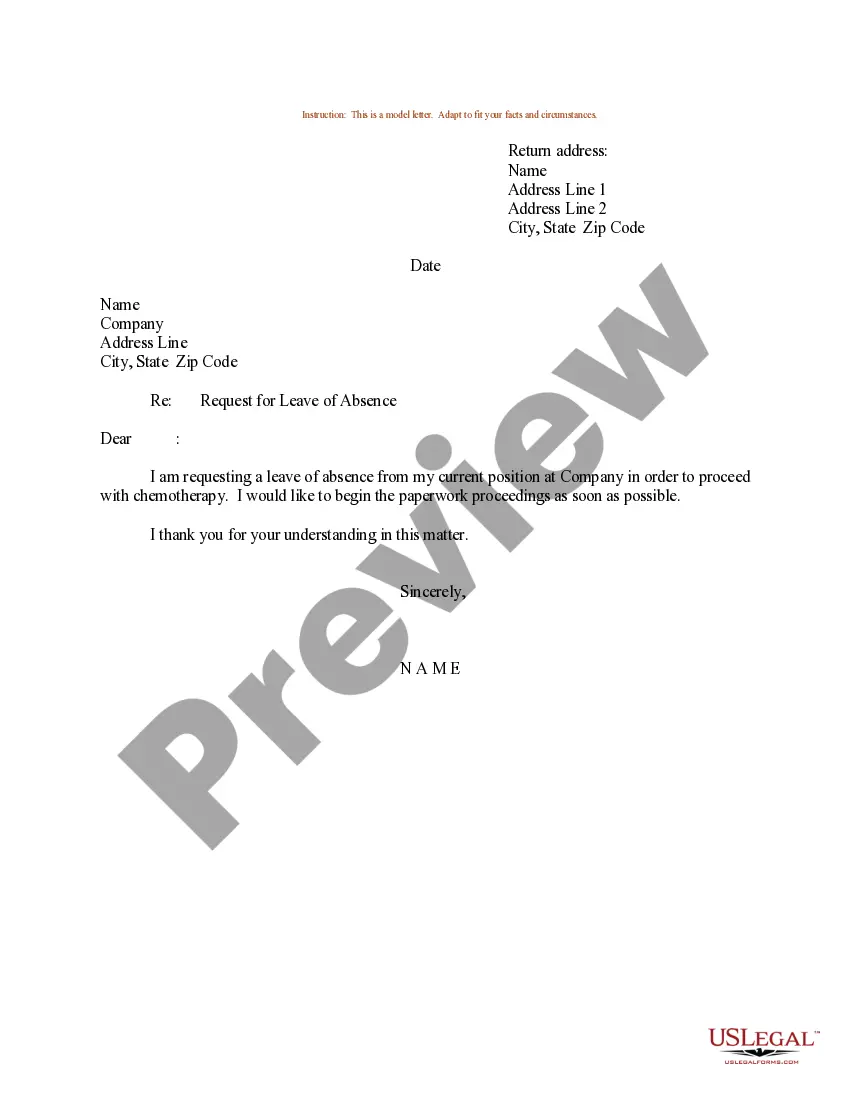
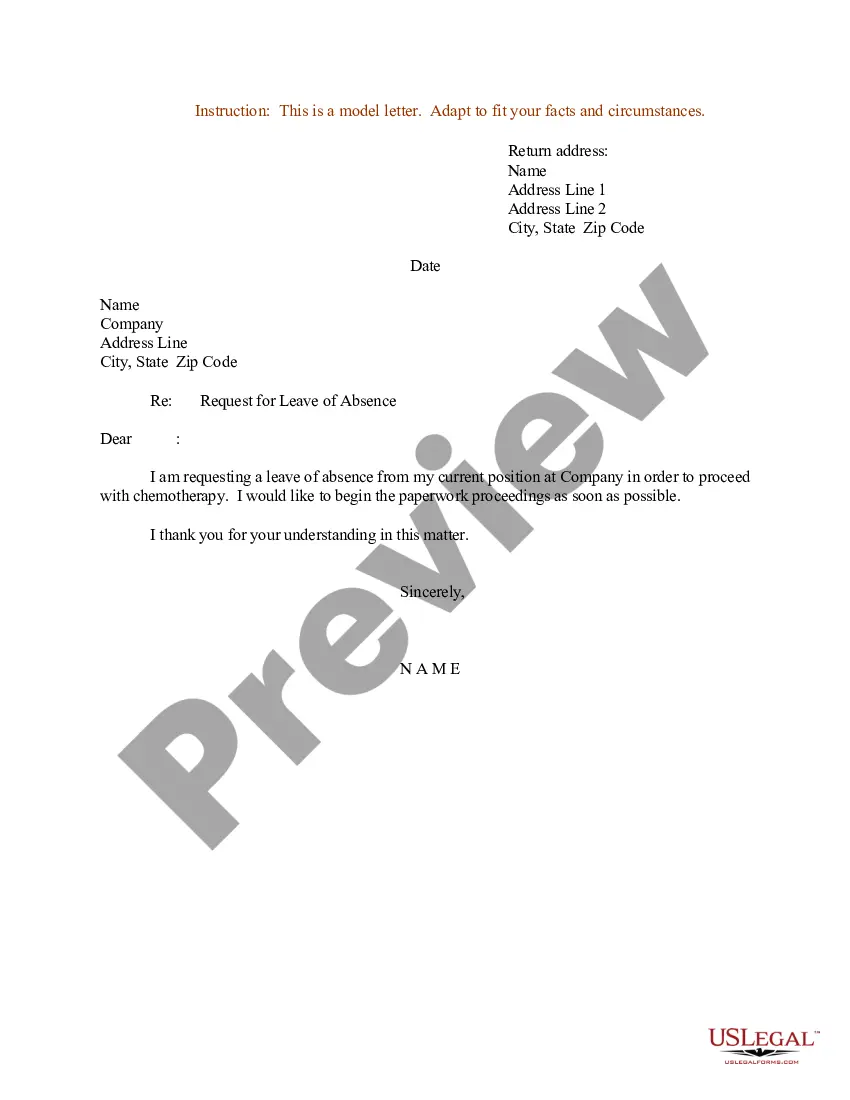
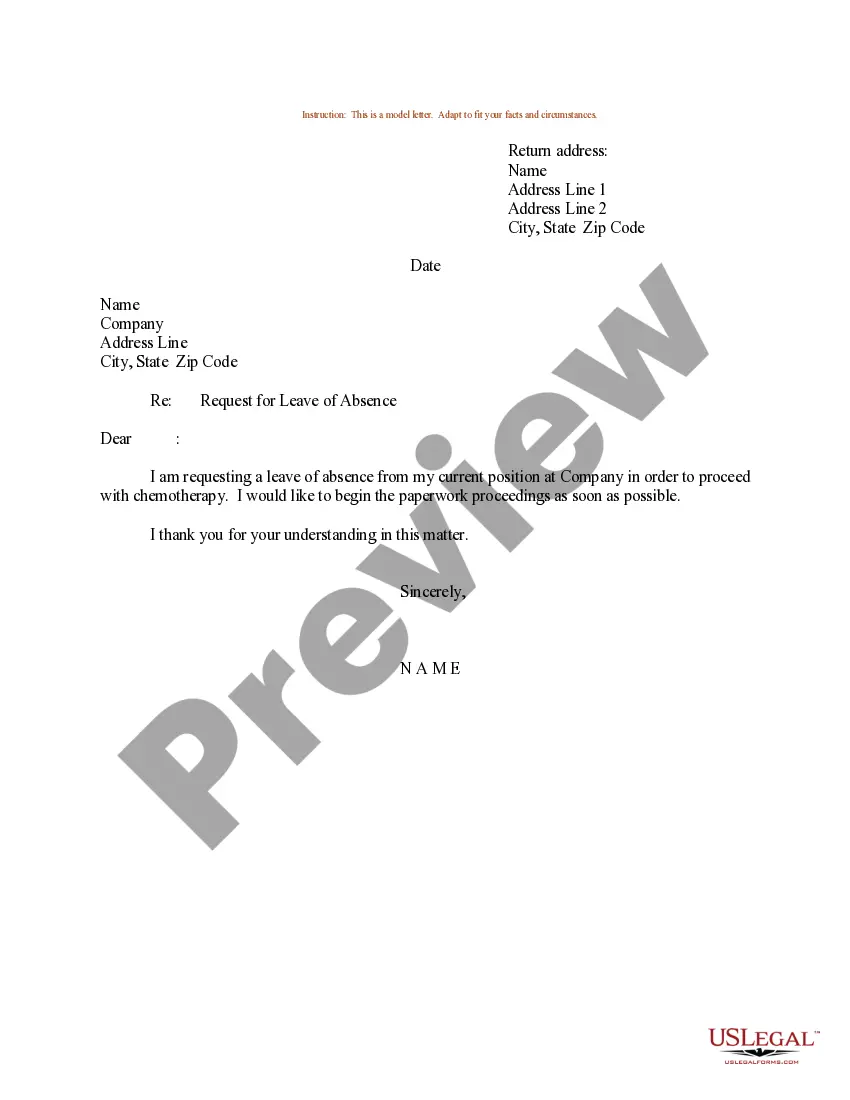
This Leave of Absence for Work form is a sample letter designed to formally request a temporary leave from your employment. Unlike other forms of leave requests, this customizable template focuses specifically on requesting time away from work for personal, medical, or other reasons. It provides a clear structure to communicate your intentions to your employer effectively.
Key components of this form
- Return address: Your contact information for the employer.
- Date: The date when the letter is written.
- Recipient details: Name and address of the employer or HR department.
- Subject line: Clearly states the intent of the letter as a request for leave.
- Closure: A polite closing statement with your name for authenticity.
When to use this form
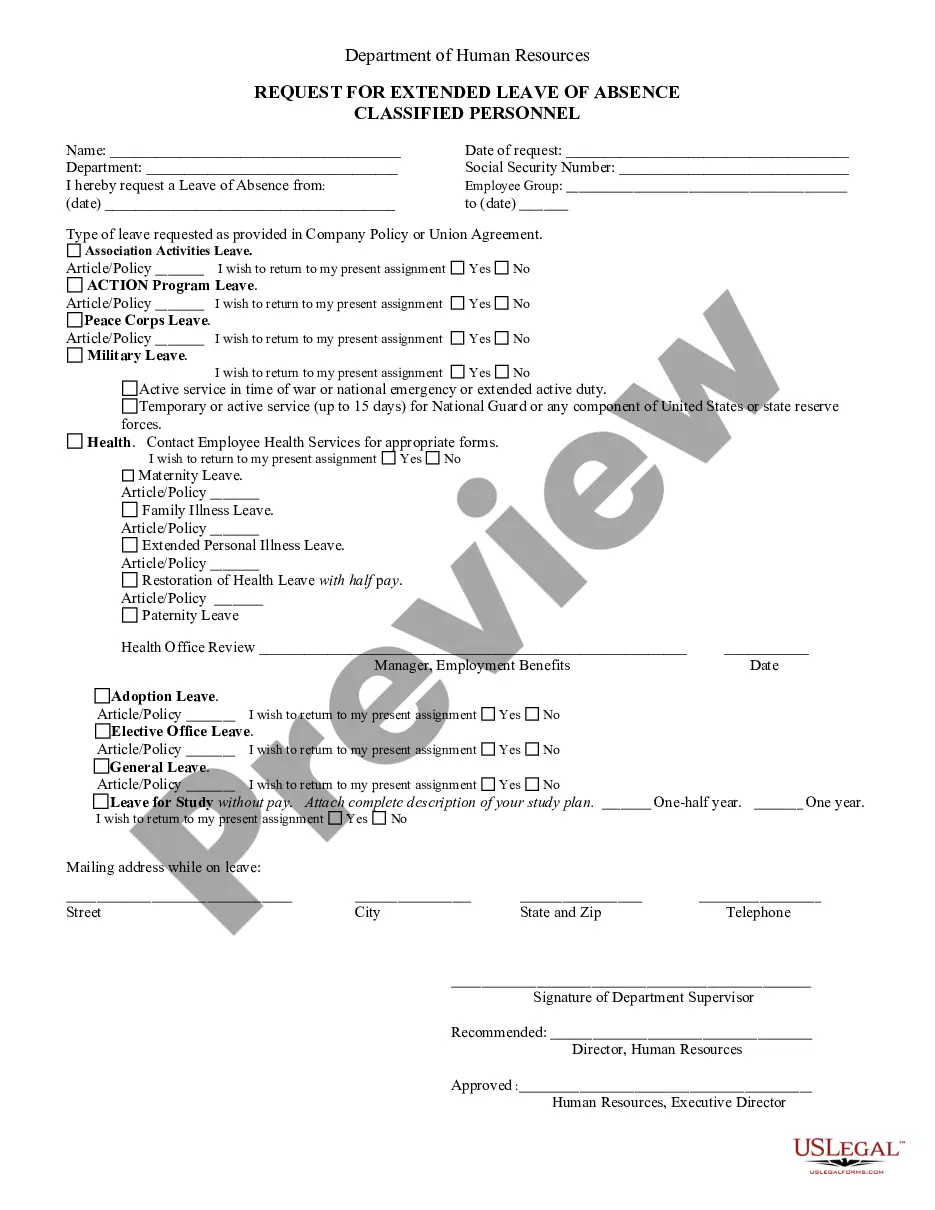
You should use this Leave of Absence for Work form when you need to take time off from your job for various reasons, including illness, personal matters, family emergencies, or other significant events. This form helps in communicating your leave request formally and ensures that your employer understands the duration and reason for your absence.
Who needs this form
- Employees who need to request a temporary leave from their job.
- Individuals experiencing medical conditions requiring time off.
- Employees facing personal issues that necessitate a leave of absence.
- Workers who need to address family emergencies or obligations.
Steps to complete this form
- Identify the parties: Fill in your name and address as well as your employer's information.
- Enter the date: Write the date the letter is being sent.
- Specify the subject: Clearly mention it is a request for leave of absence.
- Include the reason: Briefly explain the reason for your leave.
- Sign the letter: Add your name at the end to authenticate the request.
Notarization guidance
This form does not typically require notarization unless specified by local law. It is advisable to check your company policy or state regulations for any specific requirements.
Get your form ready online
Our built-in tools help you complete, sign, share, and store your documents in one place.
Make edits, fill in missing information, and update formatting in US Legal Forms—just like you would in MS Word.
Download a copy, print it, send it by email, or mail it via USPS—whatever works best for your next step.
Sign and collect signatures with our SignNow integration. Send to multiple recipients, set reminders, and more. Go Premium to unlock E-Sign.
If this form requires notarization, complete it online through a secure video call—no need to meet a notary in person or wait for an appointment.
We protect your documents and personal data by following strict security and privacy standards.

Make edits, fill in missing information, and update formatting in US Legal Forms—just like you would in MS Word.

Download a copy, print it, send it by email, or mail it via USPS—whatever works best for your next step.

Sign and collect signatures with our SignNow integration. Send to multiple recipients, set reminders, and more. Go Premium to unlock E-Sign.

If this form requires notarization, complete it online through a secure video call—no need to meet a notary in person or wait for an appointment.

We protect your documents and personal data by following strict security and privacy standards.
Typical mistakes to avoid
- Failing to provide a specific reason for the leave.
- Not including the dates for the requested leave.
- Omitting return contact information for follow-up.
- Using informal language instead of a professional tone.
- Neglecting to proofread for typos or errors.
Why use this form online
- Convenient access to a professionally drafted template.
- Editable format allows for personalization with your details.
- Reliable legal structure ensuring compliance with common practices.
- Quick download and printing options for immediate use.
Looking for another form?
Form popularity
FAQ
At some point, you may need to request a leave of absence from work. It could be for one of a variety of reasons: personal or family health problems, the birth or adoption of a child, relief from excessive job stress, the loss of a loved one, or the desire to travel or pursue a hobby.
Forced unpaid leave There's no limit to how long you can lay-off an employee, but if they've been away from work for four weeks in a row, or six weeks within a 13-week period where no more than six weeks are consecutive, then they can apply for redundancy pay and resign from their position.
An FMLA leave allows employees to take up to 12 weeks off in a 12-month period. If their absence is not protected by the Family and Medical Leave Act (FMLA), then it's considered a non-FMLA medical leave.
It's simple: "A leave of absence is when an employee asks an employer for an extended period of time to not work," Heathfield says. Depending on your request, you may or may not continue to receive a paycheck and employee benefits during your time off.
Childbirth, adoption and foster care. Serious health condition. Caring for a family member with a serious health condition. Certain military reasons (including care of a service member)
The Family and Medical Leave Act (FMLA) provides certain employees with up to 12 weeks of unpaid, job-protected leave per year. It also requires that their group health benefits be maintained during the leave.
Can You Get Fired for Taking a Leave of Absence? Employees may need time off from work because of health and family concerns. The time period during which the employee is off from work is known as a leave of absence. The law may prohibit an employer from terminating an employee for taking a leave of absence.
All employers in California must abide by all FMLA and CFRA regulations without exception. However, an employer has every right to deny an employee's request to use accrued vacation time or paid time off, but the employer must usually provide some kind of reasonable explanation.