Leave of Absence for Vacation
What this document covers
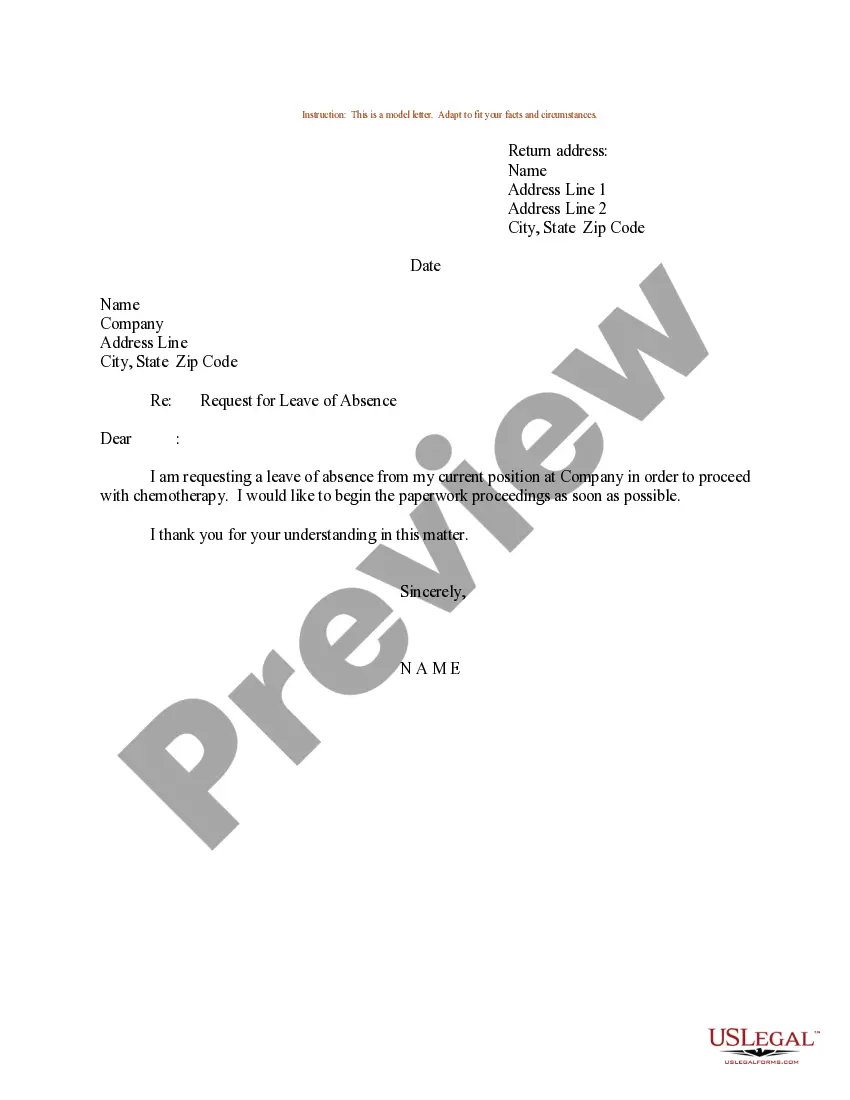
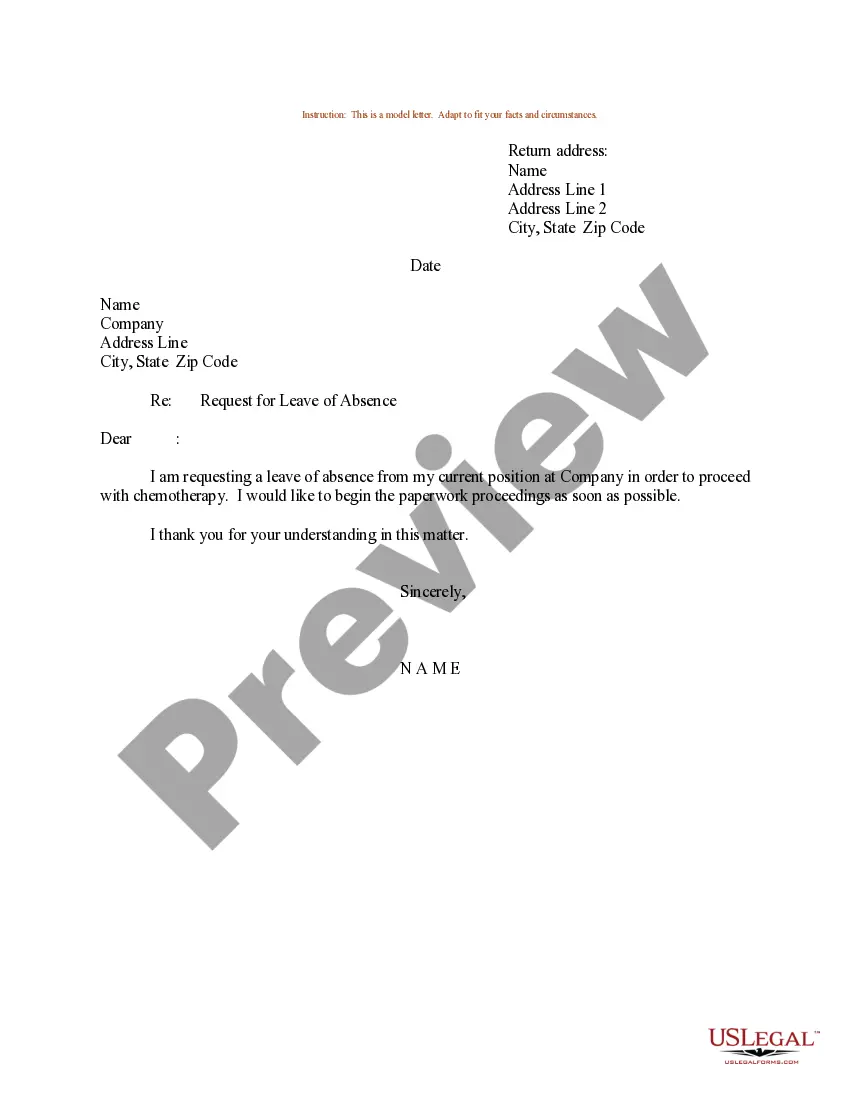
The Leave of Absence for Vacation form is a template letter that allows an employee to formally request time off from work for vacation purposes. This form differs from other leave forms as it is specifically tailored for vacation requests, ensuring clarity in communication regarding anticipated time away from work.
Key components of this form
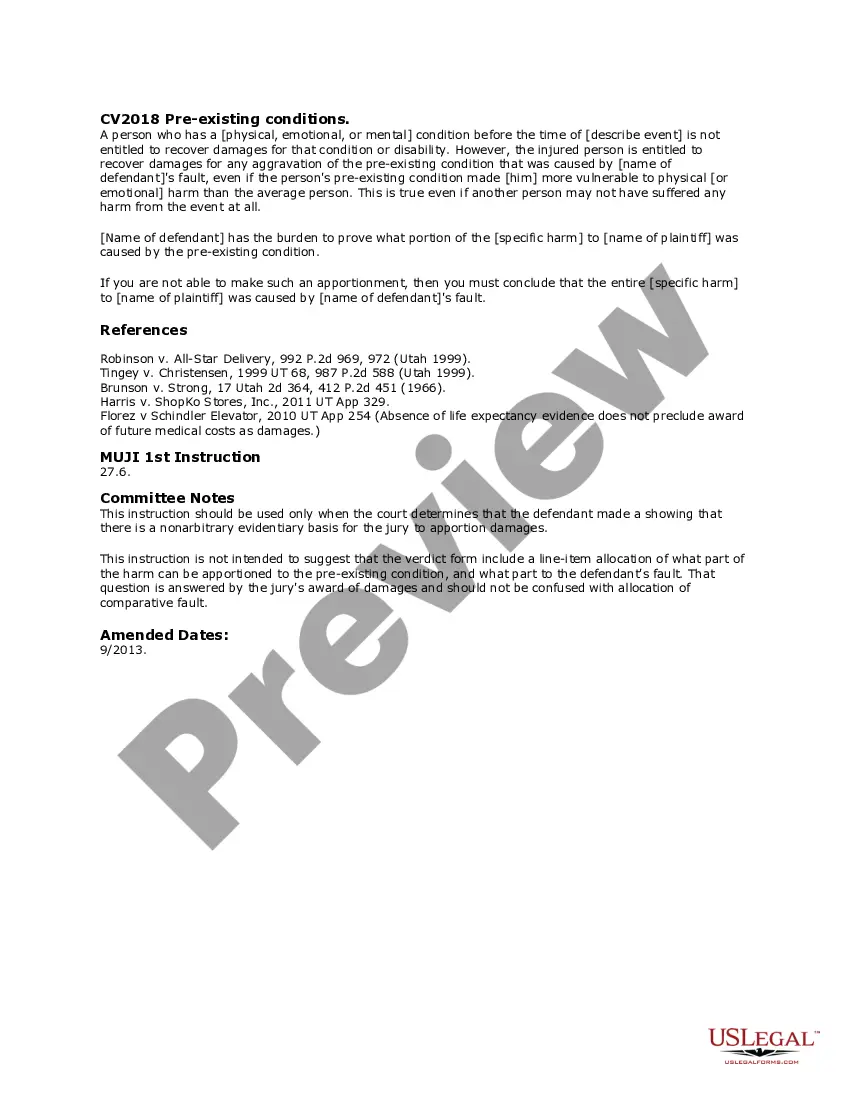
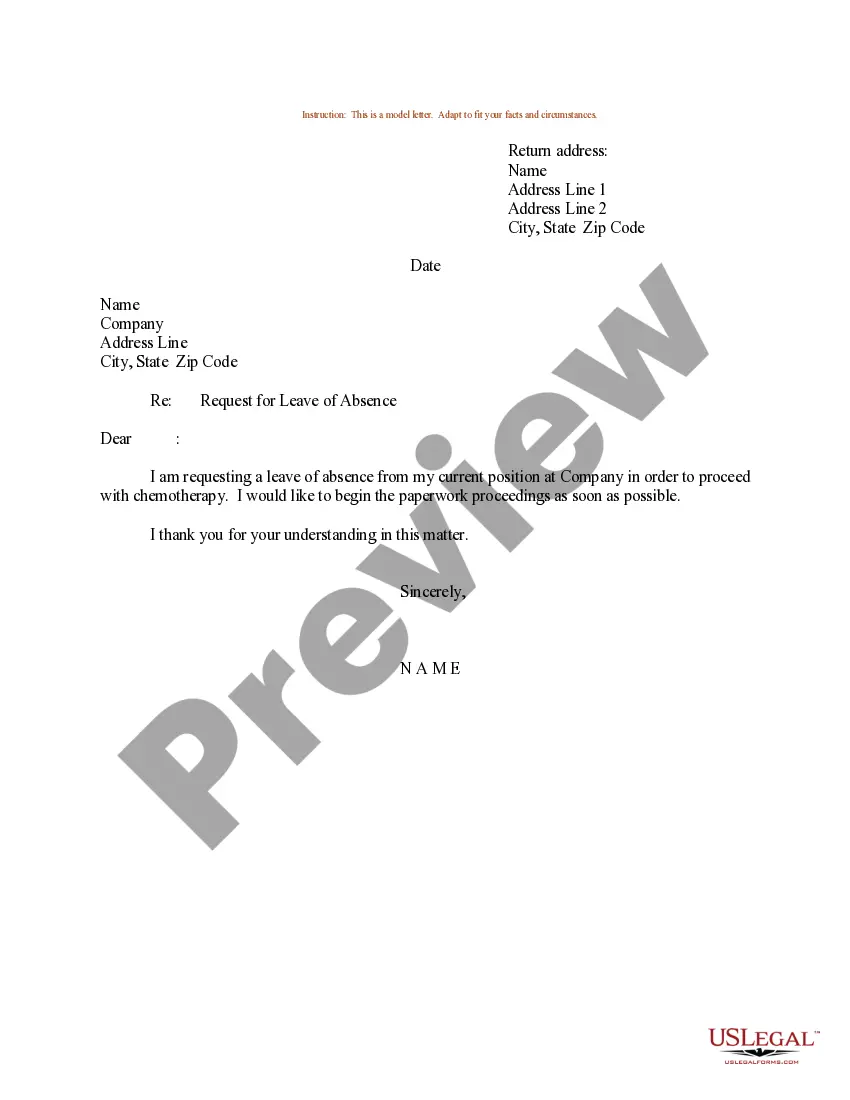
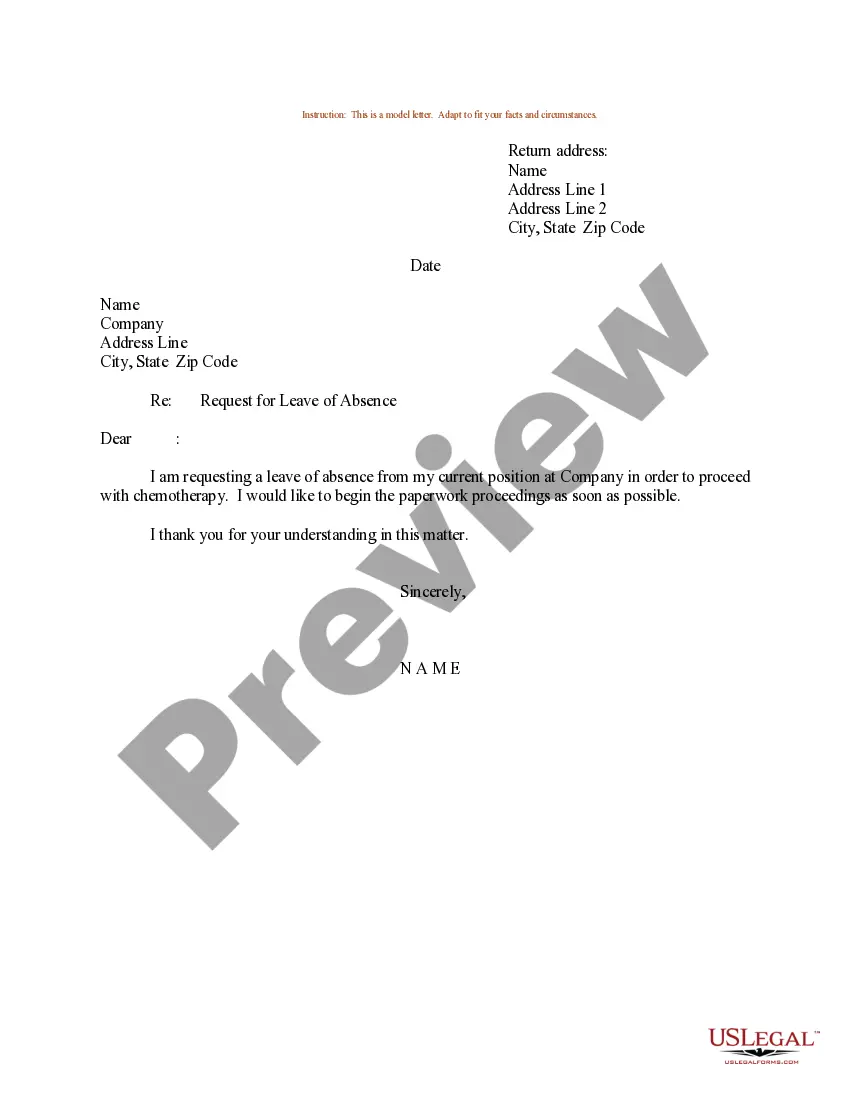
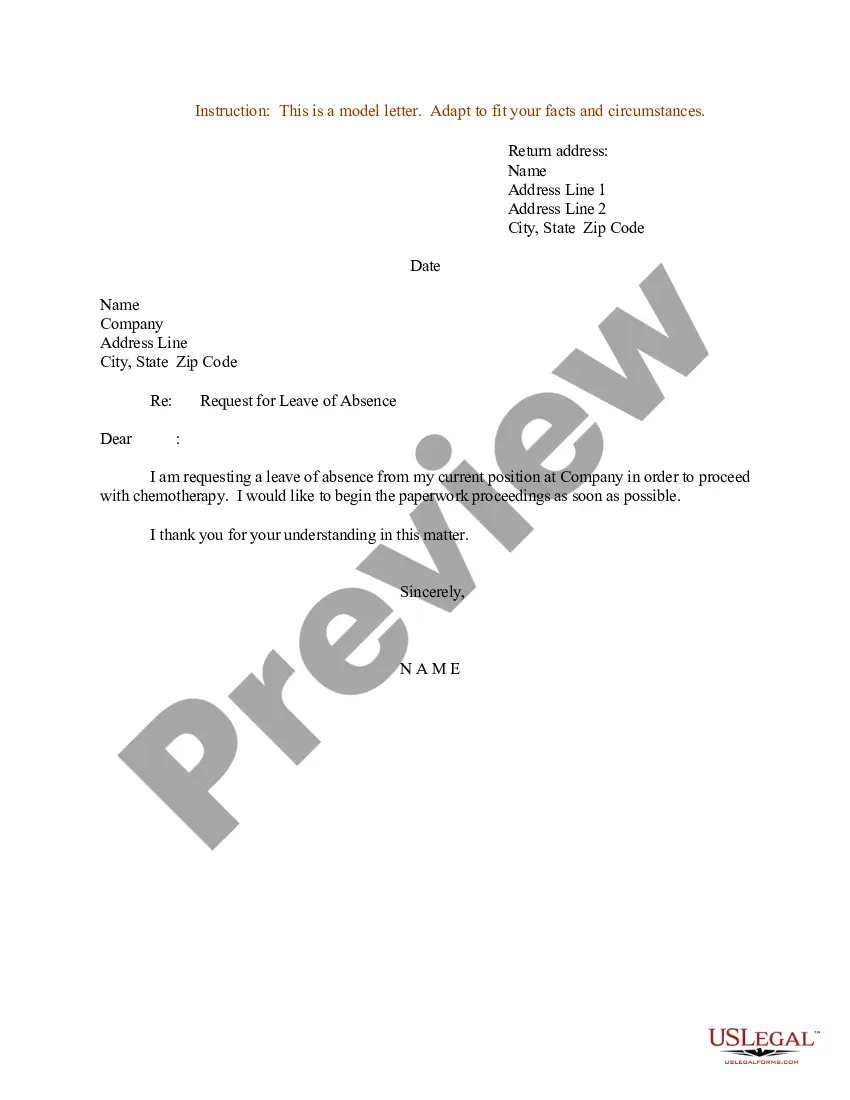
- Return address â where the letter originates from, including the sender's name and contact details.
- Date â the date the letter is written.
- Recipient's information â includes the name and address of the employer or supervisor.
- Subject line â clearly states the purpose as a request for a leave of absence.
- Closing â includes a courteous sign-off and the sender's name.
Common use cases
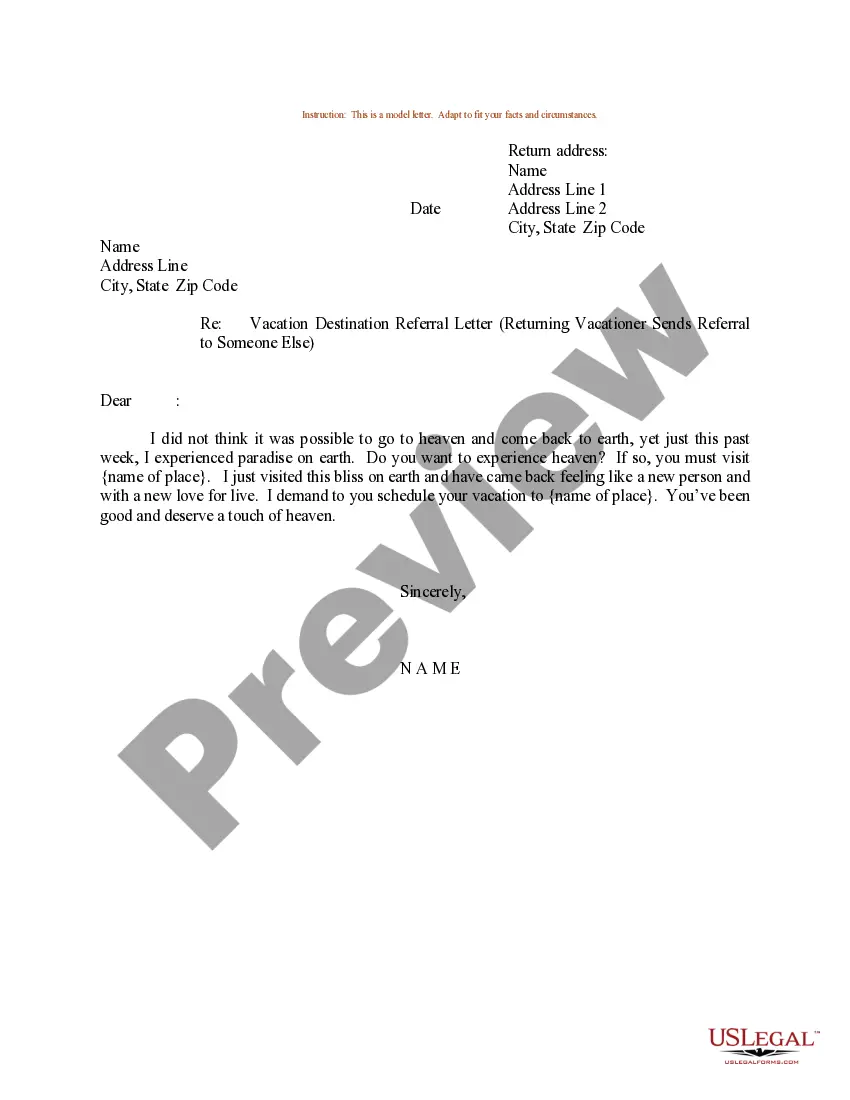
This form should be used when an employee wishes to formally notify their employer of an upcoming vacation. It is particularly important to use this form when the company has established procedures for requesting leave, ensuring that all communications are documented and processed efficiently.
Who can use this document
This form is intended for:
- Employees seeking to take planned time off for vacations.
- Workers in organizations that require formal leave requests.
- Individuals wanting to ensure clear communication with their employer regarding absences.
How to complete this form
- Identify and fill in your return address at the top of the letter.
- Add the date you are submitting the letter.
- Include the recipientâs name and company address.
- Write your request clearly in the subject line.
- Close the letter politely and include your name for signature.
Notarization requirements for this form
This form does not typically require notarization unless specified by local law.
Get your form ready online
Our built-in tools help you complete, sign, share, and store your documents in one place.
Make edits, fill in missing information, and update formatting in US Legal Forms—just like you would in MS Word.
Download a copy, print it, send it by email, or mail it via USPS—whatever works best for your next step.
Sign and collect signatures with our SignNow integration. Send to multiple recipients, set reminders, and more. Go Premium to unlock E-Sign.
If this form requires notarization, complete it online through a secure video call—no need to meet a notary in person or wait for an appointment.
We protect your documents and personal data by following strict security and privacy standards.

Make edits, fill in missing information, and update formatting in US Legal Forms—just like you would in MS Word.

Download a copy, print it, send it by email, or mail it via USPS—whatever works best for your next step.

Sign and collect signatures with our SignNow integration. Send to multiple recipients, set reminders, and more. Go Premium to unlock E-Sign.

If this form requires notarization, complete it online through a secure video call—no need to meet a notary in person or wait for an appointment.

We protect your documents and personal data by following strict security and privacy standards.
Common mistakes
- Forgetting to provide a clear return address and contact information.
- Not specifying the exact dates for the leave of absence.
- Using vague language instead of clearly expressing the purpose of the request.
Why use this form online
- Convenient access from anywhere, allowing you to create or edit your request any time.
- Reliable templates that are drafted by licensed attorneys to ensure legal validity.
- Immediate downloads for quick submission to your employer.
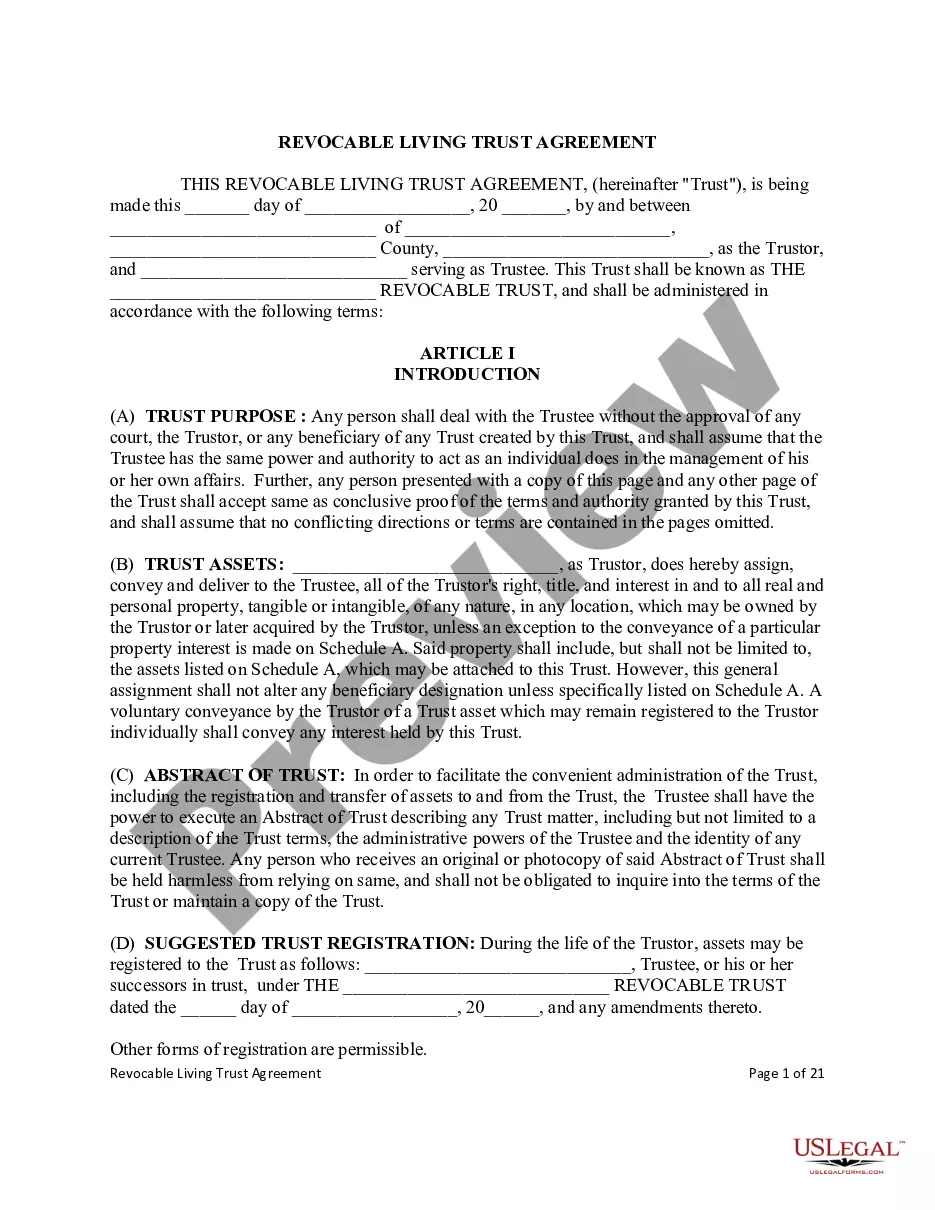
Looking for another form?
Form popularity
FAQ
Vacation is the most popular type of paid absence. This type of time off is usually earned by working a certain number of days or hours throughout the year. Similarly, sick leave is another form of accumulated paid time off based on the number of days the employee works.
It's simple: "A leave of absence is when an employee asks an employer for an extended period of time to not work," Heathfield says. Depending on your request, you may or may not continue to receive a paycheck and employee benefits during your time off.
An FMLA leave allows employees to take up to 12 weeks off in a 12-month period. If their absence is not protected by the Family and Medical Leave Act (FMLA), then it's considered a non-FMLA medical leave.
At some point, you may need to request a leave of absence from work. It could be for one of a variety of reasons: personal or family health problems, the birth or adoption of a child, relief from excessive job stress, the loss of a loved one, or the desire to travel or pursue a hobby.
Employers do not have to count paid holidays, paid time off (PTO), vacation, personal and sick leave hours taken by an employee toward the calculation of the overtime requirement, because these hours are not actually "worked" and are therefore not considered as hours counted toward overtime under the FLSA.
The terms PTO and vacation often are used interchangeably by employees, but they're not actually the same thing. PTO is considered to be any time an employee is getting paid while away from workit's more all-encompassing than vacation. Think of it like this: all vacation is PTO while not all PTO is vacation.
A personal leave of absence is an absence from work taken for personal reasons not otherwise covered by the FMLA or other protected leave policies. Personal leaves of absence are unpaid and are not job-protected.During the leave, an employee must regularly update the Company as to his or her status.
Forced unpaid leave There's no limit to how long you can lay-off an employee, but if they've been away from work for four weeks in a row, or six weeks within a 13-week period where no more than six weeks are consecutive, then they can apply for redundancy pay and resign from their position.
The difference between sick leave and vacation is that sick leave is used to care for one's own health (or sometimes, that of a child or other family member), and vacation days are for, well, a vacation or fun. An employer can also offer flexible or personal time off, or just generic PTO.