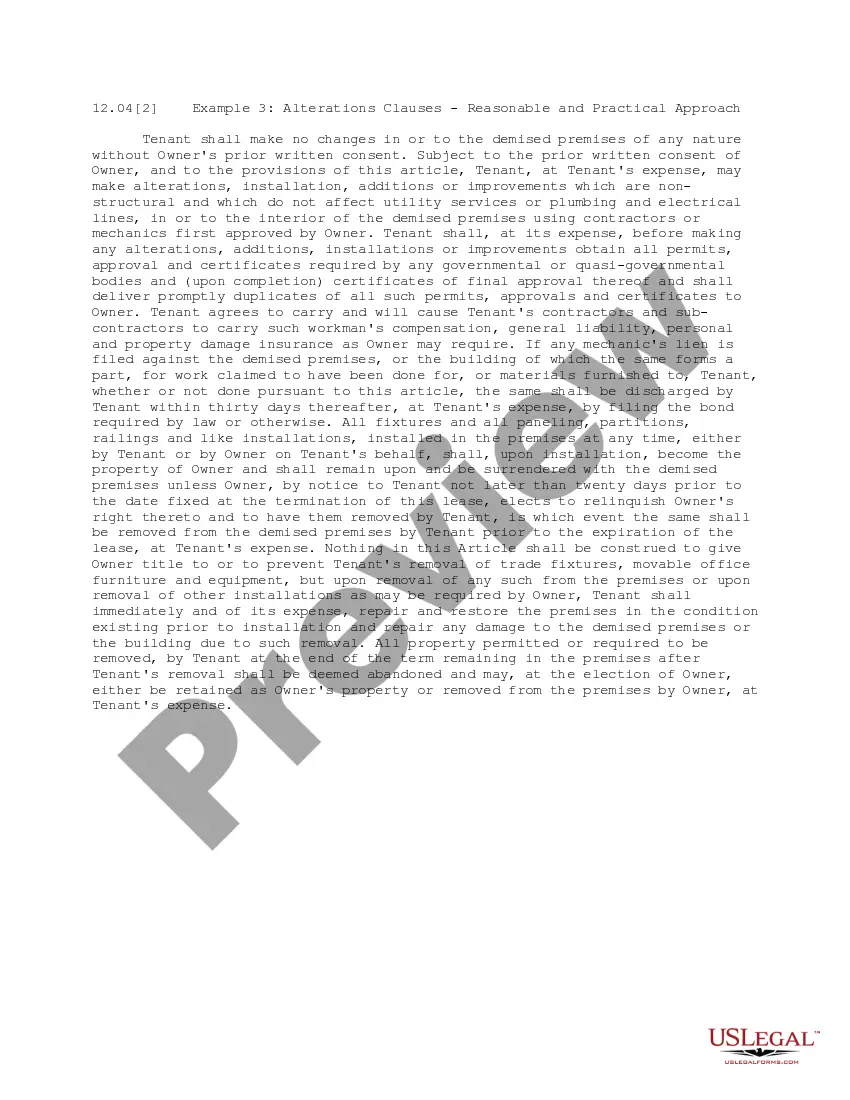
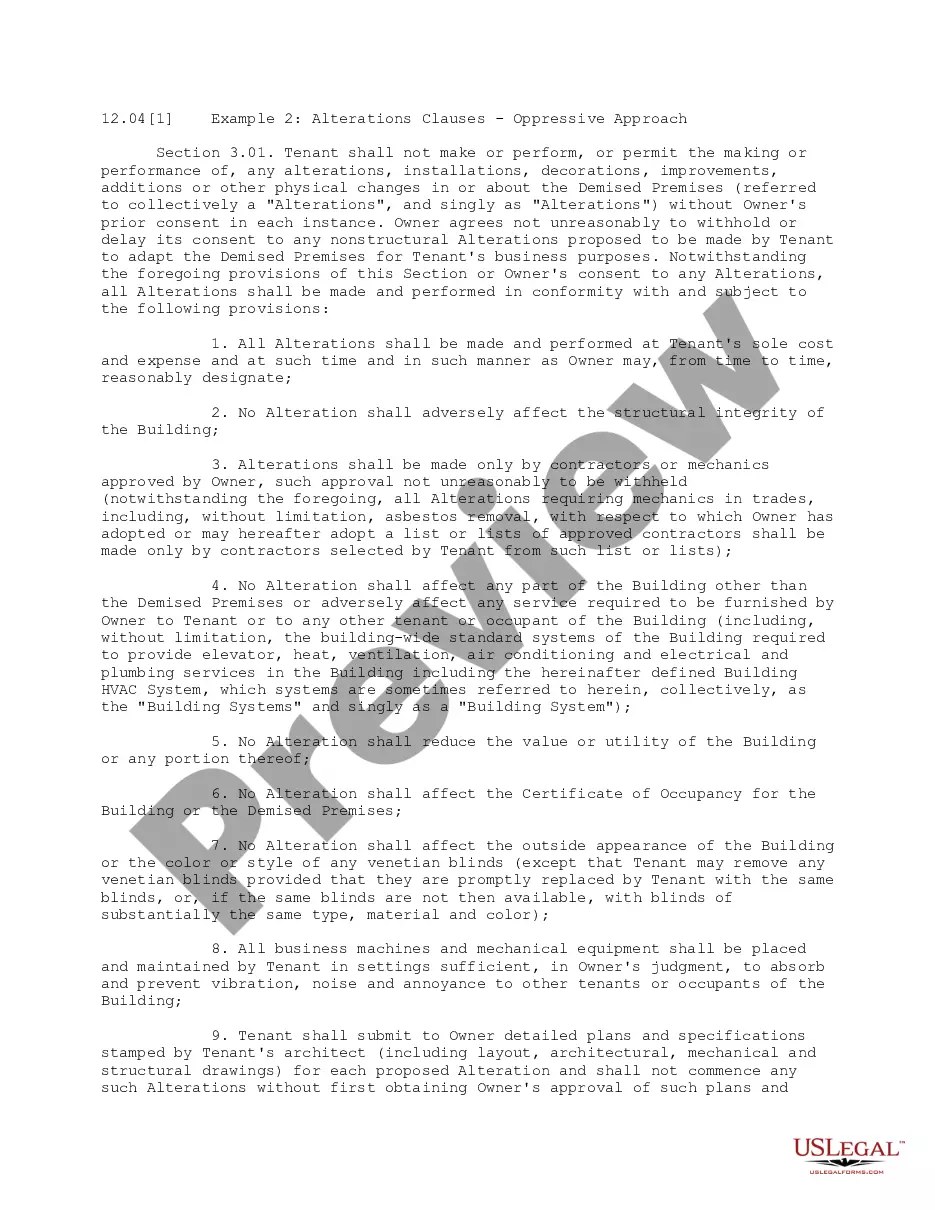
Alterations Clauses Reasonable and Practical Approach
About this form
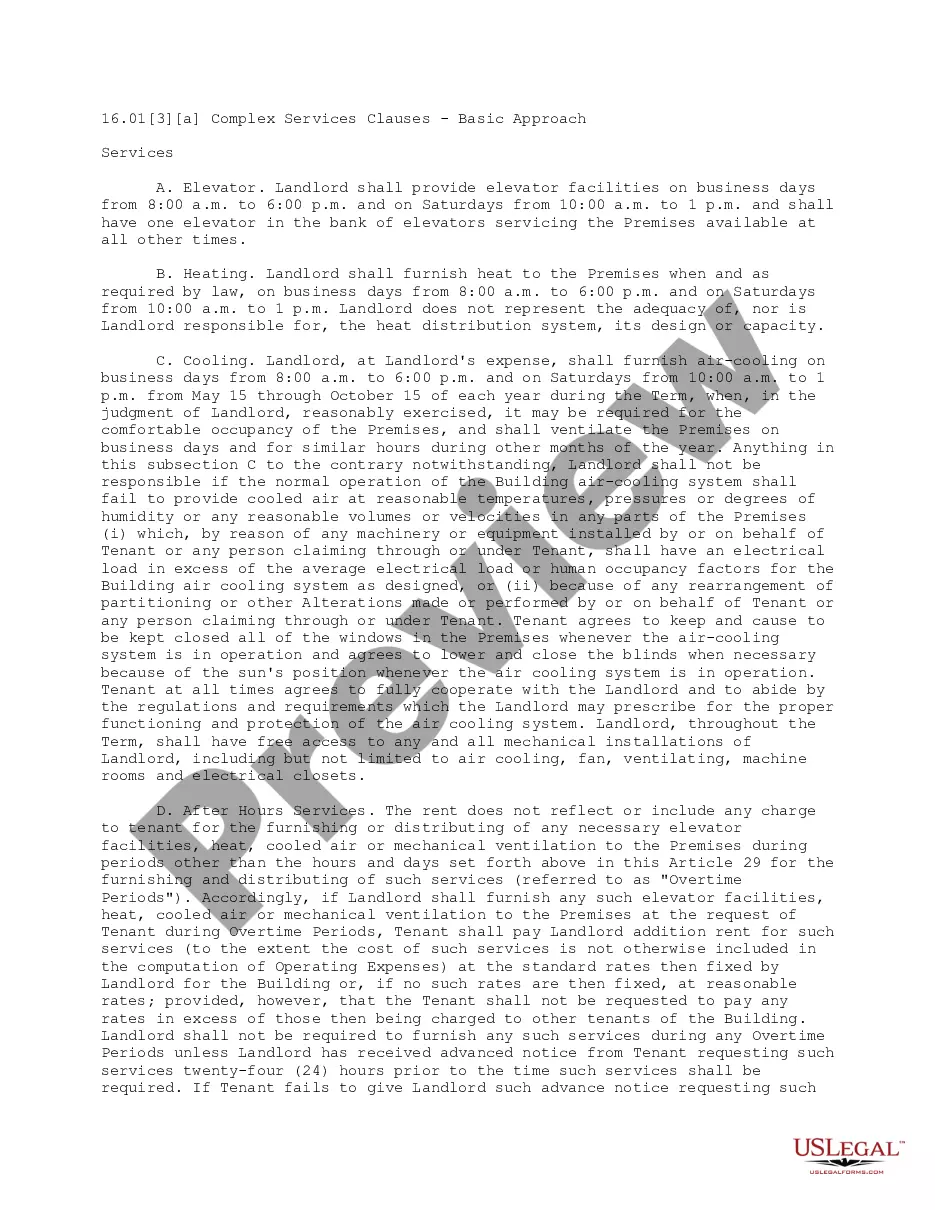
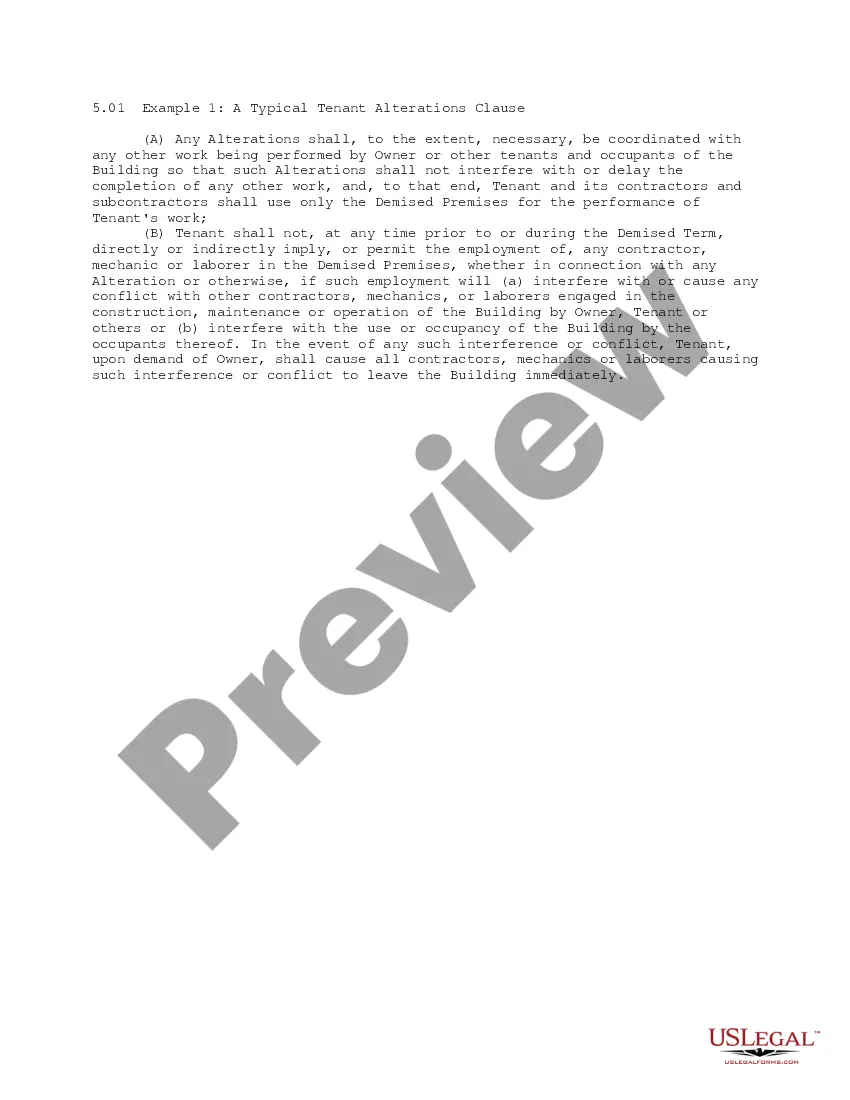
The Alterations Clause is a legal form that outlines the conditions under which a tenant may make modifications to a leased office space. This form specifies that tenants can carry out alterations, installations, and improvements at their own expense, provided they receive prior written consent from the property owner. This is an essential document for tenants looking to customize their space while adhering to the specific requirements set by the landlord.
What’s included in this form
- Tenant obligations regarding prior written consent from the owner.
- Conditions for alterations that are non-structural and do not affect utility services.
- Requirements for obtaining necessary permits and approvals.
- Liability for any mechanics liens and necessary insurance coverage.
- Terms related to ownership of fixtures and restoration of the premises upon lease termination.
When this form is needed
This form is useful when a tenant wishes to modify their leased office space, such as installing new fixtures, partitions, or upgrades that do not change the building's structure. It is typically used when the lease specifies that alterations require the landlord's approval, ensuring both parties are clear on their rights and responsibilities concerning property modifications.
Who this form is for
- Tenants who plan to make alterations to their leased office space.
- Property owners looking to establish clear guidelines for tenant modifications.
- Legal professionals assisting clients in drafting lease agreements with alteration clauses.
How to prepare this document
- Identify the parties involved: the landlord (owner) and the tenant.
- Specify the property address in which alterations will occur.
- Detail the nature of the proposed alterations and ensure it aligns with the terms of the lease.
- List any required approvals and permits before commencing work.
- Include any insurance requirements as stipulated by the property owner.
Does this form need to be notarized?
This form usually doesn’t need to be notarized. However, local laws or specific transactions may require it. Our online notarization service, powered by Notarize, lets you complete it remotely through a secure video session, available 24/7.
Get your form ready online
Our built-in tools help you complete, sign, share, and store your documents in one place.
Make edits, fill in missing information, and update formatting in US Legal Forms—just like you would in MS Word.
Download a copy, print it, send it by email, or mail it via USPS—whatever works best for your next step.
Sign and collect signatures with our SignNow integration. Send to multiple recipients, set reminders, and more. Go Premium to unlock E-Sign.
If this form requires notarization, complete it online through a secure video call—no need to meet a notary in person or wait for an appointment.
We protect your documents and personal data by following strict security and privacy standards.

Make edits, fill in missing information, and update formatting in US Legal Forms—just like you would in MS Word.

Download a copy, print it, send it by email, or mail it via USPS—whatever works best for your next step.

Sign and collect signatures with our SignNow integration. Send to multiple recipients, set reminders, and more. Go Premium to unlock E-Sign.

If this form requires notarization, complete it online through a secure video call—no need to meet a notary in person or wait for an appointment.

We protect your documents and personal data by following strict security and privacy standards.
Common mistakes to avoid
- Failing to obtain written consent from the landlord before making alterations.
- Not securing necessary permits or approvals before starting construction.
- Overlooking insurance requirements, which can leave tenants vulnerable to liabilities.
Benefits of using this form online
- Convenience of immediate download and access from any device.
- Editability to customize the form according to specific needs.
- Reliable templates drafted by licensed attorneys to ensure legal compliance.
Legal use & context
This form ensures that both landlords and tenants understand their rights regarding alterations. It helps prevent disputes by clarifying responsibilities and procedures for modifications in a rental agreement, thus making it enforceable in a legal context.
Quick recap
- The Alterations Clause allows tenants to make specified modifications with landlord approval.
- It emphasizes the importance of permits and insurance in protecting both parties.
- Ensuring clear communication can help avoid potential disputes during the lease term.
Looking for another form?
Form popularity
FAQ
Nordstrom: Complimentary basic alterations are available for most full-price items, but a receipt or packing slip is required. More complicated alterations (suits, eveningwear) are offered but for a fee.
The pinching, lengthening, and shortening involved with alterations isn't usually overly complicated or expensive. This is especially true for basic alterations, including taking up hems on pants or skirts, letting out a waistband, repairing seams, and shortening sleeves.
Prices for common alterations typically fall into these broad ranges: Hemming Pants, Skirts, or Dresses: $10 to $25 Skirts with a lining cost more to hem than unlined ones. Shortening Sleeves: $15 to $40 Jacket sleeves cost more than shirt sleeves, and jackets with buttons and linings cost more than plain ones.
For alterations, most tailors charge by the job or project and prices are often standard, running from $8 on average for hemming pants up to a few hundred dollars (or more) on average to alter a wedding gown or other special-occasion garment.
Noun. The act of altering or changing something. The act of altering or changing something. The changing of a pattern, garment or design to improve the outcome of the appearance or fit.
You can get skirts, pants, jeans, and even too-long shirts hemmed. This is one of the least expensive things a tailor can do, and it can make a bigger difference in fit than you might think. When you get rid of the excess fabric at the base, you get clean lines for a put-together look.
To begin with, a tailor can do alterations, but an an alterations expert does not usually have the adequate training to tailor a garment.While tailoring usually refers to refitting a garment, the process can also include adding collars, cuffs and pockets.
The exact price depends on the item, the fix, and where you get it altered, but most alterations range from $15 to $75. On the low end, you'll find simple repairs like hemming a dress or pants and shortening sleeves. On the high end are more elaborate fixes, like adjusting the shoulders of a blouse or coat.
Lined garments are more difficult and time consuming to alter. Chiffon, lace, delicate fabrics, and beaded clothing cost more to alter because they require more time and care to sew. Men's jackets are also expensive because of their complicated construction.