Underground Storage Lease and Agreement (From Surface Owner with Mineral Interest)
Overview of this form
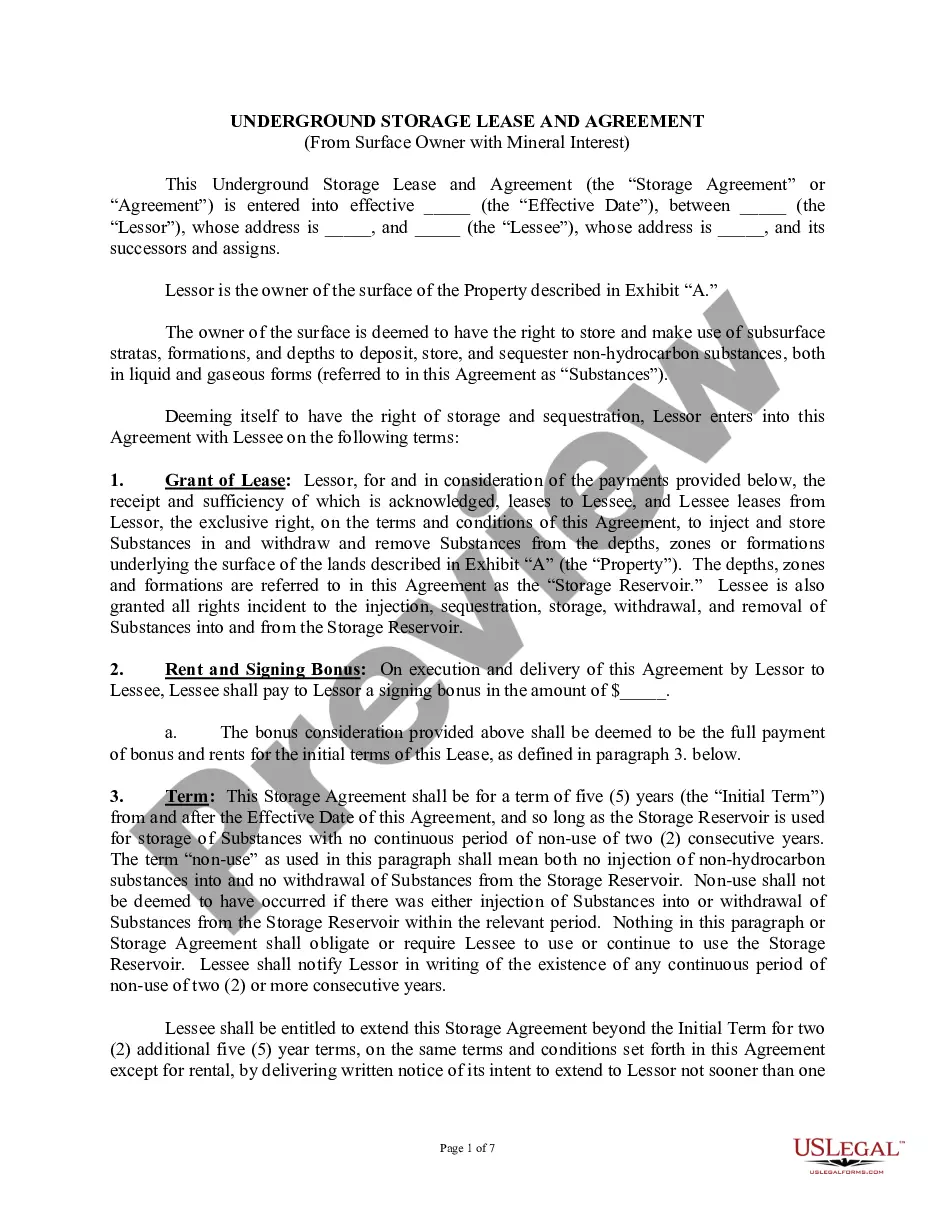
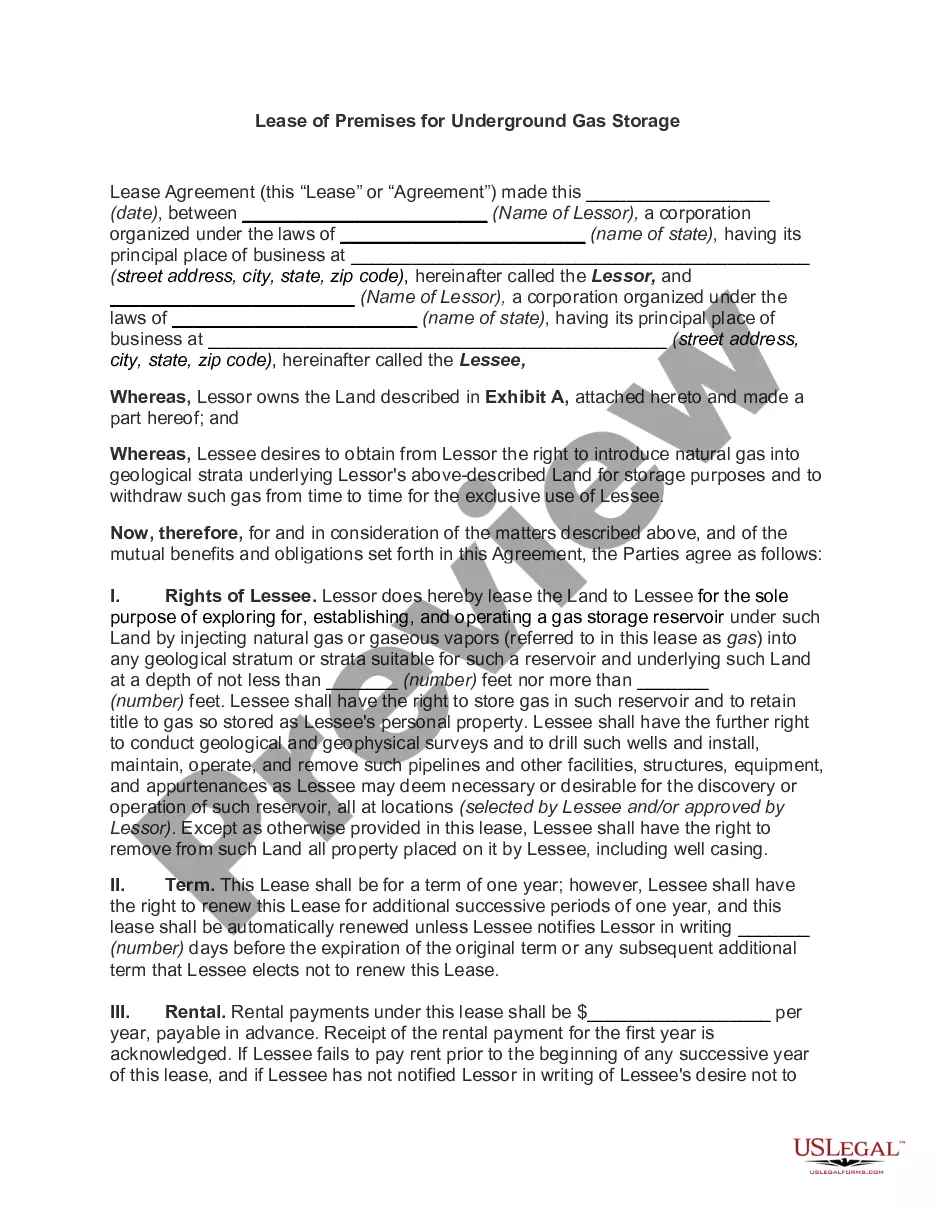
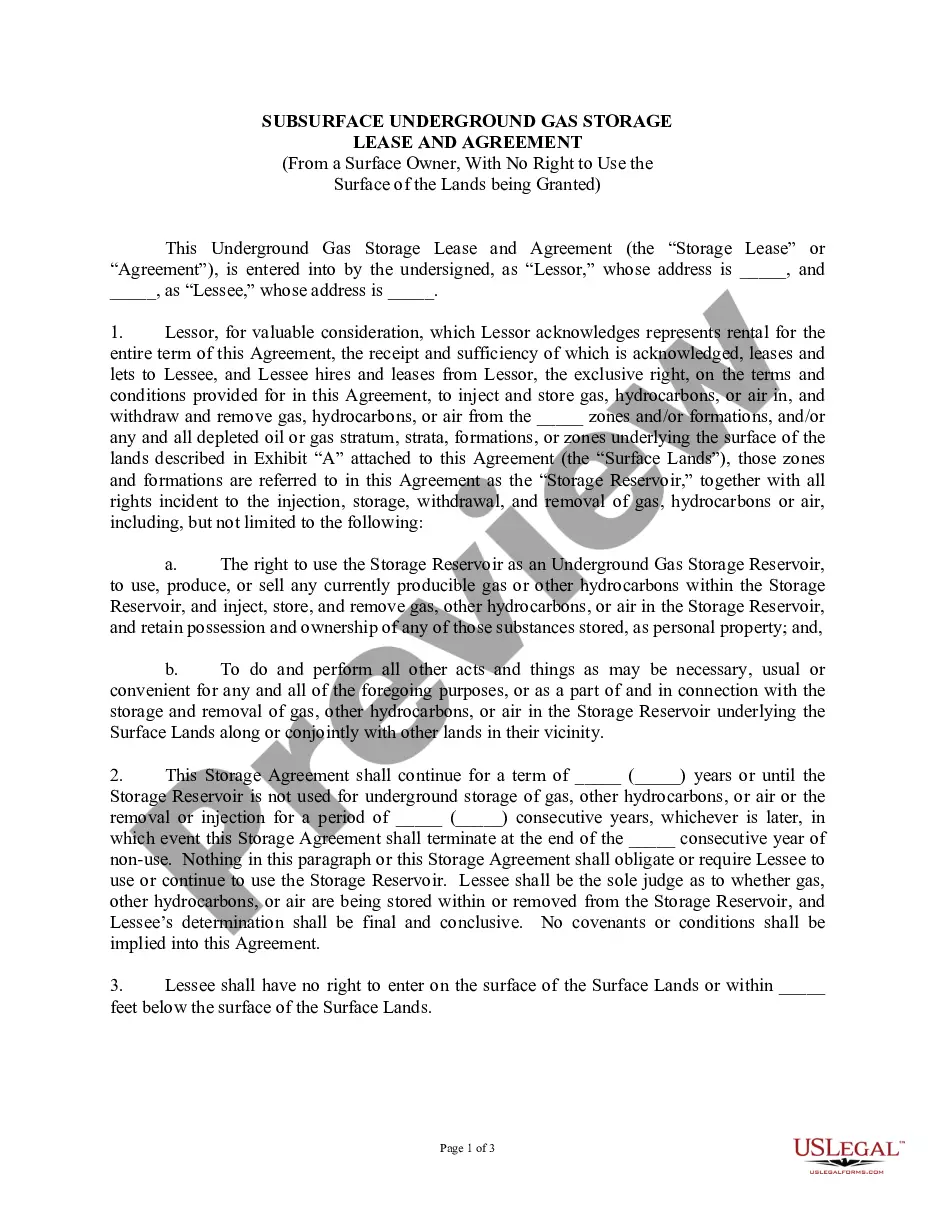
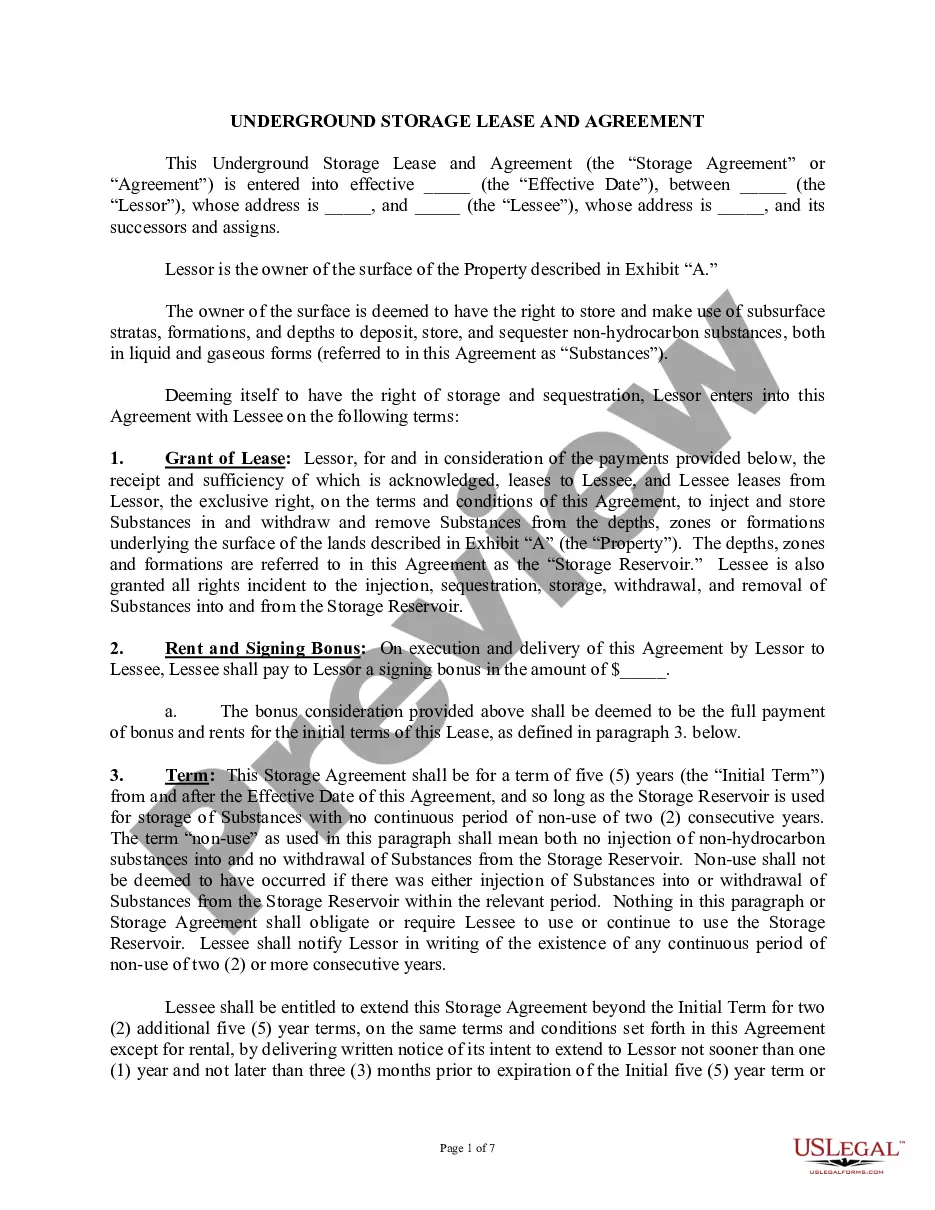
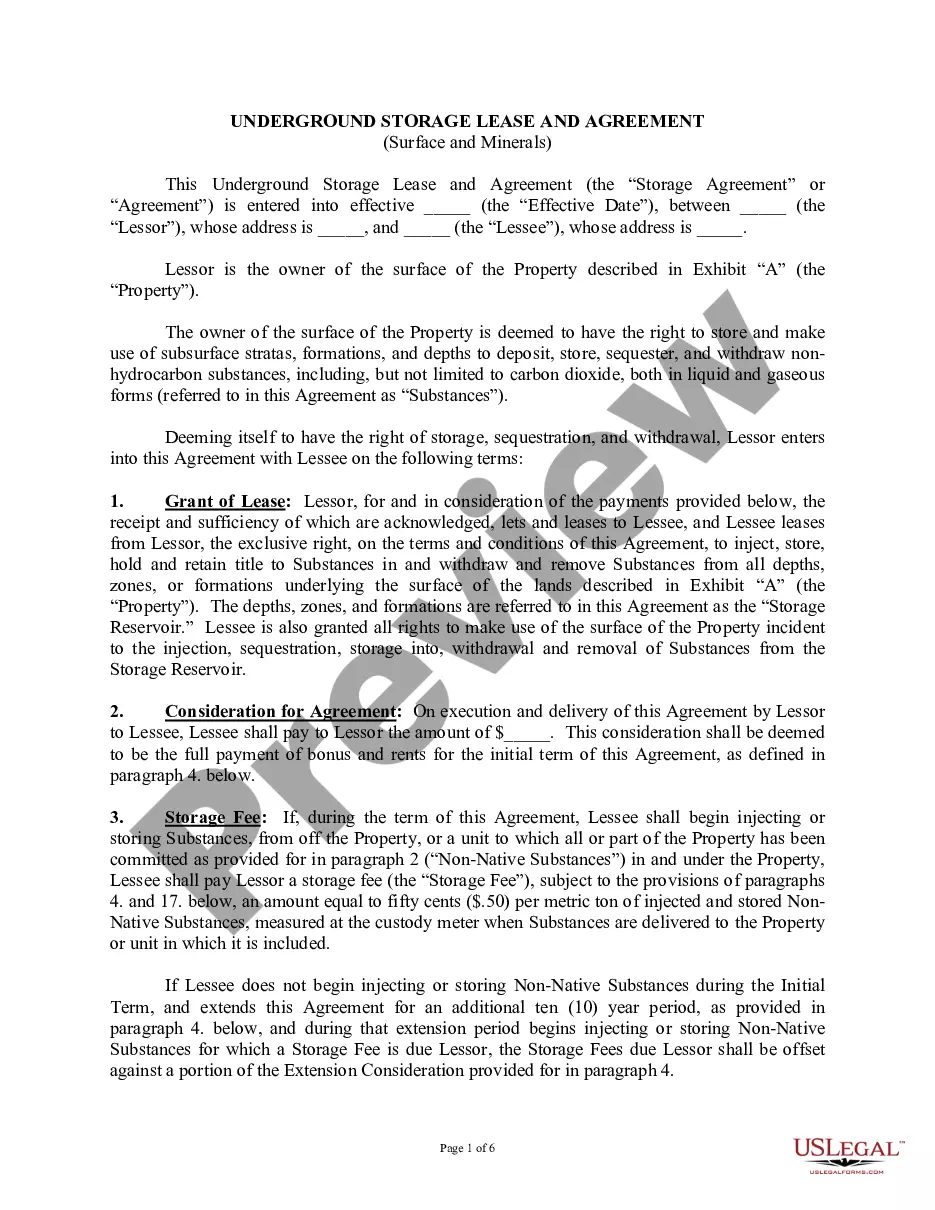
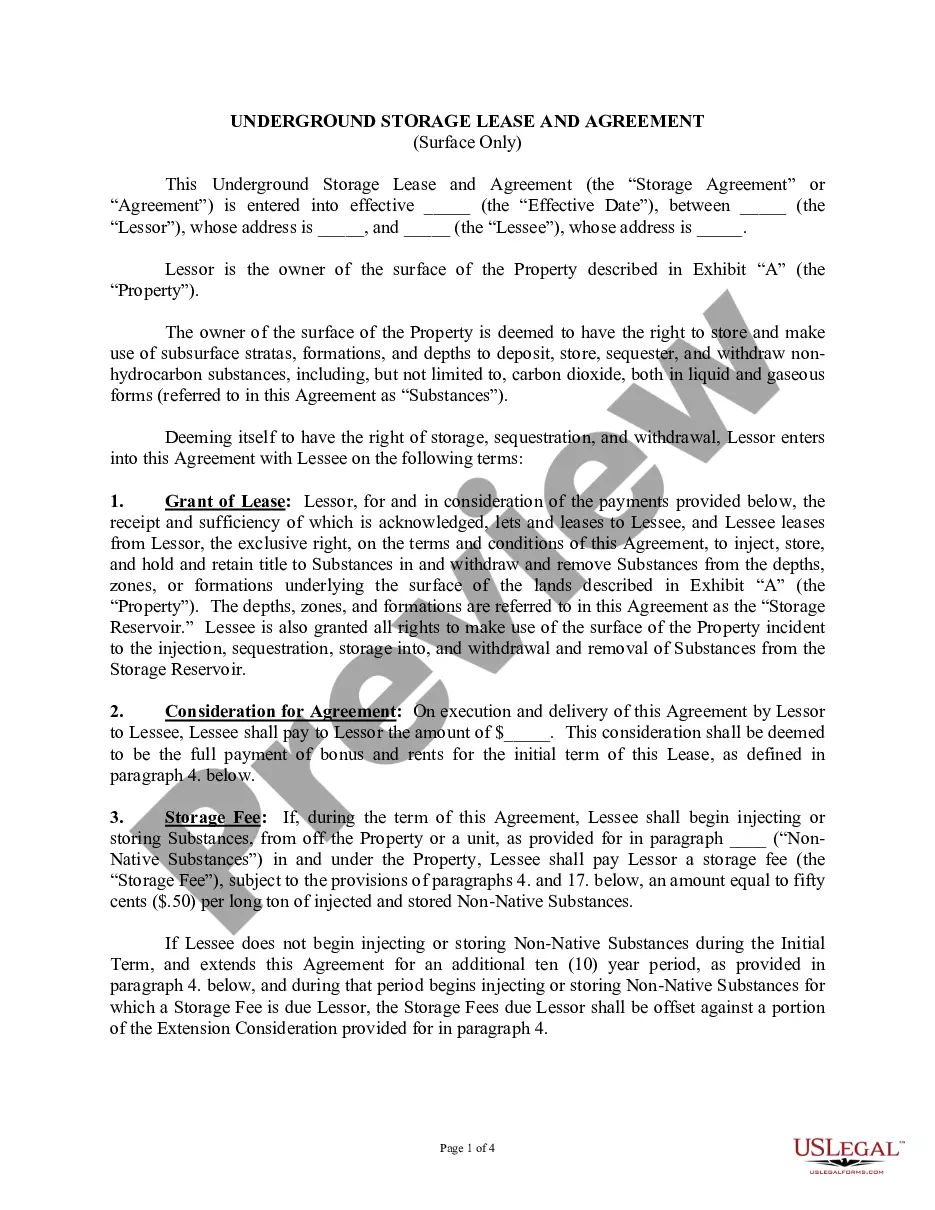
The Underground Storage Lease and Agreement is a legal document that outlines the rights and responsibilities of a surface owner with mineral interests (the Lessor) and a party that intends to store non-hydrocarbon substances underground (the Lessee). This agreement allows the Lessee to use specific subsurface strata for storage while ensuring the surface owner's rights and property are respected. It is distinct from other lease agreements by focusing on underground storage specifically.
What’s included in this form
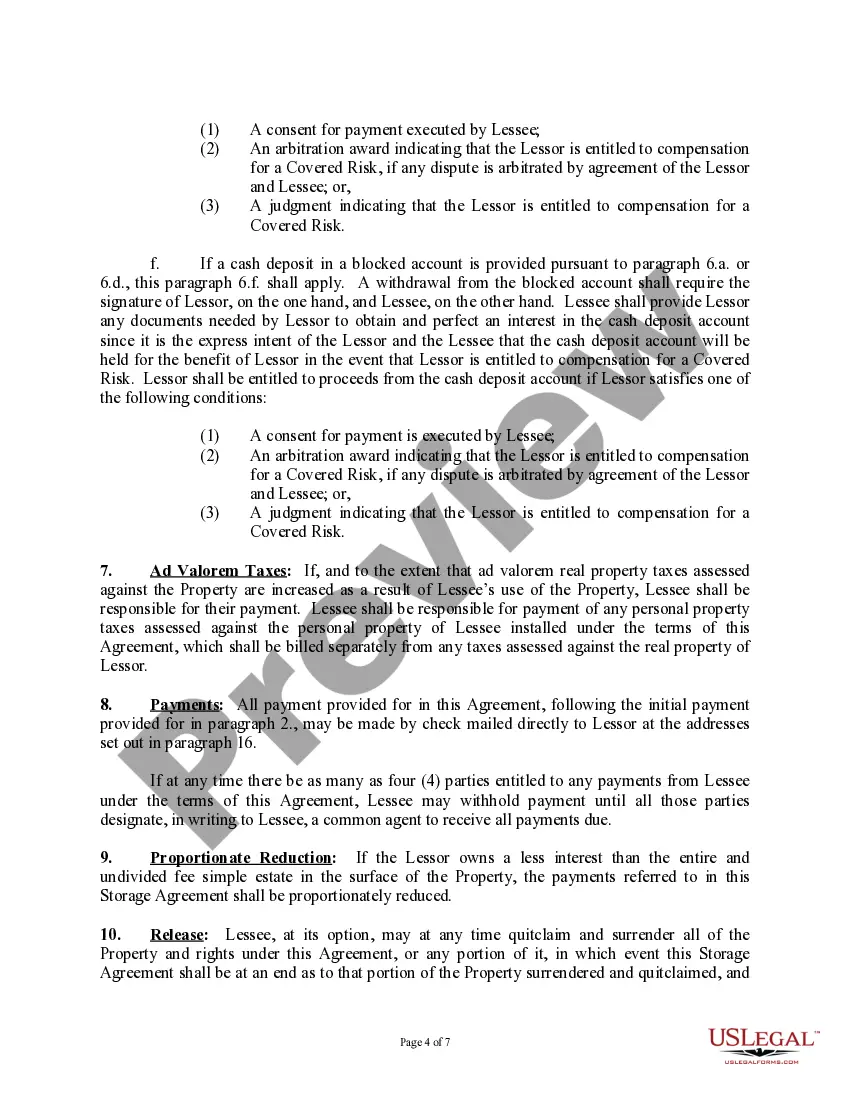
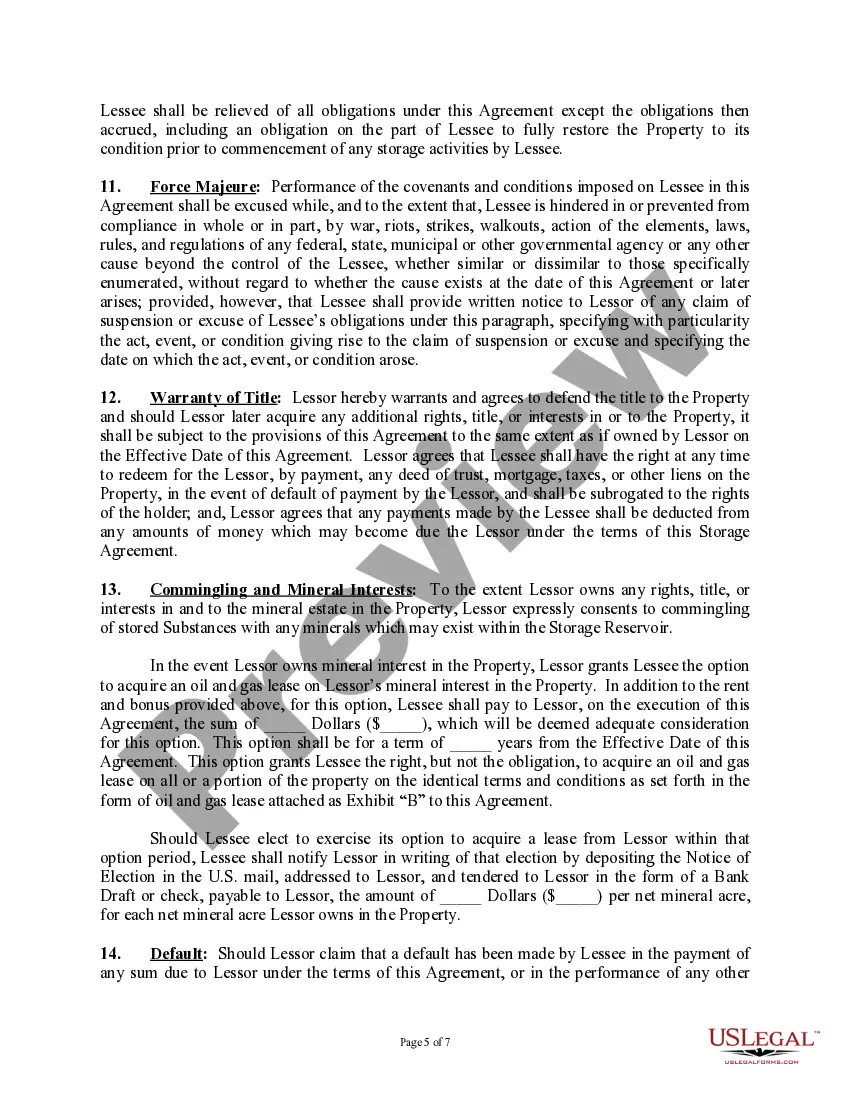
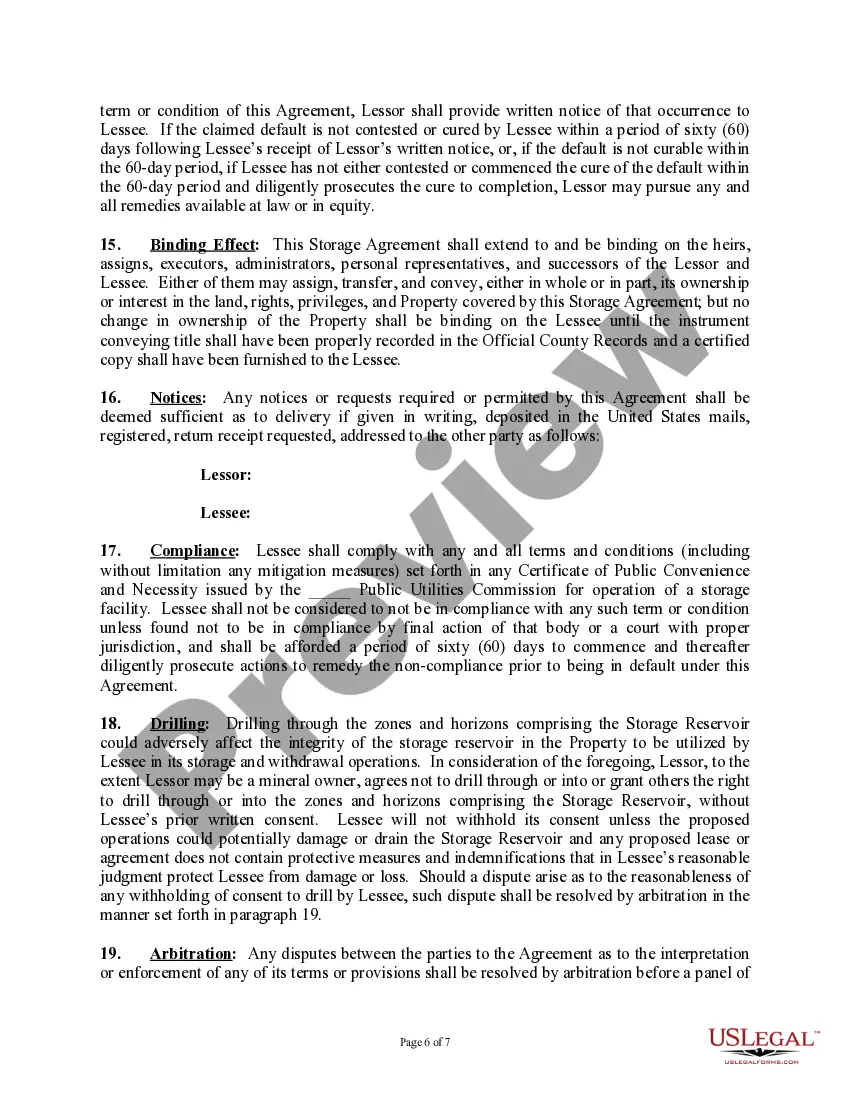
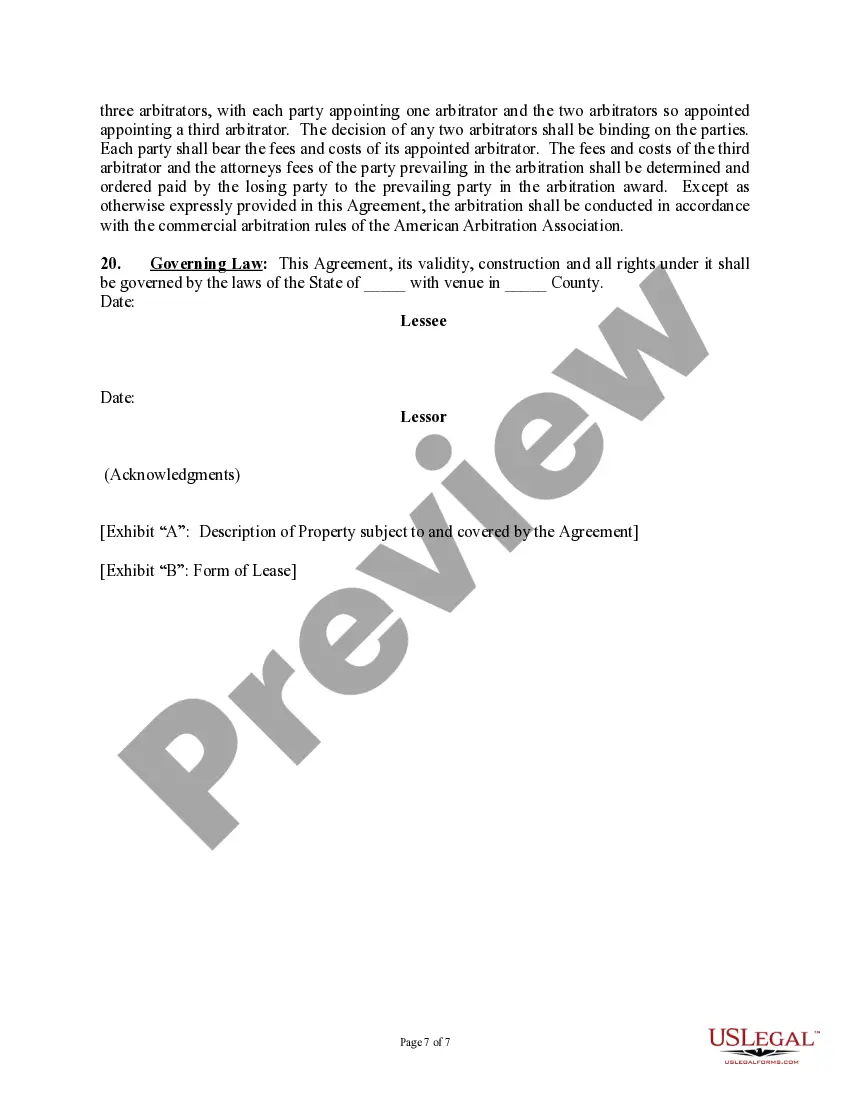
- Effective Date: Specifies when the agreement begins.
- Grant of Lease: Outlines the rights granted to the Lessee for subsurface storage.
- Term: Defines the duration of the lease and conditions for extension.
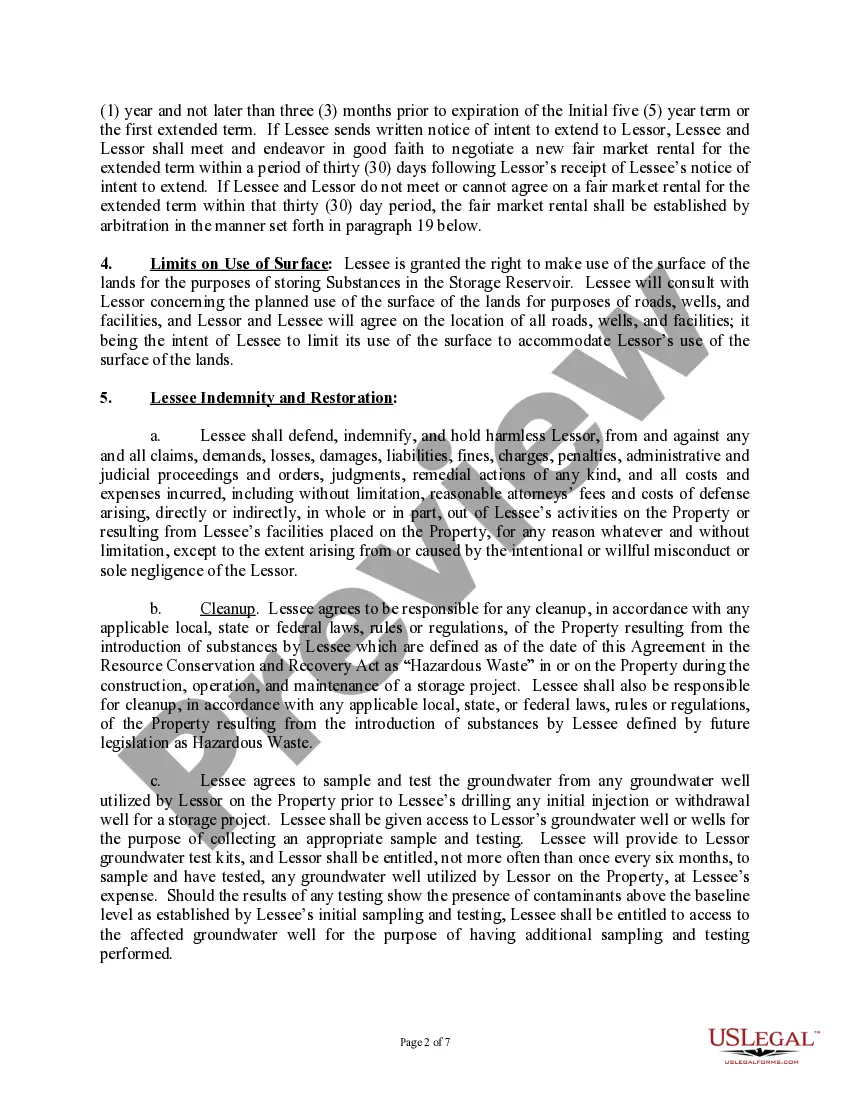
- Indemnity: Details the Lessee's responsibilities for claims and damages.
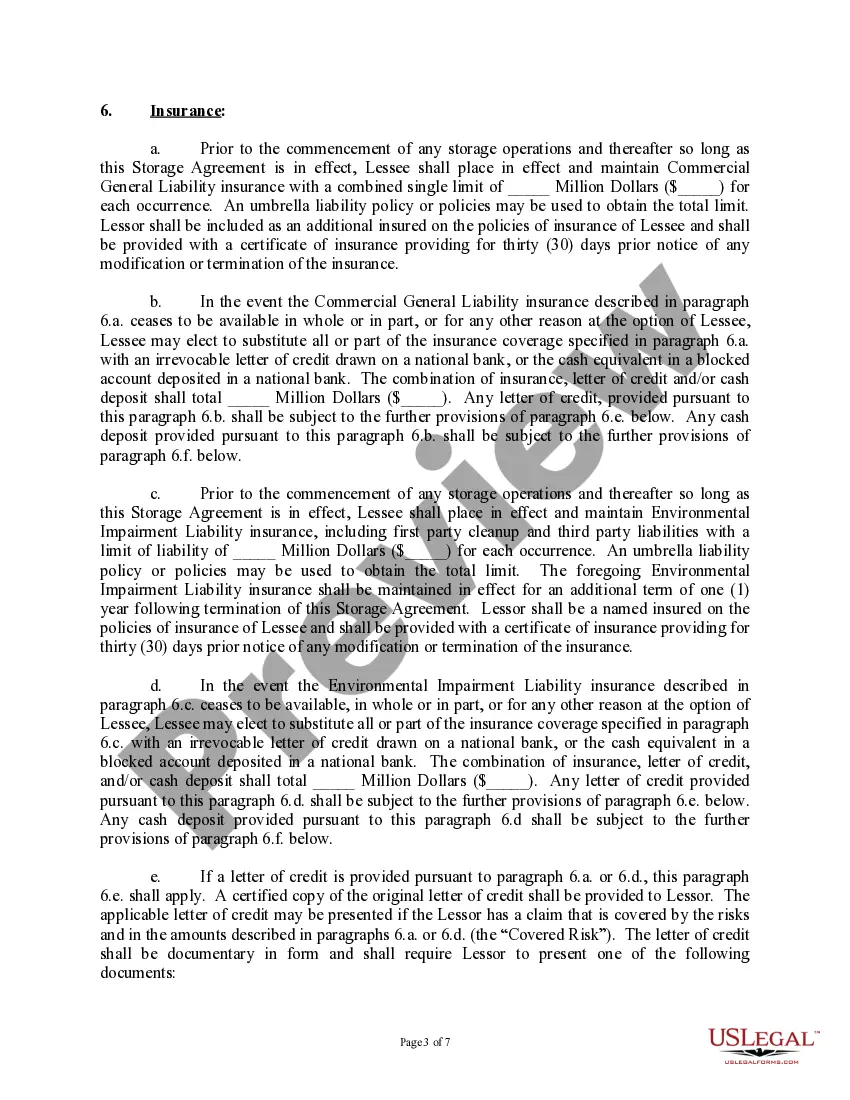
- Insurance Requirements: States the insurance obligations of the Lessee.
- Compliance Clause: Ensures adherence to local regulations and laws.
When to use this form
This form should be used when a surface landowner wishes to lease underground space for the storage of approved non-hydrocarbon substances. Such scenarios may arise when the landowner and Lessee enter into an agreement to store materials underground, ensuring both parties understand their rights and responsibilities, particularly regarding the maintenance of the property and liabilities.
Who should use this form
This form is intended for:
- Surface owners who have mineral interests in their property.
- Companies or individuals planning to store non-hydrocarbon substances underground.
- Legal professionals advising clients in real estate or mineral rights.
How to complete this form
- Identify the parties: Enter the names and addresses of both the Lessor and Lessee.
- Specify the Property: Fill in the description of the property as outlined in the exhibit.
- Insert the Effective Date: Clearly state when the agreement takes effect.
- Enter payment details: Specify the signing bonus and rental terms.
- Review insurance requirements: Ensure that all necessary insurance obligations are understood and outlined.
- Sign and date the agreement: Ensure that both parties sign to make the agreement legally binding.
Is notarization required?
This form does not typically require notarization unless specified by local law. However, itâs advisable to check with legal counsel to ensure compliance with jurisdiction-specific requirements.
Get your form ready online
Our built-in tools help you complete, sign, share, and store your documents in one place.
Make edits, fill in missing information, and update formatting in US Legal Forms—just like you would in MS Word.
Download a copy, print it, send it by email, or mail it via USPS—whatever works best for your next step.
Sign and collect signatures with our SignNow integration. Send to multiple recipients, set reminders, and more. Go Premium to unlock E-Sign.
If this form requires notarization, complete it online through a secure video call—no need to meet a notary in person or wait for an appointment.
We protect your documents and personal data by following strict security and privacy standards.

Make edits, fill in missing information, and update formatting in US Legal Forms—just like you would in MS Word.

Download a copy, print it, send it by email, or mail it via USPS—whatever works best for your next step.

Sign and collect signatures with our SignNow integration. Send to multiple recipients, set reminders, and more. Go Premium to unlock E-Sign.

If this form requires notarization, complete it online through a secure video call—no need to meet a notary in person or wait for an appointment.

We protect your documents and personal data by following strict security and privacy standards.
Avoid these common issues
- Failing to specify the Effective Date, which can lead to disputes about when the agreement starts.
- Not comprehensively detailing the property description, causing potential legal issues over land boundaries.
- Neglecting to include adequate insurance provisions, exposing the parties to risk.
- Overlooking local legal requirements that may affect agreement enforceability.
Benefits of completing this form online
- Convenience: Access and complete the form from anywhere at any time.
- Editability: Customize the template according to specific needs easily.
- Reliability: Use trusted legal templates drafted by licensed attorneys to ensure compliance with current laws.
Legal use & context
- The Underground Storage Lease provides legal rights for storing non-hydrocarbon substances underground.
- Compliance with local laws is crucial to the enforceability of this agreement.
- This form serves to protect both the surface and mineral rights of the parties involved.
Summary of main points
- The Underground Storage Lease and Agreement is essential for regulating underground storage practices.
- Both parties must understand their rights, responsibilities, and insurance obligations as outlined in the form.
- Consult legal advice to ensure compliance with state laws and regulations.
Looking for another form?
Form popularity
FAQ
Not owning the mineral rights to a parcel of land doesn't mean your property is worthless. If someone else owns the mineral rights and they sell those rights to an individual or corporation, you can still make a profit as the surface rights owner. You have the rights of ingress and egress.
Nationally, mineral rights owners can expect anywhere from $100 to $5,000 per acre for their mineral rights lease. The most valuable mineral rights leases are on producing parcels of land that are still expected to hold many more precious minerals.
Mineral rights are automatically included as a part of the land in a property conveyance, unless and until the ownership gets separated at some point by an owner/seller.Conveying (selling or otherwise transferring) the land but retaining the mineral rights.
As a mineral rights value rule of thumb, the 3X cash flow method is often used. To calculate mineral rights value, multiply the 12-month trailing cash flow by 3. For a property with royalty rights, a 5X multiple provides a more accurate valuation (stout.com).
Hence, mineral rights. Also known as a mineral estate, mineral rights are just what their name implies: The right of the owner to utilize minerals found below the surface of property. Besides minerals, these rights can apply to oil and gas.
You can retain your mineral rights simply by putting an exception in your sales contract, provided that the buyer agrees to it, of course. If you sell your house with no such legal clarification, then those mineral rights automatically transfer to the buyer.
When it comes to mineral rights, the standard admonition has long been consistent and emphatic: Avoid selling them. After all, simply owning mineral rights costs you nothing. There are no liability risks, and in most cases, taxes are assessed only on properties that are actively producing oil or gas.
Nationally, mineral rights owners can expect anywhere from $100 to $5,000 per acre for their mineral rights lease. The most valuable mineral rights leases are on producing parcels of land that are still expected to hold many more precious minerals.
Mineral rights are automatically included as a part of the land in a property conveyance, unless and until the ownership gets separated at some point by an owner/seller.Conveying (selling or otherwise transferring) the land but retaining the mineral rights.