Oklahoma Landlord's Release and Consent
About this form
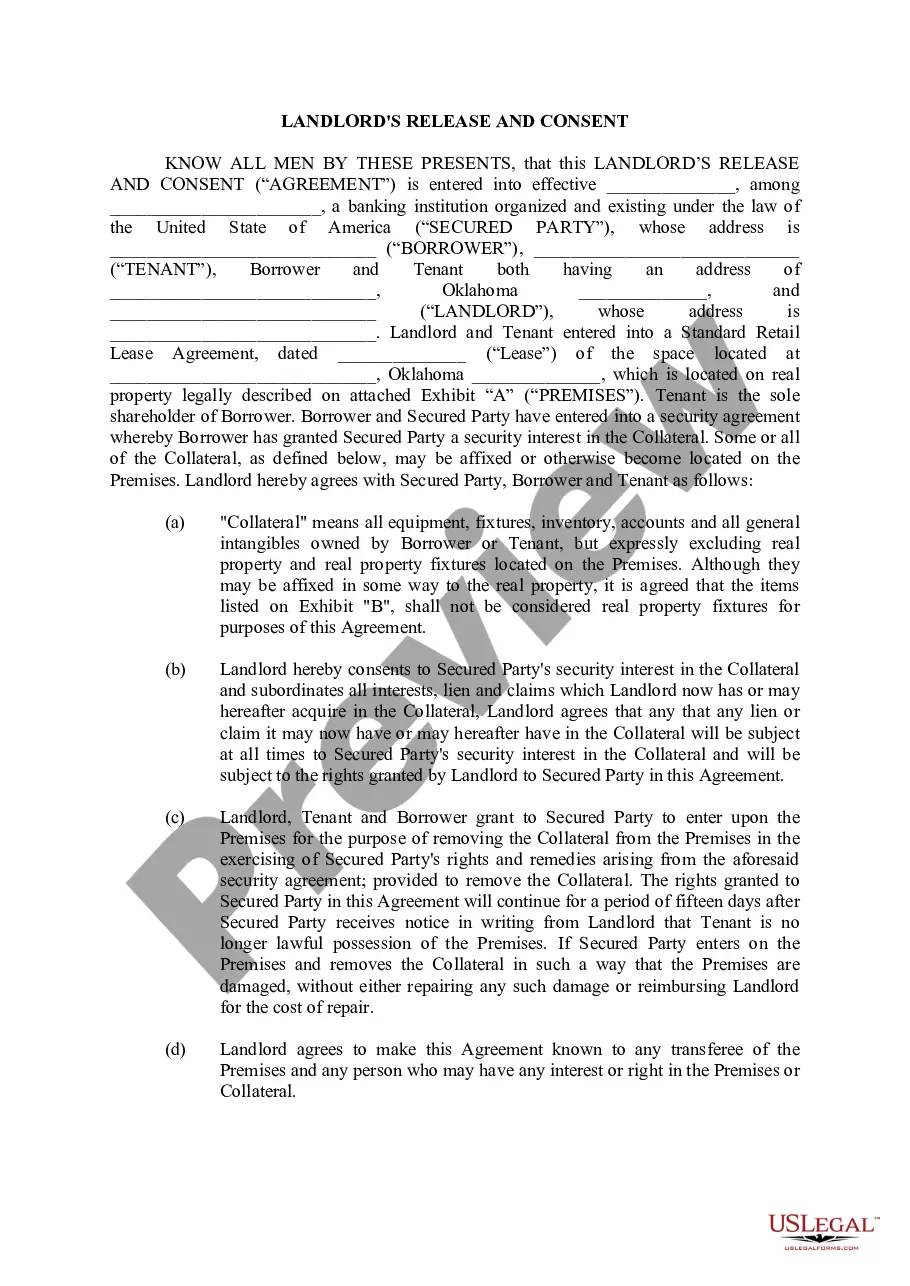
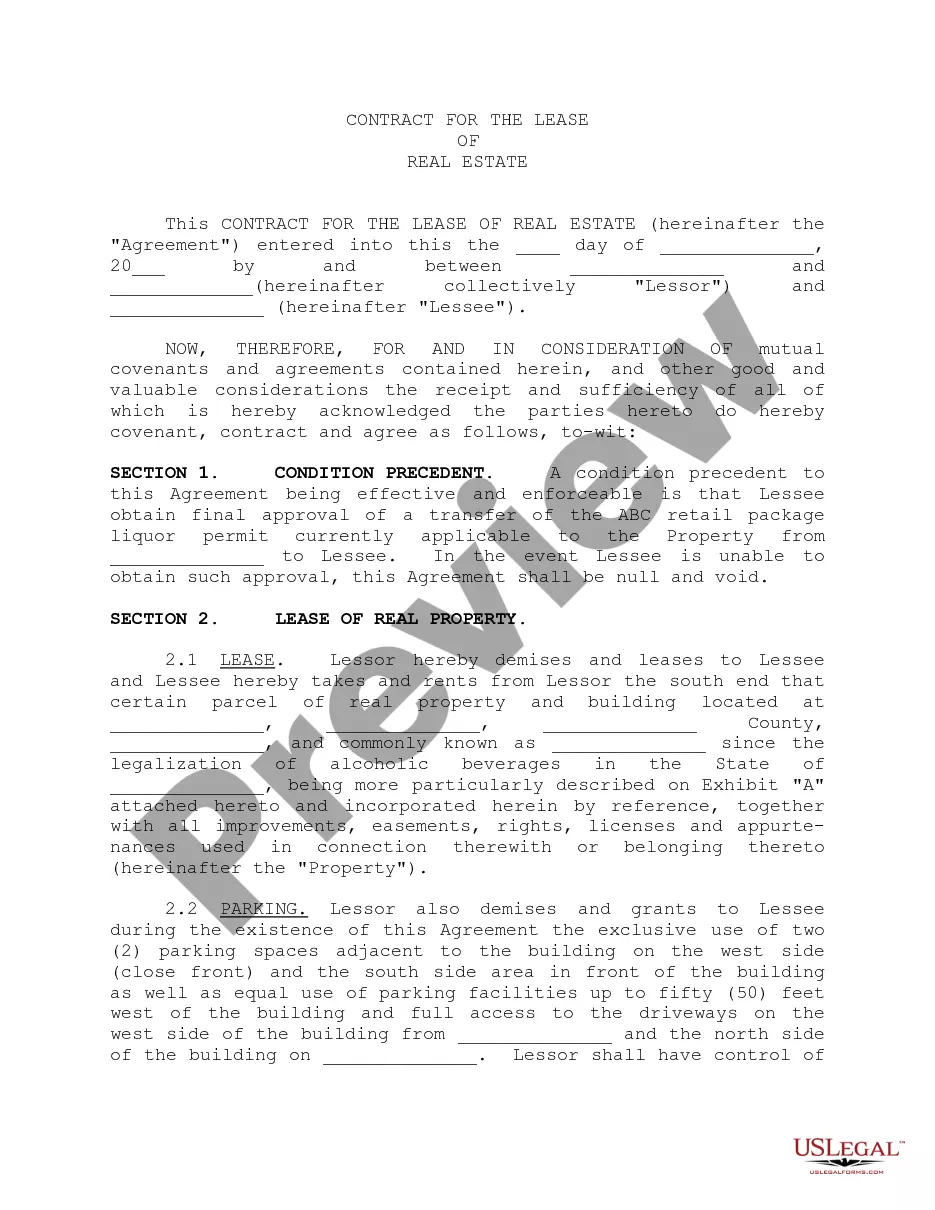
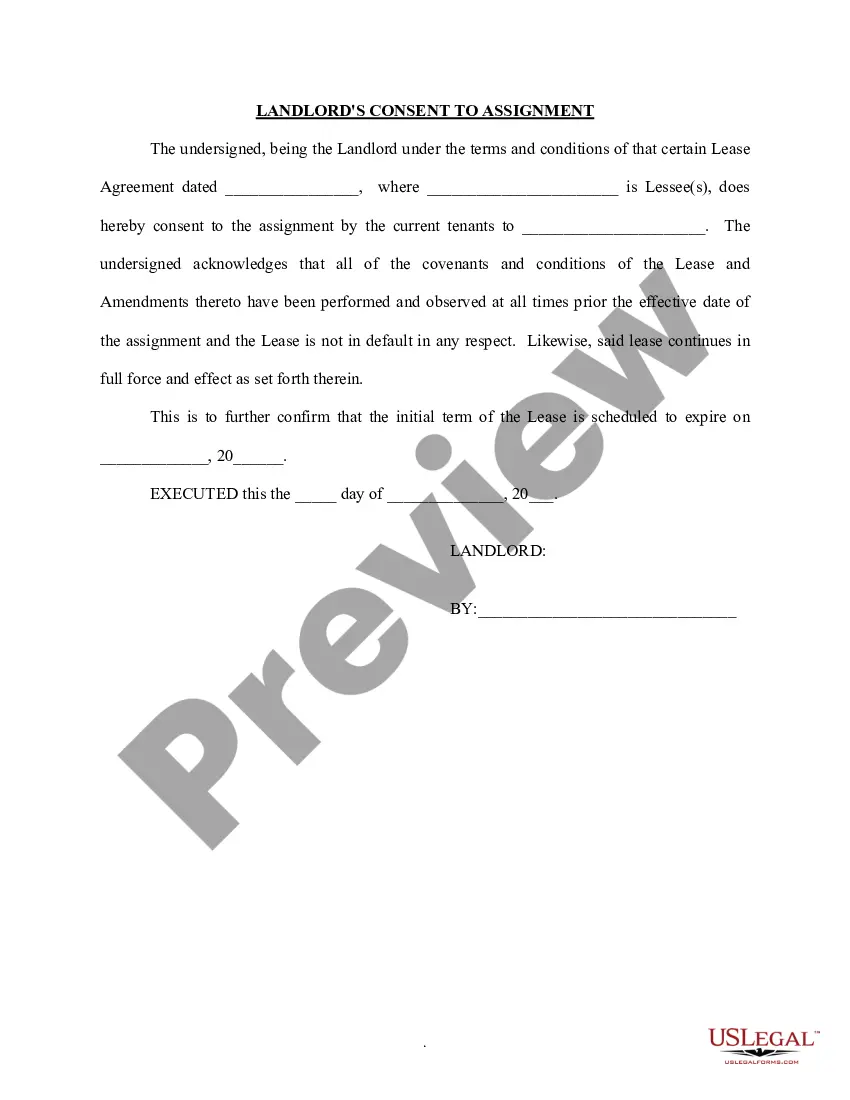
The Landlord's Release and Consent is a legal document that serves to formalize the relationship between a landlord, tenant, borrower, and secured party in a rental context. This agreement is crucial when a borrower creates a security interest in collateral that may be affixed to a property, ensuring that the landlord consents to the secured party's rights. This document is essential for landlords who want to protect their interests while enabling tenants to secure financing against personal property located on the premises.
Key components of this form
- Parties involved: Identifies the landlord, tenant, borrower, and secured party.
- Definitions: Clarifies what constitutes "collateral" and excludes certain real property fixtures.
- Consent section: Includes landlord's consent to the secured party's security interest.
- Rights of the secured party: Grants permissions for collateral removal from the premises.
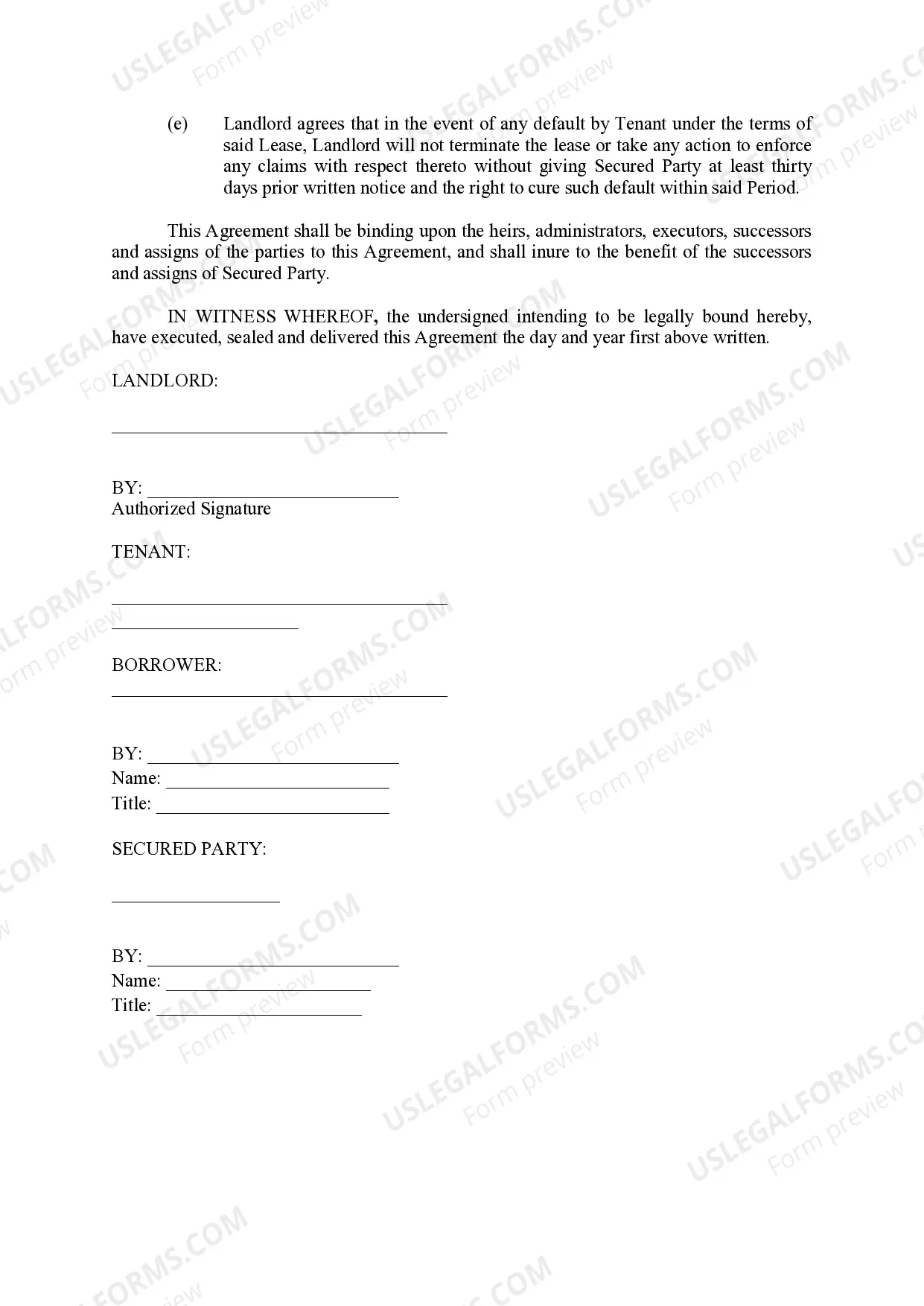
- Notification requirements: Specifies the notice periods before lease termination actions can be taken.
Situations where this form applies
This form should be used when a tenant wishes to secure financing based on collateral that may be located on rental property. It protects the landlordâs interests while allowing the tenant to leverage their assets. Use this form particularly when the tenant is a corporation, and the landlord needs to acknowledge and consent to the secured party's rights.
Who needs this form
- Landlords and property owners who rent commercial or residential properties.
- Tenants seeking to secure loans against personal property located within a leased space.
- Borrowers who are corporations and need to formalize their agreements with landlords regarding security interests.
- Secured parties, such as lenders, who require consent from the landlord to establish their security rights.
Completing this form step by step
- Identify the parties involved: Fill in the names and addresses of the landlord, tenant, borrower, and secured party.
- Specify the collateral: Clearly define what items are considered collateral and those that are excluded as real property fixtures.
- Enter the premises details: Describe the rental property and attach any necessary legal descriptions as required.
- Include dates and signatures: Ensure all parties date and sign the agreement to make it legally binding.
- Provide notice clauses: Make sure to accurately represent any notice periods required in case of tenant default.
Does this document require notarization?
This form does not typically require notarization to be legally valid. However, some jurisdictions or document types may still require it. US Legal Forms provides secure online notarization powered by Notarize, available 24/7 for added convenience.
Get your form ready online
Our built-in tools help you complete, sign, share, and store your documents in one place.
Make edits, fill in missing information, and update formatting in US Legal Forms—just like you would in MS Word.
Download a copy, print it, send it by email, or mail it via USPS—whatever works best for your next step.
Sign and collect signatures with our SignNow integration. Send to multiple recipients, set reminders, and more. Go Premium to unlock E-Sign.
If this form requires notarization, complete it online through a secure video call—no need to meet a notary in person or wait for an appointment.
We protect your documents and personal data by following strict security and privacy standards.

Make edits, fill in missing information, and update formatting in US Legal Forms—just like you would in MS Word.

Download a copy, print it, send it by email, or mail it via USPS—whatever works best for your next step.

Sign and collect signatures with our SignNow integration. Send to multiple recipients, set reminders, and more. Go Premium to unlock E-Sign.

If this form requires notarization, complete it online through a secure video call—no need to meet a notary in person or wait for an appointment.

We protect your documents and personal data by following strict security and privacy standards.
Avoid these common issues
- Failing to include all parties' accurate names and addresses.
- Not defining the collateral clearly, which can lead to misunderstandings.
- Neglecting to provide the correct legal description of the premises.
- Forgetting to obtain signatures from all involved parties.
- Ignoring local laws that may affect the agreement.
Why complete this form online
- Convenience of access: Downloadable at any time, removing the need for in-person meetings.
- Editable templates: Allows users to customize fields as needed to fit their specific situations.
- Reliability: Drafted by licensed attorneys, ensuring the document meets legal standards.
- Time-saving: Quick completion process compared to traditional legal service methods.
Looking for another form?



Form popularity
FAQ
The tenant should fill his original name with father name, permanent address, and other essential information in the given form. It verifies a tenant and makes it easy for the landlord to involve the police in case of a dispute.
The landlord will usually have to get your consent before releasing your personal information to anyone. There are times when the landlord may not have to get your consent, including if it's an emergency situation or if another law requires disclosure of that information.
Give the landlord/agent a written termination notice and vacate move out and return the keys according to your notice, and/or. apply to the NSW Civil & Administrative Tribunal (NCAT) for a termination order.
A lease termination letter, or end of lease letter, is a notice provided to the tenant by the landlord to inform them that the lease will not continue after the set end date. As the end of your lease term approaches, you and your tenant may choose to renew for another term or end the lease agreement.
Dear your landlord or property manager's name, I am writing to inform you I will be vacating my rental unit on date you intend to vacate. This letter meets the 30-day notice requirement outlined in my lease agreement.
A landlord cannot legally evict you without a court order, whether or not you have a lease.) How long does it take for a landlord to evict a tenant? A landlord can evict a tenant only by going through a formal eviction proceeding, which can take a few weeks from start to finish.
The first sentence should explain who is writing the letter and why. It should also give the name of the tenant, so the purpose of the letter is clear. The writer may be a property manager or the owner of the property. The landlord can include, if applicable, a statement on the character of the tenant.
Dear (Name of landlord or manager), This letter constitutes my written (number of days' notice that you need to give based on your lease agreement)-day notice that I will be moving out of my apartment on (date), the end of my current lease. I am leaving because (new job, rent increase, etc.)
Your name, and the landlord's name and address. The date you're writing the letter. Informing the landlord you're breaking your lease early. The reason why you're breaking your lease. The building and apartment you're vacating. The date by which you're vacating.