Release of Mortgagor
Understanding this form
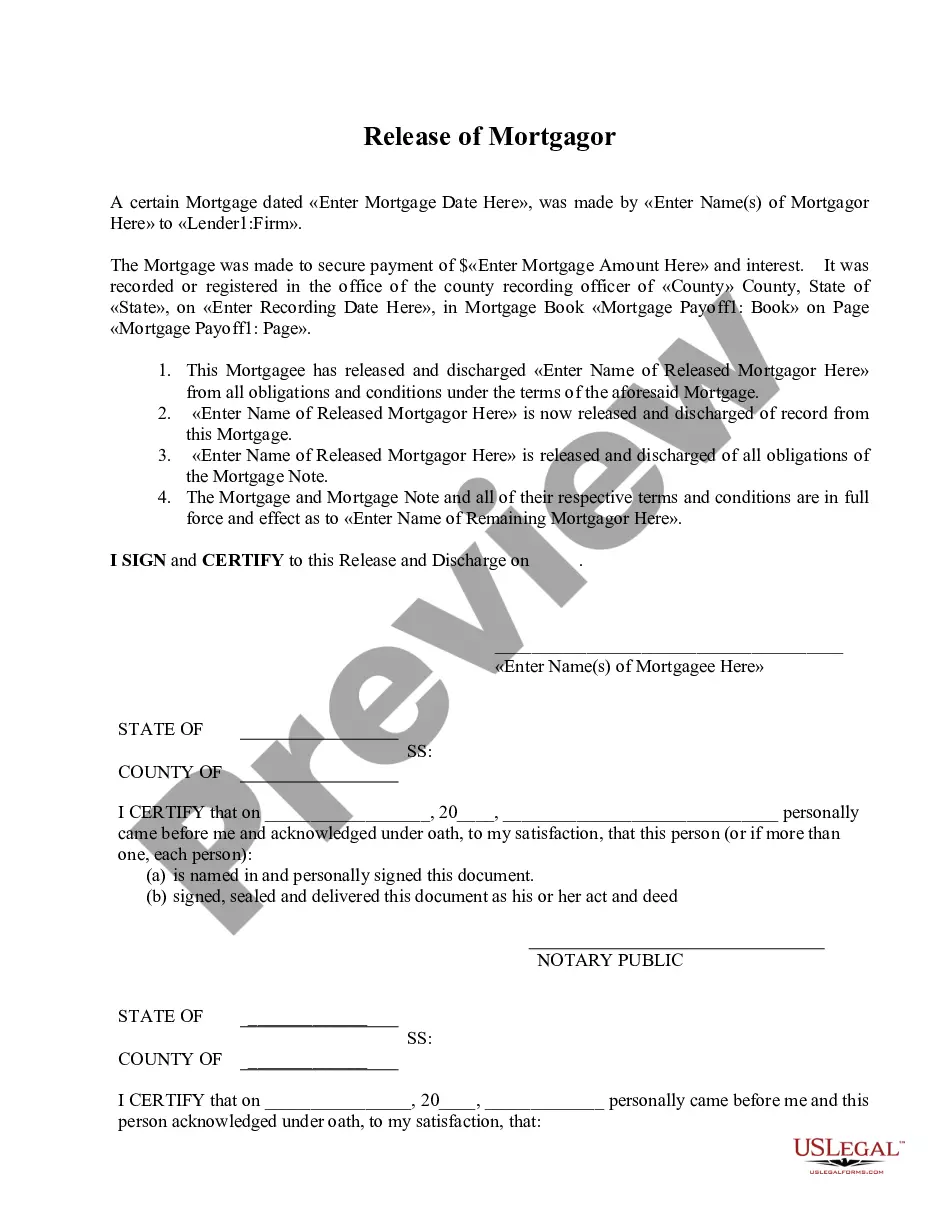
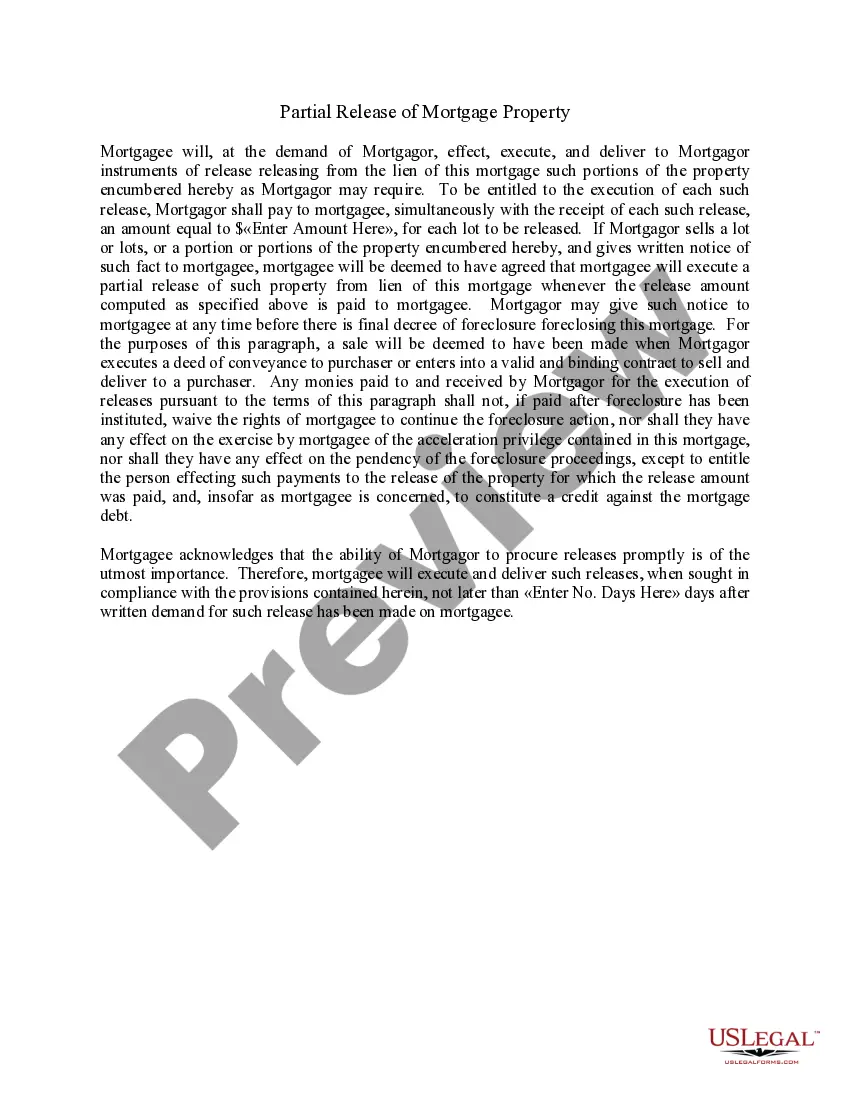
The Release of Mortgagor form is a legal document that facilitates the transfer of mortgage responsibility from the original mortgagor to new purchasers of a property. This form is essential when the new buyers agree to assume the existing mortgage debt, allowing the lender to release the original mortgagors from any further liability. This process is distinct from other mortgage forms, as it not only concludes the obligations of the original mortgagors but also formalizes the arrangement with the new purchasers and the lender.
Main sections of this form
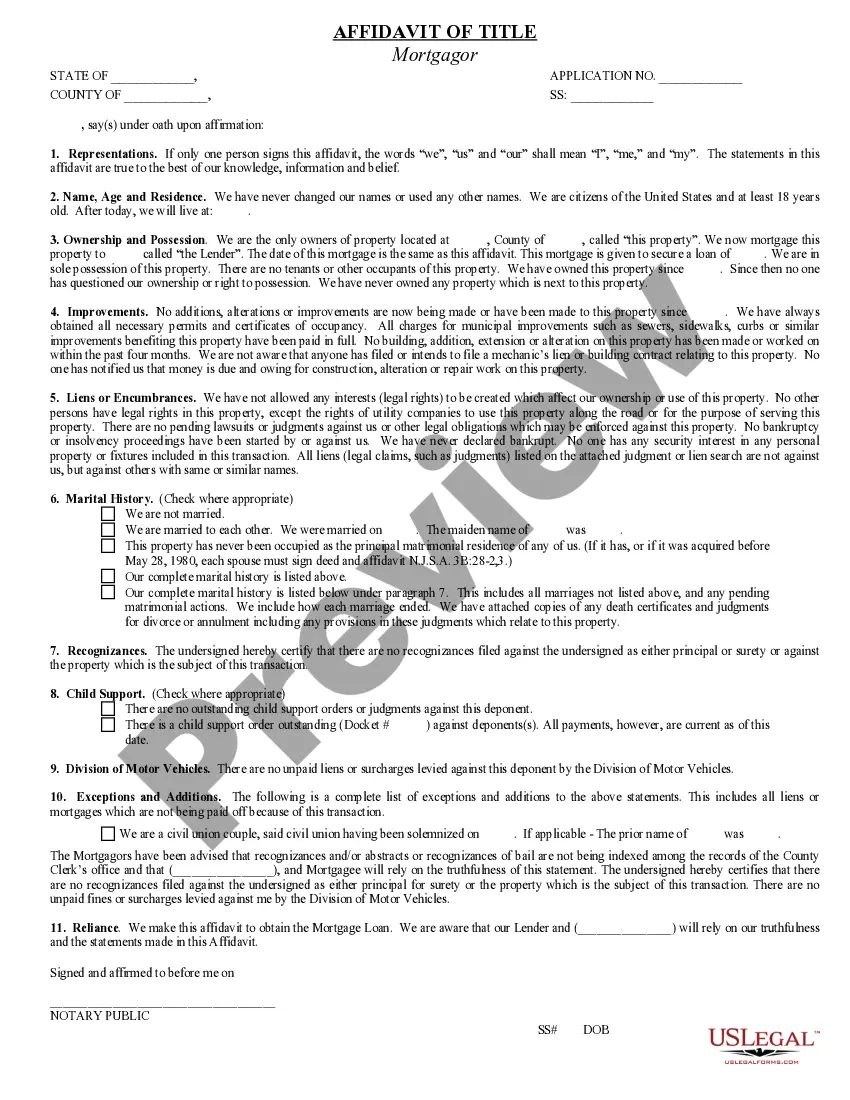
- Identification of the original mortgagor, including names and mortgage date.
- Details of the lender and mortgage amount secured by the original mortgage.
- Statements confirming the release of the original mortgagor from all mortgage obligations.
- Record of the mortgage in the county recording office, including book and page details.
- Signatures of all parties involved, including any required notarization information.


When to use this document
This form is typically used during the sale of a property where the buyer agrees to take over the existing mortgage obligations. It is essential in situations where the seller (original mortgagor) is looking to be released from personal liability after transferring ownership, particularly if the mortgage is still active and has not been fully paid off.
Who this form is for
This form is intended for:
- Original mortgagors who wish to finalize their release from mortgage obligations.
- New purchasers who are assuming the mortgage and want to formalize the agreement with the lender.
- Lenders or mortgagees who need to document the release of the original mortgagor.
How to prepare this document
- Enter the mortgage date and detailed information about the original mortgagor and lender.
- Specify the mortgage amount and interest terms that are being transferred.
- Fill in the recording details, including the county and state where the mortgage is recorded.
- Provide accurate names of both the released mortgagor and the remaining mortgagor, if applicable.
- Sign and date the document, ensuring that all parties involved acknowledge the release.
- Consider obtaining notarization if required by local jurisdiction.
Does this form need to be notarized?
This form does not typically require notarization unless specified by local law. However, it is advisable to verify local requirements to ensure validity. In some cases, notarization might strengthen the legal enforceability of the document.
Get your form ready online
Our built-in tools help you complete, sign, share, and store your documents in one place.
Make edits, fill in missing information, and update formatting in US Legal Forms—just like you would in MS Word.
Download a copy, print it, send it by email, or mail it via USPS—whatever works best for your next step.
Sign and collect signatures with our SignNow integration. Send to multiple recipients, set reminders, and more. Go Premium to unlock E-Sign.
If this form requires notarization, complete it online through a secure video call—no need to meet a notary in person or wait for an appointment.
We protect your documents and personal data by following strict security and privacy standards.

Make edits, fill in missing information, and update formatting in US Legal Forms—just like you would in MS Word.

Download a copy, print it, send it by email, or mail it via USPS—whatever works best for your next step.

Sign and collect signatures with our SignNow integration. Send to multiple recipients, set reminders, and more. Go Premium to unlock E-Sign.

If this form requires notarization, complete it online through a secure video call—no need to meet a notary in person or wait for an appointment.

We protect your documents and personal data by following strict security and privacy standards.
Avoid these common issues
- Not providing accurate details about the original mortgage, such as dates or amounts.
- Failing to get signatures from all parties involved, which may render the document invalid.
- Omitting required notarization, if necessary, depending on the state requirements.
- Not recording the form in the appropriate county office, which is crucial for legal validity.
Advantages of online completion
- Convenient access to legal forms that can be downloaded instantly.
- Edit and customize the template to fit your specific needs.
- Created by licensed attorneys, ensuring reliability and legal compliance.
- Easy to fill out, saving time and reducing the need for legal consultations.
Looking for another form?

Form popularity
FAQ
A security release fee is a small fee that needs to be paid immediately. It is actually at the borrower's request and payable when both parties agree to discharge valid security. Once this step is done, you will have the power to get a hold of your title deeds for the land and properly.
Novation. In novation, the mortgage lender participates in and agrees to the full transfer of liability from the seller to the buyer. Because the lender is able to put the buyer through the underwriting process, it is willing to release the seller from all future responsibility for the mortgage payments.
A Deed Release Fee (also referred to as a mortgage completion fee, redemption administration fee or discharge fee) is an administration fee charged by mortgage lenders once a mortgage has been repaid to cover the legal costs involved with returning the title deed to you.
More Definitions of Release Fee Release Fee means one hundred twenty percent (120%) of the portion of the Loan attributed by the Lender to the Release Property.
Borrowers who can no longer afford to stay in their home may consider a Mortgage Release?, also known as a deed-in-lieu of foreclosure, to avoid foreclosure. This is also a good alternative for homeowners who are unable to sell their property, whether for a full payoff or a short sale.
Borrowers who can no longer afford to stay in their home may consider a Mortgage Release?, also known as a deed-in-lieu of foreclosure, to avoid foreclosure. This is also a good alternative for homeowners who are unable to sell their property, whether for a full payoff or a short sale.
A mortgagor is the borrower in the home buying process. A mortgagee approves the mortgagor for a loan, and the mortgagor is expected to pay back the amount they borrowed, plus interest, in installments over as long as 30 years.
The purpose of a mortgage discharge fee is to cover the costs associated with closing out your loan, such as filing paperwork and other administrative tasks. It's important to note that this isn't an additional cost; rather, it's part of what you already owe on your mortgage loan.