Landlord Consent and Estoppel Agreement
About this form
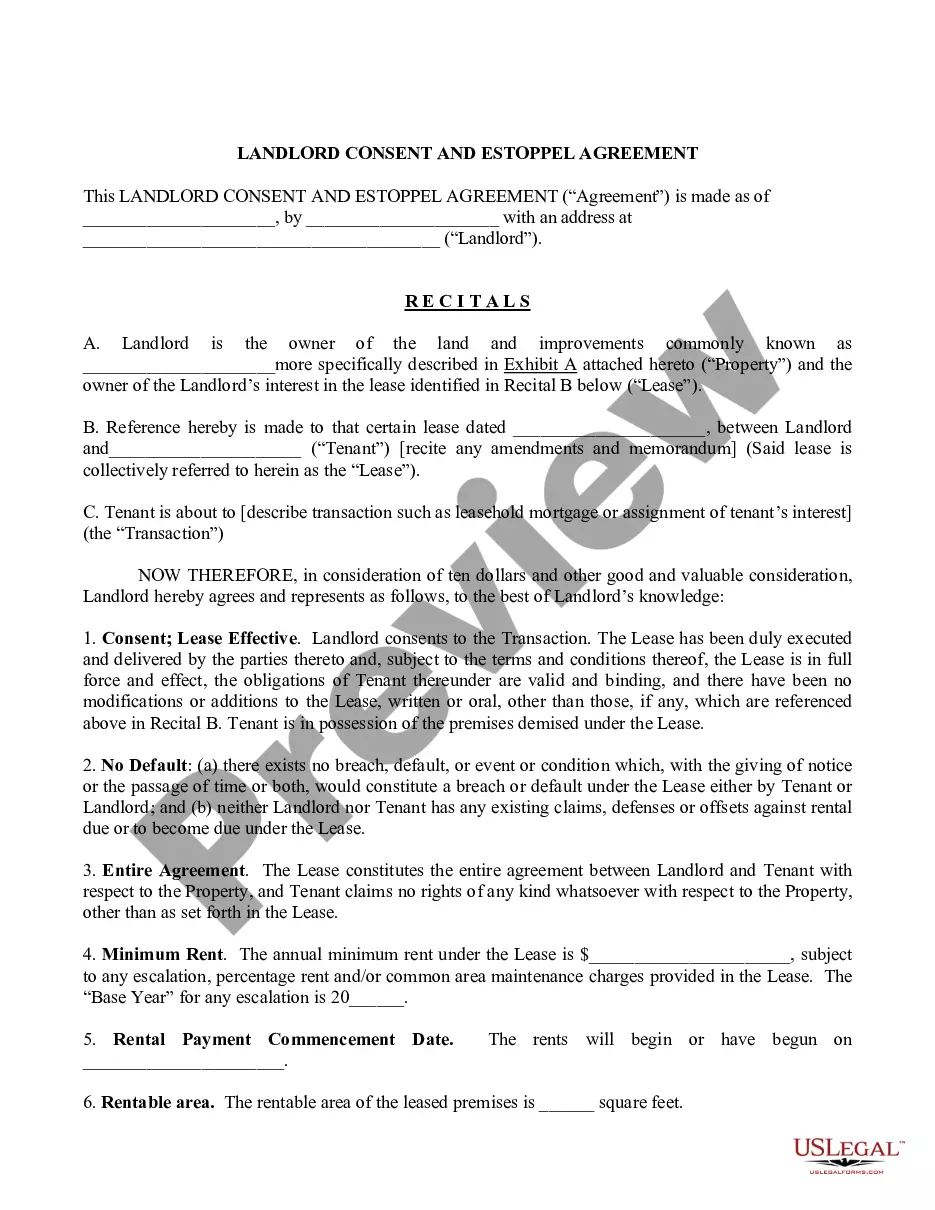
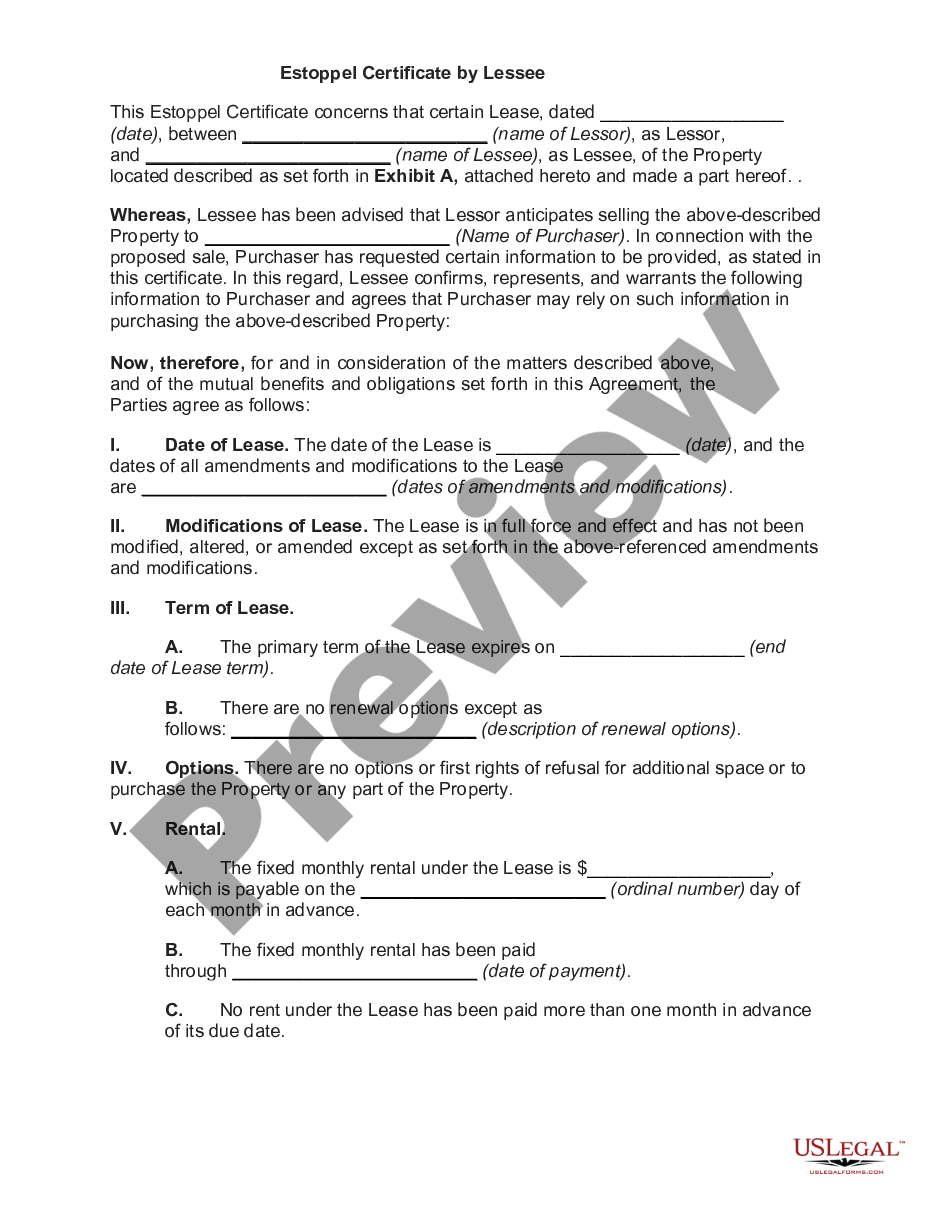
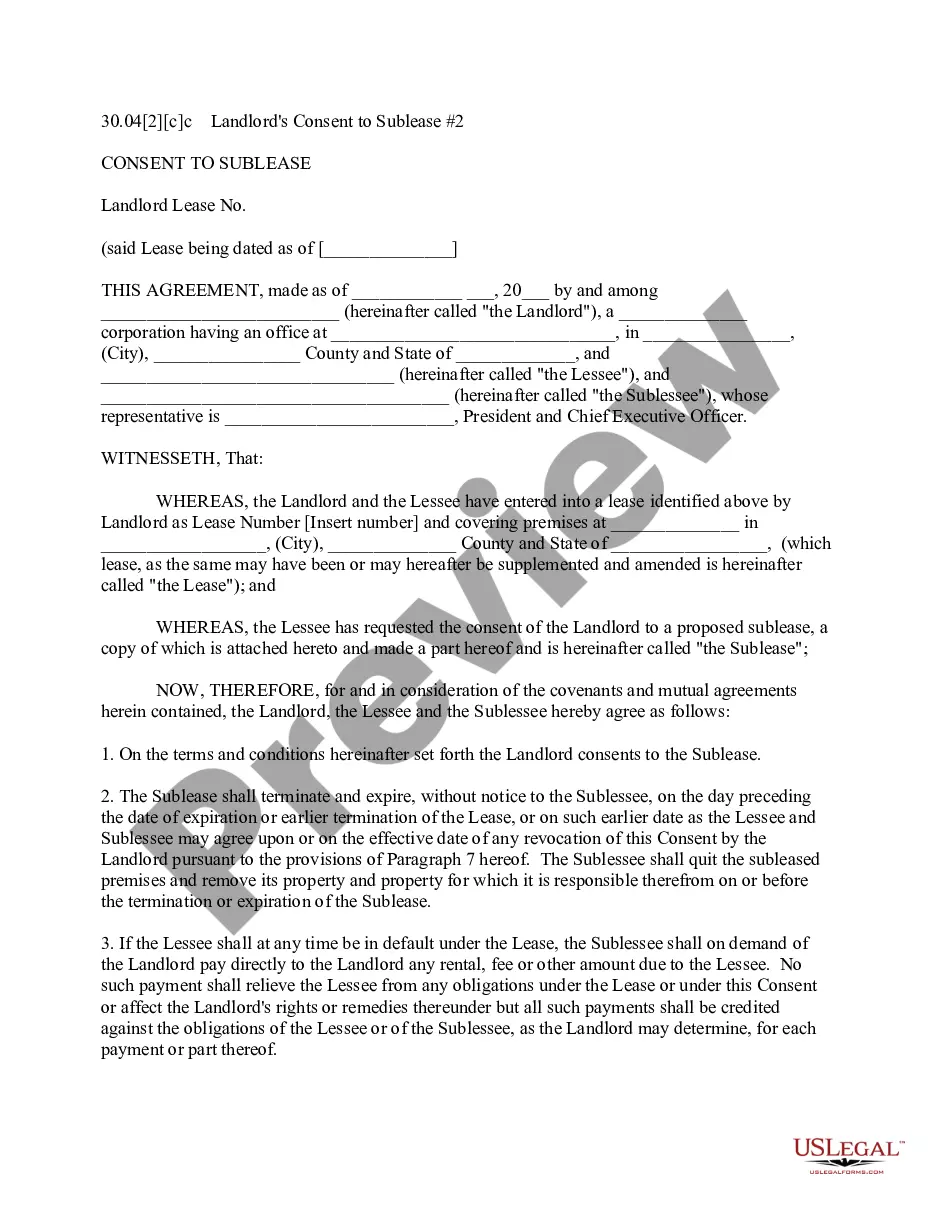
The Landlord Consent and Estoppel Agreement is a formal document that provides consent from a landlord regarding a specific transaction involving leasehold property. This agreement serves to confirm the validity of the lease, ensuring that it remains enforceable and outlining the terms agreed upon by the landlord and tenant. Unlike a standard lease agreement, this document focuses on the landlord's acknowledgment of specific transactions, making it essential in contexts such as lease modifications or tenant assignments.
Form components explained
- Parties involved: Identifies the landlord and tenant, including addresses.
- Property description: Specifies the property covered by the lease.
- Transaction details: Outlines the nature of the transaction requiring landlord consent.
- Lease acknowledgment: Confirms the lease is active and without modifications, specified breaches, or defaults.
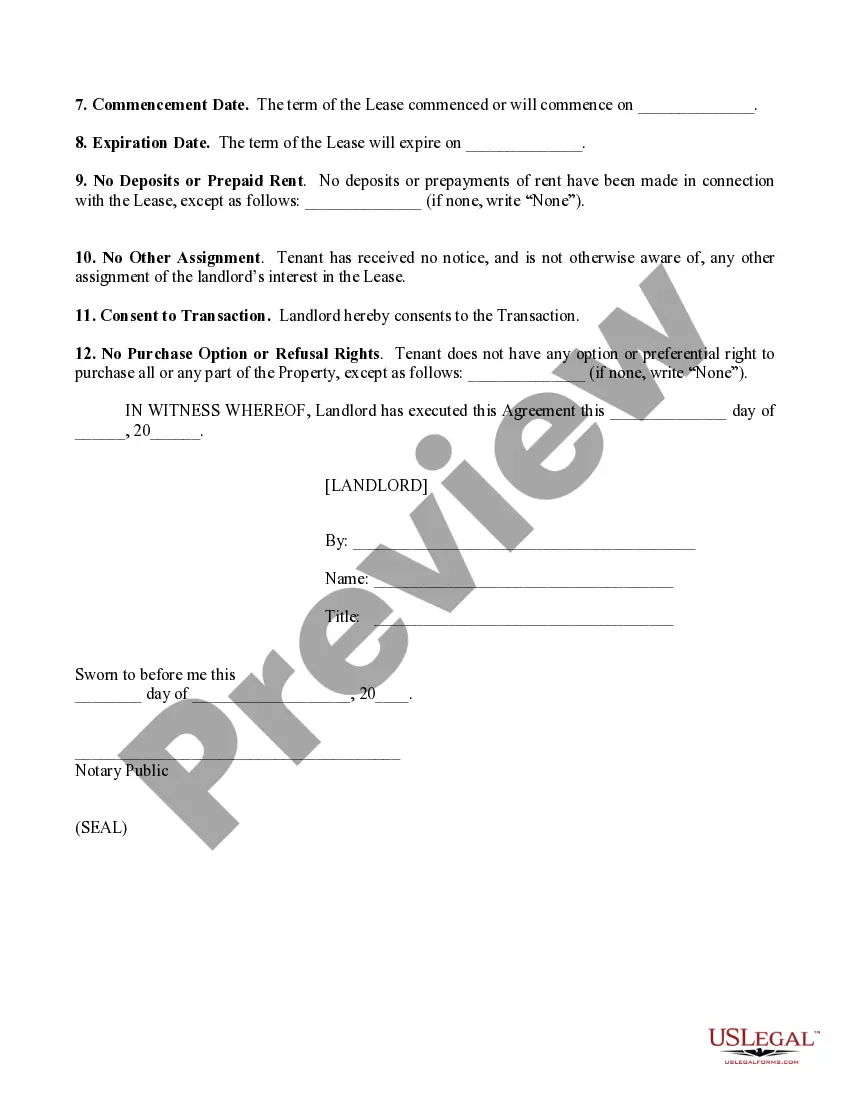
- Rental terms: Includes details on rent amount, payment commencement date, and lease duration.
When to use this document
This form is useful in situations where a landlord must formally consent to changes in a lease agreement, such as mortgage financing on the leasehold property, assignment of the lease to another party, or any other transaction that may affect the landlord's interests. It helps prevent disputes by clarifying that the lease remains valid and that there are no known defaults by either party.
Who needs this form
- Landlords who are asked to consent to certain transactions impacting their lease agreements.
- Tenants seeking validation of their lease status when entering into additional agreements.
- Real estate agents or attorneys involved in commercial or residential leasing arrangements.
Completing this form step by step
- Identify the parties: Enter the names and addresses of both the landlord and tenant.
- Specify the property: Provide a detailed description of the leased property.
- Detail the transaction: Describe the nature of the transaction that requires consent.
- Fill out lease information: Include lease dates, rent amounts, and any other necessary financial details.
- Sign and notarize: Ensure the document is signed by the landlord in the presence of a notary public.
Notarization guidance
Yes, this form must be notarized to be legally valid. Notarization verifies the identities of the signatories, ensuring that the agreement is executed correctly. US Legal Forms offers integrated online notarization services, allowing you to complete this process securely via video call without the need for travel.
Get your form ready online
Our built-in tools help you complete, sign, share, and store your documents in one place.
Make edits, fill in missing information, and update formatting in US Legal Forms—just like you would in MS Word.
Download a copy, print it, send it by email, or mail it via USPS—whatever works best for your next step.
Sign and collect signatures with our SignNow integration. Send to multiple recipients, set reminders, and more. Go Premium to unlock E-Sign.
If this form requires notarization, complete it online through a secure video call—no need to meet a notary in person or wait for an appointment.
We protect your documents and personal data by following strict security and privacy standards.

Make edits, fill in missing information, and update formatting in US Legal Forms—just like you would in MS Word.

Download a copy, print it, send it by email, or mail it via USPS—whatever works best for your next step.

Sign and collect signatures with our SignNow integration. Send to multiple recipients, set reminders, and more. Go Premium to unlock E-Sign.

If this form requires notarization, complete it online through a secure video call—no need to meet a notary in person or wait for an appointment.

We protect your documents and personal data by following strict security and privacy standards.
Typical mistakes to avoid
- Failing to specify the transaction clearly can lead to misunderstandings.
- Not providing accurate property details might cause issues in enforceability.
- Omitting necessary signatures or notarization may invalidate the agreement.
Advantages of online completion
- Convenience: Download and complete the form at your convenience from home.
- Editability: Easily customize the document to fit your specific needs.
- Reliability: Access professionally drafted forms that comply with legal standards.
Looking for another form?
Form popularity
FAQ
An estoppel certificate is considered an essential piece of document undertaken for the buyer or lender's due diligence. In the first case where the property owner is selling the property, he will request an estoppel certificate from the tenant due diligence towards the property's buyer.
The term estoppel refers to a legal principle that prevents someone from arguing something or asserting a right that contradicts what they previously said or agreed to by law. Put simply, estoppel prevents one person from contradicting an action or statement from the past.
An estoppel certificate establishes the current status of the lease terms for a third party. Generally, the certificate requests that the Tenant verify that the rent is current or whether the Tenant has any potential claims against the Landlord.
By definition, an estoppel certificate is ?a signed statement by a party (such as a tenant or mortgagee) certifying for anoth- er's benefit that certain facts are correct, as that a lease exists, that there are no defaults, and that rent is paid to a certain date.
Estoppel is an equitable doctrine, a bar that prevents one from asserting a claim or right that contradicts what one has said or done before, or what has been legally established as true. Estoppel may be used as a bar to the re-litigation of issues or as an affirmative defense.
What is an estoppel certificate? An estoppel certificate establishes the current status of the lease terms for a third party. Generally, the certificate requests that the Tenant verify that the rent is current or whether the Tenant has any potential claims against the Landlord.
For example, the tenant may claim promissory estoppel if their landlord promises a lease renewal at the end of the term at the same price but later tries to increase the rent for the renewal period.
An estoppel agreement (also known as an estoppel certificate) is a legal document that's used to verify certain representations made by the landlord.