Tenant Acceptance Agreement or Letter
What this document covers
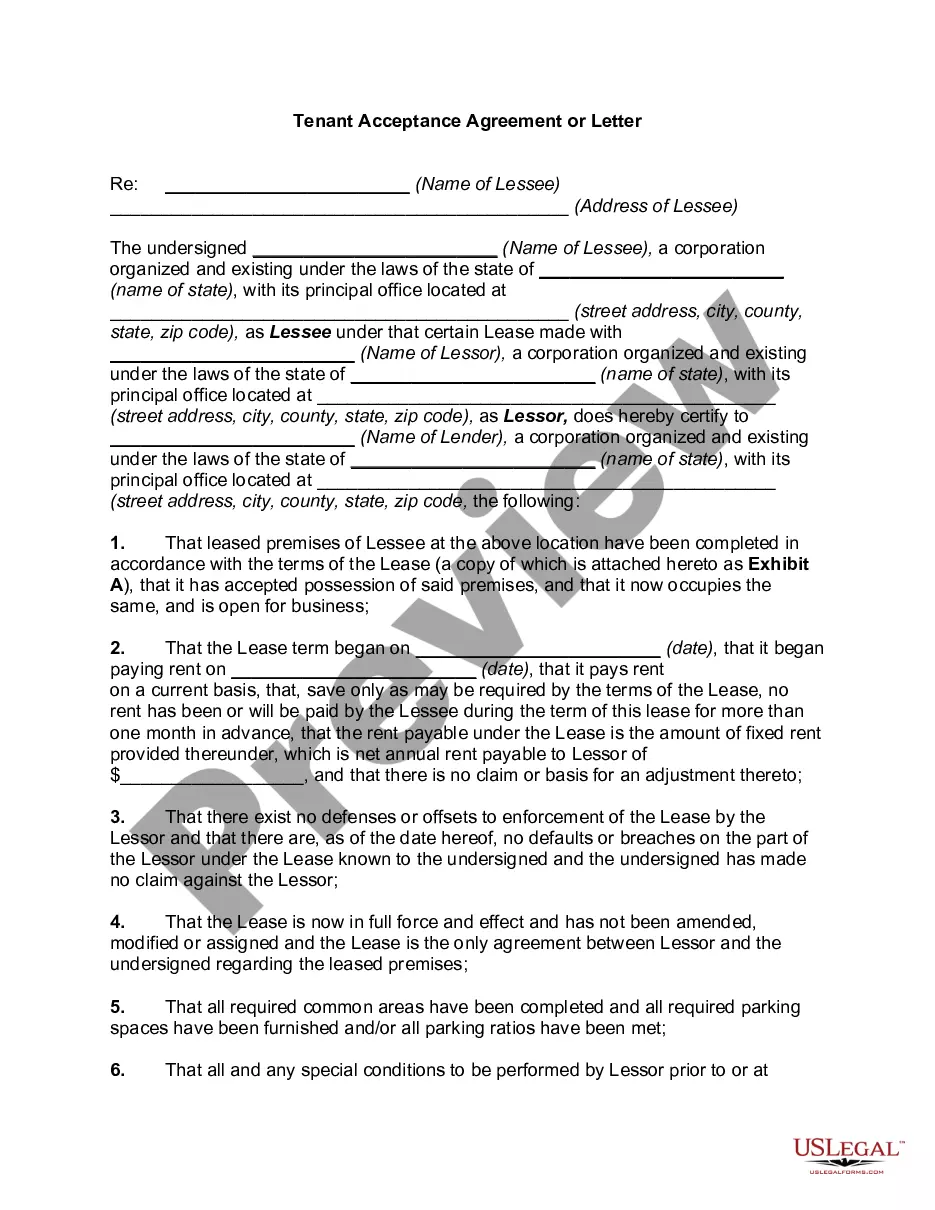
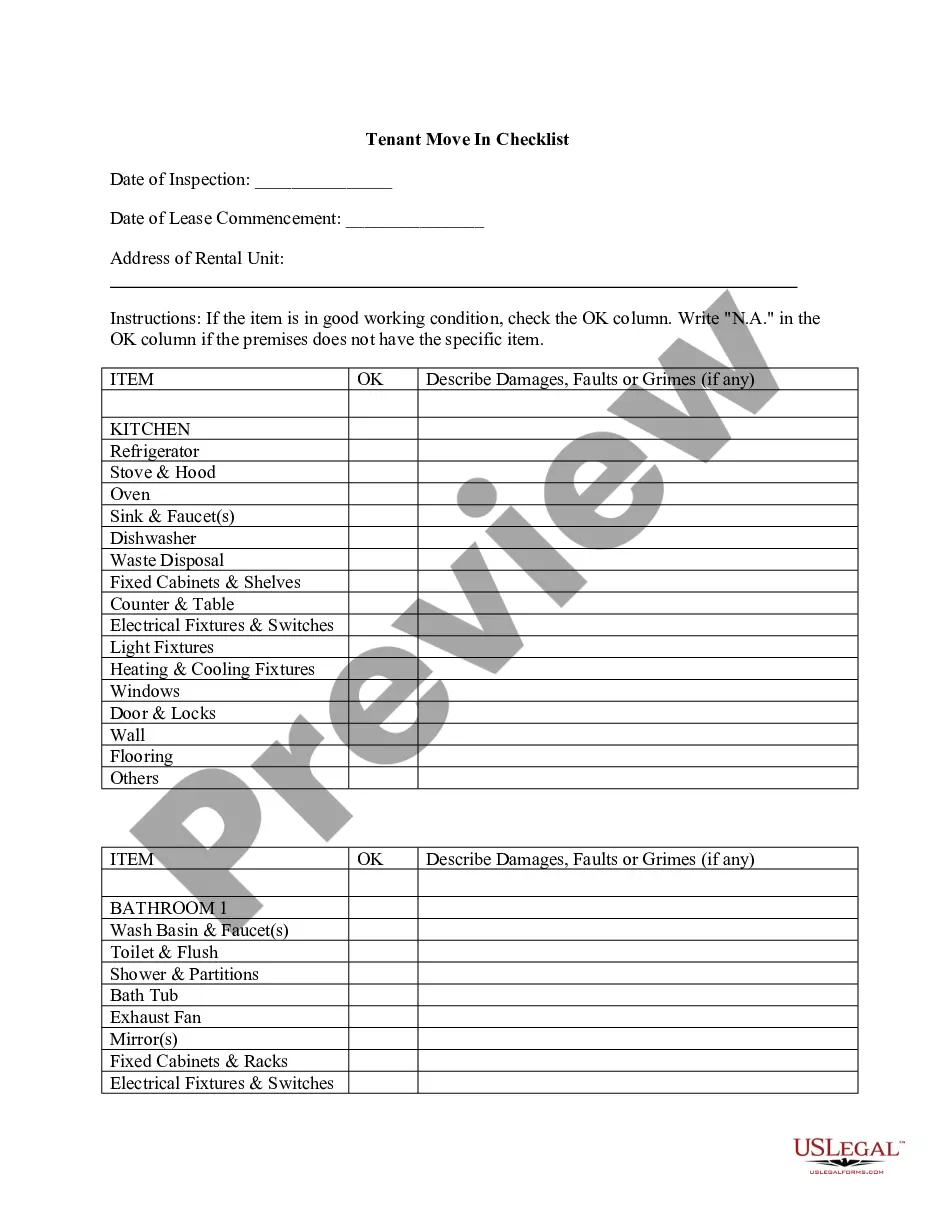
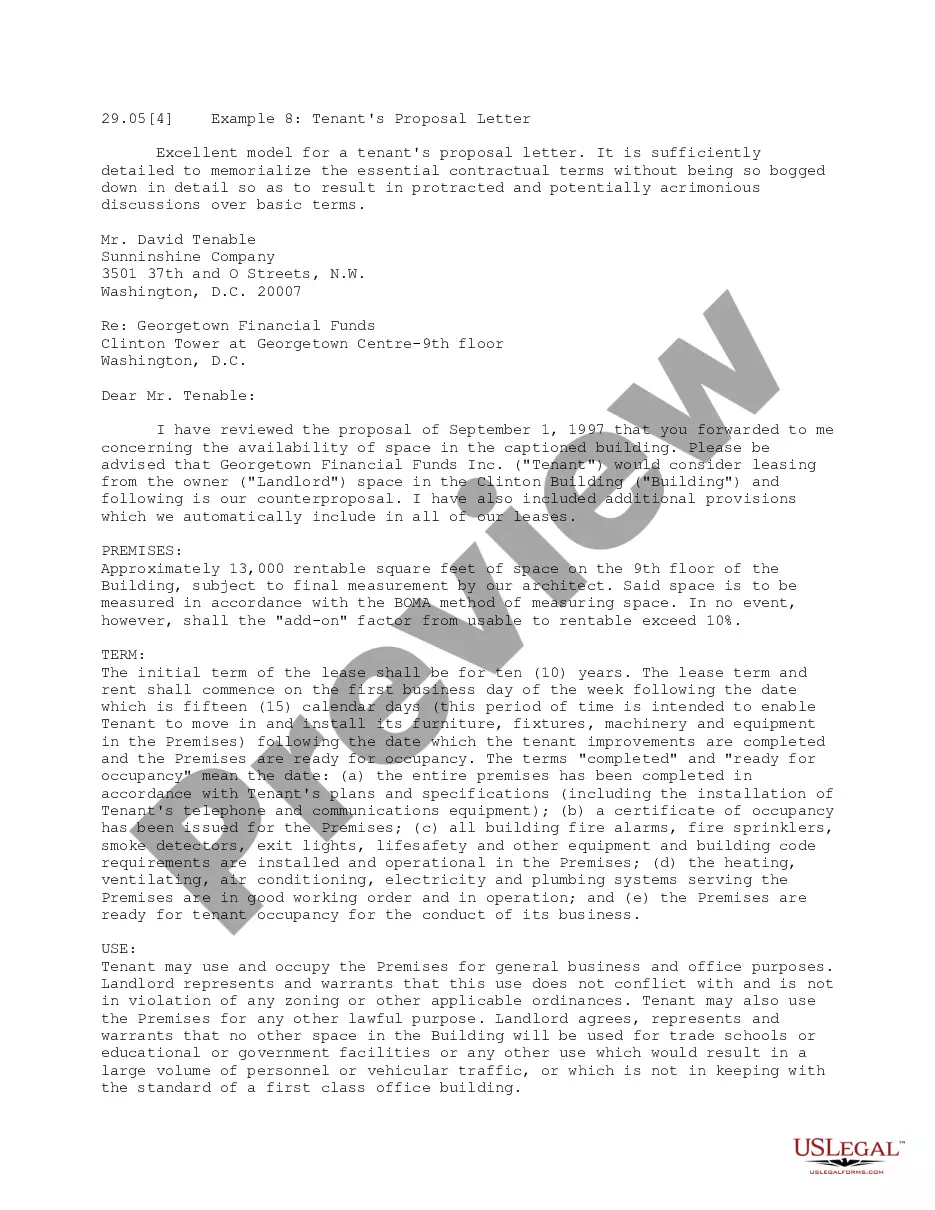
The Tenant Acceptance Agreement or Letter is a crucial document that assures lenders that leases on a property are active and not in default. This form serves to confirm that tenants are in compliance with their lease agreements, which is essential during loan transactions. It differs from general lease agreements by focusing specifically on the lender's reassurance concerning tenant occupancy and lease validity.
Main sections of this form
- Identification of the lessee and lessor including their corporate information.
- Certification of lease status including possession and business operation.
- Confirmation of timely rent payments and absence of defaults.
- Assertion that the lease is in full force with no amendments.
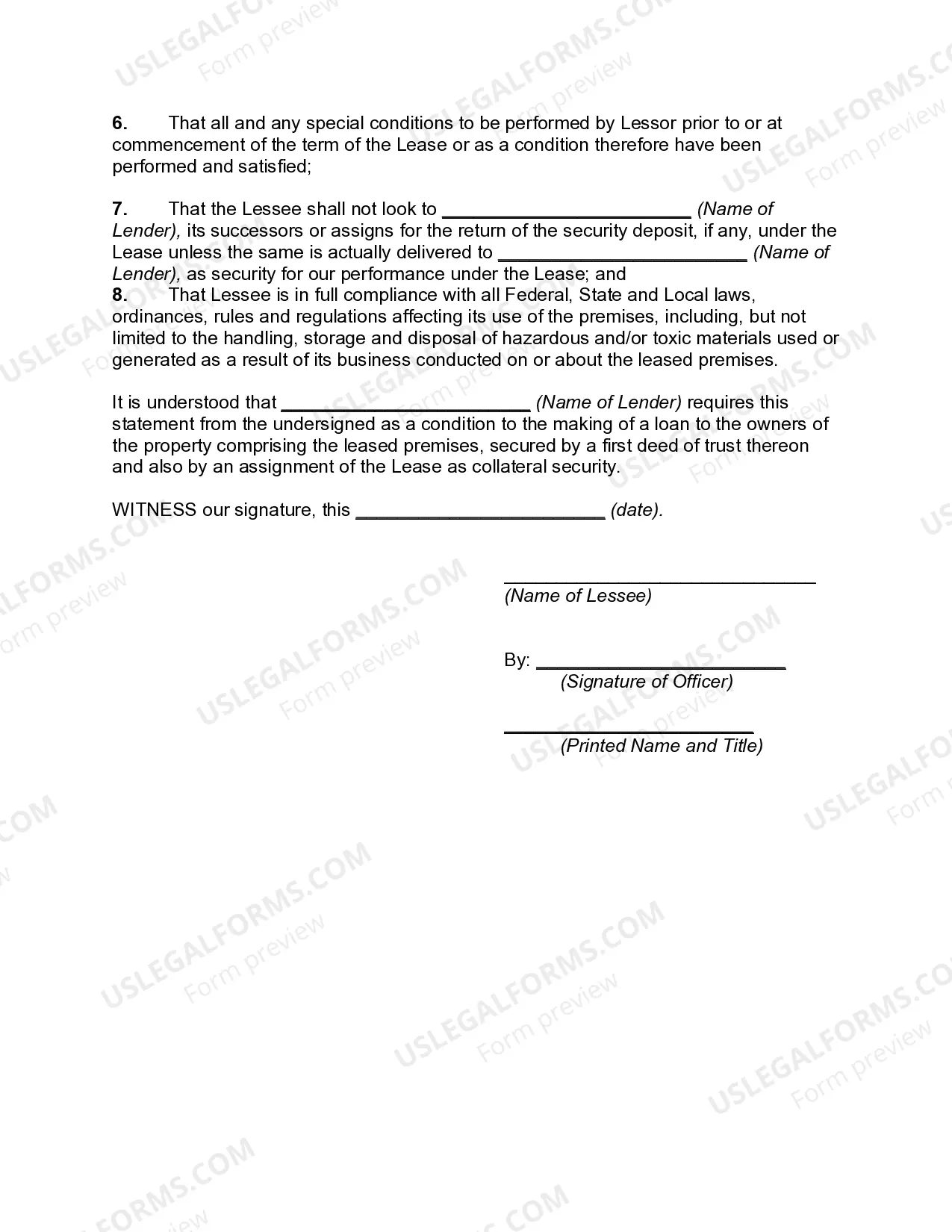
- Verification of compliance with local laws regarding premises use.
Situations where this form applies
This form should be used when a lender requires confirmation of the tenant's compliance with lease terms as part of property financing. It is particularly important during real estate transactions where loans are secured against rented properties, ensuring that all lease agreements are valid and operational prior to closing the deal.
Who needs this form
- Commercial landlords who need to provide assurance to lenders.
- Tenants seeking to affirm their lease's validity during financing processes.
- Lenders who require confirmation of lease agreements as part of their loan approval process.
- Property management companies involved in managing leased properties.
Completing this form step by step
- Identify and fill in the names of the lessee and lessor with their respective addresses.
- Certify the status of the leased premises, noting the lease commencement date and rent payment details.
- Confirm that there are no defaults under the lease and that the lease is unaltered.
- Complete any additional requirements related to common areas and compliance with local regulations.
- Ensure signatures from authorized representatives of the lessee, including their printed names and titles.
Notarization requirements for this form
This form does not typically require notarization unless specified by local law. It is advisable to verify whether additional legal acknowledgment is necessary in your jurisdiction.
Get your form ready online
Our built-in tools help you complete, sign, share, and store your documents in one place.
Make edits, fill in missing information, and update formatting in US Legal Forms—just like you would in MS Word.
Download a copy, print it, send it by email, or mail it via USPS—whatever works best for your next step.
Sign and collect signatures with our SignNow integration. Send to multiple recipients, set reminders, and more. Go Premium to unlock E-Sign.
If this form requires notarization, complete it online through a secure video call—no need to meet a notary in person or wait for an appointment.
We protect your documents and personal data by following strict security and privacy standards.

Make edits, fill in missing information, and update formatting in US Legal Forms—just like you would in MS Word.

Download a copy, print it, send it by email, or mail it via USPS—whatever works best for your next step.

Sign and collect signatures with our SignNow integration. Send to multiple recipients, set reminders, and more. Go Premium to unlock E-Sign.

If this form requires notarization, complete it online through a secure video call—no need to meet a notary in person or wait for an appointment.

We protect your documents and personal data by following strict security and privacy standards.
Common mistakes
- Failing to accurately identify all parties involved in the lease.
- Not providing the correct dates for lease terms and rent payments.
- Omitting signature from an authorized officer of the lessee.
- Neglecting to attach a copy of the lease as required.
Advantages of online completion
- Convenience of downloading and filling out the form at your own pace.
- Easy editing capabilities, allowing for quick updates as needed.
- Access to templates drafted by licensed attorneys, ensuring legal compliance.
Looking for another form?
Form popularity
FAQ
Most rental agreements are short-term agreements, such as month-to-month tenancies, while lease agreements are usually for longer rental periods, such as six months, a year, or more.
The letter should be clear in its terms and conditions. The factors like rent amount, a period of rent and other details should be its special highlight. The letter should contain the interests of both parties. The letter should be inclusive of all the rights of both parties.
Overview. Alberta has 2 types of rental agreements: Fixed term agreement. A fixed term tenancy begins and ends on specific dates. Periodic agreement. A periodic tenancy has a start date but no end date. Boarding and employer accommodations. Application of the legislation.
There are several different types of residential tenancy agreements, including short-term fixed, long-term fixed and periodic leases.
Legally, a lease is just one way to rent an accommodation. A rent agreement can either be a lease or a licence and will be treated accordingly, based on the terms and conditions and renting period mentioned in the agreement.
Most rental agreements are short-term agreements, such as month-to-month tenancies, while lease agreements are usually for longer rental periods, such as six months, a year, or more.
Thank you, works well. Keep in mind you should only tell tenants that you've rented the unit to other applicants if it is true. Prospective tenants could claim you are rejecting them based on discriminating reasons. To avoid this, you can always just say, We're sorry but we've rejected your application.
There are no rules in the Residential Tenancies Act 2010(the RT Act 2010) about what information agents and landlords can and cannot ask for in their application forms.As with agents' requests for personal information, you can withhold your consent, but you should be prepared for the agent to reject your application.
Let the tenant know that your property is still available and you'd like to rent it to them. Let the tenant know that the next step is signing a rental agreement. Confirm the move-in date. Discuss collecting the first month's rent and the security deposit (if applicable).