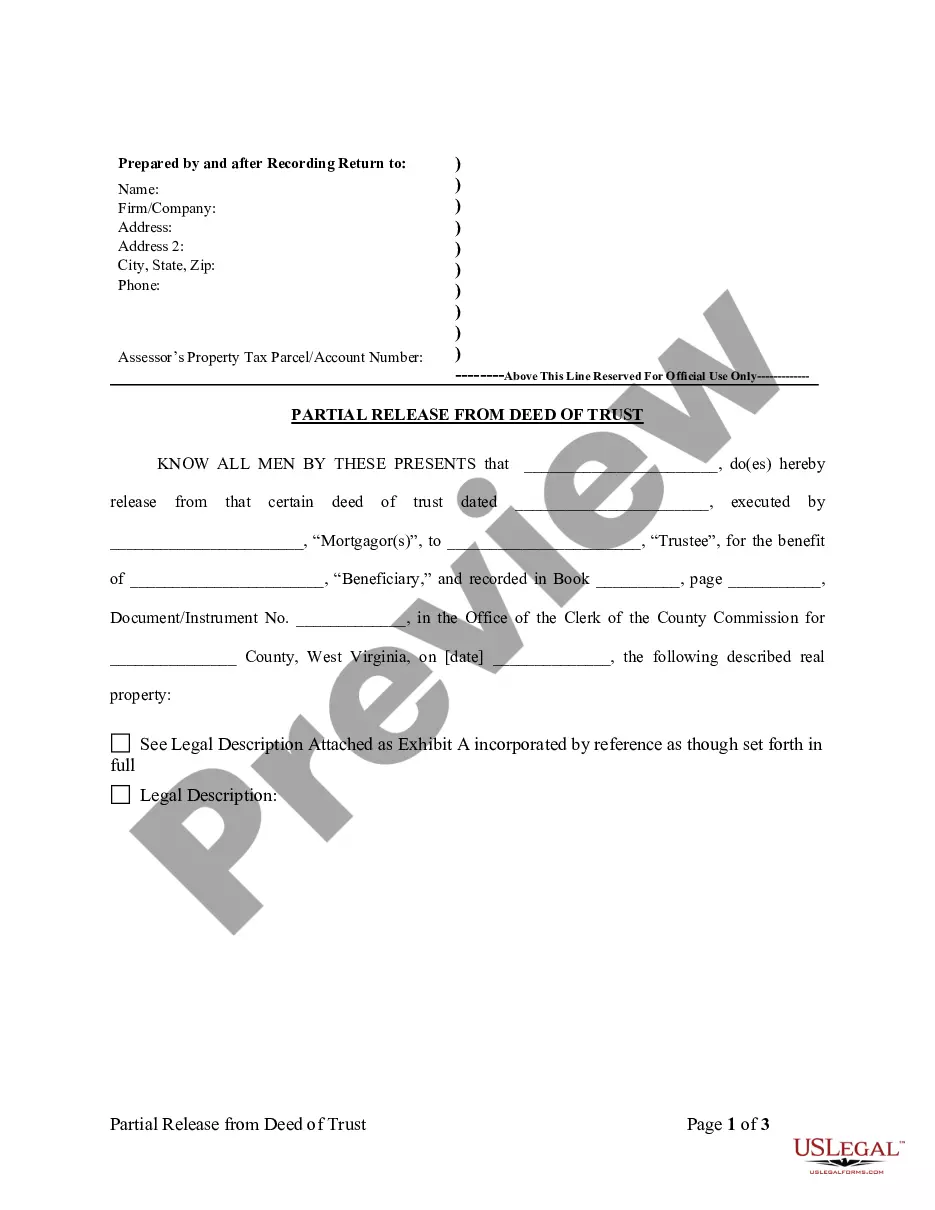
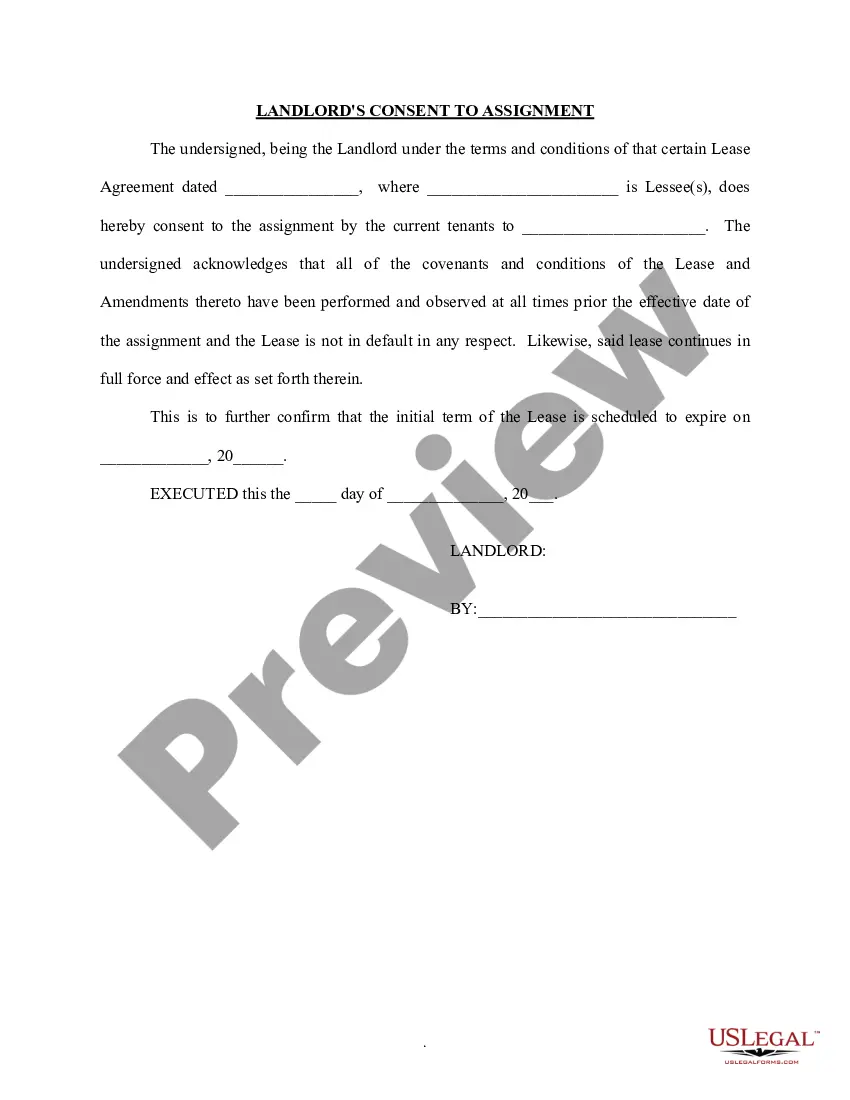
Landlord Consent to Assignment of Lease
What is this form?
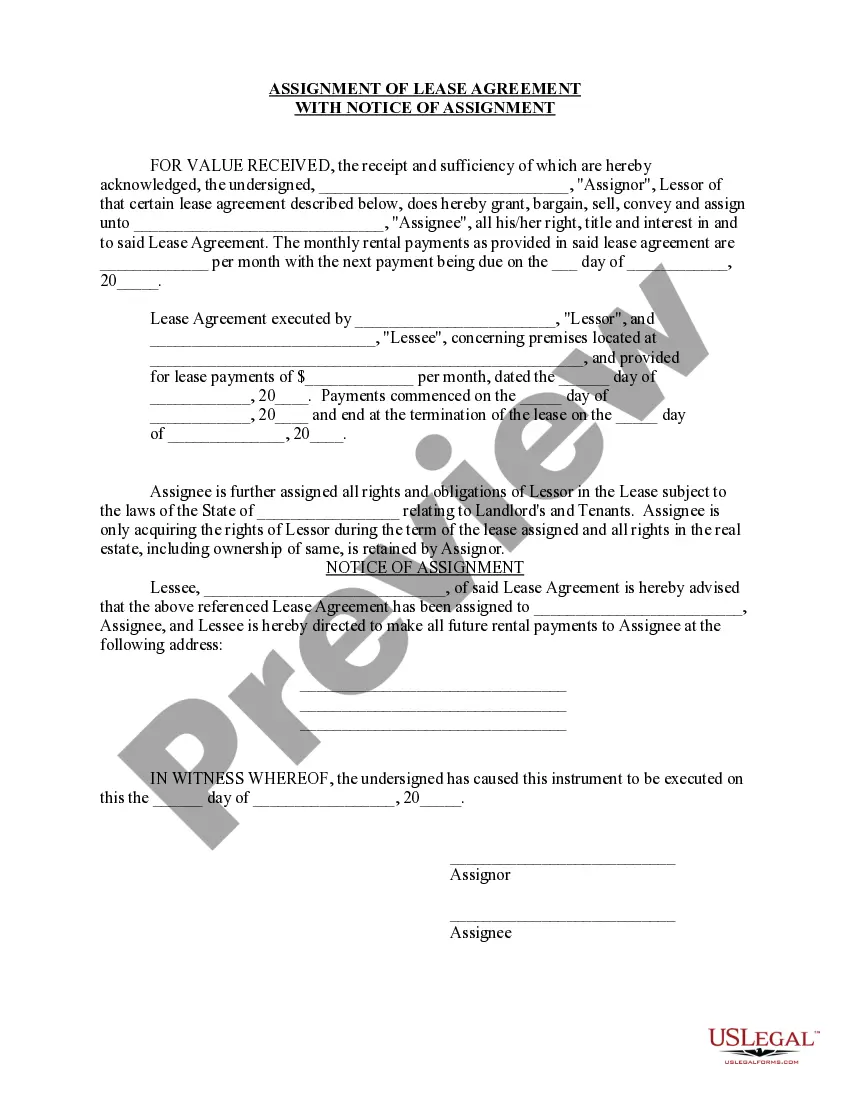
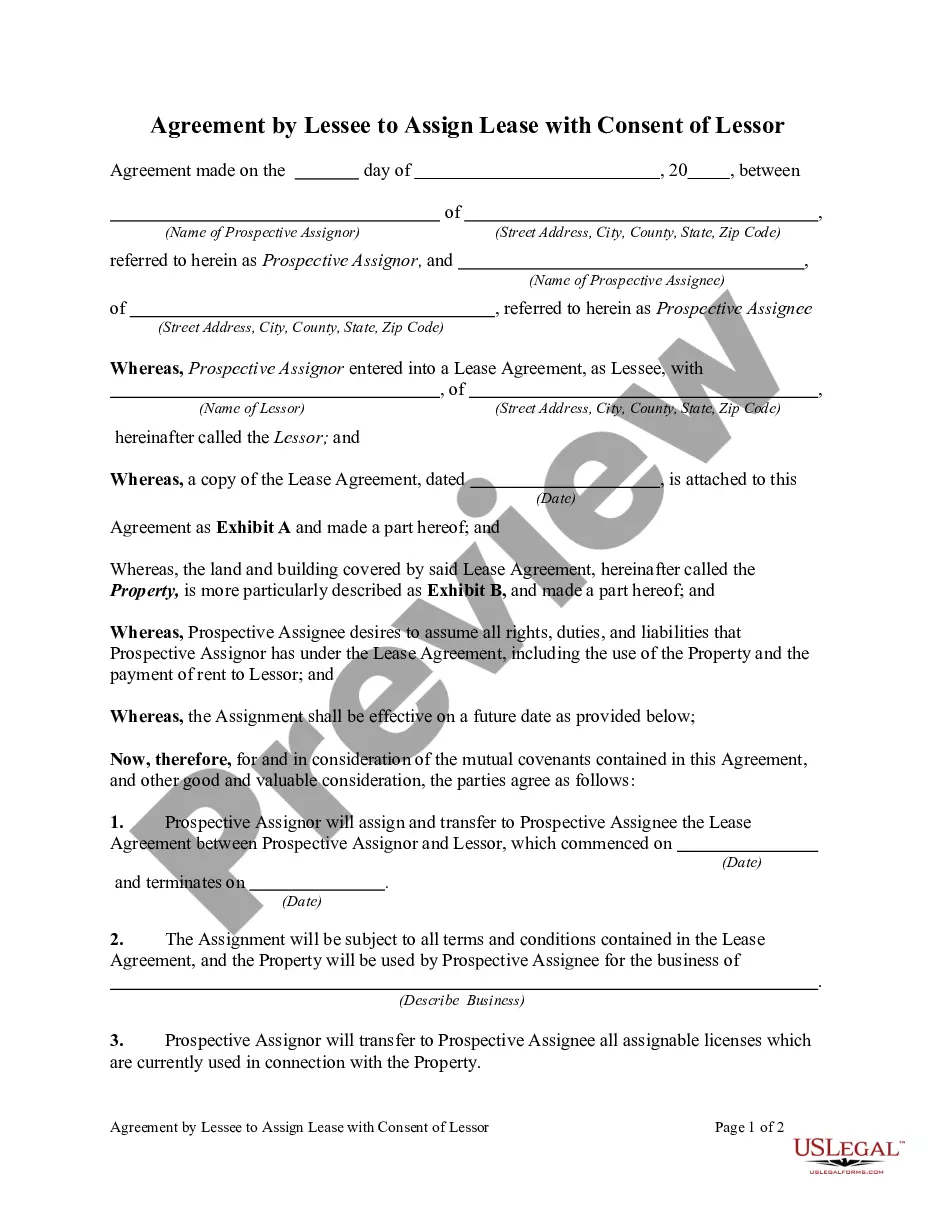
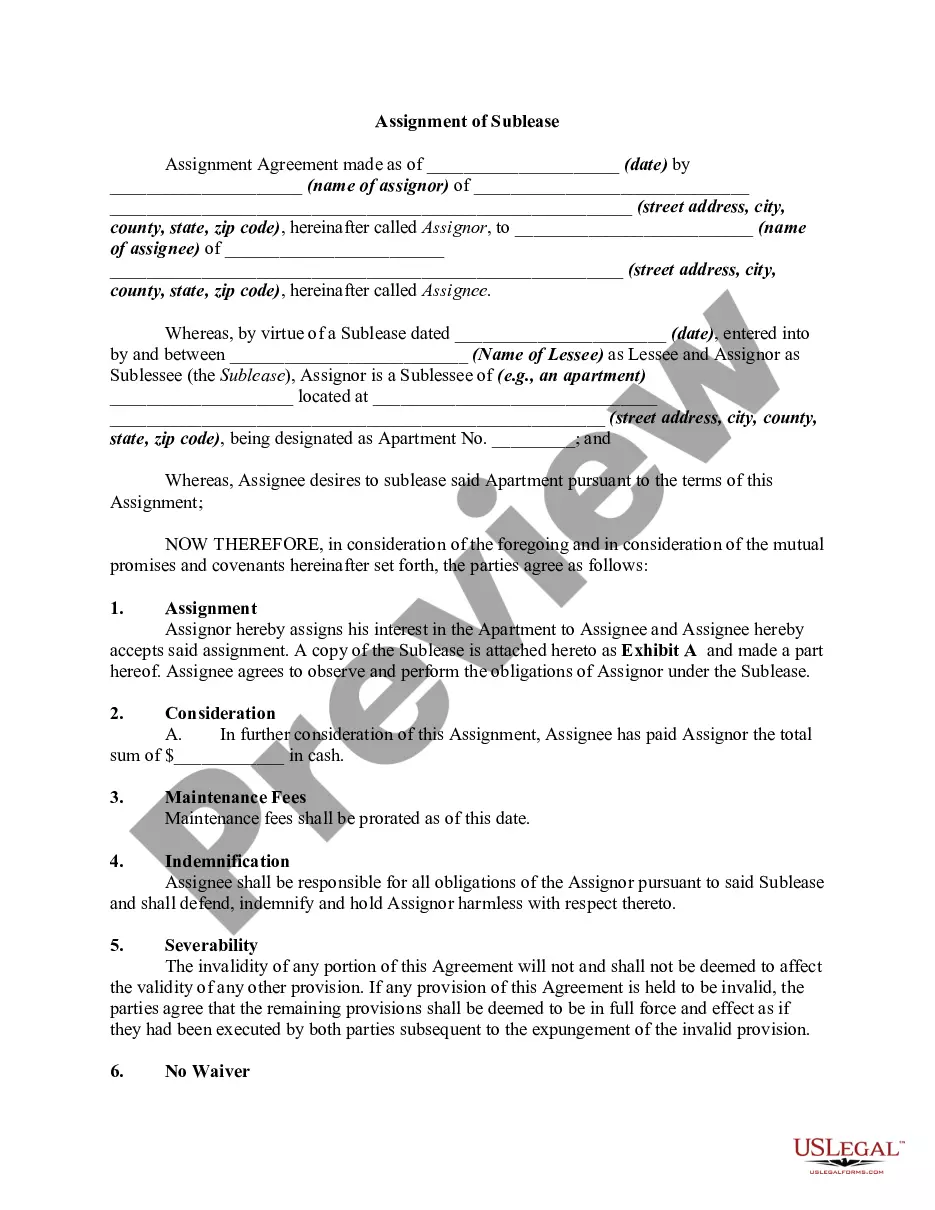
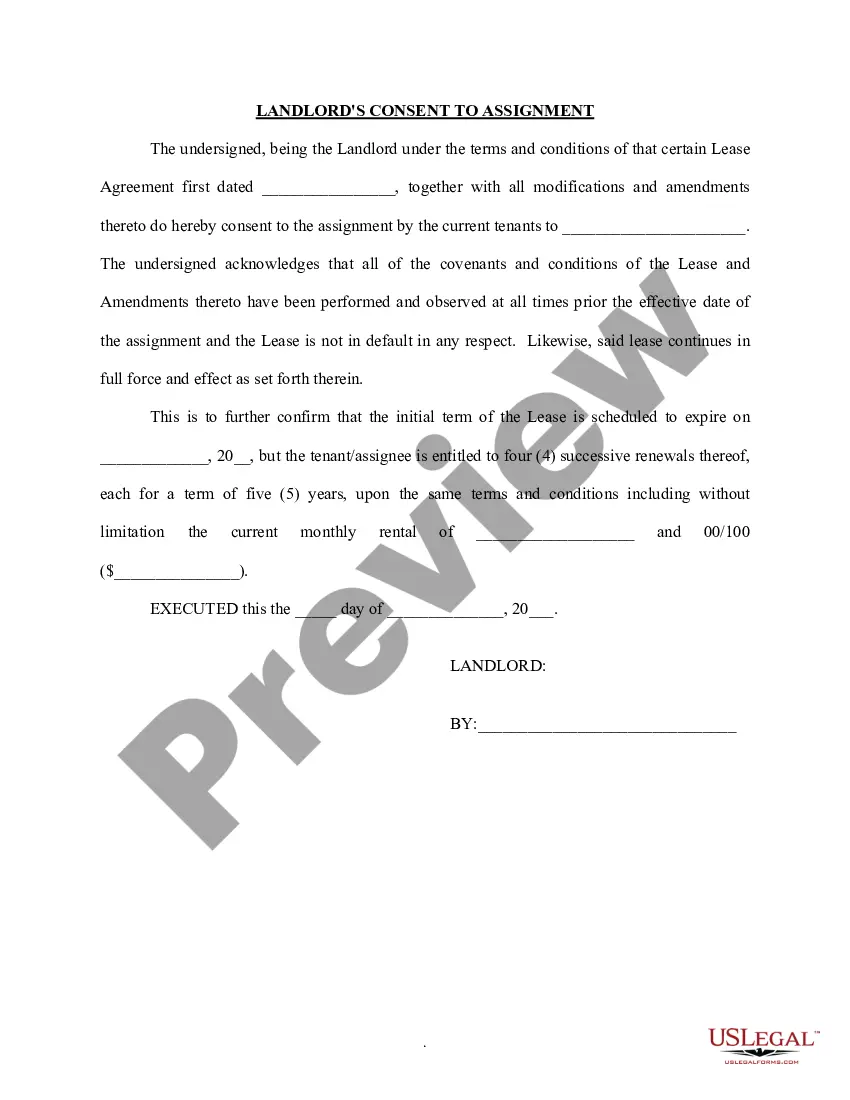
The Landlord Consent to Assignment of Lease is a document that allows a landlord to approve the transfer of lease rights from one tenant to another. This form serves as a written acknowledgment that the current tenants can assign their lease obligations to a new tenant, ensuring all lease terms remain intact. Unlike other lease agreements, this form specifically focuses on the landlord's consent for the assignment, making it essential when tenants wish to relinquish their rights to the lease.
Form components explained
- Date of the original lease agreement
- Name and details of the current tenants
- Name and details of the new tenant receiving the assignment
- Confirmation that the existing lease terms have been fulfilled
- Expiration date of the original lease
- Signature of the landlord
When to use this document
This form is necessary when current tenants want to assign their lease to another party. Situations may include a tenant relocating for work, financial issues requiring them to leave the rental property, or simply changing personal circumstances. For landlords, providing consent through this form ensures clarity and adherence to the lease terms as the property transitions to a new tenant.
Intended users of this form
- Landlords looking to formalize their consent to a lease assignment
- Current tenants wishing to transfer their lease obligations
- New tenants intending to assume a lease
Completing this form step by step
- Identify the original lease date and fill it in the designated field.
- Provide the names of the current tenants who are assigning their lease.
- Enter the name of the new tenant receiving the lease assignment.
- Verify that all conditions of the original lease have been met before signing.
- Complete the expiration date of the original lease in the appropriate field.
- Have the landlord sign and date the form to finalize the consent.
Does this document require notarization?
This form does not typically require notarization to be legally valid. However, some jurisdictions or document types may still require it. US Legal Forms provides secure online notarization powered by Notarize, available 24/7 for added convenience.
Get your form ready online
Our built-in tools help you complete, sign, share, and store your documents in one place.
Make edits, fill in missing information, and update formatting in US Legal Forms—just like you would in MS Word.
Download a copy, print it, send it by email, or mail it via USPS—whatever works best for your next step.
Sign and collect signatures with our SignNow integration. Send to multiple recipients, set reminders, and more. Go Premium to unlock E-Sign.
If this form requires notarization, complete it online through a secure video call—no need to meet a notary in person or wait for an appointment.
We protect your documents and personal data by following strict security and privacy standards.

Make edits, fill in missing information, and update formatting in US Legal Forms—just like you would in MS Word.

Download a copy, print it, send it by email, or mail it via USPS—whatever works best for your next step.

Sign and collect signatures with our SignNow integration. Send to multiple recipients, set reminders, and more. Go Premium to unlock E-Sign.

If this form requires notarization, complete it online through a secure video call—no need to meet a notary in person or wait for an appointment.

We protect your documents and personal data by following strict security and privacy standards.
Typical mistakes to avoid
- Failing to fill in the original lease date.
- Not confirming that the lease terms have been fulfilled before consent is given.
- Omitting signatures or dates, rendering the consent invalid.
Benefits of using this form online
- Convenient download and customizable format.
- Edit anytime to reflect the specific details of the lease assignment.
- Access reliable templates drafted by licensed attorneys.
What to keep in mind
- This form legitimizes the assignment of lease rights from one tenant to another.
- Ensure all conditions of the original lease are fulfilled before completing the form.
- Signatures from all relevant parties are critical for validity.
Looking for another form?

Form popularity
FAQ
Consent to assignment refers to allowing a party of a contract (the assignor) to assign a contract and move the obligations to another party (the assignee).
Landlords can try and forfeit a lease if a tenant is in breach of their obligations (this assumes that the lease document includes a right to forfeit).If a commercial lease contains a break clause, either or both parties to the agreement may seek to terminate the lease before its fixed period has ended.
Can the landlord refuse consent to an Assignment? Most leases will say that the Landlord cannot unreasonably withhold consent. According to section 19 (1A) of the Landlord and Tenant Act 1927 the landlord can insert conditions in the lease, which need to be met in the case of an assignment.
The difference between assignment and transfer is that assign means it's legal to transfer property or a legal right from one person to another, while transfer means it's legal to arrange for something to be controlled by or officially belong to another person.
An assignment of a Commercial Lease is where a new tenant steps into the shoes of the original tenant and takes over the lease going forward.
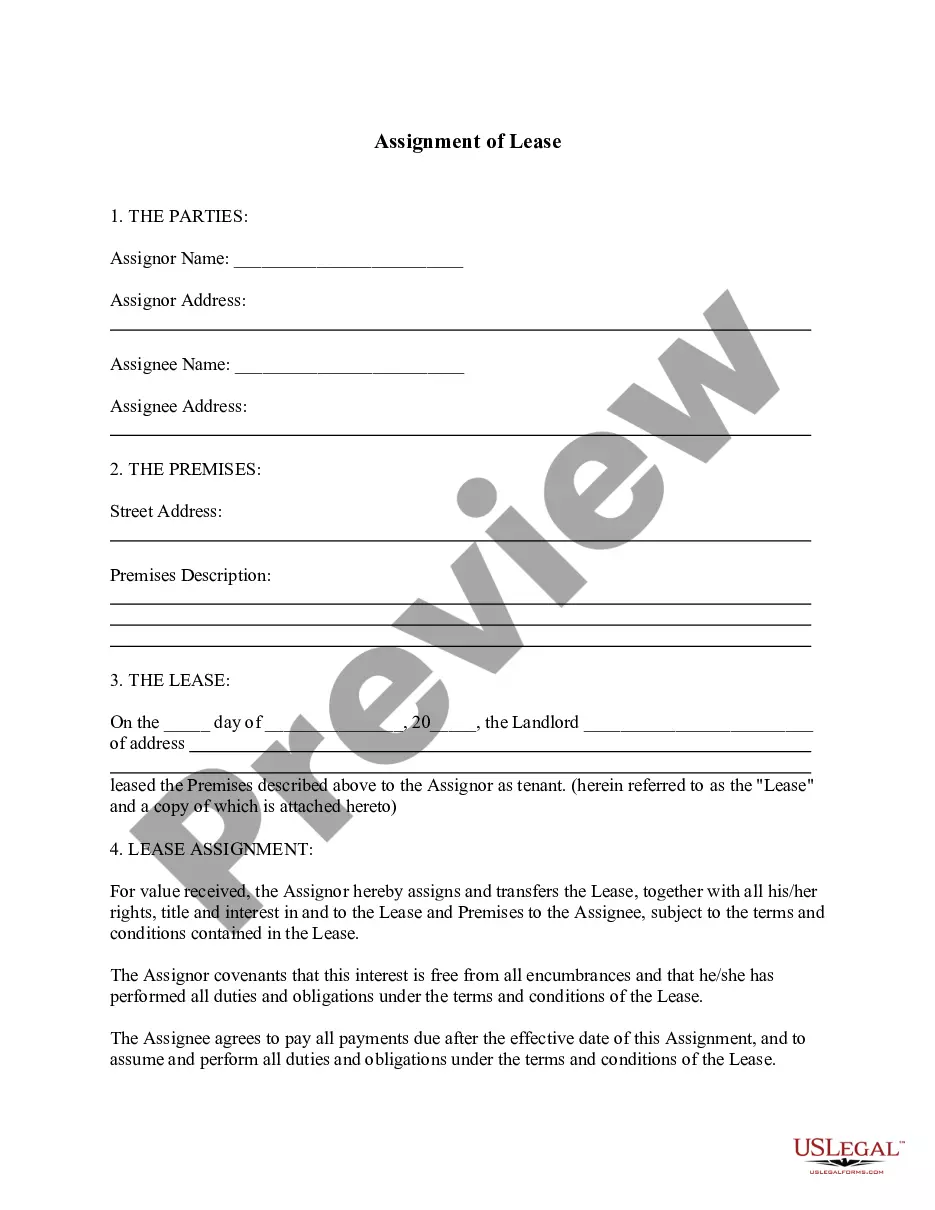
An assignment is when the tenant transfers their lease interest to a new tenant using a Lease Assignment. The assignee takes the assignor's place in the landlord-tenant relationship, although the assignor may remain liable for damages, missed rent payments, and other lease violations.
What is a Landlord's Consent to Lease Assignment? With a Landlord's Consent to Lease Assignment, landlords and property managers can give formal approval to tenants who wish to exit their lease agreement and transfer it to a new tenant before the rental term is complete.
The landlord's lawyer usually prepares the agreement. However, the outgoing tenant or the incoming tenant pays these costs, not the landlord.