Agreement by Lessee to Assign Lease with Consent of Lessor
What this document covers
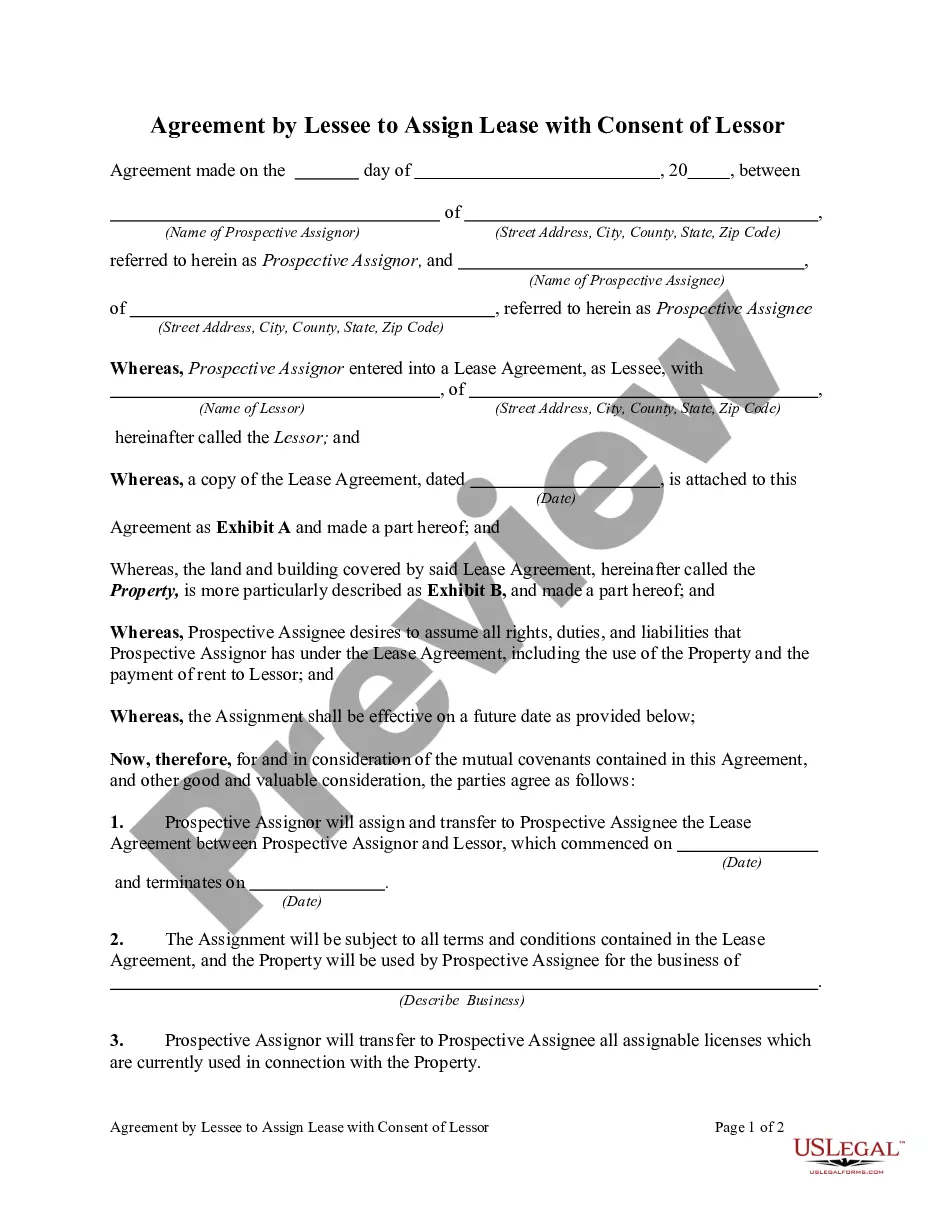
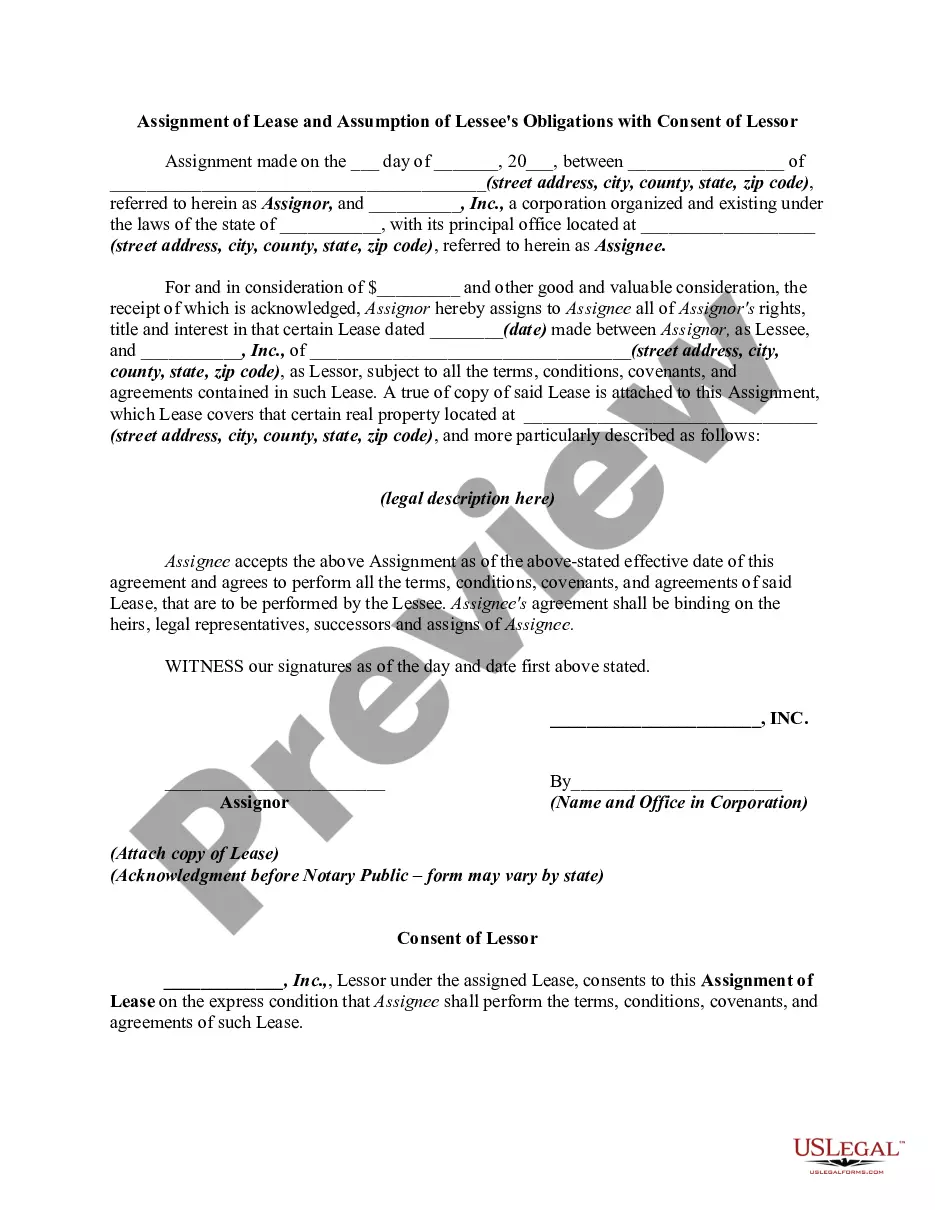
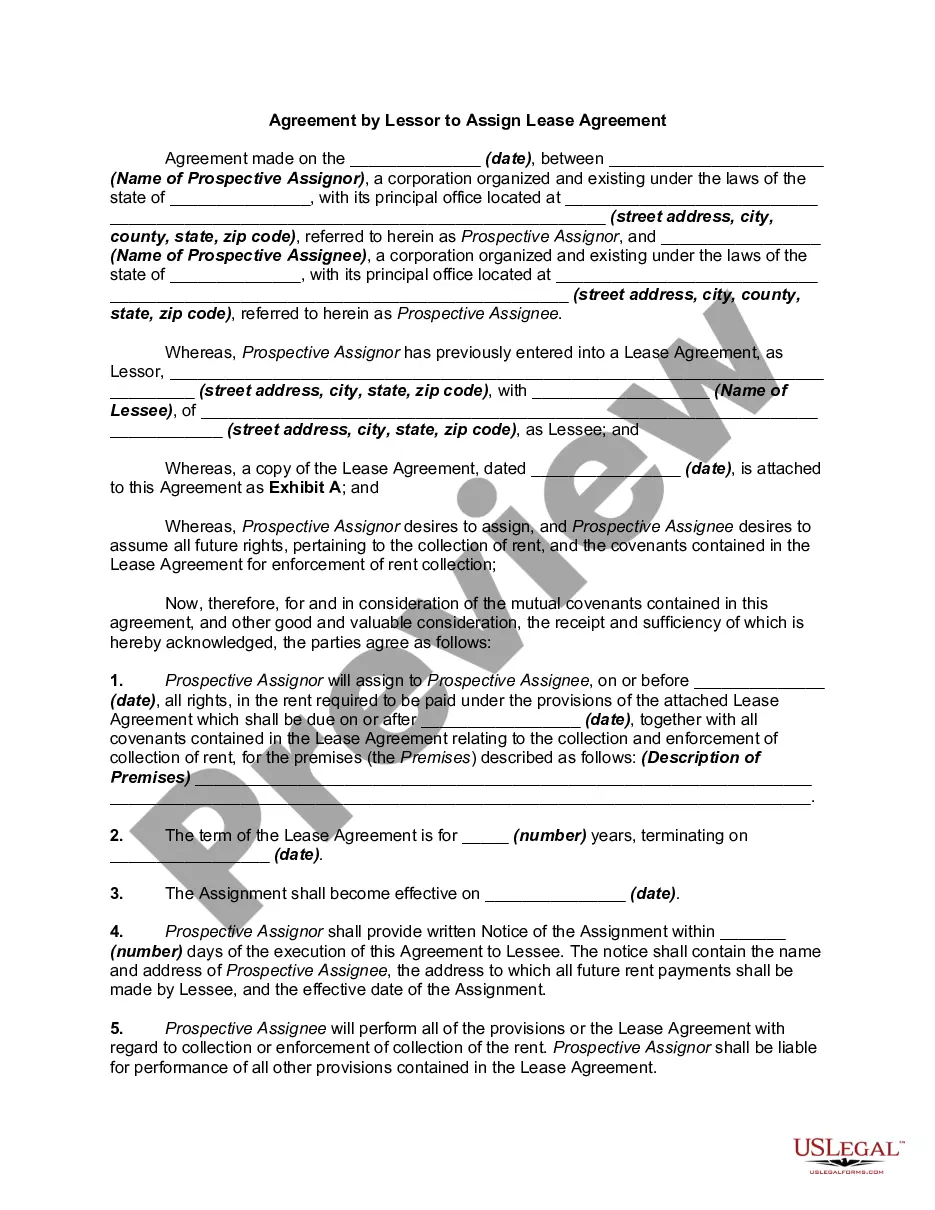
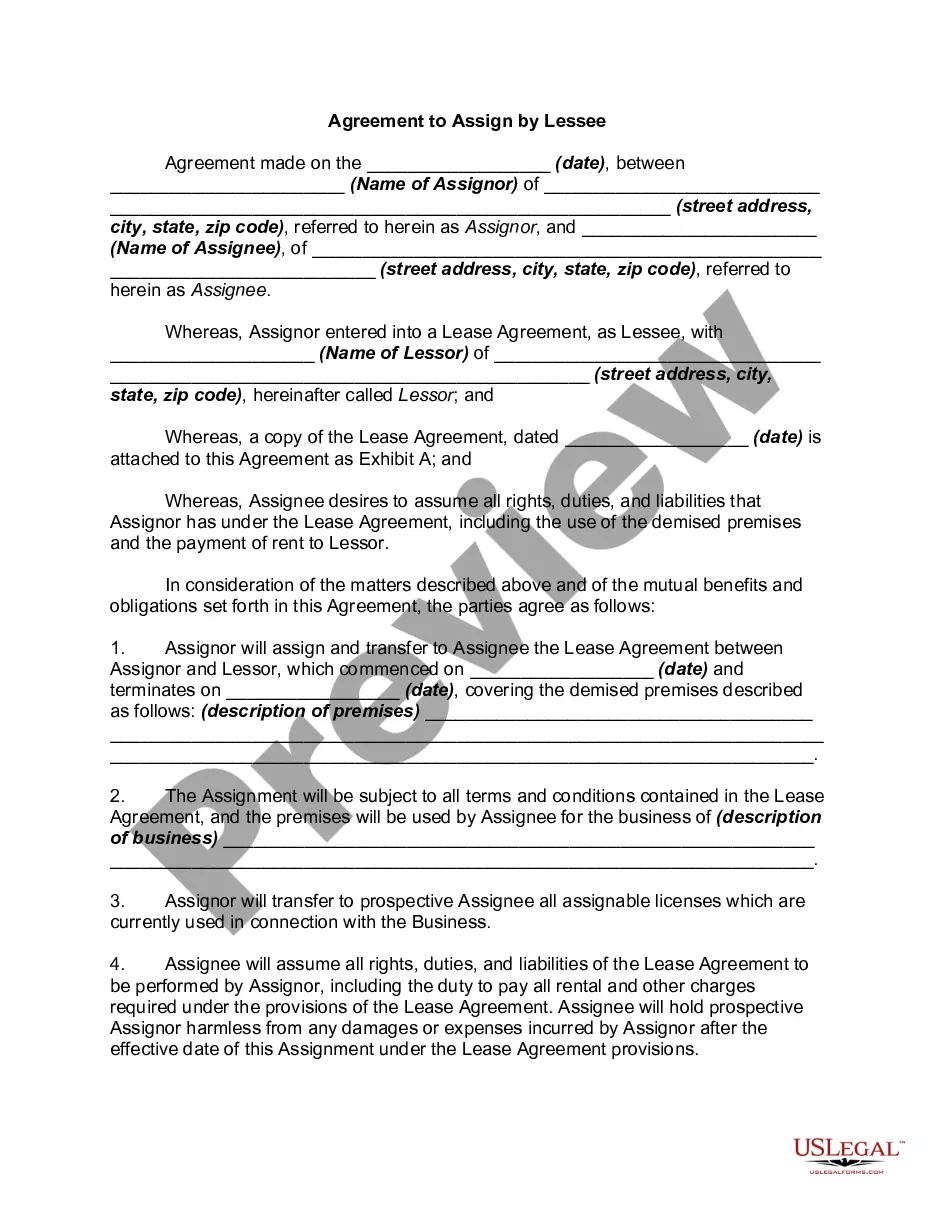
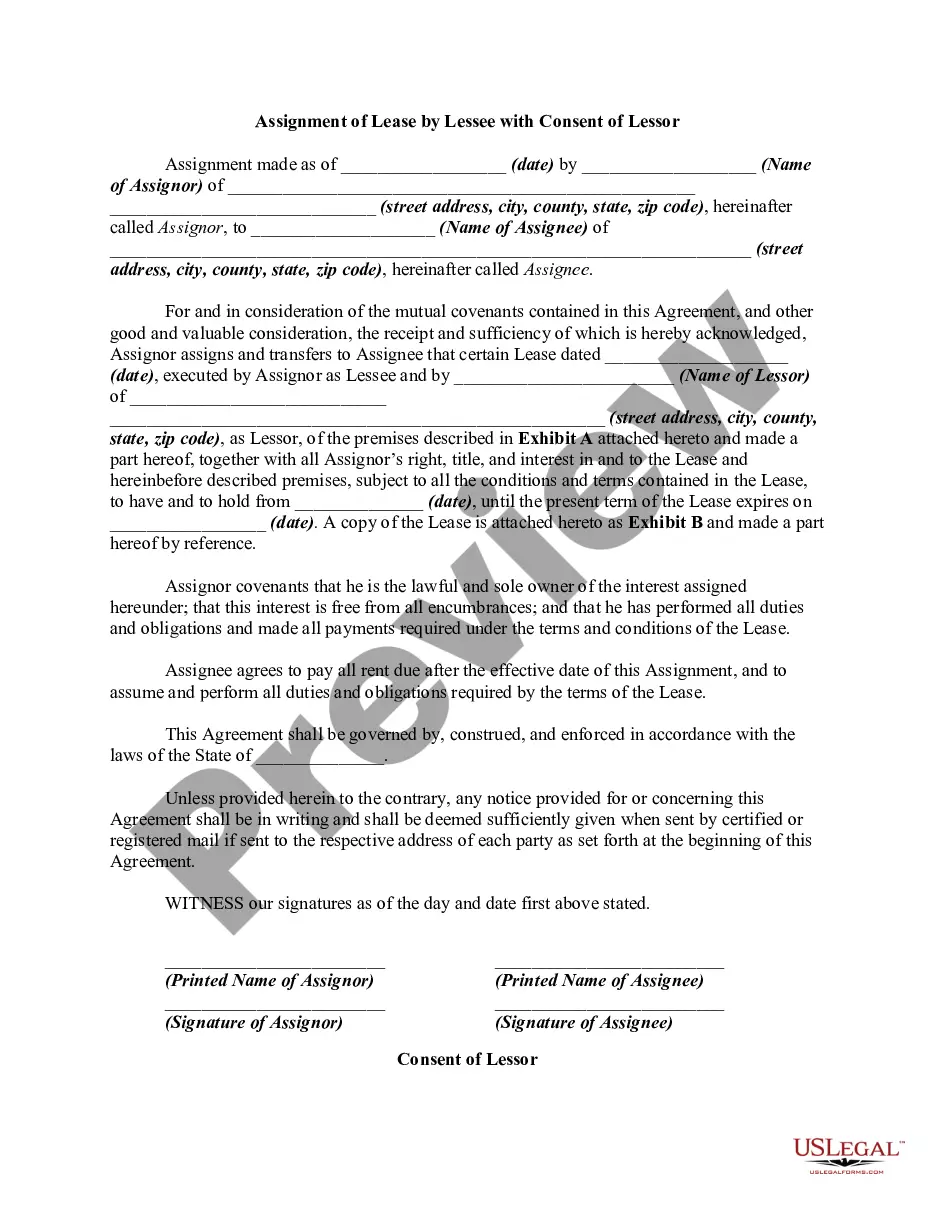
The Agreement by Lessee to Assign Lease with Consent of Lessor is a legal document used to transfer a lease from the original tenant (assignor) to a new tenant (assignee) with the landlord's (lessor's) approval. This form ensures that both parties are aware of their rights and responsibilities under the lease agreement, distinguishing it from simple lease transfer forms that may not require landlord consent.
Key parts of this document
- Identification of the assignor and assignee, including their contact information.
- Details of the original lease agreement, including property description and rental terms.
- Effective date of the lease assignment.
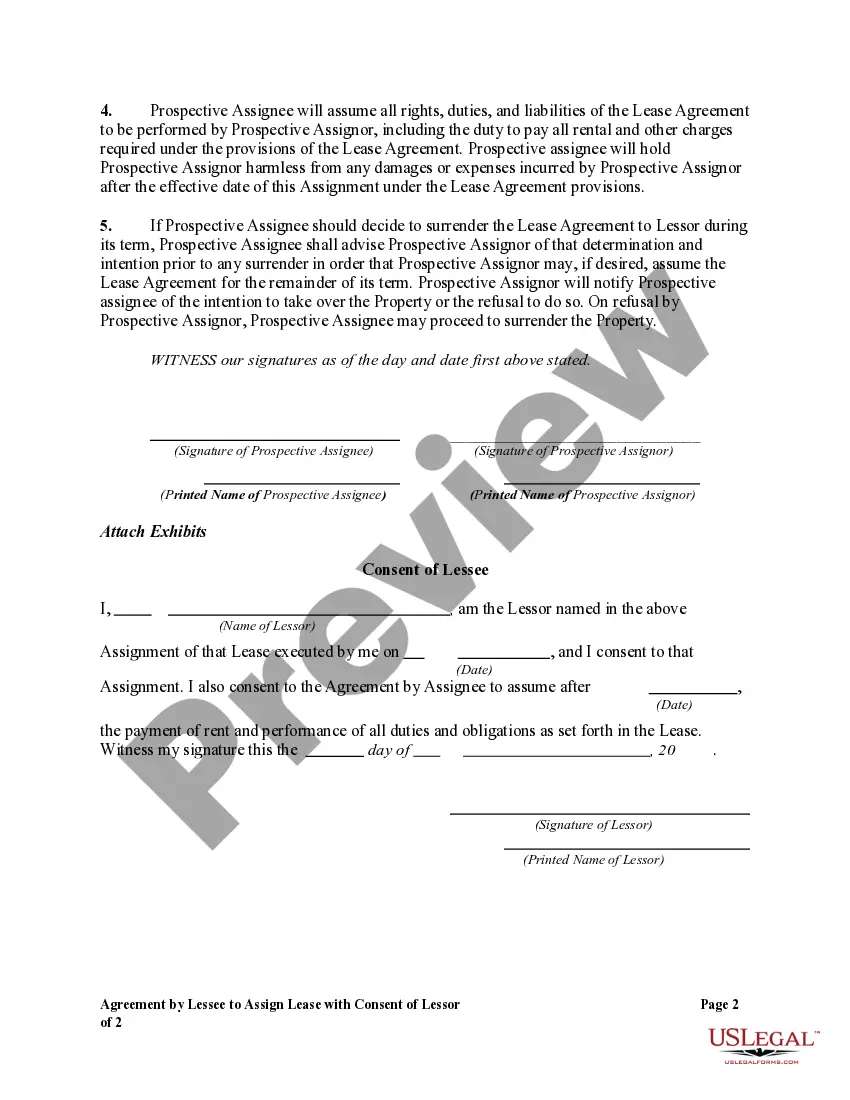
- Assumption of rights, duties, and liabilities by the assignee.
- Indemnification clause protecting the assignor from future liabilities after the assignment.
Common use cases
This form is necessary when a tenant wants to transfer their lease to another party and requires the landlord's consent. Common scenarios include situations where the original tenant needs to move for work or personal reasons but wants to avoid breaking the lease and incurring penalties. It is also useful when a tenant finds someone to take over their lease obligations for the duration remaining on the term.
Who this form is for
- Current tenants (lessees) wishing to assign their lease to another person.
- New tenants (assignees) who are agreeing to take over the lease.
- Landlords (lessors) who must provide consent for the lease assignment.
Completing this form step by step
- Identify the parties involved by filling in the names and contact information of the assignor and assignee.
- Specify the property address and details related to the original lease agreement.
- Indicate the effective date of the assignment in the designated section.
- Ensure that both parties understand their obligations by reviewing the assumption of rights and liabilities clause.
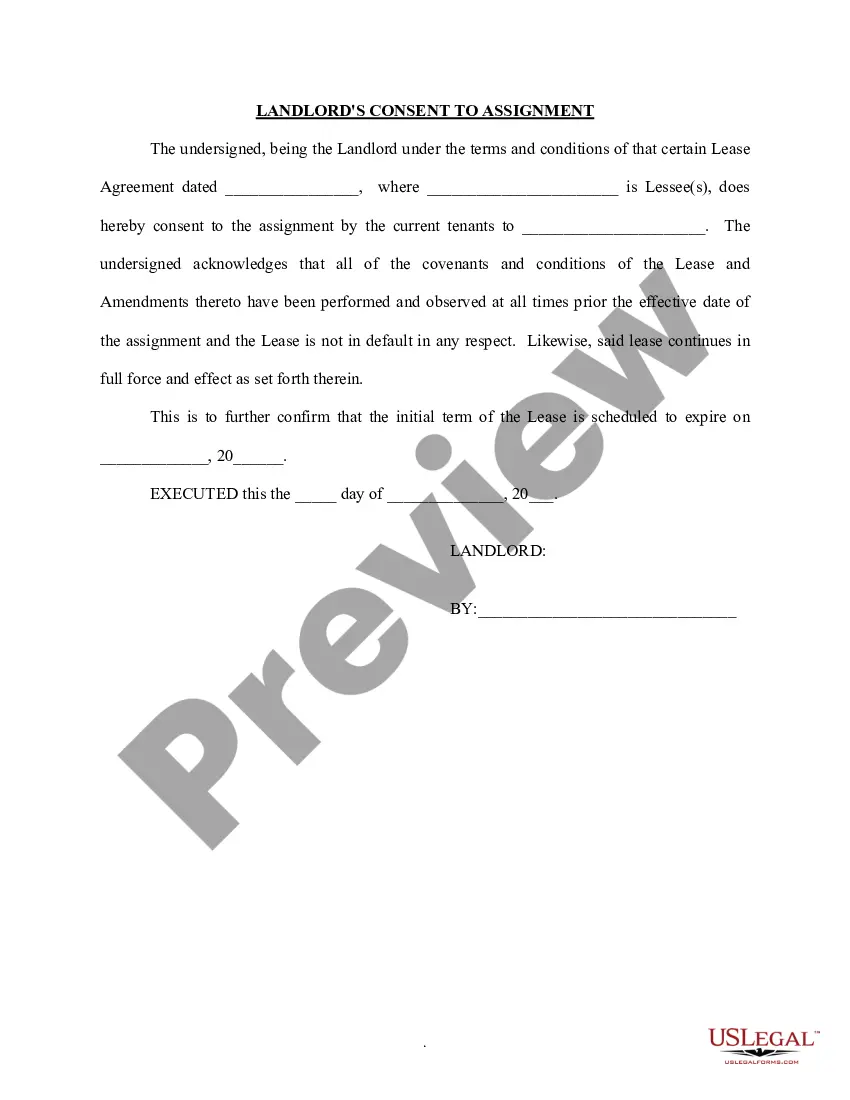
- Obtain the landlord's signature to confirm their consent to the lease assignment.
Notarization guidance
This form usually doesn’t need to be notarized. However, local laws or specific transactions may require it. Our online notarization service, powered by Notarize, lets you complete it remotely through a secure video session, available 24/7.
Get your form ready online
Our built-in tools help you complete, sign, share, and store your documents in one place.
Make edits, fill in missing information, and update formatting in US Legal Forms—just like you would in MS Word.
Download a copy, print it, send it by email, or mail it via USPS—whatever works best for your next step.
Sign and collect signatures with our SignNow integration. Send to multiple recipients, set reminders, and more. Go Premium to unlock E-Sign.
If this form requires notarization, complete it online through a secure video call—no need to meet a notary in person or wait for an appointment.
We protect your documents and personal data by following strict security and privacy standards.

Make edits, fill in missing information, and update formatting in US Legal Forms—just like you would in MS Word.

Download a copy, print it, send it by email, or mail it via USPS—whatever works best for your next step.

Sign and collect signatures with our SignNow integration. Send to multiple recipients, set reminders, and more. Go Premium to unlock E-Sign.

If this form requires notarization, complete it online through a secure video call—no need to meet a notary in person or wait for an appointment.

We protect your documents and personal data by following strict security and privacy standards.
Common mistakes
- Failing to obtain the landlord's consent before assigning the lease.
- Not providing complete information about the original lease or property details.
- Overlooking the effective date, which may lead to confusion regarding when the assignment takes place.
Why complete this form online
- Convenient access to the form at any time, allowing users to complete it at their own pace.
- Editability enables personalization for specific lease terms and conditions.
- Reliable templates drafted by licensed attorneys ensuring legal compliance.
Legal use & context
- This form serves as a legally binding agreement once all parties have signed it.
- It protects the rights of the landlord by ensuring they consent to the lease assignment.
- Failure to properly execute this document may lead to legal disputes regarding tenant obligations and landlord rights.
Quick recap
- The form ensures the legal transfer of a lease from one tenant to another with landlord consent.
- Complete all information accurately to avoid legal issues in the future.
- Ensure that all necessary parties have signed the document before the effective date.
Looking for another form?
Form popularity
FAQ
There is an agreement about who is liable for the costs of the deed of assignment. The landlord's lawyer usually prepares the agreement. However, the outgoing tenant or the incoming tenant pays these costs, not the landlord.
Can the landlord refuse consent to an Assignment? Most leases will say that the Landlord cannot unreasonably withhold consent. According to section 19 (1A) of the Landlord and Tenant Act 1927 the landlord can insert conditions in the lease, which need to be met in the case of an assignment.
If the lessee transfers his or her entire remaining interest in the tenancy, then the transfer is known as an assignment. If the lessee transfers only part of his or her interest, then the transfer is known as a sublease.
The landlord's lawyer usually prepares the agreement. However, the outgoing tenant or the incoming tenant pays these costs, not the landlord.
Most often, the lease won't permit assignment without the landlord's approval, but leases often state that the landlord cannot unreasonably withhold consent. As long as you produce a tenant who's shown a history of payment under prior leases and has been a model tenant, a landlord should consent to assignment.
Consent to assignment refers to allowing a party of a contract (the assignor) to assign a contract and move the obligations to another party (the assignee).
What is a Landlord's Consent to Lease Assignment? With a Landlord's Consent to Lease Assignment, landlords and property managers can give formal approval to tenants who wish to exit their lease agreement and transfer it to a new tenant before the rental term is complete.
An assignment of a lease is a complete transfer of the right to be the tenant under the lease. The third-party assignee becomes the "tenant" under the lease, taking over all of the leased premises, substituting for the old tenant.
Under a typical lease assignment, you transfer all of your space to someone else for the entire remaining term of the lease, and the new tenant pays rent directly to the landlord.Once your landlord has agreed to allow a full assignment, you'll need to secure what the law so often requires: a piece of paper.