Analysis Checklist
About this form
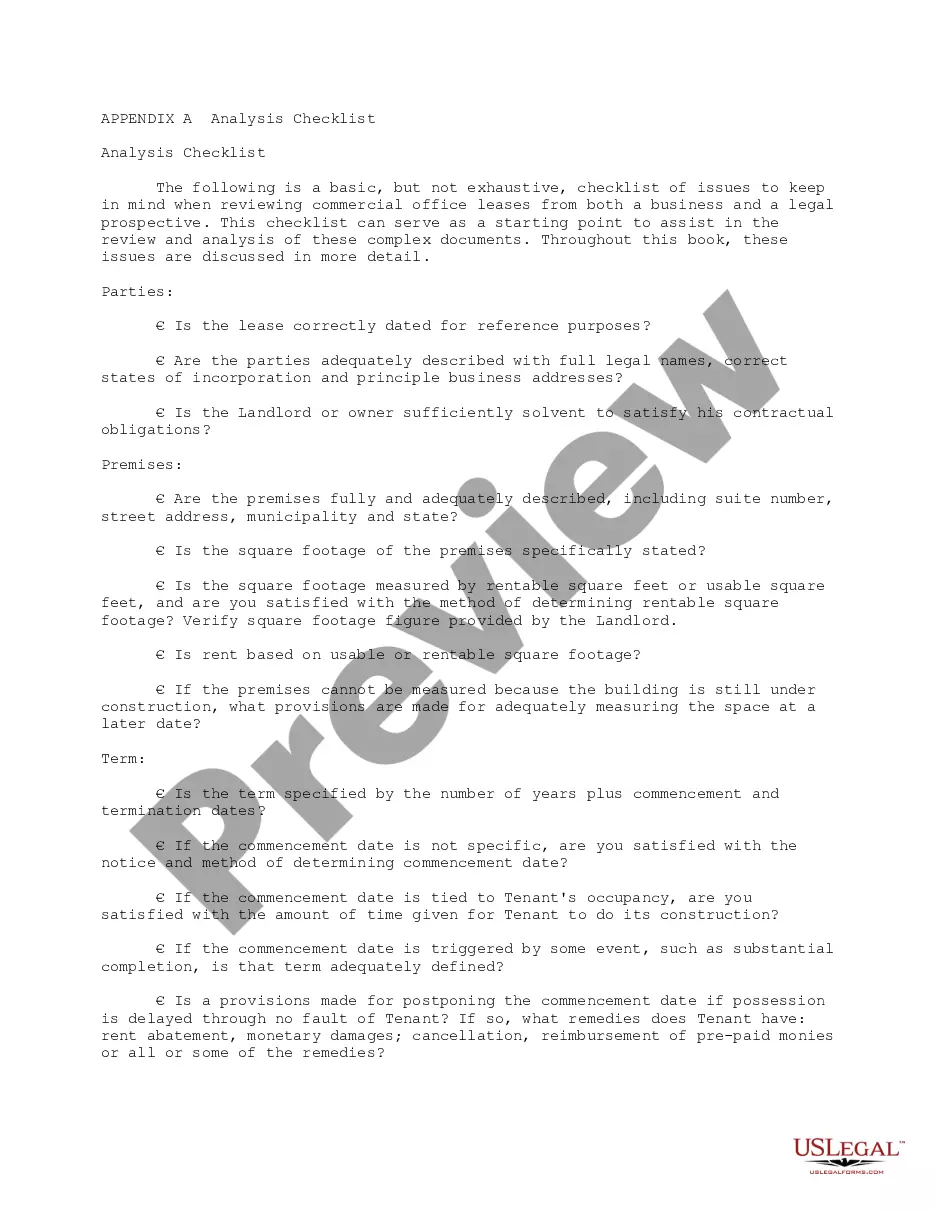
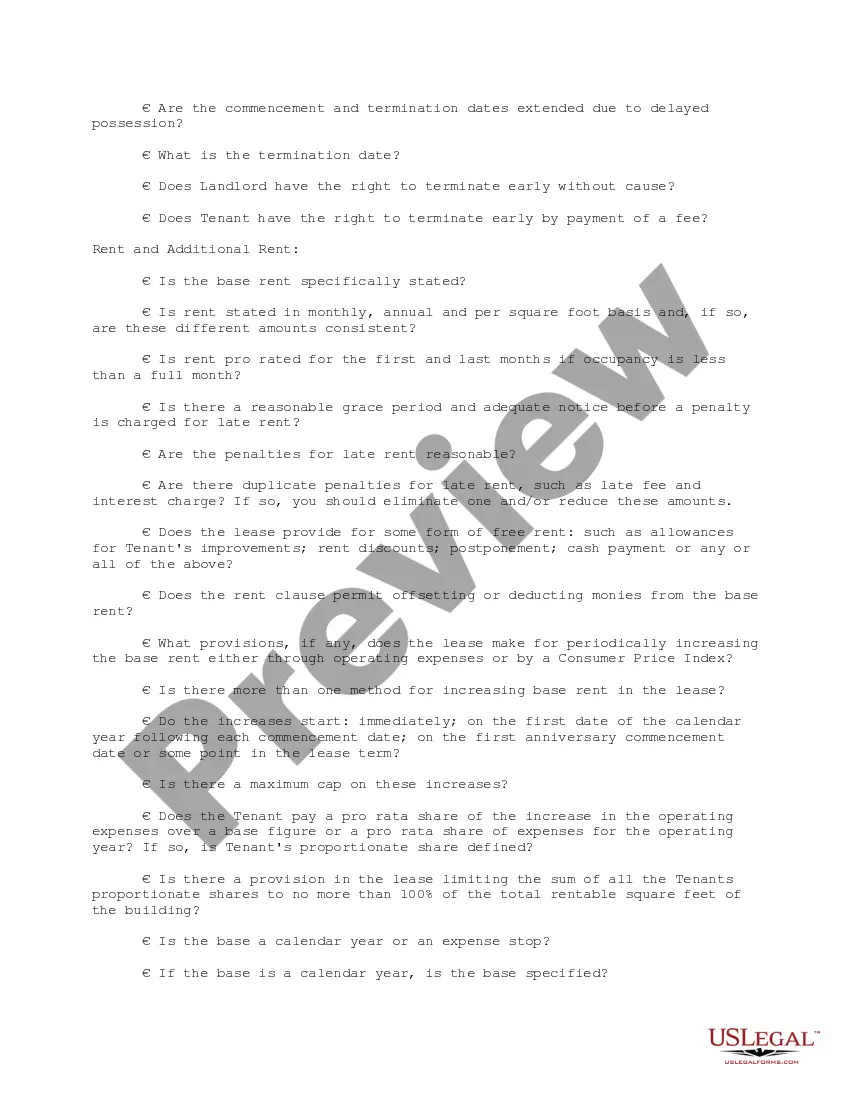
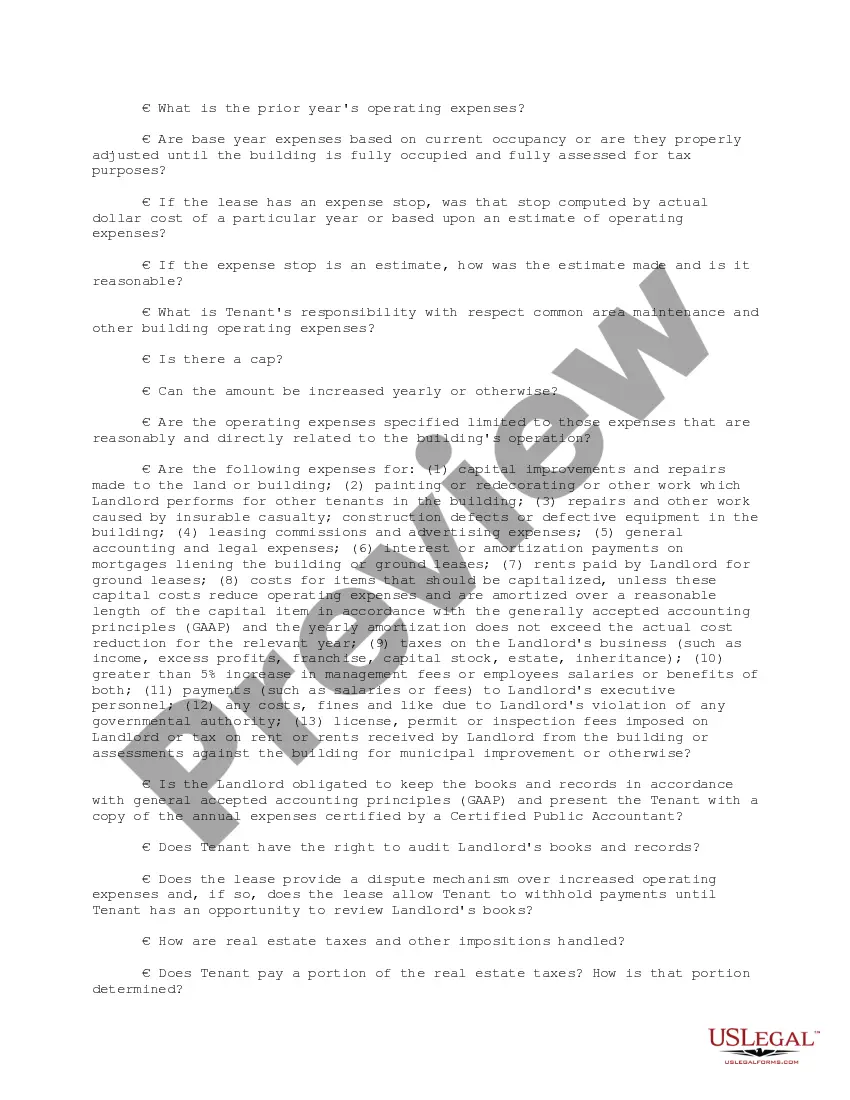
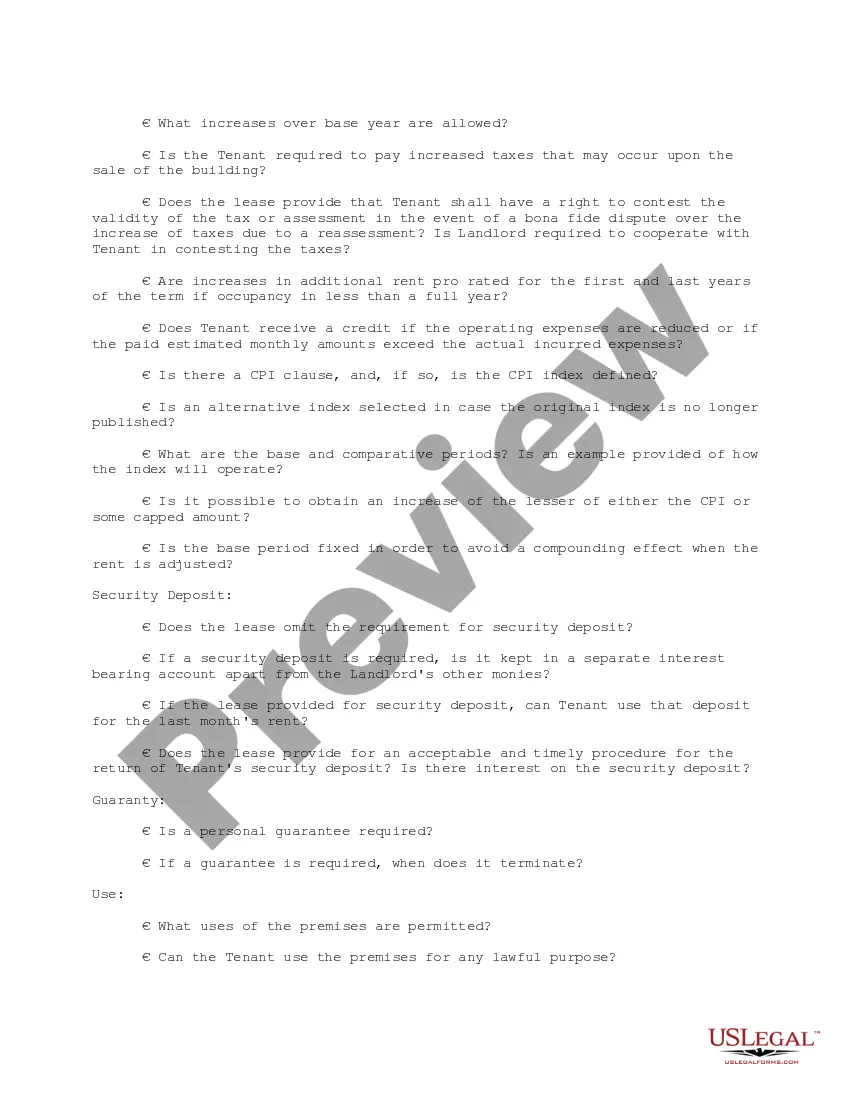
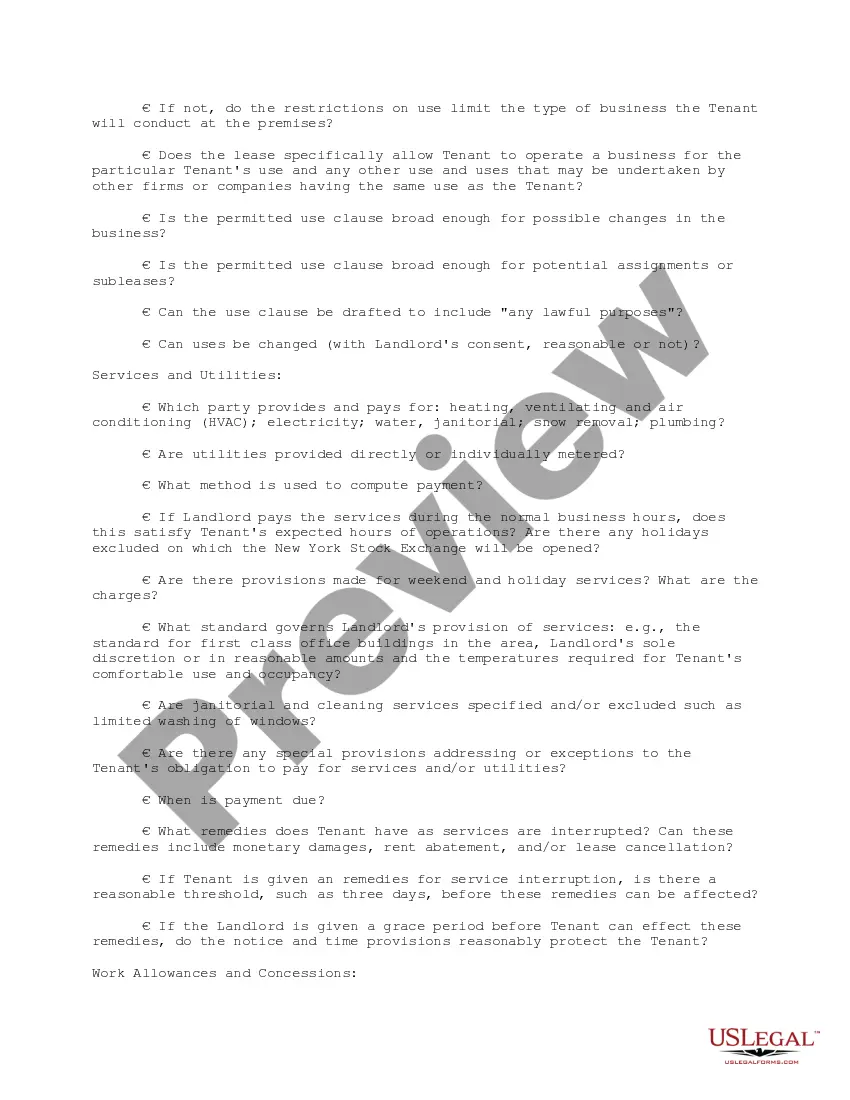
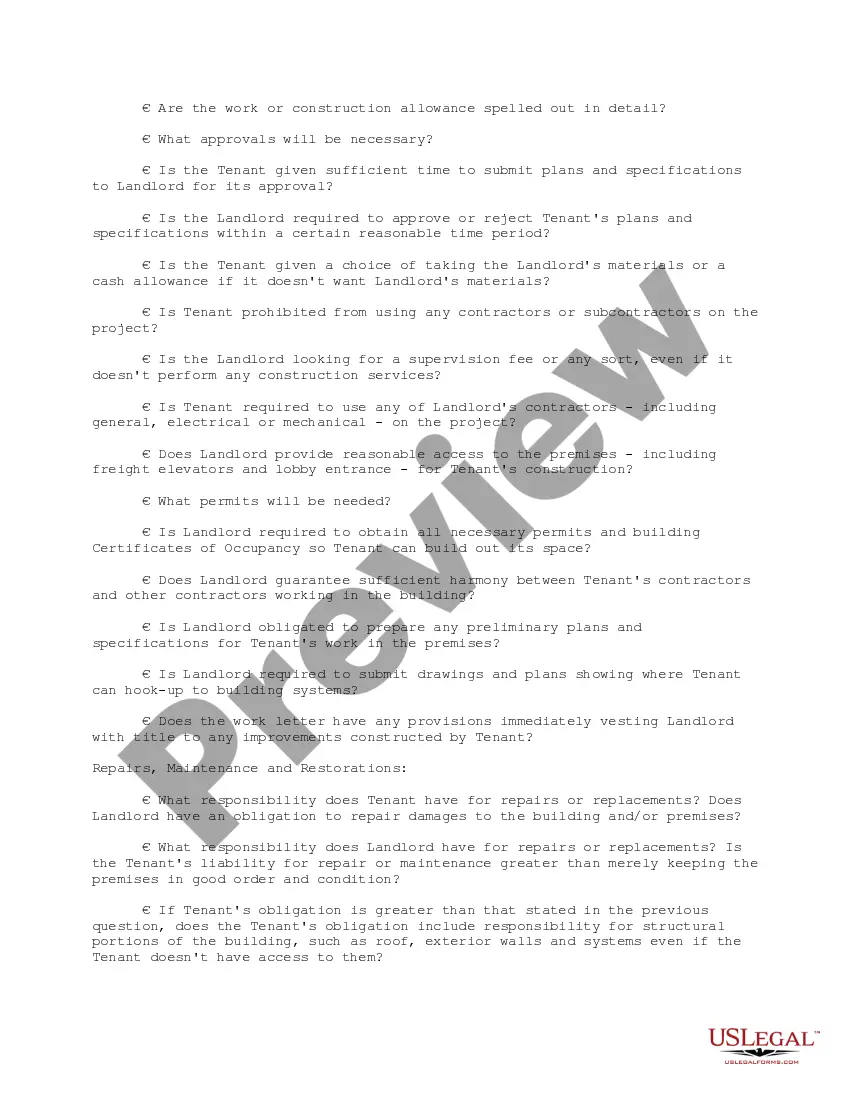
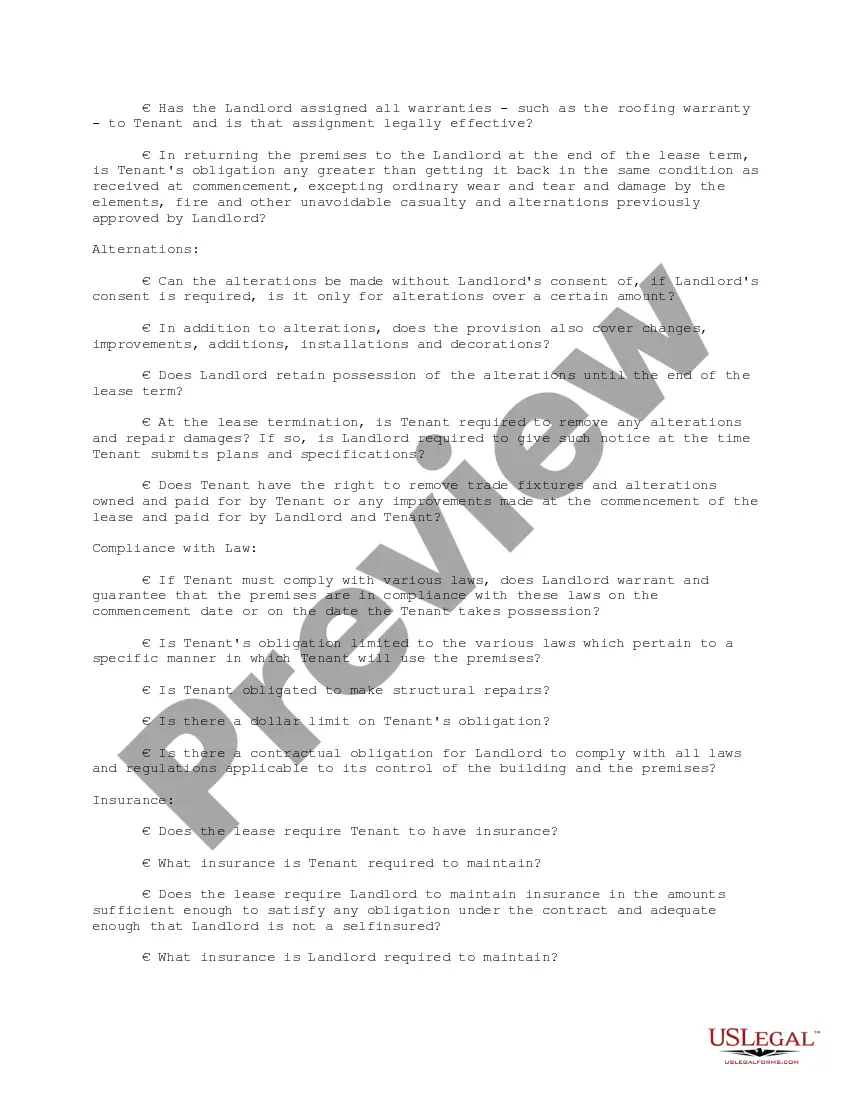
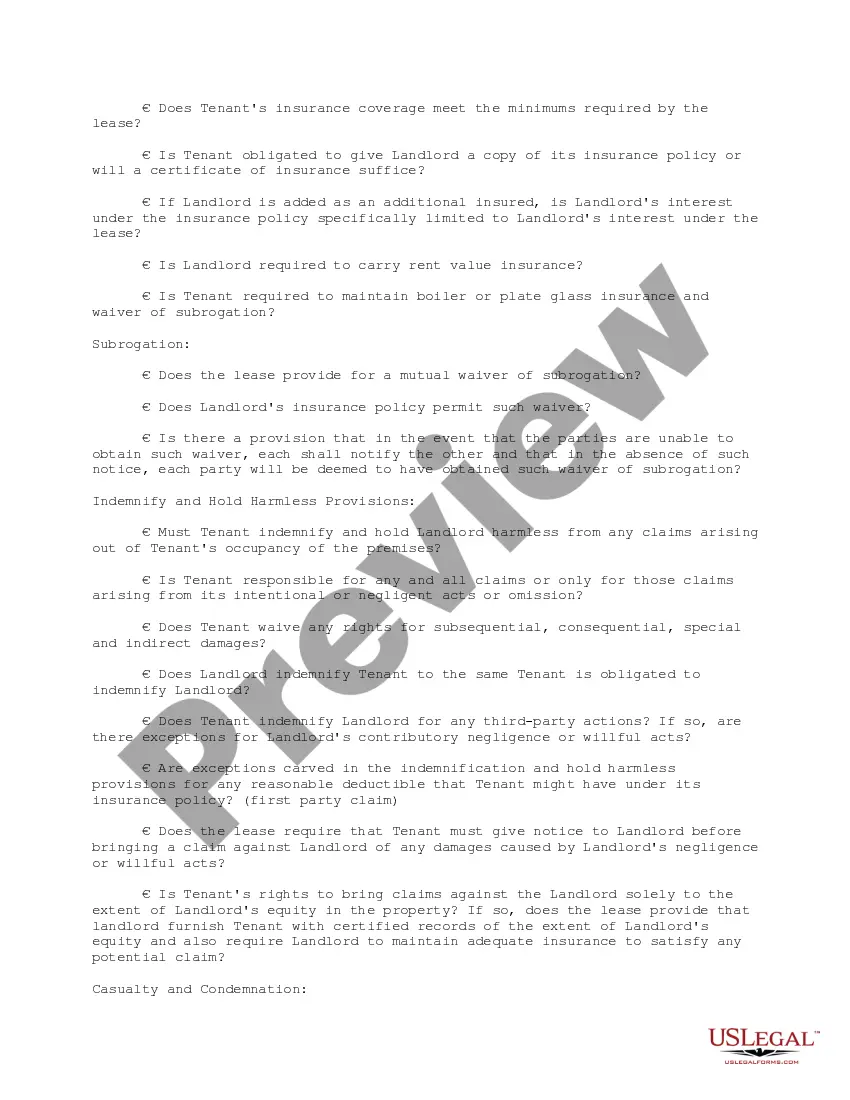
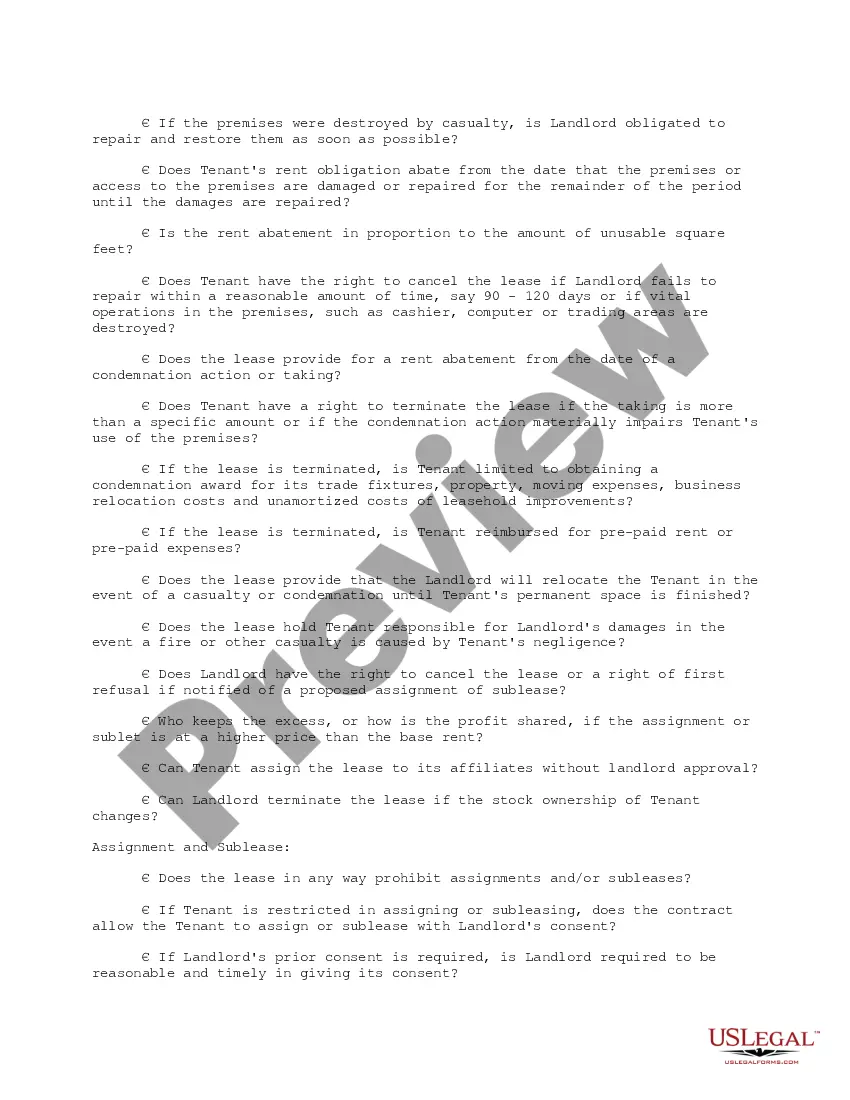
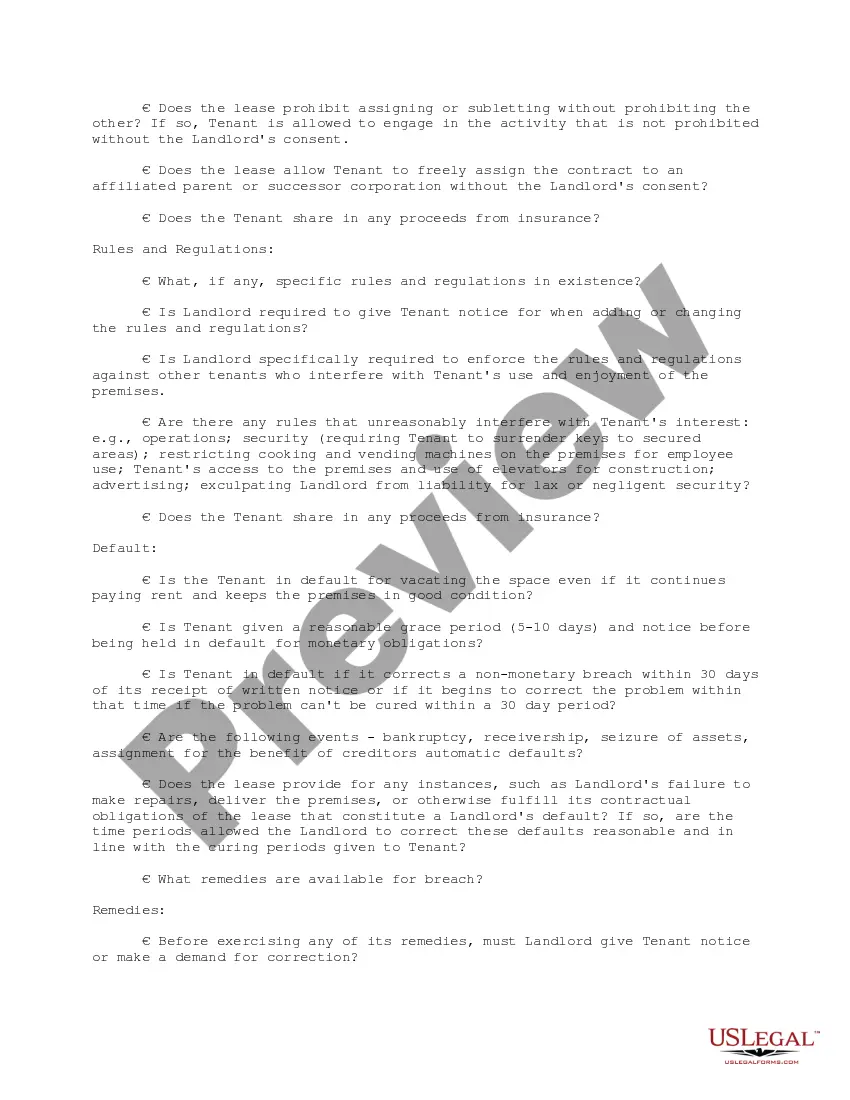
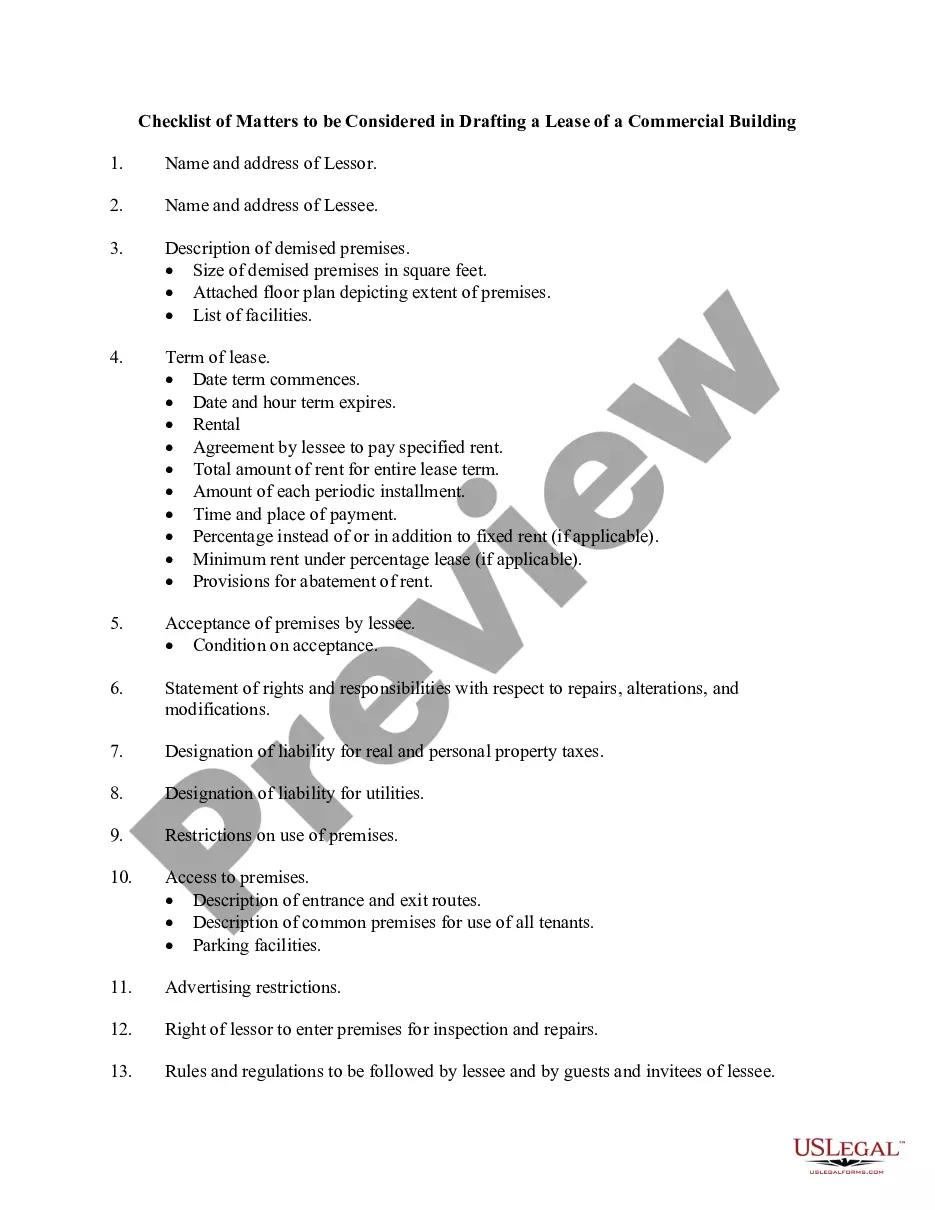
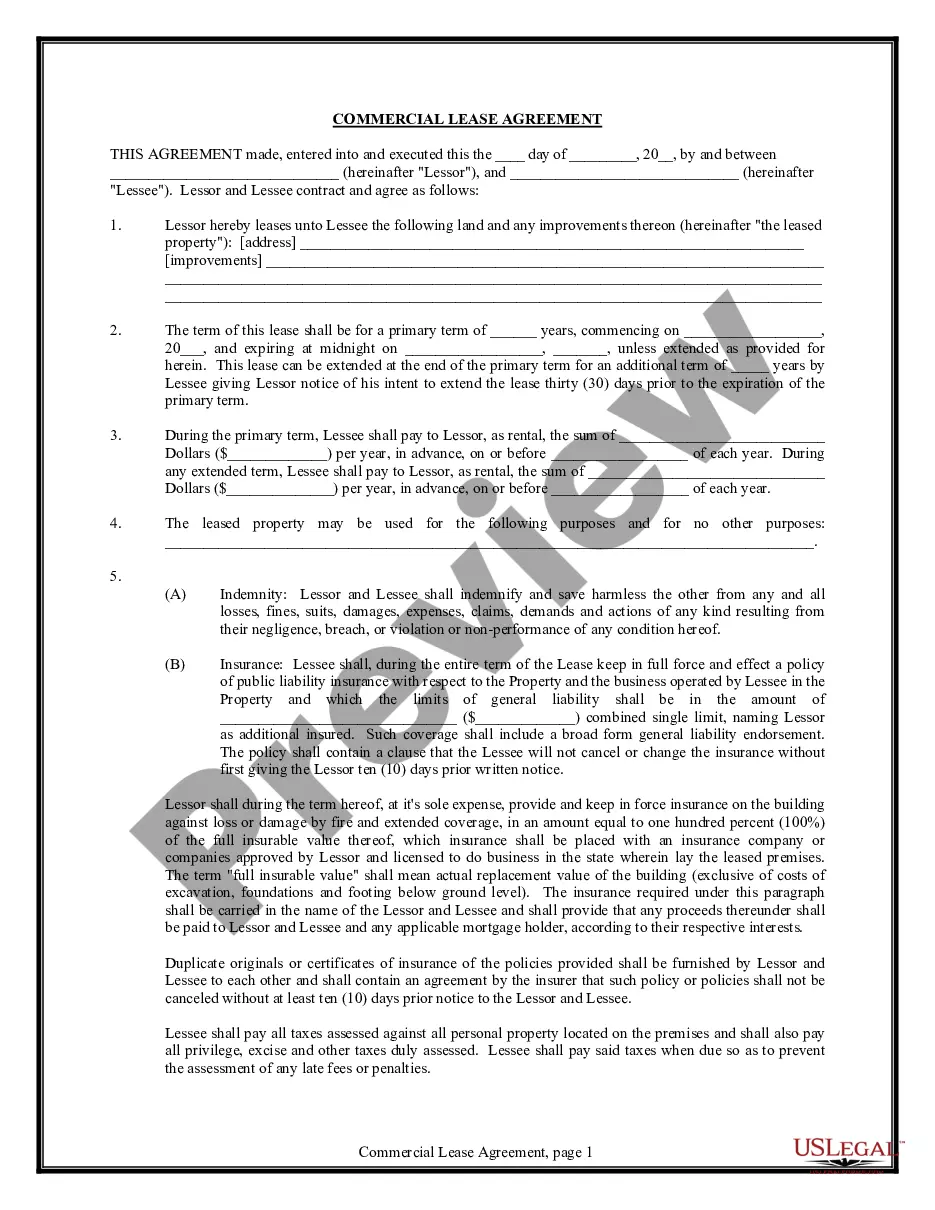
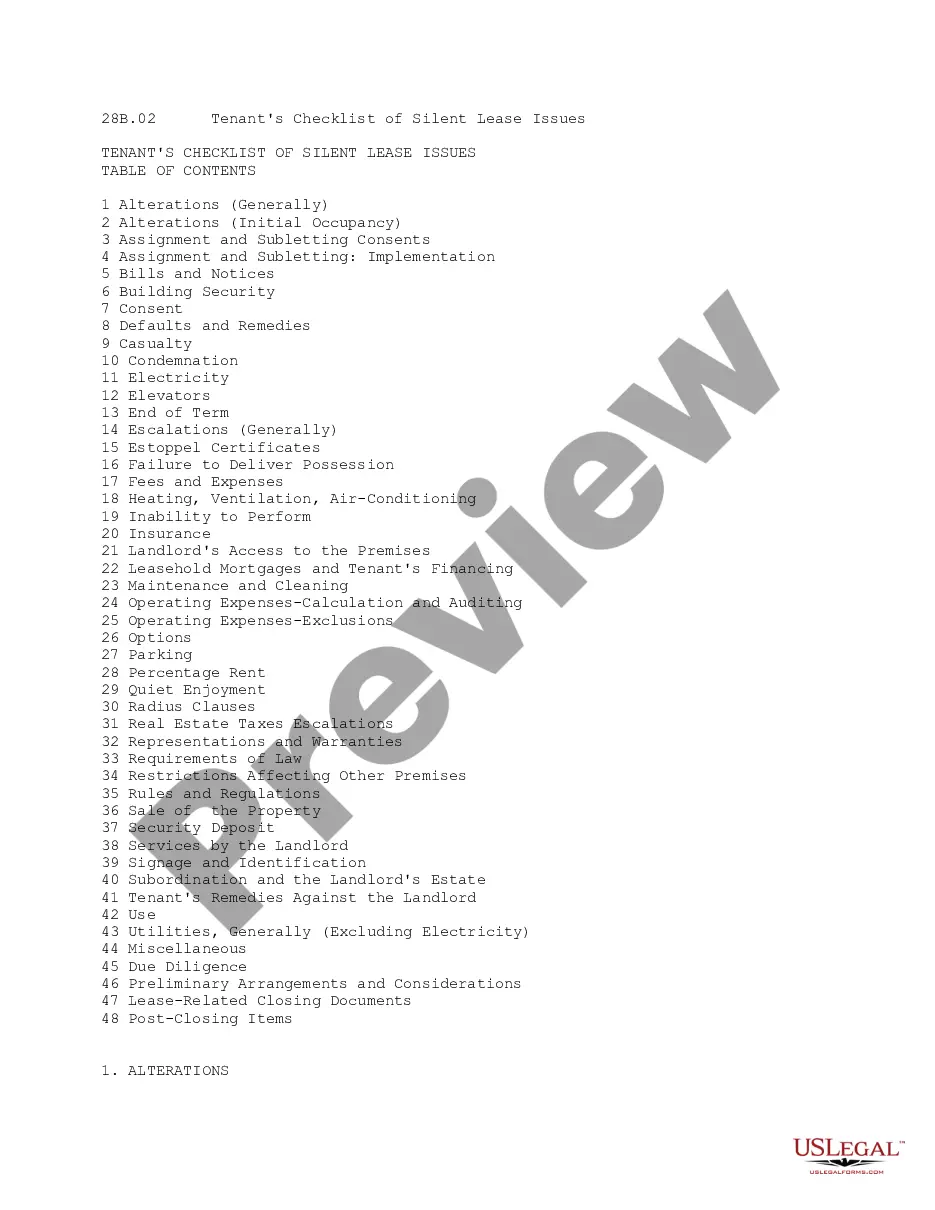
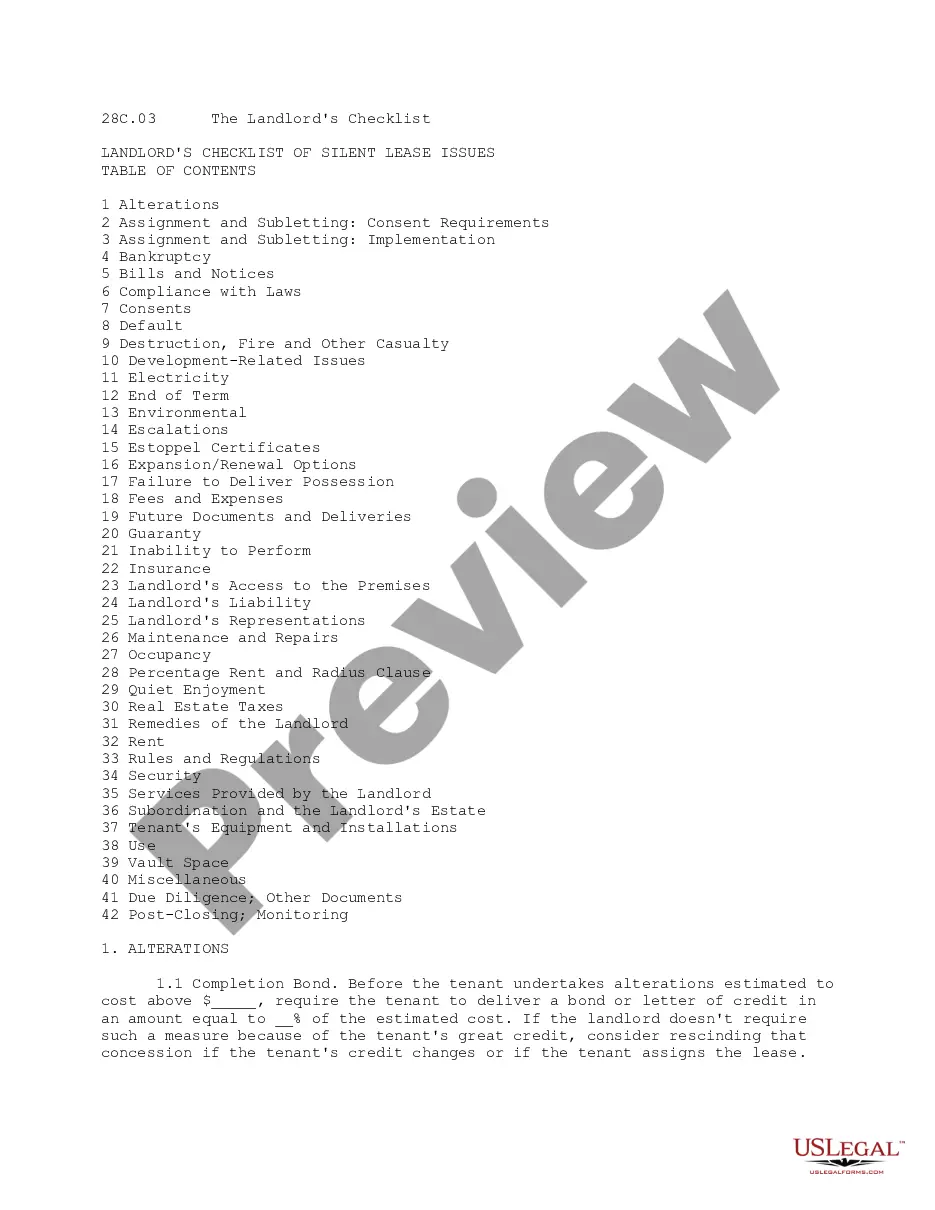
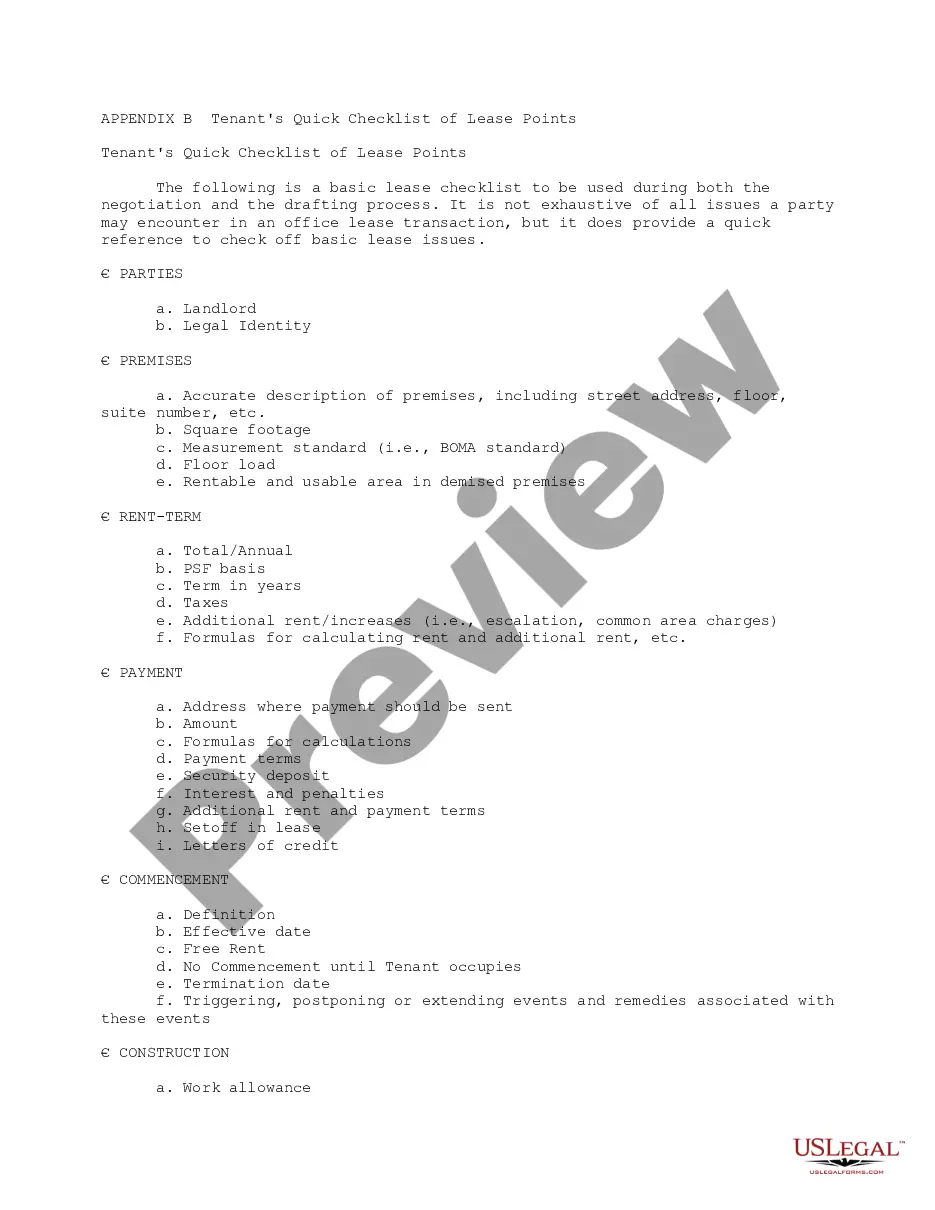
The Analysis Checklist is a valuable tool designed to help you review commercial office leases from both a business and legal perspective. This checklist serves as a starting point for analyzing complex lease agreements, ensuring that you consider all necessary factors before making a decision. Unlike other forms, this checklist specifically focuses on the critical issues that arise during lease reviews.
Key parts of this document
- Parties involved in the lease agreement
- Lease term and renewal options
- Rent and payment terms
- Maintenance and repair responsibilities
- Terms relating to termination and default
- Specific clauses that may affect operations

When this form is needed
This form is useful when you are considering entering into a commercial office lease or if you need to renew an existing lease. Use the Analysis Checklist to systematically review lease documents, ensuring all critical issues are addressed and nothing is overlooked.
Intended users of this form
- Business owners looking to lease office space
- Real estate professionals assisting clients with lease agreements
- Attorneys reviewing commercial leases on behalf of clients
- Individuals involved in property management
How to complete this form
- Identify the parties involved in the lease.
- Specify key terms, such as lease duration and payment amounts.
- Evaluate responsibilities for maintenance and repairs.
- Note conditions for termination and default.
- Review any additional clauses that may impact business operations.
Notarization guidance
Notarization is not commonly needed for this form. However, certain documents or local rules may make it necessary. Our notarization service, powered by Notarize, allows you to finalize it securely online anytime, day or night.
Get your form ready online
Our built-in tools help you complete, sign, share, and store your documents in one place.
Make edits, fill in missing information, and update formatting in US Legal Forms—just like you would in MS Word.
Download a copy, print it, send it by email, or mail it via USPS—whatever works best for your next step.
Sign and collect signatures with our SignNow integration. Send to multiple recipients, set reminders, and more. Go Premium to unlock E-Sign.
If this form requires notarization, complete it online through a secure video call—no need to meet a notary in person or wait for an appointment.
We protect your documents and personal data by following strict security and privacy standards.

Make edits, fill in missing information, and update formatting in US Legal Forms—just like you would in MS Word.

Download a copy, print it, send it by email, or mail it via USPS—whatever works best for your next step.

Sign and collect signatures with our SignNow integration. Send to multiple recipients, set reminders, and more. Go Premium to unlock E-Sign.

If this form requires notarization, complete it online through a secure video call—no need to meet a notary in person or wait for an appointment.

We protect your documents and personal data by following strict security and privacy standards.
Common mistakes to avoid
- Overlooking important terms related to lease renewal.
- Failing to clarify maintenance responsibilities.
- Not reviewing termination conditions carefully.
- Assuming all standard clauses are included without verification.
Advantages of online completion
- Convenience of accessing the checklist anytime and anywhere.
- Ability to customize and edit the form to suit specific needs.
- Reliability of using templates drafted by licensed attorneys.
Legal use & context
- This checklist provides guidance but does not replace legal advice from a qualified attorney.
- Ensure compliance with local lease laws in your jurisdiction.
- Understanding lease terms is crucial for protecting your business interests.
Main things to remember
- The Analysis Checklist is crucial for reviewing commercial office leases.
- It helps ensure that all important lease provisions are considered.
- This checklist is suitable for business owners, real estate professionals, and legal advisors.
Looking for another form?

Form popularity
FAQ
The purpose of the data extraction checklist is to provide a guide to reviewers about the type of relevant information that could be extracted from primary studies. Each review is different and reviewers will need to adapt the checklist to suit their purposes.
Biological. Biological hazards include viruses, bacteria, insects, animals, etc., that can cause adverse health impacts. Chemical. Chemical hazards are hazardous substances that can cause harm. Physical. Safety. Ergonomic. Psychosocial.
The checklist helps to ensure that the appropriate conditions are present or that they're inspected. The checklist is often only as good as the inspector utilizing it and must be accompanied by instructions. A risk management checklist needs to start with identification of the risk.
All hazard checklists are incomplete. The fol- lowing lists, derived from the references are simply a beginning and should be further de- veloped by the using organisation. The lists also (deliberately) contain redundant entries. Checklists lend themselves easily to form style documentation.
Risk checklists are a tool for risk identification that can be used at the earliest stages of risk identification to learn from past projects and past team member experience.The use of a risk checklist is the final step of risk identification to ensure that common project risks are not overlooked.
Risk assessments help your company identify, estimate and prioritize risk. These risks can be things such as organizational operations or business assets. A risk assessment checklist ensures you've evaluated every area of your business when preparing to conduct a risk assessment.
Safety. Safety hazards encompass any type of substance, condition or object that can injure workers. Chemical. Biological. Physical. Ergonomic.
A Hazard checklist contains questions or topics intended to prompt consideration of a range of safety issues. It can also be used in combination with structured hazard identification (HAZID) techniques such as SWIFT and HAZOP.
The purpose of the hazard assessment is to help develop a plan that will identify hazards, assess risks, and develop controls based on specific workplace situations. Both employers and workers have a responsibility to point out potential health and safety hazards.