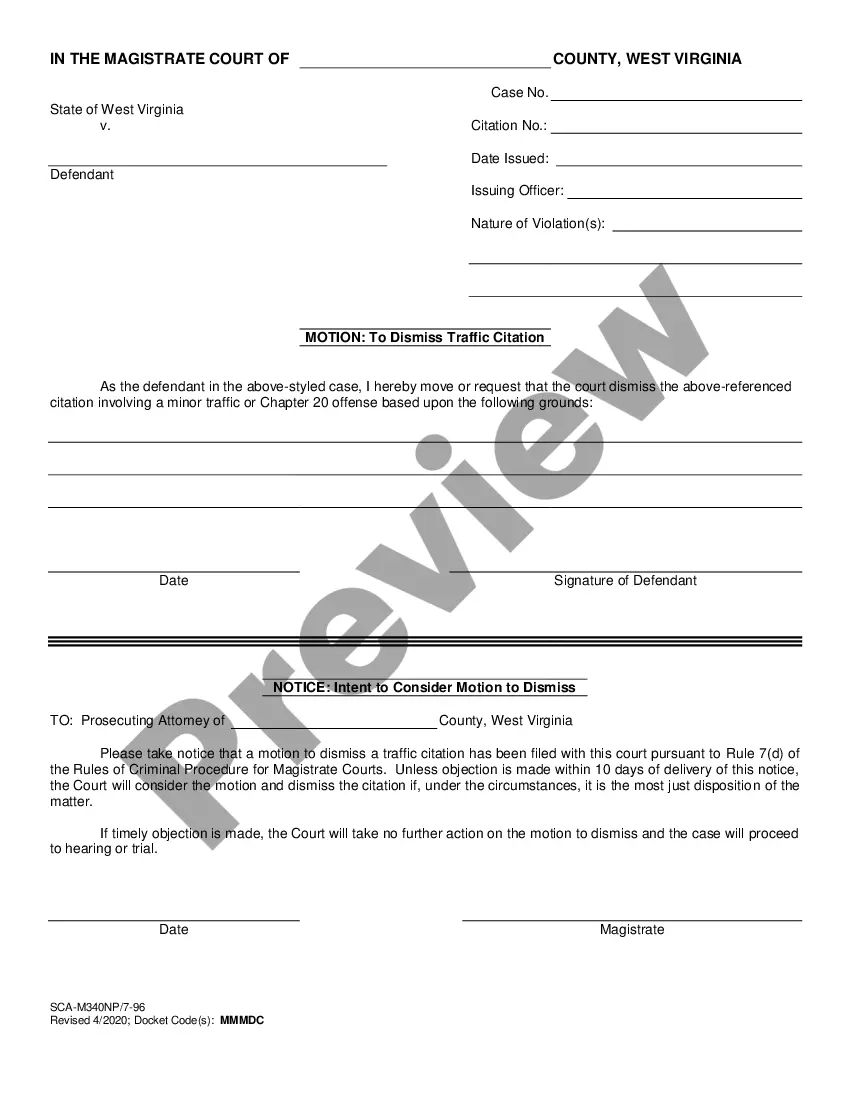
Commercial Lease Agreement

What this document covers
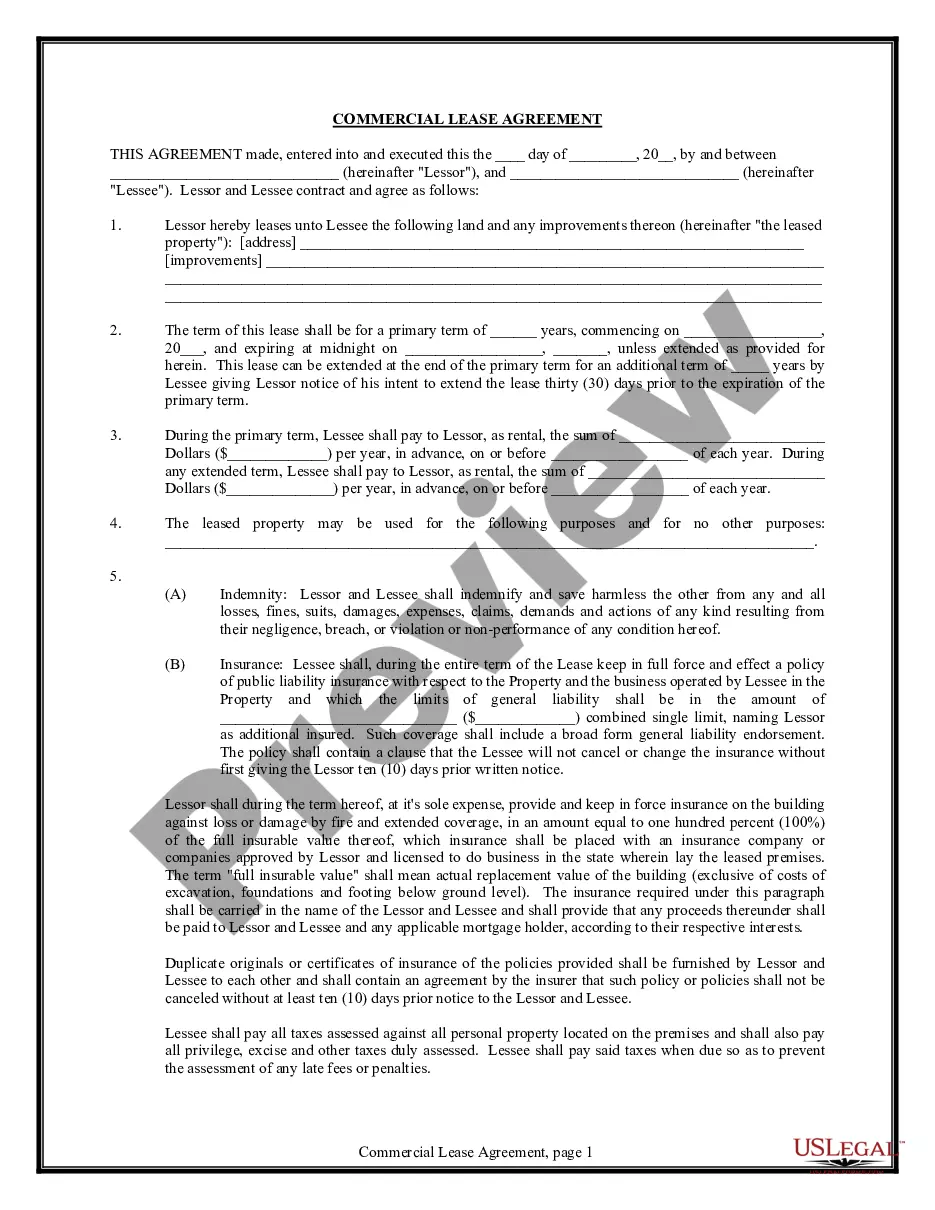
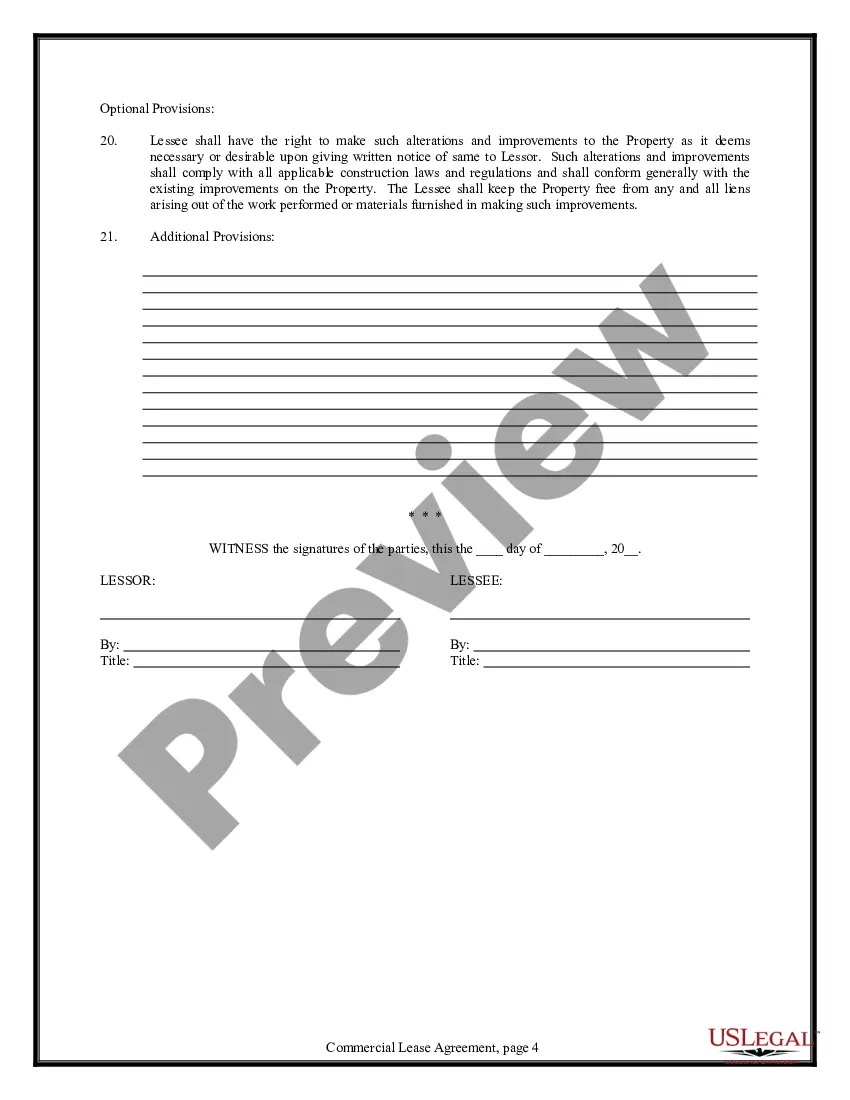
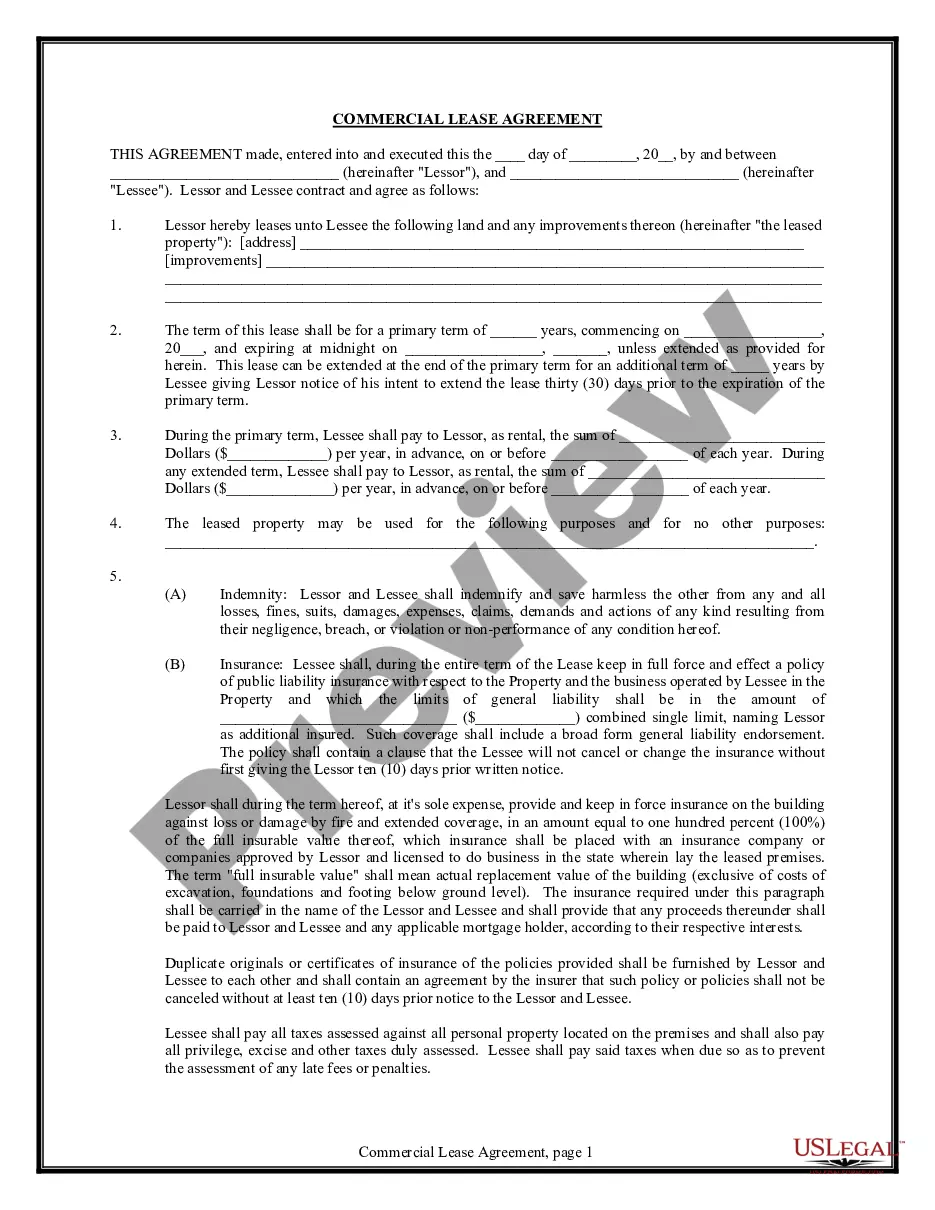
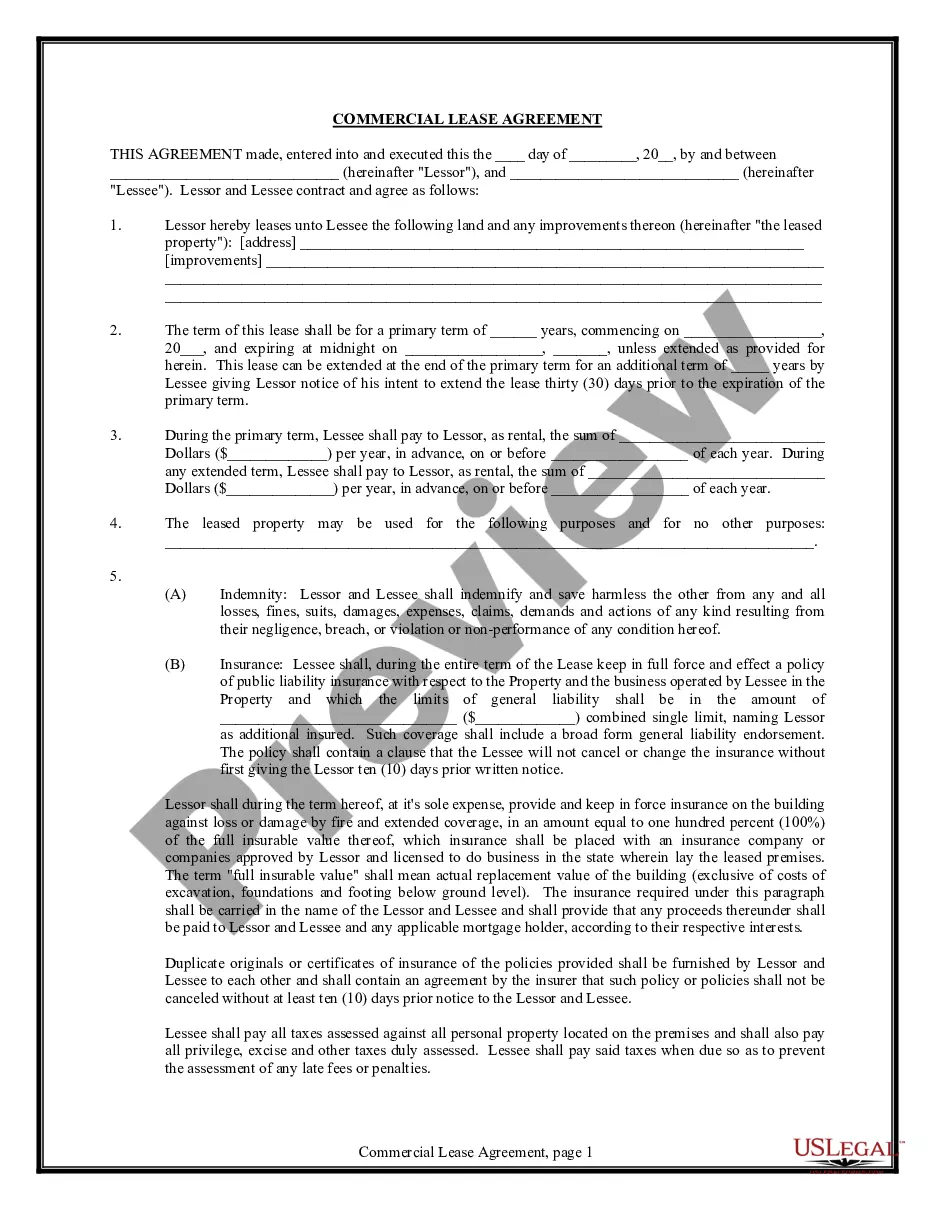
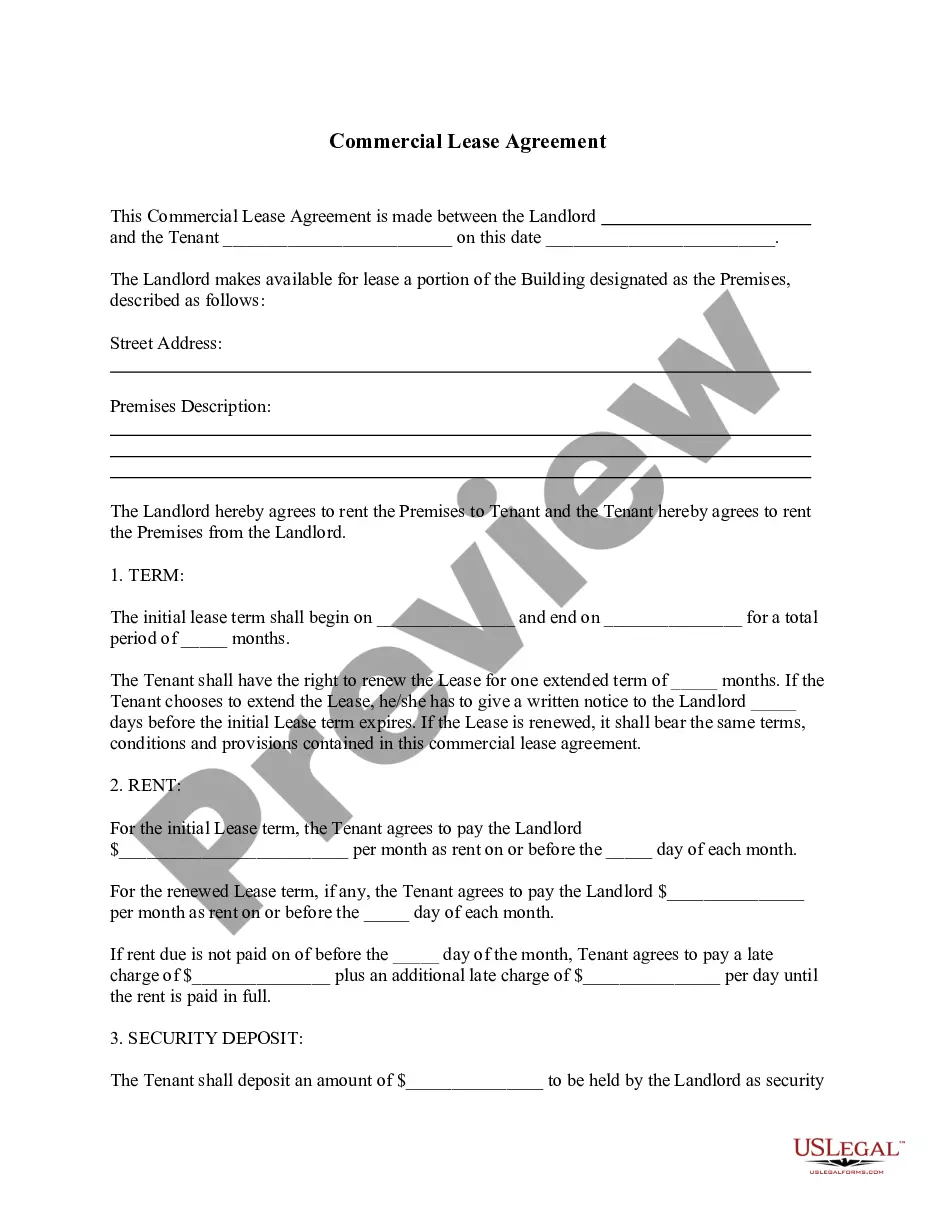
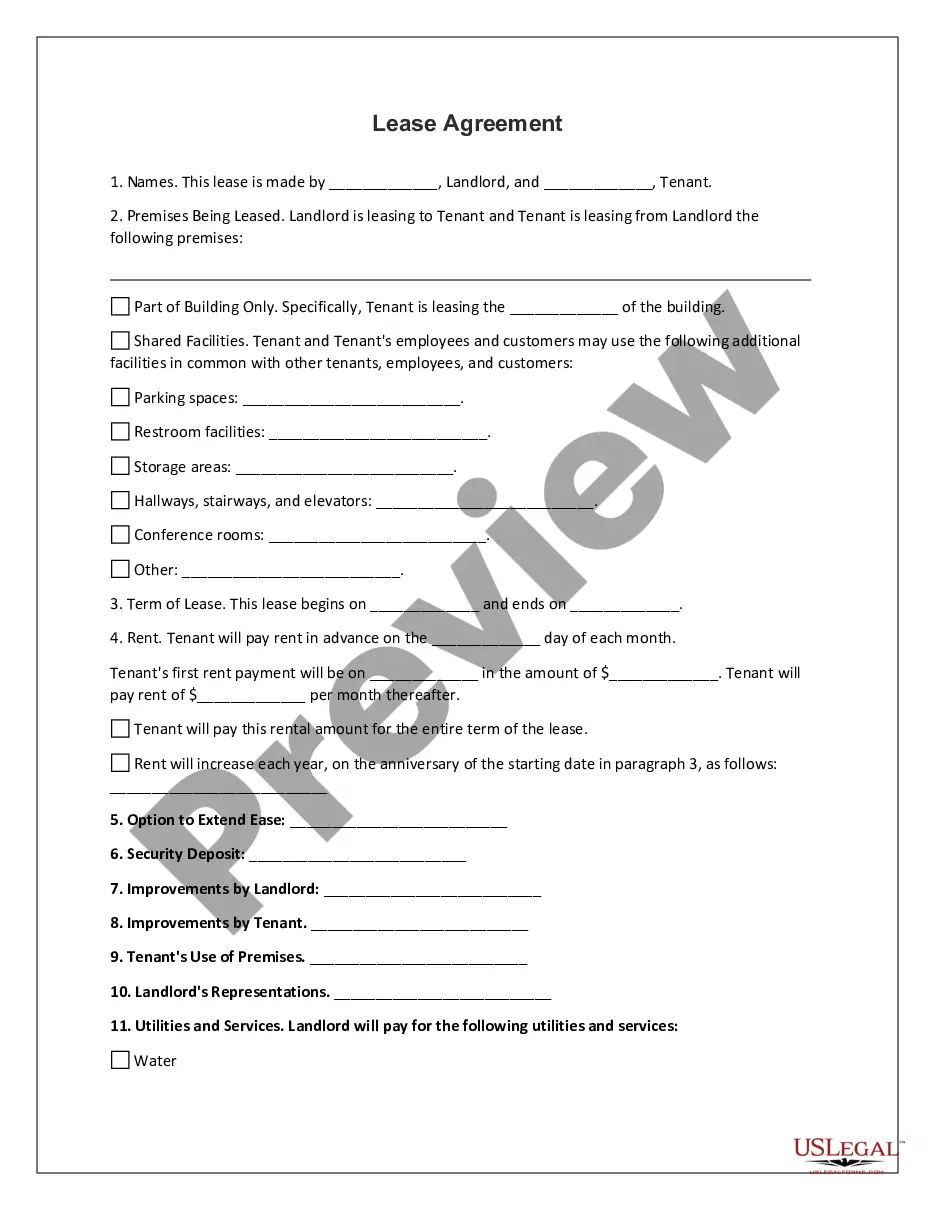
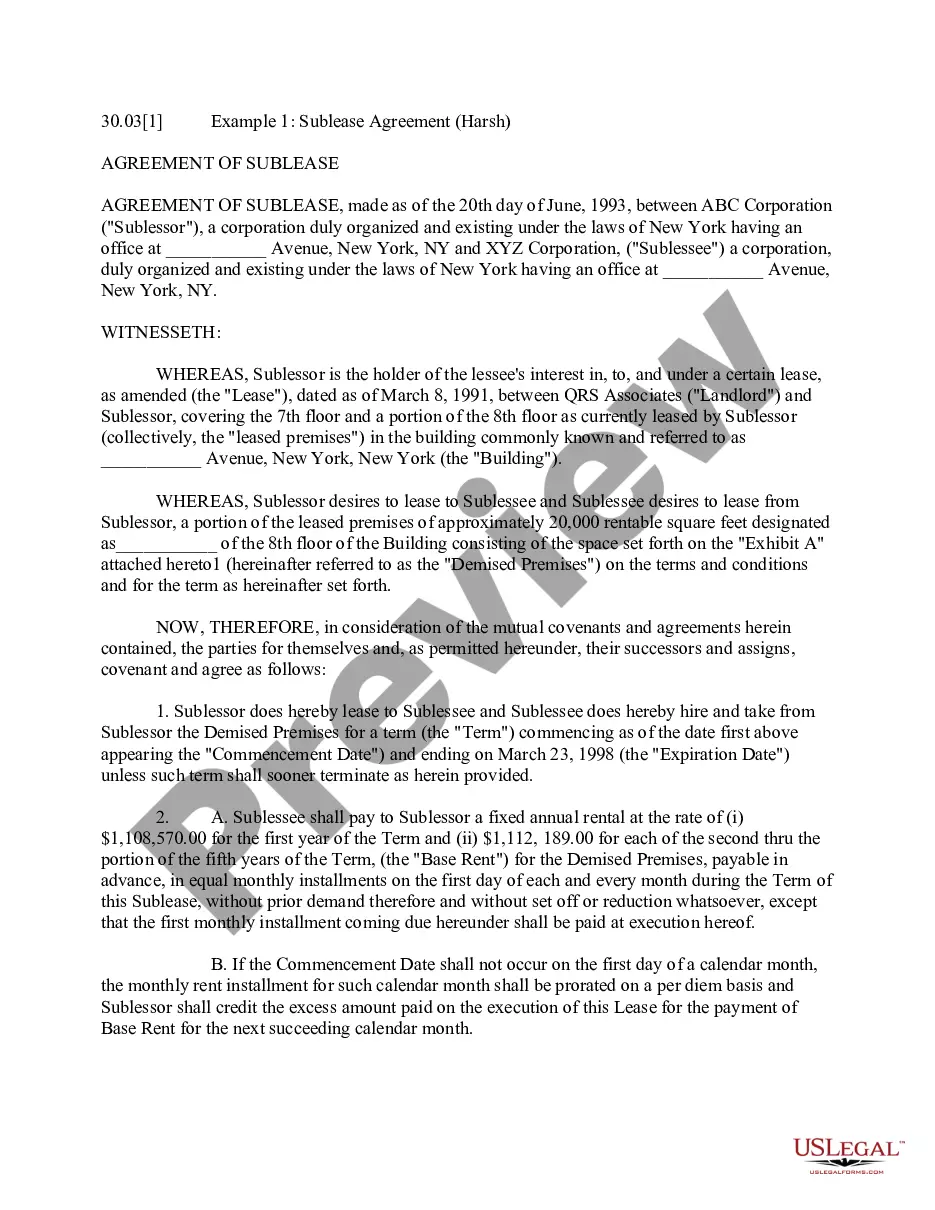
The Commercial Lease Agreement is a legal document used to lease property for commercial purposes. This agreement outlines the terms under which a lessor (the property owner) allows a lessee (the tenant) to use the property. It differs from residential leases in that it is specifically tailored to commercial businesses and includes clauses that address unique business-related scenarios. This form is important for defining each party's rights and obligations while ensuring clarity in commercial real estate transactions.
Key components of this form
- Identification of the parties involved: lessor and lessee.
- Description of the leased property, including location and any improvements.
- Term of the lease, including start and expiration dates.
- Rental payment details, including amount and payment frequency.
- Permitted use of the property, outlining intended business activities.
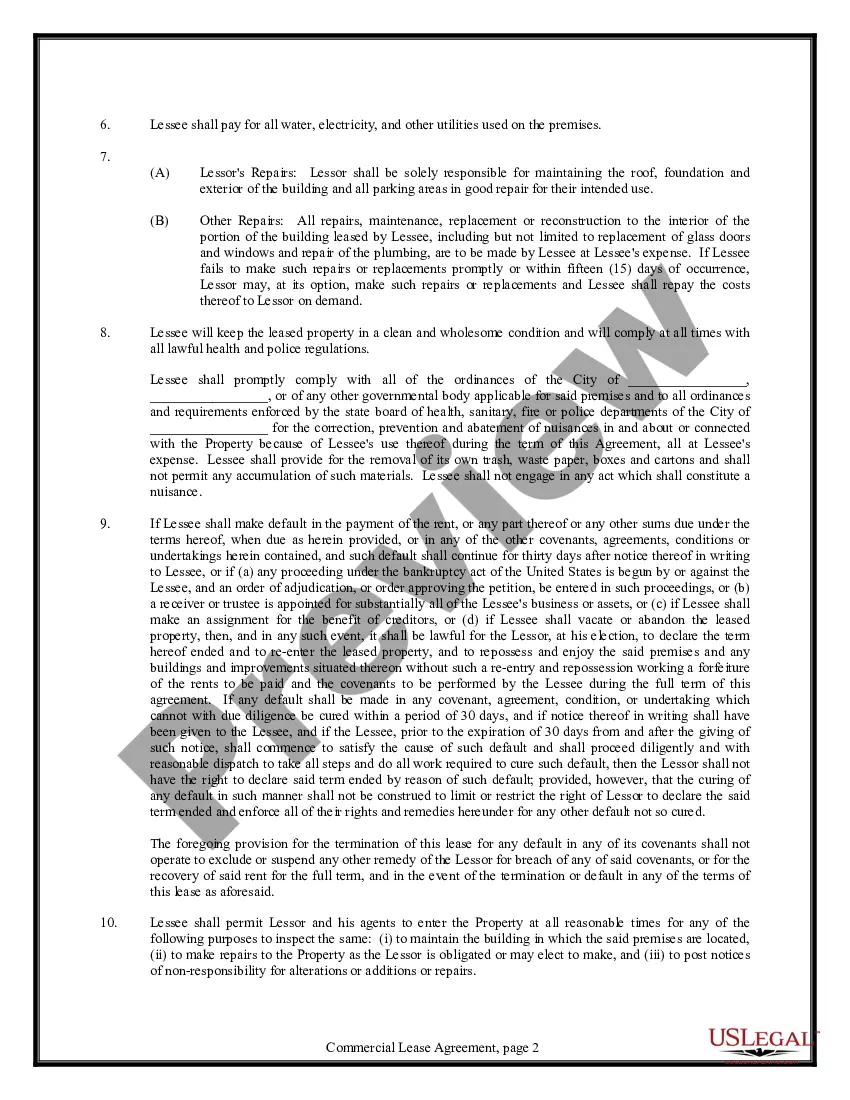
- Responsibilities for repairs and maintenance between lessor and lessee.
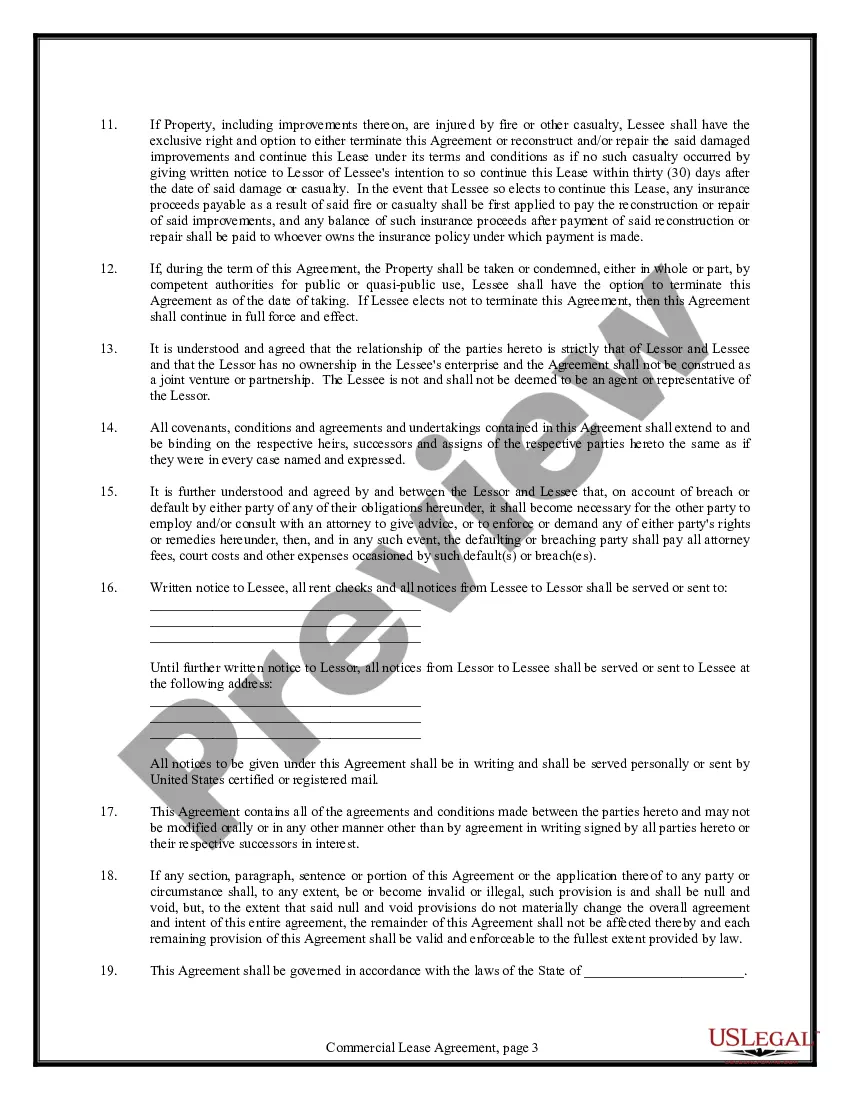
- Indemnity and insurance requirements for the property and business operations.
Common use cases
This Commercial Lease Agreement should be used when a business seeks to rent commercial property, whether for retail, office, or industrial use. It is necessary when both parties want to establish clear expectations and guidelines regarding rent payments, property maintenance, and permissible usage. This document is essential in preventing disputes and ensuring compliance with local laws related to commercial rentals.
Who needs this form
- Property owners (lessors) looking to lease their commercial space.
- Businesses and entrepreneurs (lessees) seeking rental space for their operations.
- Real estate professionals involved in commercial renting agreements.
- Individuals with little legal experience seeking a straightforward leasing solution.
How to prepare this document
- Identify the parties: fill in the names of the lessor and lessee.
- Specify the property: provide the address and details of the leased property.
- Enter the lease term: indicate the rental period, including start and end dates.
- Detail rental payments: write the annual rent amount and payment schedule.
- Outline use of the property: define the types of business activities permitted on the premises.
- Include indemnity and insurance information to protect both parties.
Does this form need to be notarized?
This form does not typically require notarization to be legally valid. However, some jurisdictions or document types may still require it. US Legal Forms provides secure online notarization powered by Notarize, available 24/7 for added convenience.
Get your form ready online
Our built-in tools help you complete, sign, share, and store your documents in one place.
Make edits, fill in missing information, and update formatting in US Legal Forms—just like you would in MS Word.
Download a copy, print it, send it by email, or mail it via USPS—whatever works best for your next step.
Sign and collect signatures with our SignNow integration. Send to multiple recipients, set reminders, and more. Go Premium to unlock E-Sign.
If this form requires notarization, complete it online through a secure video call—no need to meet a notary in person or wait for an appointment.
We protect your documents and personal data by following strict security and privacy standards.

Make edits, fill in missing information, and update formatting in US Legal Forms—just like you would in MS Word.

Download a copy, print it, send it by email, or mail it via USPS—whatever works best for your next step.

Sign and collect signatures with our SignNow integration. Send to multiple recipients, set reminders, and more. Go Premium to unlock E-Sign.

If this form requires notarization, complete it online through a secure video call—no need to meet a notary in person or wait for an appointment.

We protect your documents and personal data by following strict security and privacy standards.
Common mistakes
- Failing to clearly define the property and its permitted usages.
- Not specifying the duration of the lease and renewal terms.
- Neglecting to include insurance obligations and liability clauses.
- Omitting details on maintenance responsibilities which could lead to disputes.
Advantages of online completion
- Convenient access to legal forms that can be downloaded and completed at your own pace.
- Editable templates that can be customized to meet specific needs and circumstances.
- Access to forms drafted by licensed attorneys, ensuring reliability and legal compliance.
- Faster completion compared to traditional methods, with instant downloads available.
Quick recap
- The Commercial Lease Agreement defines the terms between lessor and lessee for commercial property rental.
- It is crucial for protecting both parties by outlining clear responsibilities and expectations.
- Always consider state-specific regulations that may impact the lease agreement.
- Using this form online offers convenience, customization, and legal security.
Looking for another form?
Form popularity
FAQ
Names of all tenants. Limits on occupancy. Term of the tenancy. Rent. Deposits and fees. Repairs and maintenance. Entry to rental property. Restrictions on tenant illegal activity.
The Introduction. The beginning of the lease agreement should contain the name of the landlord and tenant, as well as a statement of the agreement into which they are entering. Rent. Deposit. Taxes. Property Insurance. Utilities and Amenities. Remodeling and Improvements. Repairs and Maintenance.
Commercial leases fall within the ambit of the CPA and refer to an agreement between a landlord and a business setting out terms and conditions governing a property rental. The CPA applies to contracts entered with natural persons and juristic persons with an annual turnover or asset value of less than R2 million.
This means that a private lease agreement will be covered by the CPA.The CPA does not apply to transactions where the consumer is a company, close corporation or a trust with an annual turnover or net asset value of R2M.
The Introduction. The beginning of the lease agreement should contain the name of the landlord and tenant, as well as a statement of the agreement into which they are entering. Rent. Deposit. Taxes. Property Insurance. Utilities and Amenities. Remodeling and Improvements. Repairs and Maintenance.
The cost of registering a lease is generally paid by a tenant. Leases with a lease period of more than three years, including any option period, must be registered. This helps to protect the tenant's interests. The tenant pays their own legal costs.
The Consumer Protection Act (CPA) does NOT apply to all lease agreements (or rental agreements). This is really important to know because the Consumer Protection Act has a big influence on the lease and changes the legal position between the landlord and tenant significantly.Tenants already have lots of protection.
The Parties & Personal Guarantees. Lease Term & Renewals. Rent Payments and Expenses. Business Protection Clauses.
Single-net lease (N lease) In a single-net lease, the tenant pays a base rent, a share of the building's property tax, as well as utilities and janitorial services. Double-net lease (NN lease) Triple-net lease (NNN lease) Absolute triple-net lease.