Commercial Lease Agreement for Tenant
About this form
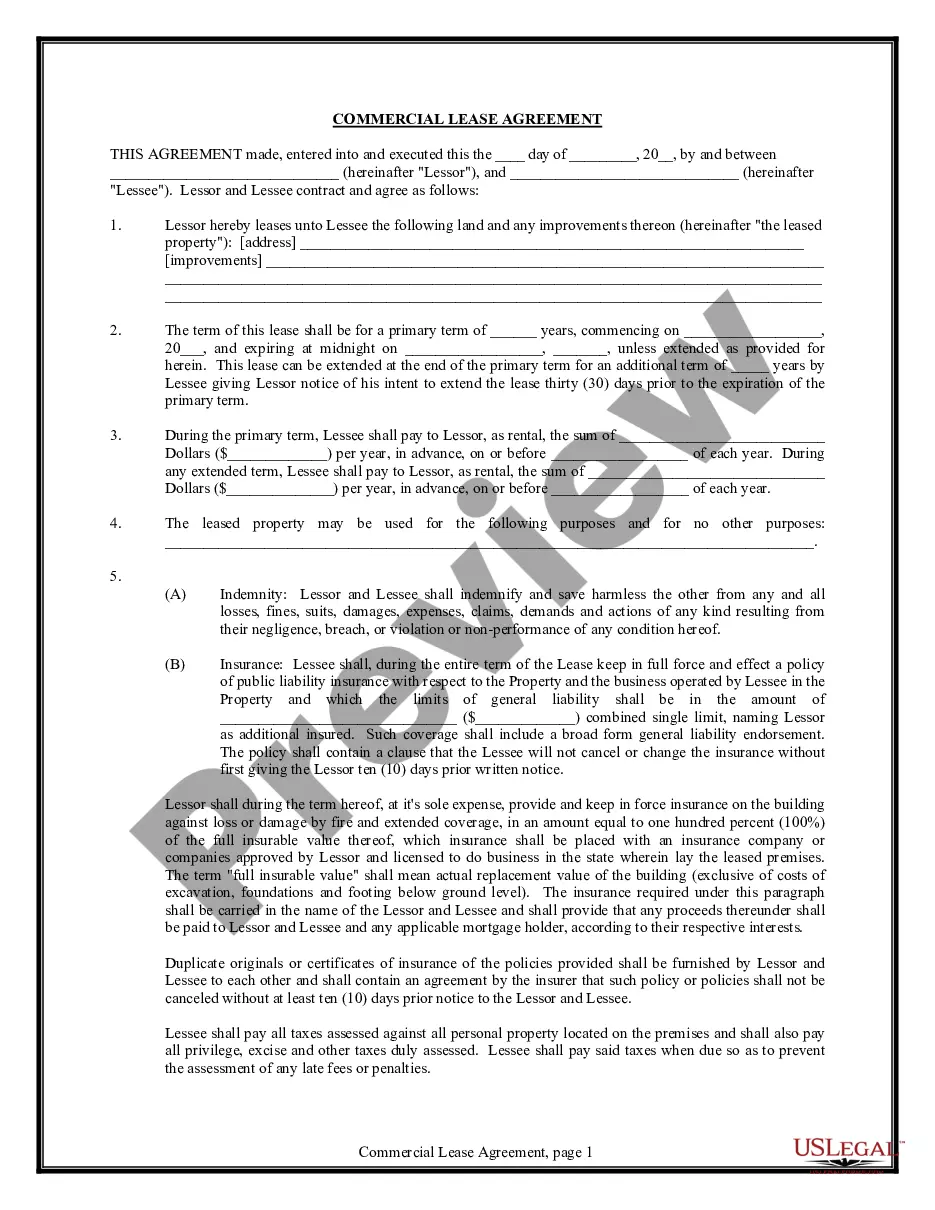
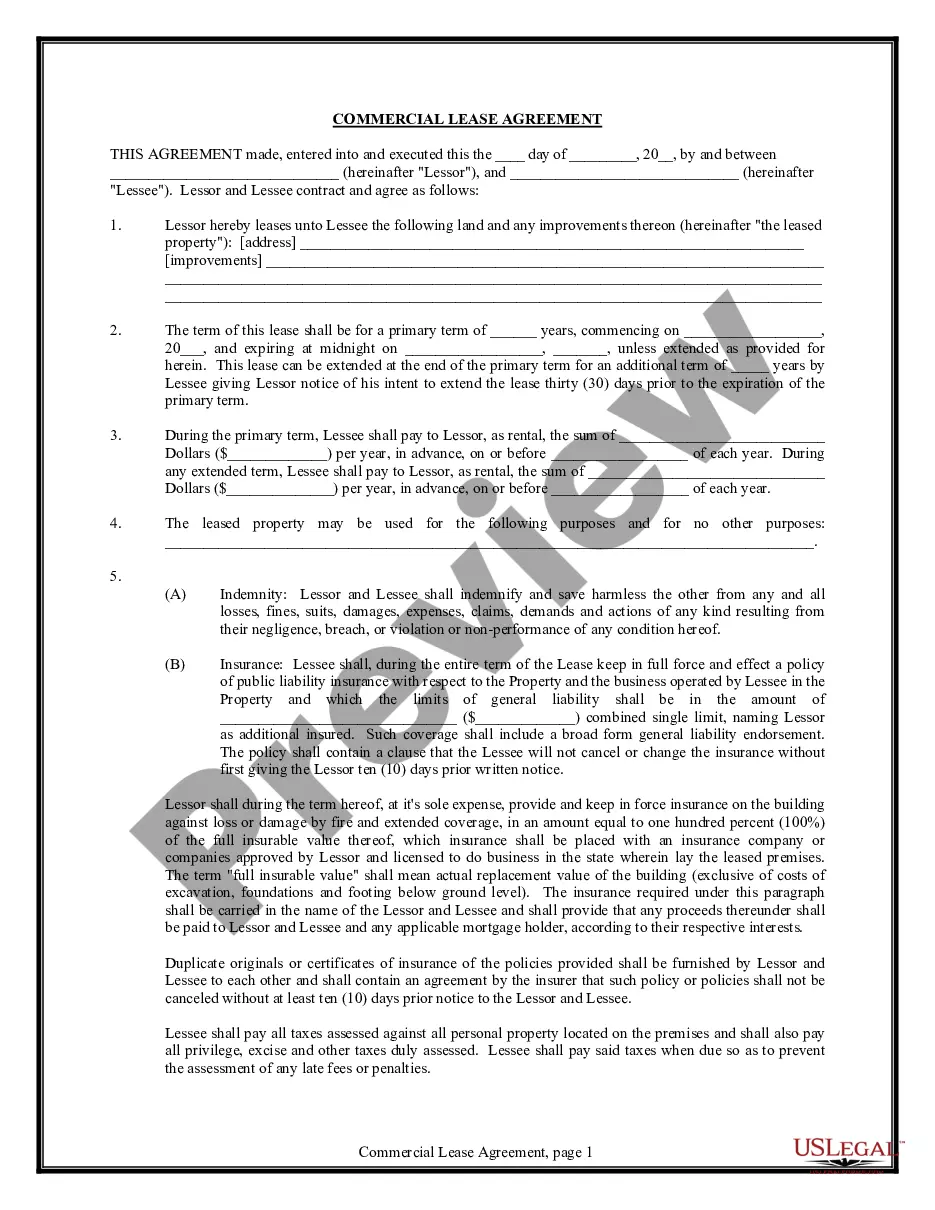
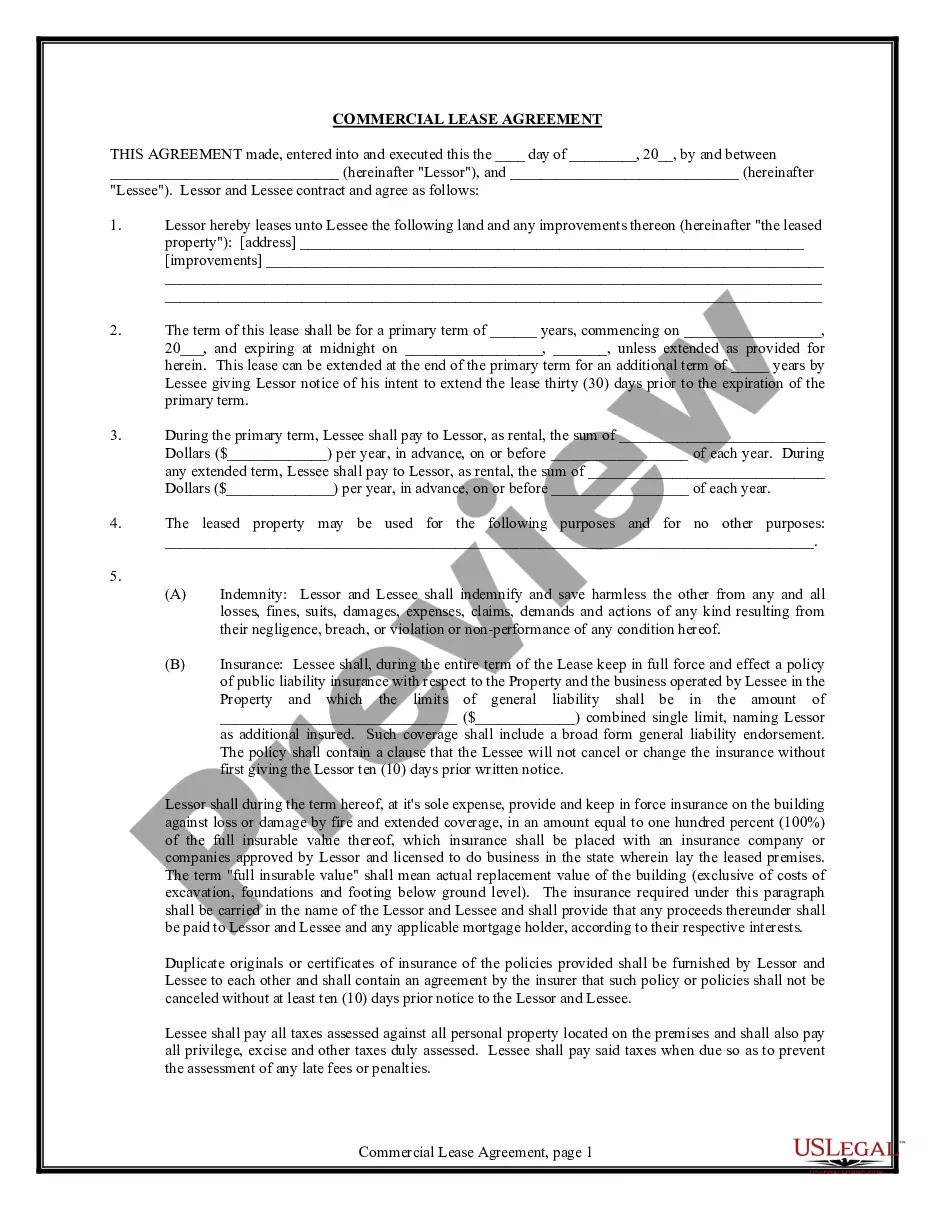
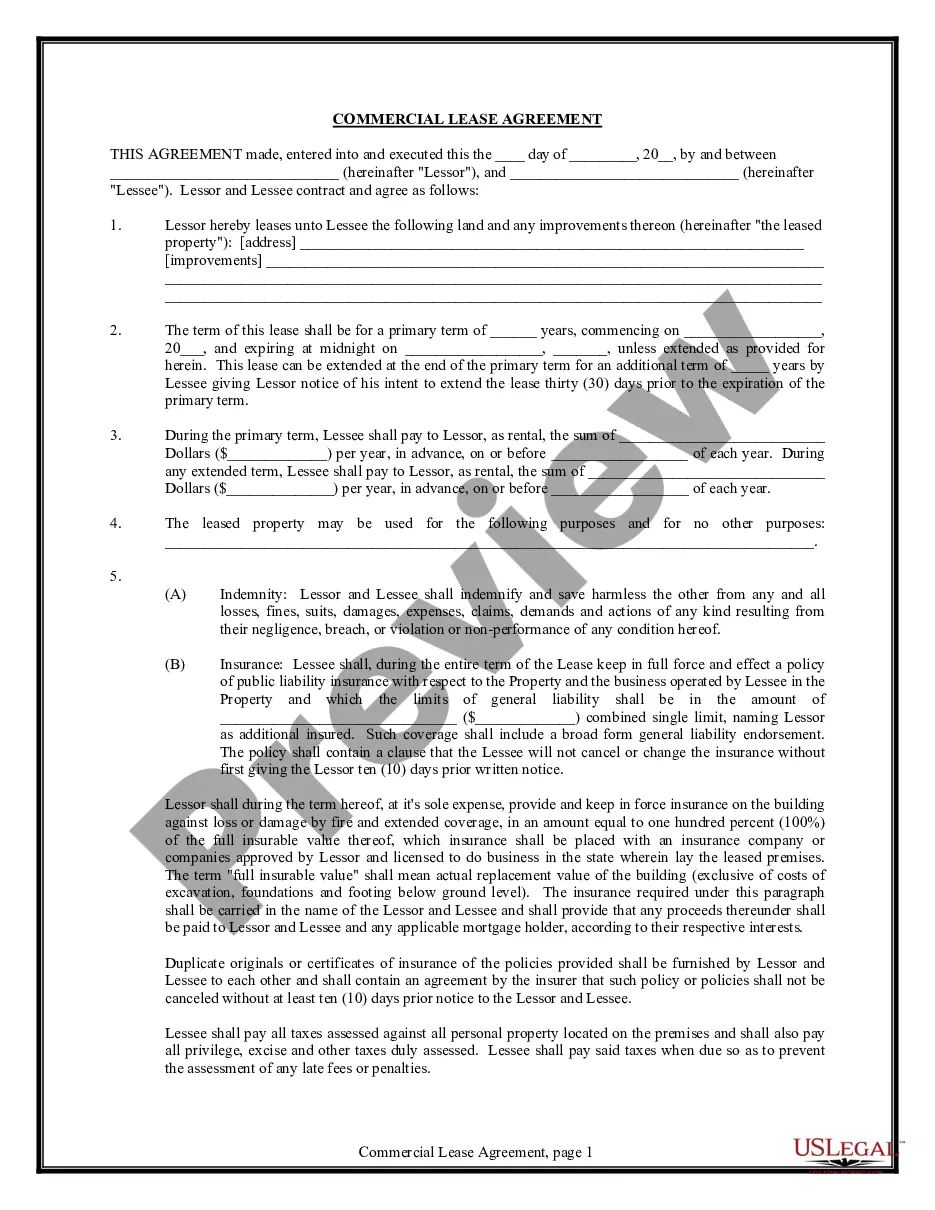
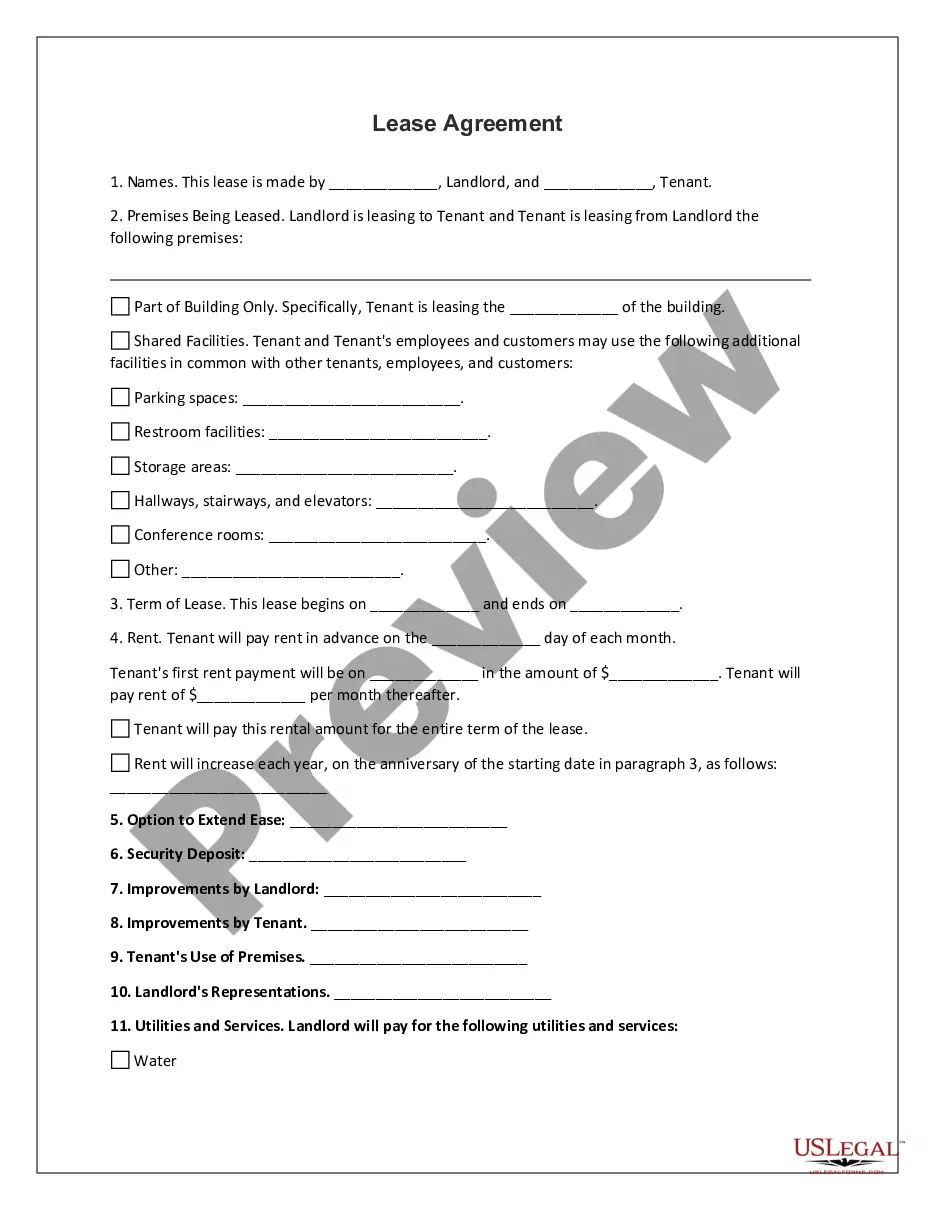
The Commercial Lease Agreement for Tenant is a legal document that outlines the terms and conditions under which a commercial property is rented. This agreement is specifically tailored for commercial purposes and includes vital sections related to rent, duration of the lease, and the responsibilities of both the landlord (Lessor) and tenant (Lessee). Unlike residential leases, this agreement is structured to address the unique aspects of commercial use, ensuring both parties are legally protected and aware of their obligations.
Main sections of this form
- Identification of the Lessor and Lessee with their contact information.
- Description of the leased property including address and improvements.
- Details of rental payments, including amount and due dates.
- Purpose of the lease and restrictions on property use.
- Responsibilities for maintenance, repairs, and property taxes.
- Terms for renewing or terminating the lease agreement.


When to use this form
This form is needed when an individual or business intends to lease a commercial property for business activities. It is suitable for various scenarios, such as opening a retail store, office space, warehouse, or any business requiring a location outside a residential setup. Using this form ensures that both the landlord and tenant have a clear understanding of their rights and responsibilities, avoiding disputes in the future.
Who this form is for
- Business owners looking to lease commercial property.
- Landlords seeking to rent out their commercial spaces.
- Real estate professionals managing commercial leases.
- Individuals unfamiliar with lease agreements, needing a clear template.
Completing this form step by step
- Identify the parties involved by filling in the names and addresses of the Lessor and Lessee.
- Specify the commercial property being leased, including the address and any physical improvements.
- Determine the lease duration, including the start and end dates, and any option for renewal.
- Enter the agreed rental amount and payment schedule.
- Outline the allowed uses for the property and any restrictions.
- Review and sign the agreement to finalize the lease.
Does this form need to be notarized?
This form does not typically require notarization unless specified by local law. However, having the lease agreement notarized can provide additional legal assurance and is often viewed favorably in court if disputes arise.
Get your form ready online
Our built-in tools help you complete, sign, share, and store your documents in one place.
Make edits, fill in missing information, and update formatting in US Legal Forms—just like you would in MS Word.
Download a copy, print it, send it by email, or mail it via USPS—whatever works best for your next step.
Sign and collect signatures with our SignNow integration. Send to multiple recipients, set reminders, and more. Go Premium to unlock E-Sign.
If this form requires notarization, complete it online through a secure video call—no need to meet a notary in person or wait for an appointment.
We protect your documents and personal data by following strict security and privacy standards.

Make edits, fill in missing information, and update formatting in US Legal Forms—just like you would in MS Word.

Download a copy, print it, send it by email, or mail it via USPS—whatever works best for your next step.

Sign and collect signatures with our SignNow integration. Send to multiple recipients, set reminders, and more. Go Premium to unlock E-Sign.

If this form requires notarization, complete it online through a secure video call—no need to meet a notary in person or wait for an appointment.

We protect your documents and personal data by following strict security and privacy standards.
Common mistakes to avoid
- Failing to specify all partiesâ names and complete contact information.
- Not clearly defining the purpose of the lease and allowed business activities.
- Omitting details on maintenance responsibilities, leading to disputes later.
- Forgetting to include the lease termination terms, which can cause confusion.
Benefits of completing this form online
- Convenient access to a professionally drafted legal document.
- Easy customization to fit specific property and lease terms.
- Fast download option, allowing immediate use.
- Reliability ensured by templates created by licensed attorneys.
Looking for another form?

Form popularity
FAQ
As the landlord of a commercial property, your main responsibilities will be to keep up with any maintenance and repairs to the property and to ensure it is a safe place for people to work.
As long as the contract spells out specific details and both parties have signed that they agree to the contract's terms, a handwritten contract is legally binding and enforceable in court.
Just like a residential rental or lease, your commercial landlord is going to insist on a security deposit. The security deposit can be used by the landlord for a number of reasons, but most commonly it will be used to cover any damage at the end of your lease if you do not renew your agreement.
A typically commercial lease agreement The type of leased property (e.g., an industrial building, an office building, a retail center). The square footage of the leased space. The length of the tenancy and whether the tenant has an option to renew the lease. If so, how frequently and under what terms.
The Introduction. The beginning of the lease agreement should contain the name of the landlord and tenant, as well as a statement of the agreement into which they are entering. Rent. Deposit. Taxes. Property Insurance. Utilities and Amenities. Remodeling and Improvements. Repairs and Maintenance.
§ 704.07(3). Typically, a landlord is responsible for the repair of structural and major component parts of the leased premises, as well as any replacements that would be considered capital expenditures, such as the roof, parking lot, and foundation.
Complying with all state and local health and building codes. Maintaining structural components and a reasonably weather-protected unit. Providing the necessary heat, electric, and hot and cold water facilities. Making any requested repairs promptly.
Name the parties. A simple rental agreement form needs to name the parties signing the lease and where they live. Describe the premises. Define the term of the lease. Set how much rent is owed. Assign a security deposit amount. Finalize the lease.
Fixtures and fittings. Any fixtures and fittings you have installed in the property need to be safe to use. Gas and electricity. Gov.uk says that tenants should maintain equipment according to the manufacturer's instructions. Maintenance and repair. Asbestos. Fire safety.