Commercial Lease Agreement for Restaurant
Overview of this form
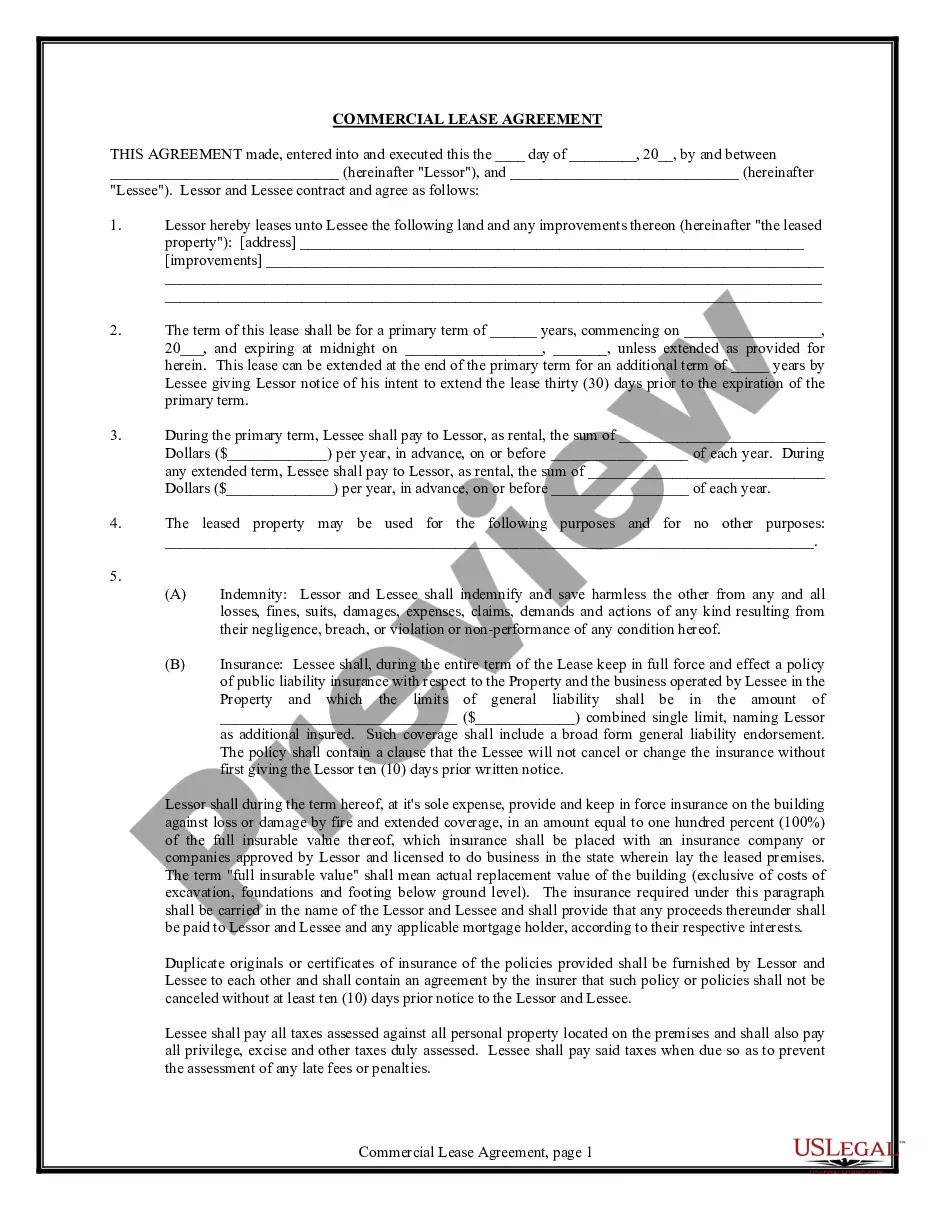
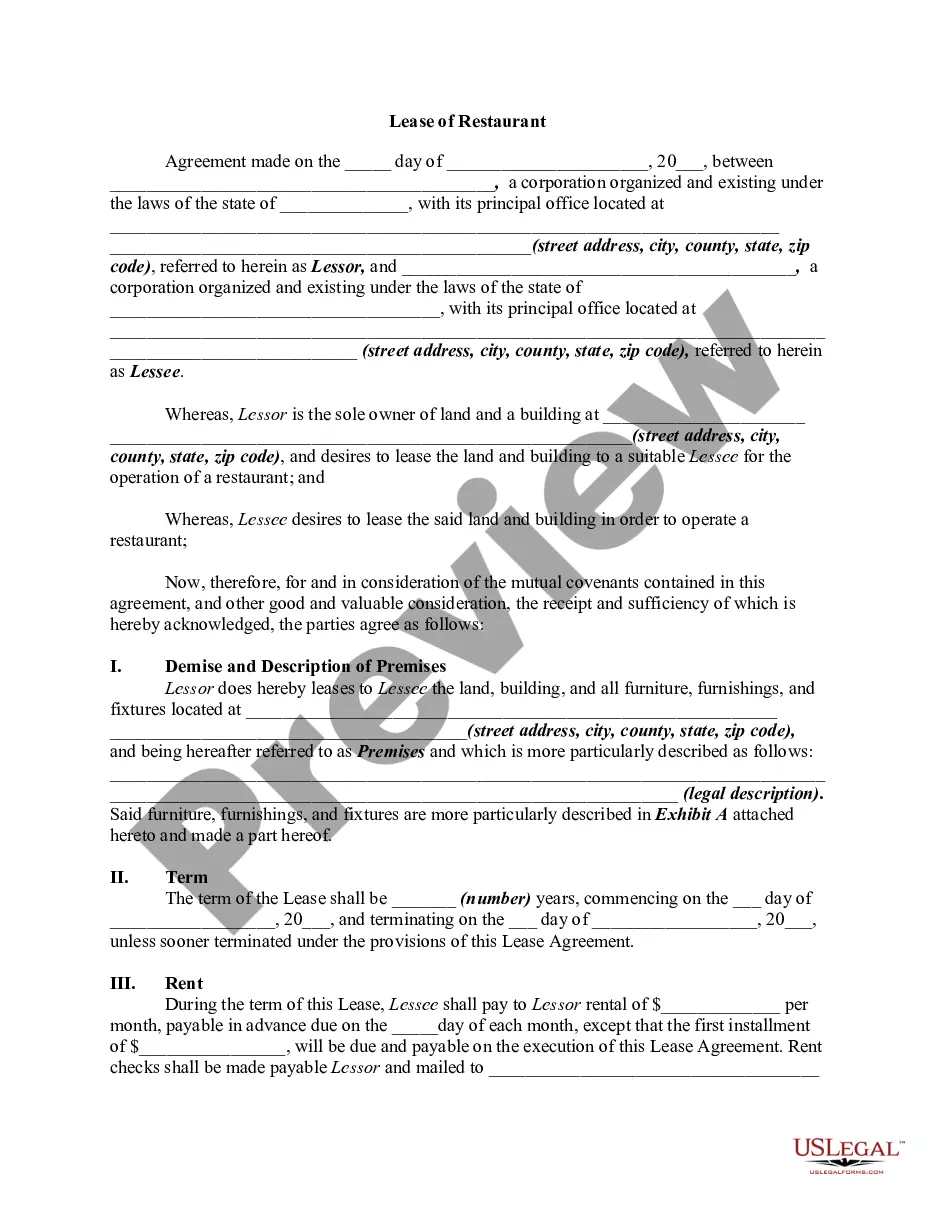
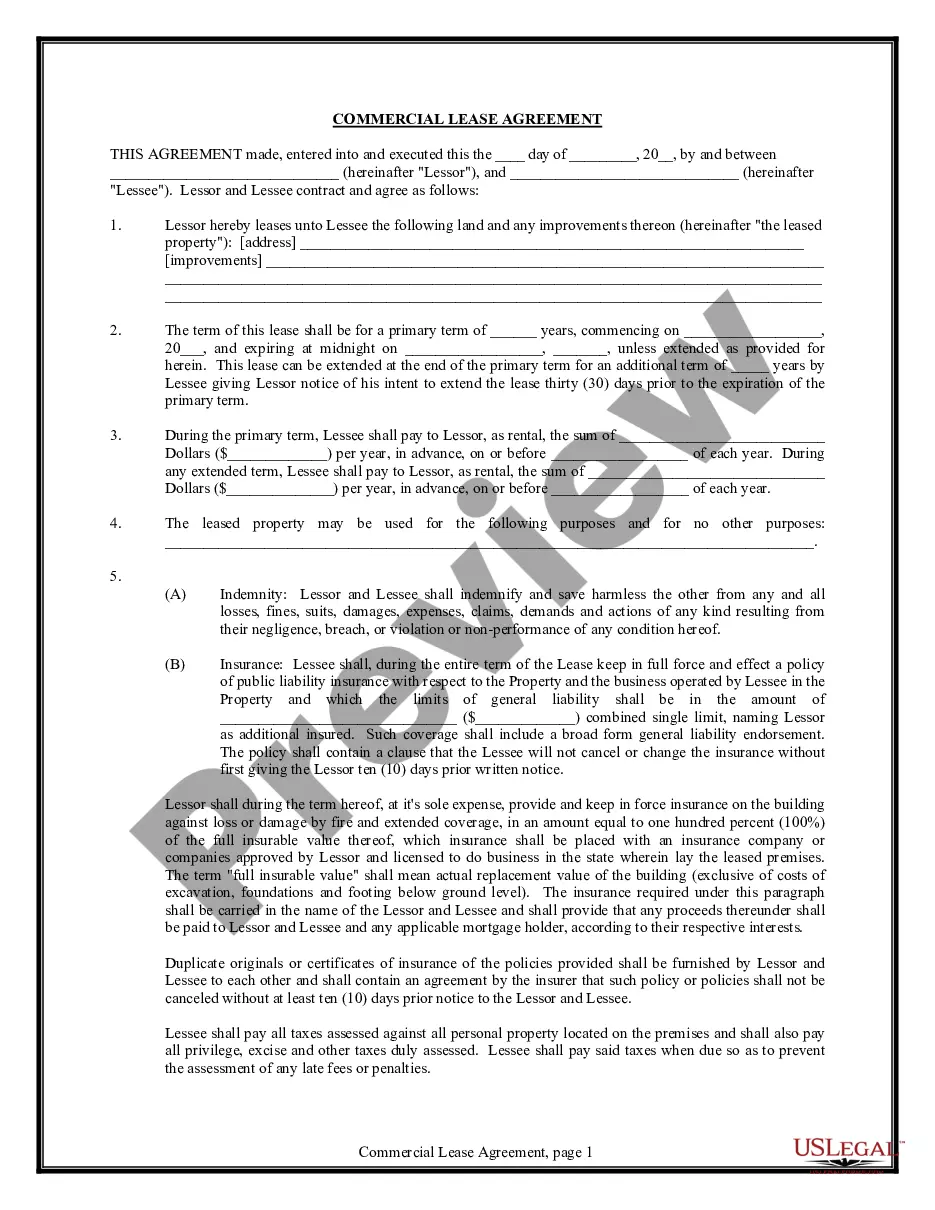
The Commercial Lease Agreement for Restaurant is a legal document that outlines the terms and conditions under which a property owner (the Lessor) rents out a commercial space specifically for restaurant operations to a tenant (the Lessee). This agreement is crucial for ensuring both parties understand their rights and responsibilities, differentiating it from other lease agreements that may not specifically cater to the needs of a restaurant business.
Key parts of this document
- Parties involved: Identifies the Lessor and Lessee.
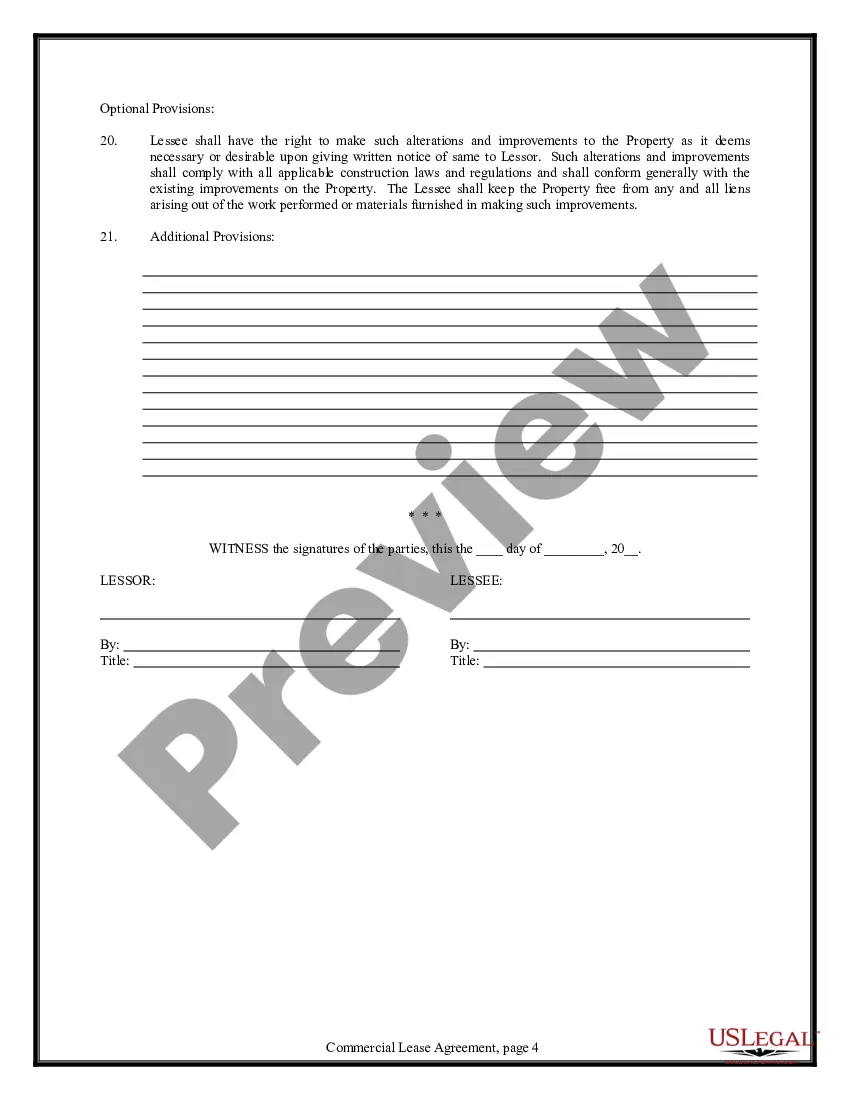
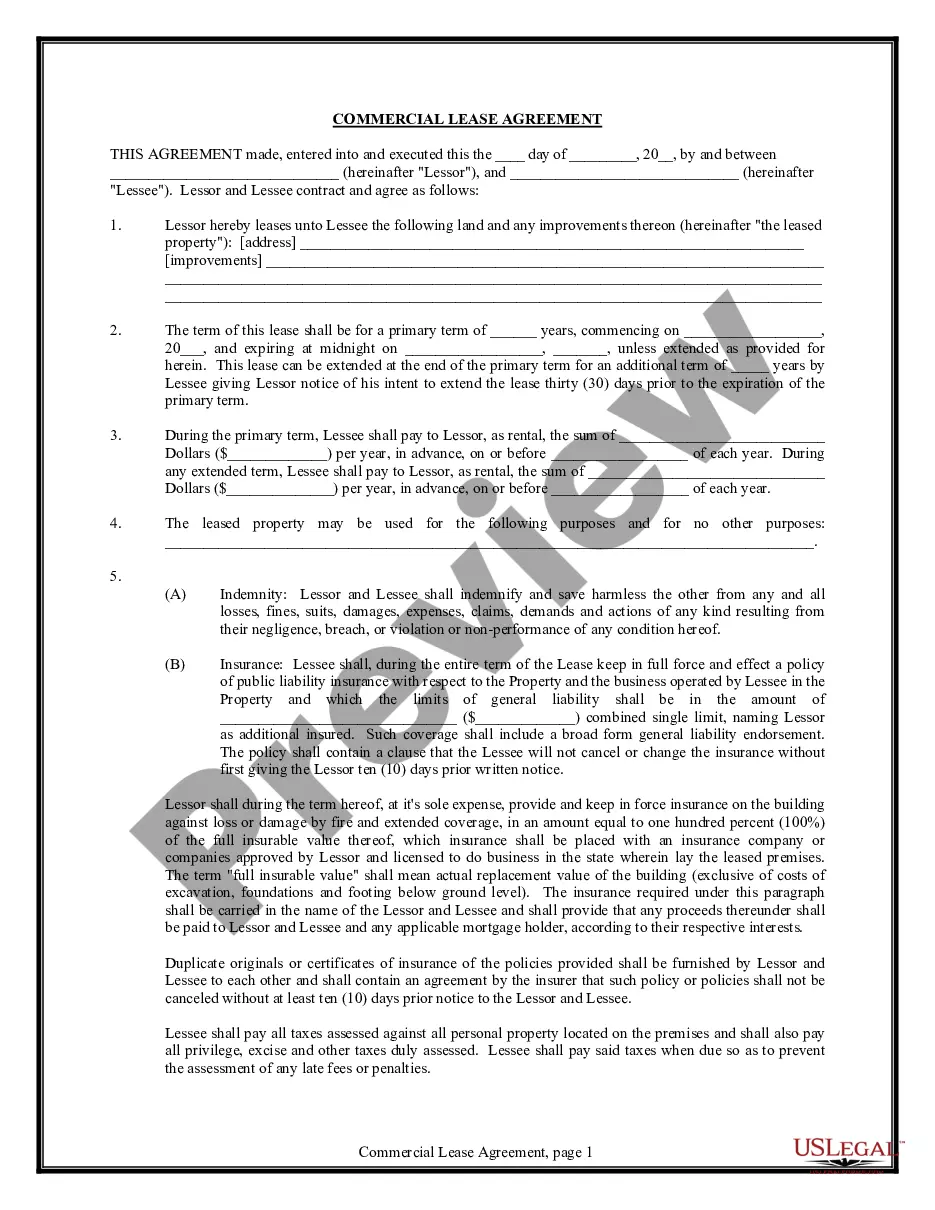
- Description of the property: Includes the address and any improvements on the leased premises.
- Lease term: Specifies the duration of the lease and options for extension.
- Rent details: Outlines rental payment amounts and schedules.
- Use of premises: Defines acceptable activities within the leased property.
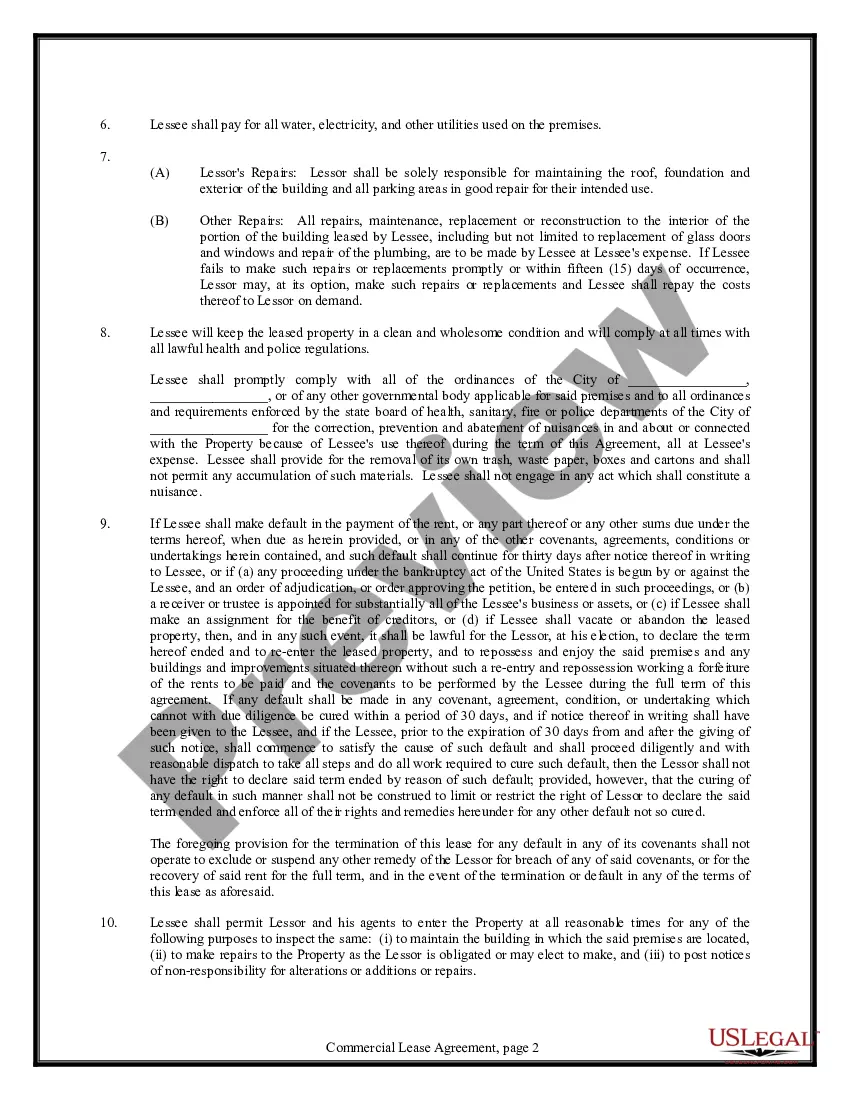
- Insurance and indemnity: Establishes insurance requirements and liability protections for both parties.
- Repair obligations: States which repairs and maintenance are the responsibility of the Lessor and Lessee.
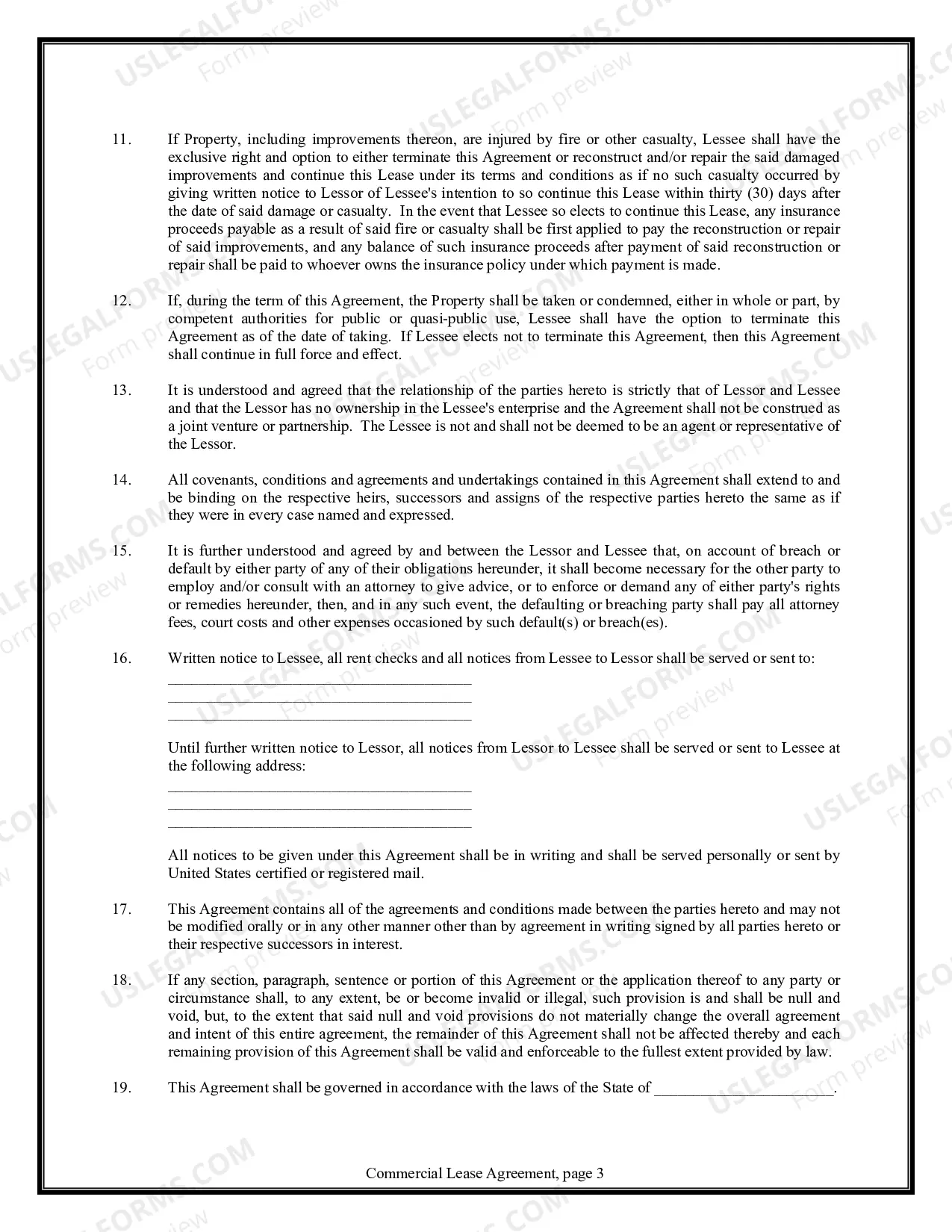
- Default clauses: Details the conditions under which the lease may be terminated due to non-compliance.
When to use this form
This form is necessary when you are a property owner looking to lease a commercial space for restaurant purposes or a restaurateur seeking to rent such a space. Use this agreement to clearly define the terms of your lease, including the rental amount, duration, and maintenance responsibilities, to prevent disputes later on.
Who needs this form
- Property owners (Lessors) who wish to rent out their commercial property for restaurant use.
- Tenants (Lessees) who are restaurant operators looking to secure a lease for a commercial space.
- Real estate professionals assisting clients with commercial lease agreements.
How to complete this form
- Identify the parties: Enter the names of the Lessor and Lessee.
- Specify the property: Fill in the address and any details about the improvements on the property.
- Enter the lease term: State the duration of the lease and any options for extension.
- Detail rental payments: Specify the amount of rent and payment dates for the initial and extension terms.
- Outline permitted uses: Clearly indicate the intended use of the property for restaurant purposes.
- Sign and date: Ensure both parties sign the agreement to make it legally binding.
Notarization guidance
This form does not typically require notarization unless specified by local law. However, having it notarized may add an extra layer of security and validity to the agreement.
Get your form ready online
Our built-in tools help you complete, sign, share, and store your documents in one place.
Make edits, fill in missing information, and update formatting in US Legal Forms—just like you would in MS Word.
Download a copy, print it, send it by email, or mail it via USPS—whatever works best for your next step.
Sign and collect signatures with our SignNow integration. Send to multiple recipients, set reminders, and more. Go Premium to unlock E-Sign.
If this form requires notarization, complete it online through a secure video call—no need to meet a notary in person or wait for an appointment.
We protect your documents and personal data by following strict security and privacy standards.

Make edits, fill in missing information, and update formatting in US Legal Forms—just like you would in MS Word.

Download a copy, print it, send it by email, or mail it via USPS—whatever works best for your next step.

Sign and collect signatures with our SignNow integration. Send to multiple recipients, set reminders, and more. Go Premium to unlock E-Sign.

If this form requires notarization, complete it online through a secure video call—no need to meet a notary in person or wait for an appointment.

We protect your documents and personal data by following strict security and privacy standards.
Common mistakes
- Failing to clearly define the permitted uses of the property.
- Not specifying the duration of the lease or renewal terms accurately.
- Neglecting to outline both parties' responsibilities regarding repairs and maintenance.
- Omitting insurance requirements or incorrectly interpreting liability clauses.
Why use this form online
- Immediate access to a professionally drafted lease template.
- Easier customization to reflect the specific terms negotiated between parties.
- Time-saving convenience to download and complete the form at your own pace.
- Reliability and adherence to legal standards, providing peace of mind for both parties.
Looking for another form?
Form popularity
FAQ
A Triple Net Lease (NNN Lease) is the most common type of lease in commercial buildings. In a NNN lease, the rent does not include operating expenses. Operating expenses include utilities, maintenance, property taxes, insurance and property management.
Triple Net Lease Arguably the favorite among commercial landlords, the triple net lease, or NNN lease makes the tenant responsible for the majority of costs, including the base rent, property taxes, insurance, utilities and maintenance.
A typical commercial lease is a 5 and 5, meaning a 5 year lease, with an option to renew for another 5 years. Options usually must be exercised by writing a letter to the landlord some months before the initial lease term expires, expressly exercising the option.
Name the parties. A simple rental agreement form needs to name the parties signing the lease and where they live. Describe the premises. Define the term of the lease. Set how much rent is owed. Assign a security deposit amount. Finalize the lease.
The Introduction. The beginning of the lease agreement should contain the name of the landlord and tenant, as well as a statement of the agreement into which they are entering. Rent. Deposit. Taxes. Property Insurance. Utilities and Amenities. Remodeling and Improvements. Repairs and Maintenance.
As long as the contract spells out specific details and both parties have signed that they agree to the contract's terms, a handwritten contract is legally binding and enforceable in court.
Name the parties. A simple rental agreement form needs to name the parties signing the lease and where they live. Describe the premises. Define the term of the lease. Set how much rent is owed. Assign a security deposit amount. Finalize the lease.
Is the business conducted from the premises retail or non-retail?Fashion stores, restaurants, hairdressers are the typical types of retail business that we associate with retail leasing.
Summary. There are different types of leases, but the most common types are absolute net lease, triple net lease, modified gross lease, and full-service lease. Tenants and proprietors need to understand them fully before signing a lease agreement.