Commercial Lease Agreement for Warehouse
What is this form?
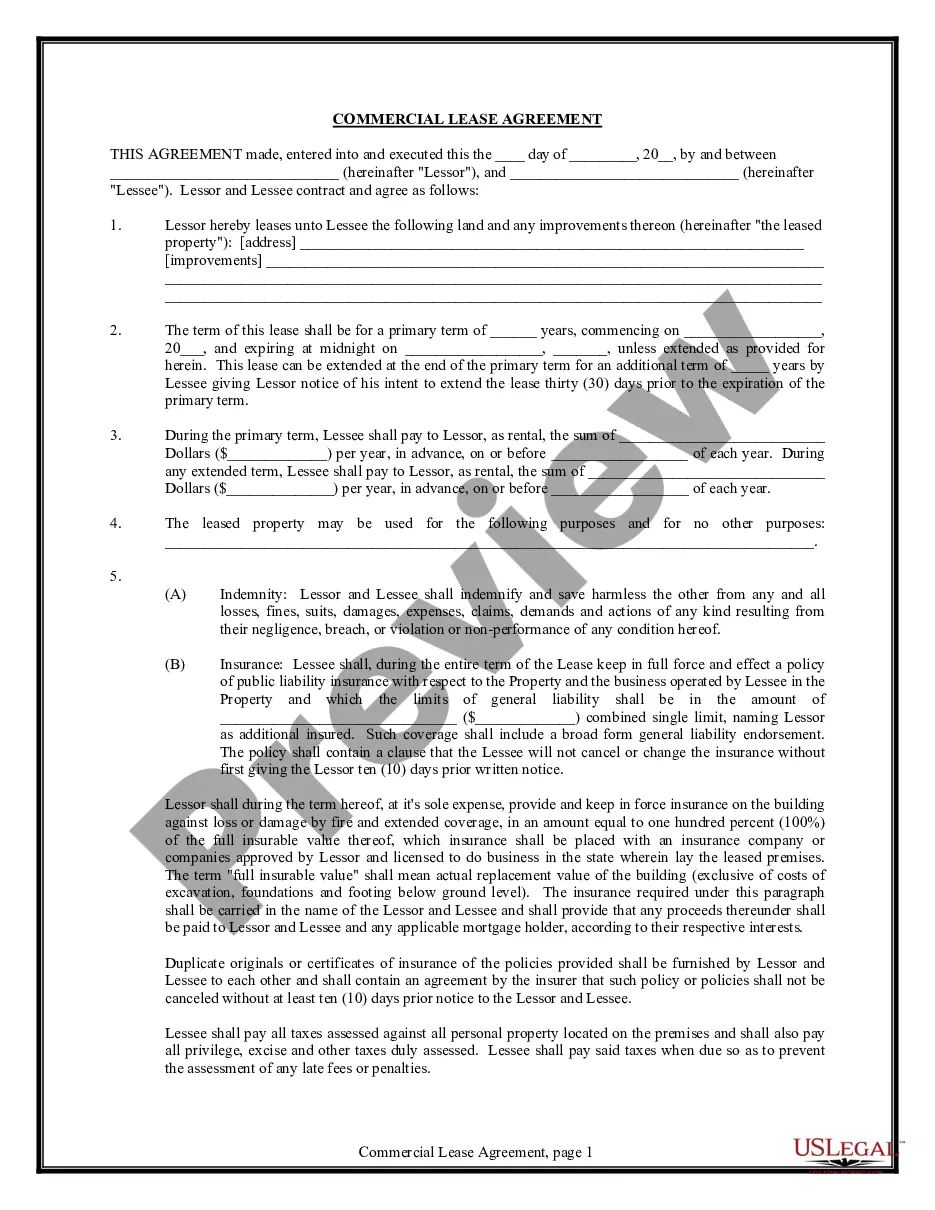
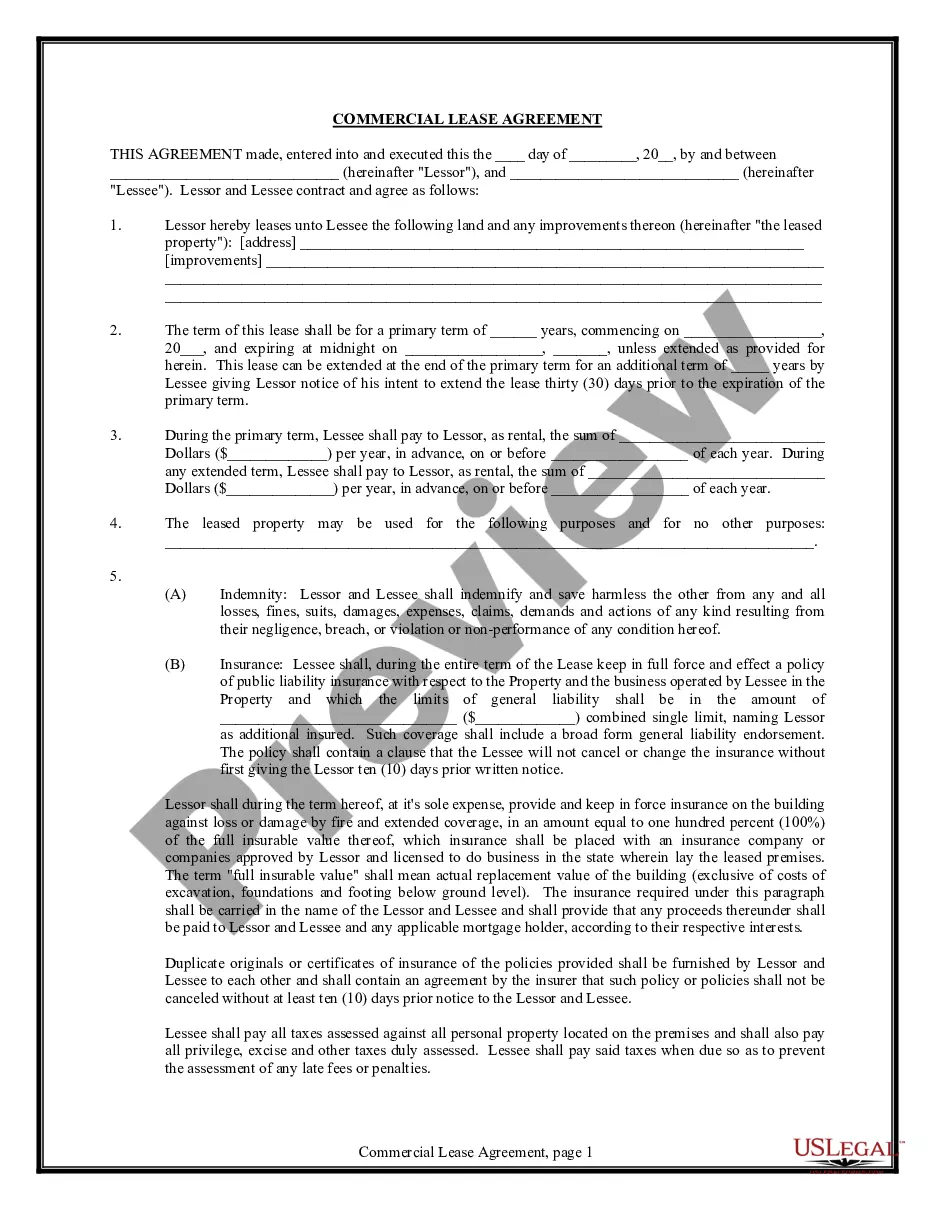
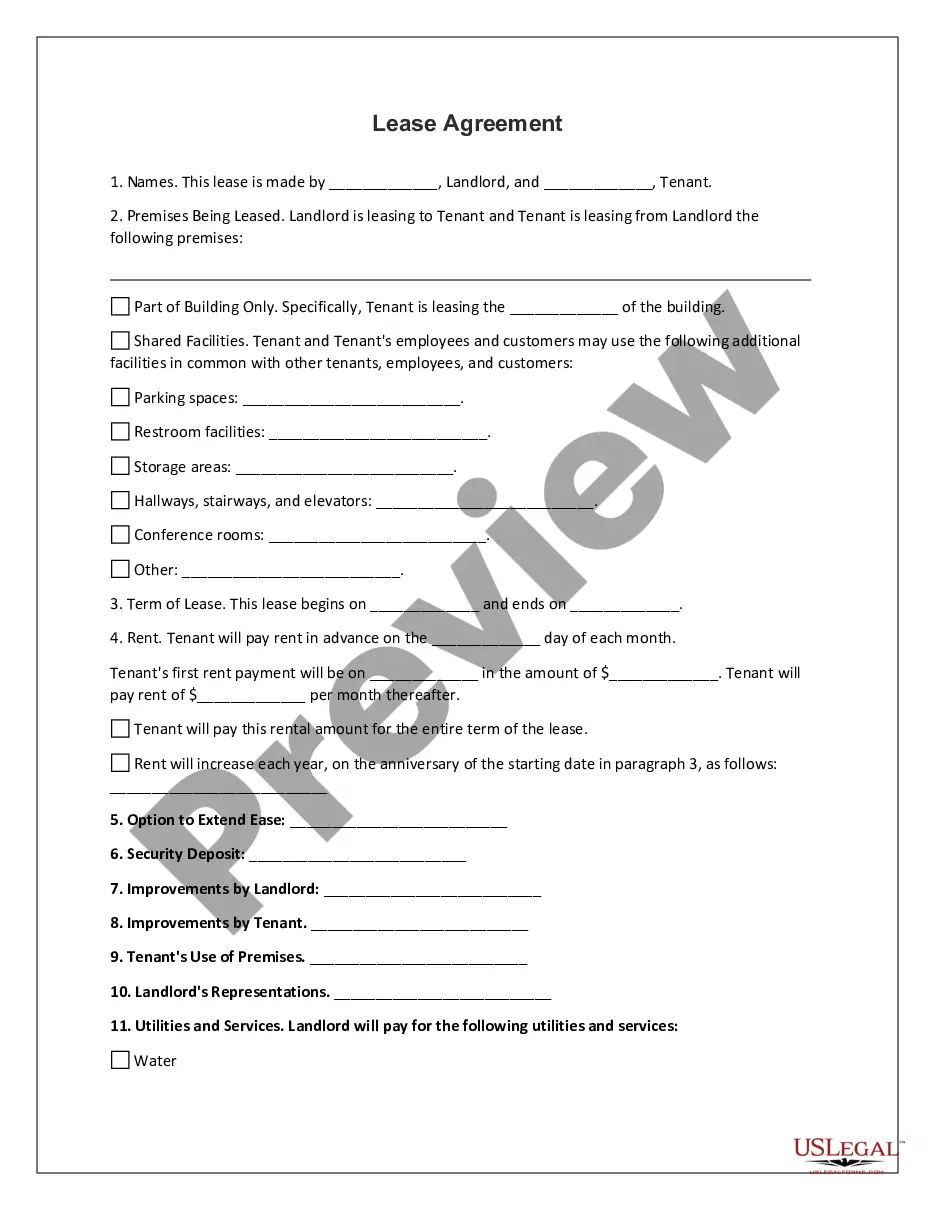
The Commercial Lease Agreement for Warehouse is a legal document outlining the terms under which a property owner (Lessor) rents a warehouse space to a business (Lessee). This agreement serves to protect the rights and obligations of both parties and is essential for commercial leasing arrangements. Unlike residential lease agreements, this form pertains specifically to commercial real estate and is tailored for the unique needs of businesses leasing warehouse space.
Form components explained
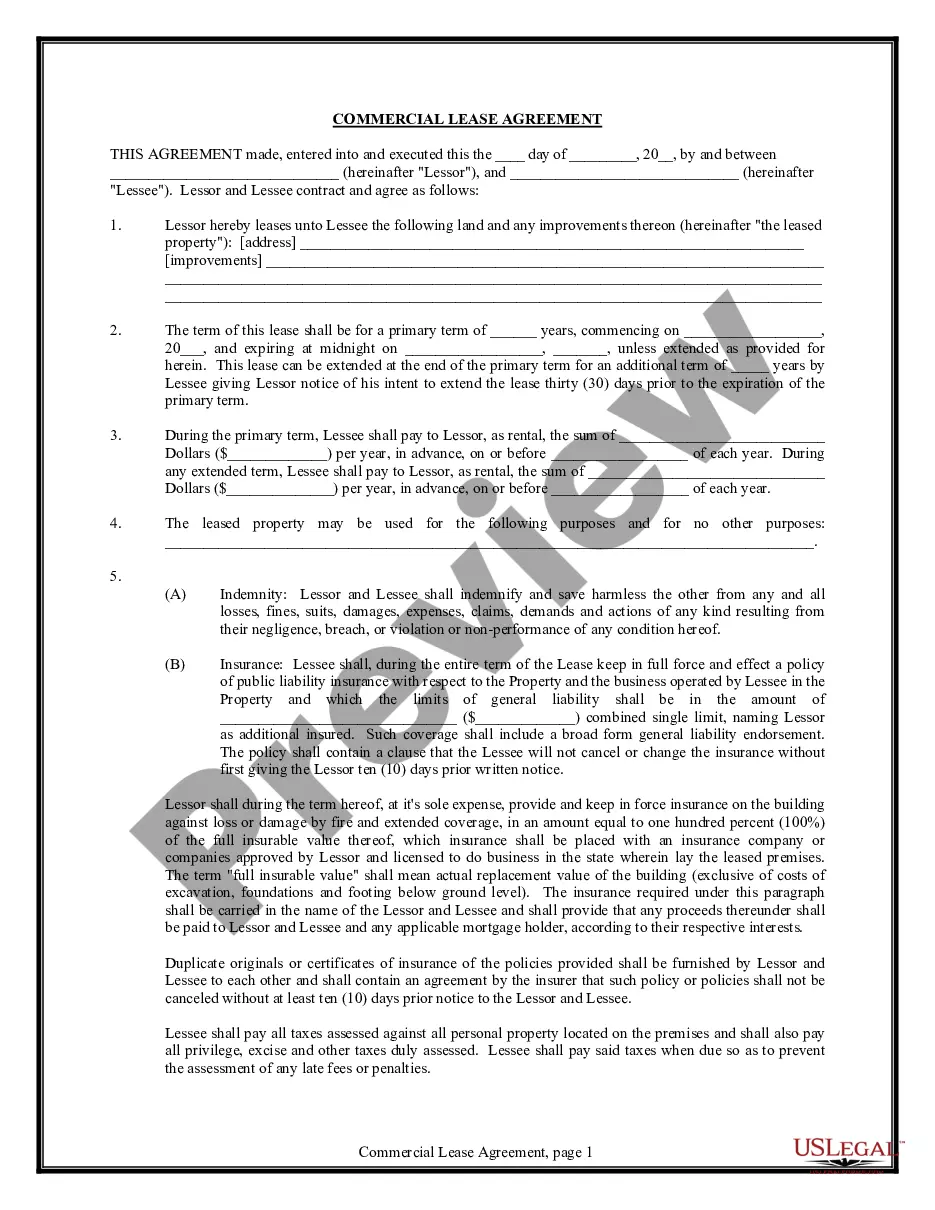
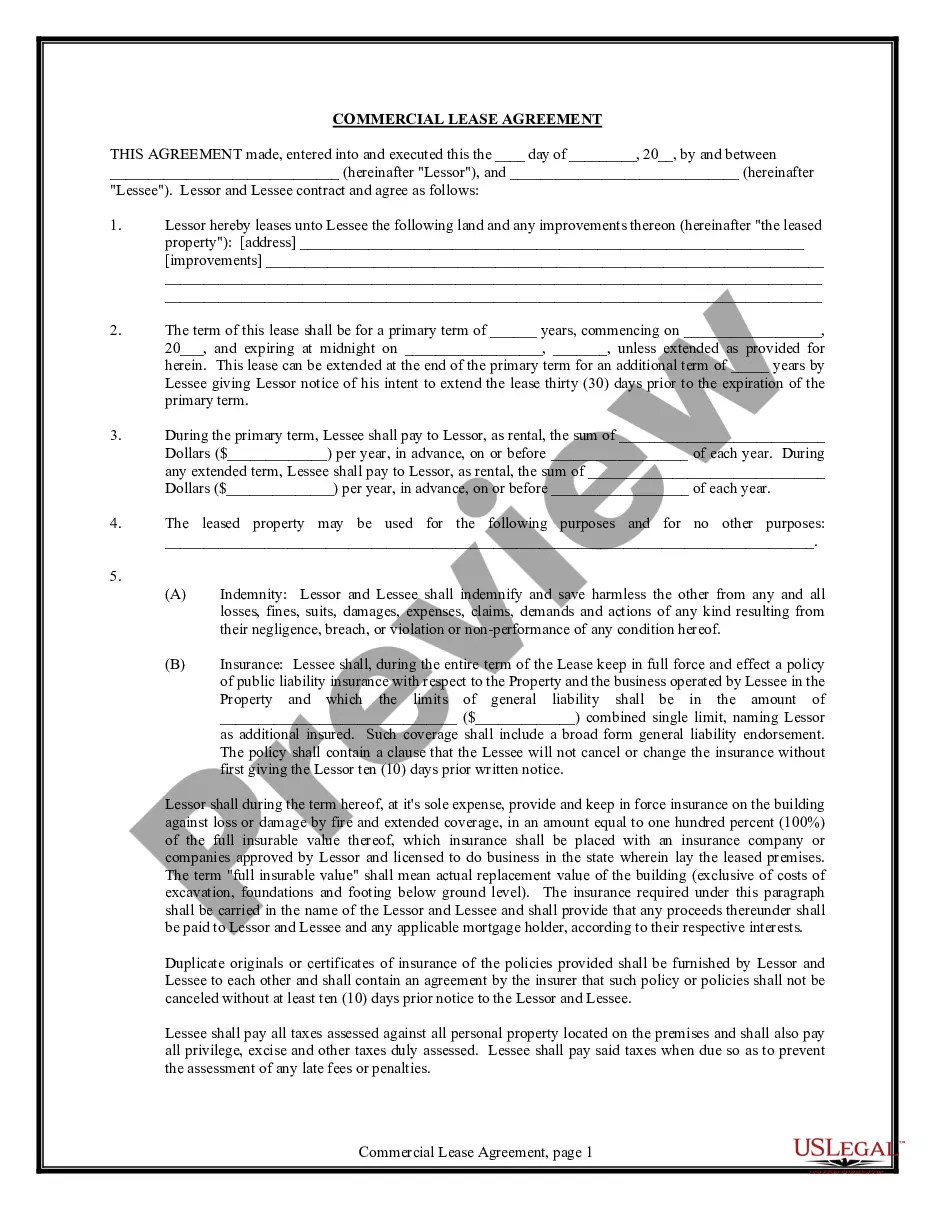
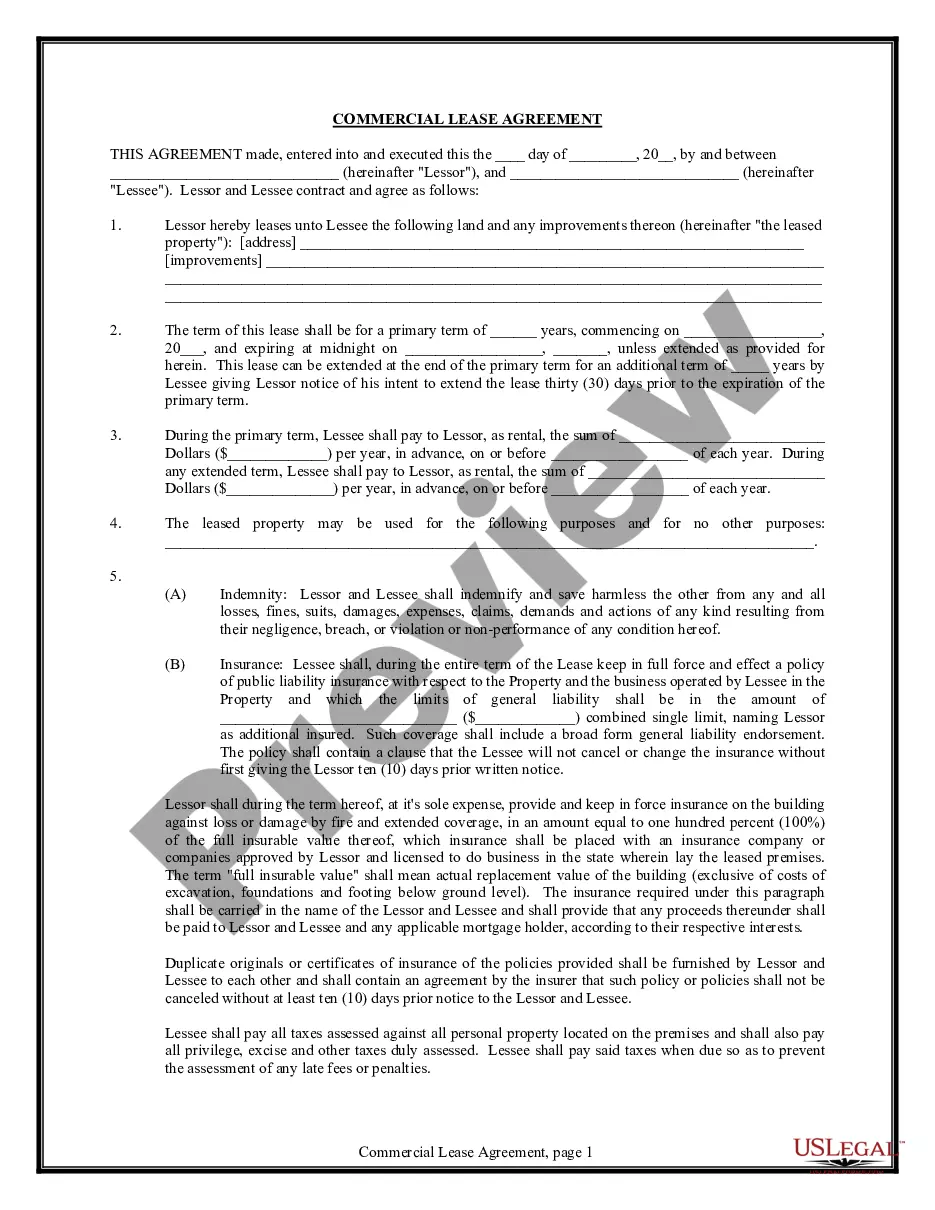
- Identification of the Lessor and Lessee.
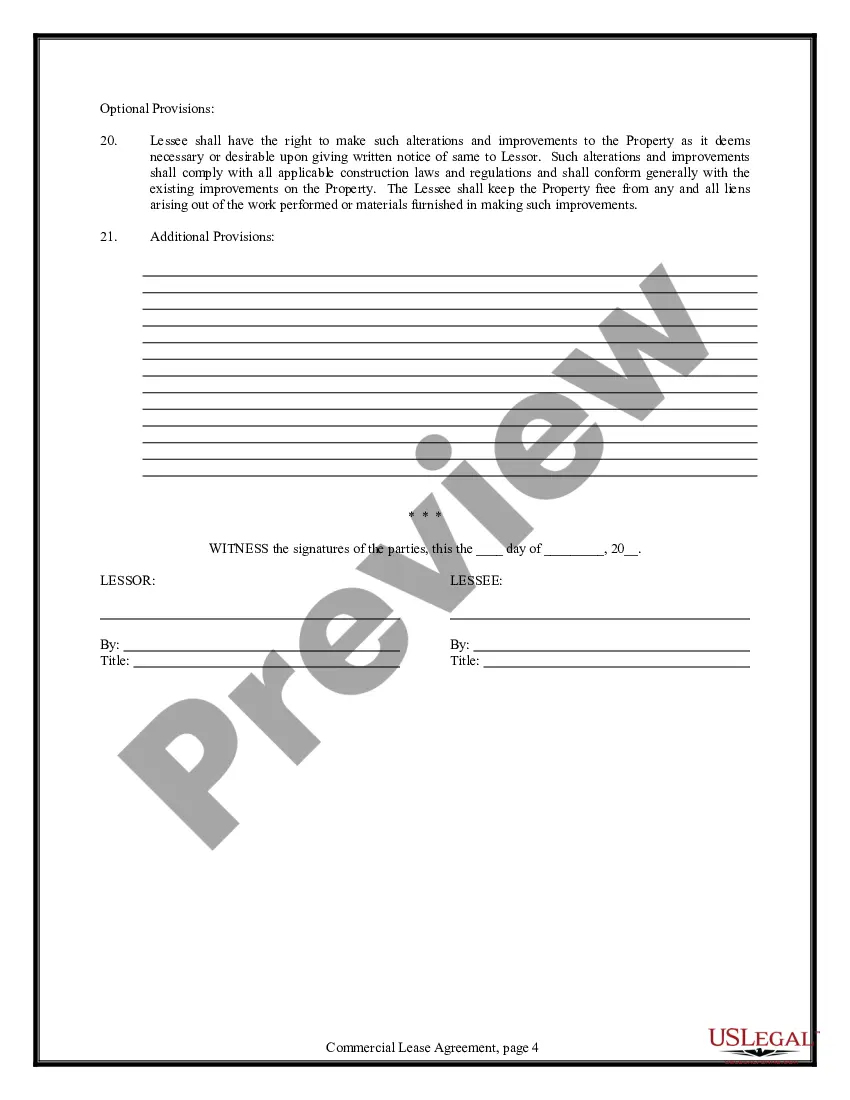
- Description of the leased property, including address and improvements.
- Lease duration detailing the primary term and any extensions.
- Rental payment terms specifying annual rental fees and payment schedules.
- Permitted uses of the property outlined clearly.
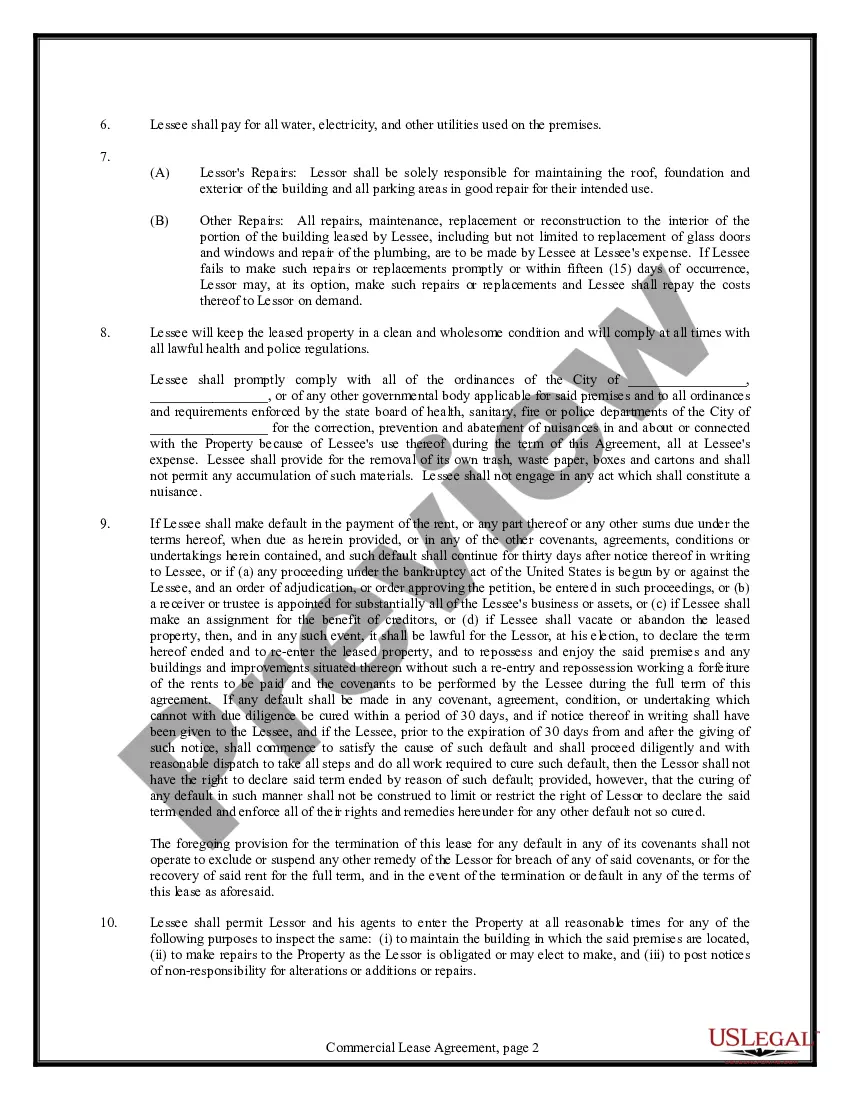
- Responsibilities for repairs and maintenance specified for both parties.
- Indemnity and insurance obligations detailed for the Lessee.
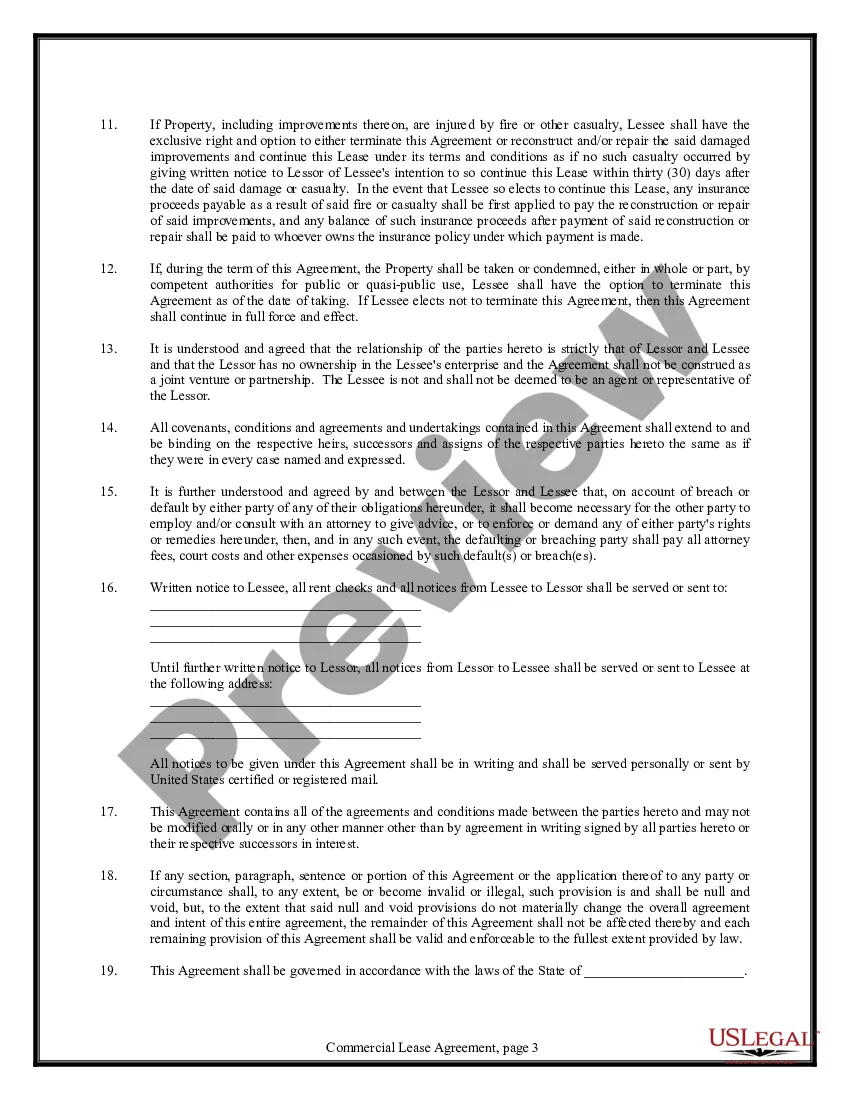
- Conditions under which the lease can be terminated or renewed based on defaults or damages.
When to use this form
This Commercial Lease Agreement for Warehouse should be used when a property owner wishes to lease warehouse space for commercial use. It is particularly useful for businesses needing storage or operational space, such as manufacturers, distributors, or retailers. This form provides a clear understanding of both parties' responsibilities, thereby minimizing potential disputes.
Who needs this form
- Property owners or lessors wishing to lease out warehouse space.
- Businesses or lessees seeking a formal agreement to rent warehouse space.
- Attorneys or legal professionals facilitating commercial lease agreements for clients.
How to prepare this document
- Identify and enter the names of both the Lessor and Lessee.
- Provide complete details for the leased property, including the address and any existing improvements.
- Clearly state the primary term of the lease and any renewal options available.
- Specify the rental amount and the schedule for payments.
- Outline the intended uses of the warehouse space in the designated field.
- Both parties should sign and date the agreement where indicated.
Notarization guidance
This form does not typically require notarization unless specified by local law. Always check for any state-specific requirements regarding notarization to ensure the lease is valid.
Get your form ready online
Our built-in tools help you complete, sign, share, and store your documents in one place.
Make edits, fill in missing information, and update formatting in US Legal Forms—just like you would in MS Word.
Download a copy, print it, send it by email, or mail it via USPS—whatever works best for your next step.
Sign and collect signatures with our SignNow integration. Send to multiple recipients, set reminders, and more. Go Premium to unlock E-Sign.
If this form requires notarization, complete it online through a secure video call—no need to meet a notary in person or wait for an appointment.
We protect your documents and personal data by following strict security and privacy standards.

Make edits, fill in missing information, and update formatting in US Legal Forms—just like you would in MS Word.

Download a copy, print it, send it by email, or mail it via USPS—whatever works best for your next step.

Sign and collect signatures with our SignNow integration. Send to multiple recipients, set reminders, and more. Go Premium to unlock E-Sign.

If this form requires notarization, complete it online through a secure video call—no need to meet a notary in person or wait for an appointment.

We protect your documents and personal data by following strict security and privacy standards.
Mistakes to watch out for
- Failing to specify the exact address and description of the leased property.
- Neglecting to include terms regarding property use, leading to potential misuse.
- Not clearly stating the renewal or extension options, causing confusion later.
- Forgetting to include comprehensive insurance and indemnity clauses.
Why complete this form online
- Immediate access to a professionally drafted lease template.
- Easily customizable to fit specific needs and legal requirements.
- Reduction of legal expenses compared to hiring an attorney for document preparation.
- Secure storage and convenient retrieval of legal documents.
Looking for another form?
Form popularity
FAQ
Evaluate the Length of the Lease. Research Comparable Rents. Look for Hidden Costs. Ask for Favorable Clauses. Check the Termination Clause Closely.
Contents of a lease agreement: Description of the property. Amount of rent and due dates, grace period, late charges. Mode of rent payment. Methods to terminate the agreement prior to the expiration date and charges if any.
A typically commercial lease agreement The type of leased property (e.g., an industrial building, an office building, a retail center). The square footage of the leased space. The length of the tenancy and whether the tenant has an option to renew the lease. If so, how frequently and under what terms.
The Introduction. The beginning of the lease agreement should contain the name of the landlord and tenant, as well as a statement of the agreement into which they are entering. Rent. Deposit. Taxes. Property Insurance. Utilities and Amenities. Remodeling and Improvements. Repairs and Maintenance.
As used in this Lease, Common Areas shall mean all areas within the Property which are available for the common use of tenants of the Property and which are not leased or held for the exclusive use of Tenant or other tenants, including, but not limited to, parking areas, driveways, sidewalks, loading areas, access
Option usually refers to an option to renew the lease for another period of time, but it can also refer to an option to purchase the property, itself. A typical commercial lease is a 5 and 5, meaning a 5 year lease, with an option to renew for another 5 years.
Name the parties. A simple rental agreement form needs to name the parties signing the lease and where they live. Describe the premises. Define the term of the lease. Set how much rent is owed. Assign a security deposit amount. Finalize the lease.
The Parties & Personal Guarantees. Lease Term & Renewals. Rent Payments and Expenses. Business Protection Clauses.