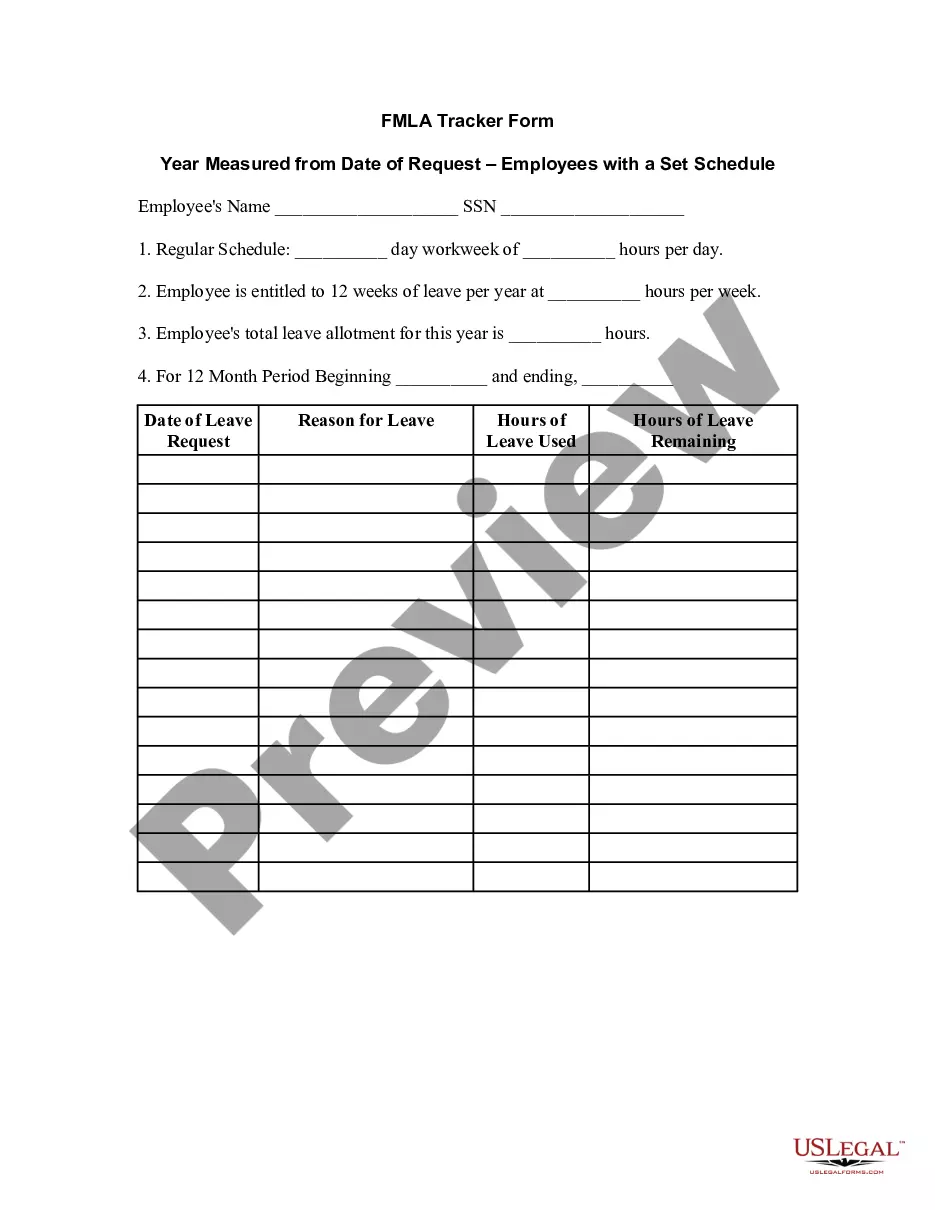
FMLA Tracker Form - Year Measured from Date of Request - Employees with Set Schedule
Overview of this form
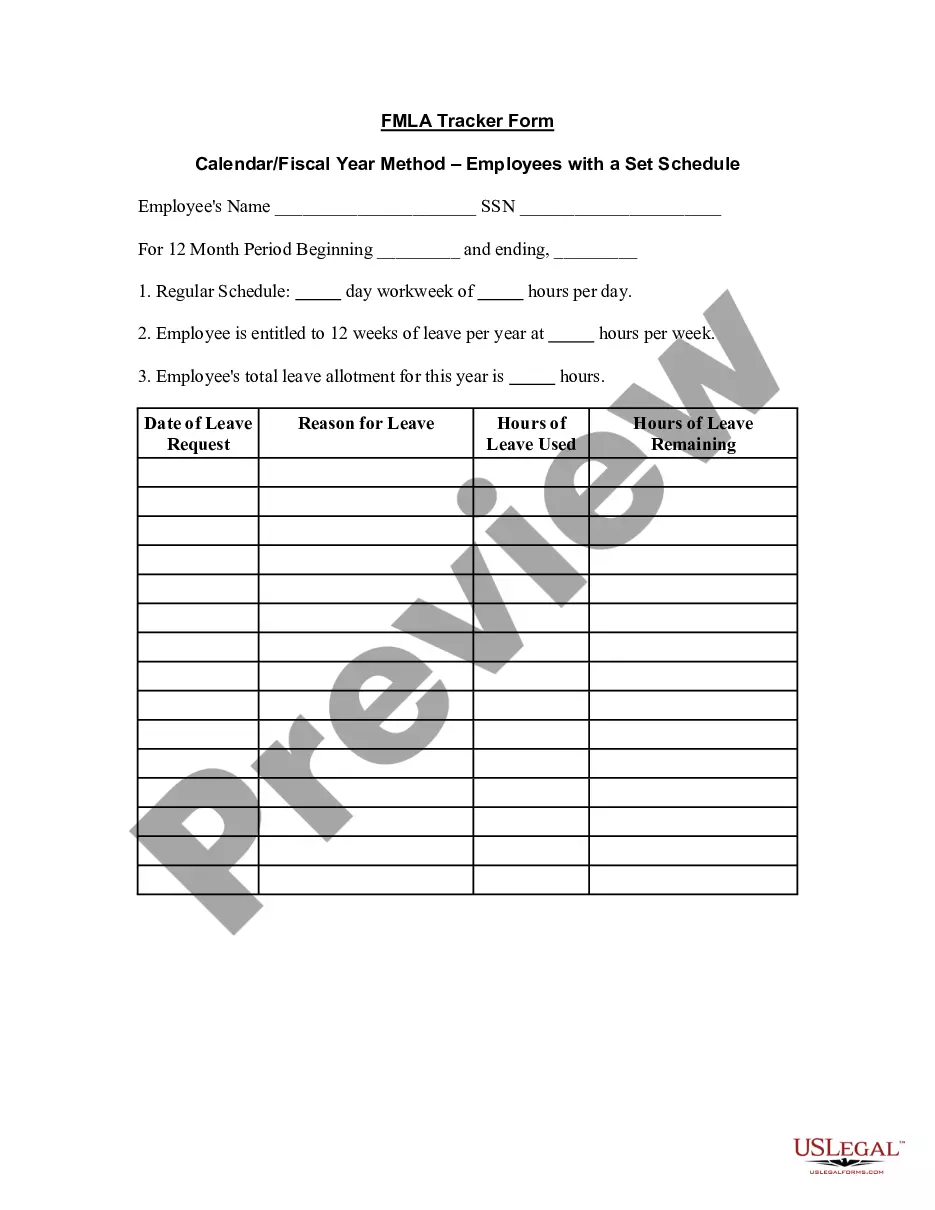
The FMLA Tracker Form for employees with a set schedule is designed to help employers track Family and Medical Leave Act (FMLA) leave usage. This form measures the twelve-month leave period from the date an employee requests leave, allowing employers to ensure compliance with FMLA regulations while effectively managing employee leave. It specifically applies to employees with fixed work schedules, making it distinct from other FMLA tracking forms that are for variable schedules.
Key components of this form
- Employee identification: Name and Social Security Number of the employee.
- Regular schedule: The standard workweek days and hours the employee is expected to work.
- Leave entitlement: Total hours of FMLA leave the employee is entitled to in a year.
- Leave tracking: Space for recording leave requests, dates, and hours used.
When to use this document
This form should be used when an employer needs to track FMLA leave for employees who have a regular work schedule. It is particularly useful when calculating leave based on a twelve-month period starting from the date of the leave request. Use this form to monitor leave usage and ensure that employees do not exceed their allotted FMLA hours.
Who can use this document
This form is intended for:
- Employers managing FMLA leave for employees working under a consistent schedule.
- HR personnel responsible for tracking employee leave and ensuring compliance with FMLA regulations.
- Managers and supervisors overseeing employee requests for leave under the FMLA.
Instructions for completing this form
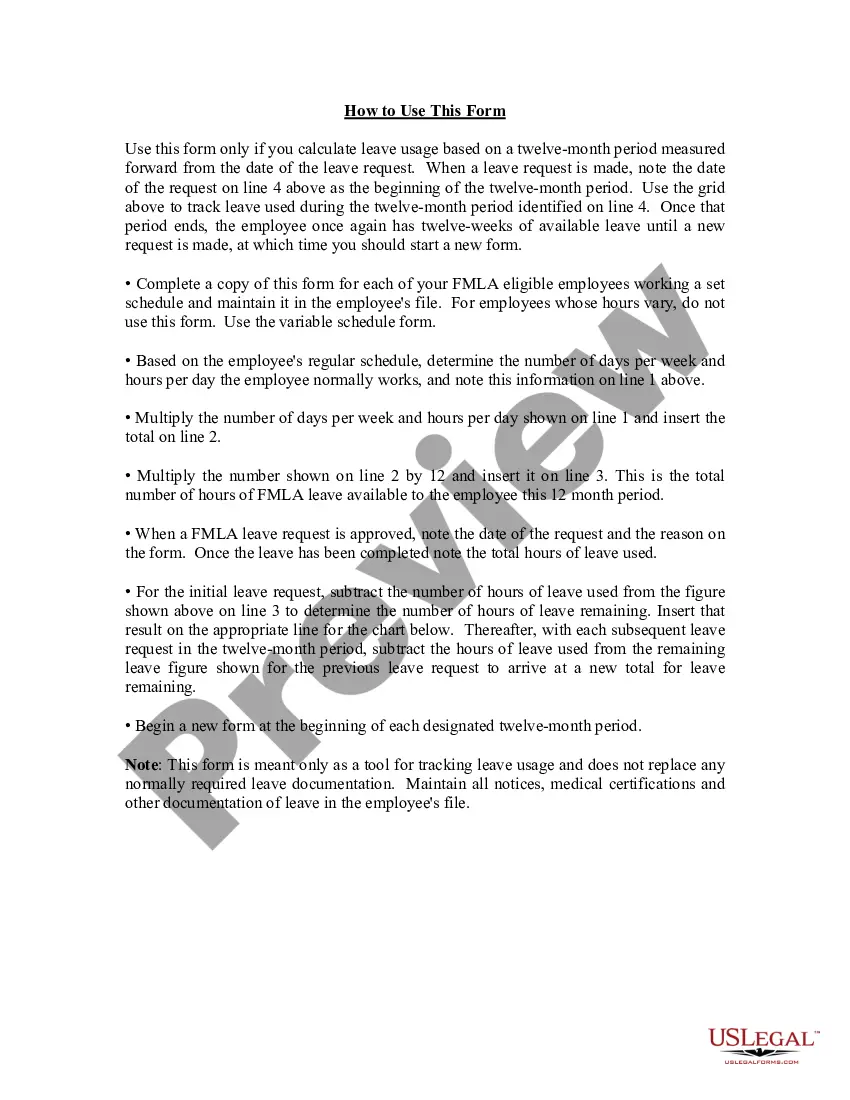
- Identify the employee by filling in their name and Social Security Number at the top of the form.
- Enter the employee's regular work schedule, specifying the number of workdays and hours per day.
- Calculate the total hours of FMLA leave to which the employee is entitled and enter this amount in the designated section.
- Record the date of each leave request and any reasons provided on the form as they occur.
- Update the hours of leave used after each request and maintain the form for tracking throughout the twelve-month period.
Notarization requirements for this form
This form does not typically require notarization to be legally valid. However, some jurisdictions or document types may still require it. US Legal Forms provides secure online notarization powered by Notarize, available 24/7 for added convenience.
Get your form ready online
Our built-in tools help you complete, sign, share, and store your documents in one place.
Make edits, fill in missing information, and update formatting in US Legal Forms—just like you would in MS Word.
Download a copy, print it, send it by email, or mail it via USPS—whatever works best for your next step.
Sign and collect signatures with our SignNow integration. Send to multiple recipients, set reminders, and more. Go Premium to unlock E-Sign.
If this form requires notarization, complete it online through a secure video call—no need to meet a notary in person or wait for an appointment.
We protect your documents and personal data by following strict security and privacy standards.

Make edits, fill in missing information, and update formatting in US Legal Forms—just like you would in MS Word.

Download a copy, print it, send it by email, or mail it via USPS—whatever works best for your next step.

Sign and collect signatures with our SignNow integration. Send to multiple recipients, set reminders, and more. Go Premium to unlock E-Sign.

If this form requires notarization, complete it online through a secure video call—no need to meet a notary in person or wait for an appointment.

We protect your documents and personal data by following strict security and privacy standards.
Typical mistakes to avoid
- Failing to update the form with each leave request, leading to inaccurate leave tracking.
- Not calculating the total leave hours correctly based on the employee's work schedule.
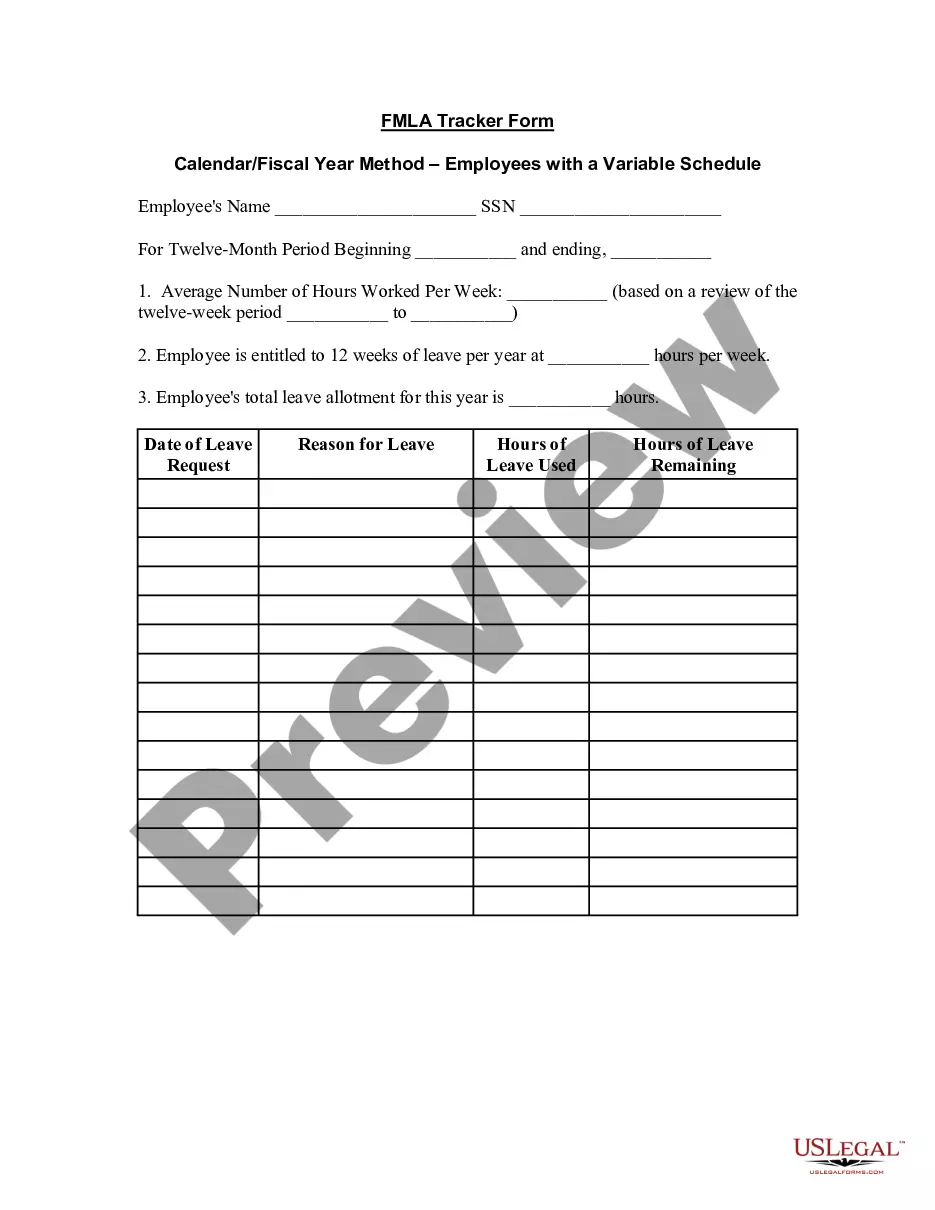
- Confusing this form with those for employees with variable work schedules.
Advantages of online completion
- Easy access: Downloadable and fillable format for efficient record-keeping.
- Editable: Make changes as needed without starting from scratch.
- Secure: Maintain employee confidentiality and ensure data integrity.
Legal use & context
- This form complies with the Family and Medical Leave Act, ensuring that employers can effectively manage employee leave while adhering to legal requirements.
- It facilitates documentation that may be needed for audits or legal inquiries regarding FMLA compliance.
Key takeaways
- The FMLA Tracker Form is essential for tracking employee leave for those with a set work schedule.
- Ensure accurate calculations and timely updates to stay compliant with FMLA regulations.
- This form is adaptable to various states under federal guidelines.
Looking for another form?
Form popularity
FAQ
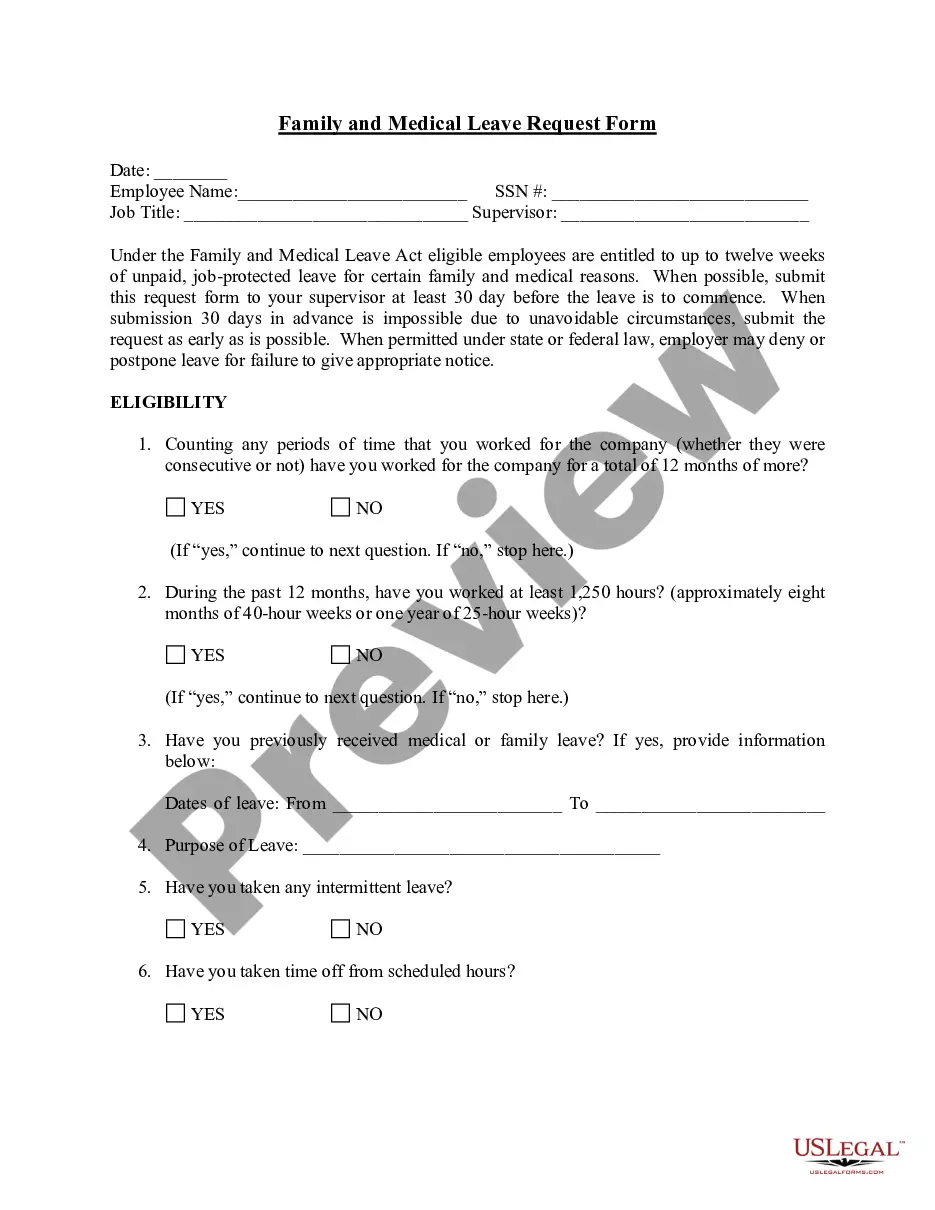
This form helps employers monitor Family and Medical Leave Act usage for workers who have a fixed schedule. It anchors the 12-month leave period to the date the employee requests leave and provides fields to record essential details: employee identification (name and SSN), the regular schedule, the total leave entitlement hours, and each leave event with dates and hours used to stay compliant.
Under this form, the 12-month period starts on the date the employee requests leave and lasts 12 months. Leave taken within that window is tallied against the employee’s annual entitlement hours, and the form records each leave event with its dates and hours used to ensure the employee does not exceed the limit.
No. This form measures the 12-month period from the date of the leave request, so the tracking window is anchored to that date and applies to that specific leave event. Each new request can create a fresh 12-month window for employees with a set schedule.
For this form, the 12-month period is anchored to the date of the leave request, making it a rolling, request-based year rather than strictly calendar-year. It tracks hours within that window for employees with a set schedule to stay compliant.
FMLA eligibility hinges on whether a medical condition qualifies as a serious health condition under the law. Hashimoto's thyroiditis can qualify if it meets that threshold and the employee's circumstances meet the criteria. The form supports tracking such leave for employees with a set schedule; eligibility should be assessed by HR or a qualified attorney.
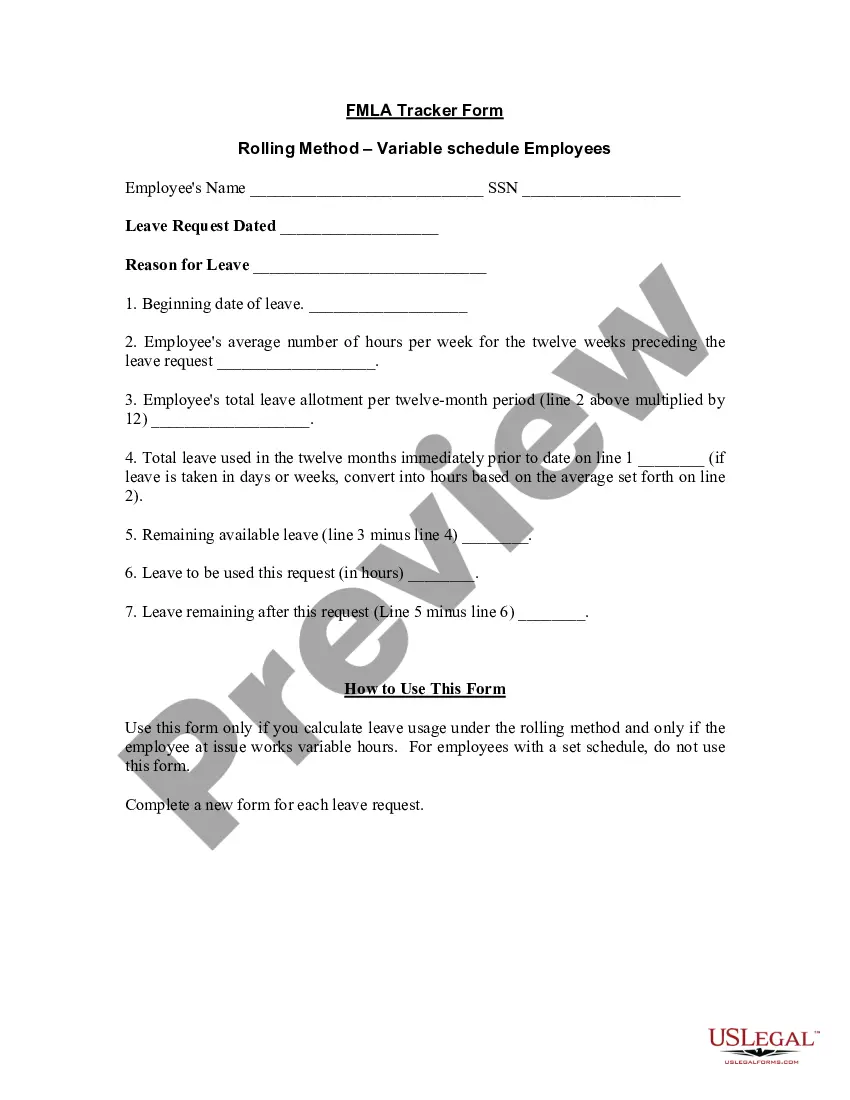
This form is tailored for employees with a fixed, regular schedule and uses a date-of-request anchored 12-month period to track FMLA leave hours. In contrast, variable-schedule trackers address different scheduling patterns. The components—employee identification, regular schedule, leave entitlement, and leave tracking—support compliance for consistent schedules.