Purchase Order for Consulting Services
What this document covers
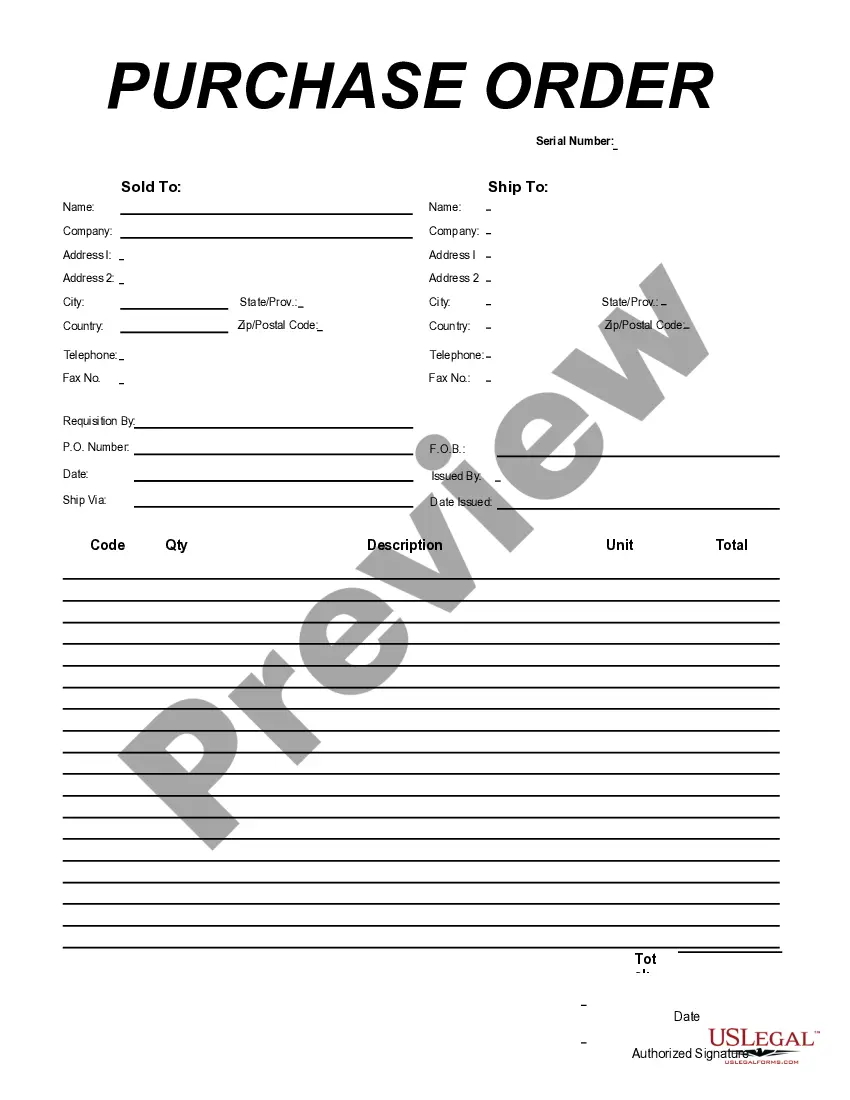
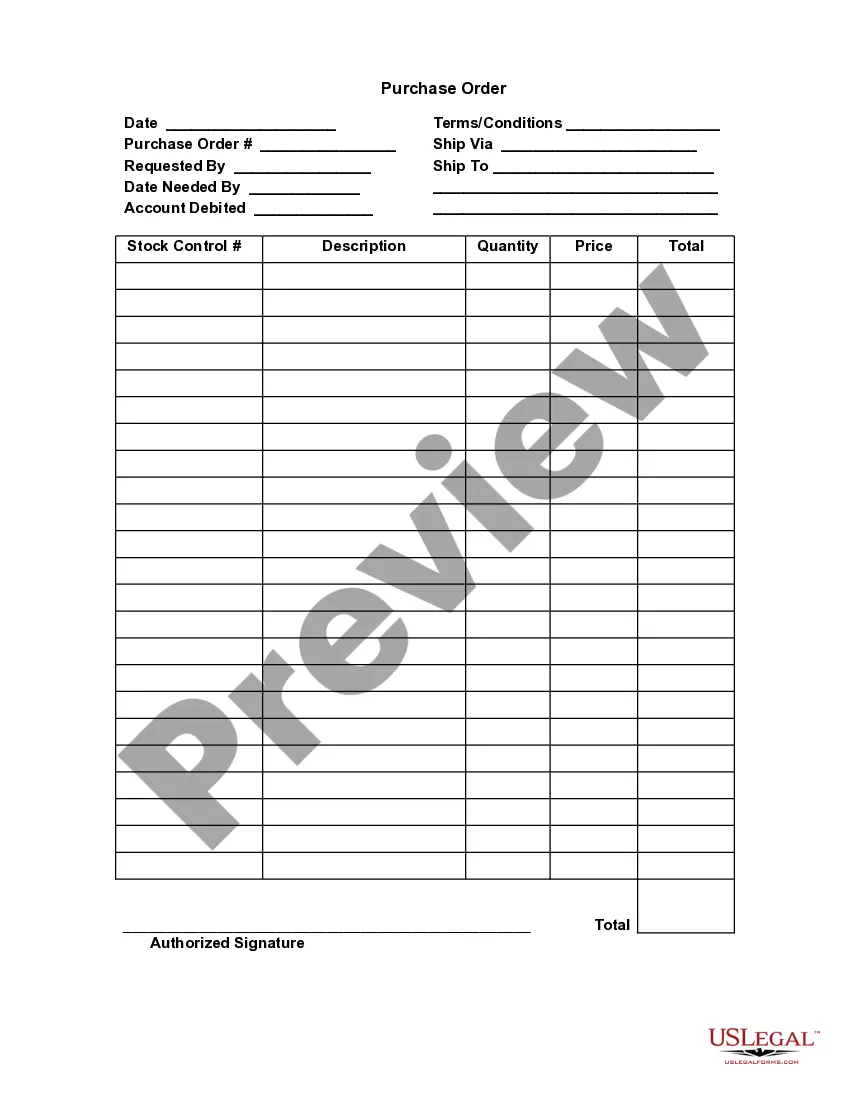
The Purchase Order for Consulting Services is a legal document used by businesses to order consulting services from a vendor. This form clarifies the agreement between the purchaser and the service provider, ensuring both parties understand the scope of work, costs, and delivery terms. Unlike generic purchase orders, this specific template is tailored for consulting engagements, making it essential for accurate business transactions.
Key components of this form
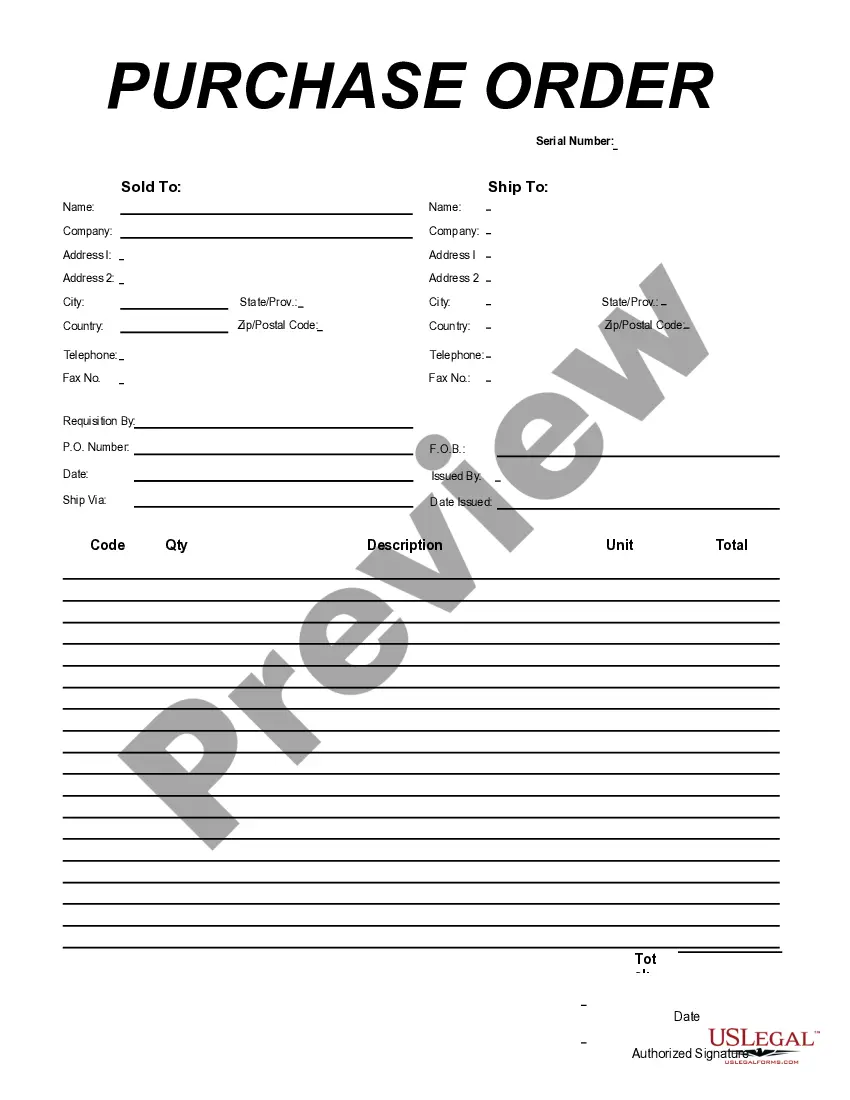
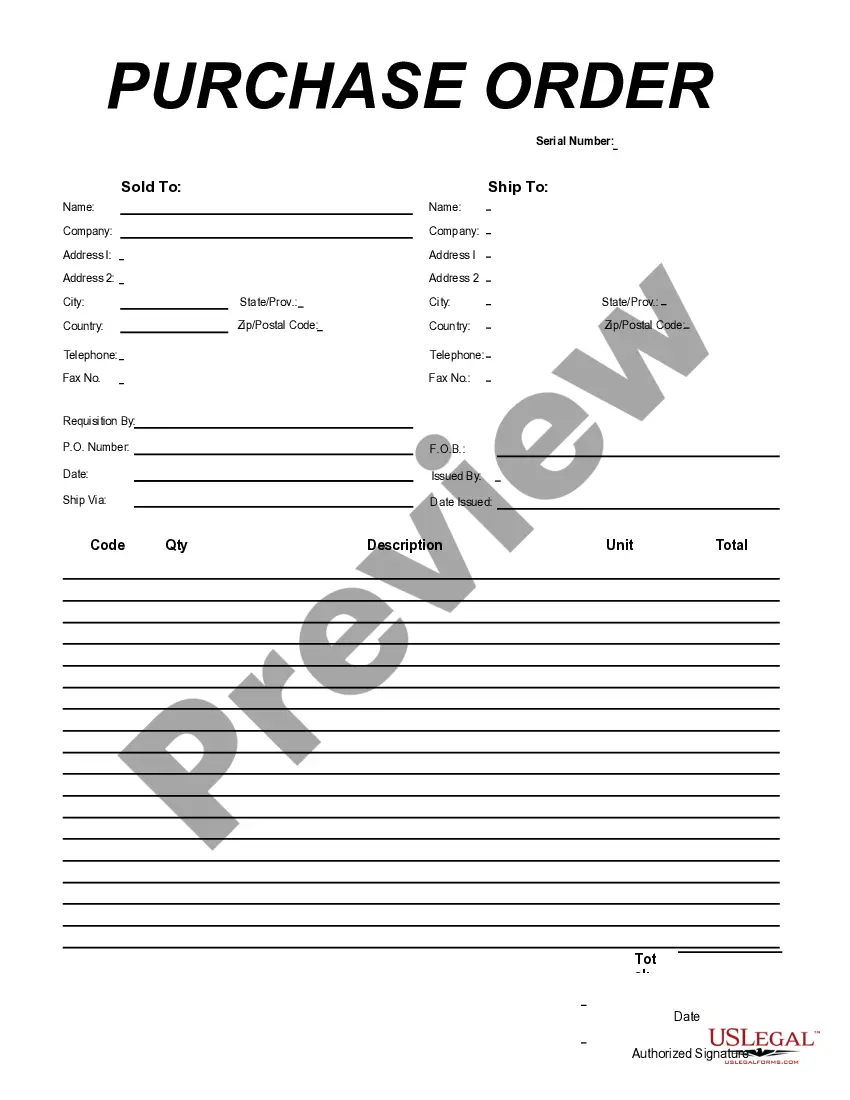
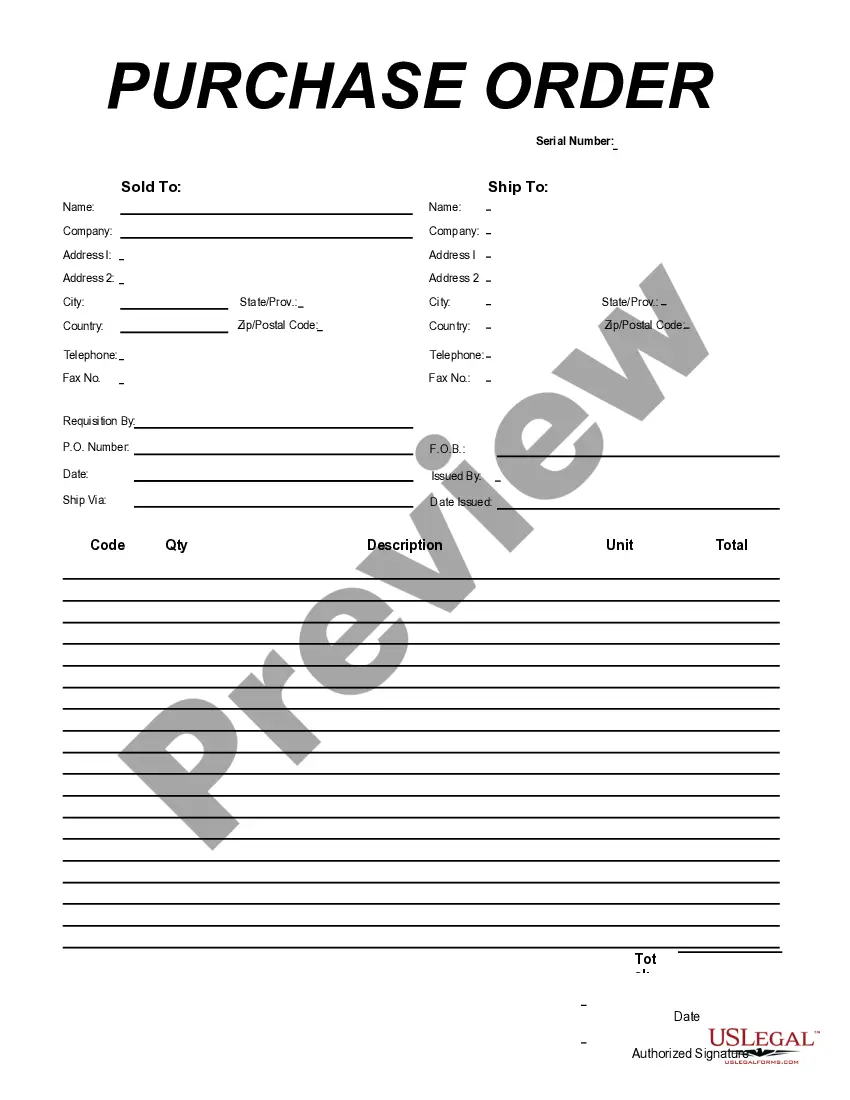
- Ship To Name: Identifies the recipient of the services.
- Company: The name of the purchasing entity.
- Address Fields: Detailed address for service delivery.
- Telephone and Fax No.: Contact information for communication.
- P.O. Number: A unique identifier for tracking the order.
- Description and Unit Cost: Detailed breakdown of services ordered.
- Total: Overall cost for the consulting services.
- Date: The date when the order is issued.
- Authorized Signature: Confirms approval from the buying entity.

Common use cases
This purchase order form should be used when a business wants to procure consulting services from a third-party vendor. It is essential to use this form to ensure all details regarding the services required, costs, and terms of delivery are clearly documented, preventing misunderstandings and disputes.
Who should use this form
- Business owners looking to contract consulting services.
- Procurement officers managing vendor relationships.
- Project managers coordinating specific consulting tasks.
How to complete this form
- Identify the parties involved: Fill in the Ship To Name and Company sections.
- Enter the complete address for service delivery using the address fields.
- Provide contact information, including phone and fax numbers.
- Specify the ordered services by filling out the Description and Unit Cost fields.
- Calculate the total cost, including any applicable taxes or fees, and enter it in the Total field.
- Sign and date the document to authorize the purchase order.
Does this document require notarization?
This form does not typically require notarization unless specified by local law. Ensure to check for any specific regulations that may apply in your jurisdiction.
Get your form ready online
Our built-in tools help you complete, sign, share, and store your documents in one place.
Make edits, fill in missing information, and update formatting in US Legal Forms—just like you would in MS Word.
Download a copy, print it, send it by email, or mail it via USPS—whatever works best for your next step.
Sign and collect signatures with our SignNow integration. Send to multiple recipients, set reminders, and more. Go Premium to unlock E-Sign.
If this form requires notarization, complete it online through a secure video call—no need to meet a notary in person or wait for an appointment.
We protect your documents and personal data by following strict security and privacy standards.

Make edits, fill in missing information, and update formatting in US Legal Forms—just like you would in MS Word.

Download a copy, print it, send it by email, or mail it via USPS—whatever works best for your next step.

Sign and collect signatures with our SignNow integration. Send to multiple recipients, set reminders, and more. Go Premium to unlock E-Sign.

If this form requires notarization, complete it online through a secure video call—no need to meet a notary in person or wait for an appointment.

We protect your documents and personal data by following strict security and privacy standards.
Typical mistakes to avoid
- Leaving fields incomplete, particularly contact information and service descriptions.
- Not specifying the quantity of services needed, leading to potential misunderstandings.
- Failing to obtain the necessary signatures before submitting the order.
Why use this form online
- Convenience of immediate access and download.
- Editability allows for customization of details to fit specific transactions.
- Ensures compliance by using legally drafted templates from licensed attorneys.
Quick recap
- The Purchase Order for Consulting Services creates a formal agreement between the buyer and seller.
- It is crucial for documenting the specifics of consulting services needed.
- Completing the form accurately helps prevent disputes and ensures clear communication.
Looking for another form?


Form popularity
FAQ
A purchase order is used by a buyer to place an order and is issued before delivery. An invoice is issued by a seller using invoicing software after an order is delivered. It defines the amount the buyer owes for the purchased goods and the date by which the buyer needs to pay.
For example: Maria's company needs to purchase new materials from a supplier to create their products. The company then creates a purchase order to present to the supplier from which they wish to order materials.When Maria's company receives the goods and the invoice, they compare them to the purchase order.
Purchase orders are used to initiate a transaction with a supplier when a business wants to purchase something. This allows both parties to have matching records they can use to verify what was purchased, the price of the transaction, and when the purchase took place.
A purchase order is used by a buyer to place an order and is issued before delivery. An invoice is issued by a seller using invoicing software after an order is delivered. It defines the amount the buyer owes for the purchased goods and the date by which the buyer needs to pay.
A purchase order and a contract are used for different things, though both have their place in the purchasing process. Under normal conditions, you would use a PO to order and purchase an item, while the contract is used to pay for a service.
A purchase order (PO) is a commercial document and first official offer issued by a buyer to a seller indicating types, quantities, and agreed prices for products or services. It is used to control the purchasing of products and services from external suppliers.
Purchase Orders are documents issued from a Buyer (your organization) to a Seller (the vendor). They are an important tool for Buyers because they formalize requirements and pricing, and serve as legally binding documentation of the goods/services that were ordered.