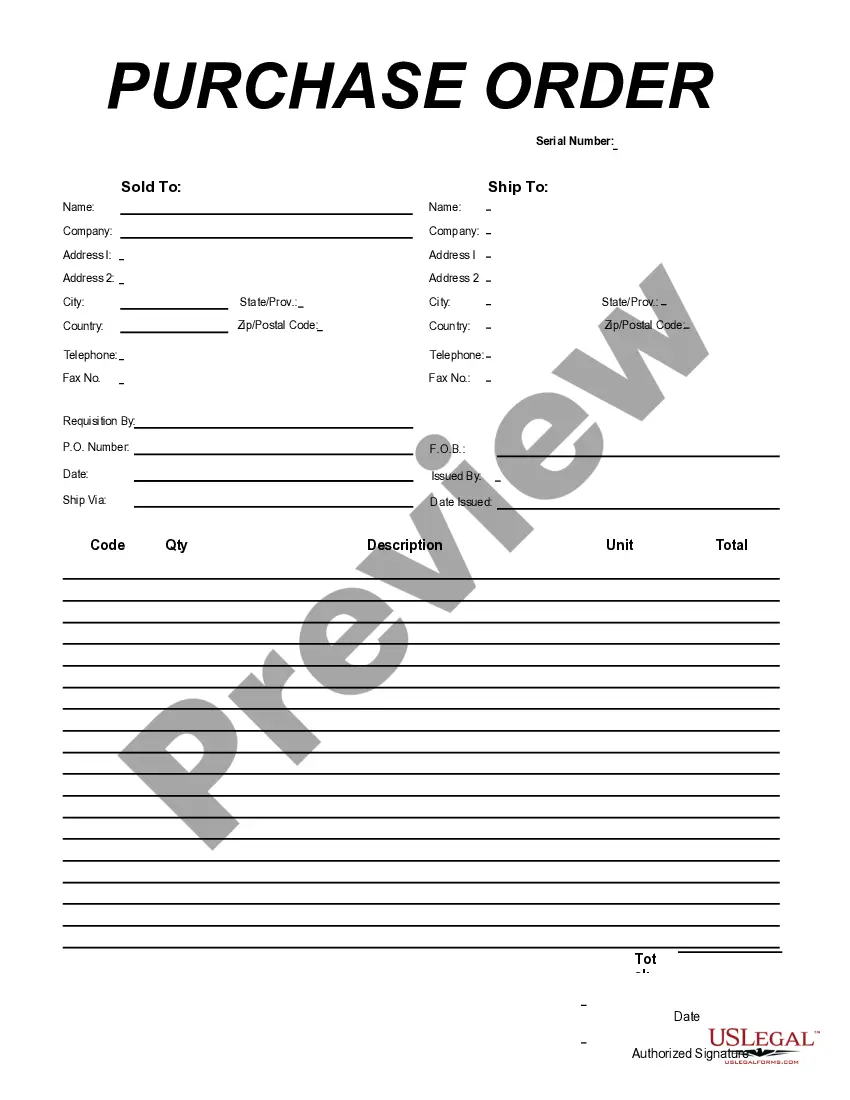
Purchase Order for Employee
About this form
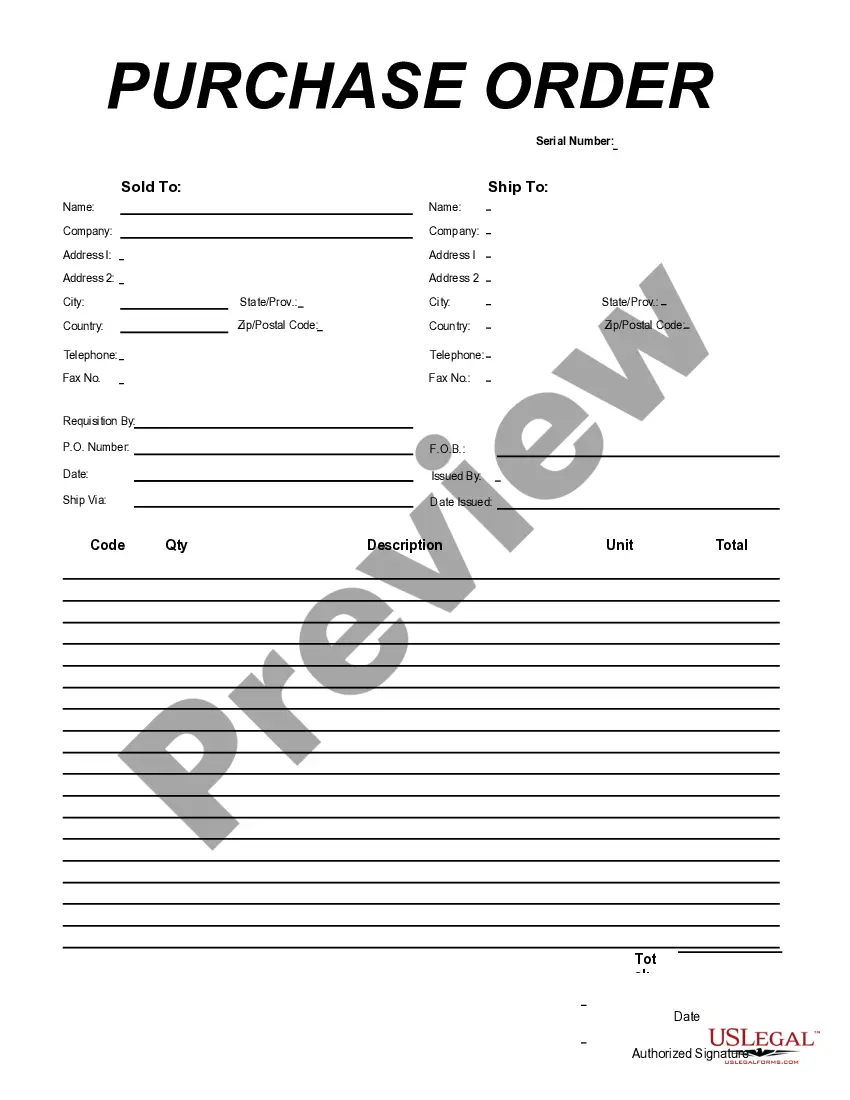
The Purchase Order for Employee is a vital business document used to formally request goods or services from a vendor on behalf of an employee or department within an organization. This form facilitates a clear understanding between the buyer and supplier, detailing quantities, costs, and delivery specifics. Unlike informal requisitions, it provides a structured approach, ensuring accountability and traceability in business transactions.
Key parts of this document
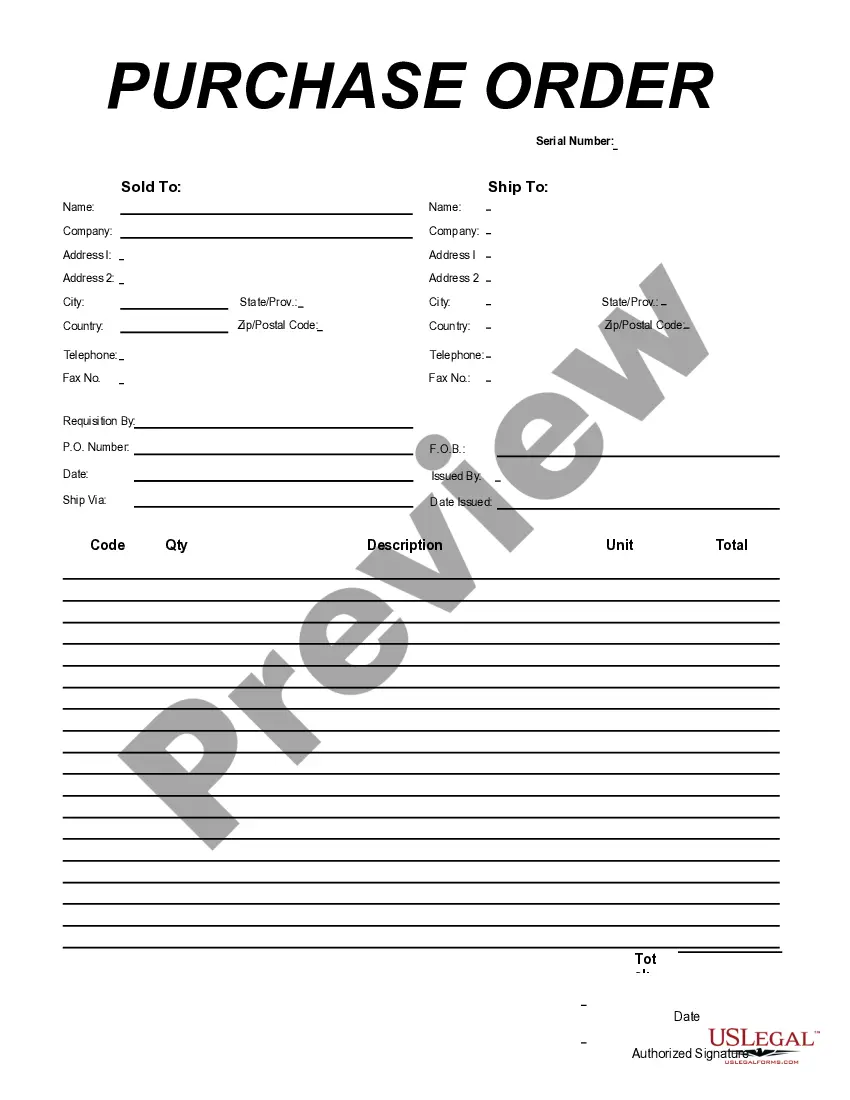
- Ship To Name: Indicates where the items should be sent.
- Company Information: Includes the name and address of the purchasing company.
- Requisition By: Identifies the individual requesting the order.
- P.O. Number: A unique identifier for tracking the purchase order.
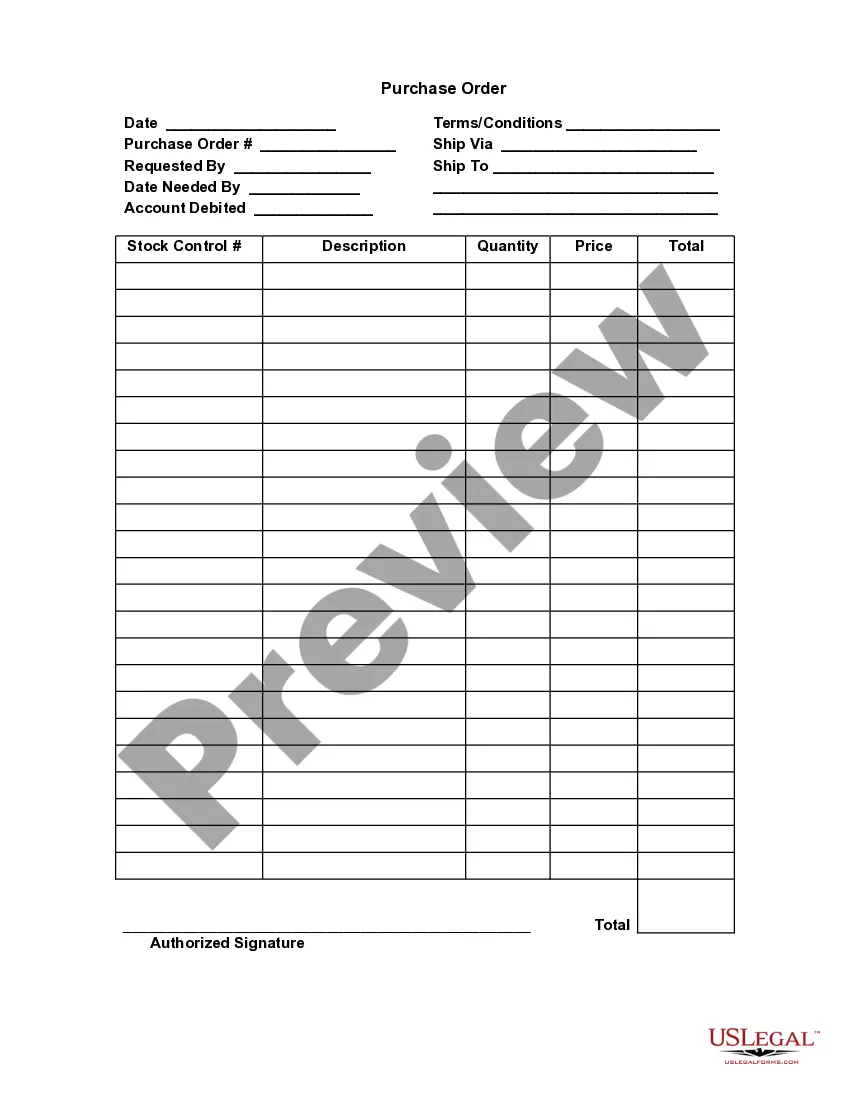
- Qty and Description: Specifies the quantity and detailed description of the requested items.
- Unit Cost and Total: Breaks down the costs involved in the order.
- Date and Authorized Signature: Validates the order with a timestamp and signature.

Common use cases
This form should be used when an employee needs to purchase goods or services for their department. It is essential in situations where a formal request is required for accounting or procurement purposes, helping to streamline purchasing and maintain accurate records. Common scenarios include ordering office supplies, equipment, or services needed for projects.
Who this form is for
- Employees who have the authority to make purchases on behalf of their department.
- Managers or supervisors overseeing procurement activities.
- Administrative staff responsible for processing purchase requests.
Completing this form step by step
- Identify the ship-to information by filling in the name and address where the goods should be delivered.
- Enter the company details, including the name and address of the purchasing organization.
- Complete the requisition section by providing the name of the individual requesting the order.
- Fill in the P.O. number for tracking, along with the quantities and descriptions of the items needed.
- Detail the unit cost and calculate the total cost for the order.
- Sign and date the form to authorize the purchase once all fields are complete.
Is notarization required?
This form does not typically require notarization unless specified by local law. It is advisable to check if any specific regulations apply to your jurisdiction.
Get your form ready online
Our built-in tools help you complete, sign, share, and store your documents in one place.
Make edits, fill in missing information, and update formatting in US Legal Forms—just like you would in MS Word.
Download a copy, print it, send it by email, or mail it via USPS—whatever works best for your next step.
Sign and collect signatures with our SignNow integration. Send to multiple recipients, set reminders, and more. Go Premium to unlock E-Sign.
If this form requires notarization, complete it online through a secure video call—no need to meet a notary in person or wait for an appointment.
We protect your documents and personal data by following strict security and privacy standards.

Make edits, fill in missing information, and update formatting in US Legal Forms—just like you would in MS Word.

Download a copy, print it, send it by email, or mail it via USPS—whatever works best for your next step.

Sign and collect signatures with our SignNow integration. Send to multiple recipients, set reminders, and more. Go Premium to unlock E-Sign.

If this form requires notarization, complete it online through a secure video call—no need to meet a notary in person or wait for an appointment.

We protect your documents and personal data by following strict security and privacy standards.
Mistakes to watch out for
- Failing to include all required information, such as the shipping address or quantity.
- Not verifying the costs before submission, leading to unexpected budget issues.
- Omitting the signature, which can render the form invalid.
Why complete this form online
- Convenient access: Easily download and fill out the form at any time.
- Editability: The form can be filled out using Adobe Acrobat or Word, allowing for straightforward editing.
- Reliability: Using a standardized form helps maintain consistency and reduces errors in procurement processes.
Main things to remember
- The Purchase Order for Employee streamlines the purchasing process within an organization.
- It is important for ensuring clarity and accountability in business transactions.
- Always double-check all entries to avoid common mistakes that could delay orders.
Looking for another form?
Form popularity
FAQ
A purchase order is used by a buyer to place an order and is issued before delivery. An invoice is issued by a seller using invoicing software after an order is delivered. It defines the amount the buyer owes for the purchased goods and the date by which the buyer needs to pay.
A purchase order is where a purchaser creates and sends an order to a vendor for goods or services. In a standard purchase order, the purchaser will, at a minimum, specify what products are being ordered, the quantity, the agreed price and delivery and payment terms.
Purchase orders are standardized across the entire company and contain, at the very least, information about: the purchaser and vendor (names, addresses), the order itself (product description, technical specs, price, quantity), and payment terms (due date and form of payment, eg.
How Does a Purchase Order Work?The supplier fulfills the order and delivers the items on the agreed due date. The supplier issues a bill or sales invoice for the purchased items. The buyer pays for the item, and the sale is processed through the seller's POS system.
A purchase order (PO) is a commercial document and first official offer issued by a buyer to a seller indicating types, quantities, and agreed prices for products or services. It is used to control the purchasing of products and services from external suppliers.
A purchase order and a contract are used for different things, though both have their place in the purchasing process. Under normal conditions, you would use a PO to order and purchase an item, while the contract is used to pay for a service.
A purchase order is used by a buyer to place an order and is issued before delivery. An invoice is issued by a seller using invoicing software after an order is delivered. It defines the amount the buyer owes for the purchased goods and the date by which the buyer needs to pay.
For example: Maria's company needs to purchase new materials from a supplier to create their products. The company then creates a purchase order to present to the supplier from which they wish to order materials.When Maria's company receives the goods and the invoice, they compare them to the purchase order.