Louisiana Petition for Deficiency Judgment
Understanding this form
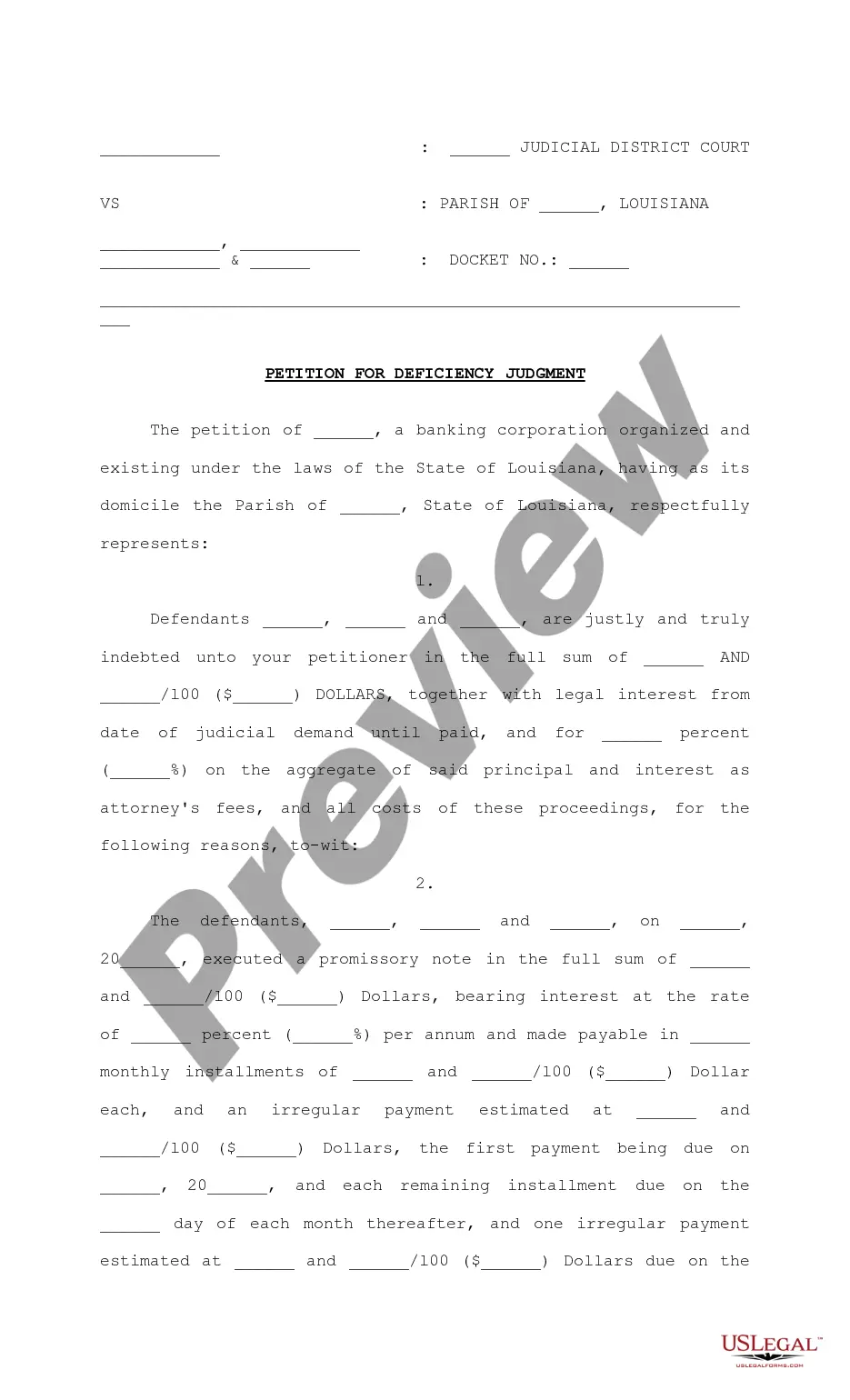
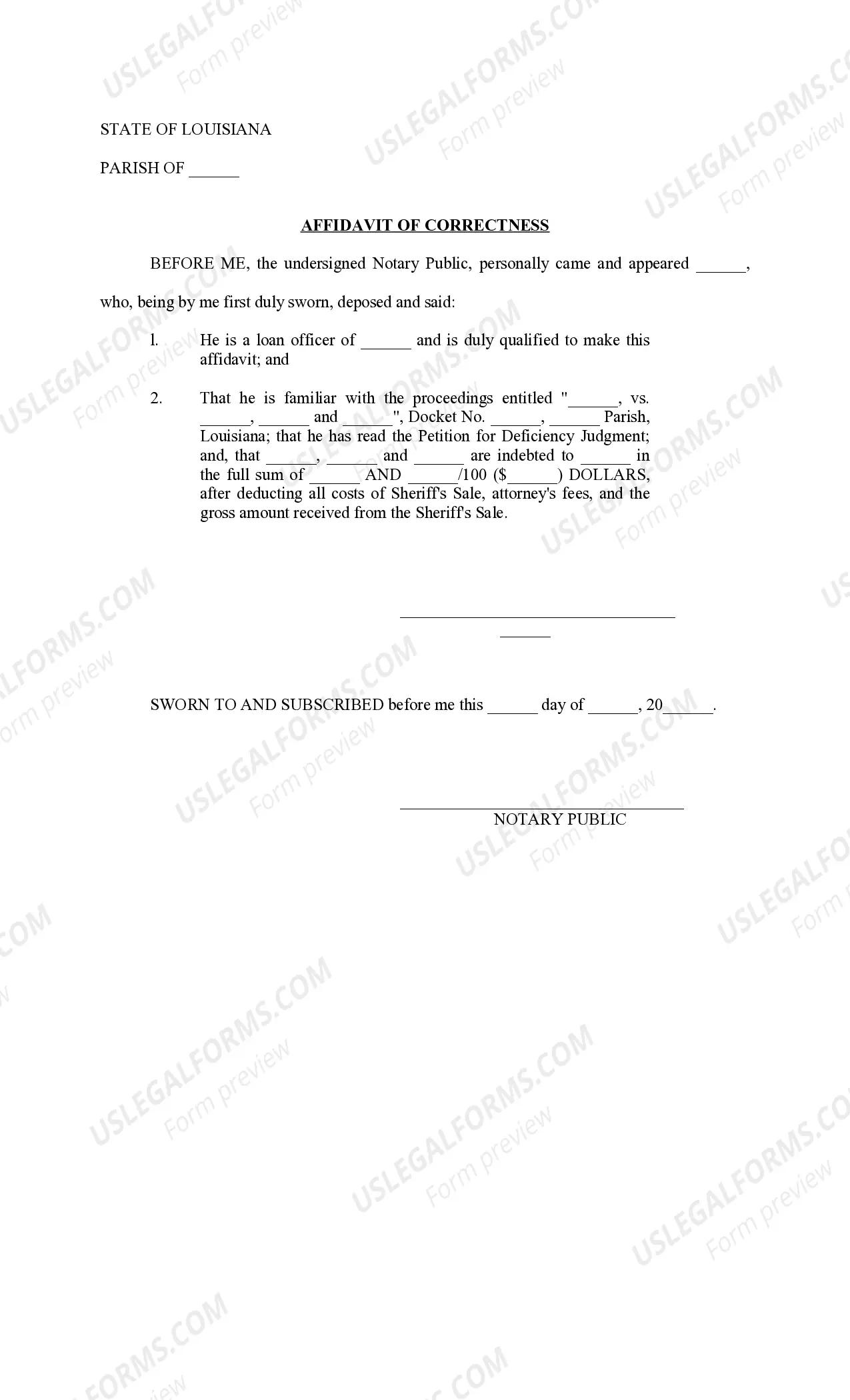
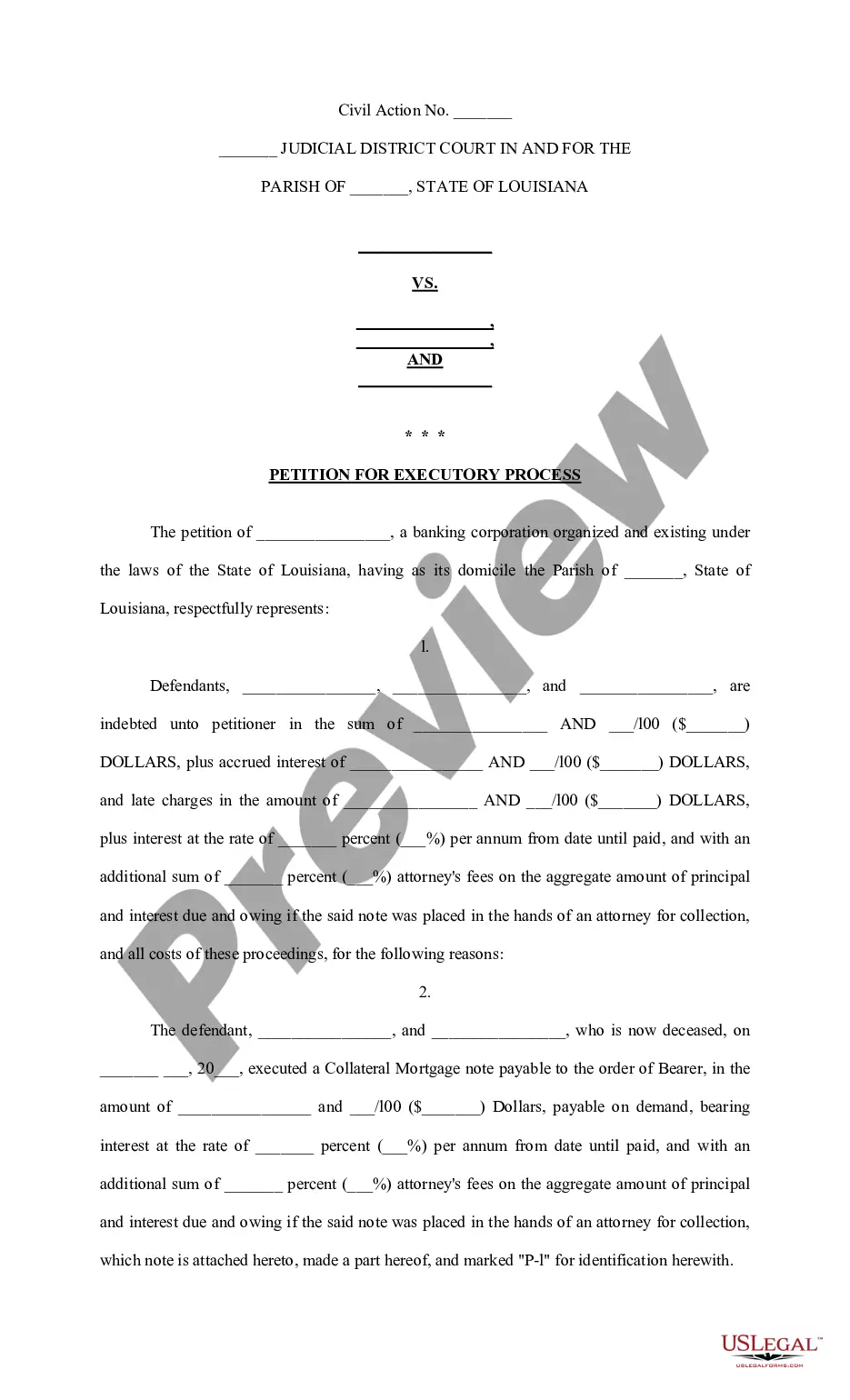
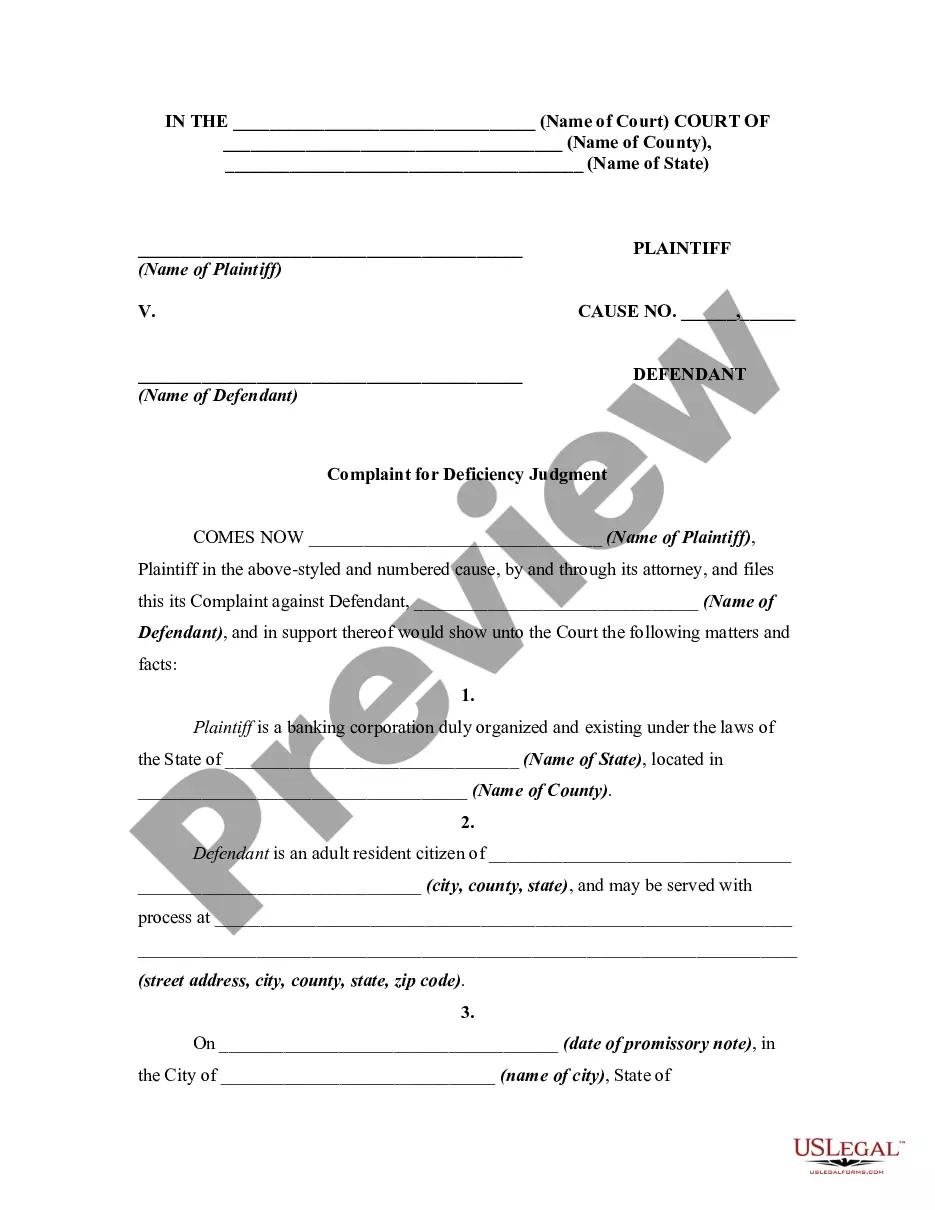
The Petition for Deficiency Judgment is a legal document used by a lender to seek a court order for the remaining balance owed by a borrower after foreclosure proceedings. Unlike standard foreclosure documents, this petition requests a specific judgment for any unpaid debts, including principal, interest, attorney's fees, and court costs, following the sale of the property. This ensures that the lender can recover losses from the transaction by legally compelling the debtor to pay the outstanding amount.
Main sections of this form
- Identification of the petitioner (lender) and defendants (borrowers).
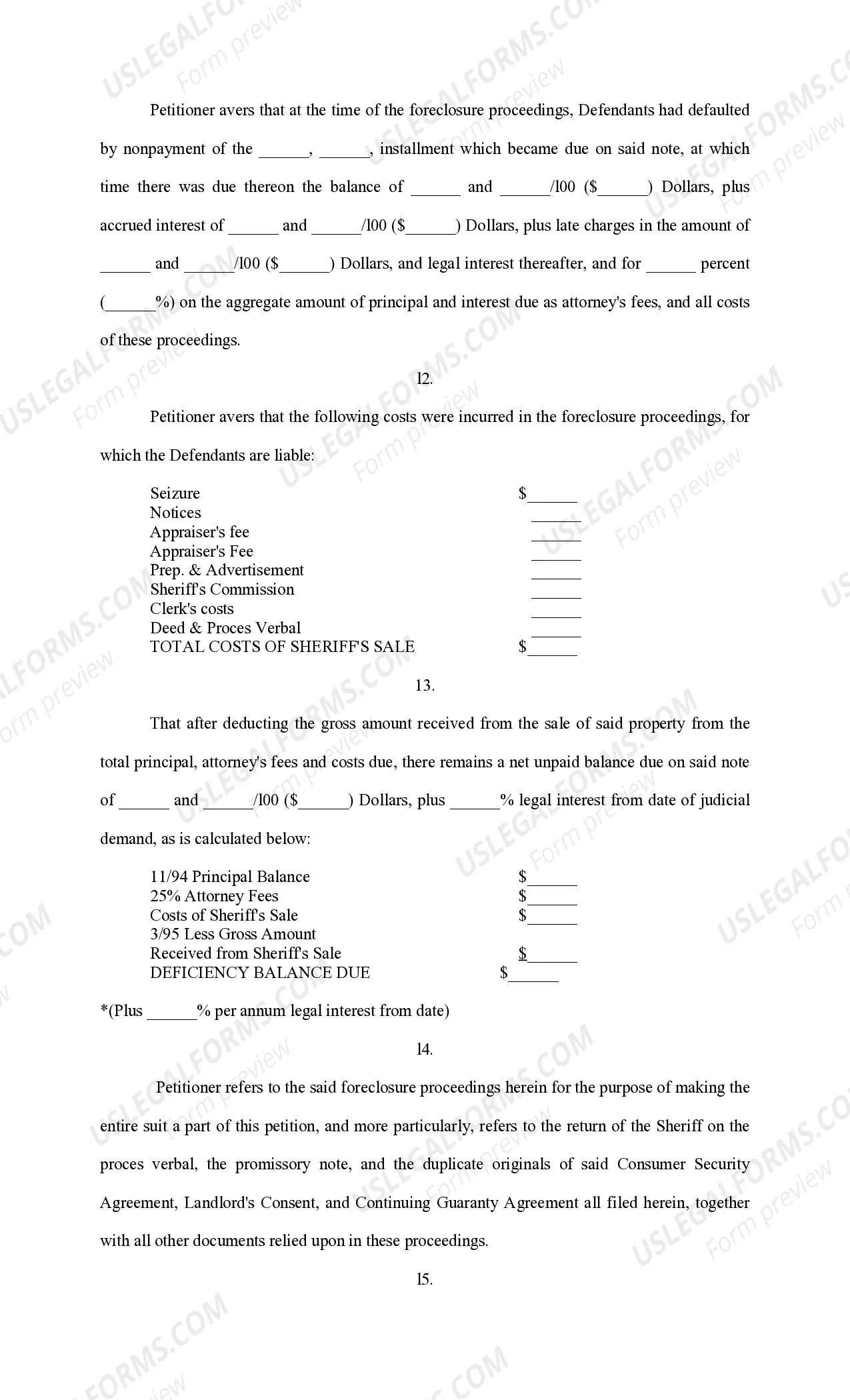
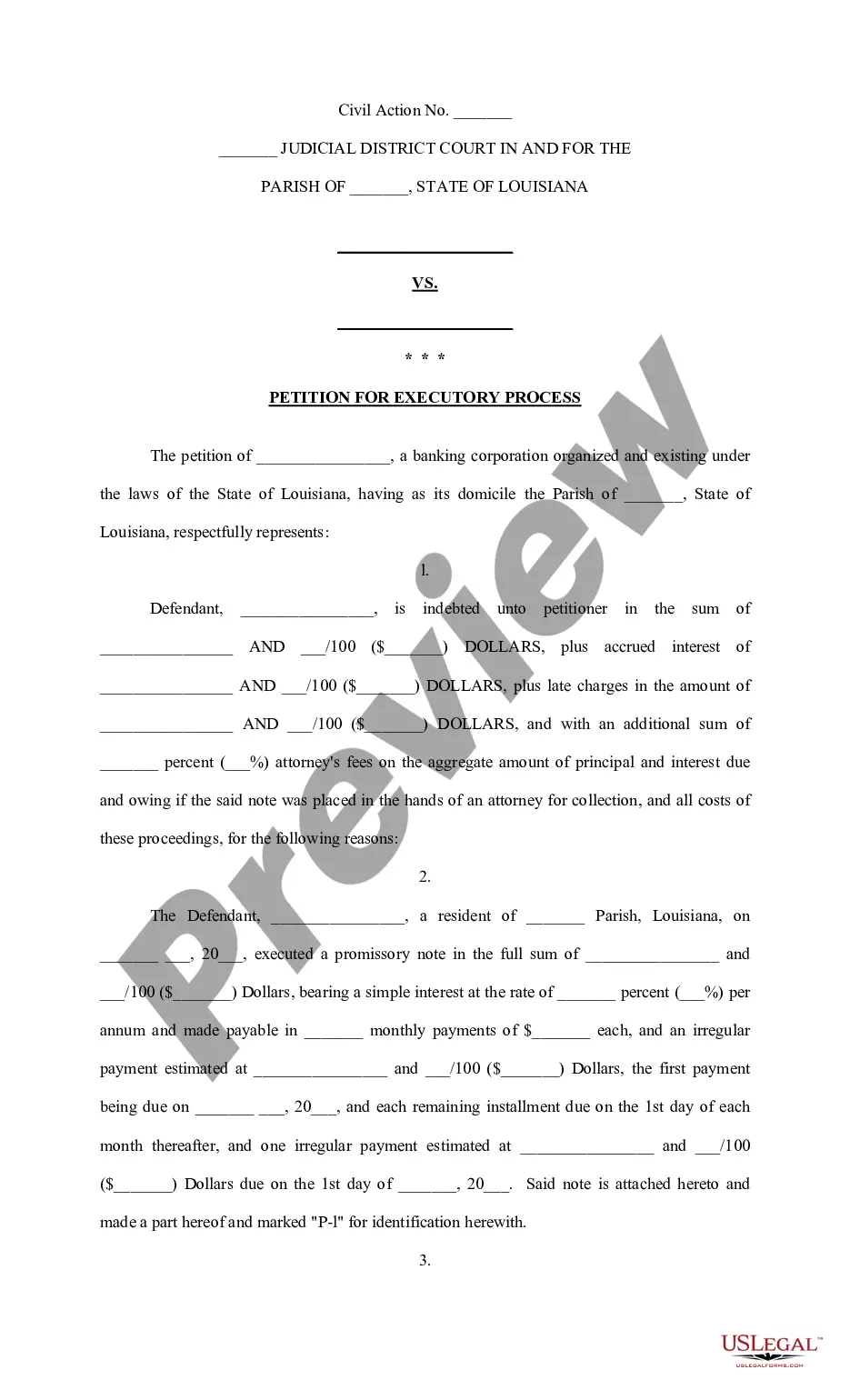
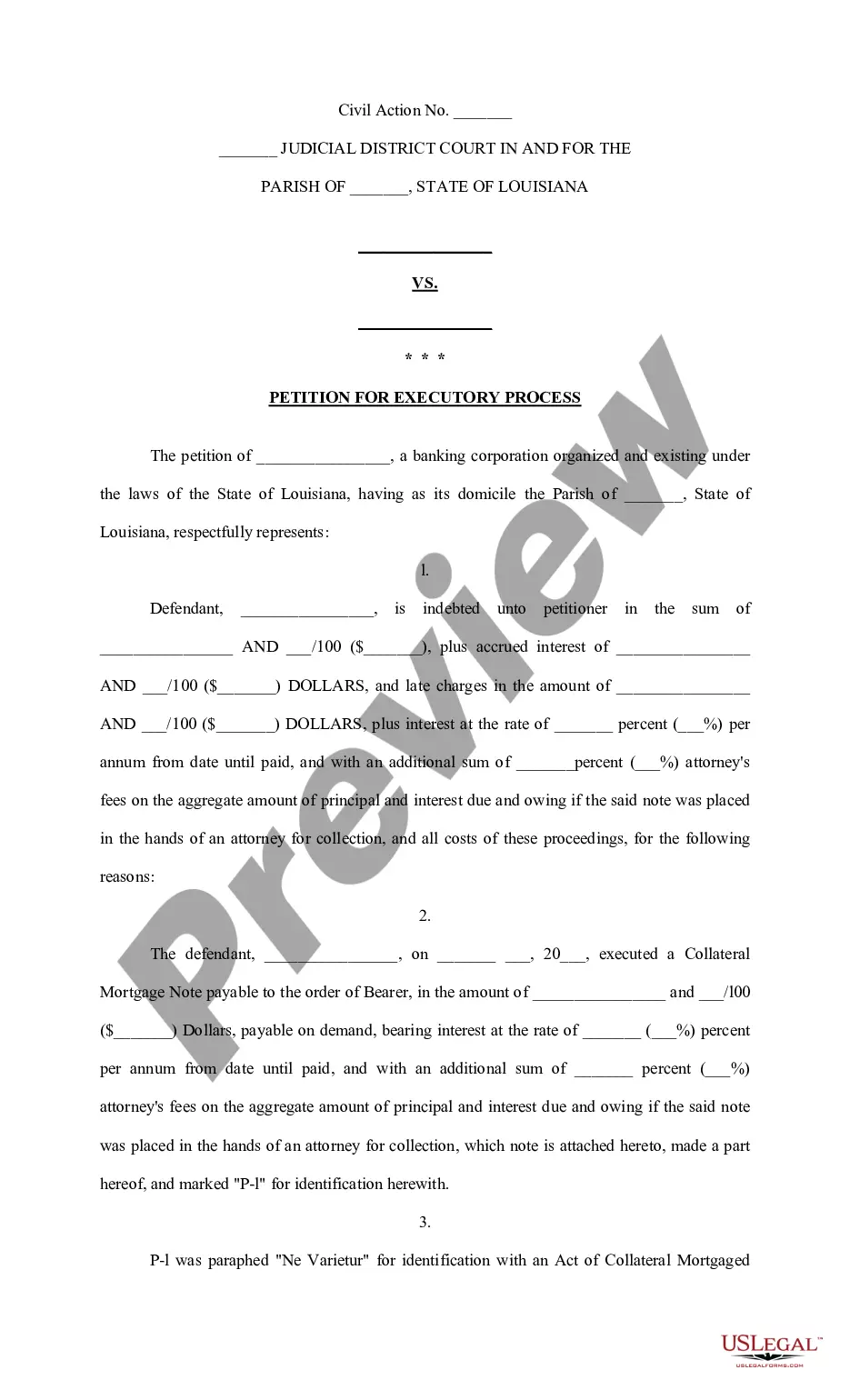
- Statement of the debt amount and breakdown of principal, interest, and fees.
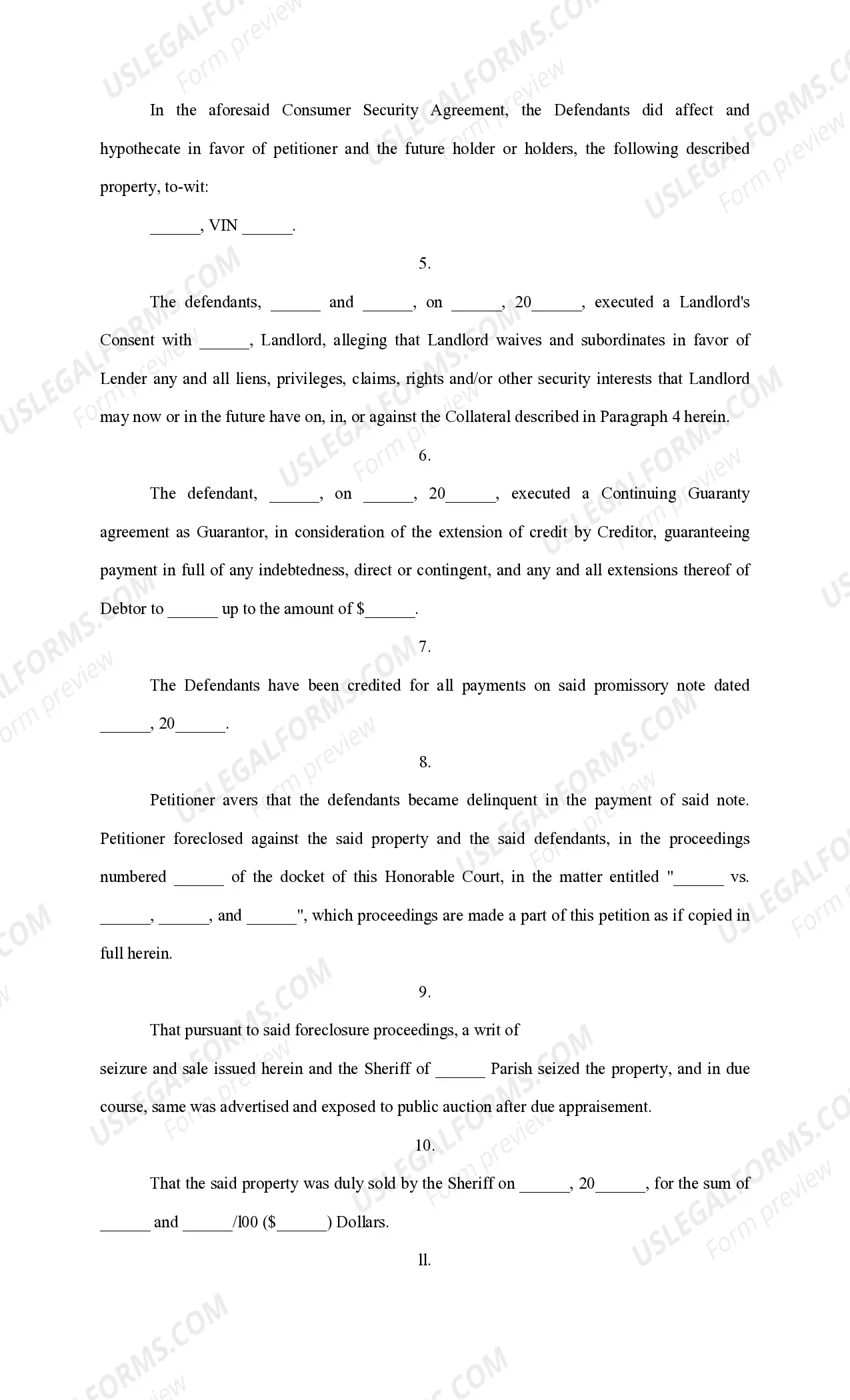
- Details of the original loan agreement, including payment terms and security agreements.
- Information regarding foreclosure proceedings, including sale details and the remaining debt.
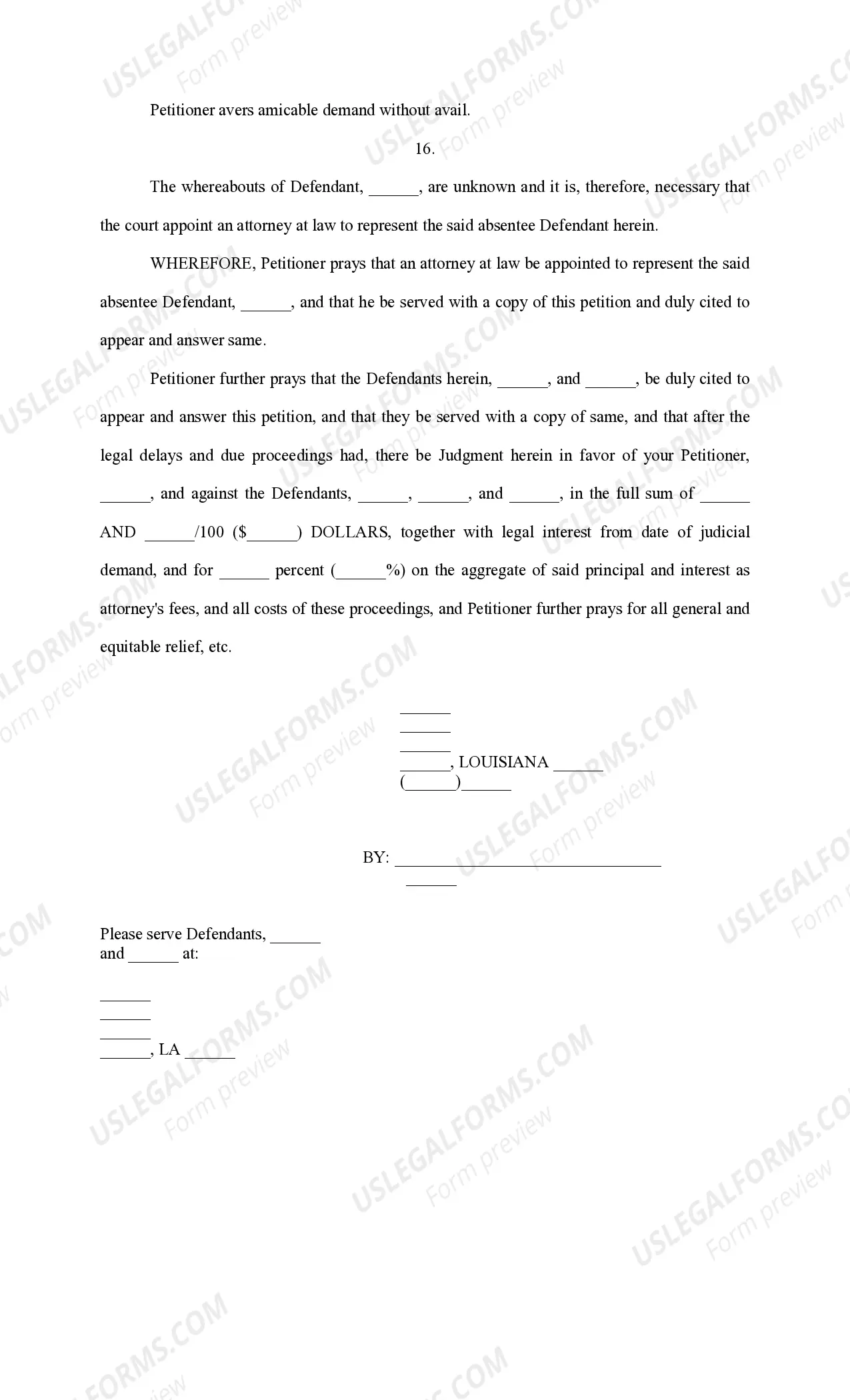
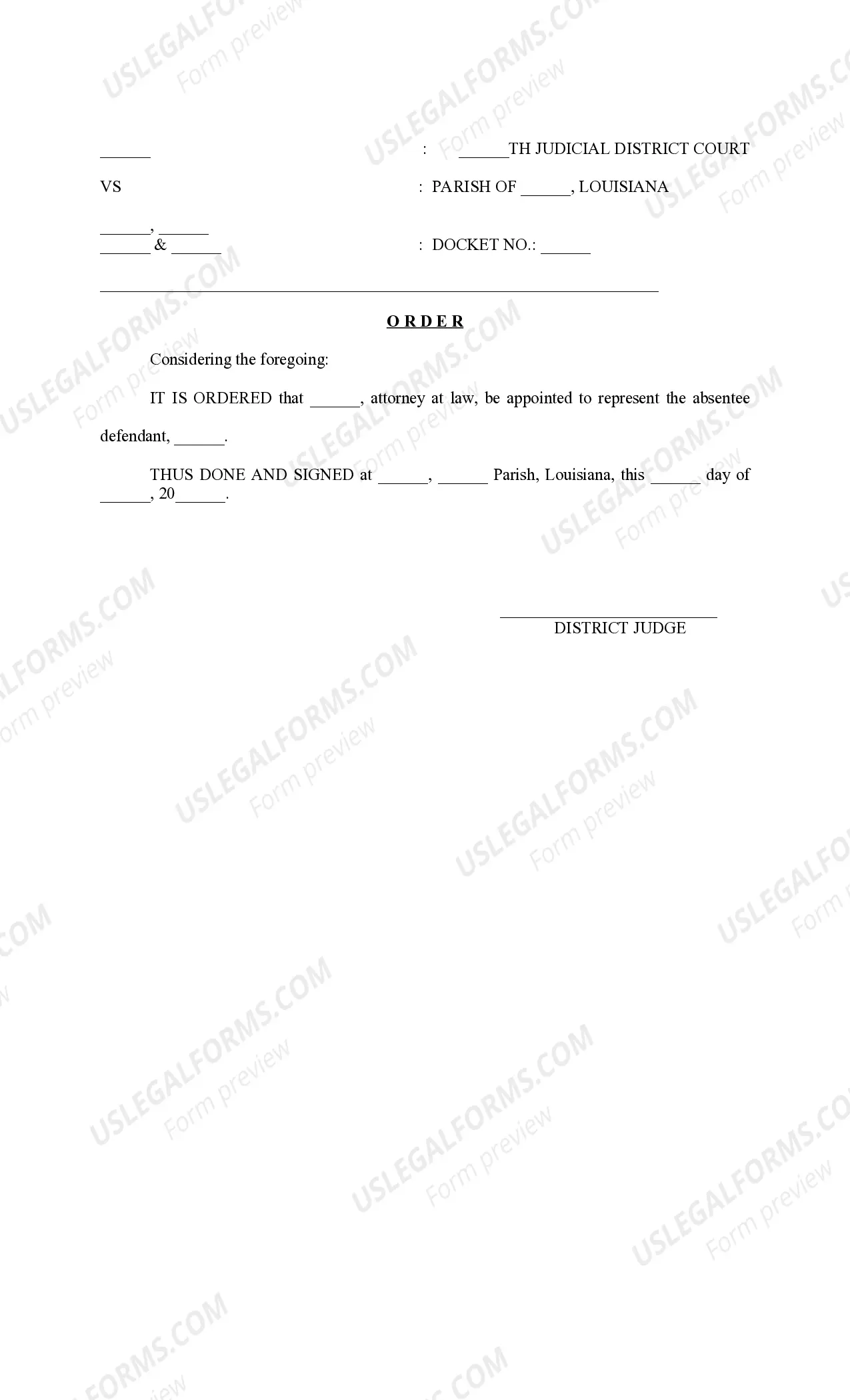
- Request for the court to appoint an attorney for any absentee defendants.
- Prayer for judgment including the total amount owed and request for court costs.
When to use this document
This form is utilized in situations where the borrower has defaulted on a loan, leading to the foreclosure and sale of property. If the sale does not cover the total amount owed by the borrower, this petition can be filed to seek judgment for the deficiency. It is particularly relevant for lenders who want to recover remaining debts after the foreclosure process has concluded.
Who can use this document
This form is intended for:
- Lenders or financial institutions seeking to recover overdue loans after foreclosure.
- Attorneys representing lenders in deficiency judgment cases.
- Borrowers, in cases where a lender seeks a deficiency judgment against them.
How to complete this form
- Identify all parties involved by entering the names of the petitioner and defendants.
- Clearly state the total amount owed, including principal, interest, attorney's fees, and court costs.
- Detail the circumstances surrounding the loan, including key dates and payment terms.
- Provide descriptions of the property that was foreclosed upon, including any relevant agreements.
- Request the court to appoint an attorney for any defendants whose whereabouts are unknown.
- Ensure all fields are completed accurately and sign where indicated.
Does this form need to be notarized?
To make this form legally binding, it must be notarized. Our online notarization service, powered by Notarize, lets you verify and sign documents remotely through an encrypted video session.
Get your form ready online
Our built-in tools help you complete, sign, share, and store your documents in one place.
Make edits, fill in missing information, and update formatting in US Legal Forms—just like you would in MS Word.
Download a copy, print it, send it by email, or mail it via USPS—whatever works best for your next step.
Sign and collect signatures with our SignNow integration. Send to multiple recipients, set reminders, and more. Go Premium to unlock E-Sign.
If this form requires notarization, complete it online through a secure video call—no need to meet a notary in person or wait for an appointment.
We protect your documents and personal data by following strict security and privacy standards.

Make edits, fill in missing information, and update formatting in US Legal Forms—just like you would in MS Word.

Download a copy, print it, send it by email, or mail it via USPS—whatever works best for your next step.

Sign and collect signatures with our SignNow integration. Send to multiple recipients, set reminders, and more. Go Premium to unlock E-Sign.

If this form requires notarization, complete it online through a secure video call—no need to meet a notary in person or wait for an appointment.

We protect your documents and personal data by following strict security and privacy standards.
Typical mistakes to avoid
- Failing to include all parties in the petition, which can delay proceedings.
- Not accurately calculating the total amount owed, including correct interest and fees.
- Omitting necessary documentation, such as copies of the loan agreements and foreclosure notices.
- Missing deadlines for filing the petition after foreclosure.
Why use this form online
- Convenience of accessing and downloading the form at any time.
- Editable fields allow for accurate and personalized completion.
- Secure storage of documents to ensure easy retrieval when needed.
Looking for another form?
Form popularity
FAQ
Yes, Texas does permit deficiency judgments, but like in Louisiana, specific regulations govern this process. A lender can seek a deficiency judgment if a property's sale does not satisfy the total owed on the mortgage. Understanding these aspects can enhance your knowledge of how deficiency judgments work in different states, including their relation to the Louisiana Petition for Deficiency Judgment.
In Louisiana, personal property that can be seized under a judgment includes items such as vehicles, jewelry, and valuable assets. However, exemptions exist for certain types of property, including necessary household goods and tools for work. Understanding these exemptions can help you navigate the implications of a Louisiana Petition for Deficiency Judgment effectively.
To make a judgment executory in Louisiana, you need to file a Louisiana Petition for Deficiency Judgment. This petition must include the necessary documentation, such as proof of the original judgment and any relevant financial details. Once properly filed, the court will evaluate your case and may issue an order that allows you to enforce the judgment. This process serves as a crucial step in protecting your rights as a creditor.
Learn how foreclosures in Louisiana work. Ordinary judicial foreclosures are also possible in Louisiana, but not as common. Because the most prevalent type of foreclosure process in the state is an executory proceeding, this article focuses on that process.
Most states forgive the taxes, said Annapolis bankruptcy lawyer Tate Russack. States have different statutes of limitation on how long they allow lenders to pursue deficiency judgments, ranging from 30 days to 20 years.
There is no anti-deficiency law in Louisiana; deficiency judgments are allowed in the state. Ordinary judicial foreclosures.
If your lender sues you to recover the deficiency and wins, the court will issue a judgment ordering you to pay off the deficiency. If you ignore this court order, your lender can use the deficiency judgment to place liens on other property that you own, garnish your wages, or freeze your bank accounts.
1Declaring Bankruptcy.2Negotiating a Waiver of the Lender's Right to Seek a Deficiency Judgment.3Making a Settlement Offer.4Taking the Chance that Your Lender Won't Actually Sue You for the Deficiency.
A deficiency judgment is an unsecured money judgment against a borrower whose mortgage foreclosure sale did not produce sufficient funds to pay the underlying promissory note, or loan, in full.A deficiency judgment is a court judgment that is a public record of the amount owed and by whom.
Also, it's possible to negotiate a reduced deficiency or pay a lump-sum settlement regarding any remaining debt associated with the transaction. Be aware that you might have tax consequences if the lender forgives all or some of the deficiency. You might also consider filing for bankruptcy.