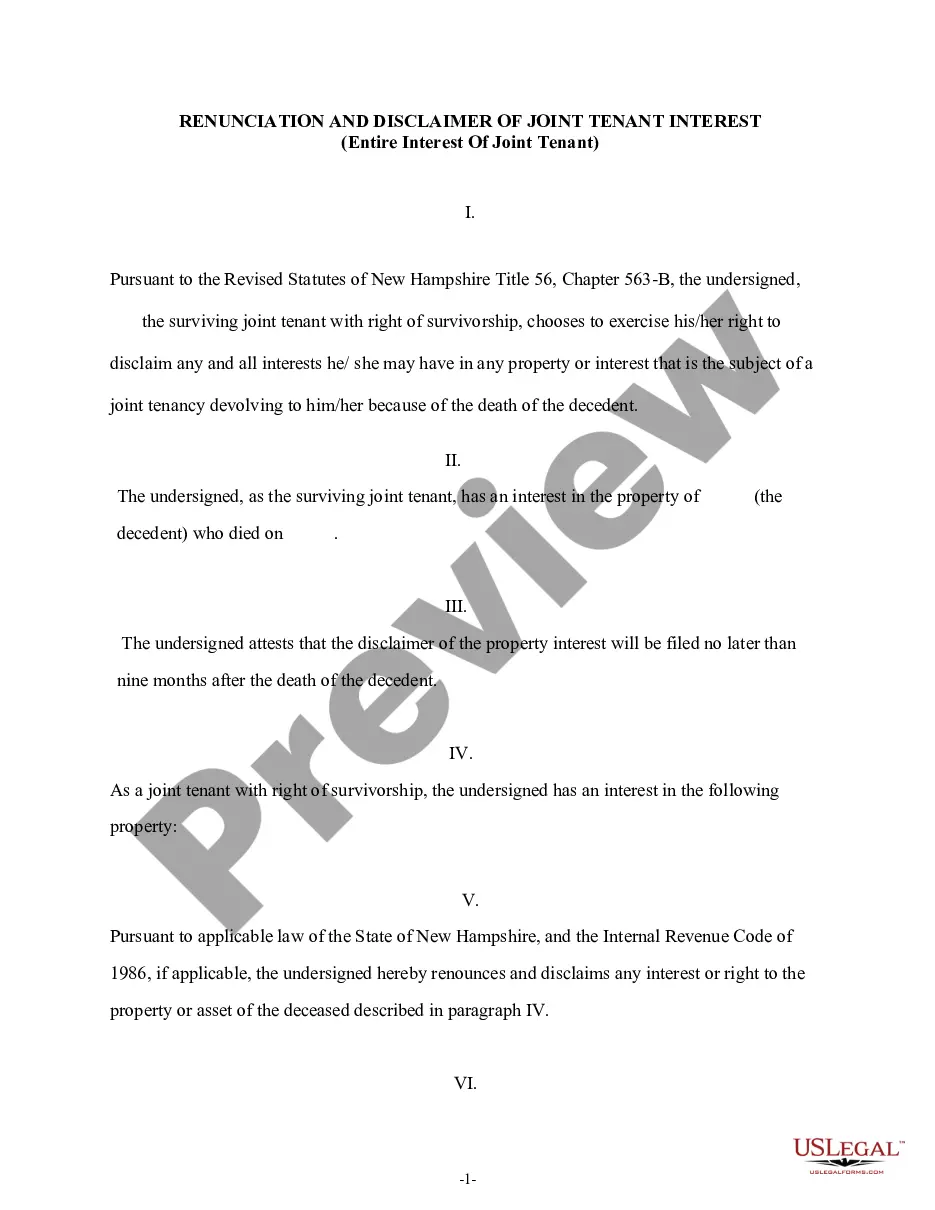
Licensor Oriented Content License Agreement
What is this form?
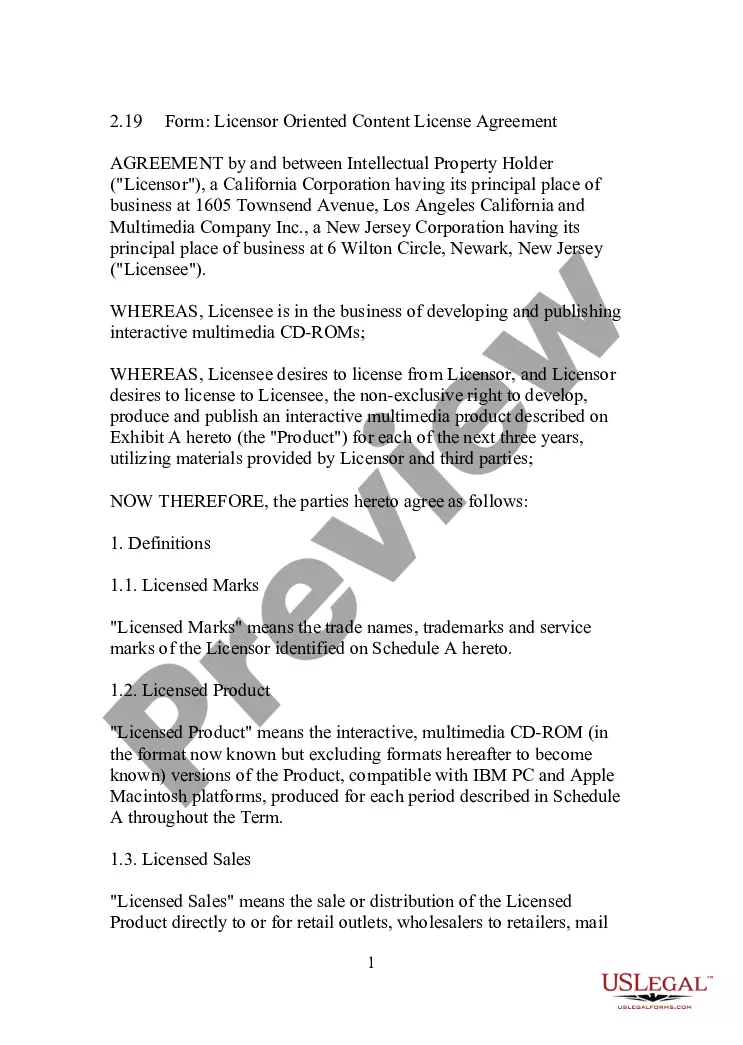
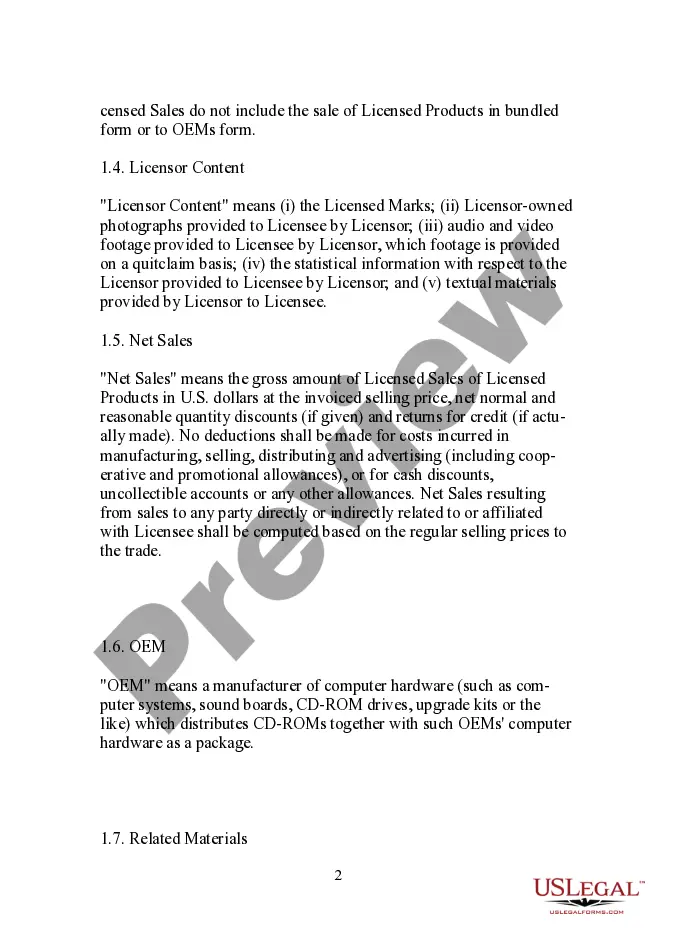
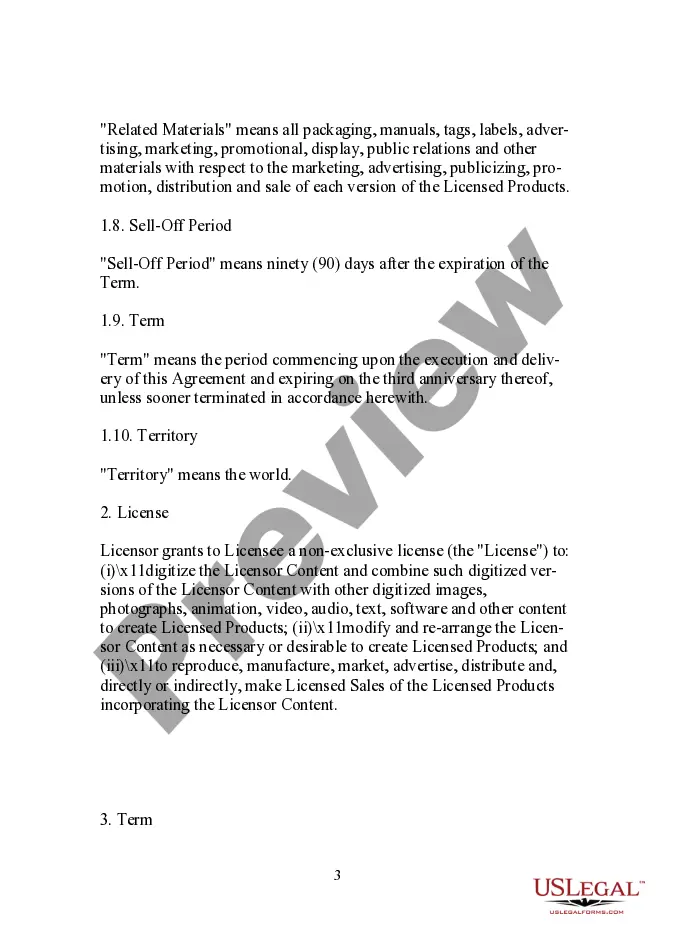
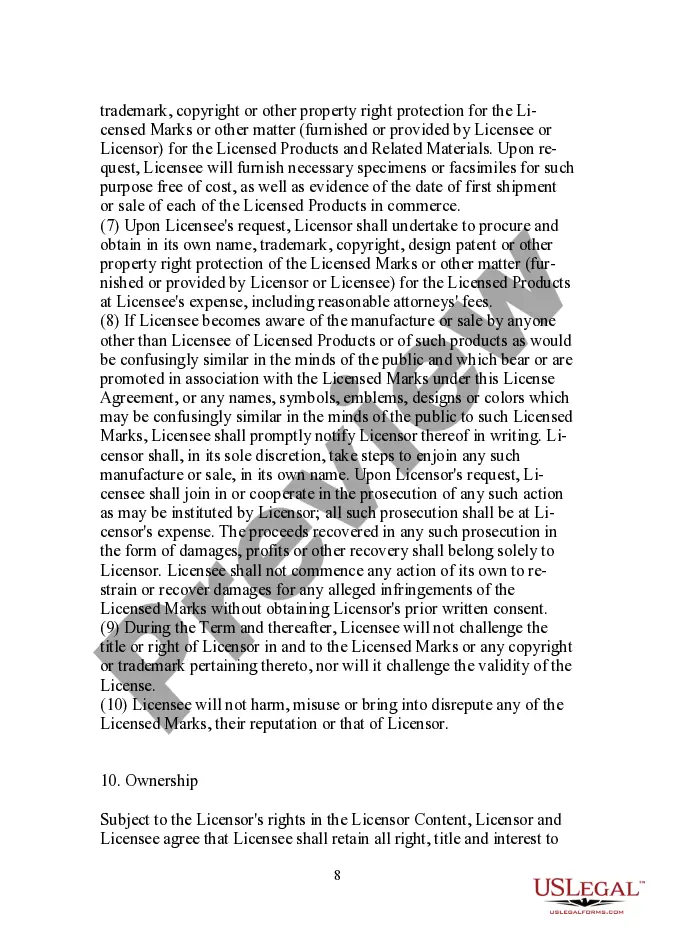
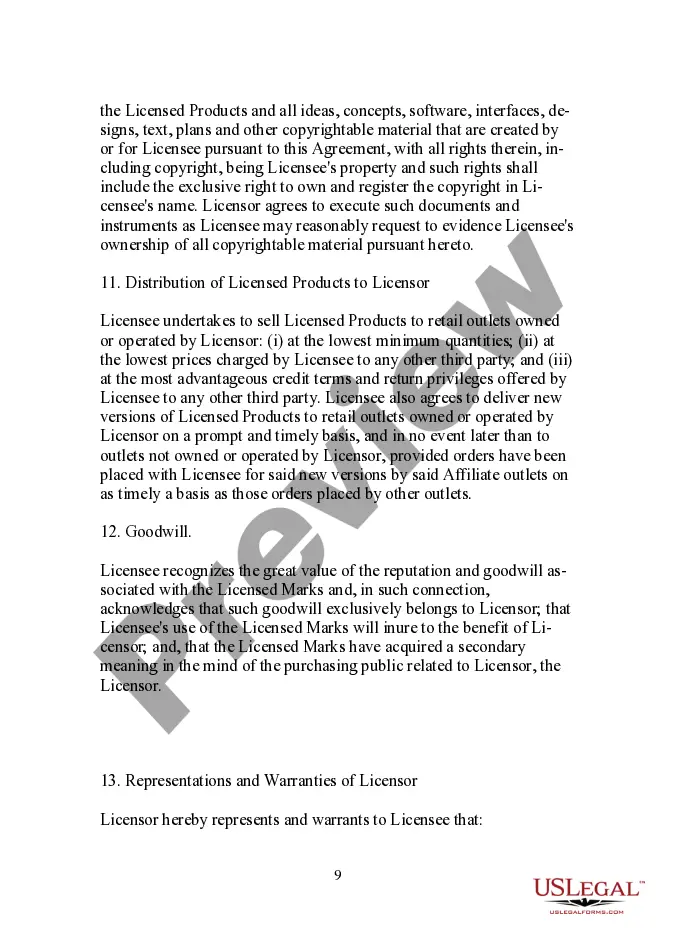
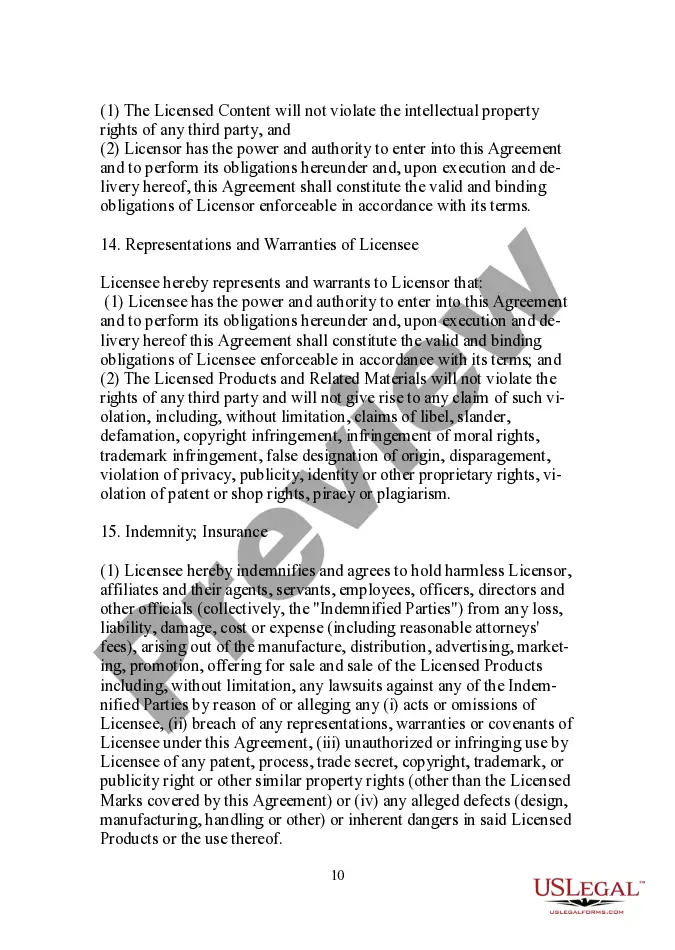
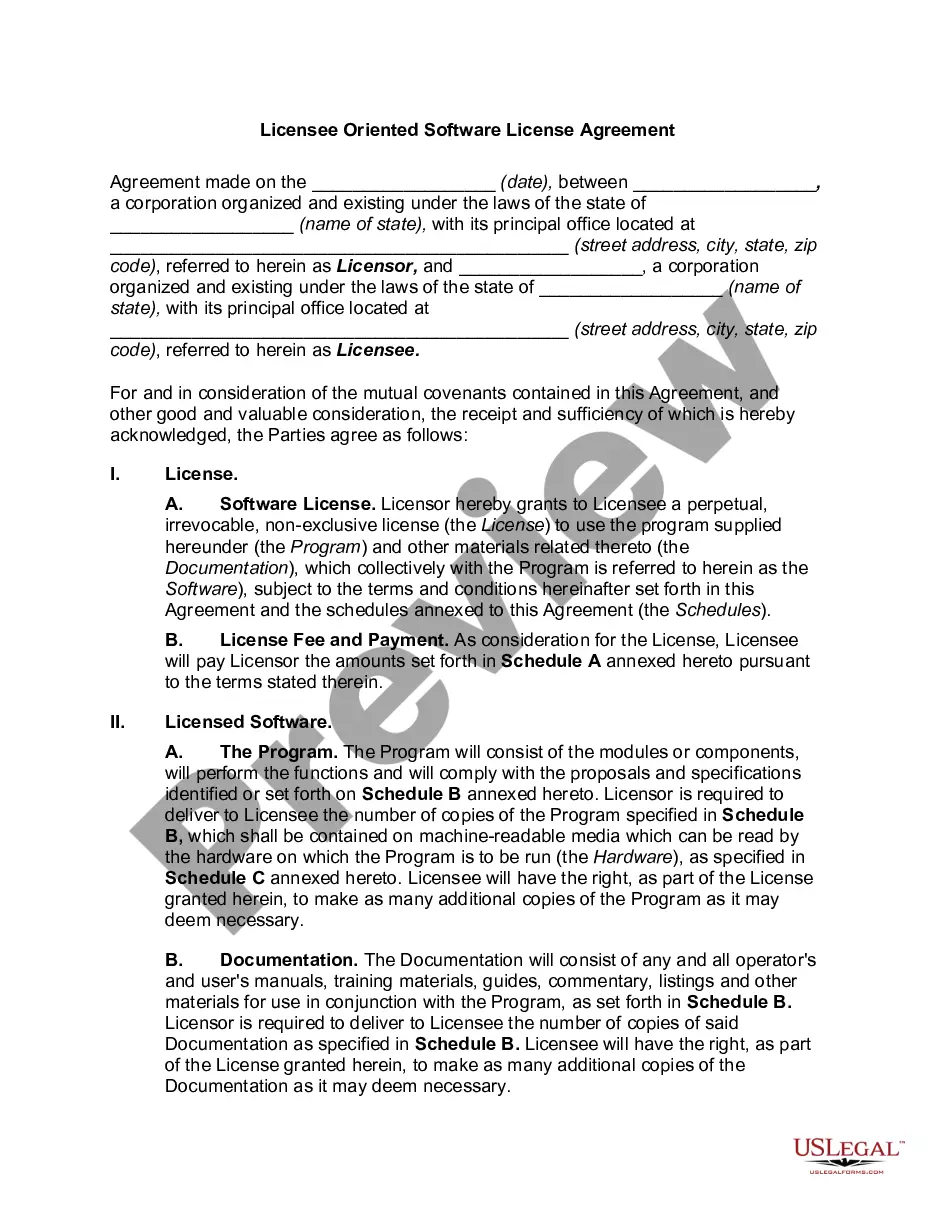
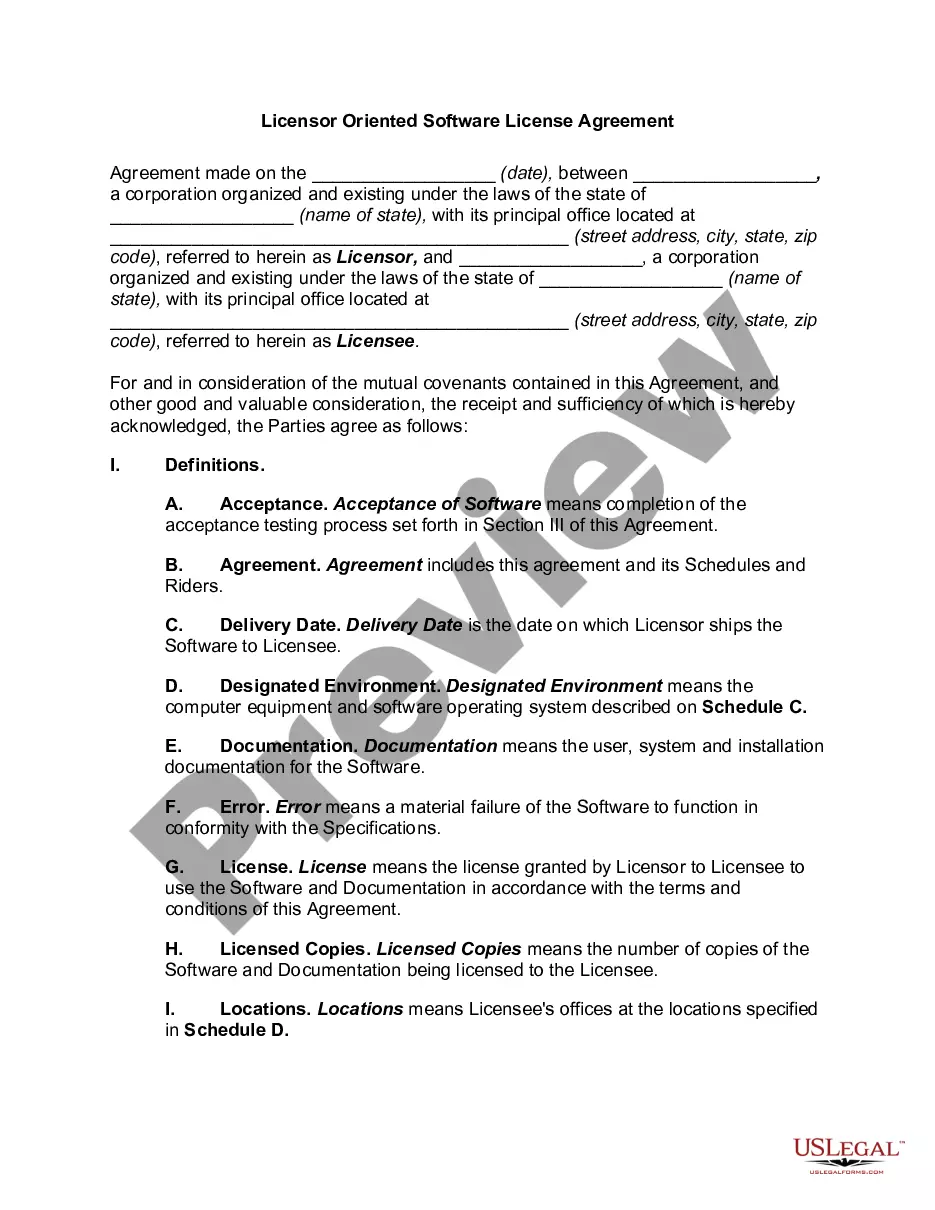
The Licensor Oriented Content License Agreement is a legal document that outlines the terms under which a Licensor grants a Licensee the right to produce, develop, and sell a specified product using the Licensor's intellectual property. This agreement helps to protect the rights of both parties by clearly defining the scope of use, obligations, and revenue sharing. Unlike other licensing agreements, this form focuses specifically on multimedia content and interactive products, ensuring compliance with intellectual property laws.
Form components explained
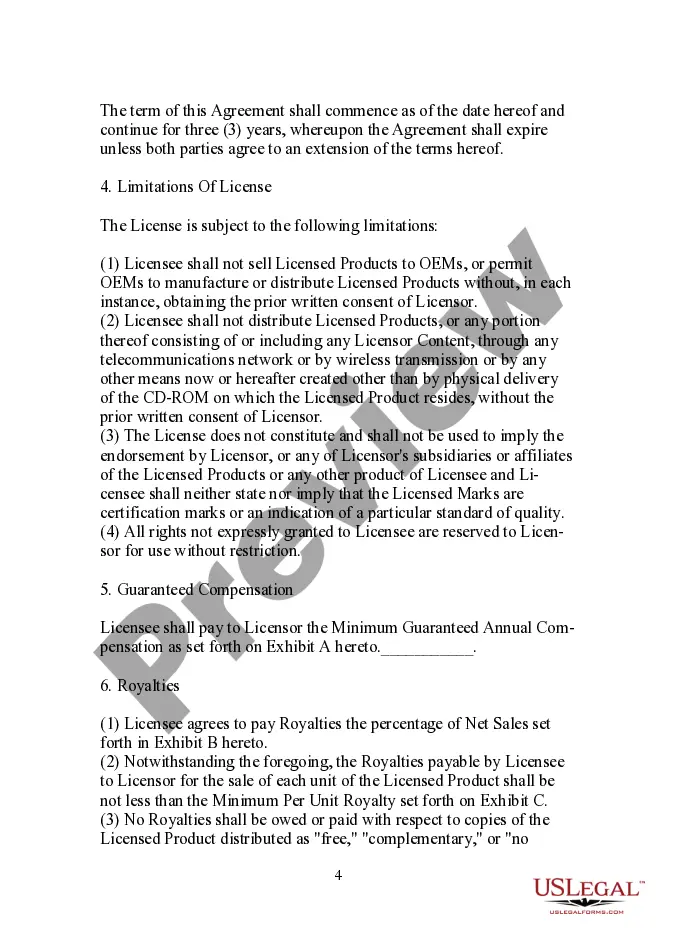
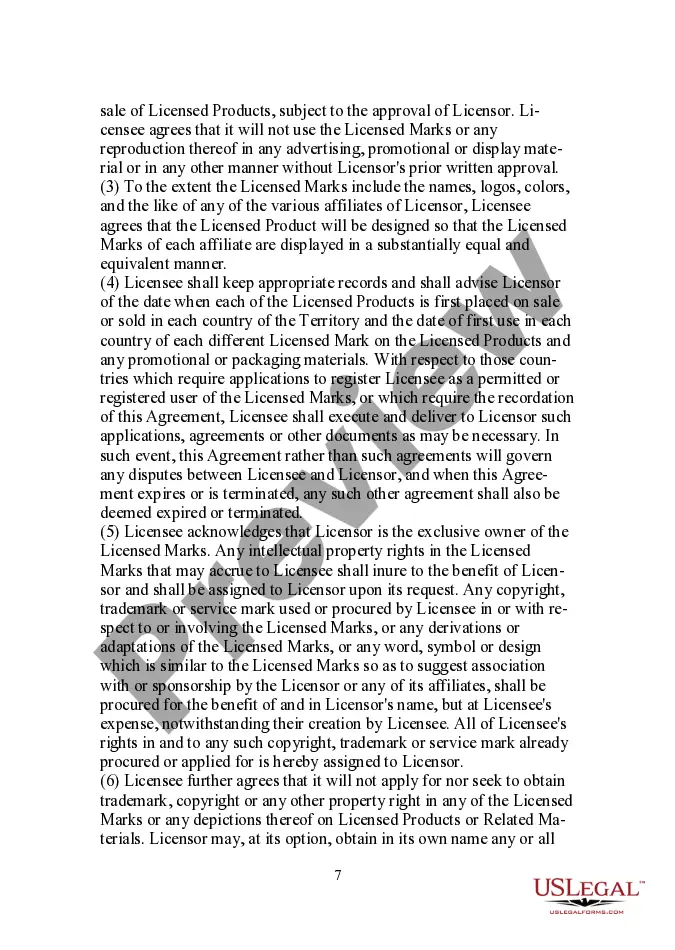
- Definitions section: Clarifies key terms such as "Licensed Marks" and "Net Sales."
- License grant: Details the non-exclusive rights given to the Licensee to use the Licensor's content.
- Term of the agreement: Specifies the duration of the license and conditions for renewal.
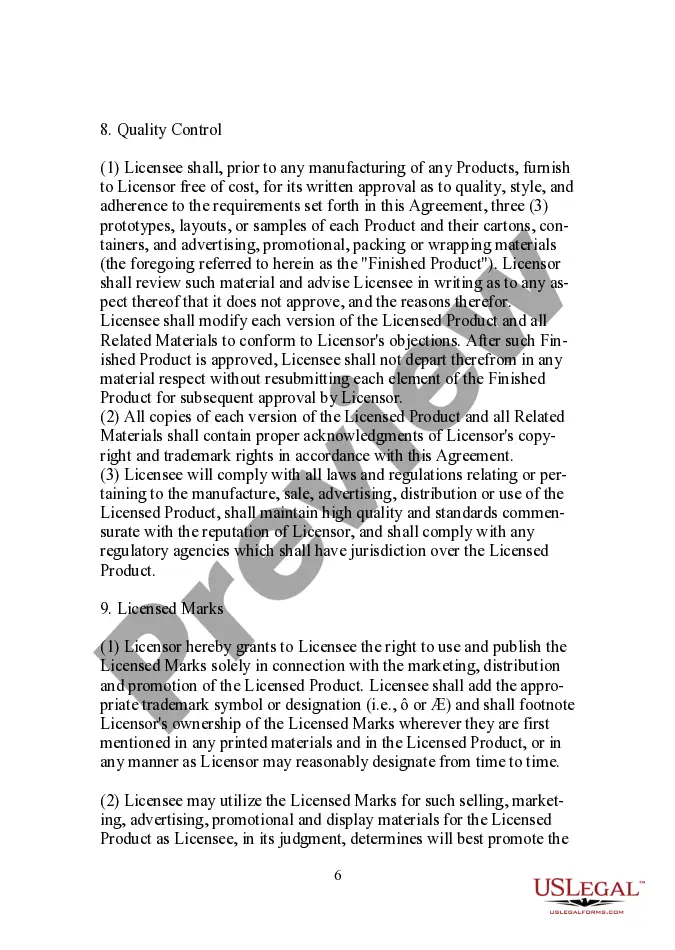
- Quality control provisions: Outlines standards and approval processes for products developed under the agreement.
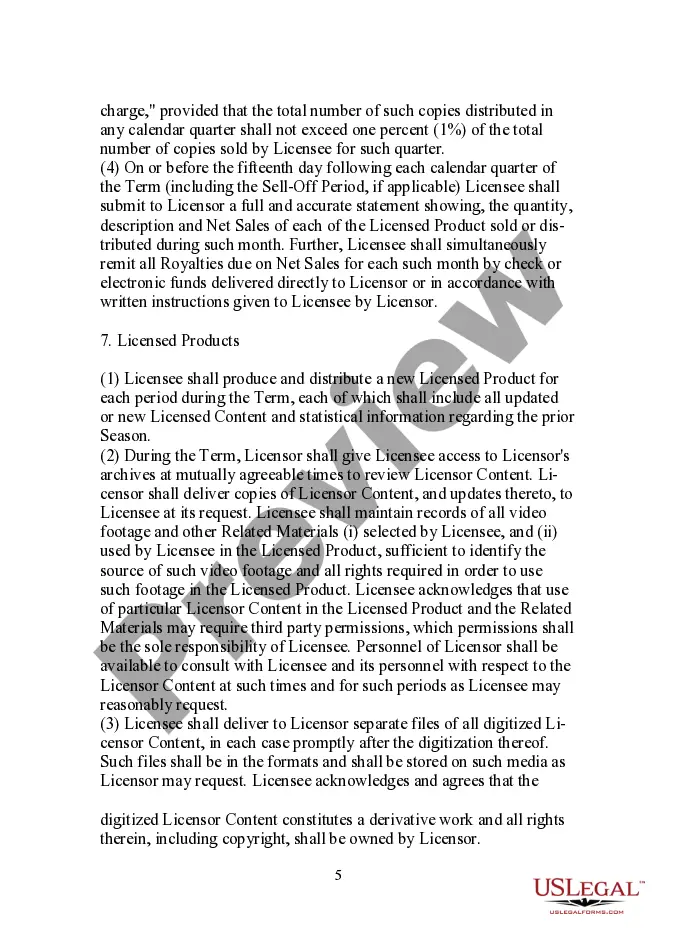
- Compensation terms: Describes the structure for royalties and minimum guarantees owed to the Licensor.
- Termination conditions: Explains the circumstances under which the agreement may be ended.

When this form is needed
This form is useful when a business seeks to create and sell a multimedia product that incorporates copyrighted materials from another entity. It is ideal for scenarios where a publisher or developer wishes to utilize trademarks, downloadable content, or intellectual property owned by the Licensor over a defined period. This agreement particularly applies to businesses operating in the digital multimedia space, looking to ensure legal compliance and clear revenue arrangements.
Who can use this document
- Businesses engaged in the development and distribution of multimedia products.
- Content creators seeking to license content from a third party.
- Corporations that need a clear legal framework for using another entity's intellectual property.
How to complete this form
- Identify the Licensor and Licensee by entering the correct legal names and principal business addresses.
- Specify the term of the agreement, including the exact start and end dates.
- Outline the Licensed Products and related materials, including any specific content to be used.
- Include the compensation structure, detailing minimum guarantees and royalty percentages based on sales.
- Add any additional provisions related to quality control and ownership rights as necessary.
Notarization guidance
This form does not typically require notarization to be legally valid. However, some jurisdictions or document types may still require it. US Legal Forms provides secure online notarization powered by Notarize, available 24/7 for added convenience.
Get your form ready online
Our built-in tools help you complete, sign, share, and store your documents in one place.
Make edits, fill in missing information, and update formatting in US Legal Forms—just like you would in MS Word.
Download a copy, print it, send it by email, or mail it via USPS—whatever works best for your next step.
Sign and collect signatures with our SignNow integration. Send to multiple recipients, set reminders, and more. Go Premium to unlock E-Sign.
If this form requires notarization, complete it online through a secure video call—no need to meet a notary in person or wait for an appointment.
We protect your documents and personal data by following strict security and privacy standards.

Make edits, fill in missing information, and update formatting in US Legal Forms—just like you would in MS Word.

Download a copy, print it, send it by email, or mail it via USPS—whatever works best for your next step.

Sign and collect signatures with our SignNow integration. Send to multiple recipients, set reminders, and more. Go Premium to unlock E-Sign.

If this form requires notarization, complete it online through a secure video call—no need to meet a notary in person or wait for an appointment.

We protect your documents and personal data by following strict security and privacy standards.
Common mistakes
- Failing to clearly define all relevant terms, which can lead to misunderstandings about rights and obligations.
- Not specifying the duration of the agreement and conditions for termination.
- Ignoring compliance with local laws, particularly regarding intellectual property.
Why complete this form online
- Convenience of downloading and customizing the form as per specific needs.
- Access to template forms drafted by licensed attorneys, ensuring legal reliability.
- Ability to quickly adjust the agreement for various multimedia products or licensing scenarios.
Legal use & context
- The agreement grants specific rights to utilize copyrighted materials, thus protecting against potential infringement claims.
- It clearly differentiates between the rights of the Licensor and the Licensee, minimizing the risk of disputes.
- Proper execution of this agreement aids in establishing legal enforceability in a court of law.
What to keep in mind
- The Licensor Oriented Content License Agreement is essential for businesses using others' intellectual property.
- Clear definitions and terms protect both Licensor and Licensee interests.
- Understanding the agreement's content reduces the likelihood of common legal pitfalls.
Looking for another form?
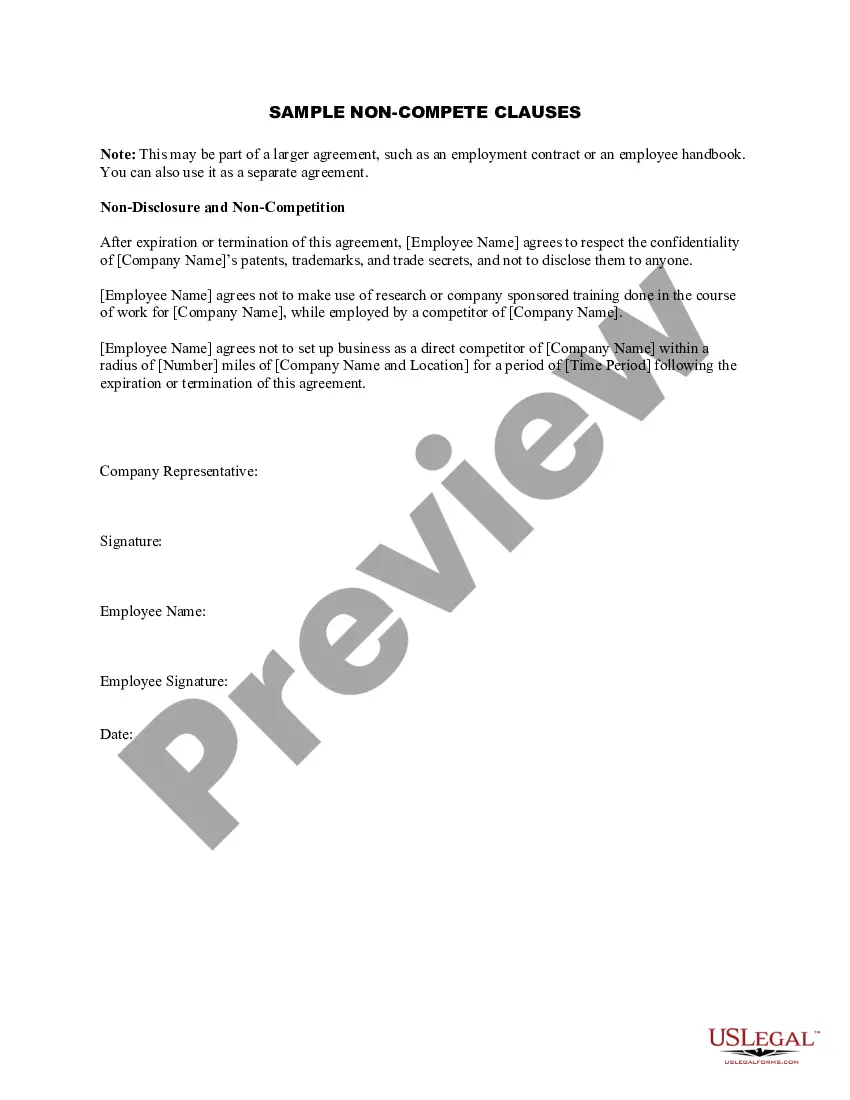
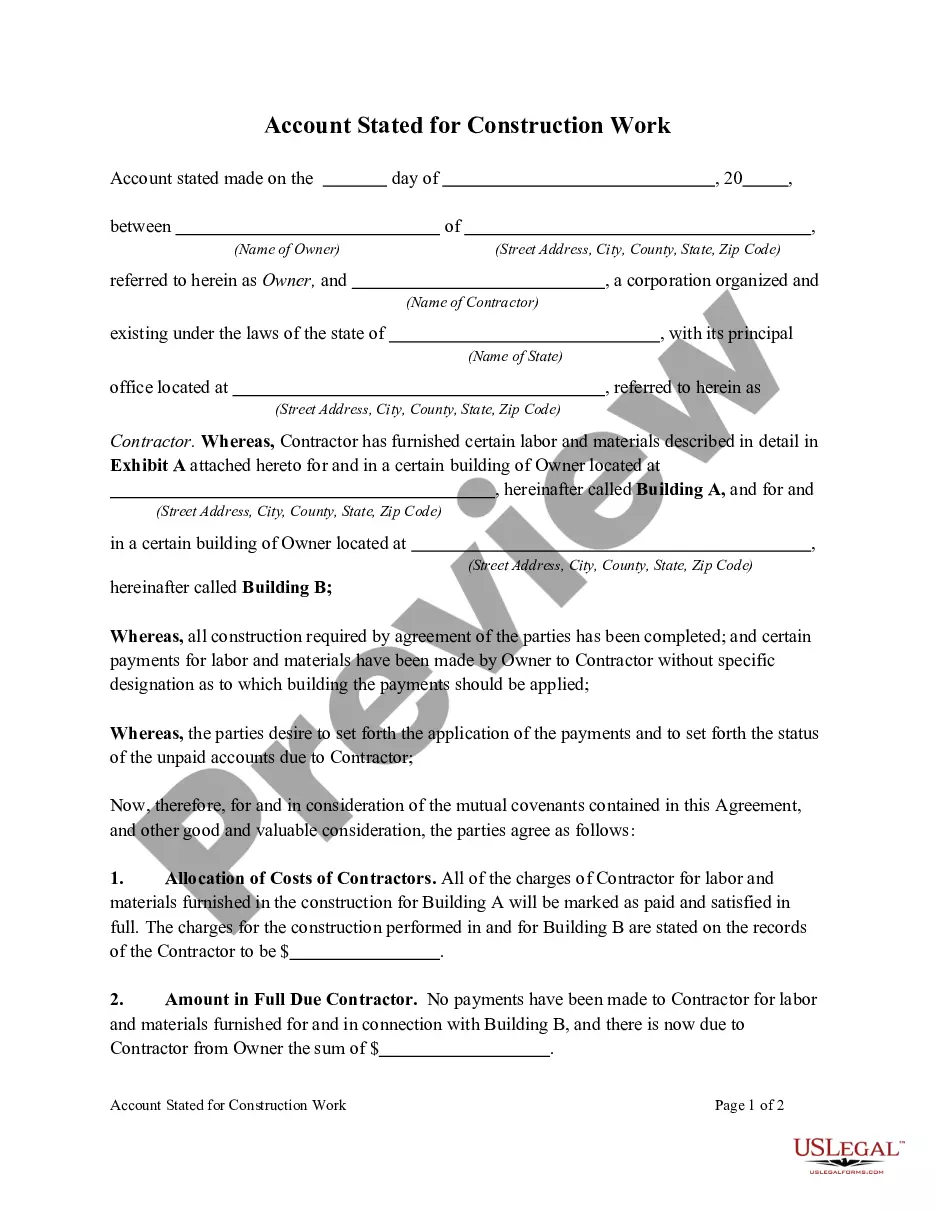
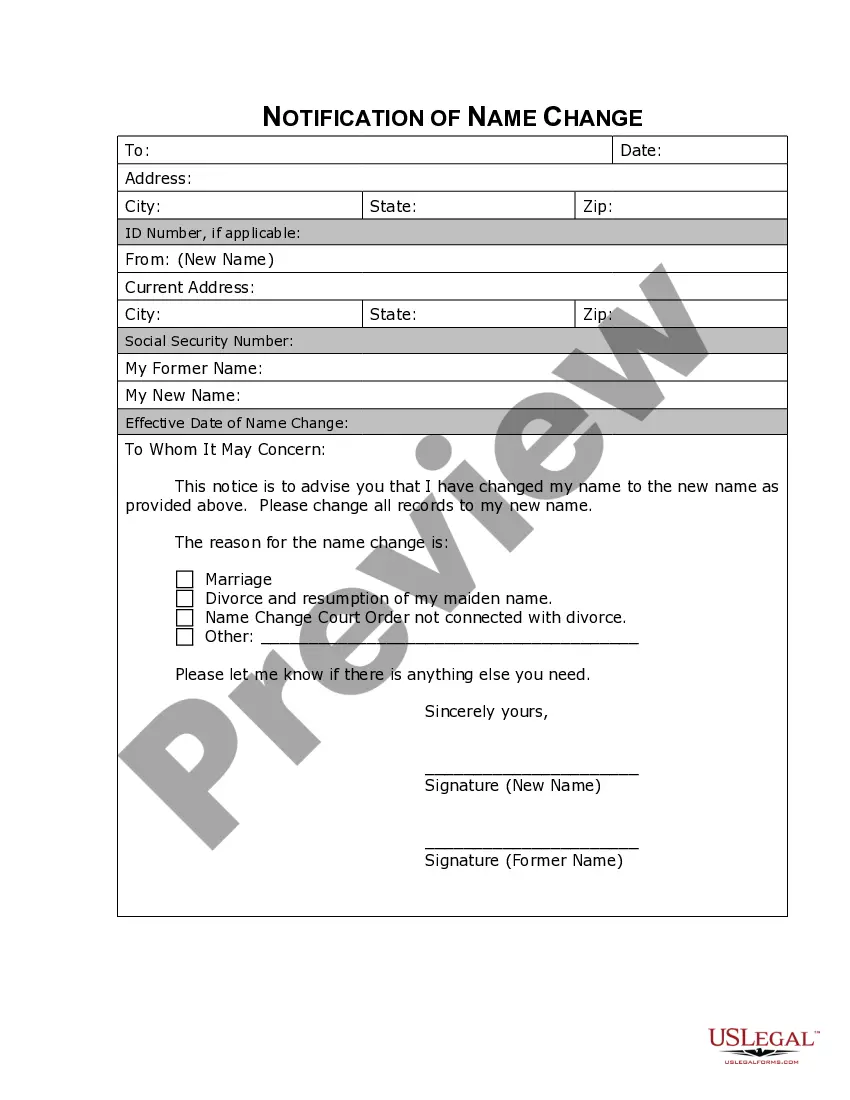
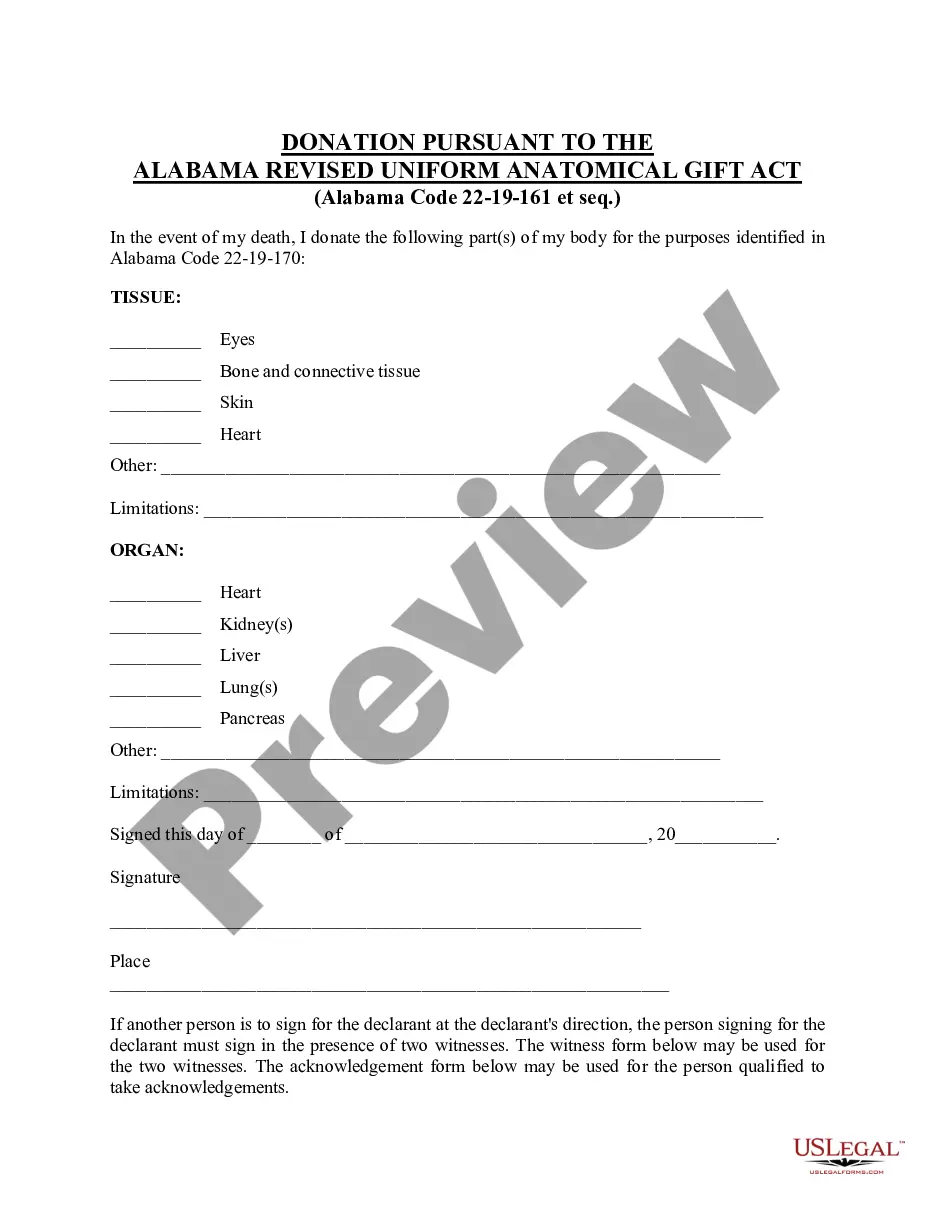


Form popularity
FAQ
Generally speaking, an EULA is a legally binding agreement between the owner of a product (often software) and the end-user more specifically a contract between the licensor of a product and the licensee.
An example of a licensing agreement is a contract between the copyright holders of software and another company, allowing the latter to use the computer software for their daily business operations.
What is a Licensing Agreement? A licensing agreement is a contract between two parties (the licensor and licensee) in which the licensor grants the licensee the right to use the brand name, trademark, patented technology, or ability to produce and sell goods owned by the licensor.
Exclusive or non-exclusive. In an exclusive license, the intellectual property holder is licensing the work only to one person, for that particular use/territory. Territory. Use. Attribution. Derivative works. Confidentiality. Time frame. Termination.
Setting up Your Licensing Agreement. Granting the License. Limiting Your Liability. Adding Boilerplate Clauses. Finalizing the Licensing Agreement.
A license agreement is a business contract between two parties. The licensor (the seller of the license) owns the asset being licensed and the licensee (the buyer) pays for the right to use the license. The licensee pays royalties to the owner in exchange for the right to sell the product or use the technology.
Download a template for a licensing agreement. Choose your role as the licensor or licensee. Define the license(s) in the agreement. Decide whether the license is exclusive or not. Settle the matter of fees and payment schedule. Add a renewal date and rules.