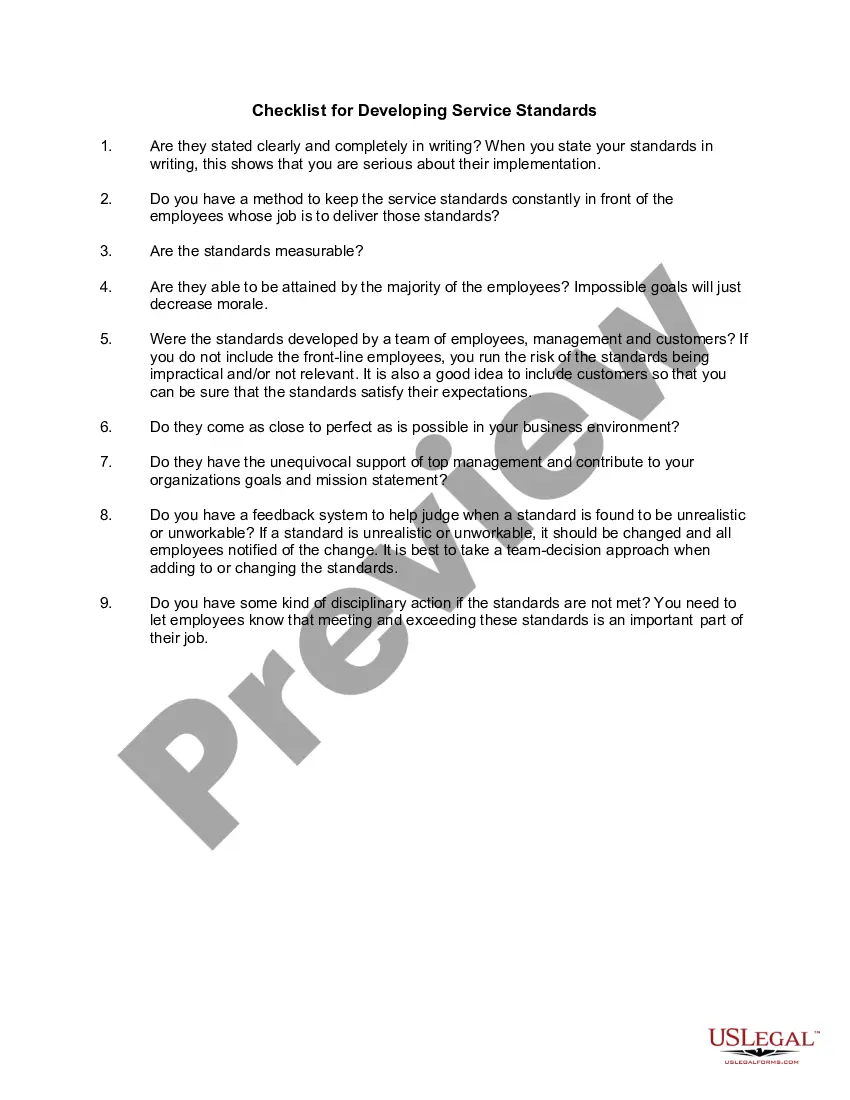
Checklist for Developing Service Standards
What is this form?
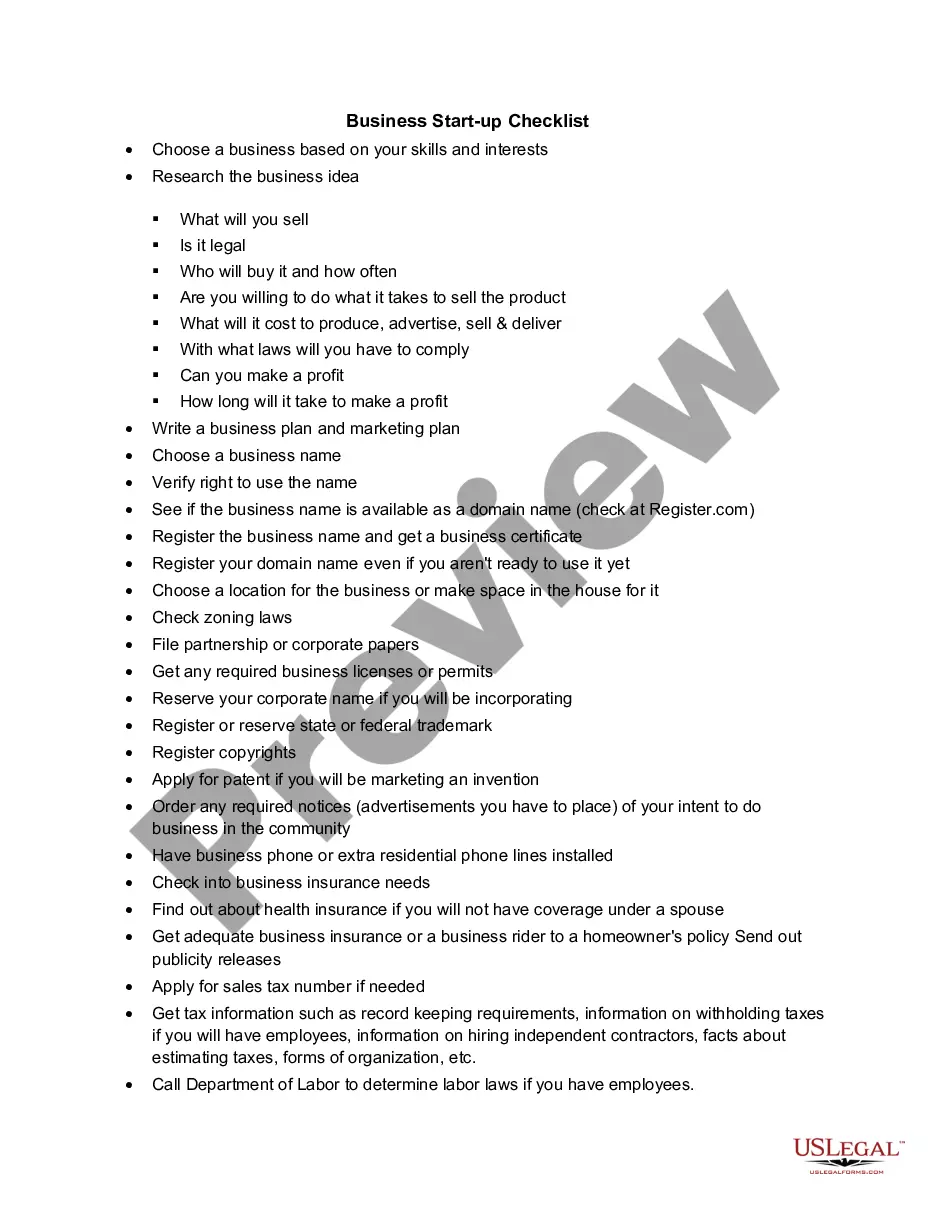
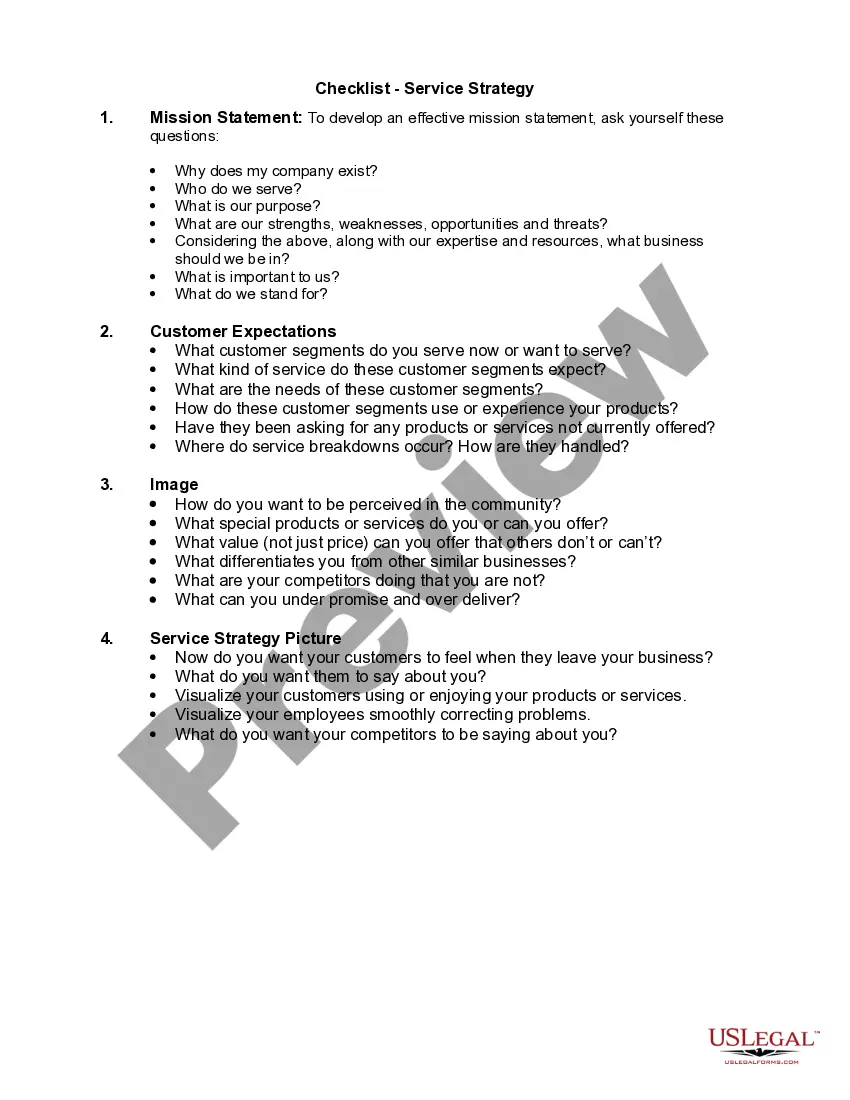
The Checklist for Developing Service Standards is a tool designed to help organizations establish clear, measurable service standards that enhance client satisfaction. Unlike other forms that may focus solely on feedback collection, this checklist provides a systematic approach to both develop and evaluate service standards crucial for quality service delivery.
Form components explained
- Clear written service standards: Ensures standards are communicated effectively to all employees.
- Visibility for employees: Outlines methods to keep standards front-of-mind for those delivering services.
- Measurable criteria: Standards must be quantifiable to assess performance accurately.
- Attainable goals: Ensures standards are realistic and achievable to maintain employee morale.
- Stakeholder involvement: Encourages collaboration among employees, management, and customers during the standard-setting process.
- Management support: Highlights the importance of backing from top management for the successful implementation of standards.
- Feedback mechanism: Provides a system to evaluate and adjust standards as needed based on team insights.
- Disciplinary actions: Addresses the importance of accountability in meeting established service standards.
Common use cases
This form is essential for organizations seeking to improve their service delivery. It is particularly useful during the initial development of service standards, as well as during periodic evaluations to ensure that these standards remain relevant and achievable. If your organization faces challenges in client satisfaction or employee performance, utilizing this checklist can help identify areas for improvement.
Who can use this document
- Service managers responsible for establishing client service standards.
- Quality assurance professionals who need to evaluate the effectiveness of current standards.
- Human resources personnel involved in employee training and development.
- Organizational leaders aiming to enhance overall service quality.
How to complete this form
- Review each item on the checklist thoroughly to ensure clarity in standards.
- Gather input from front-line employees and management to develop practical standards.
- Make sure all standards are documented and easily accessible to relevant staff.
- Implement a feedback system to continuously assess and update service standards.
- Communicate the standards clearly to all employees and ensure they understand their importance.
Does this form need to be notarized?
Notarization is not commonly needed for this form. However, certain documents or local rules may make it necessary. Our notarization service, powered by Notarize, allows you to finalize it securely online anytime, day or night.
Get your form ready online
Our built-in tools help you complete, sign, share, and store your documents in one place.
Make edits, fill in missing information, and update formatting in US Legal Forms—just like you would in MS Word.
Download a copy, print it, send it by email, or mail it via USPS—whatever works best for your next step.
Sign and collect signatures with our SignNow integration. Send to multiple recipients, set reminders, and more. Go Premium to unlock E-Sign.
If this form requires notarization, complete it online through a secure video call—no need to meet a notary in person or wait for an appointment.
We protect your documents and personal data by following strict security and privacy standards.

Make edits, fill in missing information, and update formatting in US Legal Forms—just like you would in MS Word.

Download a copy, print it, send it by email, or mail it via USPS—whatever works best for your next step.

Sign and collect signatures with our SignNow integration. Send to multiple recipients, set reminders, and more. Go Premium to unlock E-Sign.

If this form requires notarization, complete it online through a secure video call—no need to meet a notary in person or wait for an appointment.

We protect your documents and personal data by following strict security and privacy standards.
Typical mistakes to avoid
- Failing to involve front-line employees in the development of standards.
- Setting unrealistic goals that demoralize employees.
- Neglecting to review and update standards regularly.
- Not providing adequate support and training for employees to meet standards.
Benefits of completing this form online
- Convenience: Download the form anytime and access it from anywhere.
- Editability: Tailor the checklist to suit your specific organizational needs.
- Reliability: Get forms drafted by licensed attorneys, ensuring legal soundness.
Legal use & context
- This checklist supports businesses in creating enforceable service standards.
- It helps in establishing protocols that can be defended in case of client dissatisfaction.
- Following the checklist can enhance organizational accountability and service quality.
Summary of main points
- The Checklist for Developing Service Standards helps businesses ensure quality in service delivery.
- It encourages involvement from all stakeholders, including employees and customers.
- Clear, measurable, and achievable standards that receive managerial support can lead to better client satisfaction.
- Regular updates and feedback mechanisms are critical for maintaining effective service standards.
Looking for another form?


Form popularity
FAQ
Reliability. Customers expect product and service providers to be dependable and accurate during interactions. Competence. Responsiveness. Courtesy. Credibility. Consistency.
A service standard helps to define what a customer can expect from a service and how it should be delivered by the service provider, e.g. in terms of timeliness, accuracy and suitability.A service standard specifies requirements that should be fulfilled by a service to establish its fitness for purpose.
Speed Standards. This won't make the news but it's worth repeating: quick service means convenience for customers. Accuracy Standards. Transparency Standards. Accessibility Standards. Empowerment Standards. Friendliness Standards. Efficiency Standards.
Document The Expected Restaurant Service Standards. Train Your Staff At Regular Intervals. Take A Follow Up At Regular Intervals. Promote Accountability Among Your Employees.
Collect Feedback. Survey your customers and clients. Create Review Opportunities. Use a Mystery Shopper. Evaluate Customer Retention.
A service standard specifies requirements that should be fulfilled by a service to establish its fitness for purpose. The standard may provide definitions, indicators of service quality and their levels, or specify a time period for delivery, such as the standard on handling customer complaints.
Seek Customer Feedback. To provide excellent customer service, you first need understand their needs, experiences, and pain points. Strengthen Your Customer Service Team. Use CRM Platforms. Leverage Multi-Channel Servicing.