California Substitution of Trustee, Request for Reconveyance and Reconveyance
Understanding this form
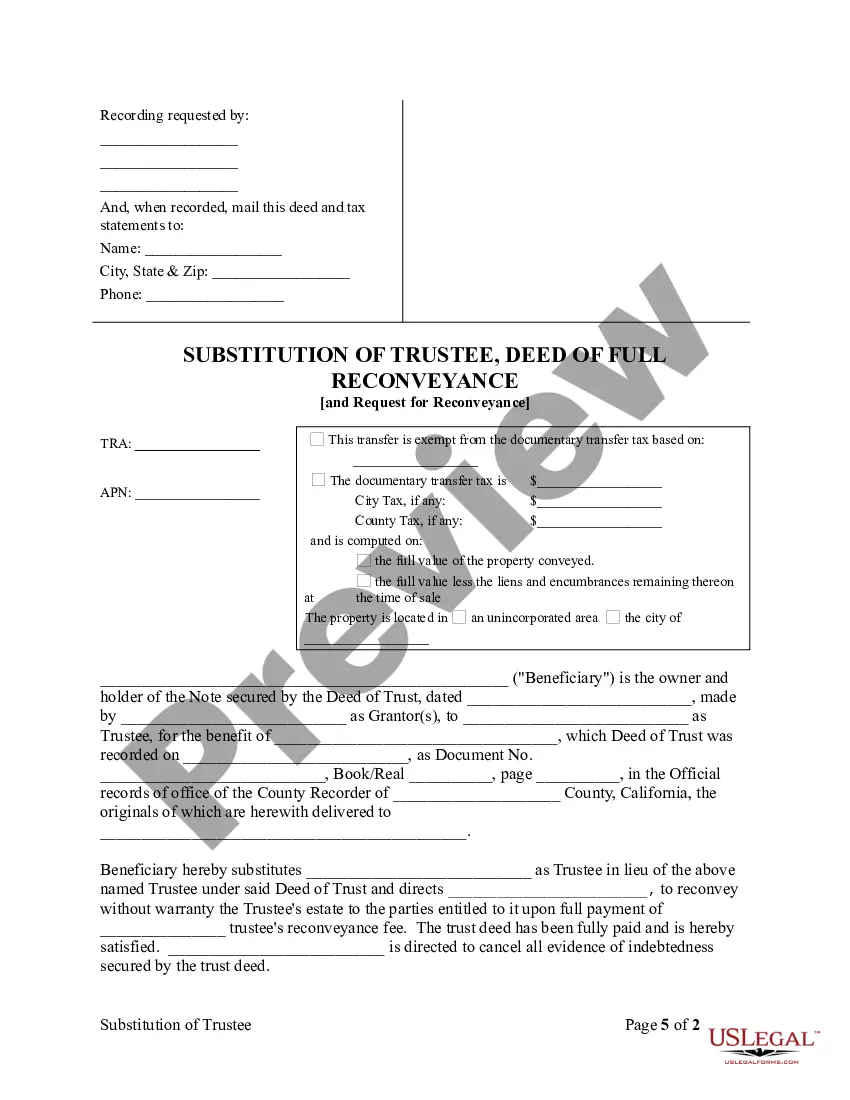
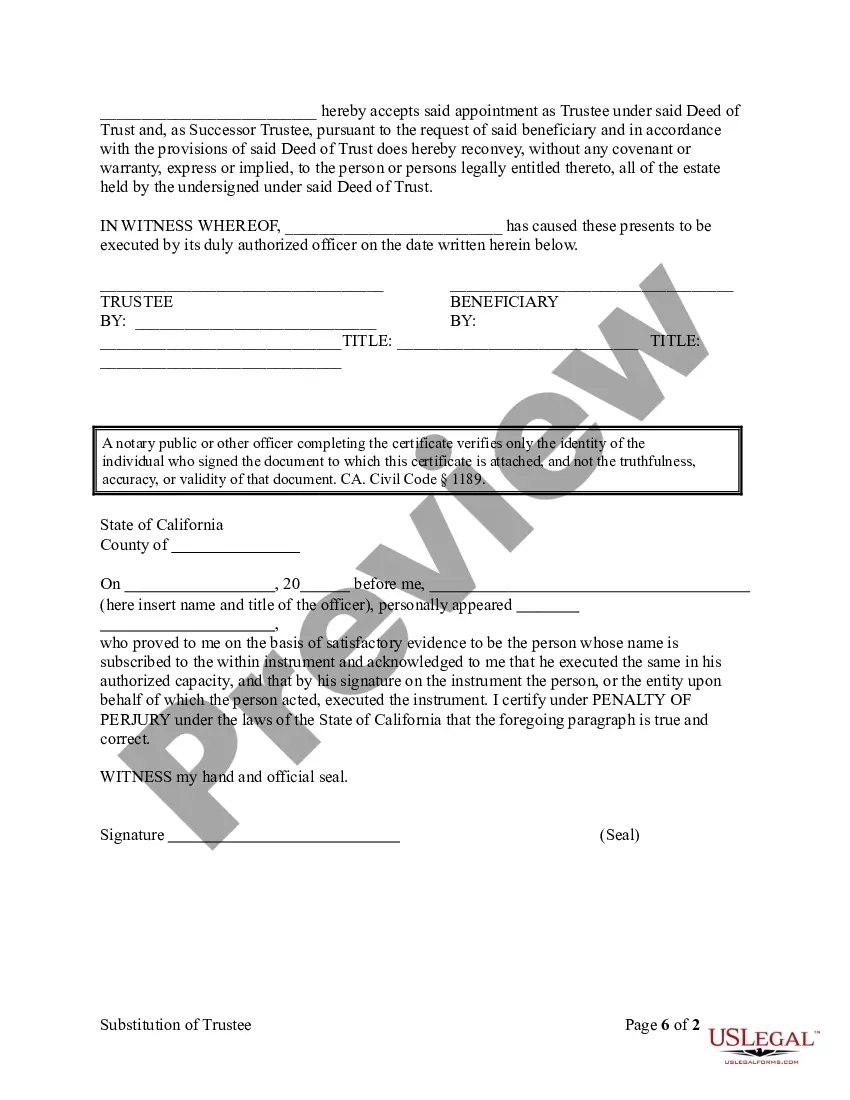
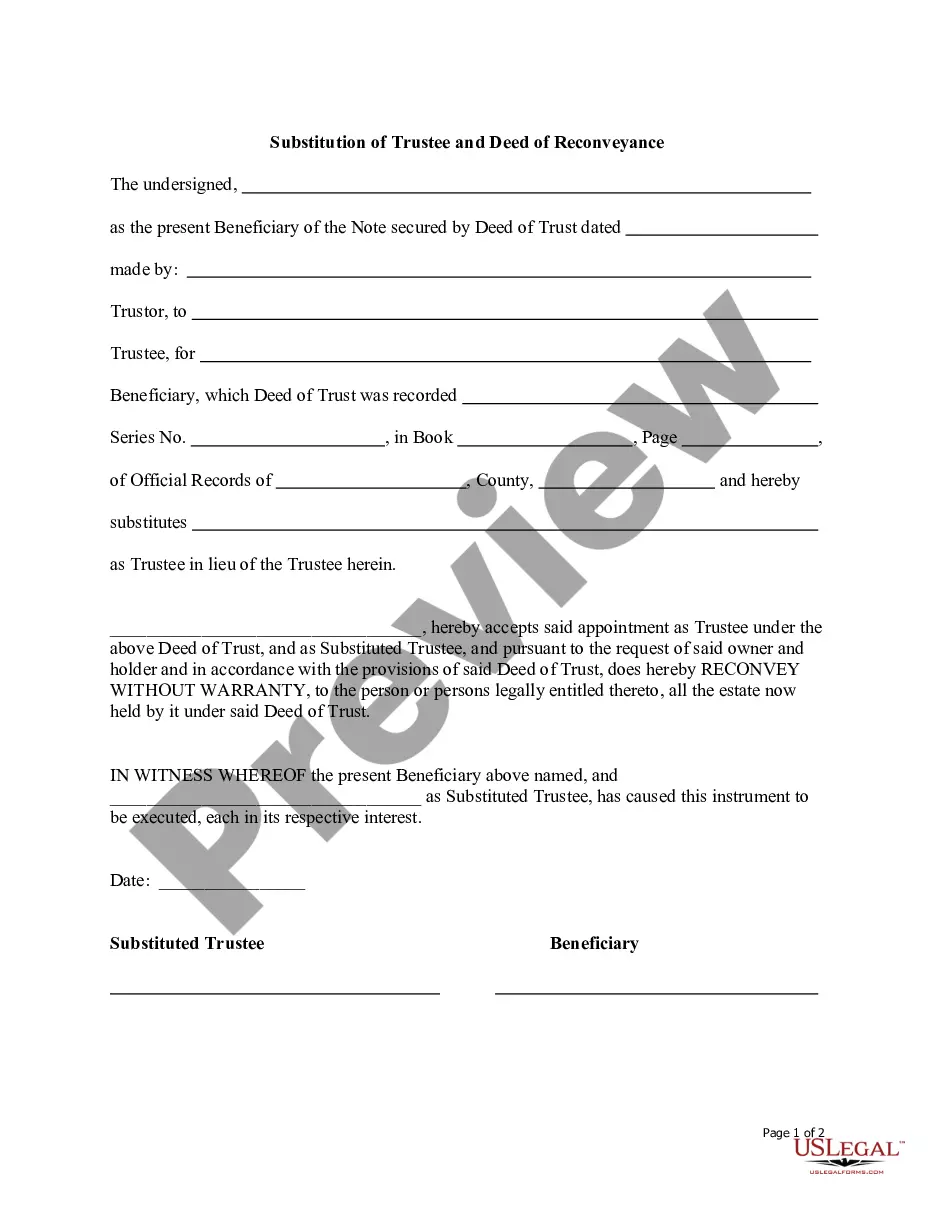
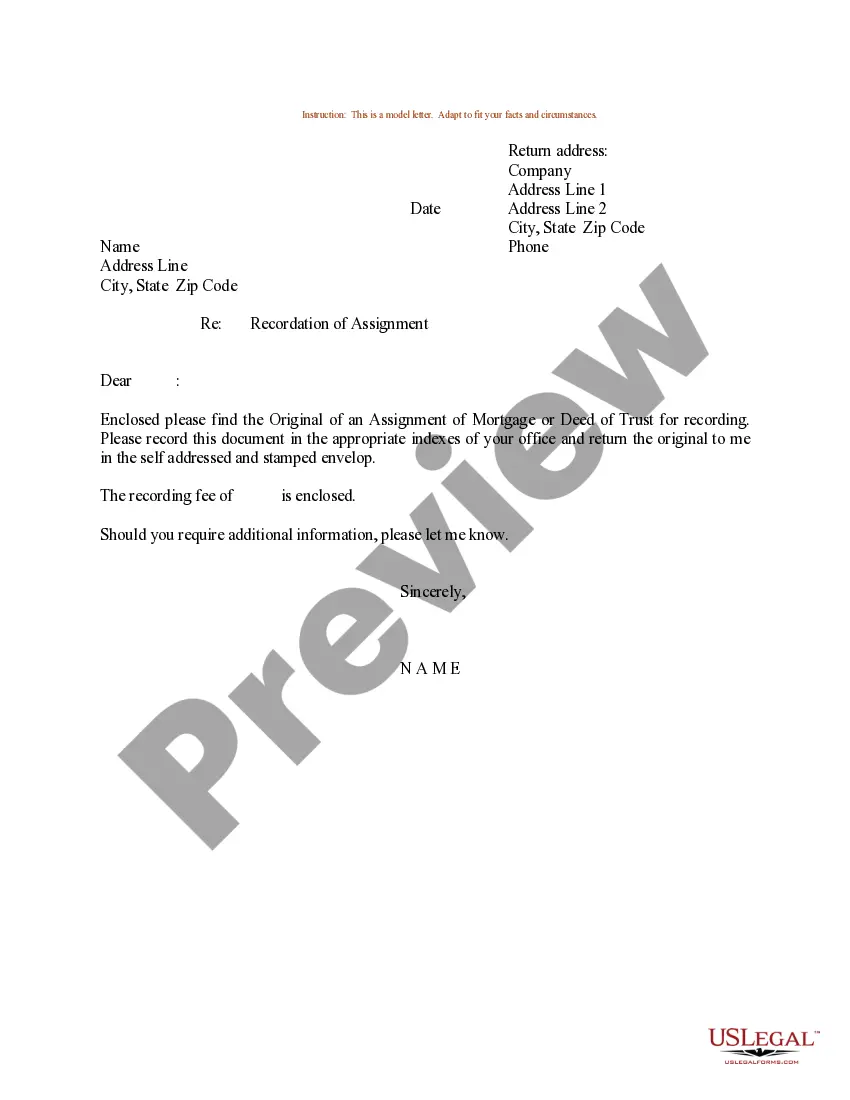
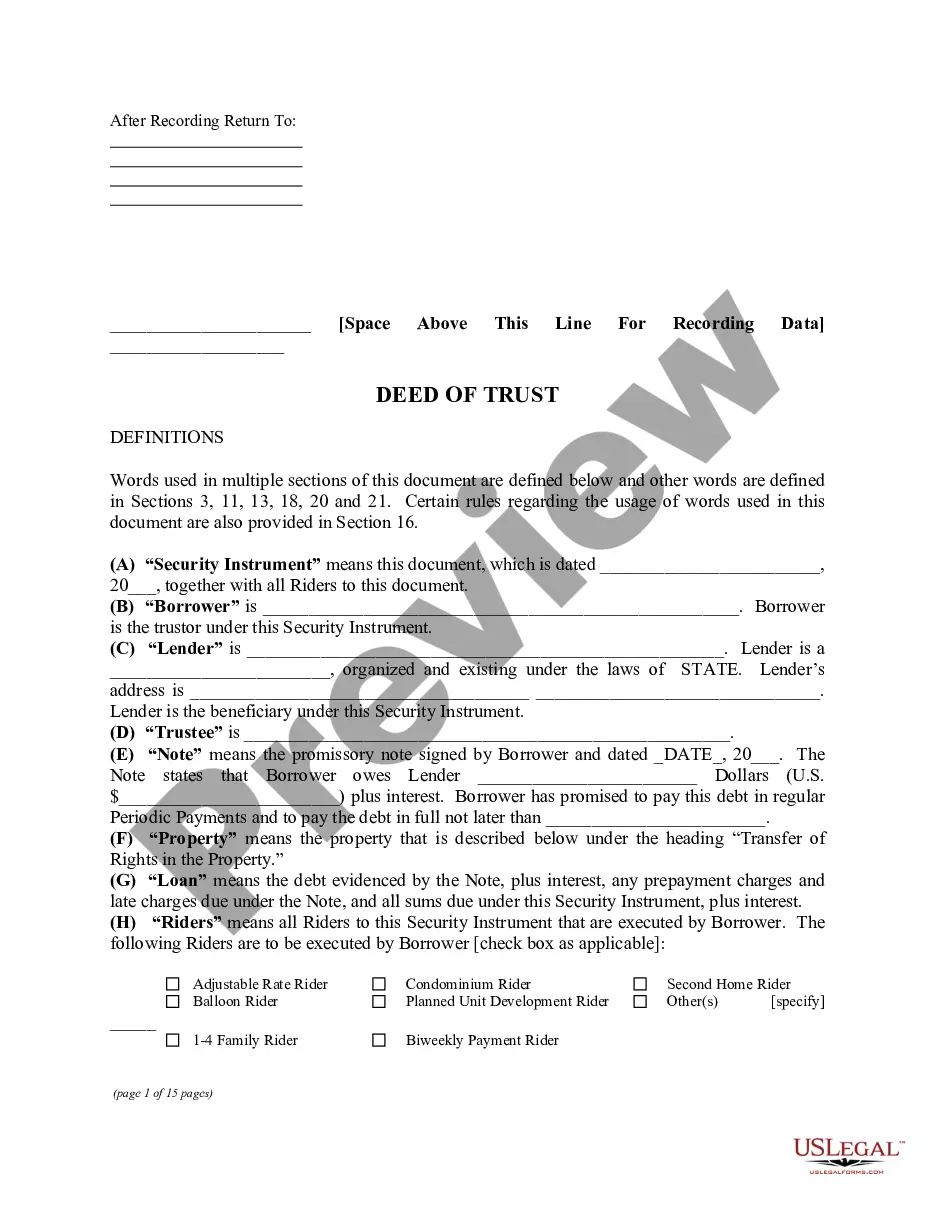
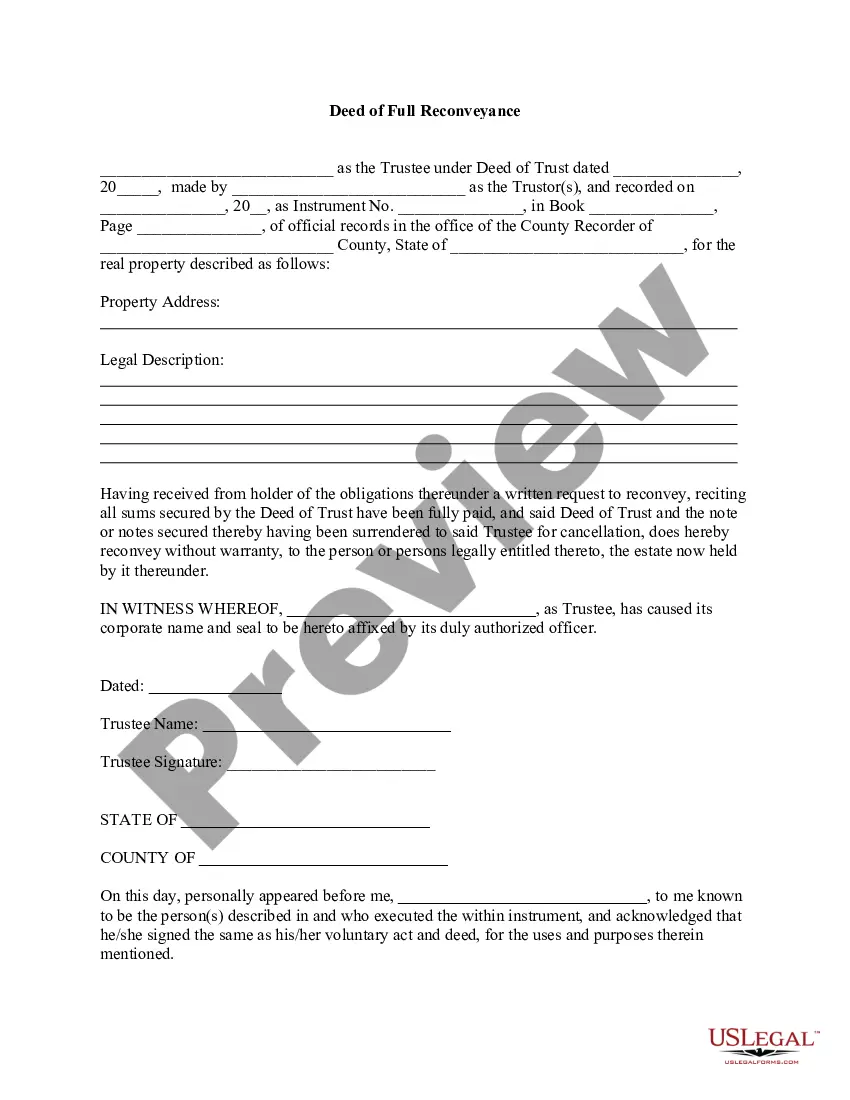
The Substitution of Trustee, Request for Reconveyance and Reconveyance is a legal document used in property transactions. It allows the appointment of a new trustee and the reconveyance of property back to the rightful party upon the satisfaction of a debt. This form is specifically designed for use in mortgages and deeds of trust, distinguishing it from other property-related forms that may not include the reconveyance process.
Form components explained
- Identification of the original trustee and the new trustee.
- A declaration of the satisfaction of the debt secured by the deed of trust.
- Instructions for reconveyance without warranty to the entitled parties.
- Signature lines for the new trustee and beneficiary.
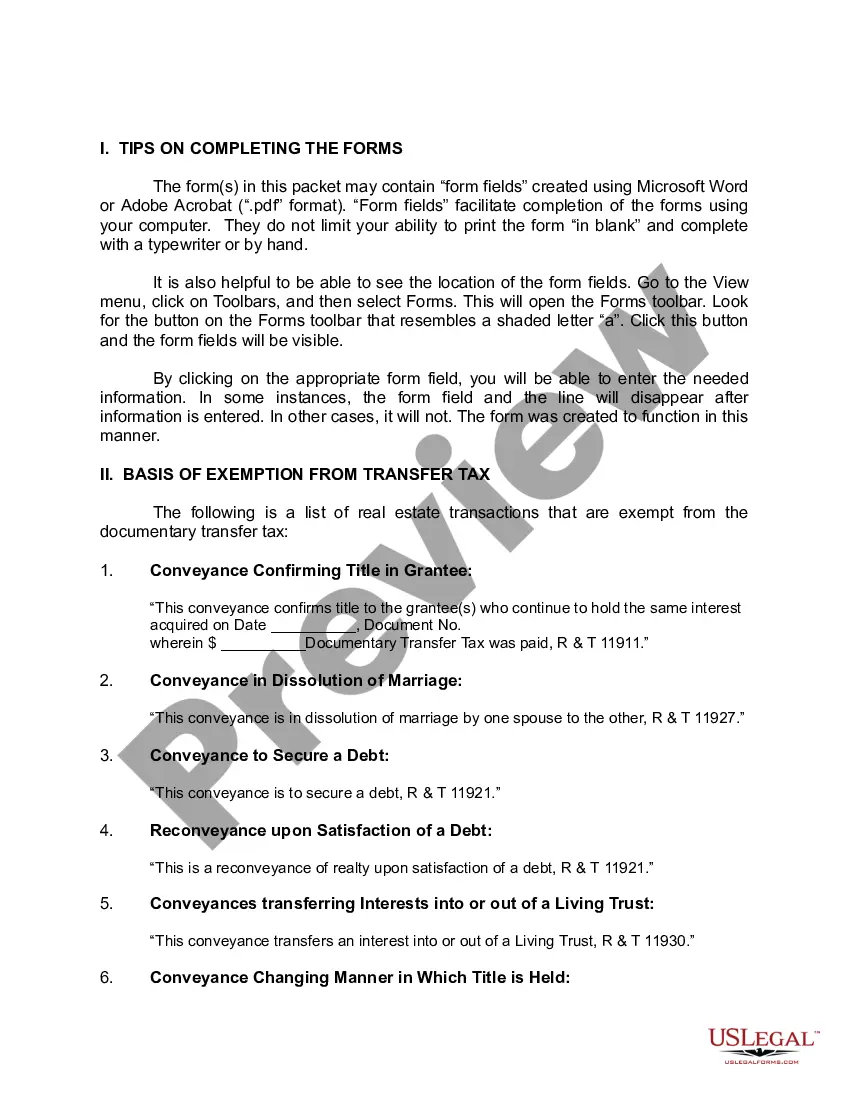
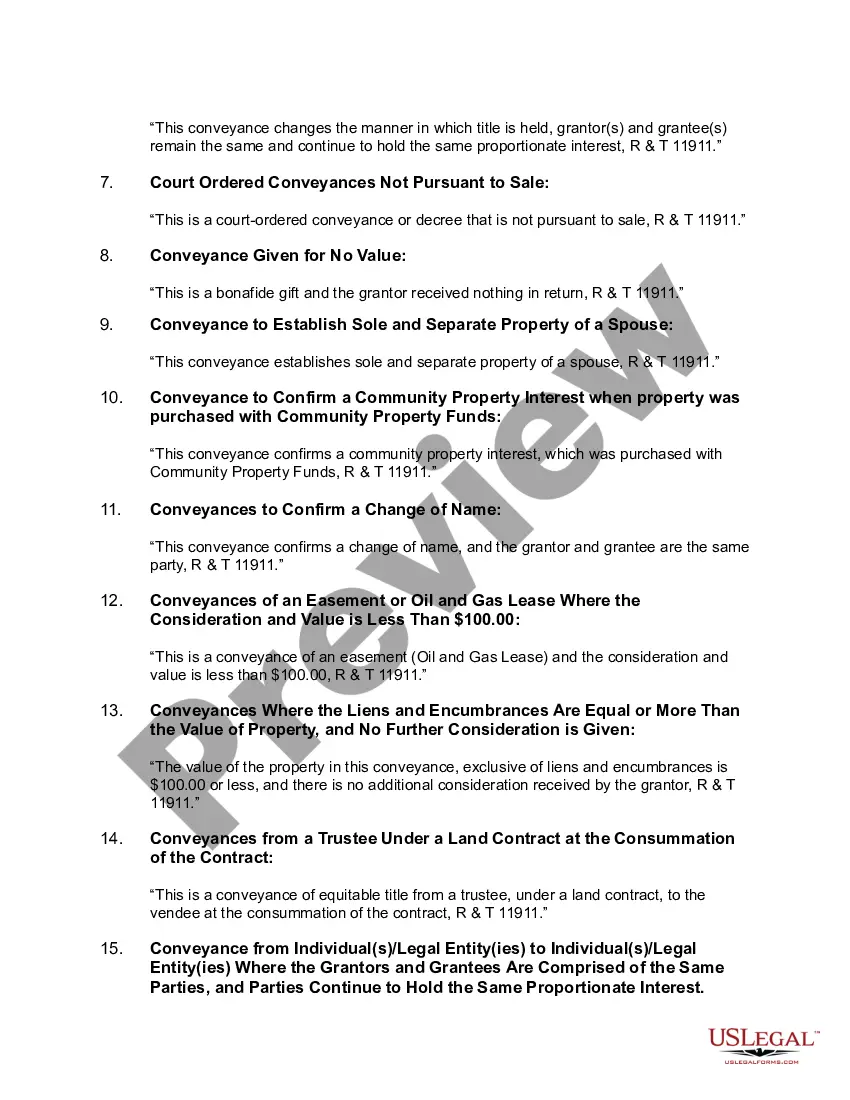
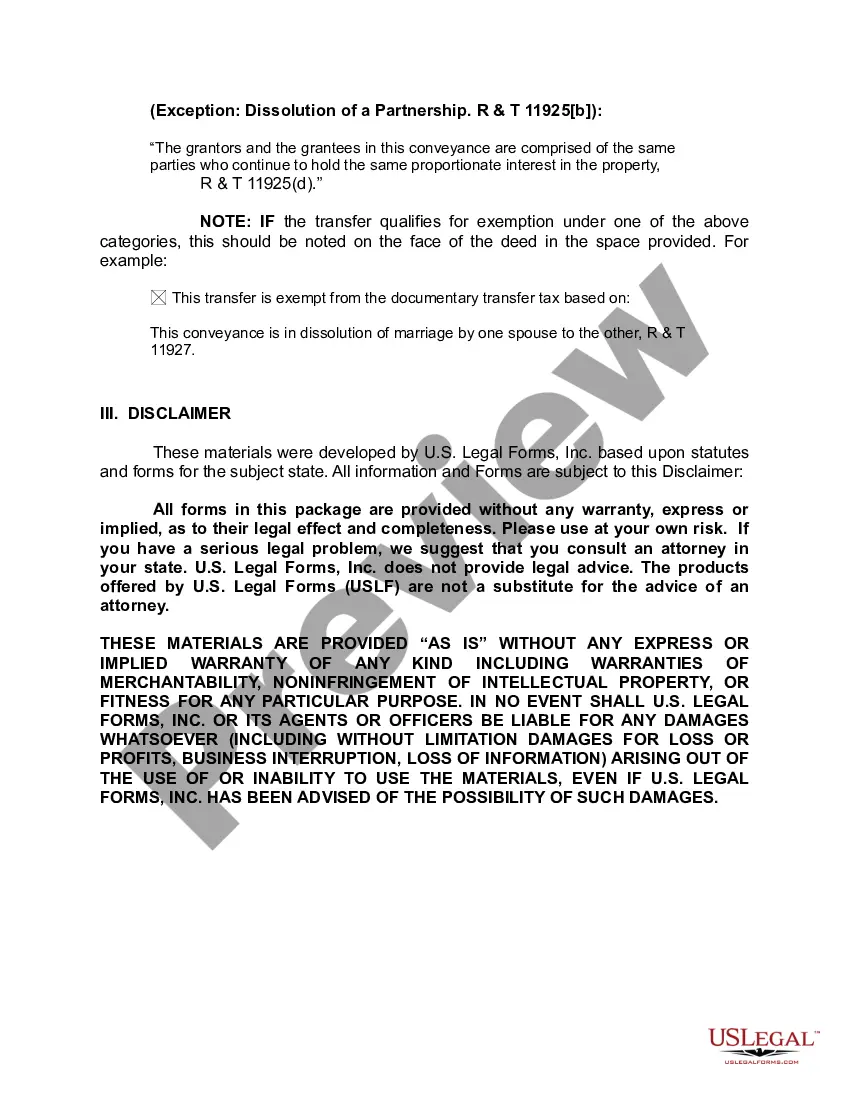
- Space to note any applicable exemptions from transfer tax.
When to use this form
This form is needed when a property owner has fully paid off a mortgage or deed of trust and wishes to appoint a new trustee. It is also utilized during property transfers, especially when changing the trustee for management or conveyance purposes. It is essential in situations where clarity regarding the ownership and rights tied to the property must be established.
Who this form is for
- Property owners who have paid off their existing mortgage or deed of trust.
- Individuals or organizations needing to appoint a new trustee for their property.
- Beneficiaries of a trust requiring a formal record of reconveyance.
Instructions for completing this form
- Identify the original trustee and the new trustee to be appointed.
- Provide the details of the property involved, including any relevant legal descriptions.
- Enter the date and confirm the satisfaction of the debt secured by the deed of trust.
- Include the signatures of the new trustee and the beneficiary.
- Document any applicable exemptions from transfer tax directly on the form.
Notarization guidance
This form does not typically require notarization unless specified by local law. However, consulting with a legal professional is recommended to ensure compliance with all governing regulations.
Get your form ready online
Our built-in tools help you complete, sign, share, and store your documents in one place.
Make edits, fill in missing information, and update formatting in US Legal Forms—just like you would in MS Word.
Download a copy, print it, send it by email, or mail it via USPS—whatever works best for your next step.
Sign and collect signatures with our SignNow integration. Send to multiple recipients, set reminders, and more. Go Premium to unlock E-Sign.
If this form requires notarization, complete it online through a secure video call—no need to meet a notary in person or wait for an appointment.
We protect your documents and personal data by following strict security and privacy standards.

Make edits, fill in missing information, and update formatting in US Legal Forms—just like you would in MS Word.

Download a copy, print it, send it by email, or mail it via USPS—whatever works best for your next step.

Sign and collect signatures with our SignNow integration. Send to multiple recipients, set reminders, and more. Go Premium to unlock E-Sign.

If this form requires notarization, complete it online through a secure video call—no need to meet a notary in person or wait for an appointment.

We protect your documents and personal data by following strict security and privacy standards.
Typical mistakes to avoid
- Failing to properly identify the original and new trustees.
- Not including the correct legal description of the property.
- Omitting signatures from required parties.
- Neglecting to document any exemptions from transfer tax where applicable.
Why complete this form online
- Immediate access to a professionally drafted legal form.
- The ability to edit and customize the form to fit specific needs.
- Convenience of completing the form at your own pace from home.
Main things to remember
- The Substitution of Trustee, Request for Reconveyance and Reconveyance ensures clear transition of property ownership.
- It is essential to complete the form accurately to avoid delays in reconveyance.
- Using the form online offers significant advantages in terms of convenience and reliability.
Looking for another form?



Form popularity
FAQ
Recording a deed after closing in California typically occurs within a few days, often within a week. However, it can depend on the county's recording office workload. Ensuring that you have all necessary documents ready can help expedite the recording process.
The time it takes to receive a reconveyance can vary depending on the lender and their processing times. Generally, you can expect to receive the reconveyance within a few weeks once the Request for Reconveyance is submitted. Using services like uslegalforms can help streamline this process and ensure all documents are correctly completed.
In California, lenders are required to record the reconveyance within 21 calendar days after receiving a completed Request for Reconveyance. Prompt action ensures that the title reflects the reconveyance and protects your rights as a homeowner. If delays occur, consider following up with your lender to expedite the process.
To reconvey a deed of trust in California, you must start by obtaining a Request for Reconveyance form from your lender or a legal document service like uslegalforms. After filling out the form, submit it to the lender for their signature. Once signed, record the reconveyance with the county recorder's office to officially complete the process.
The reconveyance is issued by the trustee on record who originally held the deed of trust. Once the borrower has fulfilled their obligations, the trustee is responsible for issuing this document to clear the mortgage lien. This action effectively transfers the title back to the borrower, reinforcing their ownership rights. For easy access to the required forms and clarification on the process, USLegalForms offers valuable resources to assist borrowers in California.
A new deed is generally drawn up by a qualified attorney or a title company, especially when dealing with real estate transactions like a California Substitution of Trustee. If you're engaging in a substitution process, you want to ensure the document meets all legal requirements. To streamline this task, you can also utilize services from USLegalForms, which provide templates and guidance for creating the necessary legal deeds.
To create a deed of reconveyance, you need to obtain the necessary forms, which can be found on platforms like USLegalForms. Fill out the form with the required information, including the borrower’s details and the property's description. After that, it must be signed by the trustee and recorded with the county recorder's office in California. Following this procedure ensures that the title is clear and the lender's interest is removed.
The substitution of trustee and full reconveyance in California are two distinct yet interconnected processes. The substitution allows a new trustee to take over the management of a trust deed, while full reconveyance involves the release of that deed when the mortgage obligation is fulfilled. Together, they maintain the legal integrity of property transactions, ensuring that all parties are up to date and informed. Understanding both processes is essential for efficient property management.
To record a reconveyance in California, you must fill out the necessary reconveyance form and submit it to the county recorder's office where the property is located. This includes providing details about the original trust deed and confirming that the debt has been satisfied. Recording the reconveyance formally updates public records and removes the lien from your property title. Using a platform like US Legal Forms can simplify this process by providing you with the correct documentation.