Workers' Compensation Acknowledgment Form
What this document covers
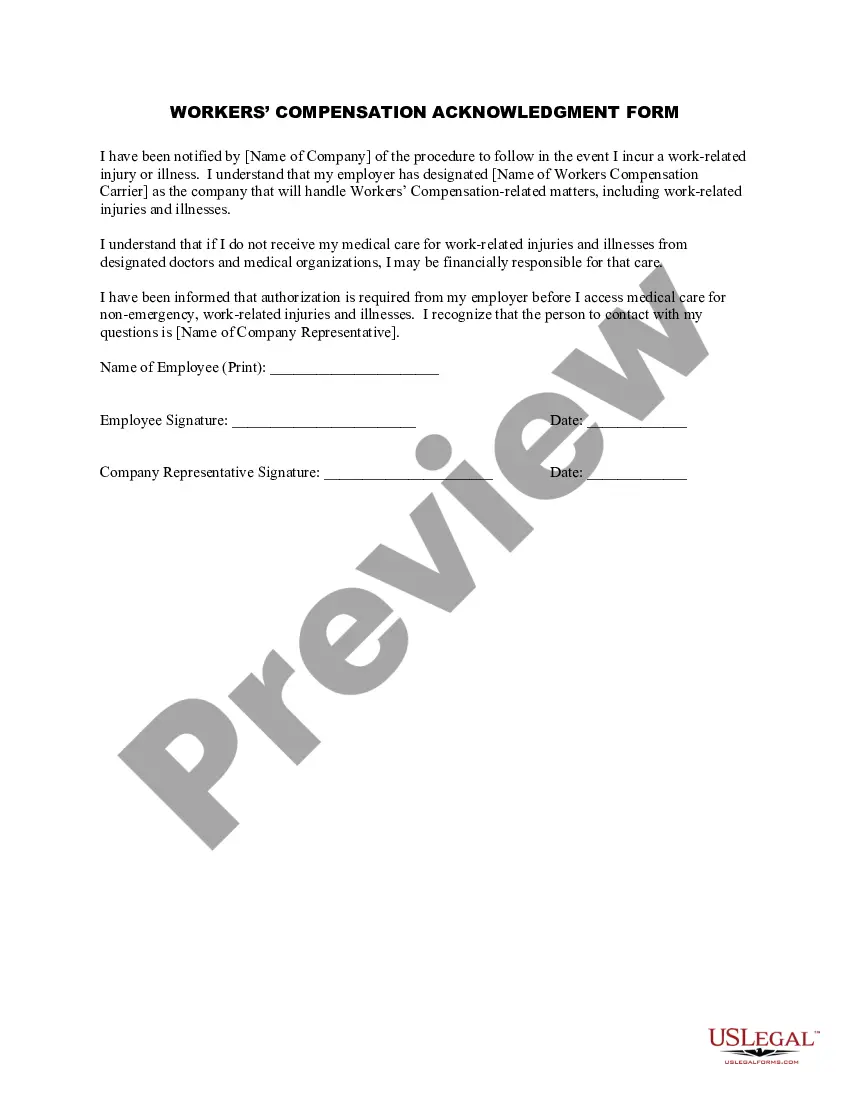
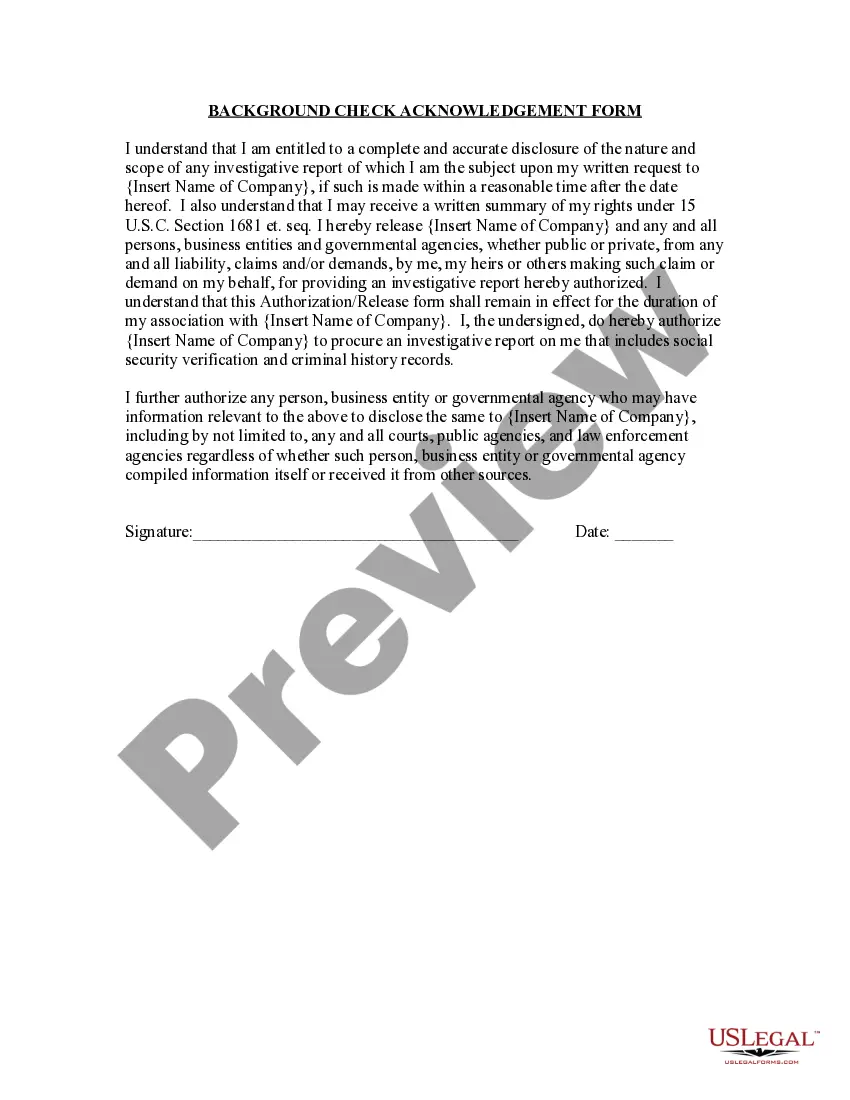
The Workers' Compensation Acknowledgment Form is a crucial document that ensures employees understand their rights and responsibilities under workers' compensation laws. This form serves as a written acknowledgment that the worker has received information regarding the procedures to follow in case of a work-related injury or illness, differentiating it from other employment-related forms by focusing specifically on workers' compensation guidelines.
Key components of this form
- Notification of the procedure to follow for work-related injuries and illnesses
- Designation of the workers' compensation insurance carrier
- Understanding of financial responsibilities if medical care is not accessed through designated providers
- Requirement for employer authorization before seeking non-emergency medical care
- Contact information for the company representative for questions
- Signature fields for both the employee and company representative
When this form is needed
This form should be used when an employee is hired or when there are updates to workers' compensation policies. It ensures that employees are informed about the processes they need to follow if they suffer from a work-related injury or illness, contributing to a safer work environment and compliance with legal obligations.
Who should use this form
- Employees who are covered by workers' compensation insurance
- Employers who wish to ensure their employees understand their rights and responsibilities
- Human resources personnel tasked with onboarding new employees
Steps to complete this form
- Provide the name of the company at the top of the form.
- Fill in the name of the designated workers' compensation carrier.
- Read the guidelines thoroughly to understand the procedure for work-related injuries.
- Sign the form in the designated areas, including the date of signature.
- Ensure the company representative also signs and dates the form.
Does this document require notarization?
This form does not typically require notarization to be legally valid. However, some jurisdictions or document types may still require it. US Legal Forms provides secure online notarization powered by Notarize, available 24/7 for added convenience.
Get your form ready online
Our built-in tools help you complete, sign, share, and store your documents in one place.
Make edits, fill in missing information, and update formatting in US Legal Forms—just like you would in MS Word.
Download a copy, print it, send it by email, or mail it via USPS—whatever works best for your next step.
Sign and collect signatures with our SignNow integration. Send to multiple recipients, set reminders, and more. Go Premium to unlock E-Sign.
If this form requires notarization, complete it online through a secure video call—no need to meet a notary in person or wait for an appointment.
We protect your documents and personal data by following strict security and privacy standards.

Make edits, fill in missing information, and update formatting in US Legal Forms—just like you would in MS Word.

Download a copy, print it, send it by email, or mail it via USPS—whatever works best for your next step.

Sign and collect signatures with our SignNow integration. Send to multiple recipients, set reminders, and more. Go Premium to unlock E-Sign.

If this form requires notarization, complete it online through a secure video call—no need to meet a notary in person or wait for an appointment.

We protect your documents and personal data by following strict security and privacy standards.
Common mistakes
- Not reading the guidelines properly before signing.
- Failing to obtain employer authorization for non-emergency medical care.
- Leaving signature fields blank.
- Using outdated versions of the form that do not comply with current regulations.
Why use this form online
- Easy access to downloadable and printable forms.
- Editable fields to ensure all necessary information is completed.
- Secure and reliable source, drafted by licensed attorneys.
Legal use & context
- This acknowledgment is legally binding and confirms the employee's understanding of their workers' compensation rights.
- Failure to adhere to outlined procedures may result in the employee incurring financial liability for medical care.
Looking for another form?
Form popularity
FAQ
Payroll journal and summary. Your check book (if it's your only means of keeping records. Federal Tax Report- 941's that cover the period. State Unemployment Tax reports or individual earnings records. All overtime payroll records (charged at reduced rates)
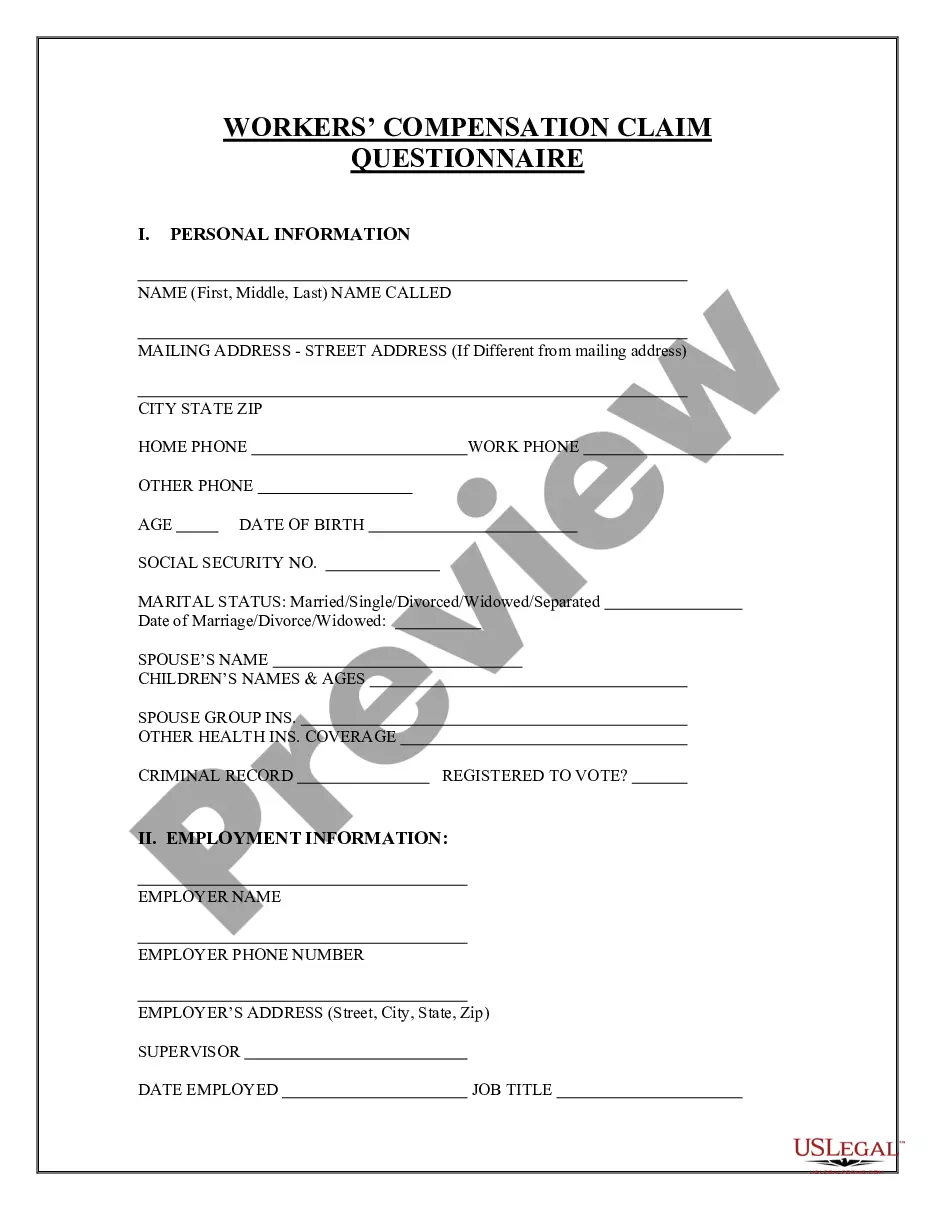
State your name, date of birth, social security number, and date of injury at the very beginning of your letter. Explicitly state that you were on-the-job and that you were injured while performing your duties. Elaborate on the tasks you were performing at the time of your injury. Include as many details as you can.
A prospective employer has no right to ask whether you have had a previous workers' compensation claim. However, a prospective employer does have the right to know if you have an injury or medical condition that will impact on your ability to perform your work duties.
Be factual with the information you provide. Be concise with the information you provide. Keep descriptions simple and to the point. Be sure to monitor your audit results.
The HIPAA Privacy Rule does not apply to entities that are either workers' compensation insurers, workers' compensation administrative agencies, or employers, except to the extent they may otherwise be covered entities.
Wages or salaries including retroactive wages or salaries. Total cash received by employees for commissions and draws against commissions. Bonuses including stock bonus plans. Extra pay for overtime work-see next section for exceptions.
Will a Workers' Compensation Case Affect My Future Employment? As long as you do not badmouth your former employer, a previous workers' compensation claim should not impact your chances of being hired in the future.
The EEOC says An employer may ask questions about an applicant's prior workers' compensation claims or occupational injuries after it has made a conditional offer of employment, but before employment has begun, as long as it asks the same questions of all entering employees in the same job category.
What RTW / workers' comp information IS confidential? While relevant, recent, work-related medical information is usually not confidential, other medical informationsuch as the individual's medical historyis confidential.