Clearinghouse Oriented Content License Agreement
What is this form?
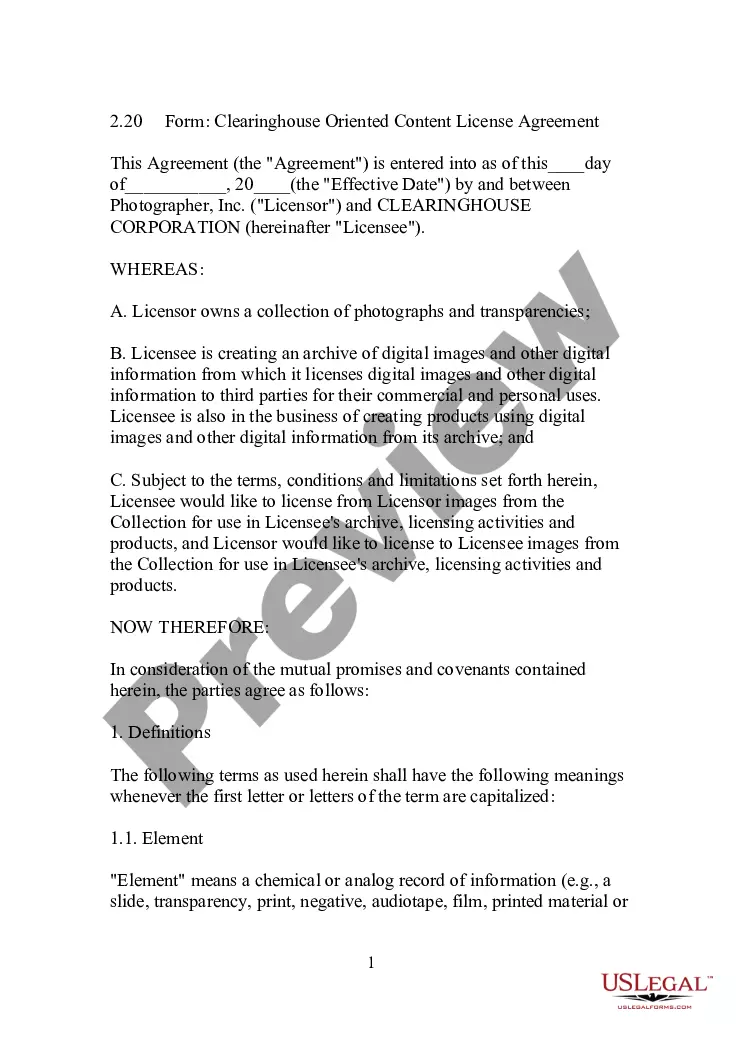
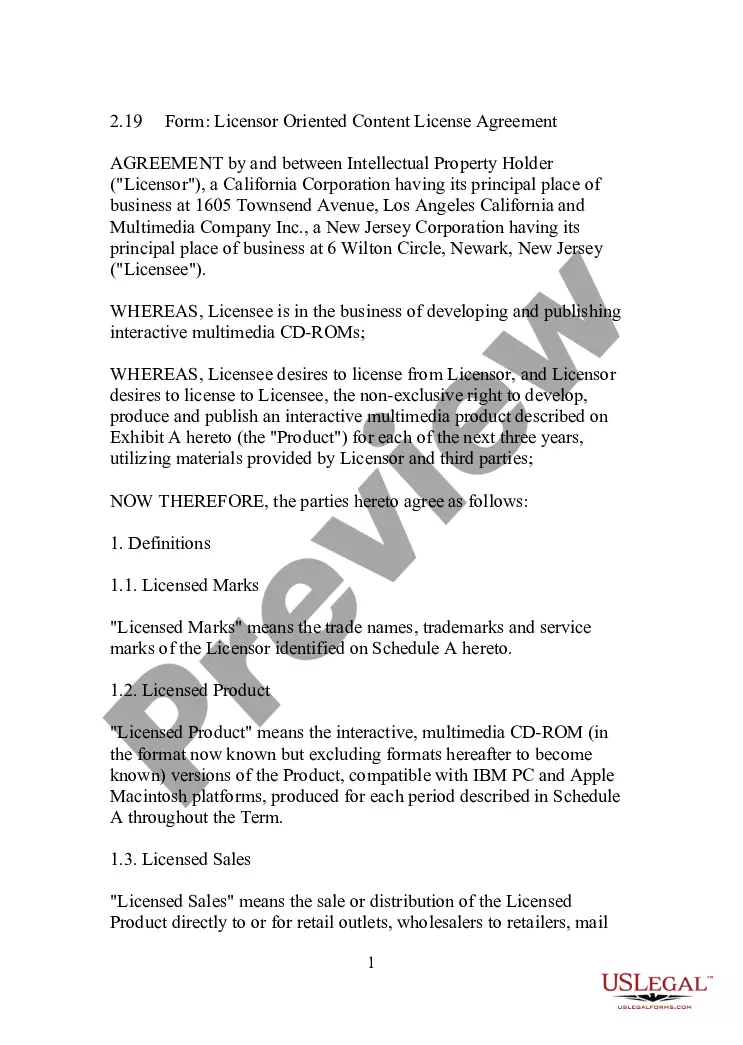
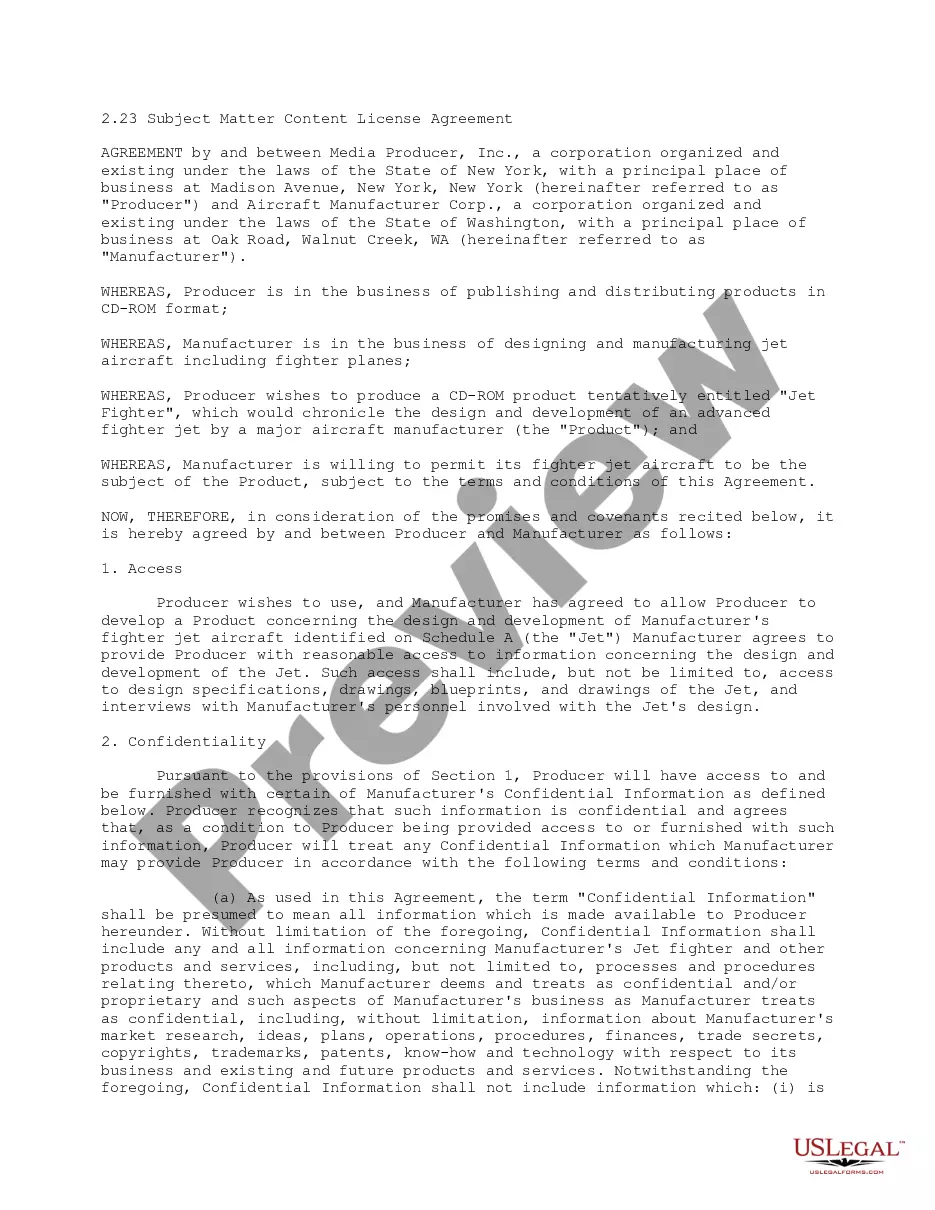
The Clearinghouse Oriented Content License Agreement is a legal contract designed for businesses that wish to license photographic images and other digital content. It establishes the terms under which a Licensor grants rights to a Licensee, allowing them to use specific elements from an image collection for various purposes, including commercial and personal use. This agreement is essential for setting clear expectations and protecting the rights of both parties involved in the licensing process.
Main sections of this form
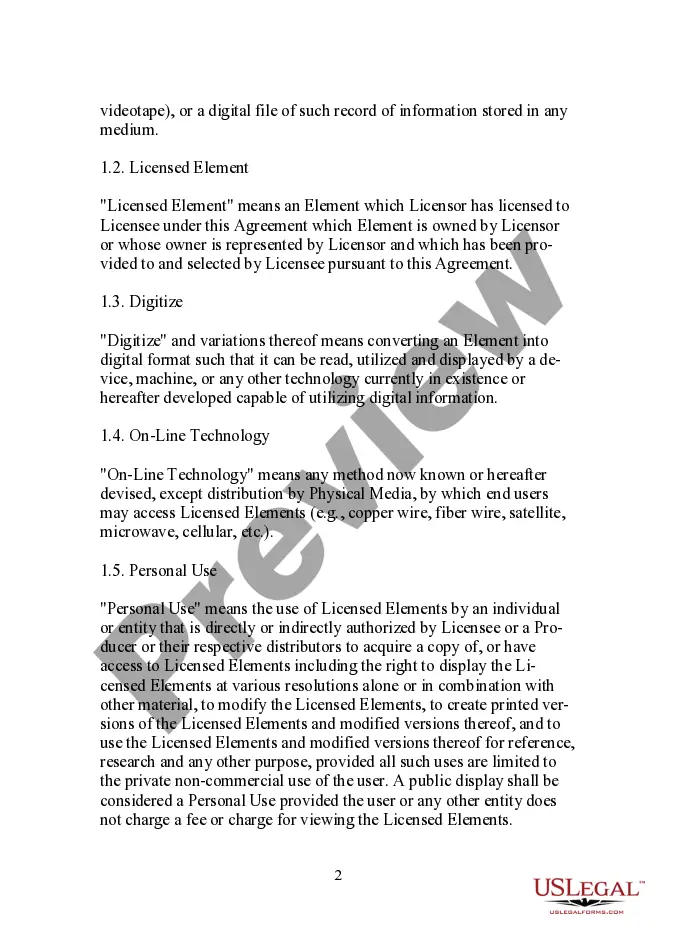
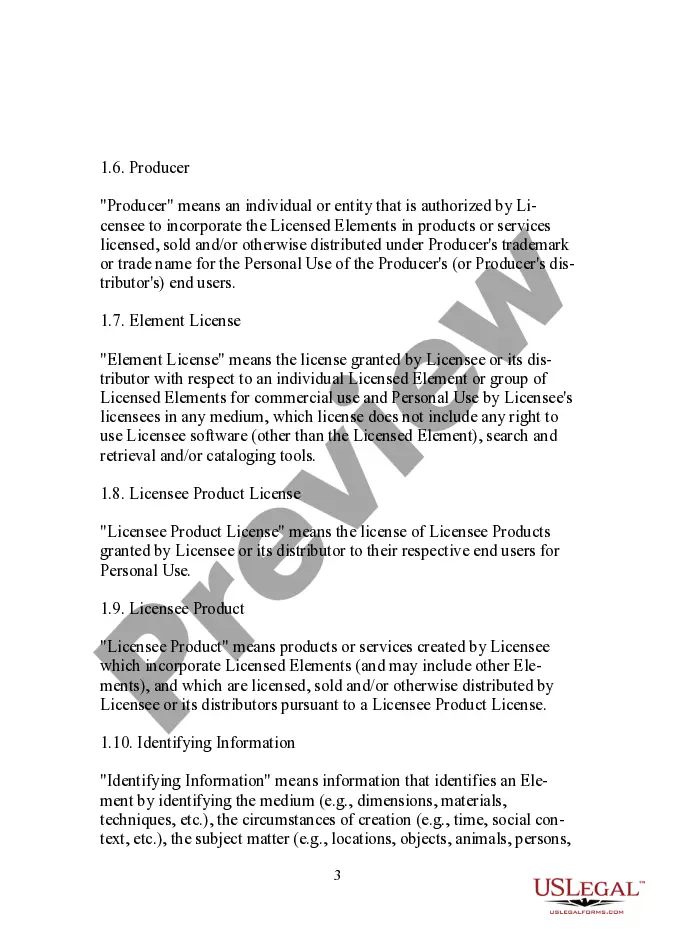
- Definitions: Clarifies key terms like "Licensed Element" and "Digitize."
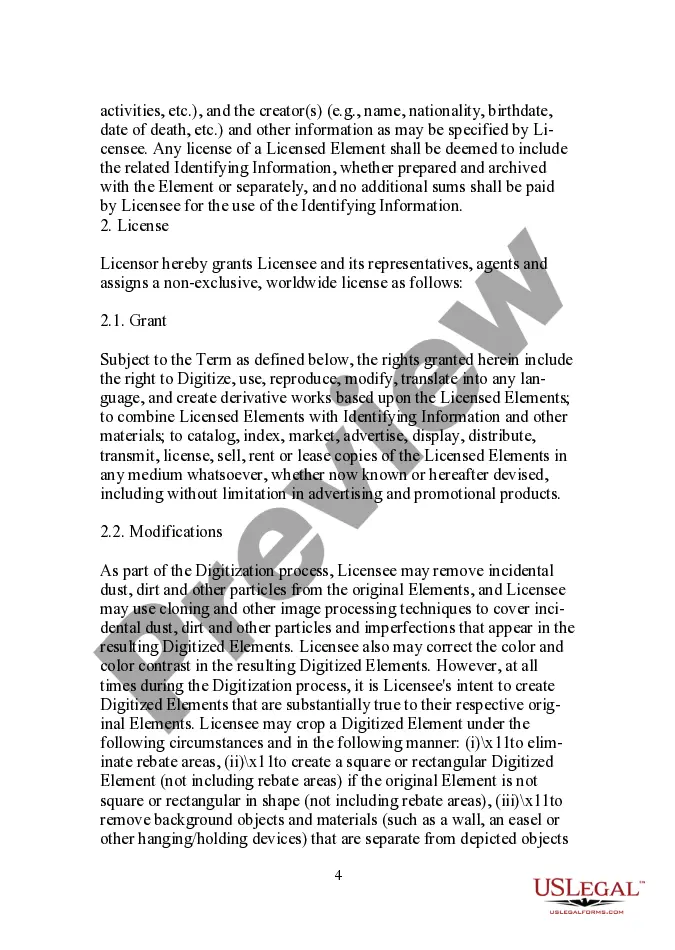
- License Grant: Details the rights granted to the Licensee regarding the use of Licensed Elements.
- Payments: Specifies royalty rates, advances, and payment schedule to the Licensor.
- Transportation: Outlines the responsibilities for transferring original elements between parties.
- Termination: Details the conditions under which the agreement can be terminated and the effects of termination.

When to use this document
This form is necessary when a business, such as a digital content clearinghouse, wants to license images or digital content from a photographer or artist. It is suitable for companies that create archives or products that require the use of licensed imagery for commercial sales, promotional materials, or for personal educational purposes. Utilizing this agreement prevents legal disputes and outlines the expectations of both parties clearly.
Who needs this form
- Photographers and content creators, known as Licensors, who wish to monetize their images.
- Businesses or corporations, referred to as Licensees, that require access to digital content for commercial use.
- Marketing agencies looking to incorporate licensed imagery into advertising materials.
- Individuals or organizations using digital images for educational projects or personal use.
How to complete this form
- Identify the parties involved: Complete the names and addresses of the Licensor and Licensee.
- Specify the Effective Date: Indicate the date the agreement will take effect.
- Fill in the License Terms: Clearly outline the rights being granted and the duration of the license.
- Detail the payment terms: Include the fees, royalties, and any advances that will be provided.
- Include the transportation details for the elements being transferred between parties.
Is notarization required?
Notarization is not commonly needed for this form. However, certain documents or local rules may make it necessary. Our notarization service, powered by Notarize, allows you to finalize it securely online anytime, day or night.
Get your form ready online
Our built-in tools help you complete, sign, share, and store your documents in one place.
Make edits, fill in missing information, and update formatting in US Legal Forms—just like you would in MS Word.
Download a copy, print it, send it by email, or mail it via USPS—whatever works best for your next step.
Sign and collect signatures with our SignNow integration. Send to multiple recipients, set reminders, and more. Go Premium to unlock E-Sign.
If this form requires notarization, complete it online through a secure video call—no need to meet a notary in person or wait for an appointment.
We protect your documents and personal data by following strict security and privacy standards.

Make edits, fill in missing information, and update formatting in US Legal Forms—just like you would in MS Word.

Download a copy, print it, send it by email, or mail it via USPS—whatever works best for your next step.

Sign and collect signatures with our SignNow integration. Send to multiple recipients, set reminders, and more. Go Premium to unlock E-Sign.

If this form requires notarization, complete it online through a secure video call—no need to meet a notary in person or wait for an appointment.

We protect your documents and personal data by following strict security and privacy standards.
Mistakes to watch out for
- Failing to clearly define the Licensed Elements, which can lead to disputes.
- Omitting payment details, resulting in misunderstandings regarding royalties and advances.
- Not specifying the duration of the license, which can lead to unintentional expirations.
Why use this form online
- Immediate access to a professionally drafted legal agreement tailored for content licensing.
- Editable Word format allows users to customize the agreement easily to fit specific needs.
- Ensures reliable legal compliance by using a form created by licensed attorneys.
Legal use & context
- This form is legally binding upon signing by both parties, clarifying the permissions and restrictions for use of Licensed Elements.
- The agreement protects both the Licensor's intellectual property rights and the Licensee's investment in the licensed content.
- Clear terms about royalties and ownership minimize disputes and legal complications.
Key takeaways
- Establish clarity regarding the licensing of images and digital content.
- Includes vital details about payment, responsibilities, and duration of the license.
- Protects both parties by providing a structured legal framework for usage rights.
Looking for another form?





Form popularity
FAQ
A license agreement is a business contract between two parties. The licensor (the seller of the license) owns the asset being licensed and the licensee (the buyer) pays for the right to use the license. The licensee pays the owner in exchange for the right to sell the product or use the technology.
The data license must also establish who is permitted to use the licensed data. For example, the license agreement may identify the people who are permitted to use the data or the devices on which the data may be used or may specify the maximum number of such users or devices.
From a publishing perspective, content licensing is the distribution of media assets/intellectual property to any third party, generally for a fixed term, and for a negotiated fee. The license also specifies how the assets can be used by the buyer.200b
An example of a licensing agreement is a contract between the copyright holders of software and another company, allowing the latter to use the computer software for their daily business operations.
A common example is food retail brands with large followings in their own market.Licensing the brand to a local company with market expertise allows the brand to be monetized with limited risk, as with Top Shop.
In a typical licensing agreement, the licensor agrees to provide the licensee with intellectual property rights such as the licensor's technology, brand name, or product creation know-how.
Download a template for a licensing agreement. Choose your role as the licensor or licensee. Define the license(s) in the agreement. Decide whether the license is exclusive or not. Settle the matter of fees and payment schedule. Add a renewal date and rules.