Content License Agreement
Overview of this form
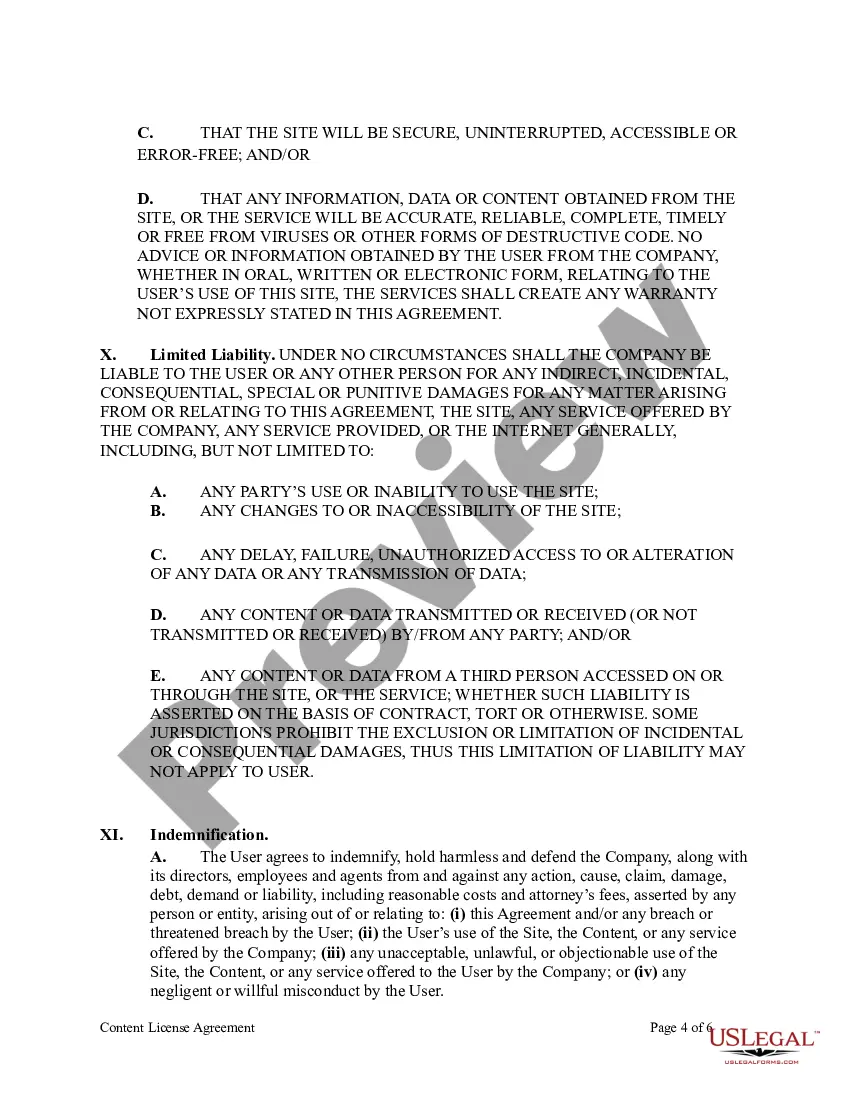
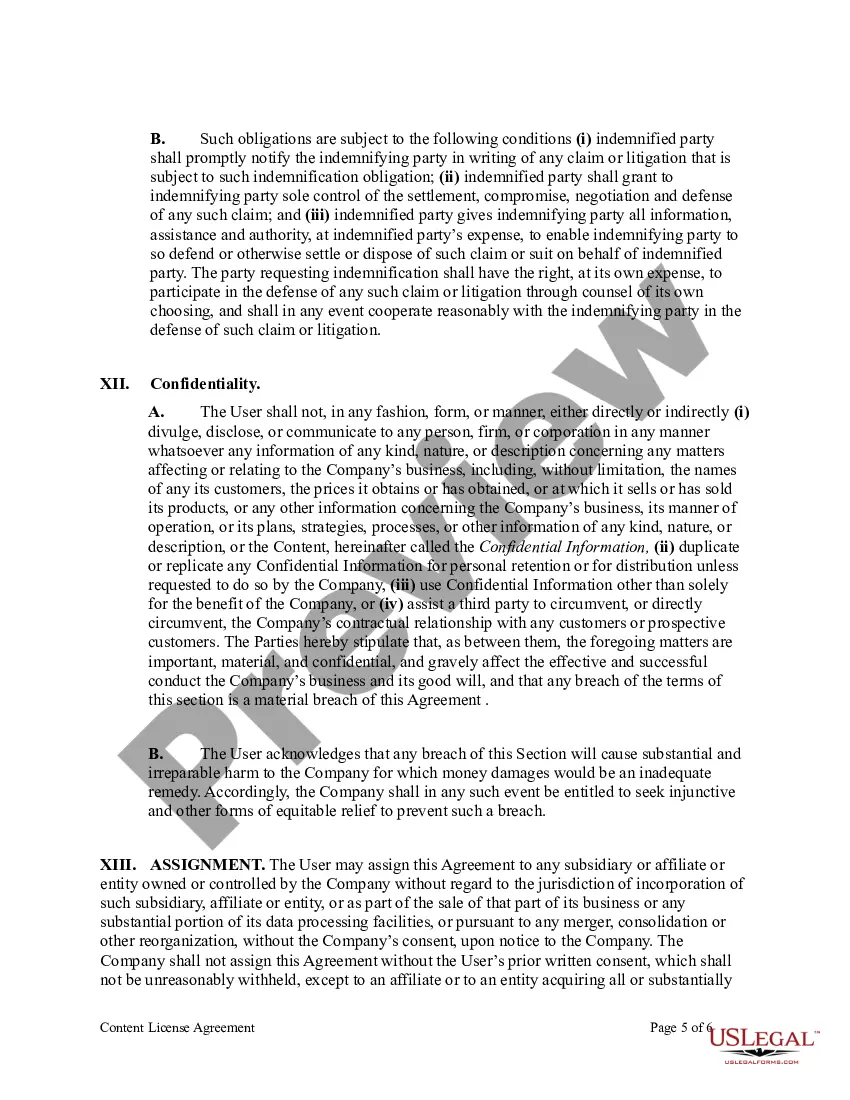
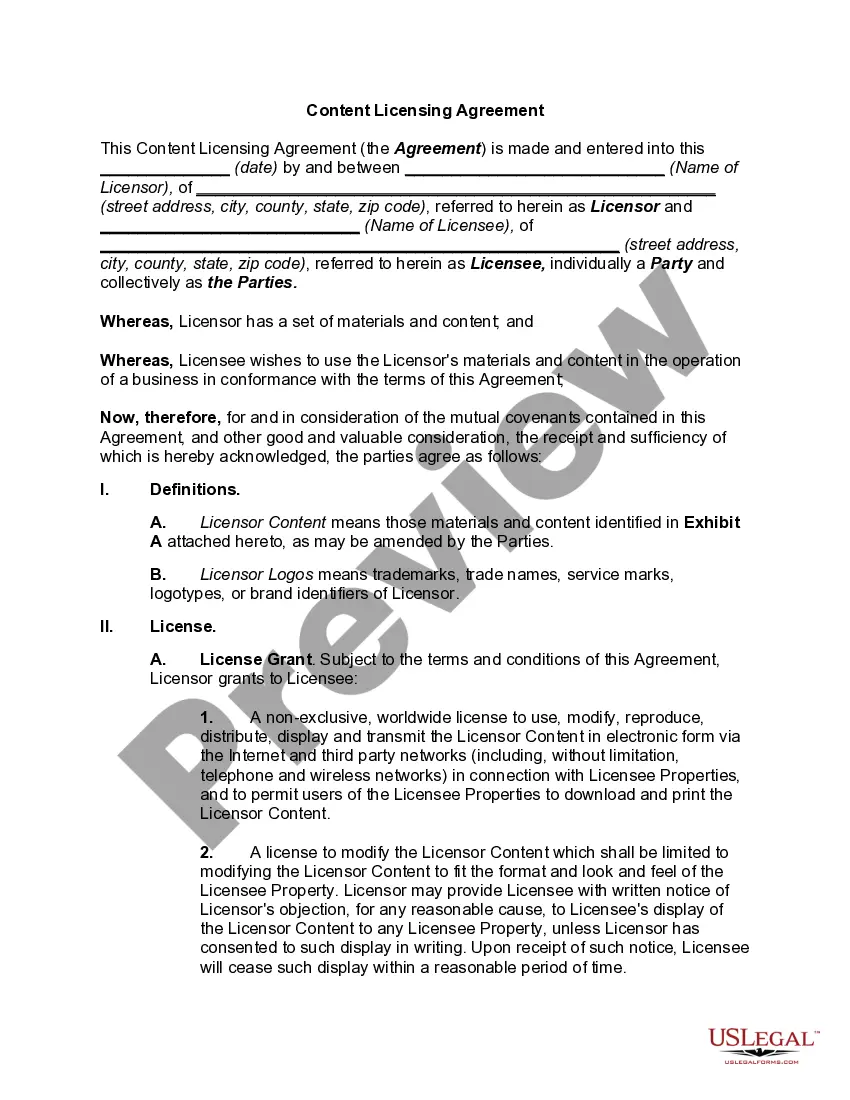
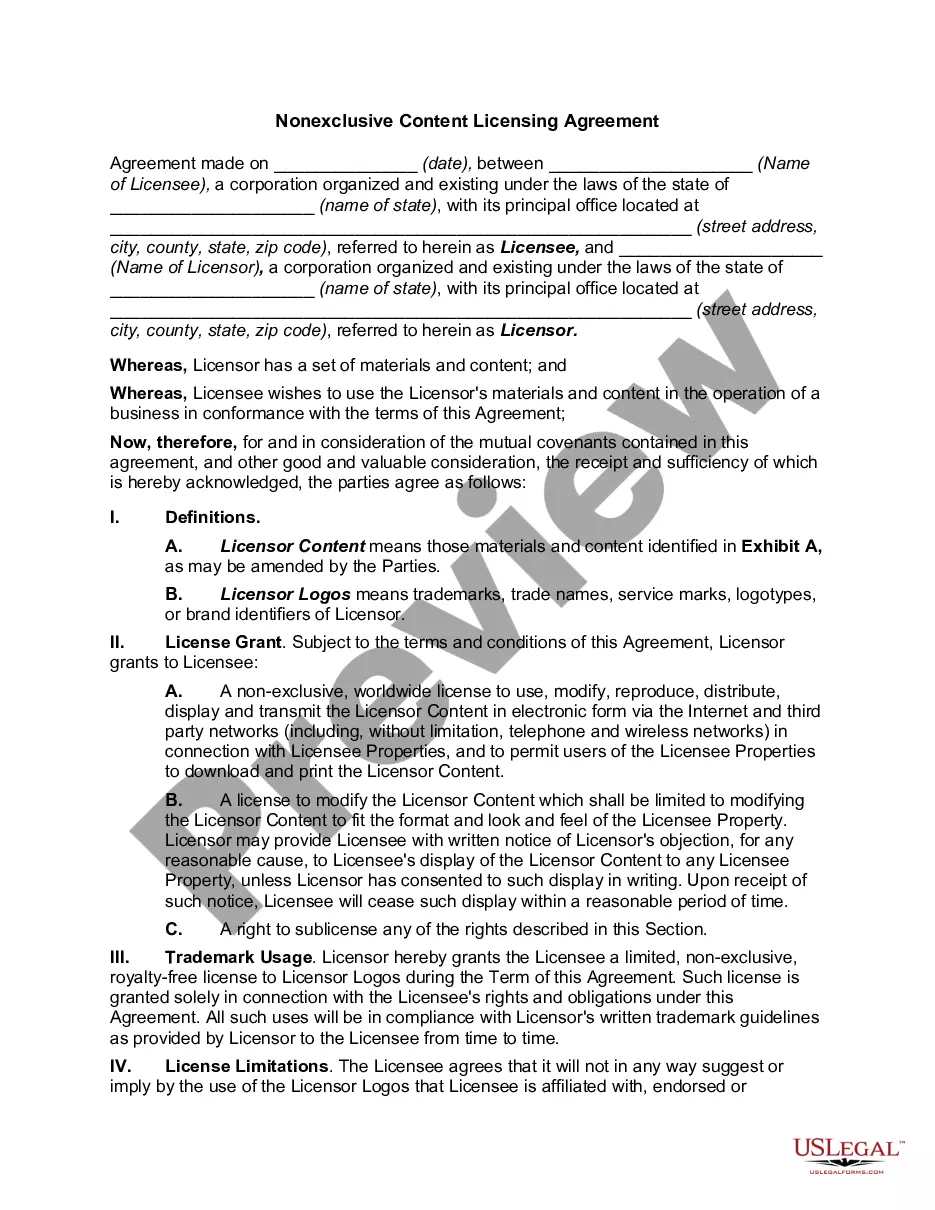
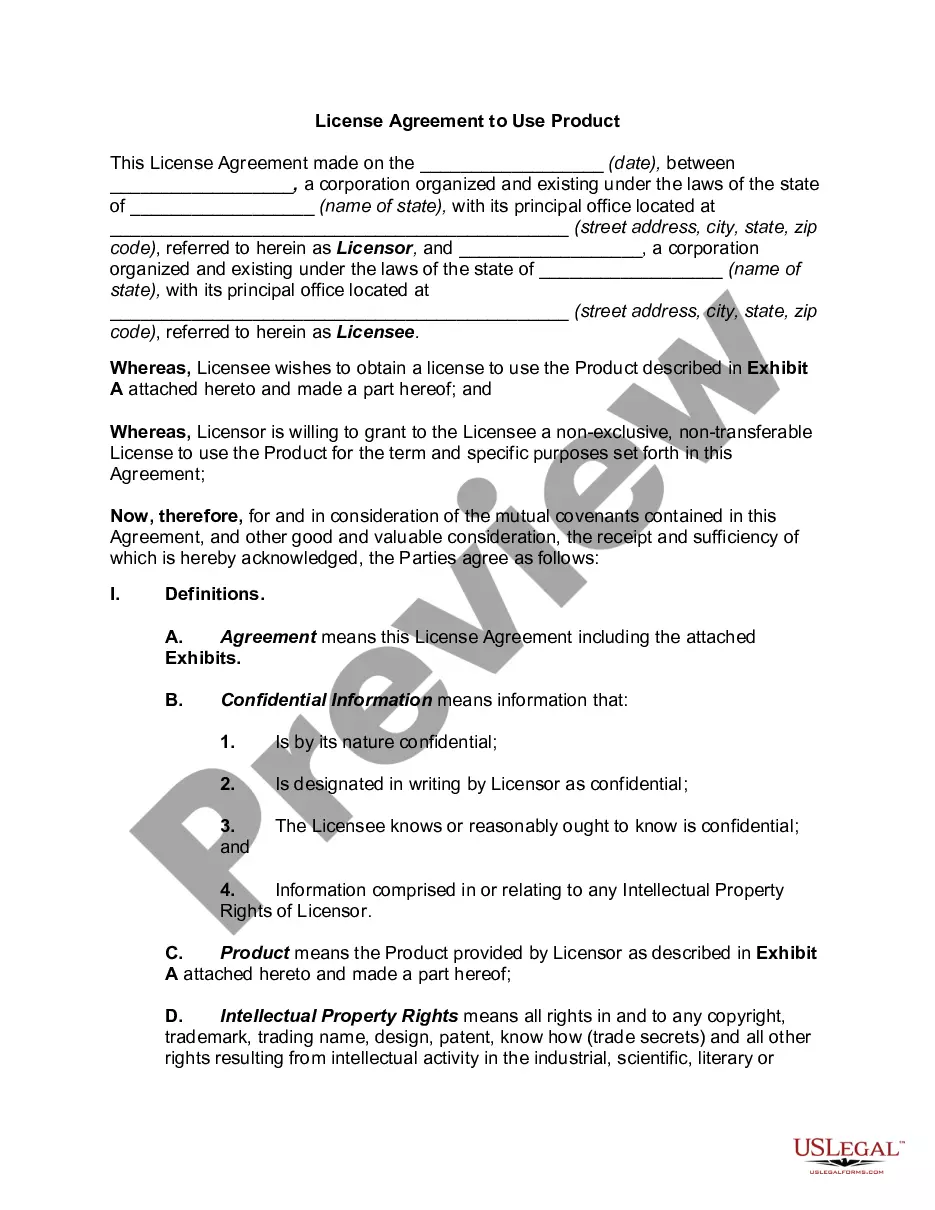
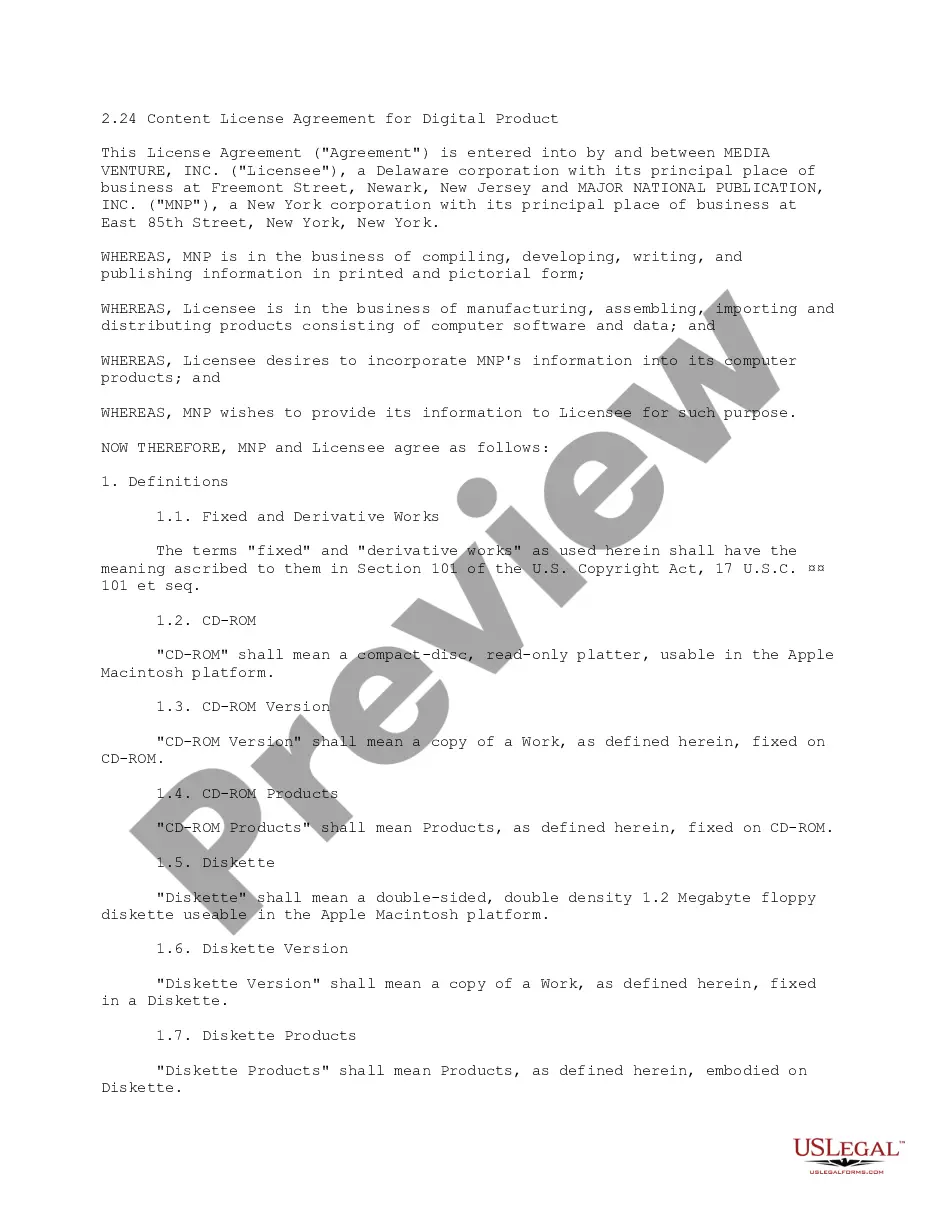
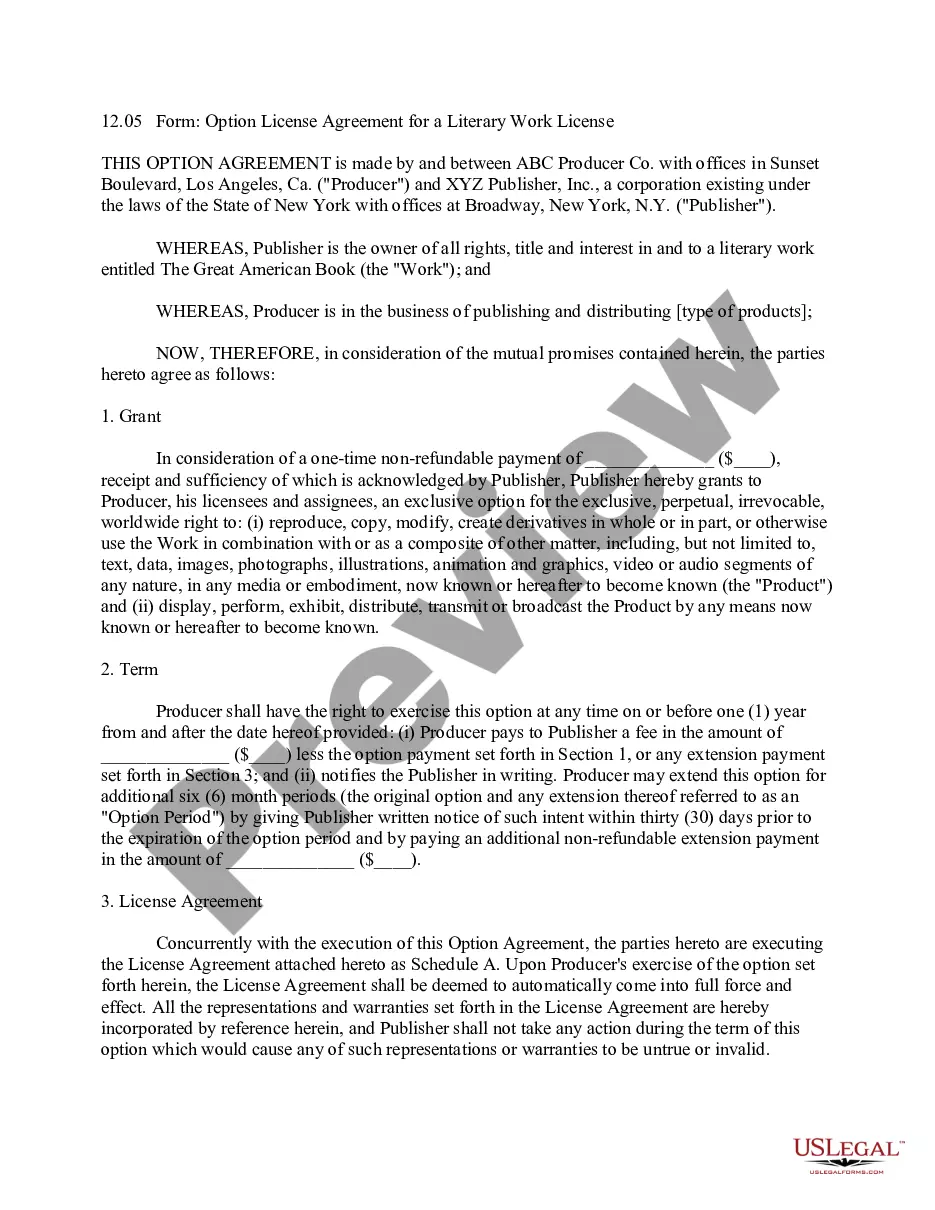
The Content License Agreement is a legal document that outlines the rights and responsibilities between a licensor and a licensee regarding the use of digital content. This agreement specifically allows the licensee to use, display, and distribute content provided by the licensor for designated purposes. It is essential for users who want to ensure legal compliance when utilizing copyrighted material, distinguishing it from similar agreements by its focus on digital content licensing.
Main sections of this form
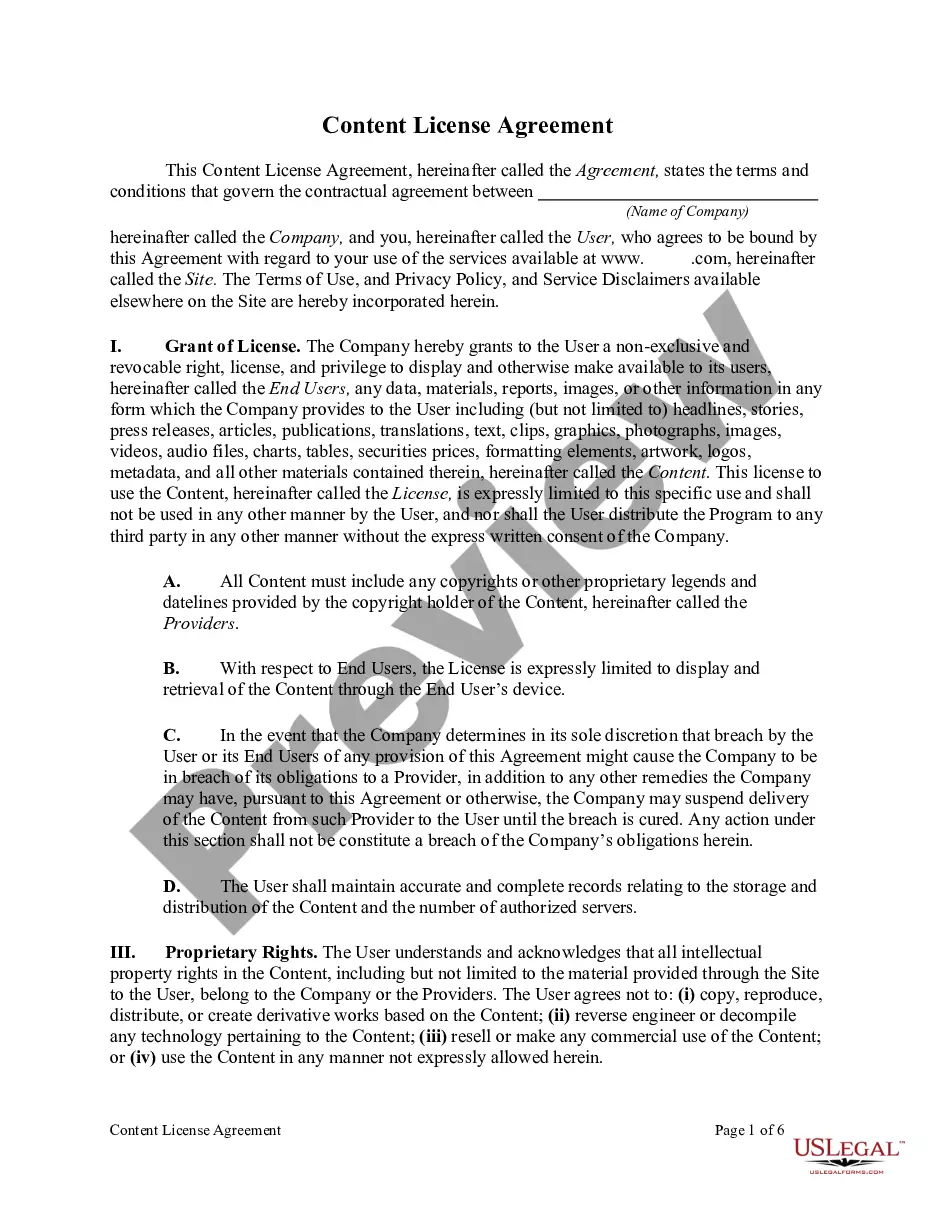
- Grant of License: Specifies the non-exclusive rights granted to the licensee to use the content.
- Proprietary Rights: Affirms the licensor's ownership of the intellectual property rights in the content.
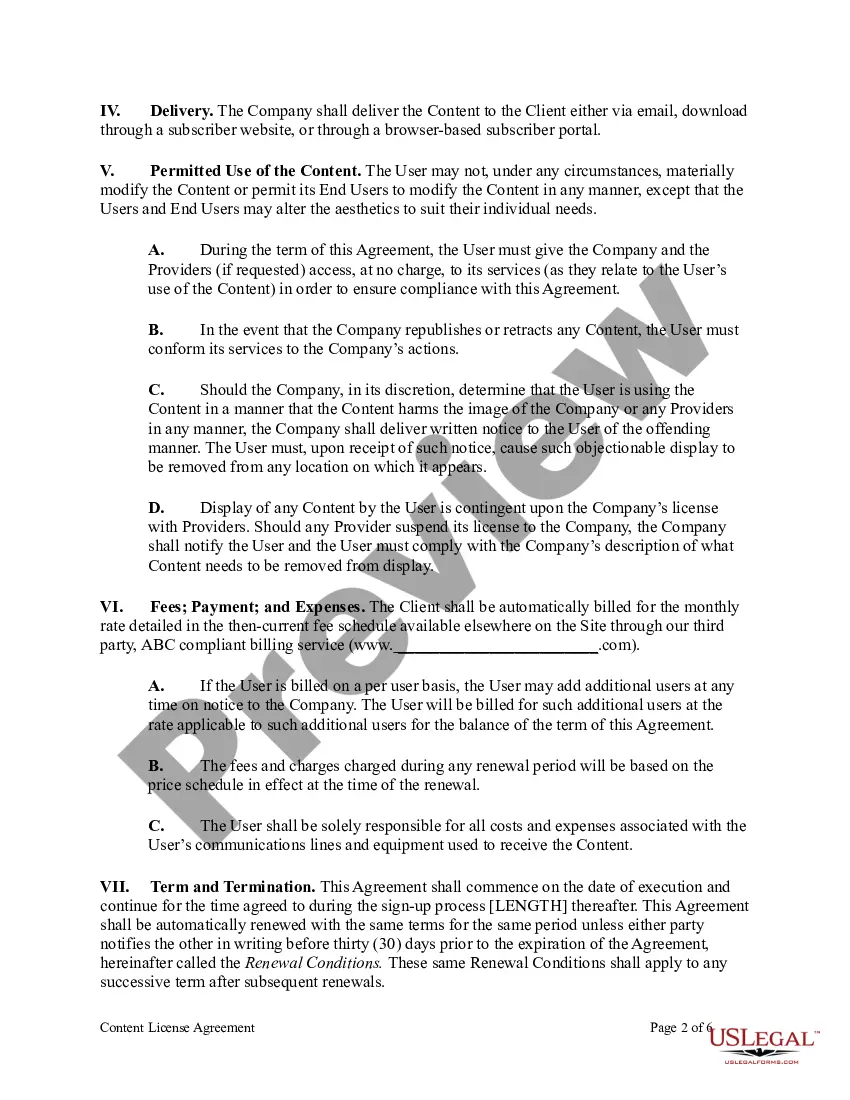
- Delivery: Outlines the methods for delivering the content to the licensee.
- Permitted Use: Details the acceptable uses of the content and restrictions on modifications.
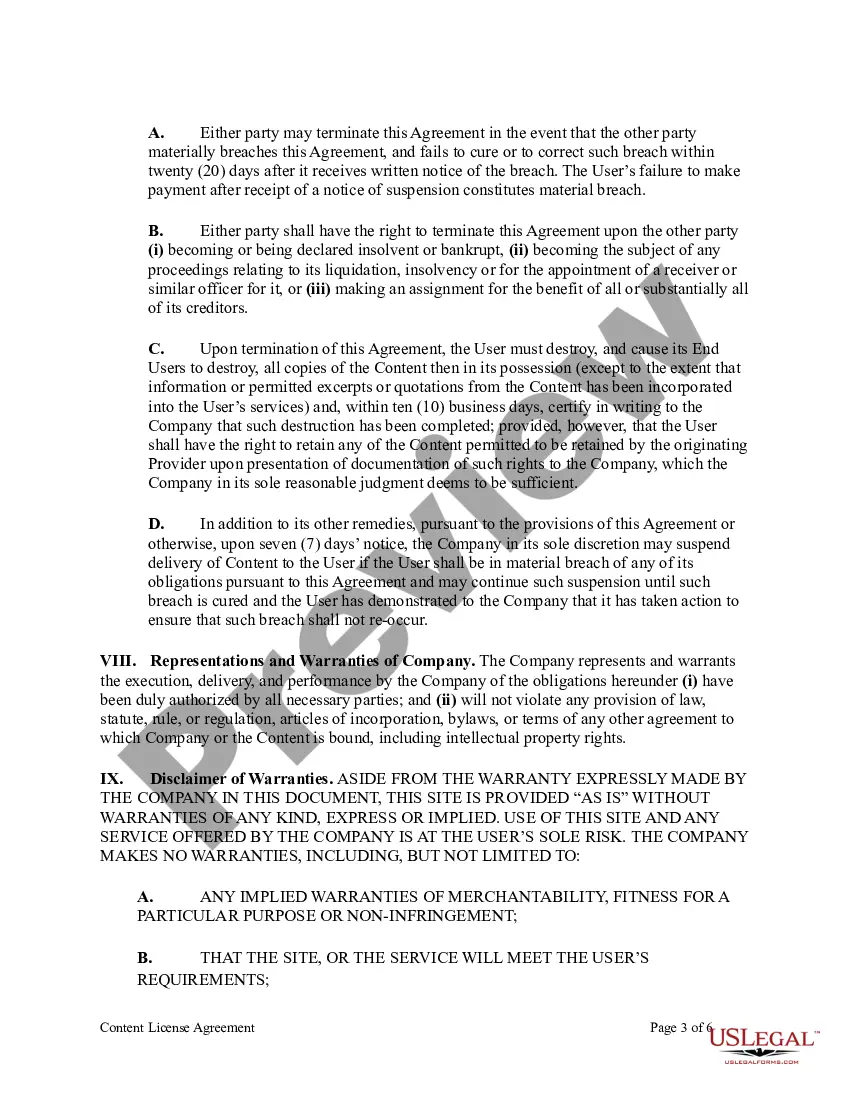
- Term and Termination: Describes the duration of the agreement and conditions for termination by either party.
- Confidentiality: Imposes obligations to protect sensitive information exchanged during the agreement.
Common use cases
You should use a Content License Agreement when you are a business, individual, or organization looking to obtain rights to use digital content such as images, articles, videos, or other media provided by a content creator or company. This form is needed to legally define how that content can be used, ensuring that you comply with copyright laws and prevent any unauthorized use that could lead to legal disputes.
Who needs this form
- Businesses that wish to incorporate licensed content into their products or services.
- Content creators seeking to allow others to use their materials while retaining ownership rights.
- Individuals wanting to use specific digital content for personal or professional projects.
- Organizations that require assurance on the legal use of provided content.
Completing this form step by step
- Identify the parties involved: Clearly state the name of the licensor and licensee.
- Define the content: Describe the specific digital content that is being licensed.
- Specify rights granted: Outline the rights and limitations for using the content.
- Enter the agreement duration: Specify the term length and renewal conditions.
- Include signatures: Ensure that both parties sign the agreement to make it legally binding.
Does this form need to be notarized?
In most cases, this form does not require notarization. However, some jurisdictions or signing circumstances might. US Legal Forms offers online notarization powered by Notarize, accessible 24/7 for a quick, remote process.
Get your form ready online
Our built-in tools help you complete, sign, share, and store your documents in one place.
Make edits, fill in missing information, and update formatting in US Legal Forms—just like you would in MS Word.
Download a copy, print it, send it by email, or mail it via USPS—whatever works best for your next step.
Sign and collect signatures with our SignNow integration. Send to multiple recipients, set reminders, and more. Go Premium to unlock E-Sign.
If this form requires notarization, complete it online through a secure video call—no need to meet a notary in person or wait for an appointment.
We protect your documents and personal data by following strict security and privacy standards.

Make edits, fill in missing information, and update formatting in US Legal Forms—just like you would in MS Word.

Download a copy, print it, send it by email, or mail it via USPS—whatever works best for your next step.

Sign and collect signatures with our SignNow integration. Send to multiple recipients, set reminders, and more. Go Premium to unlock E-Sign.

If this form requires notarization, complete it online through a secure video call—no need to meet a notary in person or wait for an appointment.

We protect your documents and personal data by following strict security and privacy standards.
Common mistakes
- Failing to specify the scope of permitted use, which can lead to unauthorized distribution.
- Not including necessary terms related to termination, leaving parties without clear exit strategies.
- Overlooking confidentiality obligations, potentially exposing sensitive information.
Benefits of using this form online
- Convenience: Easily download and edit the agreement to suit your needs.
- Reliability: Standardized format ensures all necessary legal components are included.
- Accessibility: Available anytime, allowing you to create and finalize licensing agreements quickly.
Legal use & context
- This agreement is enforceable in a court of law, provided both parties fulfill their obligations under the agreement.
- It is important to comply with local laws regarding copyright and intellectual property to avoid legal disputes.
- Using copyrighted content without this agreement can lead to legal consequences, including monetary damages.
Summary of main points
- The Content License Agreement establishes the rights and limitations for using licensed materials.
- It is critical for protecting intellectual property rights while enabling the practical use of creative content.
- Parties must carefully review the terms to ensure clarity and prevent future disputes.
Looking for another form?

Form popularity
FAQ
Do your homework. Before you begin negotiating, you need to understand your licensee's business. Start with a term sheet. Manage your expectations. Be patient. Have a win-win attitude. Don't lose your sense of humor. Remember to hold something back. Put yourself in their shoes.
Exclusive or non-exclusive. In an exclusive license, the intellectual property holder is licensing the work only to one person, for that particular use/territory.Territory.Use.Attribution.Derivative works.Confidentiality.Time frame.Termination.10 Points to Include in Any Licensing Agreement - EPW Small\nwww.elizabethpottsweinstein.com > 10-licensing-agreement
Exclusive or non-exclusive. In an exclusive license, the intellectual property holder is licensing the work only to one person, for that particular use/territory. Territory. Use. Attribution. Derivative works. Confidentiality. Time frame. Termination.
An effective licensing agreement is the most effective solution for protecting your intellectual property. A licensing agreement allows owners of intellectual property to authorize third parties to use, alter, or resell the property for a mutually agreed-upon price, without transferring ownership to the third party.
An example of a licensing agreement is a contract between the copyright holders of software and another company, allowing the latter to use the computer software for their daily business operations.
A licensing agreement is a legal contract between two parties, known as the licensor and the licensee. In a typical licensing agreement, the licensor grants the licensee the right to produce and sell goods, apply a brand name or trademark, or use patented technology owned by the licensor.
If you want a licensing agreement tailored to your specific situation, most attorneys charge $100-$300 or more an hour.
A license agreement is a business contract between two parties. The licensor (the seller of the license) owns the asset being licensed and the licensee (the buyer) pays for the right to use the license. The licensee pays royalties to the owner in exchange for the right to sell the product or use the technology.