Estoppel Cert Clause
Overview of this form
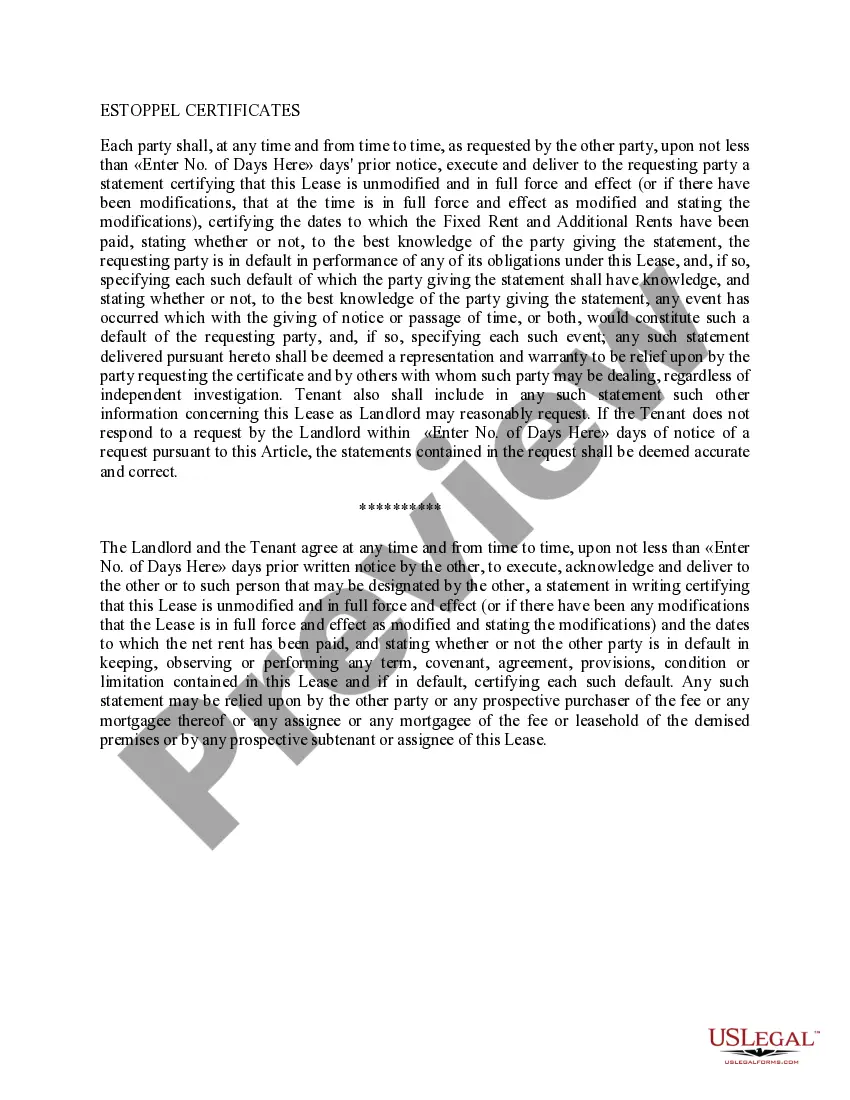
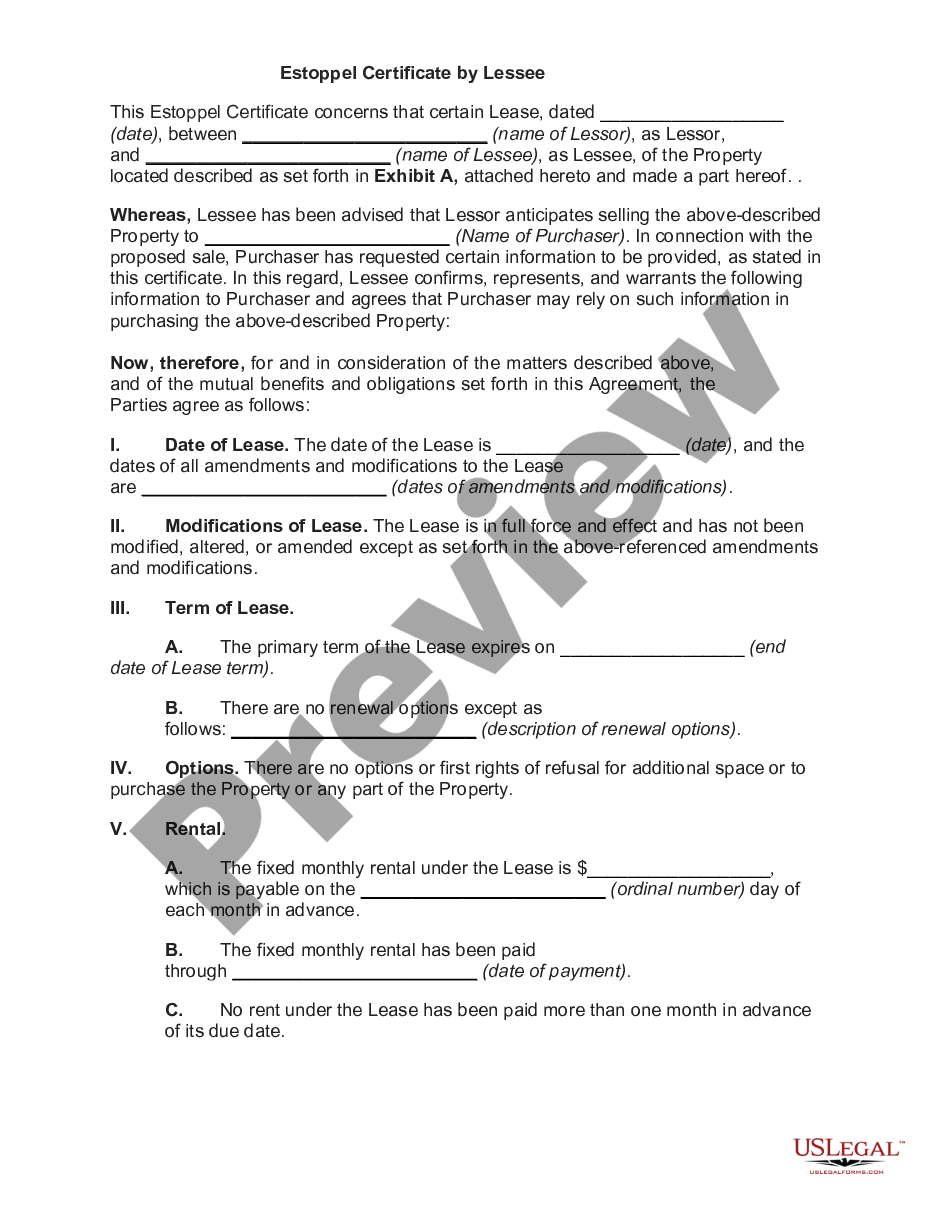
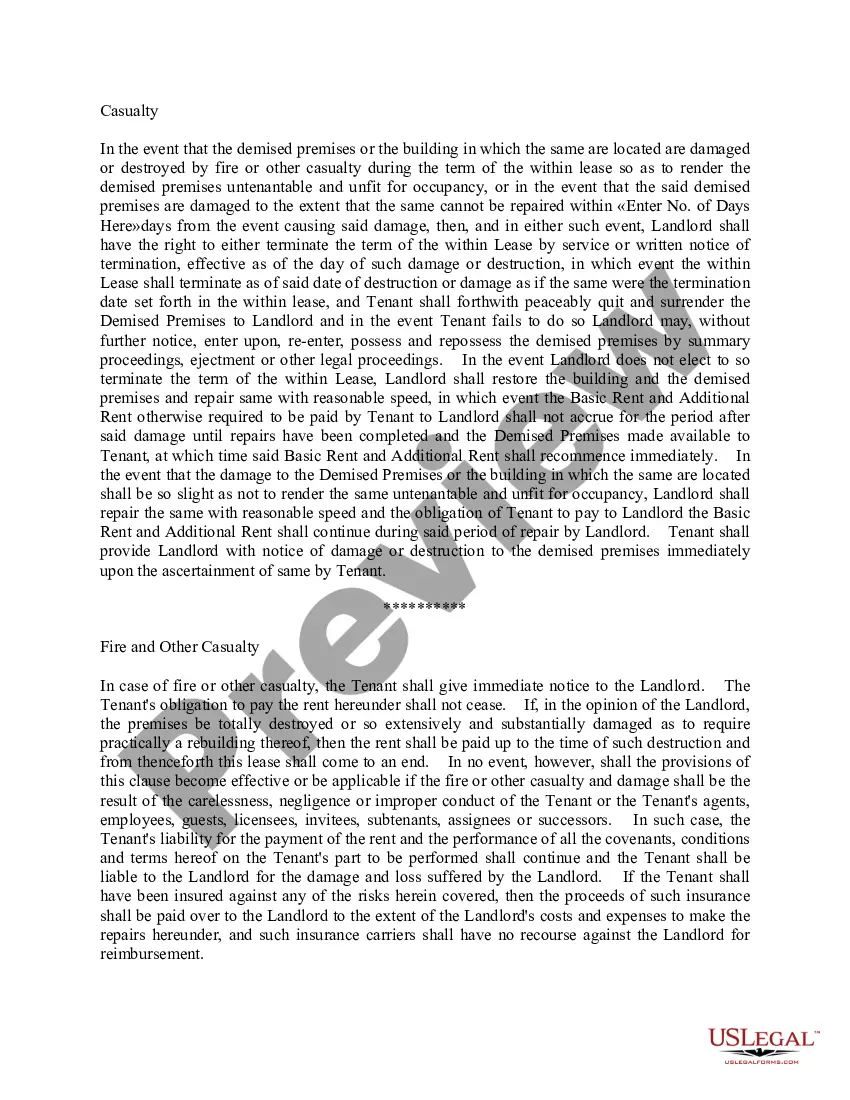
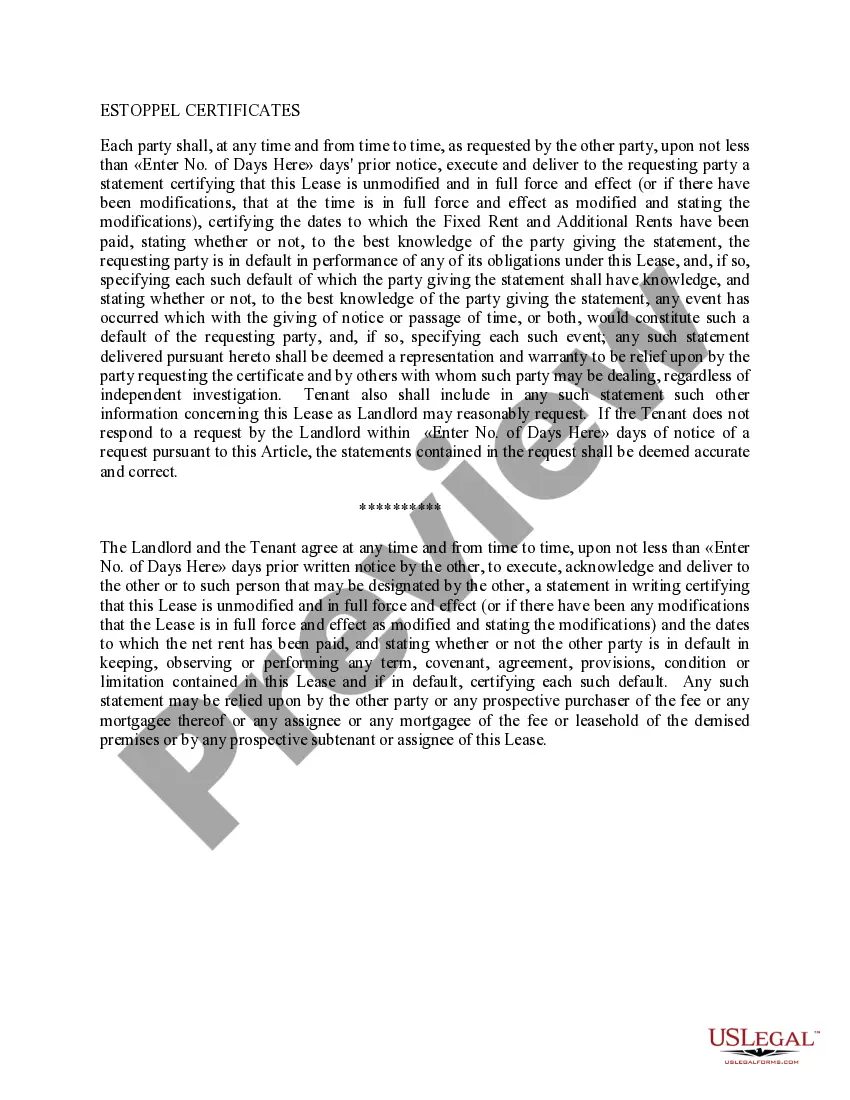
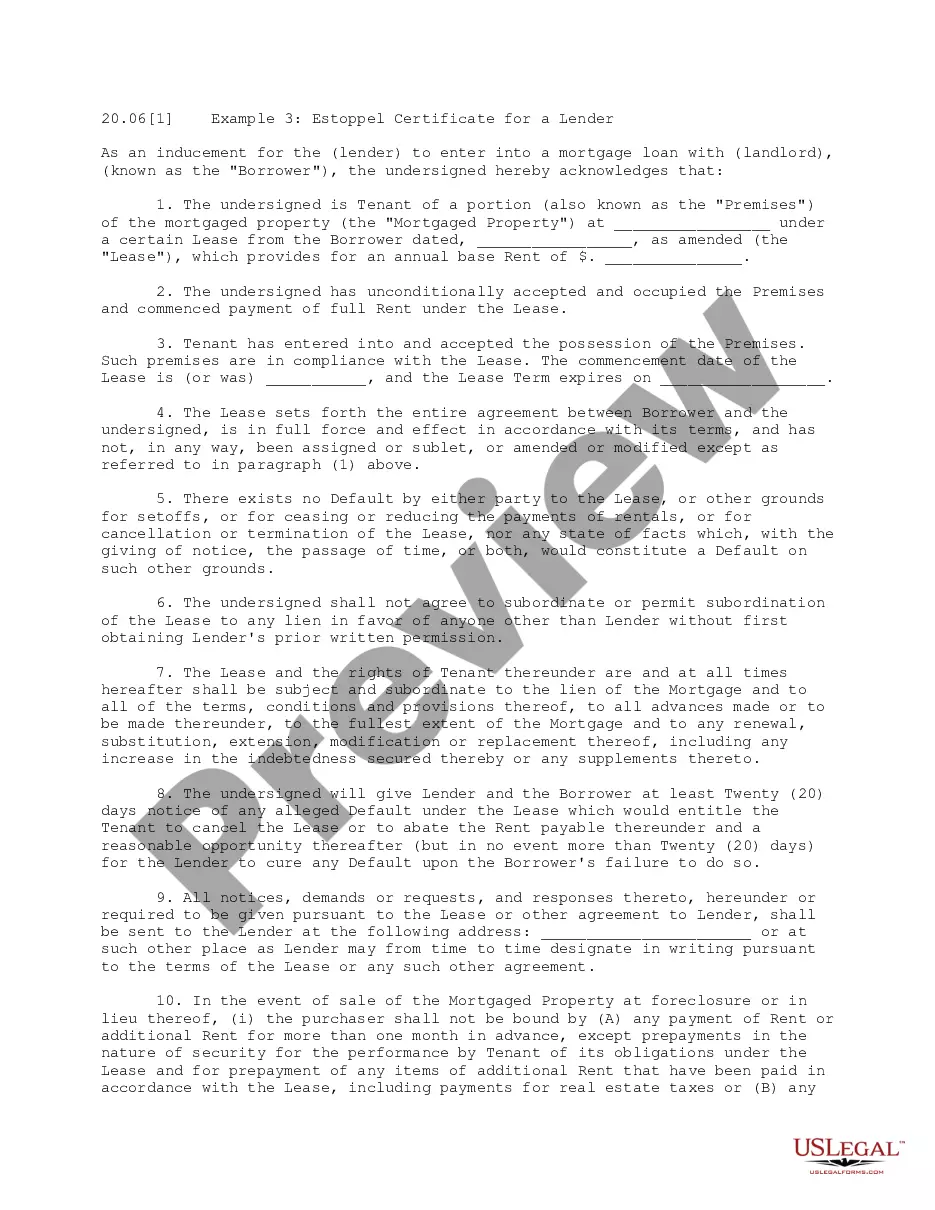
The Estoppel Certificate Clause is a legal document that certifies the status of a lease agreement between a landlord and tenant. This form confirms whether the lease is unmodified and in full force or if there have been any modifications. It also includes essential details such as the amount of rent paid, security deposit information, and the lease expiration date. Understanding this form is crucial, as it provides validation and clarity for all parties involved, particularly in situations where the lease terms may affect property transactions or financing arrangements.
Form components explained
- A statement certifying if the lease is unmodified and in full force.
- Details on any modifications made to the lease agreement.
- Confirmation of fixed rent and additional rents paid to date.
- Notification of any defaults by either party under the lease.
- Authorizes reliance on the statements made by either party.
When to use this form
This form is commonly used when a landlord or tenant requests confirmation of the lease status. It is particularly important in situations involving property sales or refinancing, where potential buyers or lenders may require proof that the lease is valid and enforceable. Additionally, this form can be useful in dispute resolution or when verifying lease terms for subletting or lease assignments.
Who needs this form
- Landlords seeking validation of lease agreements.
- Tenants needing to confirm their lease status for external parties.
- Real estate agents involved in property sales or leases.
- Attorneys representing either landlords or tenants in lease matters.
How to complete this form
- Identify the parties involved in the lease agreement.
- Specify the terms regarding the lease, including whether it has been modified.
- Enter dates related to rent payments and lease validity.
- State the conditions of any defaults known to the party providing the statement.
- Sign and date the document, ensuring copies are distributed as required.
Notarization requirements for this form
This form does not typically require notarization unless specified by local law. However, it is advisable to confirm if notarization is necessary for the specific jurisdiction to ensure legal validity.
Get your form ready online
Our built-in tools help you complete, sign, share, and store your documents in one place.
Make edits, fill in missing information, and update formatting in US Legal Forms—just like you would in MS Word.
Download a copy, print it, send it by email, or mail it via USPS—whatever works best for your next step.
Sign and collect signatures with our SignNow integration. Send to multiple recipients, set reminders, and more. Go Premium to unlock E-Sign.
If this form requires notarization, complete it online through a secure video call—no need to meet a notary in person or wait for an appointment.
We protect your documents and personal data by following strict security and privacy standards.

Make edits, fill in missing information, and update formatting in US Legal Forms—just like you would in MS Word.

Download a copy, print it, send it by email, or mail it via USPS—whatever works best for your next step.

Sign and collect signatures with our SignNow integration. Send to multiple recipients, set reminders, and more. Go Premium to unlock E-Sign.

If this form requires notarization, complete it online through a secure video call—no need to meet a notary in person or wait for an appointment.

We protect your documents and personal data by following strict security and privacy standards.
Typical mistakes to avoid
- Failing to include all required signatures from both parties.
- Neglecting to update any modifications to the lease agreements.
- Omitting important dates related to rent payments or lease duration.
Why complete this form online
- Convenient access to legally vetted templates at any time.
- Easy to edit and customize based on specific lease needs.
- Reliable documents that meet standard legal requirements.
Looking for another form?


Form popularity
FAQ
For instance, if a landlord agrees not to terminate a tenant's lease as long as the tenant spends money on improving the property, an estoppel certificate could prevent the landlord from going back on their word and terminating the lease, even when the promise may not have been written into a contract.
The Tenant Estoppel certificate contains crucial elements such as the lease start and expiration dates, money owed over the course of the lease, contact information of both parties, information on lease renewal and extensions, and notification of both parties' rights and responsibilities ing to the lease
Both the buyer and seller are jointly responsible for the default fees, and payments incurred before a lease transfer is added to a buyer's closing cost. As defined by Florida Statute 720.30851, once a request for an estoppel letter has been made, the HOA must deliver the document to the requested party within 15 days.
An estoppel certificate is typically requested when the owner of a multifamily property is either selling or refinancing the property. It's an important piece of a buyer or lender's due diligence. A property owner may be required to request an estoppel certificate from their tenants when they're selling the property.
An estoppel certificate is a legally binding document whereby a tenant represents or promises certain things regarding its lease or rental agreement to be true.
An estoppel certificate is a statement signed by a tenant that a commercial lease agreement exists, that specific facts of the agreement are valid, that no defaults exist and that they agree to pay rent on a particular date to the landlord.