Estoppel Certificate for a Lender
Understanding this form
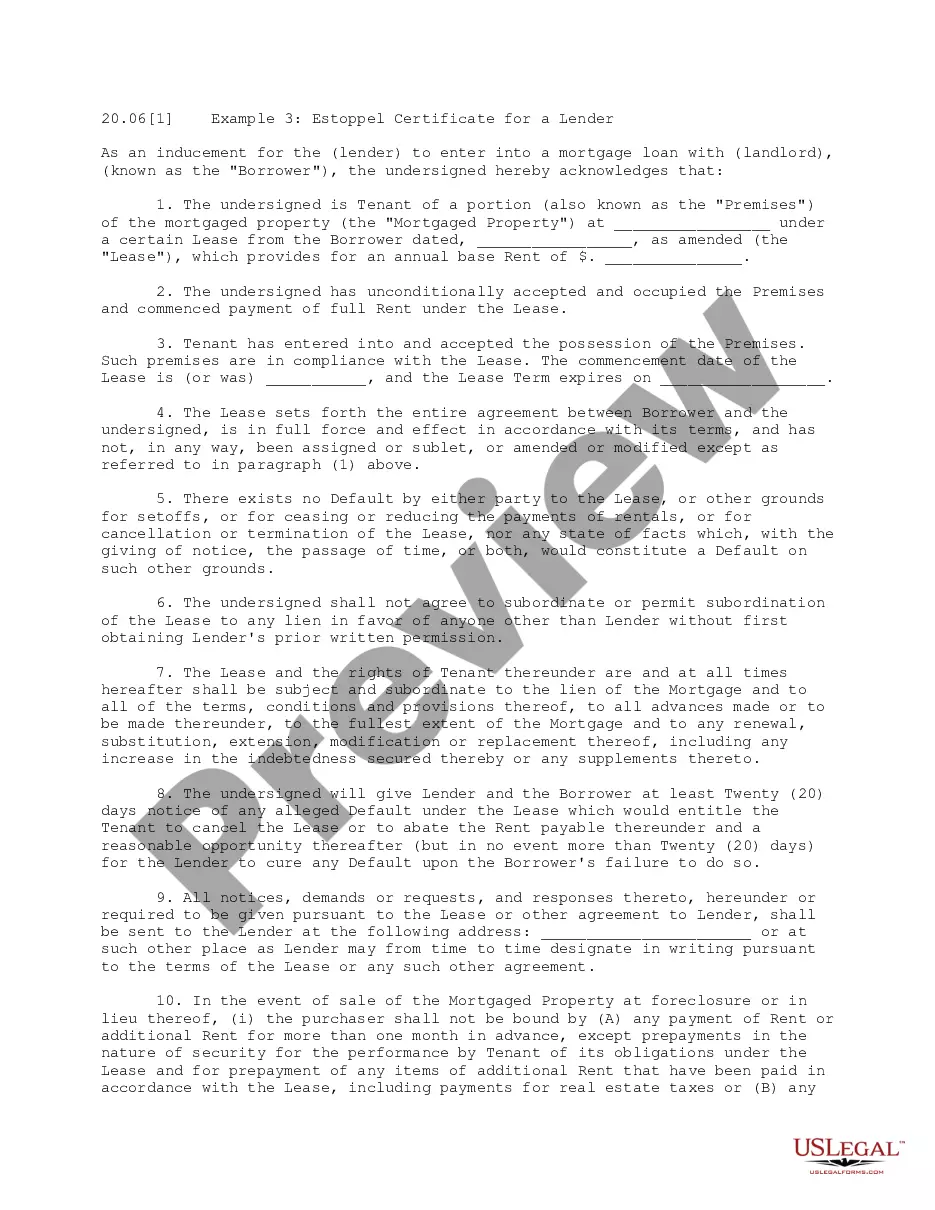
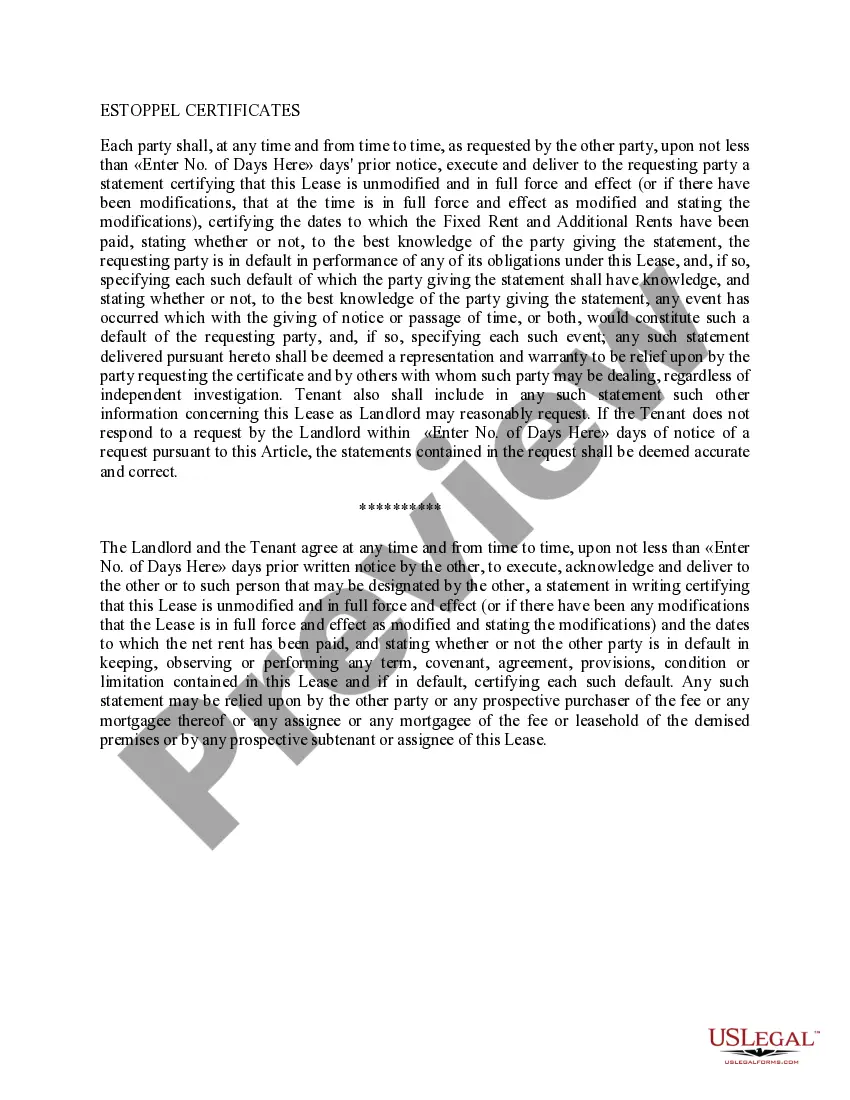
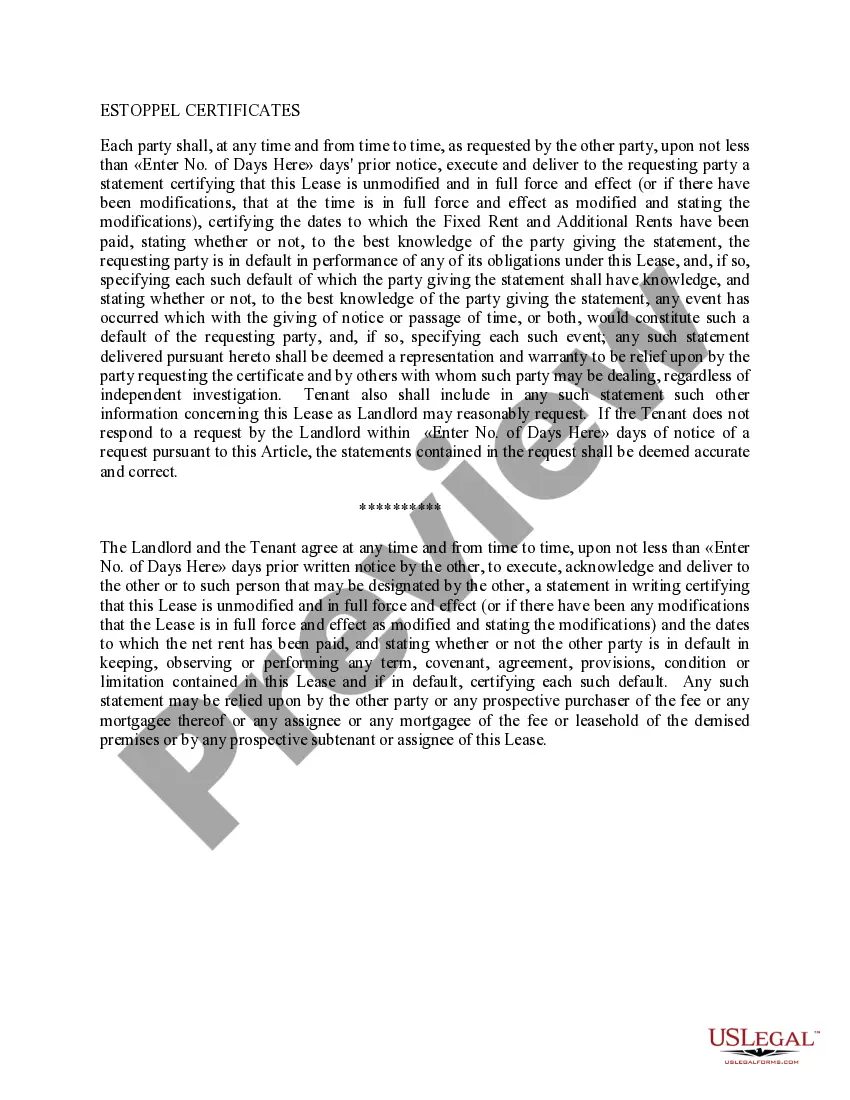
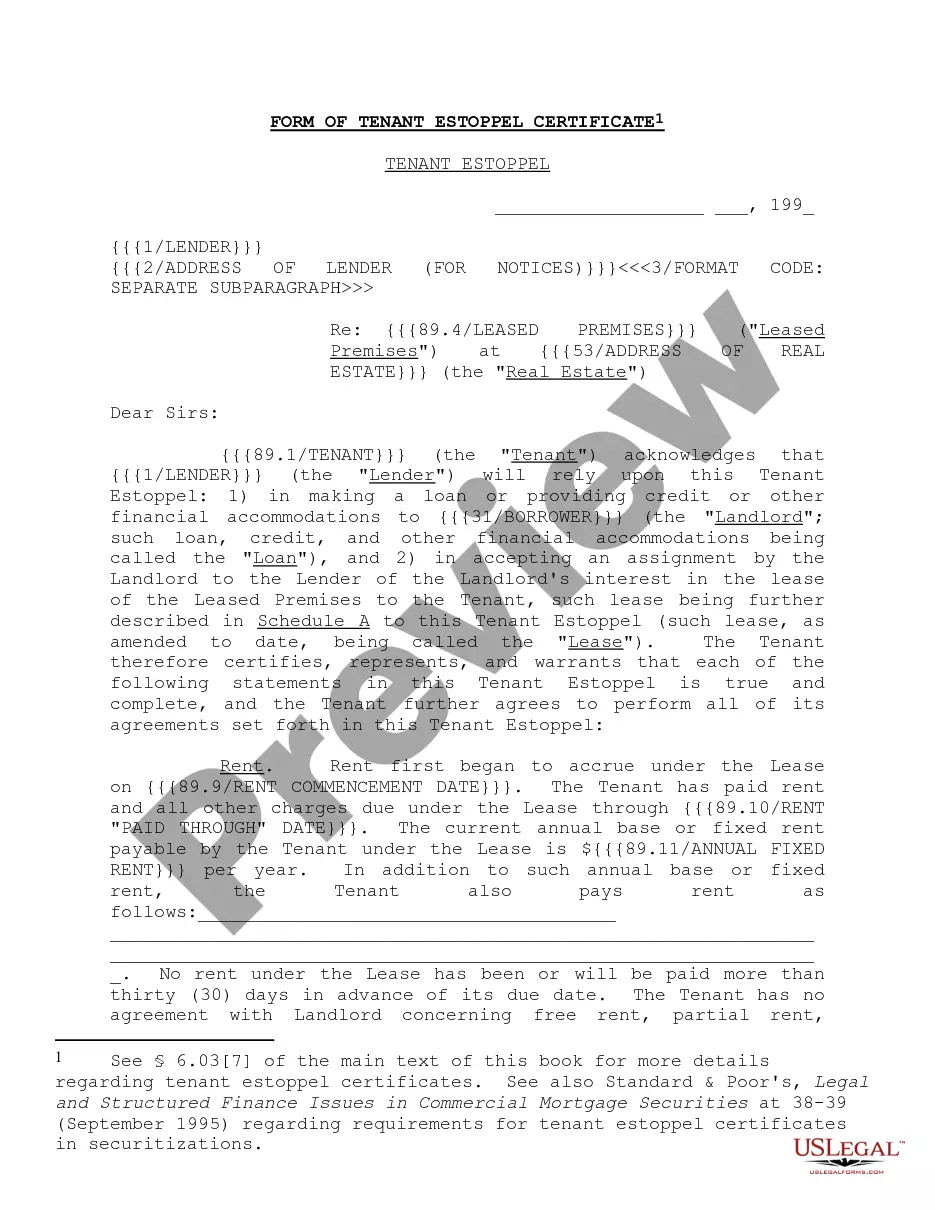
An estoppel certificate for a lender is a legal document that verifies key facts about a lease agreement between a tenant and a landlord (the borrower). It assures lenders that the lease is valid, rent payments are up to date, and no defaults exist. This form helps prevent future disputes by establishing an official record of the lease terms, distinguishing it from other lease-related documents by affirming the tenant's status and compliance with the lease agreement.
Key components of this form
- Tenant acknowledgment of premises and lease details.
- Confirmation that rent payments are current and there are no defaults.
- Stipulations regarding the subordination of the lease.
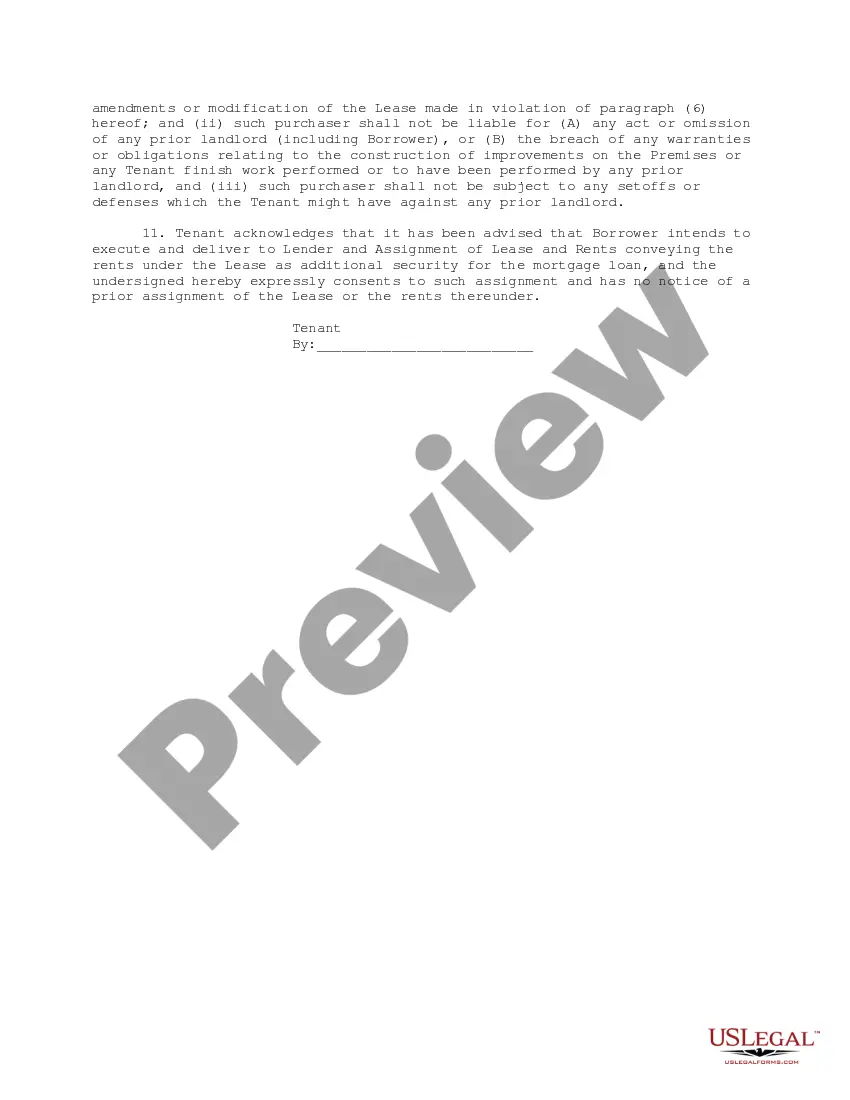
- Requirements for providing notice to the lender regarding any lease defaults.
- Provisions outlining the rights of any potential property purchaser at foreclosure.
Common use cases
This form is typically used during the financing process when a landlord seeks a mortgage loan. It provides assurance to the lender regarding the tenant's compliance with lease obligations. It may also be required when selling a property with existing tenants to clarify any lease terms and conditions related to the mortgage.
Who can use this document
- Landlords seeking financing secured by the property.
- Mortgage lenders requiring assurance regarding the property's rental status.
- Tenants who need to confirm their lease terms to a lender.
- Real estate agents involved in property transactions.
How to prepare this document
- Identify the tenant and landlord by entering their names and relevant details.
- Specify the premises by providing the address and size of the rented property.
- Enter the dates of the lease, including the commencement and expiration dates.
- Fill in the amount of the annual base rent as stipulated in the lease.
- Sign the document by the tenant, acknowledging the terms outlined.
Notarization guidance
This form does not typically require notarization unless specified by local law. It is recommended to check your jurisdiction's requirements to ensure the certificate is legally binding.
Get your form ready online
Our built-in tools help you complete, sign, share, and store your documents in one place.
Make edits, fill in missing information, and update formatting in US Legal Forms—just like you would in MS Word.
Download a copy, print it, send it by email, or mail it via USPS—whatever works best for your next step.
Sign and collect signatures with our SignNow integration. Send to multiple recipients, set reminders, and more. Go Premium to unlock E-Sign.
If this form requires notarization, complete it online through a secure video call—no need to meet a notary in person or wait for an appointment.
We protect your documents and personal data by following strict security and privacy standards.

Make edits, fill in missing information, and update formatting in US Legal Forms—just like you would in MS Word.

Download a copy, print it, send it by email, or mail it via USPS—whatever works best for your next step.

Sign and collect signatures with our SignNow integration. Send to multiple recipients, set reminders, and more. Go Premium to unlock E-Sign.

If this form requires notarization, complete it online through a secure video call—no need to meet a notary in person or wait for an appointment.

We protect your documents and personal data by following strict security and privacy standards.
Common mistakes
- Failing to provide accurate lease details regarding the rent or term.
- Omitting the tenantâs signature, which could invalidate the certificate.
- Inaccurate identification of the property or parties involved.
Benefits of completing this form online
- Convenience: Easily download and complete the form from any device.
- Editability: Make necessary changes promptly before finalizing.
- Reliable: Ensure you have the latest legal format and content approved by licensed attorneys.
What to keep in mind
- The Estoppel Certificate for a Lender confirms the status of a lease agreement to protect both the lender and tenant.
- It must be accurately completed to avoid future disputes regarding the lease.
- Using this form online simplifies the process and ensures you have access to expert-drafted content.
Looking for another form?
Form popularity
FAQ
The Purpose of Tenant Estoppel Certificates By definition, an estoppel certificate is a signed statement by a party (such as a tenant or mortgagee) certifying for anoth- er's benefit that certain facts are correct, as that a lease exists, that there are no defaults, and that rent is paid to a certain date.
1 Gather Your References, Then Open The Estoppel Form. 2 Identify The Parties Involved, The Concerned Property, And The Lease In Question. 3 Define Any Relevant Agreements. 4 Describe The Lease Agreement. 5 Discuss The Status Of Provisions That Must Be Addressed Here.
What is this Document? This powerful document is the Tenant Estoppel Certificate (TEC). The TEC is a legally binding document where a tenant represents or promises certain things to be true. These things relate to the relationship between the landlord and the terms of the lease.
An estoppel certificate is a legally binding document whereby a tenant represents or promises certain things regarding its lease or rental agreement to be true.
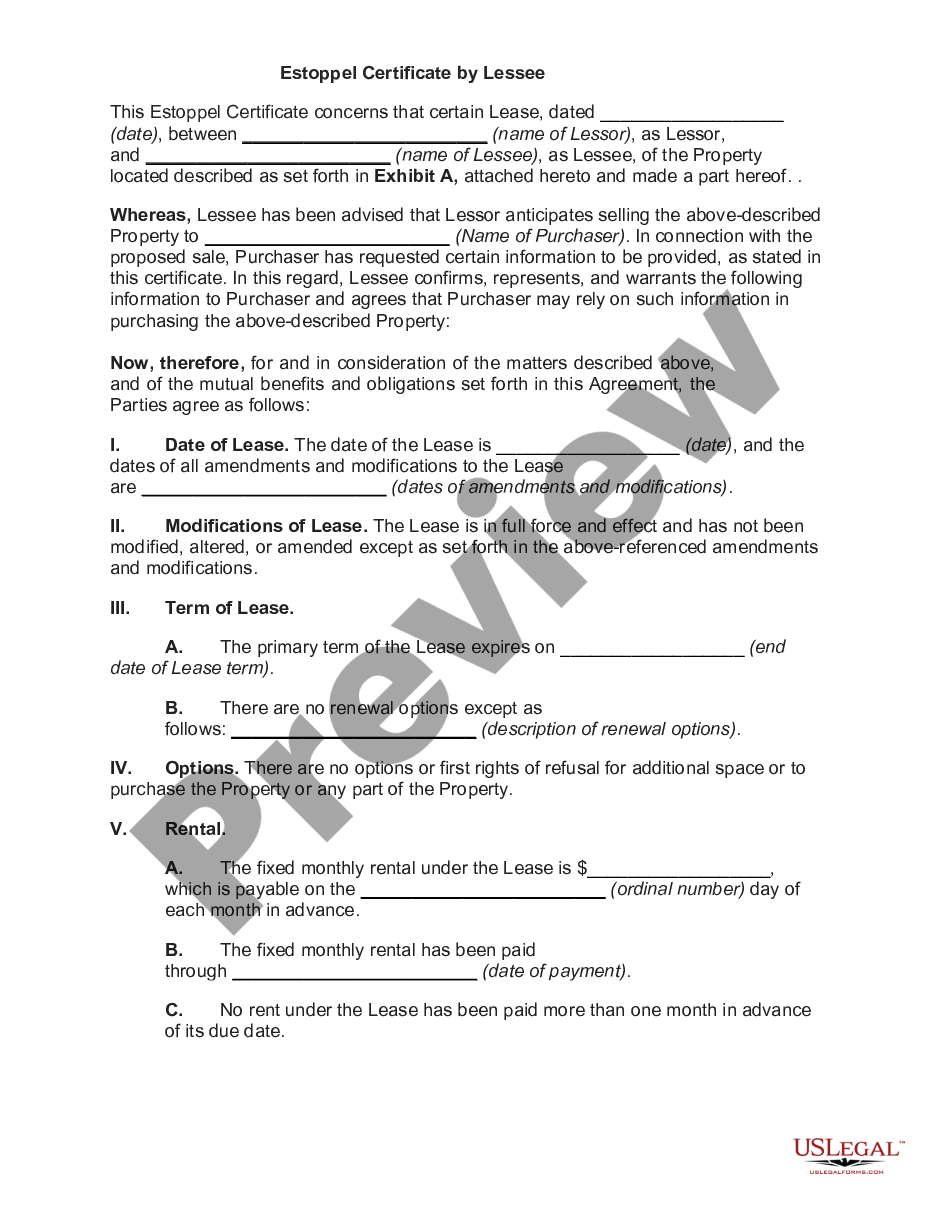
An estoppel certificate is used to inform a potential buyer of commercial or residential rental property of the rights and privileges of existing tenants.
What does estoppel mean in a real estate transaction? An association estoppel is defined as a legal document obtained from a property's governing homeowners' association, condominium owners' association, or some other common interest community, and shows all outstanding fees or fines due as of a certain date.
In summary, because a commercial tenant is not required to sign an estoppel certificate unless required by the lease, a property owner who expects to sell the property should include a provision in the lease requiring the tenant to sign an estoppel certificate upon request.
An Estoppel Certificate (or Estoppel Letter) is a document often used in due diligence in Real estate and mortgage activities. It is a document often completed, but at least signed, by a tenant used in their landlord's proposed transaction with a third party.